Last updated: September 4, 2026
We may earn a commission when you buy through links on this page, at no extra cost to you. How we research and rate.
The short version
Our top pick is Hurraw! Plantcolor, with an Organic Integrity Score of 94 out of 100. It is the cheapest product in this comparison and it publishes more about what is in it than the three products costing more than twice as much, combined.
In lipstick, the interesting ingredient is the pigment. The oils and waxes are broadly similar across the category — castor, jojoba, coconut, candelilla, beeswax — and they are what most listings describe. The color is the part that varies, and it comes from one of three sources.
Iron oxides are mineral. Carmine is made from cochineal insects, which is why it disqualifies a lipstick from being vegan. FD&C and D&C lakes are synthetic dyes, historically petroleum-derived.
Four of the five listings we read never say which of those they use.
Where lipstick color actually comes from
Three pigment families cover almost everything on the shelf, and they differ in ways that matter to different buyers.
Iron oxides are mineral pigments, giving reds, browns and blacks. They are stable, well understood, and used in most natural and conventional lipsticks alike. They are also the reason a “mineral” lipstick is not automatically a plant-based one: iron oxide is a mineral, not a vegetable.
Carmine, also called cochineal or CI 75470, is a deep red produced from the bodies of cochineal insects. It has been used for centuries, it is permitted in food and cosmetics, and it is genuinely excellent at producing rich reds. It is also the single most common reason a lipstick is not vegan, and a brand can be cruelty-free in the sense of not testing on animals while still using it.
FD&C and D&C colors, often used as “lakes”, are synthetic dyes, several historically derived from petroleum feedstocks. They are regulated, batch-certified by the FDA in the case of certified color additives, and they produce shades the other two families struggle to reach.
None of these is dangerous in a lipstick as sold. The point is that they are different answers to different concerns, and a buyer choosing an organic or natural lipstick usually has a specific one of those concerns in mind — vegan, plant-derived, or synthetic-free — which the word “natural” on the tube does not resolve.
Plant pigments, and the honest trade-off
The fourth option is rarer and it is what our top pick uses: color from plants.
Hurraw’s listing names the chemistry rather than just the plants: anthocyanins and betalains, the pigment classes that make beets red and purple potatoes purple. That is unusual specificity for a cosmetic listing, and it is checkable.
It also comes with real compromises, and the listing states them, which is the part we score highest.
“You will sense their natural taste and smell.” Plant pigments are food, and they taste and smell like food. That is a genuine drawback presented as a fact rather than hidden.
“The tartness comes from the citric acid used to preserve the pigments.” Plant pigments are less stable than mineral or synthetic ones and need help staying put, so the formula includes an acid that you can taste.
Plant-derived color also tends to be less opaque and less long-wearing than iron oxides or lakes. A listing claiming plant pigments and eight-hour transfer-proof wear would be worth reading skeptically.
This is the pattern we keep rewarding across categories: a manufacturer that explains a limitation is telling you something a competitor’s superlatives cannot.
Certified facility is not the same as certified product
A distinction worth drawing carefully, because our top pick sits right on it.
Hurraw states that products are poured “in our USDA National Organic Program and Ecocert certified facility”. Read precisely, that certifies the facility rather than each finished product.
Facility certification is meaningful. It means an accredited body has examined the premises, the handling procedures and the segregation of certified materials, and that the operation is subject to audit. In a category where our perfume comparison found zero listings naming any cosmetic certification at all, naming two accredited bodies is a substantial step up.
It is still not the same as a product-level organic certification, and we would score a COSMOS ORGANIC or NSF/ANSI 305 mark on the finished lipstick higher. As we set out in our guide to the USDA organic database, cosmetics companies are not generally required to be certified USDA operations, so one choosing to certify its facility has done something optional.
Everyone else here uses the word certified without an issuing body, except Henné Organics, which names Leaping Bunny — a real cruelty-free certification, and one that speaks to animal testing rather than to organic content.
Lead, and why one listing mentions it
BaeBlu’s listing states its lipstick is “lead-free”, which reads oddly until you know the background.
Lead in lipstick has been a recurring public concern, and the FDA has surveyed lipsticks for lead content, finding trace amounts arising as an impurity in color additives rather than as an added ingredient, at levels the agency considered not to pose a safety risk. The agency has issued recommended maximum levels for lead in cosmetic color additives.
So “lead-free” is addressing a real question and is close to being true of the category generally. Trace lead is an impurity issue in pigments, most acutely in mineral pigments, which is a reason plant-based color sidesteps the question entirely.
It is a fair claim to make and it is not a differentiator against other reputable lipsticks. Where it is genuinely useful is the context BaeBlu attaches: “safe for all ages, perfect for moms and kids alike”, since children’s exposure is the case people usually have in mind.
What we looked for
We read every feature bullet on every listing in full and scored on what each manufacturer put in writing.
Whether the pigment source is named. The one ingredient that genuinely varies, and the one most listings omit.
Any named certification and its issuing body. “Certified organic ingredients” without a certifier is not a certification claim.
Vegan status specifically, since carmine makes a lipstick non-vegan and beeswax does too.
Stated limitations. We reward listings that explain a drawback.
Keyword stuffing, which in this category was more extreme than in any other we have audited.
Best organic lipstick compared
 |  |  |  |  | |
| Product | Hurraw! Plantcolor | Henné Organics Lip Tint | BaeBlu Organic Lipstick | ILIA Color Block | Honeybee Gardens |
| Organic Integrity Score | 94 / 100 | 82 / 100 | 74 / 100 | 72 / 100 | 60 / 100 |
| Pigment source named | Beets, radishes, potatoes | No | No | “Custom pigments” | “Mineral pigments” |
| Certification named | USDA NOP, Ecocert facility | Leaping Bunny | “Certified organic”, no body | None | None |
| Carmine excluded | Yes, explicitly | Not stated | Not stated | Not stated | Not stated |
| Vegan | Yes | No, contains beeswax | Yes | Yes | Not stated |
| Limitations stated | Taste, smell, tartness | No | No | No | No |
| Price | $10.99$64.65 / ounce View on Amazon | $21.60 $27.00 −20%$21.60 / count View on Amazon | $24.00$160.00 / ounce View on Amazon | $29.00$207.14 / ounce View on Amazon | $16.99$16.99 / count View on Amazon |
Price and availability as of September 5, 2026 7:10 am EDT. Product prices and availability are accurate as of the date/time indicated and are subject to change. Any price and availability information displayed on Amazon.com at the time of purchase will apply to the purchase of this product.
Best overall: Hurraw! Plantcolor Lip Color
| Organic Integrity Score | 94 / 100 |
| Pigments | Beets, radishes and purple potatoes; anthocyanins and betalains |
| Excludes | Iron oxides, carmine, FD&C/D&C dyes and lakes, each explained |
| Certification | Poured in a USDA National Organic Program and Ecocert certified facility |
| Best for | Anyone who wants to know what the color is made of |
The most completely disclosed cosmetic listing we have audited, at the lowest price in the comparison.
It answers the pigment question directly: color from “beets, radishes and purple potatoes”, and it names the pigment chemistry, anthocyanins and betalains, rather than leaving it at “plant-based”. Then it states what is absent and why each thing matters: “NO iron oxides (metal), NO carmine (cochineal insect) and NO FD&C/D&C synthetic dyes and lakes (petroleum).” Three exclusions, each with a parenthetical explaining what it is.
That single line does more work than most cosmetic listings manage in five bullets, because it tells a vegan buyer, a plant-preference buyer and a synthetic-avoiding buyer each what they came to find out.
It names certifications with issuing bodies, which nobody else here does for organic content, and it makes a claim we rarely see: “Our ingredients are also clearly and correctly listed on each tube.”
Most persuasively, it states its own drawbacks. You will taste and smell the vegetables. The formula is tart from citric acid used to preserve the pigments. Plant color is not as opaque or as durable as mineral or synthetic pigment, and the listing positions the product as a lipstick alternative rather than as a lipstick, which is the honest framing.
The reservations are real. Certification is stated for the facility, not the finished product, which is a meaningful step below a COSMOS ORGANIC mark. Only three shades exist. The sales rank is low. And plant pigment genuinely does not wear like conventional lipstick, so anyone expecting all-day transfer-proof color will be disappointed by physics rather than by the brand.
- Names the pigment source and the pigment chemistry.
- Excludes iron oxides, carmine and synthetic lakes, explaining each.
- Names USDA NOP and Ecocert as certifying the facility.
- States its own limitations: taste, smell and tartness.
- Cheapest product in this comparison.
- Certification covers the facility rather than the finished product.
- Only three shades available.
- Plant pigment is less opaque and less long-wearing than mineral or synthetic.
- You can taste it, which the listing says plainly.
Best for: Buyers who want plant-derived color and a listing that tells them the truth about it.
Best ingredient list: Henné Organics Luxury Lip Tint
| Organic Integrity Score | 82 / 100 |
| Ingredients named | Coconut, castor seed, jojoba, avocado oils, beeswax, candelilla wax, vitamin E |
| Certification | Leaping Bunny certified cruelty-free |
| Vegan | No, contains beeswax |
| Best for | A sheer moisturizing tint where the base matters more than the color |
The most complete base-ingredient disclosure here, from a brand whose name carries the word Organics.
The first bullet names every oil and wax in the formula: coconut, castor seed, jojoba, avocado, beeswax, candelilla and vitamin E. For a sheer tint, where the product is mostly base and lightly pigmented, that is the right thing to disclose and it is unusually complete.
It also names a real certification with an issuing body: Leaping Bunny, which certifies that products are not tested on animals. That is a genuine third-party program with a defined standard, and naming it is worth considerably more than an unattributed “cruelty-free” claim.
The important thing that follows from the ingredient list, and which the listing does not spell out: beeswax means this is not vegan. Leaping Bunny certification concerns animal testing rather than animal ingredients, and the two are routinely confused. A buyer avoiding animal products needs to read the oils list rather than the certification.
What holds it at 82 is the organic claim itself. The bullet is headed “PURE ORGANIC INGREDIENTS” and then describes them as “the highest quality natural ingredients” without naming a certifier or stating which ingredients are certified. The brand name does a lot of work that the copy does not support.
The pigment is not described at all, which for a colored product is the omission this guide is about.
- Names every oil and wax in the formula.
- Leaping Bunny certified, a real program named with its body.
- Sheer, moisturizing format suited to daily wear.
- Honest that packaging cost is where luxury brands add margin.
- Not vegan, since it contains beeswax, and the listing does not flag it.
- “Pure organic ingredients” names no certifier.
- Pigment source not described at all.
- Among the most expensive here.
Best for: Sheer everyday color, for buyers who are not avoiding animal-derived ingredients.
Addresses the lead question: BaeBlu Organic Lipstick
| Organic Integrity Score | 74 / 100 |
| Organic claim | “Certified ORGANIC and ALL NATURAL ingredients”; no certifier named |
| Notable claim | Lead-free, safe for all ages |
| Made in | USA |
| Best for | Buyers focused on the lead question, if it is in stock |
A vegan organic lipstick that addresses a concern the rest of the category ignores, and leaves its central claim unattributed.
The lead-free statement is the distinguishing feature. Lead in lipstick has been a recurring public worry, and the FDA has surveyed products, finding trace lead arising as an impurity in color additives rather than as an added ingredient, at levels it did not consider a safety risk. Addressing it directly is reasonable, and the framing — “safe for all ages, perfect for moms and kids alike” — targets the situation people actually worry about.
It is vegan, gluten-free, cruelty-free and made in the USA, all stated. The base is described specifically: jojoba, avocado and coconut oils.
The weakness is the organic claim. “Made with certified ORGANIC and ALL NATURAL ingredients” uses the word certified without naming who certified anything, which by our scoring is a claim that cannot be checked. Compare it with the top pick naming two accredited bodies.
The pigment is not described, so the lead-free claim sits slightly oddly: trace lead is a pigment impurity question, and the listing does not say what the pigments are.
It was also showing limited availability when we checked, which for a shade-specific cosmetic is worth confirming before ordering.
- Addresses the lead question directly, which nothing else here does.
- Vegan, cruelty-free and gluten-free, all stated.
- Names the base oils specifically.
- Made in the USA, stated.
- “Certified organic” with no certifier named.
- Pigment source not described, which is what lead impurity relates to.
- Limited stock when we checked.
- Low sales rank, so little buyer feedback.
Best for: Buyers whose main concern is lead and who can get the shade they want.
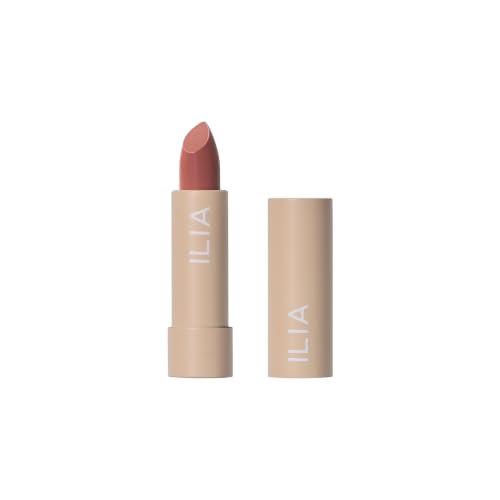
Organic castor oil, custom pigments: ILIA Color Block
| Organic Integrity Score | 72 / 100 |
| What is organic | Castor seed oil, the carrier |
| Pigment | “Custom pigments”, source not stated |
| Testing | Dermatologist-tested, non-comedogenic |
| Best for | Full-coverage color, if the shade range matters more than disclosure |
The most commercially successful clean-beauty lipstick here, with the same structural gap we found across the perfume comparison.
The organic claim attaches to the carrier: “custom pigments in organic castor seed oil”. Castor oil is the base of most lipsticks, so this is the largest ingredient and a legitimate thing to source organically. It is not the color.
“Custom pigments” is the phrase to notice. It tells you the pigments were formulated for the brand and nothing about what they are: mineral, insect-derived or synthetic. For a product whose entire purpose is color, that is the central omission.
What ILIA does offer is claims that can at least be tested: dermatologist-tested and non-comedogenic are defined terms with established testing protocols, unlike “clean”. Vegan is stated, which rules out carmine and beeswax by implication, and that is useful.
“Four times the intensity” appears without a stated comparison, which makes it unmeasurable.
It is the most expensive product here, and the coverage and shade range are genuinely the strongest, which for many buyers is the deciding factor regardless of what the listing discloses.
- Names organic castor seed oil as the base.
- Dermatologist-tested and non-comedogenic, both defined terms.
- Vegan, which rules out carmine and beeswax.
- Strongest coverage and shade range in this comparison.
- “Custom pigments” says nothing about what the color is made of.
- Organic covers the carrier oil only.
- “Four times the intensity” has no stated comparison.
- Most expensive product here.
Best for: Full-coverage color where shade range outweighs ingredient disclosure.
Keyword stuffing, no organic claim: Honeybee Gardens
| Organic Integrity Score | 60 / 100 |
| Organic claim | None; the title says “Truly Natural” |
| Pigment | “Mineral pigments”, stated |
| Certification | None named |
| Best for | Buyers who want the shade and disregard the copy |
Three long bullets that describe the shade repeatedly and the formulation almost not at all.
The copy is the most search-optimized we have encountered in any category. Across three bullets it uses “pink lipstick”, “mauve lipstick”, “neutral lipstick”, “natural lipstick long lasting”, “lipstick long lasting for women”, “all day lipstick”, “longwear lipstick”, “makeup lipstick”, “long wearing lipstick” and “lipstick for older women”. Those are the same two words rearranged for a search engine, and they crowd out everything a buyer would want to know.
To its credit, it does name the pigment family: “made with mineral pigments”, which is more than three competitors manage. Mineral means iron oxides and similar, which answers the plant-versus-mineral question and leaves the carmine question open.
It makes no organic claim at all. The title says “Truly Natural”, which is not a defined term, and no certification of any kind is named.
Honeybee Gardens is a long-established natural cosmetics company and the product has a solid sales rank, so none of this is a judgment about the lipstick. It is a judgment about a page that spends its space on search terms rather than on what is in the tube.
- Names the pigment family as mineral, which several dearer products do not.
- Long-established natural cosmetics brand.
- Mid-range price with a solid sales rank.
- Makes no organic claim it cannot support.
- Copy is heavily keyword-stuffed across all three bullets.
- No organic claim and no certification named.
- “Truly Natural” is not a defined term.
- Vegan status not stated, so carmine cannot be ruled out.
Best for: Buyers who like the shade and are not shopping on disclosure.
What we left out and why
We left out tinted lip balms, which are a lower-pigment product in a different price class and where the base matters more than the color.
We left out liquid lipsticks and long-wear stains, which achieve their durability through film-forming polymers that sit outside what most natural formulations use.
We left out lipsticks whose only claim was “clean”, which is not a defined term in cosmetics, and those making anti-aging claims on a lip product.
We also left out shade-specific duplicates of products already in this comparison, since the formulation is identical and only the pigment load differs.
How to read a lipstick label
Lipstick is the cosmetic people most often ingest by accident, which is why the ingredient question gets asked here more than for other makeup.
- Find the pigment. Look for iron oxides, carmine or CI 75470, and any FD&C or D&C color with a number. If none appears, the listing is not telling you.
- Check vegan status if it matters. Carmine is insect-derived and beeswax is animal-derived, and a product can be cruelty-free while containing either.
- Look for a certifier, not just the word certified. An issuing body you can look up is a claim; “certified organic ingredients” alone is not.
- Plant pigments: softer color, shorter wear, and you will taste them. Best for sheer everyday shades.
- Mineral pigments: strong color, good stability, and the source of the trace-lead impurity question.
- Carmine: the richest reds, and not vegan.
- Synthetic lakes: the brightest and most unusual shades, and the ones natural formulations avoid.
- Exfoliate gently first. Dry flakes are what color catches on, and no formula fixes that.
- Blot and reapply. Two thin layers with a blot between them outlast one thick one, whatever the pigment.
- Store away from heat. Lipstick is oil and wax, and a tube left in a hot car will not recover its texture.
- Replace natural formulas sooner. Without synthetic preservatives, expect around a year once opened rather than two or three.
What each listing tells you
Collecting the disclosure question, since the pigment is the whole point of the product.
One listing in five tells you what the color is made of, and it is the cheapest one. That is the finding, and it repeats a pattern this site keeps encountering: disclosure quality and price are close to unrelated.
If you take one habit from this page, make it looking for the pigment before the adjectives. Everything else on a lipstick label describes oils and waxes that barely differ between products.
Questions about organic lipstick
What is lipstick pigment usually made from?
Three families cover most of the market. Iron oxides are mineral. Carmine, also listed as CI 75470, is made from cochineal insects. FD&C and D&C colors and lakes are synthetic, several historically petroleum-derived. A fourth option, plant pigment from sources like beets, is rarer and less durable.
Is carmine vegan?
No. Carmine is produced from cochineal insects, and it is the most common reason a lipstick is not vegan. A brand can be certified cruelty-free, meaning it does not test on animals, while still using it, so the two claims answer different questions.
Can lipstick be USDA certified organic?
Product-level USDA certification on cosmetics is uncommon, since cosmetics companies are not generally required to be certified operations. One product here states its facility is certified under the USDA National Organic Program and by Ecocert, which is meaningful and is not the same as the finished lipstick being certified.
Should I worry about lead in lipstick?
The FDA has surveyed lipsticks and found trace lead arising as an impurity in color additives rather than as an added ingredient, at levels it did not consider a safety risk, and has issued recommended maximum levels for color additives. It is a pigment impurity question, which is one reason plant-based color avoids it entirely.
Why does natural lipstick not last as long?
Durability in conventional lipstick comes partly from film-forming polymers and highly stable synthetic pigments. Plant pigments in particular are less stable and need acids to preserve them, which is why one product here tastes faintly tart and positions itself as a lipstick alternative rather than a lipstick.
What does “mineral pigment” mean?
Usually iron oxides and similar inorganic colorants. It tells you the color is not plant-derived and does not tell you whether carmine is also present, so it answers one question and leaves another open.
Is “clean” or “non-toxic” a regulated term on cosmetics?
No. Neither has a legal definition in US cosmetics, so both are marketing positions rather than claims that can be checked. Defined terms worth more are dermatologist-tested, non-comedogenic, and any named certification with an issuing body.
How long does natural lipstick keep?
About a year once opened, which is shorter than a conventional formula, because natural products generally use fewer synthetic preservatives. Heat shortens it further, and a change in smell or texture is the practical signal to replace it.
Does organic lipstick cost more?
Not reliably. In this comparison the best-documented product was the cheapest, and the two most expensive disclosed the least about their pigments. Price tracks brand positioning rather than ingredient transparency.
What should I look for on the label?
The pigment first, then vegan status if it matters to you, then whether any certification names its issuing body. The oils and waxes are broadly similar across the whole category and are the part most listings choose to describe.
Organic Connection is reader supported. We read every product listing in full and say plainly when a claim cannot be verified. How we research and rate.