Last updated: September 30, 2026
We may earn a commission when you buy through links on this page, at no extra cost to you. How we research and rate.
The short version
After researching the ingredients, certifications, and formulas of the most popular natural deodorants, our top pick is Humble Brands Deodorant in Bergamot & Lime. It uses certified natural-origin ingredients, was among the first Ecocert Certified Natural deodorants in the US, and pairs strong all-day odor control with plant-based ingredients, which is why it earned our highest Organic Integrity Score of 87 out of 100. For a widely loved everyday option, Native is our pick, and for sensitive skin, the baking-soda-free, EWG Verified Each & Every is the best choice.
One honest note up front: a fully USDA-organic deodorant is rare, because deodorant is a personal-care product, not a food, and most “natural” sticks are aluminum-free formulas built on plant-based and often organic ingredients rather than a single organic seal. So we rated these on what actually matters here: aluminum-free formulas, clean and often organic plant ingredients, third-party certifications like Ecocert and EWG, and real-world odor control.

Best natural deodorant compared
| Best Choice | Best Value | ||||
 |  |  |  |  | |
| Product | Humble Brands | Native | Each & Every | Kopari Coconut | Tom’s of Maine |
| Organic Integrity Score | 87/ 100 | 84/ 100 | 82/ 100 | 74/ 100 | 72/ 100 |
| Our rating | 4.4 | 4.2 | 4.1 | 3.7 | 3.6 |
| Best for | Best overall | Everyday favorite | Sensitive skin | Certified-natural | Widely available value |
| Certification | Leaping Bunny, Non-GMO | Vegan | EWG Verified, Vegan | Not stated on the listing | Not stated on the listing |
| Baking soda | Yes (sensitive option) | Yes (sensitive option) | Baking-soda-free | Yes (magnesium options) | Baking-soda-free |
| Formula | MCT oil, beeswax, cornstarch, baking soda, essential oils | Shea butter, coconut oil, baking soda (sensitive option available) | Coconut oil, tapioca starch, essential oils, no baking soda | Plant-based with shea butter, coconut oil, essential oils | Naturally sourced, hops-based odor control, baking-soda-free |
| Price | $12.79 $13.99 −9%$5.12 / ounce View on Amazon | $13.34 $13.99 −5%$5.03 / ounce View on Amazon | $22.00$8.80 / ounce View on Amazon | $16.00$8.00 / ounce View on Amazon | $14.35$2.21 / ounce View on Amazon |
Price and availability as of October 11, 2026 7:10 pm EDT. Product prices and availability are accurate as of the date/time indicated and are subject to change. Any price and availability information displayed on Amazon.com at the time of purchase will apply to the purchase of this product.
Scores are ours, based on independent research of ingredients, certification, gentleness, and odor performance, using the same 10-criteria method we apply to every product. See how we research and rate.
The certification map for natural deodorant, and what each one actually excludes
Seals accumulate on a package faster than meaning does. This is what each of the marks you will see here certifies, and what it leaves out.
| Certification | Covers | Key exclusion |
| USDA Organic | Farming and handling: no synthetic pesticides or fertilizers, no GMOs, no sewage sludge or irradiation, audited yearly by an accredited certifier | Three different tiers share the one seal, and it makes no claim about worker pay, food miles, or nutrition |
| GOTS | Organic fiber from farm to finished textile, plus dyeing, finishing, wastewater and labor criteria | Has a weaker second tier, “made with organic”, that needs only 70% organic fiber and carries the same name |
| Leaping Bunny | No animal testing at any stage by the company or its suppliers, with supply-chain audits and annual recommitment | Says nothing about the ingredients themselves, organic content, or whether the product is vegan |
| COSMOS Organic | Cosmetics: organic content thresholds, permitted processes and ingredients, and packaging rules | Its sister grade, COSMOS Natural, carries the same name and requires no minimum organic content at all |
| B Corp | The whole company: social and environmental performance, governance, and transparency | Certifies the company, not the product in your hand |
| EWG Verified | Full ingredient disclosure and avoidance of the chemicals on the EWG list of concern | Run by an advocacy group rather than a standards body, and not an organic claim |
COSMOS is two standards with one name, and the weaker one is easy to miss. COSMOS Organic requires at least 95% of the plant ingredients to be organic. COSMOS Natural, printed in the same typeface by the same body, requires no minimum organic content whatsoever: it governs which ingredients and processes are permitted, not how much of the product is organic. If the word after COSMOS is “Natural”, the organic question is still open.
Key things to look for in a natural deodorant
Natural deodorant has come a long way, and the best options now control odor all day without aluminum. Here is what matters when you choose one.
1. Aluminum-free odor control
A good natural deodorant neutralizes odor-causing bacteria with ingredients like baking soda, magnesium, or plant powders, rather than blocking sweat with aluminum salts.
2. Clean, plant-based ingredients
Look for shea butter, coconut oil, arrowroot or tapioca starch, and essential oils, and ideally organic versions of these, with no parabens, phthalates, or propylene glycol.
3. Baking soda vs baking-soda-free
Baking soda is a powerful odor neutralizer but can irritate sensitive underarms. Baking-soda-free formulas use magnesium or tapioca starch instead and are gentler.
4. Third-party certifications
Seals like Ecocert Certified Natural, EWG Verified, Leaping Bunny (cruelty-free), and vegan certification are useful signals of clean, verified formulas.
Why “natural” rarely means “certified organic” for deodorant
Unlike food, personal-care products are not required to carry a USDA-organic seal, and very few deodorants do, because a finished deodorant is a blend of butters, starches, waxes, and essential oils that is hard to certify as a whole even when many of the individual ingredients are organic. That is why the meaningful signals here are aluminum-free formulation, clean plant-based and organic ingredients, and independent certifications such as Ecocert and EWG Verified, rather than a single organic stamp.
It is also why we are upfront that these are best described as natural, aluminum-free deodorants rather than “organic deodorants.” Our scoring rewards clean, transparent ingredient lists, recognized third-party certifications, gentleness for sensitive skin, and genuine all-day odor performance, because that combination is what actually delivers a clean deodorant that works.
The aluminum and breast cancer claim, honestly
Natural deodorant is very often sold on the idea that aluminum in antiperspirants causes breast cancer. We are not going to trade on that, because the evidence does not support it.
What the major cancer bodies say. The American Cancer Society states there is no link between aluminum-based antiperspirants or deodorants and cancer. The National Cancer Institute likewise reports no strong scientific evidence connecting deodorant or antiperspirant use to breast cancer development. This is not a fringe position or an industry line; it is the consensus of the organizations whose job is to identify cancer risks.
Why the theory fails on its own terms. Two specific points undercut it. Studies have not found meaningful aluminum accumulation in breast tissue. And breast cancers occur throughout the breast rather than clustering in the upper outer quadrant nearest the armpit, which is what you would expect to see if underarm product application were driving them.
So why buy natural deodorant at all? There are perfectly good reasons that do not require a cancer scare:
- You prefer not to block sweating. Antiperspirants work by plugging sweat ducts with aluminum salts. Deodorants do not stop sweat, they address the bacteria that make it smell. Some people simply would rather sweat normally, which is a legitimate preference rather than a health claim.
- Fewer ingredients, no fragrance. If you react to synthetic fragrance, a short unscented ingredient list is a real benefit.
- You do not need antiperspirant strength. Many people use a clinical-strength product out of habit when a deodorant would do.
- Environmental and packaging preferences, which are honest reasons in their own right.
If you genuinely sweat heavily, an antiperspirant is the appropriate product and there is no good evidence you are harming yourself by using one. Natural deodorant is a preference, not a health upgrade.
The transition period, and why baking soda is the usual culprit
There is no such thing as an armpit detox. Your armpits are not storing toxins and no clay mask is drawing anything out. What actually happens when you switch is that your underarm microbiome and sweat volume adjust after you stop plugging the ducts, which typically takes two to four weeks. You do not need to detox; you need to wait and be gentle.
Baking soda is the most common reason people give up. Sodium bicarbonate is genuinely effective at neutralizing odor, and it is alkaline, sitting well above skin’s natural pH. On the thin, frequently shaved, occluded skin of the underarm that causes irritation, redness, stinging, and sometimes a persistent rash in a meaningful minority of people. If natural deodorant gave you a rash, baking soda was probably why, and the fix is a baking-soda-free formula using magnesium hydroxide, zinc ricinoleate, or arrowroot and charcoal instead.
Other common irritants are essential oils and added fragrance, so an unscented version is the safer starting point on reactive skin.
Practical transition tips: apply to clean dry skin rather than straight after a shower, do not apply immediately after shaving, use less than you think, and reapply midday rather than expecting all-day protection from a morning application. If irritation appears, stop and switch formula rather than pushing through it.
How to choose a natural deodorant
- Confirm it is aluminum-free. That is the core reason most people switch to a natural deodorant.
- Check the base ingredients. Favor shea butter, coconut oil, and plant starches, ideally organic, with no parabens, phthalates, or propylene glycol.
- Pick baking-soda-free if you are sensitive. If your underarms are easily irritated, choose a magnesium or tapioca-starch formula.
- Look for certifications. Ecocert, EWG Verified, Leaping Bunny, and vegan seals signal a verified clean formula.
- Allow an adjustment period. Switching off antiperspirant can take a couple of weeks as your body adjusts.
Who should buy natural deodorant
Skin sensitivity decides this more than scent does. Our top pick is the certified-natural stick to try first. If you want a widely loved everyday brand, a gentle baking-soda-free option for sensitive skin, the most widely available value, or the simplest short ingredient list, we have a pick for each.
Best overall: Humble Brands Deodorant
| Organic Integrity Score | 87 / 100 |
| Certification | Leaping Bunny, Non-GMO |
| Formula | MCT oil, beeswax, cornstarch, baking soda, essential oils |
| Best for | Minimalists who want a short ingredient list |
Humble Brands is our pick for a minimalist formula. Its original stick is built on just a handful of simple ingredients, MCT oil, beeswax, non-GMO cornstarch, baking soda, and essential oils, to fight odor and absorb wetness with a soft, natural feel, is Leaping Bunny certified cruelty-free, and a single stick lasts about three months.
It leads this page because its listing names Leaping Bunny, which is more than anything else here puts in writing.
What we liked: Very short, simple ingredient list, aluminum-free, cruelty-free, long-lasting, with a soft natural feel and honest scents.
Keep in mind: The original uses baking soda and beeswax, so it is not vegan; choose the sensitive formula if baking soda bothers you.
What the listing discloses: No organic certification appears anywhere on the HUMBLE SIMPLE AND TRUE listing.
Best everyday favorite: Native Deodorant
| Organic Integrity Score | 84 / 100 |
| Certification | Vegan |
| Formula | Shea butter, coconut oil, baking soda (sensitive option available) |
| Best for | A popular, reliable everyday deodorant |
Native is our everyday pick and one of the most popular natural deodorants around. Its award-winning formula uses naturally derived ingredients like shea butter and coconut oil, is free of aluminum, parabens, and phthalates, applies smoothly without white marks, and delivers long-lasting odor protection in a wide range of well-liked scents.
A baking-soda-free sensitive version is available.
What we liked: Aluminum-free, vegan and cruelty-free, smooth application with no white marks, strong odor control, and a big scent range.
Keep in mind: The classic formula contains baking soda; sensitive users should choose the sensitive (baking-soda-free) version.
What the listing discloses: The word organic does not appear on the Native listing at all.
Best for sensitive skin: Each & Every
| Organic Integrity Score | 82 / 100 |
| Certification | EWG Verified, Vegan |
| Formula | Coconut oil, tapioca starch, essential oils, no baking soda |
| Best for | Easily irritated, sensitive underarms |
Each & Every is our pick for sensitive skin. It is EWG Verified, meaning it meets the Environmental Working Group’s strict standards for ingredient safety and transparency, and it is baking-soda-free, using tapioca starch instead to avoid the irritation baking soda can cause, in a simple formula of coconut oil, plant starch, and 100% natural essential-oil fragrance.
It scores in the middle mainly because it is a newer, smaller brand with a shorter track record than the leaders, but for a gentle, verified-clean, baking-soda-free stick, it is our top recommendation.
What we liked: EWG Verified, baking-soda-free and gentle, vegan and cruelty-free, with clean essential-oil scents and recyclable packaging.
Keep in mind: Baking-soda-free formulas can offer slightly less aggressive odor control for very heavy sweaters, though most users find it holds up well.
What the listing discloses: Each & Every makes no organic claim anywhere, so the case rests on the other claims it does make.
Certified-natural deodorant: Kopari Aluminum-Free Coconut Deodorant
| Organic Integrity Score | 74 / 100 |
| Certification | Not stated on the listing |
| Formula | Plant-based with shea butter, coconut oil, essential oils |
| Best for | An all-around certified-natural deodorant that works |
Kopari Coconut is one we still rate because it combines a genuinely clean, certified formula with strong performance. The Bergamot & Lime stick was among the first Ecocert Certified Natural deodorants in the US, uses 100% natural-origin ingredients such as shea butter, coconut oil, arrowroot, and odor-fighting magnesium and essential oils, and is vegan and cruelty-free, all with reliable all-day odor control.
The trade-off is that its classic formulas contain baking soda, which a minority of very sensitive users find irritating, though Kopari Coconut also offers magnesium-based sensitive-skin versions. For a clean, certified, effective natural deodorant, it is still worth buying.
What we liked: Ecocert Certified Natural, 100% natural-origin ingredients, vegan and cruelty-free, with strong all-day odor control and appealing scents.
Keep in mind: The classic formulas use baking soda, which can irritate very sensitive underarms; choose the magnesium sensitive version if that is you.
What the listing discloses: Kopari makes no organic claim anywhere, so the case rests on the other claims it does make.
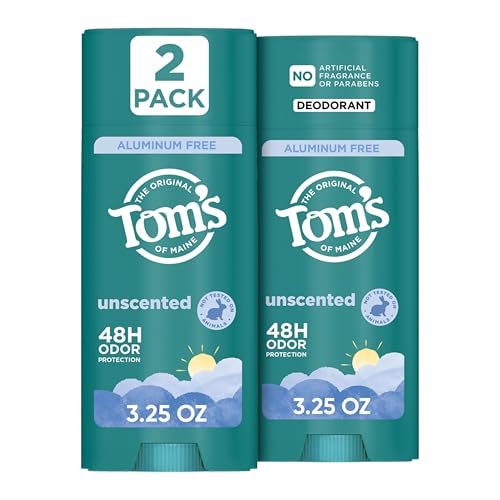
Best value: Tom’s of Maine Natural Deodorant
| Organic Integrity Score | 72 / 100 |
| Certification | Not stated on the listing |
| Formula | Naturally sourced, hops-based odor control, baking-soda-free |
| Best for | An affordable, easy-to-find natural deodorant |
Tom’s of Maine is our value pick. As one of the original natural personal-care brands and a Certified B Corp, it offers an aluminum-free deodorant with no artificial fragrances or preservatives, using odor-fighting hops, at a lower price than most and available almost anywhere, which makes it the easiest affordable entry into natural deodorant.
It scores in the value range because some users find its long-lasting odor control a step behind the top performers, but for a widely available, affordable, no-artificial-fragrance stick from an established brand, it is a dependable choice.
What we liked: Aluminum-free, no artificial fragrance or preservatives, B Corp and vegan, affordable, and available almost everywhere.
Keep in mind: Odor control is good rather than best-in-class for heavy sweat days, and you may need to reapply.
What the listing discloses: Tom’s of Maine makes no organic claim anywhere, so the case rests on the other claims it does make.
How to switch to a natural deodorant
Moving off an aluminum antiperspirant often comes with a short adjustment period of one to two weeks, as your underarms rebalance and may briefly feel like they sweat or smell more. Apply natural deodorant to clean, dry skin, and reapply midday if you need it, since it neutralizes odor rather than blocking sweat. If a baking-soda formula causes redness or itching, switch to a baking-soda-free option built on magnesium or tapioca starch. Give any new stick a couple of weeks before judging it, and remember that a natural deodorant controls odor but will not stop wetness the way an antiperspirant does.
Deodorant and antiperspirant are not the same product
This is the single biggest source of disappointment with natural deodorant, and it is a category confusion rather than a product failure.
| Deodorant | Antiperspirant | |
| What it does | Addresses odor — by neutralizing it, absorbing moisture, or making the skin inhospitable to odor-causing bacteria | Reduces sweating, by forming temporary plugs in the sweat ducts |
| Active | Baking soda, magnesium hydroxide, zinc salts, essential oils | Aluminum salts |
| Regulatory status | Cosmetic | An over-the-counter drug in the US |
| Will it stop you sweating? | No | Yes, substantially |
Keep in mind: no natural deodorant will stop you sweating, because aluminum salts are the only widely available ingredient that does, and avoiding them is the entire premise. If you switch and find yourself damper than before, the product is working as designed — you have swapped an antiperspirant for a deodorant. Sweat itself is nearly odorless; the smell comes from skin bacteria metabolizing it, which is what deodorant addresses. For anyone who genuinely needs sweat reduction — hyperhidrosis, a job requiring dry shirts — that is a legitimate reason to keep using an antiperspirant, and this guide is not the place to talk you out of it.
The “armpit detox” is not a thing
The claim is that years of antiperspirant leave aluminum and toxins stored in your underarms, which must be purged with clay masks or apple cider vinegar before natural deodorant can work.
It does not hold up. Aluminum salts form temporary plugs near the surface of the sweat ducts, and those are gradually removed by ordinary washing and normal skin cell turnover. Nothing accumulates in a way that requires purging, and there is no evidence that detox masks reduce odor or make any deodorant work better. Sweat glands do not excrete stored toxins; that is not what they are for.
The adjustment period is real, though — it is just not a detox. What actually happens is a shift in the underarm microbial community. Antiperspirants suppress the environment those bacteria live in; when you stop, the population changes composition, and for a few weeks the odor profile can be worse before it settles. Estimates vary but two to four weeks is typical.
- Give it a month before judging a product. Most people abandon natural deodorant during precisely the window that would have resolved.
- Wash with soap daily during the transition — the ordinary approach works.
- A clay mask will not hurt you and is a pleasant ritual. It is just not doing what it claims.
- Switching brands repeatedly restarts the adjustment, which is why people conclude nothing works.
Baking soda: why natural deodorant gives people a rash
Baking soda is effective — it neutralizes the acidic compounds bacteria produce — and it is the most common cause of the underarm rash that makes people give up.
Skin sits at roughly pH 4.7–5.5. Baking soda sits around pH 8.3. Applied daily to thin, occluded, frequently shaved skin, that alkalinity disrupts the acid mantle and moisture barrier, and the result is redness, itching, burning and sometimes a darkened patch. It usually appears one to three weeks in, which people misread as the “detox” and push through — making it worse.
| Active | How it works | Irritation risk |
| Baking soda | Neutralizes acidic odor compounds | High — pH ~8.3 |
| Magnesium hydroxide | Similar odor control, pH-balanced formulation | Low. GRAS status; the usual recommendation for sensitive skin. |
| Zinc ricinoleate | Traps odor molecules rather than killing bacteria | Low |
| Arrowroot / tapioca starch | Absorbs moisture | Low; can cause irritation in a few people |
| Charcoal / clay | Absorbs moisture and odor | Low; stains light fabric |
| Essential oils | Antibacterial and fragrance | Moderate — a common contact allergen, especially on shaved skin |
If natural deodorant has given you a rash, switch to a baking-soda-free formula rather than concluding natural deodorant does not suit you. Magnesium hydroxide products exist precisely for this, and most brands now offer a sensitive version.
The aluminum claim, with the sources
Our section above covers this. To be precise about who has said what: none of the major cancer organizations has found conclusive evidence linking antiperspirants or aluminum to breast cancer risk. The American Cancer Society and the National Cancer Institute both address the claim directly and reach that conclusion, and there is no strong evidence that aluminum-containing antiperspirants meaningfully increase aluminum in breast tissue.
Research continues — there is ongoing work on aluminum as a possible metallestrogen — and “no conclusive evidence” is not the same as “definitively proven safe”. But it is a long way from the confident claim circulating online, and we are not going to sell you a deodorant on a cancer scare that the evidence does not support.
There are perfectly good reasons to choose an aluminum-free deodorant anyway: you prefer fewer synthetic ingredients, you dislike the feel of antiperspirant, you have sensitive skin, or — the practical one below — you are tired of ruined shirts.
Yellow stains are the aluminum, not the sweat
This is the most useful counterintuitive fact in the category. The stiff yellow staining on white shirt underarms is not sweat: it is a reaction between aluminum salts and the proteins and salts in sweat, which bonds to fabric and builds up over washes.
Switching to an aluminum-free deodorant substantially reduces or eliminates it. If your white shirts have been suffering, that is a concrete benefit of the switch and one that shows up faster than any of the health arguments.
Making the switch work
- Apply to clean, completely dry skin. Damp skin is the most common application error and causes both poor performance and irritation.
- Less than you think. Two or three swipes. Over-application causes residue, staining and clogged fabric.
- Do not apply straight after shaving. Wait a few hours, or shave at night and apply in the morning — freshly shaved skin is where irritation begins.
- Reapply midday if needed. Deodorant is not an all-day seal, and there is no harm in topping up.
- Warm a stick between your fingers if it drags; many natural formulas are firmer than conventional ones and soften with body heat.
- Cream and paste formats often outperform sticks, because the actives are less diluted by wax.
- Store below 25°C. Coconut oil and shea based sticks melt in a hot bathroom or car and re-set grainy.
- If odor returns suddenly after months of success, look at diet, stress, medication or a new fabric before blaming the deodorant — synthetic shirts in particular hold odor that no deodorant will fix.
How we researched this guide
We are a research-based review site. We compared each deodorant against its ingredient list, aluminum-free status, third-party certifications, gentleness for sensitive skin, and the weight of aggregated customer feedback on odor control, then scored each with our 10-criteria Organic Integrity Score. No brand paid to be included or ranked. Read the full method on our How We Research and Rate page.
Common questions about natural deodorant
What is the best natural deodorant?
Our overall pick is Kopari Aluminum-Free Coconut Deodorant, because it is Ecocert Certified Natural, uses 100% natural-origin ingredients, is vegan and cruelty-free, and controls odor all day. For a widely loved everyday option, Native is our pick, and for sensitive skin, the EWG Verified Each & Every.
Is there such a thing as an organic deodorant?
Very few deodorants carry a USDA-organic seal, because personal-care products are not required to and a finished deodorant blend is hard to certify as a whole. The best options are natural, aluminum-free formulas built on clean and often organic plant ingredients, verified by certifications like Ecocert and EWG Verified.
Do natural deodorants stop sweat?
No. Natural deodorants are aluminum-free, so they neutralize odor-causing bacteria but do not block sweat the way aluminum antiperspirants do. If staying completely dry is your priority, a natural deodorant will control smell but not wetness.
Why does baking soda irritate some people?
Baking soda is alkaline and a strong odor neutralizer, but on sensitive underarms it can disrupt the skin’s natural pH and cause redness or itching. Baking-soda-free formulas use magnesium or tapioca starch instead and are gentler.
How long does it take to adjust to natural deodorant?
Most people need one to two weeks after switching from an antiperspirant, as the underarms rebalance. Applying to clean, dry skin and reapplying midday if needed helps during the transition.
Will natural deodorant stop me sweating?
No, and that is the single biggest source of disappointment with it. Deodorant addresses odor; antiperspirant reduces sweating by forming temporary plugs in the sweat ducts, and aluminum salts are the only widely available ingredient that does that — which is exactly what you are avoiding. Sweat itself is nearly odorless; the smell comes from skin bacteria metabolizing it. If you genuinely need sweat reduction, that is a legitimate reason to keep using an antiperspirant.
Do you need an armpit detox before switching?
No — it is not a real phenomenon. Aluminum salts form temporary plugs near the surface of the sweat ducts, removed by ordinary washing and normal skin turnover, so nothing accumulates that needs purging. There is no evidence detox masks reduce odor or improve deodorant performance, and sweat glands do not excrete stored toxins. Clay masks are harmless and pleasant; they are just not doing what they claim.
Why do I smell worse after switching to natural deodorant?
The adjustment period is real, it is just not a detox. What changes is the underarm microbial community — antiperspirants suppress the environment those bacteria live in, and when you stop, the population shifts composition, so odor can worsen before it settles. Two to four weeks is typical. Give a product a full month, and note that switching brands repeatedly restarts the adjustment, which is why people conclude nothing works.
Why does natural deodorant give me a rash?
Almost always baking soda. Skin sits at roughly pH 4.7 to 5.5 and baking soda at around pH 8.3, and applied daily to thin, occluded, frequently shaved skin that alkalinity disrupts the acid mantle. It typically appears one to three weeks in, which people misread as the detox and push through, making it worse. Switch to a baking-soda-free formula rather than giving up — magnesium hydroxide products exist precisely for this.
What is the best natural deodorant active for sensitive skin?
Magnesium hydroxide. It gives similar odor control to baking soda in a pH-balanced formulation, has GRAS status, and is the usual recommendation for anyone who has reacted. Zinc ricinoleate is another gentle option, working by trapping odor molecules rather than killing bacteria. Watch essential oils, which are a common contact allergen on freshly shaved skin.
Does aluminum in antiperspirant cause breast cancer?
None of the major cancer organizations has found conclusive evidence linking antiperspirants or aluminum to breast cancer risk — the American Cancer Society and National Cancer Institute both address the claim directly and reach that conclusion, and there is no strong evidence aluminum antiperspirants meaningfully increase aluminum in breast tissue. Research continues, and “no conclusive evidence” is not “definitively proven safe” — but it is a long way from the claim circulating online.
Does natural deodorant stop yellow armpit stains?
Largely, yes — and this is the most useful counterintuitive fact here. The stiff yellow staining on white shirts is not sweat; it is a reaction between aluminum salts and the proteins and salts in sweat, which bonds to fabric and builds up over washes. Switching to an aluminum-free deodorant substantially reduces it, and that benefit shows up faster than any health argument.
How should you apply natural deodorant?
To clean, completely dry skin — damp skin is the most common application error and causes both poor performance and irritation. Two or three swipes is enough; over-application causes residue and fabric build-up. Do not apply straight after shaving, and reapply midday if needed. Cream and paste formats often outperform sticks, because the actives are less diluted by wax.
- Organic Skincare and Beauty hub
- Best Organic Body Wash
- Best Organic Shampoo
- How we research and rate products
- every product we have reviewed — filter by USDA Organic, GOTS, Fair Trade and more
Price and availability as of October 11, 2026 7:10 pm EDT. Product prices and availability are accurate as of the date/time indicated and are subject to change. Any price and availability information displayed on Amazon.com at the time of purchase will apply to the purchase of this product.
Looking for other organic products?
We have checked more than 800 products across food, household goods, gardening, personal care and pet, every one against its stated certification. Browse all reviews.
Organic Connection is reader-supported. When you buy through links on this page we may earn a commission, at no extra cost to you. As an Amazon Associate we earn from qualifying purchases. We are not paid to feature or rank any product. How we research and rate.