Last updated: September 30, 2026
We may earn a commission when you buy through links on this page, at no extra cost to you. How we research and rate.
The short version
Our top pick is Wholesome Sweeteners Organic Stevia, with an Organic Integrity Score of 90 out of 100, because it publishes its full ingredient list in order and is the cheapest box here.
The thing to understand before comparing anything: a stevia packet is mostly not stevia. Steviol glycosides, the sweet compounds extracted from the leaf, are roughly 200 to 350 times sweeter than sugar. A packet containing only stevia extract would hold a few milligrams and be impossible to pour, measure or spoon into coffee.
So every packet on this page is mostly a bulking agent, with a small amount of stevia extract in it. Which bulking agent that is, is the actual product difference, and it determines the carbohydrate content, the glycemic effect and whether the product upsets your stomach.
Best organic stevia compared
 |  |  |  |  | |
| Product | Wholesome Organic Stevia | Stevia In The Raw Organic | Pyure Organic Stevia | SweetLeaf Organic | Stevia In The Raw |
| Organic Integrity Score | 90/ 100 | 86/ 100 | 84/ 100 | 70/ 100 | 58/ 100 |
| Our rating | 4.5 | 4.3 | 4.2 | 3.5 | 2.9 |
| Bulking agent named | Erythritol, listed first | Organic cane sugar | Erythritol | Not named | Not named |
| Organic wording | USDA Organic | USDA Organic | USDA Organic | “Organic” only | None |
| Non-GMO Verified | Yes | Yes | Yes | Not stated | Not stated |
| Other marks | Keto, Kosher, GF, Vegan | Vegan | Not stated | Not stated | None |
| Sweetness stated | 1 packet = 2 tsp sugar | 1 packet = 2 tsp sugar | Not stated | Not stated | Not stated |
| Best for | Anyone who wants | People who react badly | Low-carb and keto diets | Buyers loyal | Buyers who do not |
| Composition | Organic Erythritol, Organic Stevia Extract, Natural Flavors, in that order | Organic stevia leaf extract with organic cane sugar; no erythritol or dextrose | Organic stevia and erythritol, both named | “Organic stevia extract powder”; no bulking agent named in the bullets | — |
| Count | — | 300 packets | 240 packets | 70 packets, two-pack | 200 packets |
| Price | Currently unavailable See buying options | $19.98$0.07 / count View on Amazon | $15.99$0.07 / count View on Amazon | $21.99$0.16 / count View on Amazon | $8.15 $8.75 −7%$1.16 / ounce View on Amazon |
- Organic Food and Pantry hub
- our organic product database — compare brands across every guide
Price and availability as of October 15, 2026 1:10 pm EDT. Product prices and availability are accurate as of the date/time indicated and are subject to change. Any price and availability information displayed on Amazon.com at the time of purchase will apply to the purchase of this product.
Reading the seals on organic stevia: what each one does and does not cover
Each certification below appears on at least one product on this page. They are not ranked against each other, because they measure different things, but knowing which is which changes what you buy.
| Certification | Covers | Key exclusion |
| USDA Organic | Farming and handling: no synthetic pesticides or fertilizers, no GMOs, no sewage sludge or irradiation, audited yearly by an accredited certifier | Three different tiers share the one seal, and it makes no claim about worker pay, food miles, or nutrition |
| Non-GMO Project | Testing and supply-chain traceability showing the ingredients are not genetically engineered | Sets no limit on synthetic pesticides or fertilizers, so it is not an organic claim |
| Kosher | Ingredients and production comply with Jewish dietary law, verified by a rabbinic agency that inspects the facility | A dietary-law standard: it makes no claim about pesticides, GMOs or farming practice |
The mark most often mistaken for an organic claim is Non-GMO Project Verified. It is a real standard with real testing, and it verifies exactly one thing: that the ingredients are not genetically engineered. It sets no limit on synthetic pesticides, synthetic fertilizers, or anything else about how the crop was grown. USDA Organic already prohibits GMOs outright, so on a certified organic product the butterfly adds independent verification rather than a new promise. On a product carrying only the butterfly, the pesticide question has not been asked.
Why a packet needs a bulking agent
This is the mechanical fact that explains the whole category.
Sugar is bulky. A teaspoon of it weighs about four grams and takes up a teaspoon of space, and that volume is doing work: it dissolves, it spreads, it is easy to portion. Steviol glycosides are hundreds of times sweeter, so the amount needed to sweeten a coffee is a few milligrams, which is a barely visible dusting.
Manufacturers therefore mix the extract with something that provides volume. The common choices, and what each one means for you:
Erythritol is a sugar alcohol that contributes almost no calories, because most of it is absorbed and then excreted unchanged rather than metabolized. It has negligible effect on blood glucose. Its known downside is digestive: in larger quantities it causes bloating and looseness in some people, though it is tolerated better than most sugar alcohols.
Dextrose is glucose. It is a sugar, it raises blood glucose, and it is used because it is cheap and pours well.
Maltodextrin is a starch-derived carbohydrate with a glycemic index that can be higher than table sugar. It appears in many sweetener blends and is the one worth watching if blood sugar is your reason for buying.
Cane sugar is sugar. Used in a small enough quantity per packet, a product containing it can still be declared zero calorie.
None of these is disqualifying. The point is that the bulking agent is most of what you are eating, so a listing that names it is telling you about the product and a listing that does not is describing the minority ingredient.
How “zero calorie” works when there is sugar in the packet
Worth explaining plainly, because it looks like a loophole and is really a rounding rule.
US nutrition labeling permits a food to be declared zero calorie if a serving contains fewer than five calories. A stevia packet is about one gram. Even if a meaningful share of that gram is cane sugar, the total lands under the threshold, so “zero calorie” on the box is accurate as labeled.
For a single coffee that is a fair description and the sugar involved is trivial. It matters if you use several packets a day, or if you are counting carbohydrates precisely, because several servings of “zero” are not zero, and the label was never claiming otherwise.
The same rounding rule is why “sugar free” and “no added sugar” claims can coexist with small amounts of sugar-derived ingredients. If you need the real number, the ingredient list is more informative than the front of the box, which is true across most of what we audit.
Ingredient order is the fastest read
There is one shortcut that tells you more than any marketing claim, and it works on every packaged food.
Ingredients are listed in descending order by weight. Whatever is first is the largest component. So on a stevia product, if erythritol is listed before stevia extract, the product is predominantly erythritol.
Wholesome states its blend as “Organic Erythritol, Organic Stevia Extract, Natural Flavors”, in that order. That is an honest and useful disclosure: erythritol first, stevia second. Nothing is being concealed, and a reader who knows the ordering rule immediately knows the composition.
Pyure names both ingredients without ordering them in the bullet, describing the product as “naturally sweetened with organic stevia and erythritol”. Stevia In The Raw names cane sugar. SweetLeaf, in the bullets we read, names no bulking agent at all.
That last case is the one to watch for generally. A listing that describes only the interesting minority ingredient and stays silent on the majority one is not lying, and it is not telling you what is in the packet.
Whole leaf stevia is not what you are buying
A point that surprises people, and which makes “organic stevia” a more complicated claim than it looks.
In the United States, high-purity steviol glycosides are the form permitted as a sweetener in food, generally at 95% purity or above. Whole leaf stevia and crude leaf extracts have not been approved for use as food additives, which is why you will not find a packet of dried ground stevia leaf sold as a sweetener alongside these products.
So every product in this comparison contains a purified extract, produced by steeping leaves and then isolating and purifying the sweet compounds. Rebaudioside A, usually written Reb A, is the most common of them.
That is not a scandal and it does not make the products worse. It does mean the mental image many buyers have, of a minimally processed green leaf powder, does not match what is in the box. Organic certification here covers how the stevia was grown and how the processing was carried out, under organic-permitted methods, rather than indicating that the product is unprocessed.
It also means “organic” and “natural” are doing different work: the extract is naturally derived and substantially processed, and both of those things are true at once.
What we looked for
We read every feature bullet on every listing in full and scored on what each manufacturer put in writing.
Whether the bulking agent is named. It is most of the product, and naming it is the single most useful thing a stevia listing can do.
The exact organic wording. “USDA Organic” is the regulated phrase; “organic” alone in body copy is weaker.
Additional third-party marks, such as Non-GMO Project Verified, Keto Certified and Kosher certification, which are real programs with real audits.
Sweetness equivalence stated, so you know what one packet replaces.
Listing accuracy. We noted where copy appeared to have been pasted from a different product, which happened once here.
Best overall: Wholesome Sweeteners Organic Stevia
| Organic Integrity Score | 90 / 100 |
| Composition | Organic Erythritol, Organic Stevia Extract, Natural Flavors, in that order |
| Certifications | USDA Organic, Non-GMO Project Verified, Keto Certified, Kosher, Gluten Free, Vegan |
| Sweetness | One packet equals two teaspoons of sugar |
| Best for | Anyone who wants to know exactly what is in the packet |
The most transparent listing in the comparison and the cheapest box, which is a combination we do not often get to write.
It publishes the complete blend in order: “Our Stevia blend includes Organic Erythritol, Organic Stevia Extract, Natural Flavors.” Because ingredients are listed by descending weight, that single sentence tells you the product is predominantly erythritol with stevia extract second. No other listing here gives you the composition that directly.
The certification list is also the longest and the most specific: USDA Organic, Non-GMO Project Verified, Keto Certified, Kosher Certified, Gluten Free and Vegan. Keto Certified and Kosher are real third-party programs with audits behind them, not self-declarations, and naming six marks rather than gesturing at “certified quality” is the behavior we reward.
It states the sweetness equivalence, one packet to two teaspoons of sugar, which is the practical number a buyer needs and which two listings here omit.
Two caveats. Erythritol being the main ingredient means the digestive tolerance question applies: most people are fine, some are not, and it is dose-dependent. If sugar alcohols do not agree with you, this is the wrong box and the cane-sugar-bulked alternative below may suit better.
And there is a listing error worth flagging, because we score listing quality. One bullet reads “Our Organic Powdered Confectioners Sugar is made from organic sugar cane… blended with organic tapioca starch”, which describes a completely different Wholesome product and has evidently been pasted in. It does not affect what is in the box, and it is the kind of thing that makes a shopper distrust the rest of the page.
- Publishes the full blend in ingredient order, so composition is unambiguous.
- Six named certifications including Keto Certified and Kosher.
- Cheapest box in this comparison.
- States sweetness equivalence in teaspoons of sugar.
- Predominantly erythritol, which not everyone tolerates well.
- One bullet describes a different product entirely, evidently pasted in.
- 75 packets, the smallest count here.
- “Natural Flavors” is undefined, as it is on most labels.
What the listing discloses: Wholesome documents itself unusually well, stating a USDA organic claim, Non-GMO Project Verified, kosher certification and an origin of the USA.
The one without sugar alcohols: Stevia In The Raw Organic
| Organic Integrity Score | 86 / 100 |
| Composition | Organic stevia leaf extract with organic cane sugar; no erythritol or dextrose |
| Certifications | USDA Organic, Non-GMO Project Verified, vegan |
| Count | 300 packets |
| Best for | People who react badly to sugar alcohols |
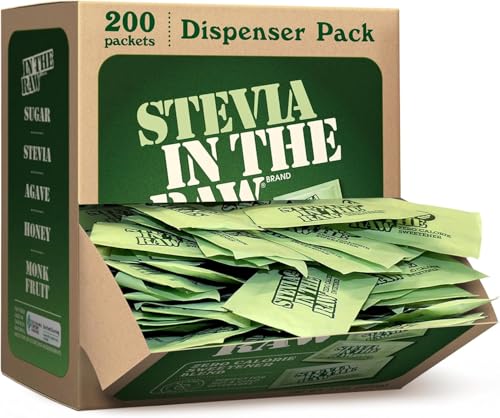
The interesting one, and the reason for the box at the top of this page.
The bullet is headed “STEVIA WITHOUT ERYTHRITOL OR DEXTROSE” and then states the product is “made with organic stevia in the raw from sweet leaf extract and organic cane sugar”. Both halves are true and they sit in the same sentence. What it does not contain is a sugar alcohol; what it does contain, as its bulking agent, is sugar.
For a specific buyer that is exactly the right trade. Erythritol causes digestive trouble for a meaningful minority of people, and for them a packet bulked with a tiny quantity of cane sugar is more comfortable than one bulked with a sugar alcohol. The amount of sugar per packet is small enough that the product is still declared zero calorie under the labeling threshold.
For a different buyer it is the wrong product. If you are avoiding sugar for glycemic reasons and using several packets a day, small quantities accumulate, and “zero calorie” is a labeling rounding rather than a literal statement.
The certifications are solid: USDA Organic and Non-GMO Project Verified, both named, plus vegan. It states sweetness equivalence at two teaspoons of sugar per packet, and at 300 packets it is the largest count here.
The wording of the headline is our only real criticism. Leading with what the product excludes, when the substitute is an ingredient many of the same shoppers are also avoiding, puts the emphasis in a place that flatters the product. Everything needed to understand it is in the same sentence, which is more than several competitors manage.
- No sugar alcohols, which suits people who react badly to erythritol.
- Names its bulking agent plainly in the same sentence as the exclusion claim.
- USDA Organic and Non-GMO Project Verified, both stated.
- 300 packets, the largest count in this comparison.
- States sweetness equivalence.
- Bulked with cane sugar, which is sugar, however small the quantity.
- Headline emphasizes the exclusion rather than the substitute.
- Not suitable if you are counting carbohydrates precisely across many servings.
- More expensive per packet than the pick above it.
What the listing discloses: IN THE RAW states a USDA organic claim and Non-GMO Project Verified, and does not say where it was grown or made.
Best for low carb: Pyure Organic Stevia
| Organic Integrity Score | 84 / 100 |
| Composition | Organic stevia and erythritol, both named |
| Certifications | USDA Organic, Non-GMO Verified |
| Count | 240 packets |
| Best for | Low-carb and keto diets, where erythritol is the point rather than the problem |
The straightforward low-carb option, and the listing is clear about why.
It names both ingredients, “naturally sweetened with organic stevia and erythritol”, and states the practical consequence: no sugar, no carbs, suitable for low glycemic diets. For anyone eating to control carbohydrate intake, erythritol is a feature rather than a compromise, because it contributes essentially nothing to blood glucose.
USDA Organic and Non-GMO Verified are both named, which puts it alongside our top two on certification.
Two things keep it just below them. It does not state the ingredient order, so you know both components without knowing the proportion, where Wholesome tells you outright. And it does not state a sweetness equivalence, so you are left to work out how many packets replace a spoon of sugar.
One phrase is worth flagging: “DIABETIC APPROVED”. There is no such approval scheme, and no regulator approves foods for diabetics. Erythritol and stevia genuinely do have negligible glycemic impact, so the underlying substance of the claim is sound, and the wording implies an authorization that does not exist. It is the sort of shorthand we mark down wherever we find it.
At 240 packets it is well priced per unit, and the individually portioned format is the same convenience case as the rest.
- Names both ingredients and explains the low-carb consequence.
- USDA Organic and Non-GMO Verified stated.
- 240 packets at a competitive price per unit.
- Genuinely negligible glycemic impact.
- Does not state ingredient order, so proportions are unknown.
- No sweetness equivalence given.
- “Diabetic approved” implies an authorization that does not exist.
- Erythritol tolerance varies between people.
What the listing discloses: Pyure documents a USDA organic claim, and leaves where it was grown or made unsaid.
Names the stevia, not the rest: SweetLeaf Organic
| Organic Integrity Score | 70 / 100 |
| Composition | “Organic stevia extract powder”; no bulking agent named in the bullets |
| Organic wording | “Organic” and “our stevia powder is organic”; USDA phrase not used |
| Count | 70 packets, two-pack |
| Best for | Buyers loyal to the brand rather than choosing on published detail |
A long-established stevia brand with a listing that describes the minority ingredient and stays quiet about the majority one.
The bullets refer to “organic stevia extract powder” and say the product is “organic and keto friendly with zero calories or carbs”. No bulking agent is named anywhere in the copy we read, which for a category where the bulking agent is most of the packet is the central omission.
The keto-friendly and zero-carb claims suggest the bulk is a sugar alcohol or similar rather than dextrose or cane sugar, but that is our inference and not a statement the listing makes.
The organic wording is also weaker than the competition. It says “organic” and “our delicious stevia powder is organic” without using the regulated “USDA Organic” phrase that three competitors state plainly, and it names no other certification, where our top pick names six.
“No bitter aftertaste” is a taste claim and a common complaint about stevia products generally, so it is at least addressing the right issue, even though it cannot be verified.
It is also the most expensive product here per packet, at 140 packets across a two-pack for a price approaching that of the 300-count box.
- Long-established stevia brand with wide availability.
- Individually portioned packets, convenient format.
- Zero calorie and zero carb claims stated.
- Addresses the bitter aftertaste issue directly.
- No bulking agent named, which is most of the packet.
- Uses “organic” rather than the regulated USDA Organic phrase.
- No Non-GMO or other third-party mark stated.
- Most expensive per packet in this comparison.
What the listing discloses: Sparse documentation from SweetLeaf — nothing on whether the USDA seal applies and where it was grown or made.
The bestseller, and it is not organic: Stevia In The Raw
| Organic Integrity Score | 58 / 100 |
| Organic claim | None; this is the conventional version of the product above |
| Listing content | No feature bullets returned |
| Count | 200 packets |
| Best for | Buyers who do not need organic certification and want the lowest price |
Included because it is by a wide margin the best selling stevia product here, and because a lot of people searching for organic stevia will end up looking at it.
It is not organic. It is the conventional sibling of the organic Stevia In The Raw box above, and the listing makes no organic claim, which is correct and honest. It also returns no feature bullets at all, so there is nothing published about composition, bulking agent, certifications or sweetness equivalence.
The score reflects that absence rather than any judgment about the product. Stevia In The Raw is a mainstream, widely used sweetener and its popularity is not accidental. But on a page comparing organic options it is here as a reference point, and on published information there is nothing to evaluate.
If organic certification is not something you need, this is the cheapest per packet by a distance and there is an argument for it. If organic is why you are reading, the same brand’s certified box is a few clicks away and states USDA Organic explicitly.
- Cheapest per packet in this comparison by a wide margin.
- Best selling stevia product here, so widely available and familiar.
- Makes no organic claim it cannot support.
- 200 packets per box.
- Not organic, on a page about organic stevia.
- No feature bullets at all, so nothing can be evaluated.
- No bulking agent, certification or sweetness information published.
- The brand’s own organic version discloses considerably more.
What the listing discloses: No organic certification appears anywhere on the IN THE RAW listing.
What we left out and why
We left out liquid stevia drops, which avoid the bulking agent question entirely by using water, glycerin or alcohol as a carrier. They are a genuinely good answer to the problem this page describes, and they are a different format with different dosing, so they belong in their own comparison rather than scored against packets.
We left out bulk stevia baking blends, which are formulated to measure cup-for-cup like sugar and are therefore mostly bulking agent by design.
We left out whole leaf stevia powder sold as a supplement or tea ingredient, since high-purity steviol glycosides are the form permitted as a sweetener in US food and leaf powder sold for other uses is a different product category.
We also left out stevia blends combined with monk fruit, allulose or sucralose, which are legitimate products answering a different question about taste and blending.
How to use stevia without the aftertaste
The most common complaint about stevia is a bitter or licorice-like finish, and most of it is fixable.
- Use less than you think. Stevia’s bitterness is dose-dependent and appears above a threshold, so overshooting is the main cause. Start with half a packet.
- Blend it. Stevia combined with another sweetener, or split between stevia and a small amount of sugar, usually tastes cleaner than stevia alone.
- Use it in acidic or strongly flavored drinks. Coffee, lemon and berry flavors mask the finish; plain water and delicate teas expose it.
- Give it two weeks. Palate adaptation is real, and people who persist usually stop noticing the aftertaste.
- Do not substitute one-for-one by weight. A packet is designed to sweeten like two teaspoons of sugar, not to replace two teaspoons of bulk.
- Expect texture problems. Sugar provides structure, browning and moisture retention, and removing it changes the result rather than just the sweetness.
- Use a baking blend if you are replacing more than a small amount, since those are formulated with bulk to substitute by volume.
- Erythritol-based blends can produce a cooling sensation on the tongue in high concentrations, which is noticeable in frostings and cold desserts.
- Suspect the bulking agent, not the stevia. Steviol glycosides are used in milligram quantities; the erythritol is measured in grams.
- Try a cane-sugar-bulked product, which is the alternative in this comparison for exactly this reason.
- Reduce the number of servings a day before abandoning the format. Sugar alcohol tolerance is dose-dependent.
- Liquid stevia avoids bulking agents altogether if the problem persists.
What is actually in a packet
Pulling the numbers together, because the composition is the whole story in this category.
The practical conclusion is short. Two of these five listings tell you what is actually in the packet, one of them tells you the proportions, and the rest describe the ingredient that makes up the smallest part of it.
Given the bulking agent determines carbohydrate content, glycemic effect and digestive tolerance, and the stevia extract determines almost nothing except sweetness, the listings that name it are the ones worth buying from.
Questions about organic stevia
Is a stevia packet actually mostly stevia?
No. Steviol glycosides are roughly 200 to 350 times sweeter than sugar, so the amount needed per serving is a few milligrams. The rest of the packet is a bulking agent, usually erythritol, dextrose, maltodextrin or cane sugar, and that bulking agent is most of what you are consuming.
Why does a zero calorie sweetener contain sugar?
Because the quantity is small enough to fall under the labeling threshold. US rules permit a food to be declared zero calorie if a serving has fewer than five calories, and a one gram packet stays under that even with some sugar in it. The claim is accurate as labeled; it matters if you use several packets a day.
What is erythritol and is it a problem?
A sugar alcohol used as a bulking agent. It contributes almost no calories, because most of it is excreted unchanged, and it has negligible effect on blood glucose. The known downside is digestive: it causes bloating or looseness in some people, and the effect is dose-dependent.
How do I tell how much stevia is in a product?
Read the ingredient order, since ingredients are listed by descending weight. If erythritol appears before stevia extract, the product is predominantly erythritol. Only one listing in this comparison publishes its ingredients in order.
Is organic stevia less processed than regular stevia?
No. In the United States, high-purity steviol glycosides are the permitted sweetener form, so every stevia product on the shelf is a purified extract rather than a leaf powder. Organic certification covers how the plant was grown and how the processing was carried out, not whether processing occurred.
Does stevia affect blood sugar?
Steviol glycosides themselves have negligible glycemic effect. The bulking agent can change that: erythritol has essentially none, dextrose and maltodextrin do raise blood glucose, and cane sugar is sugar. This is another reason to identify the bulking agent rather than the stevia.
Why does stevia taste bitter to me?
The bitterness is dose-dependent, so the most common cause is using too much. Try half a packet, use it in coffee or acidic drinks rather than plain water, and give your palate a couple of weeks. Blends with other sweeteners generally taste cleaner than stevia alone.
Can I bake with stevia packets?
Not as a direct substitute. A packet is formulated to sweeten like two teaspoons of sugar, not to replace the bulk of it, and sugar contributes structure, browning and moisture as well as sweetness. Use a baking blend designed to measure cup-for-cup if you are replacing a meaningful quantity.
Is stevia safe?
High-purity steviol glycosides are permitted as a sweetener in US food, which is the relevant regulatory position. Most of the digestive complaints attributed to stevia products come from the sugar alcohol used as bulk rather than from the stevia itself.
Which is better, stevia or monk fruit?
Both are high-intensity sweeteners requiring a bulking agent, so the same analysis applies to both, and the bulking agent matters more than the choice between them. Taste preference is the main differentiator, and many products blend the two precisely because each masks the other’s aftertaste.
Organic Connection is reader supported. We read every product listing in full and say plainly when a claim cannot be verified. How we research and rate.