Last updated: August 31, 2026
We may earn a commission when you buy through links on this page, at no extra cost to you. How we research and rate.
The short version
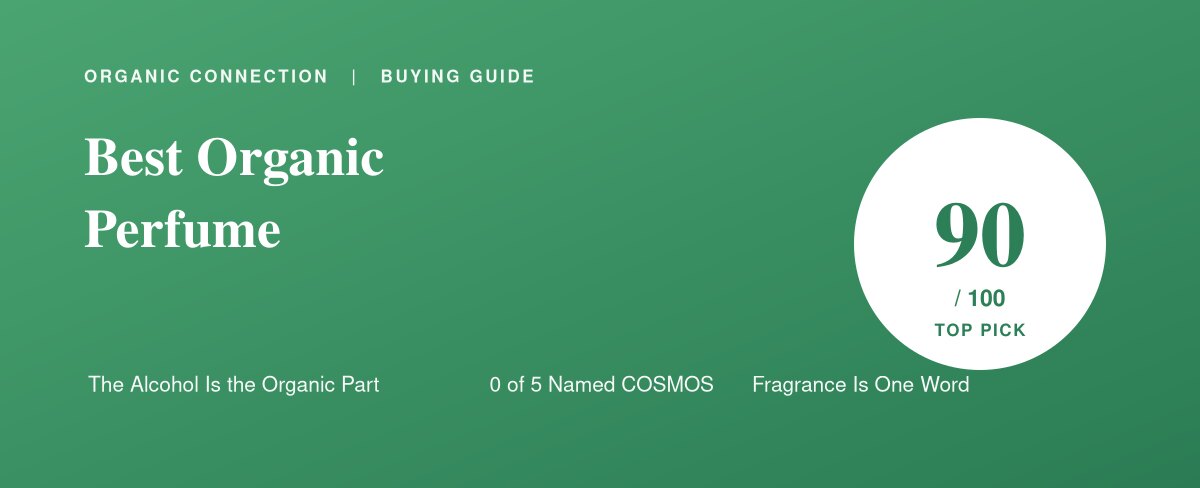
Our top pick is 100 BON Solaire, with an Organic Integrity Score of 90 out of 100, because it is the only listing here that says which parts of the product are organic and names more than one of them.
In most organic perfume, the organic ingredient is the alcohol. Three of the five listings we read apply the word specifically to the carrier — organic sugarcane alcohol, organic jojoba oil — rather than to the fragrance itself.
That matters because a perfume is mostly carrier. Alcohol or oil makes up the large majority of the bottle, and the aromatic compounds that make it smell of anything are a small fraction. Certifying the solvent is certifying the part with no scent in it.
It is not dishonest, and every listing that does it says so plainly. It is simply not the claim most buyers think they are reading.
What a perfume is actually made of
The composition explains why the organic claim lands where it does.
A conventional eau de parfum is roughly 70 to 90% alcohol, with water, and a fragrance concentrate that typically sits somewhere between 15 and 20% for parfum strength and lower for eau de toilette. An oil-based perfume replaces the alcohol with a carrier oil such as jojoba, in similar proportion.
So when a listing says “organic sugarcane alcohol”, it is describing the largest ingredient by volume. That is a genuine thing to certify, and it has real consequences: sugarcane alcohol grown organically avoids the pesticide load of conventional cane, which is not nothing.
What it does not tell you is anything about the fragrance concentrate. That is the part that took a perfumer to compose, that carries the smell, and that the price is really for. Whether those aromatic materials are naturally derived, synthetic, or a blend of both is a separate question, and only one listing in this comparison answers it.
The honest way to read these labels: identify which component the word organic is attached to, and then ask what the rest of the bottle is.
“Fragrance” is the largest disclosure gap in cosmetics
This is the structural issue behind the whole category, and it is worth understanding before spending money.
US cosmetic labeling requires ingredients to be listed, with one significant exception: fragrance and flavor compounds may be declared as a single word, “fragrance” or “parfum”, to protect trade secrets. Behind that one word can sit dozens of individual aromatic materials, none of them named.
That exemption exists for a defensible commercial reason. A fragrance formula is the intellectual property of the house that composed it, and full disclosure would make it trivially copyable.
The consequence for a buyer is that the ingredient list on a perfume is genuinely uninformative about the part you are buying. This is not a case of companies choosing to withhold; the rule permits it and essentially everyone uses it.
Which is exactly why the cosmetic certifications matter here more than in most categories. COSMOS and Ecocert set minimum organic content within a formulation and restrict which synthetics are permitted, including within the fragrance portion. A certification mark is the only practical way a buyer sees past the single word.
None of the five listings we read names one. The nearest thing is 100 BON stating its fragrances are “based on essential oils” and contain “no synthetic materials”, which is a claim about the concentrate rather than a certification of it.
Natural is not the same as safe, and neither is the opposite
A caution worth stating plainly, because this category attracts strong claims in both directions.
Natural aromatic materials are not inherently gentler than synthetic ones. Several of the most common fragrance allergens are natural constituents of essential oils: limonene, linalool, citral, eugenol and geraniol among them. The European Union requires 26 such allergens to be declared on labels above threshold concentrations, and most of them occur naturally in citrus, lavender and other plant oils.
Conversely, modern synthetic aroma chemicals are among the most heavily studied ingredients in cosmetics, and many exist precisely because they replaced natural materials that were sensitizing, unsustainable or both.
So “100% natural fragrance” is a legitimate preference and not a safety guarantee. If you have reacted to perfumes before, the useful information is which specific compounds are present, and that is exactly what the fragrance exemption obscures.
One listing here claims its alcohol is “hormone-safe”, which we cover below. There is no regulatory category by that name.
Alcohol-based or oil-based
The practical choice most buyers face, and it is not a quality difference.
Alcohol-based perfume projects. The alcohol evaporates quickly, lifting the top notes outward, which is why a spray fills a room and why fragrance families are described as opening, heart and base. It also dries the skin slightly and can sting freshly shaved or broken skin.
Oil-based perfume sits close. A jojoba or fractionated coconut carrier does not evaporate, so the scent stays within a few inches of the skin and unfolds more slowly. It generally lasts longer on skin and projects far less, which is either the point or the problem depending on what you want.
Two listings here are oil-based roll-ons and three are alcohol-based. For someone with sensitive or dry skin, or who works somewhere fragrance is discouraged, the oil format is a genuinely better answer than a lighter spray.
Cost per use is also different in a way the price tag hides. A 10 ml roll-on and a 1.7 fl oz spray are not comparable quantities, and the roll-on applies far less product per wear.
What we looked for
We read every feature bullet on every listing in full and scored on what each manufacturer put in writing.
Which component the organic claim attaches to. Alcohol, carrier oil, aromatic materials, or the finished product.
Any named cosmetic certification. COSMOS, Ecocert or NSF/ANSI 305 would be the meaningful marks. None appeared.
Whether the fragrance concentrate is described, since the ingredient list will not tell you.
Format and concentration, so the price can be compared against what you actually apply.
Health claims, which we check rather than repeat.
Best organic perfume compared
 |  |  |  |  | |
| Product | 100 BON Solaire | Kailuna Co. Roll-On | Lavanila Pure Vanilla | DIME 7 Summers | Kuumba Made Vanilla Bean |
| Organic Integrity Score | 90 / 100 | 80 / 100 | 74 / 100 | 68 / 100 | 58 / 100 |
| What is organic | Alcohol and the oils | Carrier oils | Alcohol only | Alcohol only | Nothing claimed |
| Concentrate described | Essential oils, no synthetics | Essential and fragrance oils | “Botanical extracts” | Not described | Not described |
| Cosmetic certification | None named | None named | None named | None named | None named |
| Base | Alcohol | Oil, alcohol-free | Alcohol | Alcohol | Oil, alcohol-free |
| Contested claim | No | “Therapeutic properties” | No | “Hormone-safe” | No |
| Price | $12.99$25.98 / fluid ounce View on Amazon | $15.98 $16.99 −6%$47.00 / fluid ounce View on Amazon | $62.00$36.47 / fluid ounce View on Amazon | $43.40 $62.00 −30%$25.53 / fluid ounce View on Amazon | $12.49$83.27 / ounce View on Amazon |
Price and availability as of September 5, 2026 7:10 am EDT. Product prices and availability are accurate as of the date/time indicated and are subject to change. Any price and availability information displayed on Amazon.com at the time of purchase will apply to the purchase of this product.
Best overall: 100 BON Solaire
| Organic Integrity Score | 90 / 100 |
| What is organic | Alcohol from organic wheat, and oils from organic flowers and herbs |
| Concentrate | Based on essential oils; no synthetic materials, colors or petrochemicals |
| Packaging | Refillable bottles, recyclable packaging |
| Best for | Anyone who wants the organic claim to cover the scent as well as the solvent |
The only listing here that applies the organic claim to more than the carrier, and it names both parts.
“Our fragrances are made with alcohol from organic wheat and oils from organic flowers and herbs.” That is two components identified specifically: the solvent and the aromatic materials. Every other listing in this comparison stops at the first one.
It then does the thing the fragrance exemption normally prevents, describing the concentrate: “no synthetic materials, no artificial colors, no petrochemicals.” Since the ingredient list is permitted to hide all of that behind the word “fragrance”, a statement about what the concentrate excludes is genuinely useful, and it is more than any competitor here offers.
The title also names the actual notes — bergamot, jasmine, ylang-ylang, mint, coconut — rather than describing a mood. Naming materials is a small thing that separates a house describing a composition from a brand describing a feeling.
Refillable bottles are a real reduction in packaging rather than a recycling claim, and the brand is French, which is stated.
What holds it below the nineties: no cosmetic certification is named. A COSMOS or Ecocert mark would move all of these statements from assertions to audited facts, and 100 BON’s claims are exactly the kind those standards exist to verify. The sales rank is also very low, so there is little buyer feedback, and at 0.5 fl oz this is a small bottle.
- Applies the organic claim to both the alcohol and the aromatic oils.
- Describes what the concentrate excludes, which the ingredient list would not.
- Names the actual fragrance notes rather than a mood.
- Refillable bottles and recyclable packaging.
- Cheapest alcohol-based option here.
- No COSMOS, Ecocert or other cosmetic certification named.
- Very low sales rank, so limited buyer feedback.
- 0.5 fl oz is a small bottle.
- “100% natural” is a composition claim, not a safety one.
Best for: Buyers who want organic to mean the scent, not just the solvent.
Best alcohol-free: Kailuna Co. Essential Oil Roll-On
| Organic Integrity Score | 80 / 100 |
| What is organic | Cold pressed jojoba and safflower carrier oils |
| Base | Oil, alcohol-free |
| Made in | California, small batch |
| Best for | Sensitive or dry skin, and scent that stays close |
By a very wide margin the best selling fragrance in this comparison, and the format is the reason to consider it.
It is alcohol-free, built on organic cold-pressed jojoba and safflower oils. For anyone whose skin reacts to alcohol-based sprays, or who wants a scent that stays within arm’s reach rather than announcing itself, an oil roll-on is a straightforwardly better product rather than a compromise.
The organic claim is specific and correctly scoped: “made with organic cold pressed jojoba and safflower oils”. Those are the carrier. The listing then says the product is “crafted with pure fragrance and essential oils”, which is honest about the concentrate containing fragrance oils as well as essential oils, and does not claim those are organic.
The manufacturing disclosure is unusually specific for this price: poured in small batches by a family maker in California, without alcohol, dyes or heavy preservatives. Naming where and how something is made is worth more than most brand language.
Two reservations. The organic claim covers the carrier only, which is the pattern this guide is about, though here it is at least stated clearly. And the final bullet claims the botanicals “provide therapeutic properties including relaxation, balance, and invigoration” — aromatherapy language that is not a supportable claim, and the sort of phrasing we mark down wherever it appears.
At 10 ml the bottle is small, and roll-ons apply far less per wear than sprays, so it lasts longer than the volume suggests.
- Alcohol-free, which suits sensitive and dry skin.
- Names the organic carrier oils specifically.
- Honest that the scent uses fragrance oils as well as essential oils.
- States it is handmade in small batches in California.
- Far and away the best selling product here.
- Organic covers the carrier oils, not the fragrance.
- Claims “therapeutic properties” including relaxation and balance.
- Oil base means very little projection, which not everyone wants.
- No cosmetic certification named.
Best for: Sensitive skin, close-wearing scent, and workplaces where sprays are unwelcome.
Organic alcohol, one bullet: Lavanila Pure Vanilla
| Organic Integrity Score | 74 / 100 |
| What is organic | Sugarcane alcohol |
| Concentrate | “Botanical extracts”, undefined |
| Size | 1.7 fl oz, the largest here |
| Best for | Vanilla wearers who want a full-size bottle from an established name |
A well-known clean-beauty fragrance brand, sold with a single feature bullet.
The organic claim is scoped to one component: “crafted with organic sugarcane alcohol and botanical extracts”. Sugarcane alcohol is the carrier, and organic sugarcane is a meaningful choice given conventional cane’s pesticide profile. “Botanical extracts” describes the concentrate in a way that could mean almost anything, and no organic claim is attached to it.
There is no organic claim in the product title at all, which is the more conservative arrangement and worth noting given how often we find the reverse.
At 1.7 fl oz this is the largest bottle in the comparison, and the price per volume is more reasonable than the sticker suggests against the small-format competitors.
What limits the score is simply how little is published. One bullet, covering the alcohol, the extracts and a note about blending with body chemistry. No concentration, no note breakdown, no statement about synthetics, no certification. For a fragrance at this price from a brand built on clean positioning, that is thin.
The claim that it “blends with your body chemistry for a personalized fragrance experience” is true of all perfume and is not a property of this one.
- Names organic sugarcane alcohol specifically.
- Makes no organic claim in the title it does not support.
- 1.7 fl oz, the largest bottle here.
- Long-established clean fragrance brand.
- One feature bullet in total.
- “Botanical extracts” is undefined and carries no organic claim.
- No concentration, notes or certification stated.
- Most expensive product in this comparison.
Best for: Vanilla wearers wanting a full-size bottle, who do not need the page to explain much.
Organic alcohol and an unsupportable claim: DIME 7 Summers
| Organic Integrity Score | 68 / 100 |
| What is organic | Sugarcane alcohol |
| Free-of list | Parabens, sulfates, phthalates, silicones, artificial fragrances |
| Contested claim | Alcohol described as “hormone-safe” |
| Best for | Buyers who want the free-of list and will discount the health language |
A clean-beauty fragrance with a specific free-of list and a health claim that does not stand up.
The organic claim is again the alcohol: “DIME uses organic sugarcane alcohol”, contrasted against Alcohol SD 40. That contrast is fair enough as a sourcing distinction.
The problem is what follows. The alcohol is described as “a gentler, hormone-safe, eco-friendly alternative”. There is no regulatory category called hormone-safe, no test that establishes it, and ethanol is ethanol regardless of the crop it was fermented from. Denatured alcohol differs in what has been added to make it undrinkable, not in hormonal activity. The word implies an endocrine safety assessment that has not been described.
The same bullet contains a second problem, which is that the sentence appears twice, word for word, run together without a break. That is a copy error rather than a claim, and it is the kind of thing that makes the rest of the page harder to trust.
What we do credit: the free-of list names five specific categories rather than gesturing at “clean”, and phthalates in particular are a legitimate thing to exclude from a fragrance, since they have historically been used as fixatives. Stating that every ingredient carries a safe EWG rating is a checkable reference to a published database, even though EWG’s ratings are its own scoring system rather than a regulatory standard.
The listing also states the scent is “inspired by” a designer fragrance, which is honest about being a dupe and is more than many such products admit.
- Free-of list names five specific categories including phthalates.
- References EWG ratings, a published and checkable database.
- Honest that the scent is inspired by an existing fragrance.
- Organic sugarcane alcohol named and contrasted with the alternative.
- “Hormone-safe” is not a recognized category and is not supported.
- The same sentence is duplicated word for word within one bullet.
- Organic covers the alcohol only; the concentrate is not described.
- Expensive relative to what is disclosed.
Best for: Buyers who value the free-of list and treat the health language as marketing.
No claims at all: Kuumba Made Vanilla Bean
| Organic Integrity Score | 58 / 100 |
| Organic claim | None |
| Listing content | No feature bullets returned |
| Base | Oil, alcohol-free, stated in the title |
| Best for | People who already know and want this scent |
A long-standing cult fragrance oil sold with no published information whatsoever.
The listing returns no feature bullets. Everything a buyer learns comes from the title: vanilla bean, fragrance oil, roll-on, alcohol-free, 0.15 fl oz. There is no organic claim, which on a product making no other claims is at least internally consistent.
Kuumba Made has a genuine following and these oils have been sold for decades, so the absence of copy is not a signal about quality. It is a signal about what a new buyer can evaluate, which is nothing.
The alcohol-free oil format has the same advantages described above: gentle on skin, close-wearing, long-lasting on the skin itself.
We score it at 58 because our method rewards published, checkable information and there is none. If you have used it before and want more, none of that matters. If you are choosing between five products on evidence, this one supplies none.
- Alcohol-free oil format, gentle and close-wearing.
- Long-established product with a loyal following.
- Inexpensive.
- Makes no claim it cannot support.
- No feature bullets at all, so nothing can be evaluated.
- No organic, ingredient or sourcing information.
- 0.15 fl oz is very small.
- Fragrance oil rather than essential oil composition, undescribed.
Best for: Returning buyers who already know the scent.
What we left out and why
We left out body mists and hair fragrances, which are lower-concentration products in a different price and performance class.
We left out perfume sampler sets, which are a good way to try scents and a poor way to compare formulation claims, since the listings describe the set rather than the composition.
We left out essential oil blends sold for aromatherapy rather than as perfume, which make therapeutic claims we do not evaluate here and which belong alongside essential oils.
We also left out any product whose only distinguishing claim was “clean”, which is not a defined term in cosmetics and tells a buyer nothing.
How to buy and wear it
Fragrance is the hardest cosmetic to buy online, because the one thing that matters cannot be photographed or described reliably.
- Buy the smallest size available first. A 10 ml roll-on or a sample costs a fraction of a full bottle and answers the only question that matters.
- Read the note list rather than the mood copy. “Bergamot, jasmine, ylang-ylang” tells you something; “luminous and confident” does not.
- Identify the family. If you know you like vanilla or citrus, stay there. Fragrance families are far more predictive than brand.
- Check the concentration if stated. Eau de toilette is lighter and shorter-lived than eau de parfum, and price comparisons across the two are misleading.
- Apply to skin, not paper. Skin chemistry genuinely changes how a fragrance develops, which is the one part of that marketing claim that is true.
- Wait an hour before judging. Top notes burn off within minutes; what you will actually wear is the heart and base.
- Test one at a time. Two fragrances on two wrists interfere with each other and with your ability to smell either.
- If you have reacted to fragrance before, patch test on the inner arm and wait a day. Natural does not mean non-allergenic, and several common allergens are natural.
- Apply to moisturized skin. Oil holds fragrance; dry skin lets it evaporate faster, which is why oil-based perfumes last longer on skin.
- Do not rub wrists together. It crushes the top notes and accelerates the whole development.
- Store away from light and heat. A bottle on a sunny windowsill degrades within months, and citrus notes go first.
- Keep the cap on. Oxygen changes a fragrance faster than anything except sunlight.
What organic covers in each bottle
Collecting the composition question in one place, since it is the whole point of the category.
The practical conclusion is short. If the organic claim on a perfume matters to you, check which component it names, because in this comparison it referred to the alcohol or the carrier oil four times out of five.
And if you want the claim audited rather than asserted, a named cosmetic certification is the thing to look for. None of these five carries one, which is itself the most useful finding on the page.
Questions about organic perfume
What does organic actually mean on a perfume?
Usually that the carrier is organic. Three of the five listings we read applied the word specifically to organic sugarcane alcohol or organic jojoba oil, which is the largest ingredient by volume and the part with no scent in it. Only one applied it to the aromatic oils as well.
Can perfume be USDA certified organic?
Rarely, and it is not the relevant standard. Cosmetics companies are generally not required to be certified USDA operations, so the meaningful marks are cosmetic-specific: COSMOS, Ecocert and NSF/ANSI 305. None of the five products in this comparison named any of them.
Why does the ingredient list just say “fragrance”?
Because US cosmetic labeling permits fragrance and flavor compounds to be declared as a single word to protect trade secrets. Dozens of individual aromatic materials can sit behind it, unnamed. It is the largest disclosure gap in cosmetics and it applies to natural and synthetic fragrances alike.
Is natural fragrance safer than synthetic?
Not inherently. Several of the most common fragrance allergens are natural constituents of essential oils, including limonene, linalool and geraniol, and the European Union requires 26 such allergens to be declared above threshold. Natural is a legitimate preference and not a safety guarantee.
Should I choose oil-based or alcohol-based perfume?
Alcohol projects and creates the classic opening, heart and base development, but can sting or dry the skin. Oil sits close, lasts longer on skin and suits sensitive skin. Neither is better; they are different products, and two of the five here are oil-based.
Is “hormone-safe” a real claim?
No. There is no regulatory category by that name and no standard test behind it. One listing in this comparison applies it to organic sugarcane alcohol, and ethanol does not differ in that respect according to the crop it was fermented from.
How long should perfume last?
Unopened and stored cool and dark, several years. Once opened, expect one to three years before the composition shifts noticeably, with citrus notes degrading first. Light and heat are the main enemies, so a bottle on a windowsill will fade far faster.
Why does perfume smell different on me?
Skin chemistry, temperature and moisture genuinely affect how a fragrance develops, which is the one part of the usual marketing claim that holds up. It is also why testing on paper is a poor guide and testing on skin, then waiting an hour, is the reliable approach.
Is expensive perfume better?
Not on disclosure. In this comparison the two most expensive products published the least about what is in them, and the cheapest alcohol-based option gave the most complete account of its composition. Price tracks brand and concentration more than it tracks information.
What is a fragrance dupe?
A scent composed to resemble an existing designer fragrance. One product here states plainly that it is inspired by a named perfume, which is more transparent than the many that do the same without saying so.
Organic Connection is reader supported. We read every product listing in full and say plainly when a claim cannot be verified. How we research and rate.