Last updated: September 6, 2026
We may earn a commission when you buy through links on this page, at no extra cost to you. How we research and rate.
The short version
Our top pick is Natural Force Grass Fed Organic Whey, with an Organic Integrity Score of 92 out of 100, because it names four separate certifications and, unusually, names one of the certifying bodies.
The more important finding on this page is that two different certifications compete in whey protein, they answer completely different questions, and no product we scanned held both.
USDA Organic tells you how the cows were farmed. NSF Certified for Sport tells you what is actually in the tub. A buyer who wants both is currently choosing between them.
And one of the two marks has a near-identical weaker sibling. The category best seller says “NSF Certified”, without “for Sport”, and without saying which NSF program it means.
Best organic whey protein compared
 |  |  |  |  | |
| Product | Natural Force Organic | Thorne Whey Isolate | Raw Organic Whey | Naked Whey | Orgain Grass-Fed |
| Organic Integrity Score | 92 / 100 | 90 / 100 | 86 / 100 | 74 / 100 | 58 / 100 |
| USDA Organic claimed | Yes | No | Yes | No | No |
| NSF program named | No NSF claim | Certified for Sport | No NSF claim | “NSF Certified”, unspecified | No NSF claim |
| Certifier named | Paleo Foundation | NSF, program named | No | NSF, program not named | None |
| Contaminants listed | “Lab tested for toxins” | Label claims, banned list | Five classes named | No | No |
| Price | $41.99$2.62 / ounce View on Amazon | $48.00$3.48 / ounce View on Amazon | $136.99$1.71 / ounce View on Amazon | $62.99$1.97 / ounce View on Amazon | $31.52 $36.99 −15%$1.09 / ounce View on Amazon |
Price and availability as of September 6, 2026 7:10 am EDT. Product prices and availability are accurate as of the date/time indicated and are subject to change. Any price and availability information displayed on Amazon.com at the time of purchase will apply to the purchase of this product.
The two certifications, and what each one covers
This is the whole decision in the category, so it is worth being exact.
USDA Organic on whey
Whey is a byproduct of cheesemaking, so its organic status flows entirely from the milk it came from. Certification here sits under the livestock scope of the National Organic Program, which we cover in more detail in our guide to the USDA organic database.
For an organic dairy herd that means, among other requirements, no antibiotics and no added growth hormones, organic feed, and a pasture rule: cattle must graze during the grazing season, which must be at least 120 days, and must get at least 30 percent of their dry matter intake from pasture during that period.
Those are real, audited requirements with numbers attached. What they do not cover is anything about the powder in the tub after processing.
NSF Certified for Sport
This is a finished-product certification. It verifies that what the label says is in the product is actually in it, screens for contaminants at unsafe levels, and screens against roughly 300 substances banned by major athletic organizations. It also involves auditing the facility that makes the product.
It says nothing at all about how the cows lived.
The four words that change the meaning
The best selling whey protein in our search results puts “NSF Certified” in its product title and repeats it in the body: “As an NSF Certified protein powder, Naked Whey is verified for purity and safety.”
That is a real certification claim, and it is not the same claim as NSF Certified for Sport.
NSF operates more than one certification program covering dietary supplements. The banned-substance screening that athletes need is specific to the Certified for Sport program. A listing that says “NSF Certified” without naming the program has told you that some NSF certification exists and has not told you which.
We are not asserting that the product holds the weaker mark. We are pointing out that the listing does not say, and that the difference between the two programs is the single most consequential thing about an NSF mark on a protein powder.
This is the same failure mode we documented in water filtration, where “NSF certified” turned out to mean NSF/ANSI 372 — lead-free plumbing components — on products that buyers assumed meant NSF/ANSI 58 for contaminant reduction. The mark without the qualifier is the marketing version. The qualifier is the certification.
By contrast, three listings here name the program precisely. Klean Athlete goes furthest and names the organization too: “third party certified by NSF International’s NSF Certified for Sport program.” Thorne names the program and explains what it screens. Momentous names the program.
“Grass fed” is the loosest term on the label
Every product in this comparison says grass fed. It is worth knowing how little weight that phrase carries on its own.
The USDA withdrew its grass fed marketing claim standard in 2016. Since then, a grass-fed claim on a label is supported either by company documentation submitted for label approval, or by a private certifier such as the American Grassfed Association or Certified Grassfed by A Greener World. Those private programs have real standards. The unqualified phrase does not.
Garden of Life’s listing says “Certified Grass Fed”, which acknowledges that certification exists without saying whose. Natural Force describes the farming instead — “heritage breed Jersey cows that graze on lush, coastal California grasses all year long” — which is a claim about a specific herd in a specific place, and is more useful than an uncredited certification badge.
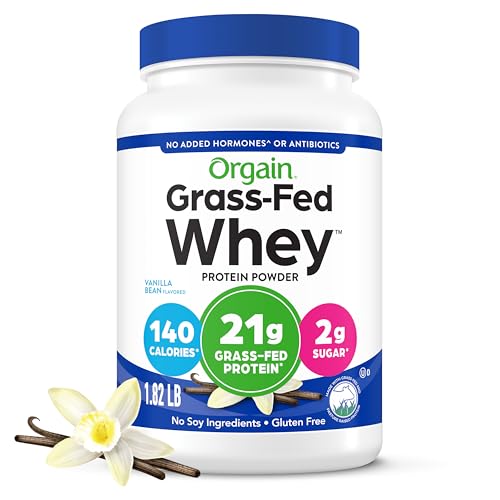
Orgain says “grass-fed & pasture-raised” and offers nothing further.
Our rule for this category: a grass-fed claim counts only when it is either certified by a named body, or made specific enough to be checkable. “Grass fed” on its own is a description of feed, not a standard.
Certifications you will see, and who runs them
Five different marks appear across these five listings. They are not interchangeable, and only one of them is a government program.
USDA Organic. Government program, administered by the National Organic Program, enforced through accredited certifying agents. Covers farming and handling.
NSF Certified for Sport. Private, run by NSF International. Covers the finished product and the facility.
Non-GMO Project Verified. Private, non-governmental. Covers genetic engineering in inputs. Worth noting that USDA Organic already prohibits genetically engineered inputs, so on a certified organic product this mark is largely redundant.
Certified Keto, Paleo Foundation. Private, and the only certifier actually named by name in any of the organic listings here. It certifies a macronutrient profile, not a farming practice.
“Humane Certified.” Natural Force uses this phrase without naming the program. There are at least three distinct US animal welfare certifications — Certified Humane, Animal Welfare Approved and Global Animal Partnership — with materially different standards. An unnamed humane claim is the same problem as an unnamed NSF claim, and we deducted for it.
What we looked for
We read every feature bullet on every listing in full and scored on what each manufacturer put in writing.
Whether a certification names its program precisely, and better still, its certifying body.
Whether contaminant testing names what it tested for. “Third party tested” is a genre. A list of contaminant classes is a claim.
Whether the ingredient count matches the ingredient claim. Several products here say one ingredient, which is checkable in seconds.
Whether the farming description is specific — breed, region, season — or generic.
Whether the product was buyable. One strong candidate was excluded on this ground, explained below.
Best overall: Natural Force Grass Fed Organic Whey
| Organic Integrity Score | 92 / 100 |
| Certifications claimed | USDA Organic, Non-GMO Verified, Humane Certified, Certified Keto by the Paleo Foundation |
| Per scoop | 20 g protein, 110 calories, 3 g total carbs |
| Sweetener | Organic monk fruit; stevia-free |
| Sourcing | Heritage breed Jersey cows, coastal California |
| Best for | Buyers choosing on farming standards rather than competition testing |
Four named certifications, one named certifying body, a specific herd, and real numbers on the scoop. No other listing in this comparison does all of that.
The organic claim is stated properly: “USDA organic, grass-fed whey protein.” That is the regulated phrase, applied to the product, and it means an accredited certifier has audited the dairy operation behind it.
The sourcing description is the part we rate highest. “Heritage breed Jersey cows that graze on lush, coastal California grasses all year long” names a breed and a region, which is a checkable statement about a real herd rather than a stock photograph of a field. Year-round grazing in coastal California is also a plausible claim in a way it would not be in most of the country, which is the kind of internal consistency we look for.
The nutrition is stated rather than implied: 20 g of protein, 110 calories, 3 g total carbs per scoop. Sweetened with organic monk fruit only, with the listing noting the product is now stevia-free — a formulation change disclosed rather than quietly made.
The packaging claim is specific too: a BPA-free recyclable pouch using 70 percent less plastic than standard tubs, with an instruction not to cut it open. That is a number and a usage note, not a sustainability slogan.
Two deductions. “Humane Certified” does not say whose program, and there are at least three distinct US animal welfare certifications with different standards. And there is no NSF claim of any kind, so if you are subject to drug testing, this is not your product regardless of how good the farming is.
The Non-GMO Verified badge is redundant on a certified organic product, since organic rules already prohibit genetically engineered inputs. Harmless, but it inflates the badge count.
- USDA Organic, stated in the regulated form.
- Names the Paleo Foundation as a certifying body, which almost no listing does.
- Names the cattle breed and grazing region.
- Full macros per scoop, and monk fruit rather than stevia.
- Quantified packaging claim: 70 percent less plastic.
- “Humane Certified” without naming the program.
- No NSF Certified for Sport, so not suitable for tested competition.
- Non-GMO badge is redundant alongside organic certification.
- Middling sales rank against the category leaders.
Best for: Buyers who want farming standards and a specific supply chain, and who are not drug tested.
Best for tested athletes: Thorne Whey Protein Isolate
| Organic Integrity Score | 90 / 100 |
| Certification | NSF Certified for Sport, program named and explained |
| Screens for | Label claim compliance and nearly 300 banned substances |
| Format | 14 single-serve packets |
| Organic claim | None |
| Best for | Anyone subject to drug testing, and anyone who wants label claims verified |
One feature bullet, and it is the most informative sentence on this page.
“NSF Certified for Sport: Tested for compliance with label claims and to ensure the absence of nearly 300 substances banned by many major athletic organizations.”
That does three things almost no listing does. It names the exact program rather than the parent mark. It says what the program verifies. And it puts a number on the banned-substance list, which turns a badge into a specification.
The label-claim compliance half deserves more attention than it gets. Supplement labels are not routinely verified by anyone, and a certification that checks the powder actually contains what the tub says is doing basic and useful work — independent of anything to do with competition.
The single-serve packet format is honest about what it is. It costs more per serving than a tub and it removes the scooping variability that makes protein powder dosing unreliable in the first place.
What it does not do is make any organic claim, or say anything about the dairy behind the whey. On a page about organic whey protein, it is here because the certification it does hold answers the question most buyers of “clean” protein think organic is answering, and it is the wrong mark for a buyer whose concern is genuinely farming.
The rest of the listing is thin. There is no sourcing detail, no grass-fed claim, no macro breakdown in the bullets we scanned.
- Names the exact NSF program rather than the ambiguous parent mark.
- Explains what the certification screens, with a number.
- Verifies label claims, which nothing else here does.
- Single-serve packets remove dosing guesswork.
- No organic claim and no dairy sourcing detail.
- No grass-fed claim at all.
- Packets cost more per serving than a tub.
- A single feature bullet, with no macros in it.
Best for: Drug-tested athletes, and anyone who wants the label independently verified.
Most specific testing: Raw Organic Whey
| Organic Integrity Score | 86 / 100 |
| Certification | USDA Organic, stated as 100% organic whey |
| Screened for | Heavy metals, antibiotics, pesticides, mycotoxins, melamine |
| Ingredients | One: organic grass-fed whey |
| Size | 5 lb, the largest tub here |
| Best for | Buyers who want organic certification plus a named contaminant panel |
The most specific testing disclosure in the comparison, on a product that also carries the organic claim.
Where other listings say “third party tested” and stop, this one lists what was tested for: heavy metals, antibiotics, pesticides, mycotoxins and melamine, by independent labs. Five named contaminant classes is a claim a buyer could hold the company to. “Lab tested for purity” is not.
Mycotoxins and melamine are the interesting inclusions. Neither is a routine consumer worry, and melamine specifically is on that list because of protein adulteration history in the dairy supply chain — testing for it is a signal the company knows the failure modes of its own category.
The ingredient claim is verifiable in one glance: one ingredient, organic grass-fed whey, with no sweetener, no flavor, no soy lecithin and no fillers. Combined with USDA Organic certification, that is a tight, checkable package.
The sticker price is the highest on this page, though it is also the largest tub at 5 lb, so the per-serving arithmetic is better than the headline suggests. Check the current price and divide before assuming.
Deductions are for language. “The gold standard” is an unsupported superlative. “Prevents bloating” is a digestive claim on a food product with nothing offered to support it. And “cold-processed and undenatured” describes a real process, but neither term is regulated or independently verified, so it goes in the claims column rather than the specifications column.
- Names five specific contaminant classes tested for.
- USDA Organic, and genuinely a single ingredient.
- Largest tub here, so the per-serving price beats the sticker.
- No sweeteners, flavors, lecithin or fillers.
- Made in USA and BPA-free packaging, both stated.
- “Gold standard” is an unsupported superlative.
- “Prevents bloating” is a digestive claim with nothing behind it.
- Highest sticker price on the page.
- Undenatured and cold-processed are unregulated descriptors.
- No NSF certification of any kind.
Best for: Buyers who want organic plus a named contaminant panel, and who will do the per-pound math.
Best seller, ambiguous mark: Naked Whey
| Organic Integrity Score | 74 / 100 |
| Certification | “NSF Certified” — program not specified |
| Organic claim | None |
| Per serving | 25 g protein, 2 g sugar, 3 g carbs, 120 calories, 5.9 g BCAAs |
| Size | 2 lb |
| Best for | Buyers who want the numbers on the scoop and are not drug tested |
By some distance the best selling product in our search results, and the reason this page has a thesis.
The listing says “NSF Certified” in the title and again in the body: “As an NSF Certified protein powder, Naked Whey is verified for purity and safety.” NSF runs more than one certification program covering dietary supplements, and the banned-substance screening athletes need belongs to Certified for Sport specifically. The listing does not say which program applies.
That matters less for a general buyer than it does for a tested athlete, and it matters a great deal for the tested athlete. If you are in that group, buy a product whose listing names the program.
What the listing does well is numbers. It is the most quantitatively detailed bullet in the comparison: 25 g protein, 2 g sugar, 3 g carbs, 120 calories and 5.9 g BCAAs per serving. The BCAA figure to one decimal place is the kind of specificity we credit.
The processing claim is also concrete: cold processed, with “no acid or bleach” named as the detergents avoided. Naming the thing you do not use is worth more than “no chemicals.”
There is no organic claim anywhere. This is grass-fed whey, not certified organic whey, and the listing does not pretend otherwise — which is a point in its favor even as it makes the product an odd fit for this page.
The last bullet slides: “take your muscle gains and recovery to new heights” is copy, not information.
- The most detailed macro disclosure here, down to 5.9 g BCAAs.
- Genuinely one ingredient, unflavored.
- Names the processing agents it avoids: acid and bleach.
- Makes no organic claim it cannot support.
- By far the best selling product in the category.
- “NSF Certified” without naming the program, which is the one detail that matters.
- No organic certification.
- No sourcing detail beyond “grass fed.”
- Closing bullet is marketing copy.
Best for: Buyers who want a plain, single-ingredient whey with published numbers, and who are not drug tested.
Cheapest, and least said: Orgain Grass-Fed Whey
| Organic Integrity Score | 58 / 100 |
| Certification | None claimed |
| Claims made | Grass-fed, pasture-raised, 21 g protein, 5 g BCAAs, from the title |
| Size | 1.82 lb |
| Best for | Price, and nothing on this page’s criteria |
The cheapest product here, with a single feature bullet that names no certification at all.
That bullet says the powder is “grass-fed & pasture-raised” and then describes who might want protein: people meeting nutritional needs, people on a low carb diet, people seeking sustained energy. Those are audience descriptions, not product facts.
The title carries the only numbers — 21 g protein and 5 g BCAAs — which is a reversal of how a listing should be built, since titles are optimized for search and bullets are where claims live.
Grass-fed and pasture-raised are both unregulated in the sense that matters. Since the USDA withdrew its grass-fed marketing claim standard in 2016, the phrase carries whatever the company’s own documentation supports, with no certifier named here.
No organic claim, no NSF claim, no contaminant testing mentioned, no sourcing region, no processing description.
As always, this is a judgment about the listing rather than about the powder. Orgain is a large brand with plenty of buyers who are happy. On a comparison scored by what each manufacturer published, one bullet with no certification is last.
- Cheapest product in the comparison.
- Protein and BCAA figures given, albeit in the title.
- Makes no certification claim it cannot support.
- No certification of any kind, organic or sport.
- A single bullet, most of which describes the buyer rather than the product.
- Grass-fed and pasture-raised with no certifier named.
- Smallest tub here at 1.82 lb.
Best for: Price-led buyers who are not choosing on certification.
What we left out and why
Garden of Life SPORT Grass Fed Whey. This one hurt to drop. Its listing names four certifications — “Certified Grass Fed, Non-GMO Project Verified, NSF Certified for Sport, NSF Certified Gluten-Free” — which is the densest certification stack we found, and it is the closest any product came to bridging the farming and finished-product gap. At the time of our scan Amazon reported it as available on a future date rather than in stock. We do not put a product a reader cannot buy today into a ranked comparison, so it sits here instead. If it returns to stock it is a serious candidate, with the caveat that “Certified Grass Fed” still does not say by whom.
Klean Athlete Klean Isolate. Names its certification more completely than anyone: “third party certified by NSF International’s NSF Certified for Sport program.” That is program plus organization, which is the gold standard for how to write a certification claim. It lost its place to Thorne on price and on sales rank, and because Thorne explains what the mark screens rather than only who issues it. Worth knowing about.
Momentous whey isolate. Also NSF Certified for Sport, sourced from grass-fed European dairy. Solid, and its second bullet leans on “highest standards of purity & quality,” which is atmosphere rather than specification.
We also left out plant proteins, which are a different product with different criteria, and whey products whose only claim was “clean,” which has no definition anywhere.
How to choose, in order
- If you are drug tested, in any sport at any level, the only mark that answers your question is NSF Certified for Sport, spelled out in full. Organic does not substitute.
- If your concern is farming, animal welfare and pesticide use in feed, USDA Organic is the mark, and no sport certification substitutes for it.
- If your concern is contaminants such as heavy metals, look for a listing that names the contaminant classes tested, not one that says “third party tested.”
- If your concern is simply that the tub contains what the label says, a certification that verifies label claims is doing that work. Very few do.
- Count the ingredients. Several products here claim one, which takes five seconds to check on the panel.
- Convert everything to price per pound before comparing. Tub sizes on this page range from 1.82 lb to 5 lb, and sticker price rankings reverse when you divide.
- Check the protein per scoop against the scoop size. Twenty grams from a 25 g scoop is a very different product from 20 g out of a 40 g scoop.
- Treat concentrate and isolate as a real distinction. Isolate is more processed and higher in protein by weight; concentrate keeps more of what came with the whey.
- “Grass fed” with no certifier and no farm detail.
- “Clean,” “pure” and “premium,” none of which have definitions.
- Any NSF claim that does not name its program.
- Digestive claims such as “prevents bloating” on a food product.
- “Gold standard,” “highest standards” and similar superlatives with nothing to compare against.
What the field adds up to
Every product says grass fed. None names who certified it. Two carry the government organic mark, one carries the sport mark, and nothing carries both.
That is a category where the most repeated phrase is the least verified one, and where the two claims that are genuinely audited have been split between different products, so a buyer cannot have both. Knowing which of the two you actually need is most of the decision.
If you are building a supplement stack, our comparison of organic creatine covers the same certification split in a category where the manufacturing question is even sharper.
Questions about organic whey protein
What is the difference between NSF Certified and NSF Certified for Sport?
NSF runs more than one certification program for dietary supplements. Certified for Sport is the one that screens against roughly 300 substances banned by major athletic organizations, verifies label claims and audits the manufacturing facility. A listing that says only “NSF Certified” has not told you which program it holds, and for a drug-tested athlete that is the whole question.
Does USDA Organic whey get tested for banned substances?
No. Organic certification covers farming and handling practices. It has nothing to say about the finished powder’s banned-substance content, contaminant levels or whether the label is accurate. Those are what finished-product certifications like NSF Certified for Sport are for.
Can whey protein be USDA Organic at all?
Yes. Whey is a byproduct of cheesemaking, so its organic status comes from the milk, certified under the livestock scope. Organic dairy requires organic feed, no antibiotics or added growth hormones, and grazing for at least 120 days a year with at least 30 percent of dry matter intake from pasture.
Is grass fed a regulated claim?
Not in the way organic is. The USDA withdrew its grass-fed marketing claim standard in 2016. Since then a grass-fed claim rests on company documentation or on a private certifier such as the American Grassfed Association. Every product in this comparison says grass fed; none names a certifying body for it.
Is whey isolate better than concentrate?
Different, not better. Isolate is processed further to remove more fat and lactose, so it is higher in protein per gram and usually easier on people who are lactose sensitive. Concentrate retains more of what came with the whey and generally costs less per gram of protein.
What does undenatured actually mean?
It describes whey processed at low temperature so its proteins keep more of their original structure. It is a real processing distinction and an unregulated term, with no certification behind it, so treat it as a manufacturer description rather than a verified specification.
Why does Non-GMO Project Verified appear on organic products?
Marketing. USDA Organic already prohibits genetically engineered inputs, so on a certified organic product the Non-GMO badge is redundant. It is not misleading, but it should not add to your confidence.
Should I worry about heavy metals in protein powder?
It is a reasonable thing to check, and the useful signal is specificity. One listing here names five classes it screens for: heavy metals, antibiotics, pesticides, mycotoxins and melamine. A phrase like “third party tested for purity” with no panel named tells you very little.
Does “humane certified” mean anything specific?
Only if the program is named. There are at least three distinct US animal welfare certifications — Certified Humane, Animal Welfare Approved and Global Animal Partnership — with materially different requirements. An unattributed humane claim is the same problem as an unattributed NSF claim.
How do I compare prices across different tub sizes?
Divide by weight, then by servings. Tubs in this comparison run from 1.82 lb to 5 lb, and single-serve packets are a different arithmetic again. The highest sticker price here is also the largest tub, so per-serving it is not the most expensive option.
Organic Connection is reader supported. We read every product listing in full and say plainly when a claim cannot be verified. How we research and rate.