Last updated: September 23, 2026
We may earn a commission when you buy through links on this page, at no extra cost to you. How we research and rate.
The short version
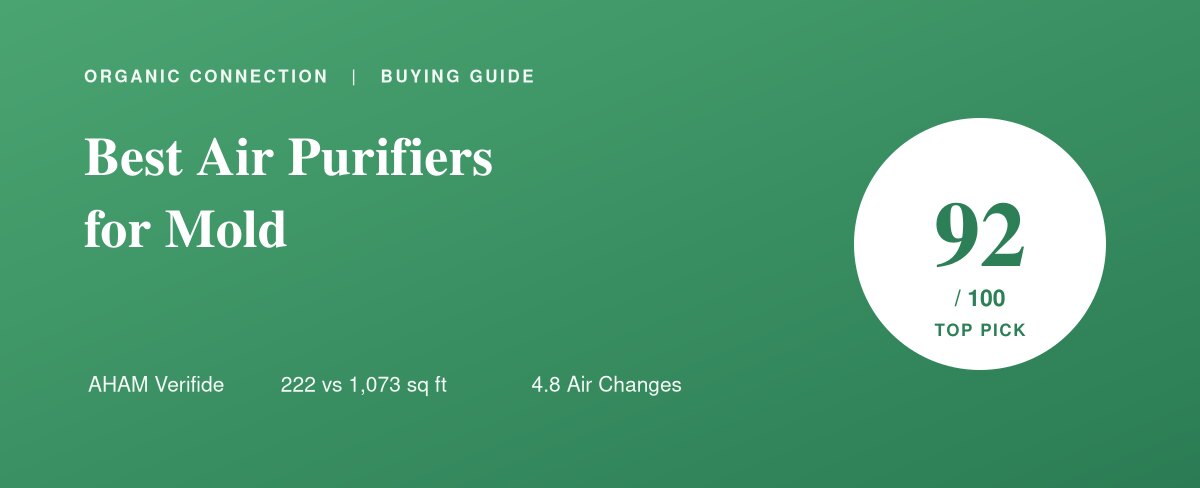
Judged on the evidence each listing gives you, our top pick is Levoit Core 300-P, with our highest Organic Integrity Score of 92 out of 100. Levoit Core 400S-P is the runner-up at 90.
Our top pick is the Levoit Core 300-P, with an Organic Integrity Score of 92 out of 100. It is the cheapest unit in this comparison, and it is the only listing we read that publishes both of its coverage figures in the same sentence, which turns out to be the whole story in this category.
Because here is what we found. The room size printed in an air purifier’s title is not the room size anyone independently verified. The Winix 5510 is titled “Large Room Up to 1881 Ft² in 1 Hr”. Its own feature bullets say “AHAM Verifide at 392 sq ft.” Both numbers describe the same machine. Neither is a lie. They are measured at different standards of clean, and only the smaller one was checked by anybody other than the manufacturer.
We found that gap in every AHAM Verifide listing we read, at almost exactly the same ratio, and the reason is a single number: 4.8.
Best air purifiers for mold compared
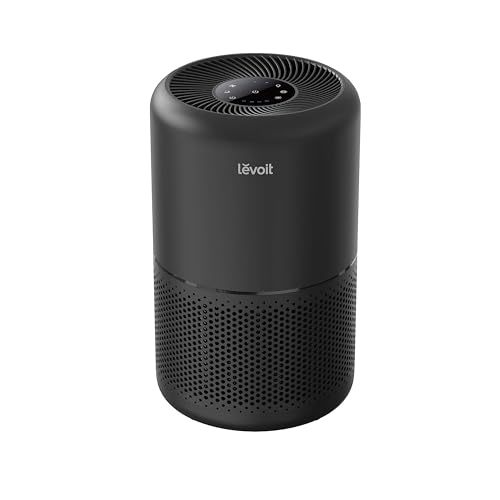 |  |  |  |  | |
| Model | Levoit Core 300-P | Levoit Core 400S-P | Winix 5510 | Clorox Medium Room | PuroAir 240 |
| Organic Integrity Score | 92/ 100 | 90/ 100 | 88/ 100 | 70/ 100 | 64/ 100 |
| Our rating | 4.6 | 4.5 | 4.4 | 3.5 | 3.2 |
| Coverage in title | Not stated | 1,733 sq ft | 1,881 sq ft | Not stated | 1,000 sq ft |
| Coverage at 4.8 air changes | 222 sq ft, stated | Approx. 361 sq ft, our arithmetic | 392 sq ft, AHAM Verifide | Not calculable | Not calculable |
| Published CADR | 143 smoke / 153 dust / 167 pollen | 231 smoke / 240 dust / 259 pollen | Not published in listing | None | None |
| Independent verification | AHAM Verifide | AHAM Verifide | AHAM Verified, UL | None named | CARB, ETL, ISO |
| Carbon stage | Combination filter | Combination filter | Deodorization carbon | 3-stage with carbon | Stated, not detailed |
| Best for | One affected room | Basements and open floors | Musty odor | Buyers who want a sensor | Not our recommendation |
| Verification | AHAM Verifide, FCC Certified, ETL Listed, CARB Compliant | AHAM Verifide, CARB Compliant | AHAM Verified, UL Certified | CARB Compliant; no AHAM Verifide claim | CARB, ETL, ISO; no AHAM Verifide, no CADR |
| Price | $104.99 View on Amazon | $239.99 View on Amazon | $179.99 View on Amazon | $94.99 $139.95 −32% View on Amazon | $159.99 $199.99 −20% View on Amazon |
- Clean Air and Water hub
- our organic product database — compare brands across every guide
Price and availability as of October 12, 2026 1:10 am EDT. Product prices and availability are accurate as of the date/time indicated and are subject to change. Any price and availability information displayed on Amazon.com at the time of purchase will apply to the purchase of this product.
What an air purifier does about mold, and what it does not
Mold is not an air problem that happens to land on surfaces. It is a surface problem that sheds into the air. A colony establishes itself wherever there is moisture and something organic to eat, which in a house means the paper facing on drywall, wood framing, dust trodden into a carpet, or the back of a bathroom tile. It releases spores continuously, and those spores travel.
An air purifier intercepts spores in transit. A true HEPA filter is rated to capture 99.97% of particles at 0.3 microns, and mold spores run from roughly 3 to 100 microns, which puts them among the easiest things in household air to catch. That part genuinely works, and it works with almost any competent HEPA machine.
What a purifier cannot do is reach the colony. It does not lower humidity. It does not dry the wall cavity behind the bath. It does not touch mold already growing on a surface, because that mold is not in the air. Run a purifier in a room with an active leak and you will capture spores forever, because the colony will keep producing them faster than you remove them.
So the honest sequence is: find the water, stop the water, dry the material, remove or clean what is contaminated, and run a purifier alongside all of that to reduce what is circulating in the meantime. A dehumidifier holding the room below about 50% relative humidity does more for a mold problem than any purifier on this page, and the same humidity threshold suppresses dust mites, which we cover in our guide to the best air purifiers for allergies. We are not going to pretend otherwise in order to sell a filter.
Where a purifier does earn its place is in the interval. Remediation takes days or weeks. Disturbing mold during cleanup throws an enormous spore load into the air, which is exactly when you want a machine running. And a basement that is merely damp rather than actively leaking will keep producing a low background of spores, and that characteristic cellar smell, more or less indefinitely. Those are real situations, and a good machine helps in all of them.
The coverage number in the title is measured at one air change an hour
This is the finding that reorganized how we scored the category, so it is worth being precise about.
Air purifier performance is measured as CADR, Clean Air Delivery Rate, in cubic feet per minute. A unit with a smoke CADR of 231 CFM delivers 231 cubic feet of filtered air every minute. That is a physical measurement, and it does not depend on the room it sits in.
Room coverage does depend on the room, and specifically on how many times per hour you want the air in it replaced. A manufacturer can pick either convention:
One air change per hour means all the air in the room passes through the filter once every sixty minutes. It produces a large, impressive square footage. It also means that at any given moment, most of the air in the room has not been filtered recently.
Four point eight air changes per hour is what AHAM, the Association of Home Appliance Manufacturers, uses when it verifies a suggested room size. Air passes through the filter roughly every twelve and a half minutes. That is the figure with independent testing behind it, and it is about one fifth the size.
Levoit states both, in one bullet, for the Core 300-P: the unit refreshes “a 222 ft² room 4.8 times per hour and a 1,073 ft² room once per hour.” Same machine, same filter, same motor. The two numbers differ by a factor of 4.83 because they answer different questions.
Now look at what reaches the buyer. Winix titles the 5510 “Up to 1881 Ft² in 1 Hr” and discloses “AHAM Verifide at 392 sq ft” in a feature bullet: a ratio of 4.80. Levoit titles the Core 400S-P “Large Room Up to 1733 Ft²” and, in the body, attributes that figure to “just one hour” at a smoke CADR of 231 CFM. Divide by the same 4.8 that Levoit itself uses on the 300-P and you land at roughly 361 sq ft.
To be fair to all three: none of these listings hides anything. Winix puts the verified number in a bullet where you can find it. Levoit explains what AHAM is and publishes its CADR figures outright, which is more than most of this category does. The one-air-change convention is legitimate and widely used. But the number that goes in the title, that appears in the search results, and that a buyer holds up against their basement’s square footage is the one-air-change number, and almost nobody reading it knows that.
Why air changes matter more for mold than for anything else
For pollen or cooking smoke, one air change an hour is a defensible target. The source is intermittent. You are cleaning up after an event.
Mold is not intermittent. An active colony emits continuously, which makes this a rate problem rather than a cleanup problem: the purifier has to remove spores faster than the colony releases them, hour after hour, or the concentration in the room simply settles at a new equilibrium slightly below where it started. Removal rate is precisely what air changes per hour describes.
The second reason is that mold rooms tend to be the wrong shape for the arithmetic. Mold happens in basements, and basements are large, often open, and frequently have higher ceilings than the eight feet these coverage calculations assume. A 900 sq ft basement with nine foot ceilings is a greater volume than a 1,000 sq ft apartment, and the coverage figure on the box does not know that.
So the practical rule we applied throughout this guide: take the AHAM Verifide figure, or divide the headline figure by 4.8, and buy for that number. If a listing publishes a CADR instead of a verified coverage figure, our guide to the best air purifiers for smoke sets out the arithmetic for converting one into the other, including the trap of a CADR quoted in metric units. If a listing publishes neither a verified coverage figure nor a CADR, you have nothing to do the arithmetic with at all, and we scored those listings accordingly.
Spores are easy to catch; the smell is the hard part
The other thing that separates mold from the usual reasons people buy a purifier is that half the complaint is an odor, and an odor is not a particle.
That cellar smell is microbial volatile organic compounds, the gases a colony gives off as it metabolizes. Geosmin is the earthy one. They are molecules in the gas phase, and a HEPA filter does nothing to them whatsoever, because HEPA is a mechanical trap for particles and these are not particles.
Only activated carbon touches the smell, and the quantity of carbon decides whether it touches it for a month or for a year. This is where the thin carbon layer bonded to the face of a combination filter, which is what most purifiers in this price range use, runs out quickly. A pelletized carbon stage with real depth lasts substantially longer, and costs more to replace.
It also makes the smell a useful signal. If the musty odor returns within weeks of a filter change, the carbon is saturating fast, which means the source is still active and still wet. The purifier is telling you something about the building.
What we looked for
We read every feature bullet on every listing in full, then scored on what each manufacturer was willing to put in writing.
A verified coverage figure or a published CADR. Either one lets you do the arithmetic. AHAM Verifide is the air equivalent of a named NSF standard on a water filter: an independent, accredited body tested that specific model, and the seal can be withdrawn. A listing offering neither figure is asking to be taken on trust.
True HEPA rather than HEPA-type. “True HEPA” and “H13” describe a tested filtration grade. “HEPA-type”, “HEPA-style” and “99% of particles” describe marketing. For spores the practical difference is smaller than usual, because spores are large, but the wording tells you how carefully the rest of the listing was written.
A real carbon stage, because of the smell.
CARB compliance, which is California’s limit on ozone emission. Any purifier with an ionizer, UV or plasma stage can generate ozone, and ozone is a respiratory irritant that does not belong in a room where someone with a mold-triggered cough is sleeping. CARB compliance is close to universal on Amazon now, so its presence is not a distinction; its absence would be a warning.
Honesty about scope. We marked listings down for implying that a purifier addresses mold, rather than mold spores.
The trade-offs of an air purifier for mold
This is the category where the most important sentence is about what the machine cannot do. A purifier captures spores that are already airborne. It does nothing about the moisture producing them.
| In its favor | Against it | |
| Spores | Mold spores are large as airborne particles go, so HEPA captures them readily | Capturing spores does not stop a colony growing. Fix the water and the colony stops making them |
| Musty smell | The smell is microbial VOCs, a gas, and activated carbon adsorbs it | Carbon has finite capacity and saturates silently. Thin carbon layers do very little |
| Evidence | AHAM Verifide CADR is available in this category and worth insisting on | No purifier is certified for “mold removal”, because that is not a testable claim |
| Placement | Basements and bathrooms are where it earns its keep | Those are also the damp, cool rooms where the underlying problem lives |
| Filter life | Washable pre-filters extend the expensive cartridge considerably | A filter loaded with organic spores in a damp room is itself a surface mold can colonize. Change on schedule |
Sequence matters: find the moisture source, fix it, dry the space, then run a purifier for what is still in the air. Doing it in the other order buys you a machine that runs forever against a supply that never stops.
What actually separates these five
Three of these publish an AHAM Verifide CADR. Two do not, and both of those make the largest claims.
| Pick | What only this one does |
| Levoit Core 300-P | AHAM Verifide with the CADR published as a plain number, 143 CFM, and the clearest explanation on any listing here of what AHAM Verifide means |
| Levoit Core 400S-P | The same verification scaled up for basements and open floors, which is where mold problems usually are |
| Winix 5510 | AHAM Verifide at a stated 392 sq ft, and the only one pairing a washable fine-mesh pre-filter with a carbon stage named for VOC reduction — the two things a musty room needs |
| Clorox Medium Room | Claims both 99.97% of allergens and 99.9% of viruses and bacteria, the broadest claim set here, with no CADR or AHAM verification to check it against |
| PuroAir 240 | The largest coverage claim in the group, supported by “lab tested” and an American Lung Association partnership, on a listing with only two feature bullets |
Best overall: Levoit Core 300-P
| Organic Integrity Score | 92 / 100 |
| Verified coverage | 222 sq ft at 4.8 air changes per hour; 1,073 sq ft at one change per hour |
| CADR | 143 CFM smoke, 153 CFM dust, 167 CFM pollen |
| Verification | AHAM Verifide, FCC Certified, ETL Listed, CARB Compliant |
| Best for | A single mold-affected bedroom, bathroom or office |
This is the cheapest machine in the comparison and it scores highest, which does not happen often and makes the recommendation straightforward.
It scores highest because of one sentence. Levoit publishes the coverage figure at 4.8 air changes per hour and the coverage figure at one air change per hour in the same bullet: 222 sq ft and 1,073 sq ft. No other listing we read in this category does that. Everyone else picks the flattering number and prints it; Levoit prints both and lets you choose which question you are asking. That is the behavior we exist to reward.
The listing also publishes all three CADR figures rather than the single headline one, and it explains what AHAM Verifide means, including that AHAM is ANSI-accredited and that the testing is independent. Most manufacturers who hold the seal simply show it.
On performance, 143 CFM of smoke CADR is modest, and that is the honest framing: this is a 222 sq ft machine. For a bedroom with a damp corner, a bathroom that never dries out, or a home office over a crawlspace, that is the right size and it will do real work. The three-stage filter runs pre-filter, then true HEPA, then activated carbon, and Levoit sells alternative cartridges for the same body, including a Toxin Absorber filter aimed at VOCs, which is the one to fit if the musty smell is the main complaint rather than the spores.
Now the limits. Do not buy this for a basement. The 1,073 sq ft number will tempt you and it should not. At 222 sq ft of genuine coverage this is a single-room machine, and mold problems in large open spaces need the 400S-P, two of these, or one of the machines in our guide to the best air purifiers for large rooms. The carbon stage is a coating on the combination filter rather than a deep bed, so it will saturate faster than the HEPA layer clogs, and the filter is not washable, which puts running cost squarely on cartridge replacement.
- The only listing here that publishes both coverage figures in one sentence.
- All three CADR ratings published, not just the headline.
- AHAM Verifide, and the listing explains what that means.
- Cheapest machine in this comparison.
- Alternative filter cartridges, including one aimed at VOCs.
- 222 sq ft of real coverage is one room, not a basement.
- Carbon is a coating on the combination filter, not a deep bed.
- No air quality sensor at this price.
- Filter is not washable.
What we liked: AHAM Verifide with the CADR published as a plain 143 CFM, and the clearest explanation on any listing here of what that verification actually means.
Keep in mind: Sized for a single room, so a damp basement or open floor needs the larger model, and no purifier addresses the moisture causing the mold.
Best for: One mold-affected room, where you want the machine that told you the truth about its own coverage.
Best for basements and open floors: Levoit Core 400S-P
| Organic Integrity Score | 90 / 100 |
| Coverage | 1,733 sq ft stated at one air change per hour; approximately 361 sq ft at 4.8, our arithmetic |
| CADR | 231 CFM smoke, 240 CFM dust, 259 CFM pollen |
| Verification | AHAM Verifide, CARB Compliant |
| Best for | Basements, open plan floors, and rooms above about 220 sq ft |
Where the 300-P is a room machine, this one has the airflow for a floor. Smoke CADR of 231 CFM is roughly 60% more than the 300-P, and the published dust and pollen figures track it at 240 and 259.
Levoit is explicit that the 1,733 sq ft headline is a one-hour, one-air-change figure. The listing says the unit “can clean air in spaces up to 1,733 sq ft in just one hour”, which is exactly the convention we have been describing, and it is stated rather than implied. Applying the 4.8 ratio Levoit itself publishes for the 300-P puts genuine coverage near 361 sq ft. That is our arithmetic, not an AHAM figure, and we would rather label it that way than present it as verified.
361 sq ft is the number to plan around, and for most basements it is enough. A 900 sq ft basement will not be fully covered at 4.8 changes an hour, but a purifier in a large space does not work uniformly anyway. Put it near the damp end, where the spore load originates, and you get high turnover where it counts.
The AirSight Plus laser sensor and PM2.5 display are the practical addition over the 300-P, and for mold they are more useful than they first sound. Spores are large particles and register on a PM2.5 sensor, so the display responds when you disturb something. Sweeping a basement floor, moving stored boxes, or opening a closed cupboard will visibly move the number, which tells you where the reservoir is. That is a diagnostic no other machine here offers.
The reservations. It costs well over twice the 300-P, and about half that premium buys the sensor and app rather than airflow. Its carbon is the same style of combination filter, so it has no more odor capacity than the cheaper unit despite moving more air, which means it saturates sooner in a musty room. And the listing’s language around a fireplace and carbon monoxide is loose: no HEPA and carbon purifier removes carbon monoxide, and nobody should read that bullet as a safety claim. A CO alarm is the only thing that addresses carbon monoxide.
- 231 CFM smoke CADR, enough airflow for a basement or an open floor.
- All three CADR figures published and AHAM Verifide.
- Explicitly states the 1,733 sq ft figure is a one-hour rating.
- PM2.5 laser sensor doubles as a way to find the spore reservoir.
- More than twice the price of the 300-P for about 60% more airflow.
- Same shallow carbon layer despite moving more air, so odor capacity runs out sooner.
- One bullet mentions carbon monoxide, which this filter does not remove.
- Real coverage is nearer 361 sq ft than the 1,733 in the title.
What we liked: The same AHAM Verifide approach scaled up for basements and open floors, which is where mold problems usually live.
Keep in mind: A large filter at a large filter price, and it is still treating symptoms rather than the water source.
Best for: A damp basement or an open floor, and anyone who wants a sensor to show them where the spores are coming from.
Best for musty odor: Winix 5510
| Organic Integrity Score | 88 / 100 |
| Verified coverage | 392 sq ft, AHAM Verifide, stated in the listing |
| Coverage in title | 1,881 sq ft in one hour |
| Verification | AHAM Verified, UL Certified |
| Best for | Rooms where the musty smell is the main complaint |
This is the unit that made the pattern visible to us, and it deserves credit for it. The title says 1,881 sq ft. The very first feature bullet says “AHAM Verifide at 392 sq ft”, then adds that it “also cleans rooms up to 1,882 sq ft in 1 hour”, along with 941 sq ft in thirty minutes and 470 sq ft in fifteen.
That bullet is the clearest disclosure in the category. It gives you the verified figure first, then the marketing figure, then a whole ladder of intermediate rates so you can pick your own target. It is more information than most manufacturers publish, and it appears above the fold in the bullets rather than buried.
The reason it is our odor pick is the filter stack. Winix specifies a “High Deodorization Carbon” filter as a named stage aimed at VOCs and household odors, rather than a carbon coating on the HEPA sheet. For mold that is the stage that matters, because the musty smell is a gas and only carbon removes it. If you have the spore side under control and what remains is the smell, this is the machine.
The HEPA claim needs one caveat. Winix states it captures “99.99% of airborne allergens… as small as 0.01 microns”, and 0.01 microns is far below the 0.3 micron particle size at which HEPA filters are rated and at which they perform worst. Filtration efficiency actually rises again below 0.3 microns, so the claim is not impossible, but it is not a like-for-like comparison with the standard rating and should not be read as one. For mold spores at 3 to 100 microns the point is academic.
Two further notes. Winix does not publish its CADR figures in the listing, which is a gap, though the AHAM Verifide coverage figure gives you the number that matters. And at 392 sq ft verified it sits between our two Levoit picks in capability while costing more than the smaller one.
- States the AHAM Verifide figure outright, in the first bullet.
- Publishes a full ladder of coverage rates at different time targets.
- Named deodorization carbon stage rather than a carbon coating.
- 392 sq ft verified is the largest genuinely verified figure here.
- Title leads with 1,881 sq ft, which is 4.8 times the verified figure.
- CADR figures are not published in the listing.
- The 0.01 micron claim is not comparable to a standard HEPA rating.
- Two consumable filters to replace rather than one.
What we liked: The only pick pairing a washable fine-mesh pre-filter with a carbon stage named specifically for VOC reduction — the two things a musty room needs. AHAM Verifide at 392 sq ft.
Keep in mind: The four-stage design means more consumables, and its larger coverage figure is quoted on the one-air-change convention.
Best for: A damp room where the smell, not the spore count, is what you notice.
Widely stocked but nothing to check: Clorox Medium Room
| Organic Integrity Score | 70 / 100 |
| Coverage | Described as medium room; no square footage, no CADR |
| Filtration | 3-stage, pre-filter, true HEPA, carbon; 99.97% at 0.3 microns |
| Verification | CARB Compliant; no AHAM Verifide claim |
| Best for | Buyers who want an air quality display and a familiar brand |
The filtration description here is fine. True HEPA at 99.97% of particles down to 0.3 microns is the correct claim, correctly worded, and the three-stage arrangement of pre-filter, HEPA, and carbon is the right architecture for a mold room. The PM2.5 display with color-coded feedback is genuinely useful, and auto mode responds to it.
The problem is that there is no number to check. No CADR, no AHAM Verifide seal, no square footage beyond “medium room”. Every judgment we made about the Levoit and Winix machines rested on a published figure, and here there is nothing to work with. We cannot tell you whether this unit turns over a 150 sq ft room or a 350 sq ft one, and neither can the listing.
That is why it scores 70 rather than the high eighties. It is not a bad machine; it is an unverifiable one. Clorox is a licensing arrangement rather than a manufacturer of appliances, and the listing reads accordingly, competent on filter description and silent on performance.
The maintenance guidance is unusually clear, which we do credit: the filter light illuminates at 4,380 hours, and replacement is recommended every six to twelve months. That is a real, checkable service interval, and more than most listings give.
- Correctly worded true HEPA claim at 99.97% and 0.3 microns.
- PM2.5 display and responsive auto mode.
- Clear service interval: 4,380 hours, then six to twelve months.
- Widely stocked and easy to source filters for.
- No CADR, no AHAM Verifide, no square footage figure at all.
- Nothing published that would let you size it to a room.
- Licensed brand rather than an appliance manufacturer.
- Carbon stage is not described in any detail.
What we liked: Claims both 99.97% of allergens and 99.9% of viruses and bacteria, the broadest claim set here, with 360-degree airflow and a familiar brand behind it.
Keep in mind: No CADR and no AHAM verification anywhere on the listing, so the broadest claims here are also the least checkable.
Best for: Someone who wants a sensor and a familiar name, and accepts that the coverage is unstated.
The largest coverage claim with the least behind it: PuroAir 240
| Organic Integrity Score | 64 / 100 |
| Coverage in title | 1,000 sq ft |
| Verified coverage | None published |
| Verification | CARB, ETL, ISO; no AHAM Verifide, no CADR |
| Best for | Not our recommendation for a mold problem |
The title says “Filter 1,000 Ft²”. The bullets say the product is “lab tested and studied to filter the most common household pollutants” and is “certified by CARB, ETL, ISO”.
None of those three certifications is a performance certification. CARB governs ozone emission. ETL is electrical safety. ISO refers to a management systems standard for how a company is run, not to how well a specific purifier cleans air. All three are worth holding and none of them tells you the machine covers 1,000 sq ft, or 400, or 90.
Nor is there a CADR figure to work from, which is the part that decided the score. With the Levoit units we could divide. With Winix we could read the verified figure directly. Here the 1,000 sq ft claim stands alone, with “lab tested and studied” as its only support and no lab, no standard, and no result named.
To be clear about what we are and are not saying: this may well be a competent purifier, and its owners may be perfectly happy. We are not claiming it underperforms. We are saying that nothing in the listing lets anyone check, and in a comparison where three competitors publish AHAM-verified figures, choosing not to is a meaningful choice.
For a mold problem specifically, sizing is the whole decision, and this is the one unit here you cannot size.
- CARB compliant, so ozone emission is limited.
- ETL listed for electrical safety.
- Established seller with a large review base.
- 1,000 sq ft claim with no CADR and no AHAM Verifide figure behind it.
- The certifications named cover ozone, electrical safety and management systems, not air cleaning performance.
- “Lab tested and studied” names no lab, no standard and no result.
- Costs more than the pick above it while publishing less.
What we liked: Backed by an American Lung Association partnership, with the largest coverage claim in the group.
Keep in mind: Only two feature bullets on the entire listing, and “lab tested” names no laboratory, no standard and no figure.
Best for: Buyers who prioritize the headline coverage figure over the evidence for it, which for mold we would not.
What we left out and why
We excluded ozone generators outright. They are still sold for “mold removal” and they work by flooding a space with a respiratory irritant. Ozone at concentrations high enough to affect mold is not safe to breathe, the room must be unoccupied, and the underlying moisture is untouched afterward. This is not a purifier category and we will not list one.
We left out purifiers whose only germicidal claim was a UV-C lamp. Killing a spore is not the same as removing it, a dead spore is still an allergen, and contact time inside a fast-moving airstream is short. Where UV appears alongside a proper HEPA and carbon stack it is harmless; where it is the headline feature it is doing less than the listing suggests.
We left out “HEPA-type” and “HEPA-style” units, which are not HEPA.
We also left out the large, well-reviewed units that publish no coverage or CADR figure at all. There were more of these than we expected. Once we settled on sizing as the core question for mold, a listing with no number in it had nothing to contribute.
How to set one up in a mold-affected room
Placement and sequence matter more here than with any other purifier use, because you are working against a source rather than cleaning up after an event.
- Find the moisture. A purifier running against an active leak is a permanent expense with no endpoint. Look for the source before you spend anything on filters.
- Buy a hygrometer. They cost very little and they tell you whether the room is above 50% relative humidity, which is the threshold that matters.
- If the room reads above 50%, a dehumidifier is the higher priority purchase. Run both if you can; if you can only buy one, buy that one first.
- Measure the room in square feet and note the ceiling height. If ceilings are above eight feet, size up.
- Remove all packaging from the filter. Purifiers ship with the filter sealed in plastic inside the housing, and a unit that seems to do nothing on day one has almost always been run with the wrapper still on.
- Position it near the damp end of the room, not in a corner and not against furniture. Most units draw in through the sides or back and need clearance on every face.
- Keep it off the floor if you can, on a low table or shelf. Floor level is where settled dust is disturbed by footfall, and it is also the coldest, dampest air in a basement.
- Close the windows and the door. Coverage figures assume a sealed room. An open door roughly doubles the volume you are asking the machine to handle.
- Run it on high for the first several hours to knock down the standing spore load, then drop to a quieter speed for continuous operation.
- If the unit has a sensor, walk the room and disturb likely reservoirs, then watch the reading. The spike tells you where to concentrate cleanup.
- Run the purifier on its highest setting while any mold is being disturbed, and for several hours afterward. This is the period of heaviest airborne load and the single most useful thing a purifier does.
- Expect to replace the filter early after remediation. A cleanup loads a filter far faster than normal use.
- Wear a mask while changing a filter that has been running in a mold room. Everything the machine captured is on that cartridge.
- Bag the used filter before carrying it through the house.
What it costs to run
The purchase price is the smaller half of the decision. Filters are consumable, mold rooms load them faster than clean rooms, and a machine that is cheap to buy and expensive to feed can cost more over three years than one that is the other way around.
Two practical points follow from that panel. The first is that continuous operation, which is what a mold problem calls for, is what filter ratings assume least. A machine run around the clock in a damp basement will not reach a twelve month interval.
The second is that the carbon and the HEPA in a combination filter wear out on different schedules. The carbon coating saturates with odor molecules long before the HEPA layer clogs with particles, so the smell returning is not a sign the filter has failed at particles. On the Winix, with its separate deodorization stage, you can replace the carbon on its own schedule, which over several years is a genuine saving in a musty room.
Living with a purifier in a damp house
A few things become obvious after a season that are not obvious in a comparison table.
The machine is a humidity gauge you did not ask for. If the musty smell returns a few weeks after each filter change, the source is still wet. Carbon saturating quickly is information about the building, not a defect in the purifier.
Coverage assumes closed doors. Everything on this page is rated for a sealed room. If the basement stairwell is open to the rest of the house, the machine is working on a much larger volume than you sized it for, and the honest fix is a door rather than a bigger purifier.
Run it continuously, not in bursts. Spore concentration climbs back within hours of switching off, because the source has not stopped. A low, constant speed does more than intermittent bursts on high, and uses less electricity than most people expect.
One machine per room. Purifiers do not work through doorways, and a single large unit in a hallway is worse than two small ones in the rooms that matter. If you have a mold problem in two rooms, you have a two-purifier problem.
Pre-filters want vacuuming. Most of these units have a washable or vacuumable pre-filter mesh, and a clogged one starves the HEPA layer of airflow. Monthly is enough, and it measurably extends the life of the expensive cartridge behind it.
Questions about air purifiers and mold
Will an air purifier get rid of mold in my house?
No. It captures spores that are already airborne and reduces the musty smell. It does not touch the colony growing on a surface, and it does not lower the humidity that lets the colony grow. Stopping the moisture is what removes mold; a purifier manages what that mold releases into the air in the meantime.
Why does the coverage figure in the title differ from the AHAM figure?
They are measured at different rates of air change. The title figure usually assumes the air passes through the filter once an hour. AHAM verifies a suggested room size at 4.8 air changes per hour. That is why the Winix 5510 is titled at 1,881 sq ft and AHAM Verifide at 392, and why the ratio between the two is close to 4.8 on every unit here that publishes both.
Do I need a HEPA filter for mold spores?
Yes, and almost any true HEPA filter is enough. Mold spores are 3 to 100 microns, well above the 0.3 micron size at which HEPA filters are rated and perform worst. The filtration grade is rarely the limiting factor for spores; airflow and room size usually are.
Does an air purifier remove the musty smell?
Only its carbon stage does, and only for as long as the carbon has capacity. The smell is microbial volatile organic compounds in the gas phase, which pass straight through a HEPA filter. A purifier with a deep, named carbon stage will hold the smell down much longer than one with a thin carbon coating on a combination filter.
Should I buy a dehumidifier or an air purifier for mold?
A dehumidifier, if you can only buy one. Mold needs moisture, and holding a room below about 50% relative humidity attacks the cause rather than the symptom. A purifier is the right second purchase, and it is the right first purchase only when the moisture is already fixed and you are dealing with what remains.
Is an ozone generator good for mold?
No, and we excluded them from this comparison. Ozone at concentrations that affect mold is a respiratory irritant that requires the space to be unoccupied, and it leaves the moisture that caused the problem completely untouched. It is not a purifier in the sense used on this page.
How big a purifier do I need for a basement?
Take the AHAM Verifide figure, or divide the title figure by 4.8, and compare that to your actual square footage. Then size up if the ceilings are above eight feet or the space is open to a stairwell. On the machines here that means the Core 400S-P at roughly 361 sq ft or the Winix at 392 sq ft verified, and it means the Core 300-P at 222 sq ft is a single-room unit whatever its 1,073 sq ft alternative figure suggests.
Does UV-C light kill mold in an air purifier?
It can damage some spores, but contact time in a moving airstream is short, and a killed spore is still an allergen that has to be physically captured. UV alongside a good HEPA and carbon stack is harmless; UV as the headline feature is doing less than the listing implies.
How often should I change the filter in a mold room?
Sooner than the manufacturer’s rating, which assumes ordinary household use. Continuous running in a damp room, and especially any period of active remediation, loads a filter much faster. Treat the return of the musty smell as the carbon’s expiry signal and the rated interval as an outer limit rather than a target.
Where should I put an air purifier for mold?
Near the damp end of the room, off the floor if possible, with clearance on all sides and the door closed. Not in a corner, not tucked behind furniture, and not in a hallway hoping to serve two rooms at once.
Organic Connection is reader supported. We read every product listing in full and say plainly when a claim cannot be verified. How we research and rate.