Last updated: September 30, 2026
We may earn a commission when you buy through links on this page, at no extra cost to you. How we research and rate.
The short version
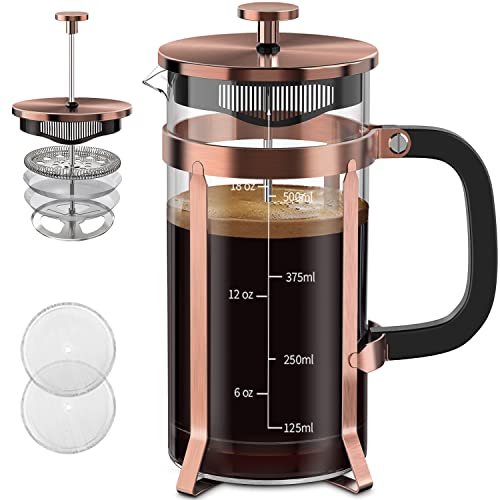
Reading what each maker will actually put in writing, our top pick is the Veken 34 oz French Press. It is the only press here that states the whole brewing path is plastic-free — 304 stainless steel and food-grade silicone, nothing else touching the coffee — and it is the best-selling press in its category while it does it. That earned it our highest Organic Integrity Score of 92 out of 100.
The thing nobody mentions is where the plastic in a French press actually sits. The carafe is glass, obviously. But the plunger assembly — the collar that holds the mesh, the cross-plate above it, the lid, the knob — is plastic on most presses at this price, and it is submerged in near-boiling coffee for the entire four-minute brew. One listing here says it removed that plastic. One says it kept it and made it BPA-free. Three do not raise the subject at all.
What the listings leave out
| Best Choice | Best Value | ||||
 |
 |
 |
 |
 |
|
| Product | Veken 34 oz | Bodum Chambord | YMMIND 4-Filter | QUQIYSO | Cuiscent 1000 ml |
| Organic Integrity Score | 92/ 100 | 87/ 100 | 84/ 100 | 79/ 100 | 74/ 100 |
| Our rating | 4.6 | 4.4 | 4.2 | 4.0 | 3.7 |
| Best for | Best overall | The classic | Cheapest, four-stage filter | Everyday glass press | Large capacity for the price |
| Plastic in the brew path | None, stated: 304 steel and food-grade silicone only | Not addressed | Yes, stated as BPA-free plastic | Not addressed | Not addressed |
| Steel grade named | 304, stated | Polished stainless, grade not named | 304, stated | Not named | 304, filter and components only |
| Glass | Not specified in listing | High-heat borosilicate | Thickened borosilicate | Borosilicate | High borosilicate |
| Capacity | 34 oz / 1 L | 34 oz | 34 oz | 34 oz | 1000 ml |
| Made in | Not stated | Portugal, stated | Not stated | Not stated | Not stated |
| Price | $24.98 $31.98 −22% View on Amazon |
$39.69 View on Amazon |
$17.99 View on Amazon |
$17.99 $19.99 −10% View on Amazon |
$14.99 View on Amazon |
Scores are ours, based on independent research of materials disclosure, construction, published specifications and value, using the same ten-criteria method we apply to every product.
What each claim on a French press listing covers
| Claim | Covers | Key exclusion |
| No plastic touching food | Every surface the coffee contacts, including the plunger collar and cross-plate | The only claim on this page that addresses the submerged parts; one listing makes it |
| BPA-free | No bisphenol A in the plastic components | Confirms plastic is present; says nothing about which polymer replaced BPA |
| 304 stainless steel | A named grade, roughly 18% chromium and 8% nickel | May cover only the filter, as one listing here specifies, rather than the whole assembly |
| Food-grade silicone | A gasket material rated for food contact at brewing temperatures | Not a certification; no certifier is named by anyone here |
| Borosilicate glass | Low thermal expansion, so the carafe survives boiling water | Says nothing about impact strength or wall thickness |
| Polished stainless steel | The exterior frame finish | A cosmetic description; it names no grade and covers no part that touches coffee |
| Dishwasher safe | Named parts survive a dishwasher cycle | Usually excludes the lid, and never means the whole press |
The pattern is the same one we keep finding. The claims that sound reassuring — polished, BPA-free, dishwasher safe — are about finish, convenience or the absence of one specific chemical. The claim that answers the actual question appears once.
Where the plastic in a French press actually is
Ask someone what a French press is made of and they will say glass and steel. That is what you can see. It is not the whole assembly.
The plunger is a stack of parts. Working down from the knob: a lid, usually with a plastic body and a plastic or steel knob. A rod. Then the filter assembly, which is typically a coiled spring, a fine mesh screen, a perforated cross-plate above it and a base plate below, all clamped together. On most presses at this price, the cross-plate and the outer collar that seals against the glass are plastic.
That plastic is not near the coffee. It is in the coffee, at roughly 200°F, for the full four minutes of the brew, and then again every time you leave the press sitting after pouring.
This is not a scandal and we are not going to pretend it is one. The polymers used are food-contact rated and stable at brewing temperatures. But if you moved from a drip machine to a French press partly to get plastic out of your coffee, you should know that a glass press is not automatically a plastic-free press, and that the difference between the two is a design decision the maker has already made and can simply tell you about.
One listing here tells you. Veken states that every brewing surface is 304 stainless steel or food-grade silicone. One other listing is honest in the opposite direction: YMMIND says plainly that its press uses 304 stainless steel and BPA-free plastic, which is an admission dressed as a feature but is still more than the other three offer.
Borosilicate is a specification, not a marketing word
The carafe is the part that breaks, and the glass it is made from decides how easily.
Soda-lime glass is ordinary glassware. It is cheap and it does not much like sudden temperature change. Pour boiling water into a cold soda-lime carafe and you are relying on luck.
Borosilicate glass has boron oxide in the mix, which drops its coefficient of thermal expansion to roughly a third of soda-lime’s. It handles the shock of boiling water hitting cold glass, which is exactly what a French press does every morning. It is the reason lab glassware is borosilicate.
Four of the five listings here say borosilicate, and it is one of the few claims in this category that is both specific and easy to verify against the product in your hand. The interesting omission is that our top pick, which is the most forthcoming press on the page about its steel and its silicone, is the one that does not name its glass.
Note also that borosilicate is about thermal shock, not strength. It will still break if you knock it off a counter, and a carafe is the part you will eventually replace.
Best overall: Veken 34 oz French Press Coffee Maker
| Organic Integrity Score | 92 / 100 |
| Capacity | 34 oz, 1 liter |
| Brew path | 304 stainless steel and food-grade silicone; stated plastic-free |
| Sales record | Best selling coffee press in its category |
| Best for | The only press here that says no plastic touches your coffee |
Veken wins on one sentence, and it is the sentence the whole category avoids: every brewing surface is 304 stainless steel and food-grade silicone, so no plastic contacts the coffee. It names the steel grade, names the gasket material, and says what the claim covers rather than gesturing at safety.
It also gives the reason people care, in the same breath and without overselling it: no plastic odor picked up by the coffee, and no plastic particles shed into it. That is a fair description of what plastic in a hot brew path actually does at the low end — it can taint the taste — rather than a health scare.
And unusually for a product we rank first on disclosure, it is also the one people are actually buying. It is the top-selling press in its category, which means the plastic-free construction is being tested daily by a large number of households rather than sitting in a warehouse.
At around twenty-five dollars it sits in the middle of this group on price and above all of it on substance.
What we liked: The only stated plastic-free brew path here, 304 named explicitly, food-grade silicone named as the gasket, a full liter of capacity, and the strongest sales record on the page.
Keep in mind: The listing never says what the glass is, which for a press is a real omission — assume borosilicate but do not treat it as stated. No origin given either.
The classic: Bodum 34 oz Chambord French Press
| Organic Integrity Score | 87 / 100 |
| Capacity | 34 oz |
| Glass | High-heat borosilicate, stated in the title |
| Origin | Made in Portugal, stated |
| Best for | The design everything else on this page is a copy of |
The Chambord is the French press. The chrome frame, the domed lid, the little ball on the plunger — every other press here is an interpretation of this shape, and it has been in production long enough that buying one is a known quantity rather than a bet.
Two things in the listing are worth real credit. It names the glass as high-heat borosilicate, in the title, where you cannot miss it. And it states a country of manufacture, Portugal, which almost nothing in this category does. A named factory country is not a certification, but it is a commitment, and it is the kind of thing a seller with something to hide leaves out.
What keeps it from the top spot is what the rest of the listing does not do. Beyond the title it makes no materials claims at all — the only substantive line in the description is a warning that it is not for stovetop use. Nothing about the plunger assembly, nothing about the steel grade, nothing about whether plastic is in the brew path. At around forty dollars it is the most expensive press here and, apart from the glass and the country, the least forthcoming.
What we liked: Borosilicate named in the title, a stated country of manufacture, a design with decades behind it, replacement carafes that are easy to find, and a genuinely good pour.
Keep in mind: The most expensive option here, no steel grade, and no statement about plastic in the plunger. The frame is open, so it loses heat faster than a walled press.
Cheapest, four-stage filter: YMMIND 304 Stainless French Press
| Organic Integrity Score | 84 / 100 |
| Filter | Four-stage screen system |
| Materials | Thickened borosilicate, 304 stainless and BPA-free plastic, all stated |
| Dishwasher | Plunger and filter stated dishwasher safe; carafe separates for cleaning |
| Best for | Less sediment in the cup, for the lowest price here |
The cheapest press on this page and, in one specific way, the most straightforward. Its materials line reads: thickened borosilicate glass, top-quality 304 stainless steel, and BPA-free plastic. It tells you the plastic is there.
That is not the claim you want, but it is honest, and it is more information than three of the five listings here provide. A seller willing to write the word plastic in a materials line is a seller not hoping you will assume otherwise.
The four-stage filter is the other reason to look. More screen layers means fewer fines through the mesh, which means less sludge in the last inch of the cup — the single most common complaint about French press coffee. And it takes apart for cleaning, which matters, because coffee oils in a filter stack turn rancid and a press that cannot be dismantled eventually tastes like it.
It scores below the Bodum despite disclosing more because plastic in the brew path is a real drawback, not just a documentation one, and because its sales record is a fraction of the two above it.
What we liked: The lowest price here, a materials line that names everything including the plastic, 304 stated, thickened borosilicate, and a four-layer filter that genuinely reduces sediment.
Keep in mind: Plastic is confirmed in the brew path. “BPA-free” tells you what is not in it, not what is. The lid still needs hand washing.
Everyday glass press: QUQIYSO Borosilicate French Press
| Organic Integrity Score | 79 / 100 |
| Glass | Borosilicate, stated in the title |
| Cleaning | Beaker, filter and plunger dishwasher safe; lid hand wash only |
| Materials detail | None beyond the glass |
| Best for | A well-selling press when price is the deciding factor |
A strong seller at around twenty-one dollars, and a perfectly ordinary glass press. Borosilicate is named in the title, which puts it ahead of nothing in particular, since four of the five here manage that.
The only substantive line in the entire description is care instructions: beaker, filter and plunger go in the dishwasher, the lid is hand wash with a soft sponge because scrubbers mark it. That is useful and specific, and it is the most this listing commits to.
It scores where it does because a press that discloses nothing about its plunger assembly is asking you to assume, and the safe assumption at this price is plastic. Popularity is evidence that it works, not evidence of what it is made of.
What we liked: Borosilicate named, a strong sales position, clear and honest care instructions, and a low price.
Keep in mind: No steel grade, no statement about plastic, no origin. The hand-wash lid is a small daily annoyance.
Large capacity for the price: Cuiscent 1000 ml French Press
| Organic Integrity Score | 74 / 100 |
| Capacity | 1000 ml |
| Steel | 304, stated for the filter and components only |
| Glass | High borosilicate, stated in the title |
| Best for | A full liter at the bottom of the price range |
A full liter for around seventeen dollars, with high borosilicate glass named in the title and 304 stainless named in the description. On paper that is two of the three specifications you want.
Read the 304 claim carefully, though, because it is narrower than it first appears. It covers the filter and components — the screen and the metal parts — and says nothing about the collar or the cross-plate that sit in the coffee alongside them. A press can have a 304 filter and a plastic carrier holding it.
The larger problem is that this is by a wide margin the slowest-selling product on this page. That is not proof of anything, but where a listing’s claims cannot be checked against a body of use, it is a reason for caution rather than confidence, and our scoring treats it that way.
What we liked: A full liter for the lowest effective price per ounce here, borosilicate named, and 304 named for the filter.
Keep in mind: The 304 claim covers the filter, not the whole assembly. Almost no sales history. No plastic statement and no origin.
The screen decides how your coffee tastes
Everything about French press flavor comes down to what the mesh lets through, and it is the part of the product listings that gets the least attention relative to how much it matters.
A French press is an immersion brewer with a metal filter, which is the whole point of it: paper traps the coffee oils, metal lets them through. Those oils are the body, the weight in the mouth, the thing that makes press coffee taste rounder than drip. They are also why a press cannot be as clean-tasting as a pour-over, and no amount of filtering will change that trade.
What the screen can change is sediment. The fines — dust-sized particles created during grinding — slip through a single mesh layer and settle in the bottom of the cup, where they keep extracting and turn bitter. This is the actual complaint most people have about French press coffee, and they usually blame the coffee.
Two things fix it. The first is a multi-layer filter, like the four-stage stack on the YMMIND, which catches progressively finer particles. The second is grinding coarser, which produces fewer fines in the first place, and costs nothing.
A third fix is free and almost nobody does it: after pressing, pour the whole pot out. Coffee left sitting on the grounds keeps extracting and is noticeably worse by the second cup.
Grind, ratio and timing, briefly
The press itself is only half the result. The other half is four numbers.
Grind coarse. Sea-salt texture, not sand. Too fine and the fines flood through the mesh, the plunger goes down hard, and the coffee is bitter.
Use a ratio around 1 to 15. That is roughly 60 grams of coffee per liter of water, or about seven tablespoons in a full 34 oz press. Scales are cheap and this is the single change that improves most people’s coffee.
Water just off the boil. Around 200°F. Straight from a rolling boil scorches the grounds; let the kettle sit thirty seconds. Our stovetop kettle guide covers what to boil it in.
Four minutes, then press slowly. Start the timer when the water hits the grounds. Press with steady even pressure — forcing it pushes fines through the seal at the edges.
What we left out, and why
Double-walled insulated stainless presses. These keep coffee hot for an hour and cannot shatter, which are two real advantages. They are also opaque, so you cannot watch the brew, and they are typically two to four times the price of the presses here. If heat retention is your priority, buy one — but check that its plunger assembly is steel rather than plastic, because an insulated body says nothing about that.
Travel presses and press-in-a-mug designs. A different product solving a different problem, usually with more plastic rather than less.
Pour-over and drip. If the sediment is what bothers you about press coffee, the honest answer is that you may want a paper filter rather than a better press. You will lose the body and gain clarity. That is a preference, not an upgrade.
How to choose a French press
Decide about plastic first, because it is the one thing you cannot change later. If you want none in the brew path, you have to buy a press that says so. Filters can be replaced; a plastic plunger collar is the press.
Buy the size you actually brew. A 34 oz press half-filled brews badly, because the plunger seal and the water level interact — too little water and the grounds are not properly submerged. Two-cup drinkers should buy a small press, not a big one.
Check the carafe can be replaced. The glass is what breaks. On established designs like the Chambord, replacement beakers are easy to find; on generic presses, a broken carafe means a new press.
Look for a filter that comes apart. Coffee oils build up between the screen layers and go rancid. If the stack cannot be unscrewed, it cannot be properly cleaned.
Care, and how long a press lasts
Rinse it immediately after pouring. Grounds left to dry in a carafe cement themselves to the glass, and the mesh keeps oils long after the coffee is gone.
Take the filter stack apart weekly. Unscrew it, wash the layers separately, and the difference in taste after a month of not doing it is obvious immediately.
Do not put the lid in the dishwasher unless the listing says you can — on several presses here it specifically says not to. Detergent and heat mark the finish and can loosen the plunger seal.
Never put a glass press on a stovetop. The Bodum listing says this outright, and it applies to every glass press ever made. A carafe designed for thermal shock is not designed for direct flame.
Expect the mesh to lose tension after a couple of years of daily use. Replacement screens cost a few dollars and restore the press completely, which is a better outcome than most kitchen products manage.
How we researched this guide
We read all five listings in full, title and description, and recorded every materials claim. We separated claims that cover the brewing path from claims that cover the frame or the finish, because a French press is one of the few products where that distinction changes what you are buying. We noted which listings named a steel grade, which named the glass, which stated an origin, and which raised the subject of plastic at all — in either direction. Sales position was used as a check on whether a claim has been tested by use, not as a substitute for disclosure. Scores reflect what each maker is willing to state in writing.
Common questions about French press coffee makers
Is there plastic in a French press?
Usually yes, in the plunger assembly — the collar, the cross-plate and often the lid — and it sits submerged in near-boiling coffee for the whole brew. One press here states its brewing path is plastic-free; one states that it uses BPA-free plastic; three do not say.
Does borosilicate glass really matter?
For thermal shock, yes. It expands roughly a third as much as ordinary soda-lime glass when hot water hits it, which is exactly the stress a press carafe takes every morning. It does not make the glass harder to break by dropping it.
What does 304 stainless steel mean on a French press?
Roughly 18% chromium and 8% nickel, the standard food-contact grade. Read what it covers — one listing here specifies 304 for the filter and components, which is not the same as the whole plunger assembly.
Why is there sludge in the bottom of my cup?
Fines, the dust-sized particles created when grinding. Grind coarser, use a multi-layer filter, and pour the whole pot out rather than leaving coffee on the grounds.
How long should French press coffee steep?
Four minutes from when the water hits the grounds, then press slowly and pour immediately. Longer does not make it stronger, it makes it bitter.
What grind size do I need?
Coarse, roughly the texture of sea salt. Pre-ground supermarket coffee is usually too fine for a press, which is why it plunges hard and tastes harsh.
How much coffee per cup?
About 1 to 15 by weight — roughly 60 grams per liter, or seven tablespoons in a full 34 oz press. Weighing rather than scooping is the biggest single improvement available.
Can I put a French press in the dishwasher?
The carafe, filter and plunger usually yes; the lid usually no. Several listings here say exactly that. Check before you assume, because dishwasher detergent marks lids and loosens seals.
Can I put a glass French press on the stove?
No. One listing here states it plainly and it is true of all of them. Borosilicate handles hot water, not direct flame.
Is a stainless steel French press better than glass?
It keeps coffee hot far longer and will not shatter, but it costs more, hides the brew, and an insulated steel body tells you nothing about whether the plunger parts are plastic. Both are valid; they solve different problems.
How often should I replace the filter screen?
When the mesh loses tension and grounds start bypassing the edges, typically after a couple of years of daily use. Replacement screens are inexpensive and make an old press work like new.
Does French press coffee taste different from drip?
Yes. A metal filter passes the coffee oils that paper traps, which gives press coffee more body and weight. It also passes fines, which is the trade you are making.
- Best Organic Coffee
- Best Organic Decaf Coffee
- Best Stainless Steel Tea Kettles
- Best Stainless Steel Cookware
- Best Burr Coffee Grinders
- Organic Product Database — search all 800+ products we have reviewed
- Best Gooseneck Kettles