Last updated: September 30, 2026
We may earn a commission when you buy through links on this page, at no extra cost to you. How we research and rate.
The short version
After researching the certifications, sourcing, testing, and roasting of the most popular organic coffees, our top pick is Purity Coffee. It is USDA Certified Organic, single-origin, shade-grown, and third-party tested for mold and pesticides, which is why it earned our highest Organic Integrity Score of 94 out of 100. For a bold, Fair Trade dark roast, Kicking Horse is the pick. For the best value in a large bag, Cafe Don Pablo Subtle Earth delivers USDA Organic coffee at a friendly price per pound, and Purity Coffee is the choice if reducing mold and mycotoxins is your priority.
Every coffee below is USDA Certified Organic, meaning the beans were grown without synthetic pesticides, GMOs, or synthetic fertilizers. The scores reflect how they compare across our 10 criteria, so the spread from our 94-point top pick to the 74-point everyday option is real. Confirm the current certification and roast date on the bag before buying.
Best organic coffee compared
| Best Choice | Best Value | ||||
 |  |  |  |  | |
| Product | Purity | Lifeboost | Kicking Horse | Subtle Earth | San Francisco Bay |
| Organic Integrity Score | 94/ 100 | 89/ 100 | 87/ 100 | 81/ 100 | 76/ 100 |
| Our rating | 4.7 | 4.5 | 4.4 | 4.1 | 3.8 |
| Best for | Best overall | Cleanest, most transparent | Dark roast | Value | Everyday value |
| Certification | USDA Organic, Rainforest Alliance | USDA Organic, Non-GMO | Fair Trade, Certified Organic, Kosher | Non-GMO, Organic | — |
| Roast | Range, tested | Range, low-acid | Bold dark | Smooth medium-dark | Range, many formats |
| Price | $29.00$2.42 / ounce View on Amazon | $28.99$2.42 / ounce View on Amazon | $32.72 $42.23 −23%$0.93 / ounce View on Amazon | $31.99$1.00 / ounce View on Amazon | $41.50$0.86 / ounce View on Amazon |
Price and availability as of October 16, 2026 7:10 pm EDT. Product prices and availability are accurate as of the date/time indicated and are subject to change. Any price and availability information displayed on Amazon.com at the time of purchase will apply to the purchase of this product.
Scores are ours, based on independent research of each product’s certification, sourcing, testing, and processing, using the same 10-criteria method we apply to every product.
What each certification on an organic coffee label actually covers
Certification names are easy to confuse and easy to trade on. Below is what each of these marks covers, and the part of the picture it says nothing about.
| Certification | Covers | Key exclusion |
| USDA Organic | Farming and handling: no synthetic pesticides or fertilizers, no GMOs, no sewage sludge or irradiation, audited yearly by an accredited certifier | Three different tiers share the one seal, and it makes no claim about worker pay, food miles, or nutrition |
| Fair Trade Certified | A price floor for producers, a community premium, and labor standards on the farms and in the facilities | An economic and labor standard; it is not an organic or pesticide claim |
| Rainforest Alliance | Farm-level criteria for deforestation, biodiversity, water and working conditions | Permits a defined list of synthetic pesticides that organic certification prohibits outright |
| Bird Friendly | Requires organic certification first, then adds shade canopy, tree height and habitat diversity criteria | Coffee only, and the strictest shade standard in the category, so very few farms qualify |
Rainforest Alliance is not an organic label, and the frog is regularly read as one. Its criteria are genuinely strong on deforestation, biodiversity and farm working conditions, and it permits a defined list of synthetic pesticides that organic certification prohibits outright. The two standards overlap and plenty of good farms hold both. But a frog on its own has not answered the pesticide question.
Key benefits of organic coffee
Coffee is something most people drink every single day, which makes how it is grown worth paying attention to. Choosing USDA Organic means the beans were produced without synthetic pesticides or fertilizers. Here is what that gets you.
1. A cleaner daily cup
Conventional coffee is one of the most heavily sprayed crops in the world. Organic certification prohibits synthetic pesticides and fertilizers, so you are keeping those inputs out of a beverage you have day after day.
2. Often smoother and lower-acid
Many organic coffees, especially single-origin and shade-grown ones, are prized for a smooth, low-acid profile. People with sensitive stomachs or reflux often find they tolerate a good organic coffee better, though individual results vary.
3. Better for growers and the planet
Organic coffee is frequently shade-grown, which supports biodiversity and healthier soil, and certification pairs naturally with Fair Trade sourcing that supports the farmers who grow it.
4. Fresher and more traceable
The best organic brands lean into transparency, single-origin sourcing, visible roast dates, and even published mold and pesticide testing, so you know more about what is in your cup.
Organic vs conventional coffee: does it matter?
Coffee is one of the most chemically treated crops in the world, often grown with synthetic pesticides and fertilizers, so the growing method genuinely matters for a drink you have every day. USDA Organic certification verifies the beans were grown and processed without those synthetic inputs.
Does that translate to lower exposure? Research suggests it does. A 2019 dietary study found that switching to all-organic food for six days cut participants’ urinary pesticide levels by 60% to 95%, depending on the compound (study summary, full paper). Organic coffee also tends to be shade-grown, which supports biodiversity, and certification pairs naturally with Fair Trade sourcing. You are paying a small premium for a cleaner, better-documented cup, which is the trade-off we weight in our scoring.
Shade-grown and Bird Friendly: the certification that outranks organic
For coffee specifically, there is a certification that asks more than USDA organic does, and it is worth knowing about.
Why shade matters. Coffee evolved as an understorey shrub. Growing it under a tree canopy preserves habitat for migratory birds, maintains biodiversity, protects soil, and, usefully, reduces pest pressure because the surrounding ecosystem does the pest control for you. Sun-grown coffee yields more per hectare and requires clearing the canopy and, typically, more chemical input.
Smithsonian Bird Friendly is the strictest certification in the category. It requires organic certification as a baseline, then adds audited requirements on canopy cover, canopy height, and plant diversity. It is the only shade certification with genuinely specific and verified criteria, which makes it a stronger claim than either organic alone or the vaguer “shade grown” wording, which is unregulated and means nothing on its own.
Rainforest Alliance sits between the two, covering biodiversity and land use with less prescriptive shade requirements. Fair Trade addresses grower price and labor rather than ecology, which is a separate and also valid question, as we cover in fair trade versus organic.
Mycotoxins in coffee: a fair assessment
“Mold-free coffee” has become a substantial marketing category, so here is a balanced view rather than either alarm or dismissal.
The real part. Coffee cherries are a fruit that is fermented and dried, so mold growth is genuinely possible during processing and storage, and the mycotoxins of interest are ochratoxin A and, less commonly, aflatoxins. Poorly processed or badly stored coffee can carry higher levels.
The perspective part. Ochratoxin A limits in coffee are regulated in the EU and monitored elsewhere, roasting reduces levels substantially, and typical commercial coffee falls well within established safety thresholds. Claims that mycotoxins in ordinary coffee are causing widespread symptoms outrun the evidence considerably, and the category is marketed harder than the risk warrants.
The genuinely useful point for buyers. Organic certification does not include testing for mold or mycotoxins. It governs what was applied to the crop, not what grew on it afterwards. So if this matters to you, the organic seal is not the thing to look for; brands publishing third-party mycotoxin testing are. That distinction is the actionable takeaway, and it mirrors the pattern across this site: certification answers one question, and testing answers another.
Freshness beats almost everything else
If you improve one thing about your coffee, make it freshness rather than certification.
| Signal | What to look for |
| Roast date on the bag | Not a best-before. Best from about 3 days to 4 weeks after roasting |
| One-way degassing valve | Lets CO2 escape without letting oxygen in; a sign of proper packaging |
| Whole bean, not pre-ground | Ground coffee stales within days; whole bean holds for weeks |
| Named origin | Single origin or a named region beats an anonymous blend for traceability |
| Storage at home | Airtight, cool, dark. Not the freezer for daily-use coffee, not a clear jar on the counter |
A bag with no roast date is telling you the roaster does not want you to know, and stale organic coffee tastes worse than fresh conventional coffee. Buy smaller bags more often.
How to choose organic coffee
- USDA Certified Organic. The seal verifies the beans were grown without synthetic pesticides, GMOs, or synthetic fertilizers. It is the baseline to look for.
- Fair Trade or direct trade. A meaningful bonus that supports growers and often tracks with better sourcing and quality.
- Whole bean over pre-ground. Whole beans stay fresh far longer; grind just before brewing for the best cup.
- Roast date, not just best-by. Fresher is better. A visible roast date is a strong sign of quality.
- Testing and single-origin. Brands that publish third-party testing for mold and pesticides, or that are single-origin, offer the most transparency.
Who should buy organic coffee
Coffee is personal, so the best bag depends on what you value. If you want the cleanest, most transparent cup and do not mind paying for it, our top pick fits. If you love a bold dark roast, want to buy in bulk on a budget, or are specifically trying to reduce mold and mycotoxins, we have called out the best pick for each of those goals rather than pretending one bag wins for everyone.
Best overall: Purity Coffee
| Organic Integrity Score | 94 / 100 |
| Certification | USDA Organic, Rainforest Alliance |
| Testing | Lab-tested for mold, mycotoxins, pesticides |
| Focus | Antioxidant retention, clean processing |
| Best for | Reducing coffee contaminants |
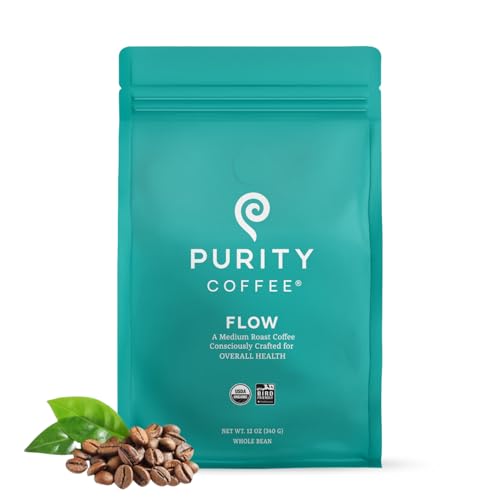
Purity is built specifically around clean-coffee testing. It is USDA Organic, and the brand’s whole pitch is lab testing for mold, mycotoxins, and pesticides plus processing choices aimed at preserving antioxidants. If your main reason for going organic is reducing contaminants in your coffee, this is the most targeted option.
It leads this page because its listing names USDA Certified Organic and Rainforest Alliance, which is more than anything else here puts in writing.
But for the specific goal of a low-mold, tested cup, it does exactly what it says.
What we liked: The testing focus and transparency around mold and mycotoxins is genuinely strong, and it is USDA Organic with a clean-processing story. It is a smooth cup aimed squarely at health-conscious drinkers.
Keep in mind: Like other tested premium coffees it costs more per cup, and it is mostly sold online. The health framing is marketing as much as science, so treat specific health claims with normal caution.
What the listing discloses: PURITY COFFEE commits to USDA organic certification, Rainforest Alliance and a B Corp certification but stops short of where it was grown or made.
Cleanest, most transparent cup: Lifeboost Coffee
| Organic Integrity Score | 89 / 100 |
| Certification | USDA Organic, Non-GMO |
| Origin | Single-origin, shade-grown (Nicaragua) |
| Testing | Third-party tested for mold, mycotoxins, pesticides |
| Profile | Smooth, low-acid; range of roasts |
| Best for | Cleanest, most transparent cup |
Lifeboost remains a sound option because it stacks the credentials that matter for clean coffee more completely than anything else we researched. It is USDA Certified Organic, single-origin from high-altitude farms in Nicaragua, and shade-grown, which is better for both flavor and the environment. Most importantly for a daily drink, the brand publishes third-party testing for mold, mycotoxins, and pesticides, the kind of sourcing transparency our method rewards heavily.
In the cup it is known for being smooth and low-acid, which is why people with sensitive stomachs gravitate to it, and it comes in a wide range of roasts from light to dark plus decaf and espresso. It is unapologetically a premium coffee, so you pay more per bag than a bulk brand, but you are paying for genuine testing and single-origin sourcing rather than marketing.
What we liked: The published third-party testing is the standout, few brands document mold and pesticide results this openly. It is USDA Organic and single-origin, shade-grown, and the smooth, low-acid profile makes it easy to drink black. The range of roasts means most people can find their preference.
Keep in mind: It is priced firmly at the premium end, so the cost per cup is higher than a big-bag value brand. It is mostly sold online rather than on grocery shelves, and the sheer number of roast options can be a little overwhelming at first.
What the listing discloses: Fully documented: LIFEBOOST states USDA organic certification and an origin of the USA.
Best dark roast: Kicking Horse Coffee
| Organic Integrity Score | 87 / 100 |
| Certification | Fair Trade, Certified Organic, Kosher |
| Signature roast | “Kick Ass” dark roast |
| Formats | Whole bean and ground |
| Best for | Bold, full-bodied dark-roast drinkers |
Kicking Horse is the pick for people who like a bold, full-bodied dark roast. It is both USDA Organic and Fair Trade certified, so you get clean beans and an ethical-sourcing layer, and it is one of the most widely available premium organic coffees in stores and online. Its flagship “Kick Ass” dark roast has a devoted following for a rich, deep, slightly smoky flavor.
It sits just below our top pick mainly because it does not publish the same detailed third-party mold and mycotoxin testing, but on certification, sourcing ethics, and everyday availability it is excellent. If a punchy dark roast is your daily driver, this is the one.
What we liked: It is USDA Organic and Fair Trade, a strong combination, and the bold dark roast is reliably consistent bag to bag. It is easy to find in stores, and the brand has a long, trusted reputation.
Keep in mind: A dark roast is intense by design, so if you prefer a lighter, brighter, more acidic cup this will taste too strong. It also does not publish the granular mold and pesticide testing that our top pick does.
What the listing discloses: Kicking Horse documents Fair Trade and kosher certification, and leaves whether the USDA seal applies and where it was grown or made unsaid.
Best value: Cafe Don Pablo Subtle Earth
| Organic Integrity Score | 81 / 100 |
| Certification | Non-GMO, Organic |
| Roast | Smooth, low-acid medium-dark |
| Size | Large 2 lb bags (low cost per pound) |
| Best for | Everyday organic on a budget |
Subtle Earth, made by Cafe Don Pablo, is the value pick and a genuine crowd-pleaser. It is USDA Organic, sold in large two-pound bags that bring the cost per pound well down, and its smooth, low-acid medium-dark roast is easy to drink for almost anyone, which makes it a great household default.
It scores in the middle because it is a solid, honest everyday coffee rather than a transparency showcase: you get the USDA Organic certification and a reliable roast at a very fair price, without the single-origin sourcing or published testing of the pricier picks. For most people brewing a pot every morning, that trade is exactly right.
What we liked: The price per pound is excellent for a certified-organic coffee, and the smooth, low-acid medium-dark roast pleases a wide range of tastes. The large bag is convenient for daily drinkers.
Keep in mind: A large bag only stays fresh if you seal it well and grind as you go, so transfer it to an airtight container. It does not offer the single-origin sourcing or third-party testing of our top picks.
What the listing discloses: Little to verify on the Cafe Don Pablo listing: no word on whether the USDA seal applies and where it was grown or made.
Best everyday value: San Francisco Bay Coffee
| Organic Integrity Score | 76 / 100 |
| Certification | — |
| Formats | Whole bean, ground, compostable pods |
| Best for | Organic across formats at everyday prices |
San Francisco Bay offers a wide range of USDA Organic coffees, including whole bean, ground, and compostable single-serve pods, all at everyday prices. It is the practical pick if you want organic coffee in whatever format your kitchen uses without overthinking it, and the compostable pods are a genuinely nice touch for pod machines.
It scores at the value end because the range is broad and results vary a little by line, and not every product the brand sells is organic, so you need to check the specific bag. Pick the certified-organic line that matches your taste and it is a dependable, affordable choice.
What we liked: USDA Organic options across whole bean, ground, and compostable pods, at reliable everyday prices. The compostable OneCup pods are a real plus for single-serve machines.
Keep in mind: The lineup is broad, so confirm the specific product is USDA Organic before buying, since not all are. Flavor consistency varies a little across the range.
What the listing discloses: Sparse documentation from SAN FRANCISCO BAY — nothing on whether the USDA seal applies and where it was grown or made.
How to store and brew organic coffee
Keep beans in an airtight, opaque container at room temperature, away from heat, light, and moisture; do not refrigerate. Buy whole bean and grind right before brewing, and use filtered water at about 195 to 205 degrees Fahrenheit. Buy only as much as you will use within a few weeks so the coffee stays close to its roast date.
The mycotoxin numbers, and what they justify
Our section above gives the fair assessment. Here are the specifics, because “mold-free coffee” has become a premium marketing category and the underlying facts are more mundane than the pitch.
Ochratoxin A (OTA) is the mycotoxin at issue, produced by molds that can grow on coffee cherries during drying and storage. The regulatory position differs by market:
- The European Commission sets a maximum of 3 µg/kg for roasted coffee beans.
- The FDA and Codex Alimentarius set no limit for OTA in coffee at all — there is no federally regulated limit in the United States.
That asymmetry is the strongest honest argument in the mold conversation: European coffee is tested against a legal threshold and American coffee is not. It is an argument for buying from roasters who test, not for any particular brand’s claim.
Keep in mind: roasting itself destroys most OTA. A 2013 study measured reductions of 56% to 97% across roasting conditions, with the largest reductions in dark roasts at coarse grinds — though residual OTA remained detectable in every condition tested. So the roast you are drinking has already been through the most effective mycotoxin removal step there is. A counterintuitive corollary: decaffeinated coffee has historically tested higher for OTA than caffeinated, with a 2015 study finding decaf samples many times over the EU legal limit. If mycotoxins genuinely worry you, decaf is the format to scrutinize, not premium single-origin.
Our position: mycotoxin testing is a legitimate quality signal and worth something, particularly in an unregulated market. It does not justify treating ordinary coffee as hazardous, and a brand selling “mold-free” as its primary proposition is charging you for something roasting largely does anyway.
Roast date is the number that matters
Coffee is at its best in a narrow window, and almost every bag on a supermarket shelf is outside it.
- Look for a roast date, not a best-before. A best-before date twelve months out tells you nothing; a roast date tells you everything. Roasters confident about freshness print it.
- Degassing: freshly roasted beans release CO₂ for several days. Espresso generally wants 7–14 days post-roast; filter can be good from 3–5 days. Coffee brewed the day after roasting tastes thin and sour because the CO₂ interferes with extraction.
- The window closes by about 4 weeks for peak flavor, though beans remain perfectly drinkable for months.
- Buy whole bean and grind at home. Ground coffee stales within days because of the surface area — this single change improves most people’s coffee more than switching brand or spending more.
- Buy smaller bags more often. A 1 kg bag bought for value is stale before you finish it.
Brewing: the ratios and temperatures
| Method | Grind | Ratio | Time |
| Espresso | Very fine | 1:2 | 25–30 sec |
| Moka pot | Fine-medium | 1:7–1:10 | Until it splutters |
| Pour over / V60 | Medium | 1:15–1:17 | 2.5–3.5 min |
| Drip machine | Medium | 1:16 | Automatic |
| French press | Coarse | 1:15 | 4 min |
| Cold brew | Very coarse | 1:8 concentrate | 12–18 hours |
- Water at 90–96°C. Boiling water scorches and over-extracts; below 90°C under-extracts and tastes sour. Boil, then wait 30 seconds.
- Bitter means over-extracted — grind coarser or brew shorter. Sour means under-extracted — grind finer or brew longer. Most people adjust the dose when they should adjust the grind.
- Weigh it. A scale is the cheapest meaningful upgrade in coffee, because scoops vary by roast density.
- Water is 98% of the cup. Very hard or heavily chlorinated water flattens good coffee; filtered water is a genuine improvement.
- Bloom pour-over coffee — wet the grounds with twice their weight in water and wait 30 seconds before continuing, letting the CO₂ escape.
Light versus dark, and the caffeine confusion
The common claim that dark roast has more caffeine, and the counter-claim that light roast does, are both right — they are measuring differently.
- By weight, light roast has slightly more caffeine, because roasting burns off a little.
- By volume — by the scoop — dark roast has less, because dark-roasted beans are less dense, so a scoop holds fewer beans.
- The difference either way is small. A cup of brewed coffee runs roughly 95–165 mg regardless, and brew method and dose matter far more than roast level.
- Dark roasts are not “stronger” in caffeine terms; they taste stronger because roasting develops bitter compounds.
- Light roasts show origin character — acidity, fruit, florals. Dark roasts taste of roasting. Neither is better, and if you have concluded you dislike light roast, it is often an under-extraction problem rather than a preference.
Where organic and shade-grown genuinely matter
- Coffee is among the more heavily sprayed crops in conventional production, which is a real argument for organic here — stronger than in most categories on this site.
- Shade-grown and Bird Friendly certification address habitat, which organic does not. Sun-cultivated coffee drives deforestation; Smithsonian Bird Friendly is the strictest habitat standard and requires organic certification as a baseline.
- Fair Trade and Direct Trade address grower income, which neither of the above covers. Coffee farmgate prices are volatile and frequently below cost of production.
- Roast quality is not certified by any of them. A badly roasted organic Bird Friendly Fair Trade coffee is still a bad cup.
Storage
- Airtight, opaque, room temperature, away from heat. Oxygen, light, heat and moisture are the four enemies.
- Do not refrigerate. Coffee is porous and absorbs fridge odors, and condensation on removal damages it. This is the most common storage mistake.
- Freezing works only if done properly — sealed in airtight portions, frozen once, and used straight from frozen without thawing and refreezing. For most people it is not worth the trouble.
- The one-way valve on a coffee bag lets CO₂ out without letting oxygen in. Keep beans in the original bag with the valve, rolled and clipped, rather than decanting into a jar with a large air space.
- Clean your equipment. Coffee oils go rancid, and stale residue in a grinder, French press or drip machine ruins fresh beans more thoroughly than poor storage does.
How we researched this guide
We are a research-based review site. We did not taste-test these coffees in a lab ourselves. We compared each against its certification records, sourcing and testing disclosures, roasting, and the weight of aggregated buyer and expert feedback, then scored each with our 10-criteria Organic Integrity Score. No brand paid to be included or ranked. Read the full method on our How We Research and Rate page.
Caffeine, thermogenesis and the milk in the cup
Coffee is the one product in this category with a genuine, measurable metabolic effect, and it is also where the effect is most reliably swamped by what gets added to it.
Caffeine increases resting energy expenditure modestly and acutely, on the order of a few percent for a few hours, and produces a small increase in fat oxidation. It also has a mild appetite-suppressing effect in some people. These findings are consistent enough to be uncontroversial.
The complication is tolerance. Habitual caffeine consumers show blunted thermogenic responses compared with occasional ones, so the effect is largest in exactly the people who drink coffee least. For a daily drinker, the metabolic contribution of the fourth cup is close to nothing.
The far larger variable is what is in the cup. Black coffee is 2 to 5 calories. A large flavored latte can exceed 300, which is more than a chocolate bar and more than any plausible thermogenic effect could offset several times over. The difference between a black coffee and a sweetened milky one dwarfs everything caffeine does.
Where coffee genuinely helps is as a training aid. Caffeine before exercise reliably improves perceived exertion and endurance performance, which means more work done, and that is a real if indirect route.
Timing is worth a note for a different reason. Caffeine has a half-life of around five hours, so an afternoon cup meaningfully affects sleep quality, and poor sleep is independently associated with increased appetite and worse food choices the following day.
Honest summary: a small real effect that tolerance erodes, easily canceled by additions, and most useful as a training aid and most harmful taken late.
Common questions about organic coffee
What is the best organic coffee?
Our overall pick is Purity Coffee, which scores highest here at 94, because its listing names USDA organic certification. For the best value, Cafe Don Pablo Subtle Earth offers USDA Organic coffee in a large bag.
Is organic coffee worth it?
Coffee is a heavily sprayed crop, and you drink it daily, so USDA Organic certification, which means no synthetic pesticides or fertilizers, is a meaningful upgrade. Organic coffee is widely available at a range of prices, so the premium can be small.
What is low-mold or mycotoxin-tested coffee?
Some brands publish lab tests showing low levels of mold and mycotoxins. Buying tested, single-origin, freshly roasted organic coffee is the practical way to reduce contaminants.
Should I buy whole bean or ground organic coffee?
Whole bean stays fresher. Grinding just before brewing gives the best flavor, but quality pre-ground organic coffee is fine for convenience.
How should I store organic coffee?
Keep it in an airtight, opaque container at room temperature, away from heat, light, and moisture, and use it within a few weeks of the roast date.
Is there really mold in coffee?
Ochratoxin A can occur, and roasting destroys most of it — a 2013 study measured 56% to 97% reductions across roasting conditions, with the largest in dark roasts at coarse grinds, though residual OTA remained detectable in every condition. The regulatory picture differs by market: the European Commission sets a maximum of 3 µg/kg for roasted beans, while the FDA and Codex set no limit at all. Testing is a legitimate quality signal, particularly in an unregulated market — it does not make ordinary coffee hazardous.
Does decaf coffee have more mycotoxins?
Historically it has tested higher, which surprises people. A 2015 study found decaf samples at levels many times over the EU legal limit for ochratoxin A. If mycotoxins genuinely concern you, decaf is the format to scrutinize rather than premium single-origin coffee.
Why does roast date matter more than best-before?
Because coffee peaks in a narrow window. A best-before date twelve months out tells you nothing; a roast date tells you everything, and roasters confident about freshness print it. Espresso generally wants 7 to 14 days post-roast and filter can be good from 3 to 5 days, since freshly roasted beans release CO₂ that interferes with extraction. Peak flavor fades by around four weeks.
Does grinding your own coffee actually matter?
It is the single biggest improvement most people can make — bigger than switching brand or spending more. Ground coffee stales within days because of the surface area exposed to oxygen. Buy whole bean, grind immediately before brewing, and buy smaller bags more often rather than a kilo that goes stale before you finish it.
What water temperature and ratio should you use?
90 to 96°C, and roughly 1:15 to 1:17 for filter methods — boil the kettle then wait 30 seconds. Bitter coffee is over-extracted, so grind coarser or brew shorter; sour coffee is under-extracted, so grind finer or brew longer. Most people adjust the dose when they should be adjusting the grind. A scale is the cheapest meaningful upgrade, since scoops vary by roast density.
Does dark roast have more caffeine than light?
Both claims are right, because they measure differently. By weight, light roast has slightly more, since roasting burns a little off. By volume — by the scoop — dark roast has less, because dark beans are less dense so a scoop holds fewer. The difference either way is small: a brewed cup runs roughly 95 to 165 mg regardless, and brew method and dose matter far more than roast level.
Is organic coffee worth buying?
The case is stronger here than in most categories, since coffee is among the more heavily sprayed crops in conventional production. Worth knowing that shade-grown and Smithsonian Bird Friendly certification address habitat, which organic does not — sun cultivation drives deforestation — and Fair Trade addresses grower income, which neither covers. None of them certifies roast quality.
Should you keep coffee in the fridge?
No — it is the most common storage mistake. Coffee is porous and absorbs fridge odors, and condensation on removal damages it. Store airtight, opaque, at room temperature away from heat. Keep beans in the original bag with its one-way valve, rolled and clipped, rather than decanting into a jar with a large air space. And clean your equipment — rancid coffee oils ruin fresh beans faster than poor storage does.
- Organic Food and Pantry hub
- Best Organic Green Tea
- Organic Product Database — search every product we have reviewed, by certification
- Best Organic Mushroom Coffee
- Best Burr Coffee Grinders
- Best French Press Coffee Makers
- Organic coffee and tea, explained
Price and availability as of October 16, 2026 7:10 pm EDT. Product prices and availability are accurate as of the date/time indicated and are subject to change. Any price and availability information displayed on Amazon.com at the time of purchase will apply to the purchase of this product.
Looking for other organic products?
We have checked more than 800 products across food, household goods, gardening, personal care and pet, every one against its stated certification. Browse all reviews.
Organic Connection is reader-supported. When you buy through links on this page we may earn a commission, at no extra cost to you. As an Amazon Associate we earn from qualifying purchases. We are not paid to feature or rank any product. How we research and rate.