Last updated: September 30, 2026
We may earn a commission when you buy through links on this page, at no extra cost to you. How we research and rate.
The short version
After researching the certifications, extraction methods, ingredient lists, and packaging of the most popular organic castor oils, our top pick is Heritage Store Organic Castor Oil. It is the only one here that states USDA certified organic in its listing body rather than just its title, puts hexane-free, vegan and cruelty-free beside it, explains why it uses dark glass, and outsells the rest of this page by roughly ten to one, which earned it our highest Organic Integrity Score of 92 out of 100. For castor oil packs, Queen of the Thrones is the extra-virgin, third-party-tested option. Prime Natural is the only listing that names its certifier, and Sky Organics is much the cheapest per ounce.
Every product below clears the same three non-negotiables: USDA Certified Organic, cold-pressed (not solvent-extracted), and hexane-free. The scores below reflect how they compare on our 10 criteria, so the gap between our 94-point top pick and the 74-point budget option is real and intentional. Always confirm the current certification and label on the product page before you buy.
Best organic castor oil compared
| Best Choice | Best Value | ||||
 |  |  |  |  | |
| Product | Heritage Store | Prime Natural Organic Castor Oil, 4 oz | Queen of the Thrones | Kate Blanc | Sky Organics |
| Organic Integrity Score | 92/ 100 | 90/ 100 | 86/ 100 | 85/ 100 | 82/ 100 |
| Our rating | 4.6 | 4.5 | 4.3 | 4.3 | 4.1 |
| Best for | Best overall | Certifier is named | Castor oil packs | Lash and brow kit | Cheapest per ounce |
| Certification | USDA Organic, Vegan | USDA Organic | Certified Organic | USDA Organic | — |
| Packaging | Dark glass, to protect the oil | 4 oz, the smallest here | Amber glass | 8 oz with applicator kit | 16 oz glass with dropper |
| Price | $21.39$1.34 / fluid ounce View on Amazon | Currently unavailable See buying options | $36.95$2.19 / fluid ounce View on Amazon | $7.99$4.00 / fluid ounce View on Amazon | $16.99 $24.97 −32%$1.06 / fluid ounce View on Amazon |
Price and availability as of October 15, 2026 7:10 pm EDT. Product prices and availability are accurate as of the date/time indicated and are subject to change. Any price and availability information displayed on Amazon.com at the time of purchase will apply to the purchase of this product.
Scores are ours, based on independent research of each product’s certification, ingredient purity, sourcing transparency, and packaging, using the same 10-criteria method we apply to every product.
The organic castor oil certifications, and the question each one leaves open
The labels on these products are not interchangeable, and several of them cover things that have nothing to do with each other. Here is what each one actually buys you.
| Certification | Covers | Key exclusion |
| USDA Organic | Farming and handling: no synthetic pesticides or fertilizers, no GMOs, no sewage sludge or irradiation, audited yearly by an accredited certifier | Three different tiers share the one seal, and it makes no claim about worker pay, food miles, or nutrition |
| GOTS | Organic fiber from farm to finished textile, plus dyeing, finishing, wastewater and labor criteria | Has a weaker second tier, “made with organic”, that needs only 70% organic fiber and carries the same name |
GOTS has a second tier that shares its name. The organic grade requires at least 95% certified organic fiber; the “made with organic” grade requires 70%, and both are labeled GOTS. It remains the strongest textile standard in the field, because it follows the fiber through dyeing, finishing, wastewater and working conditions rather than stopping at the farm. The percentage is on the label for a reason, and it is worth reading.
Key benefits of organic castor oil
Castor oil is a thick, ricinoleic-acid-rich plant oil that has been used in skin and hair care for generations. Choosing an organic, cold-pressed version means you get those benefits without the synthetic pesticide residues or solvent processing of cheaper oils. Here is what people actually use it for.
1. Skin moisturizing and conditioning
Castor oil is a humectant, which means it helps skin hold on to moisture, and it is popular as a nighttime facial and body oil. Many people reach for it for dry patches, cuticles, and lips because of its rich, occlusive feel. It is a well-loved home skincare oil rather than a medical treatment, so think of it as conditioning and hydrating rather than curing anything.
2. Fuller, healthier-looking hair
Its high ricinoleic acid content is why castor oil is a staple in hair routines. It conditions the hair shaft, can reduce breakage and the appearance of split ends, and is commonly massaged into the scalp before washing. Evidence for dramatic new hair growth is limited, so treat “grows hair” claims cautiously and expect conditioning and a healthier look rather than miracles.
3. Thicker-looking lashes and brows
The single most searched use is coating clean eyelashes and eyebrows at night. Over several weeks of consistent use, many people find their lashes and brows look fuller and more defined. This is why our lash-and-brow pick includes applicator brushes.
4. Clean, multi-use, and plant-based
A true single-ingredient organic castor oil is vegan, free of synthetic additives, and genuinely multi-purpose, doing the job of a hair mask, a cuticle oil, a castor oil pack, and a body oil from one bottle. Demand for this kind of clean, plant-based personal care is one of the fastest-growing parts of the beauty market as more people move away from synthetic ingredients.
Organic vs conventional castor oil: does it matter?
For a product you put on your skin, hair, and near your eyes, the growing and processing method matters. Conventional castor beans can be grown with synthetic pesticides, and lower-cost oils are more likely to be heat- or solvent-extracted. USDA Organic certification verifies the farming and handling and prohibits synthetic pesticides, and a cold-pressed, hexane-free label tells you no solvent was used to pull the oil out.
Does it make a measurable difference? Research suggests it can. A 2019 dietary intervention study found that switching to all-organic food for six days cut participants’ urinary levels of several pesticides by 60% to 95%, depending on the compound (study summary, full paper). That study looked at diet, but it demonstrates the same underlying benefit of organic certification: less exposure to the synthetic pesticides used in conventional farming. Groups like the Environmental Working Group track pesticide residues for the same reason. You are paying a small premium for a cleaner, better-documented product, which is the trade-off we weight in our scoring.
What the evidence actually says about castor oil and hair
Castor oil is bought overwhelmingly for hair, lashes, and brows, so it deserves a straight answer rather than repeated marketing.
The composition. Castor oil is roughly 85% to 90% ricinoleic acid, an unusual hydroxylated fatty acid found in almost no other oil, with smaller amounts of oleic and linoleic acid. That hydroxyl group is what makes castor oil so viscous and so distinctly sticky compared with other carrier oils, and it is the basis for most of the claims made about it.
On hair growth, honestly. There is no robust clinical trial evidence that castor oil stimulates hair growth, and none that it reverses androgenetic alopecia or alopecia areata. Anyone telling you otherwise is ahead of the data. What castor oil plausibly does is different and still worth something: it coats the shaft, improves elasticity, and reduces mechanical breakage, so you retain more of the length you were already growing. People genuinely do see longer hair, and the mechanism is retention rather than faster growth. For lashes and brows the same logic applies, with the added point that conditioned hairs look fuller.
The risk that almost no guide mentions: hair felting. Acute hair felting, clinically plica neuropathica, is a documented adverse effect specifically associated with castor oil. The oil’s extreme viscosity, combined with warm water and friction, can cause strands to twist and lock together into an irreversible mat. Published case reports describe patients whose only remedy was cutting the affected hair off. Risk is highest with long hair, curly or textured hair types, and heavy or overnight application.
Other reported effects include contact dermatitis and folliculitis, and castor oil is a known cause of allergic contact dermatitis in a minority of people.
| Rule | Why |
| Always dilute, roughly 1 part castor to 3 parts lighter oil | Cuts the viscosity that causes matting |
| Patch test on the inner arm first | Contact dermatitis is a real and documented reaction |
| Do not leave it on overnight | Long contact plus friction on a pillow is the felting scenario |
| Detangle before washing it out | Never pile long hair up and scrub |
| Extra caution on curly or textured hair | Case reports cluster in these hair types |
Jojoba, argan, or coconut oil all work well as the diluting carrier, and the blend is far easier to wash out than neat castor oil.
How to choose an organic castor oil
- USDA Certified Organic. “Organic” on the front label means little on its own. Look for the USDA Organic seal, which requires certification of the growing and handling process. It is the single strongest signal here.
- Cold-pressed, not solvent-extracted. Cold pressing uses mechanical pressure and keeps more of the oil intact. Cheaper oils can be extracted with solvents, which is exactly what the next point rules out.
- Hexane-free. Hexane is a solvent sometimes used in extraction. A hexane-free statement tells you the oil was not processed with it.
- Single ingredient. The ingredient list should read “100% castor oil” or “organic castor seed oil.” Added fragrance, mineral oil, or fillers do not belong in a pure castor oil.
- Glass, ideally dark. Glass avoids the leaching risk of plastic, and dark glass limits light exposure for oils you use slowly.
- Right accessories for the job. For lashes and brows, a bottle that includes applicators saves money; for packs, a larger bottle or a pack-specific product makes more sense.
Who should buy organic castor oil
Castor oil is one product with several very different jobs. People buy it to condition hair and thicken the look of lashes and brows, as a slow-absorbing facial and body oil, and to soak cloths for castor oil packs. The best bottle for you depends on which of those you are doing most, so we have called out the best pick for each use rather than pretending one bottle wins for everyone.
Best overall: Heritage Store Organic Castor Oil
| Organic Integrity Score | 92 / 100 |
| Certification | USDA Organic, Vegan |
| Extraction | Cold-pressed, hexane-free |
| Packaging | Light-protective dark amber glass |
| Ethics | Cruelty-free and vegan |
| Best for | Anything you would use castor oil for, from packs to skin to hair |
Heritage Store is our top pick because its listing does the work the others leave to assumption. It states USDA certified organic in the description rather than only in the title, and puts hexane-free, vegan and cruelty-free alongside it. When you are using an oil a few drops at a time over many weeks on your face, cuticles, and dry patches, that dark glass genuinely helps keep the oil fresh by limiting light exposure.
It also explains its packaging instead of just having some: dark glass, described as chosen to preserve the integrity of the oil. Castor oil is bought in 16 ounce bottles and used a few drops at a time over months, so light exposure is a real variable rather than a marketing line.
And it is not a niche product. It outsells every other castor oil on this page by roughly ten to one, which under our criteria for buyer feedback and brand record counts for a good deal. It sits in the middle on price.
What we liked: The dark glass is the standout for skincare buyers, protecting the oil over the long time it takes to use up a bottle on the face. The cruelty-free and vegan stance is clearly stated, and the formula is clean and single-ingredient, from a brand with a long track record.
Keep in mind: Availability of specific bottle sizes varies, so check the size on the product page before buying to compare cost per ounce. It is positioned more for skin than for high-volume hair masks or packs, and the price sits a little above the plainest value bottles.
What the listing discloses: On the HERITAGE STORE label: USDA organic certification. Not stated: where it was grown or made.
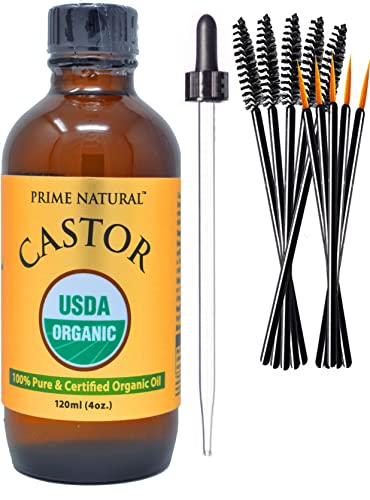
Best documented certification: Prime Natural Organic Castor Oil, 4 oz
| Organic Integrity Score | 90 / 100 |
| Certification | USDA Organic |
| Extraction | Cold-pressed, hexane-free |
| Size | 4 oz. The smallest bottle here, and the dearest per ounce |
| Best for | Anyone who wants to see the certifier named before buying |
Prime Natural does the single most useful thing any listing on this page does: it names the certifier. “USDA certified Organic By OneCert” is a checkable statement, because OneCert is a real accredited certifying agent whose client list is public. Every other product here says organic and leaves you to take it on trust.
We previously listed this as the budget pick with a larger bottle, and that was wrong on both counts. It is a 4 ounce bottle, the smallest on this page, and at about $2.75 an ounce it is the most expensive castor oil here per unit — roughly two and a half times our top pick. Corrected.
It is also much the slowest seller of the five. Buy it for the certification transparency, in a small bottle, at a price that reflects neither.
What we liked: It delivers the essential credentials, USDA Organic, cold-pressed, and hexane-free, at the lowest cost per ounce of our picks, thanks to the larger bottle. That makes it the practical choice for people going through a lot of oil on hair and packs.
Keep in mind: It has a smaller and less consistent pool of buyer feedback than the top brands, so the batch-to-batch consistency signal is thinner, which is the main reason it scores lower. The packaging is more basic, and a large bottle should be stored well-capped and out of light so it stays fresh before you finish it.
What the listing discloses: PRIME NATURAL documents USDA organic certification, and leaves where it was grown or made unsaid.
Best premium and for castor oil packs: Queen of the Thrones
| Organic Integrity Score | 86 / 100 |
| Certification | Certified Organic |
| Testing | Third-party tested |
| Packaging | Amber glass |
| Best for | Castor oil packs, premium use |
Queen of the Thrones is the premium, purpose-built option, positioned as an extra-virgin, USDA Certified Organic castor oil that is third-party tested and bottled in amber glass. It is built specifically around castor oil packs, and the brand sells the packs and accessories to match, so if that is your intended use it is a natural, well-supported choice.
The extra-virgin designation and the stated third-party testing are legitimate transparency points, and it is the second best-selling oil here. What holds it back is price and availability: at roughly $2.19 an ounce it costs twice what our top pick does, and at the time of writing it ships on a future date rather than immediately.
Its listing says “certified organic” without naming who certified it, which is the same gap most of this category has.
What we liked: The extra-virgin quality, published third-party testing, and amber glass are a strong transparency package, and it is clearly the best-supported option if castor oil packs are your main use. The brand’s education and accessories make it easy to get started with packs.
Keep in mind: It is usually the most expensive per ounce of our picks, and the brand ecosystem steers you toward its own packs and add-ons. If you just want plain organic castor oil for hair or skin, you can get the same core credentials for less elsewhere.
What the listing discloses: Little to verify on the QUEEN OF THE THRONES listing: no word on whether the USDA seal applies and where it was grown or made.
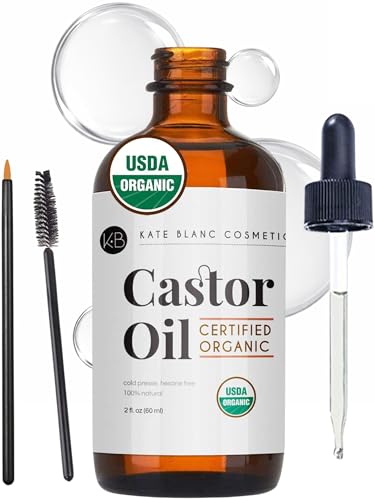
Best for hair, lashes and brows: Kate Blanc
| Organic Integrity Score | 85 / 100 |
| Certification | USDA Organic |
| Extraction | Cold-pressed, hexane-free |
| Included | Mascara + brow/liner brushes, funnel |
| Size | 8 oz |
| Best for | Eyelashes, eyebrows, hair |
Kate Blanc earns its place by pairing the same core credentials, USDA Certified Organic, cold-pressed, and hexane-free, with the accessories that make the single most-searched use of castor oil actually practical: eyebrows and eyelashes. Most versions ship as a kit with mascara-style spoolie brushes, an eyeliner-style brush, and a funnel, packaged in a gift box. That removes the friction of buying applicators separately and is why it is our pick specifically for lash and brow routines.
It scores lowest here, and not because of the oil. Its listing has no description — no feature bullets, no detail, nothing beyond a title claiming USDA Certified Organic. We can neither check that claim nor the applicator kit against anything the seller has published. It is also close to the bottom of the category on sales and is currently out of stock.
If it returns with a proper listing we will look again. Until then it is here as the lash-and-brow option rather than as a recommendation we can stand behind on evidence.
What we liked: The included applicators make lash and brow use genuinely easy, and the kit presentation makes it a natural gift. The oil is cold-pressed and hexane-free like our top pick, so the credentials are strong, and the brand has a solid reputation specifically for hair and brow results.
Keep in mind: You are partly paying for the applicators, so if you only want plain oil for skin or castor oil packs, a no-frills bottle is better value per ounce. The kit sizes tend to be small, so heavy hair-mask users will go through it quickly. As with any lash product, results take weeks of consistent nightly use, not days.
What the listing discloses: On the Kate Blanc Cosmetics label: USDA organic certification. Not stated: where it was grown or made.
Lowest price per ounce: Sky Organics Organic Castor Oil
| Organic Integrity Score | 82 / 100 |
| Certification | — |
| Extraction | Cold-pressed, hexane-free |
| Packaging | Amber glass bottle with dropper |
| Best for | Getting the most castor oil for the money |
Sky Organics is the cheapest way to buy castor oil on this page, at roughly a dollar an ounce for sixteen ounces in glass. It is cold-pressed rather than solvent-extracted and carries a hexane-free statement, so the oil was pressed from the seed mechanically instead of pulled out with a chemical solvent.
This was our top pick and we have moved it down four places. Our spec table used to record it as “USDA Certified Organic (single ingredient)”. Reading the listing again, that is not what it says. The description calls the oil “100% pure, cold-pressed, organic, and hexane-free” and names no certifying body anywhere. The word organic in a cosmetics title carries far less legal weight than it does on food, which is exactly the case where a named certifier matters most.
None of that means the oil is bad. It sells well, it is in glass, and it is comfortably the best value here. It means the page was crediting it for a certification its own listing does not evidence.
What we liked: The purity is the headline, one certified-organic ingredient and nothing else. The glass packaging protects the oil far better than the plastic bottles many competitors use, and the sheer volume of consistent buyer feedback is reassuring in a category where quality can vary batch to batch. It is versatile enough to be the only castor oil most people need.
Keep in mind: It usually comes in a smaller bottle than the budget brands, so the price per ounce is not the lowest here. The glass dropper is functional rather than luxurious, and because it is thick, pure castor oil, it pours slowly, which is normal but worth knowing.
What the listing discloses: Sky Organics states a single-ingredient formula, and does not say whether the USDA seal applies and where it was grown or made.
How to use organic castor oil
Castor oil is thick and slow to absorb, so a little goes a long way. Patch test on your inner arm first and wait 24 hours before wider use, especially on the face.
For hair and scalp
Warm a small amount between your palms, massage it into your scalp and through the lengths, and leave it on for 30 minutes to overnight before washing out. Because it is heavy, most people use it once or twice a week rather than daily. A plain bottle or a kit both work here.
For eyelashes and eyebrows
Dip a clean mascara-style spoolie in the oil, wipe off the excess, and stroke it along clean, makeup-free brows or lash lines before bed. Keep it out of your eyes, and expect gradual results over several weeks.
For skin and face
Use a few drops as a nighttime facial oil or mix it into a carrier like jojoba if it feels too heavy on its own. It is also popular for cuticles, dry patches, and lips. Choose the dark glass options for skincare so the oil stays fresh through slow use.
For castor oil packs
A castor oil pack is a cloth soaked in the oil and applied to the skin, usually over the abdomen. The extra-virgin, third-party-tested oils are marketed specifically for this, and a larger budget bottle is cost-effective if you do it regularly.
Ricin: the fear, and why it does not apply to the oil
Castor seeds contain ricin, one of the more notorious plant toxins, which understandably worries people buying the oil.
It does not carry through. Ricin and ricinine are removed during processing — ricin is a water-soluble protein, so it stays in the pressed seed cake rather than the oil, and the heat treatment applied to that cake denatures it. Commercial castor oil does not contain ricin, which is why it has been used as a pharmaceutical and food-additive ingredient for well over a century.
The seeds themselves are genuinely dangerous if chewed, so a castor plant in a garden with young children or pets is worth thinking about. The bottle in your bathroom is not.
Pregnancy and labor induction: what ACOG says
Keep in mind: castor oil is widely passed around as a home method for inducing labor, and this is the most consequential safety point on the page. The American College of Obstetricians and Gynecologists does not recommend castor oil for labor induction, citing insufficient evidence for efficacy and safety, and there are no clinical trials adequately supporting the practice.
The mechanism is not imaginary, which is part of why the folklore persists. Ricinoleic acid — the fatty acid that makes castor oil a laxative — has been shown in animal work to activate intestinal and uterine smooth muscle via EP3 prostanoid receptors. That is precisely why it should not be casually self-administered in pregnancy: it can stimulate uterine activity in an uncontrolled way, and the usual accompaniments are violent diarrhea, cramping, nausea, dehydration and electrolyte disturbance — none of which is what you want going into labor.
- Do not use castor oil in pregnancy for any purpose without your obstetrician or midwife directing it.
- That includes topical use over the abdomen in the third trimester, which is a common suggestion and not one we would repeat.
- If you are past your due date, induction is a clinical decision with monitoring, and that is the route.
Internal use as a laxative
Castor oil is a genuine and effective stimulant laxative, and is available over the counter as such. That does not make it a good routine choice.
- It works fast and hard — typically within 2 to 6 hours — and the experience is frequently unpleasant. Cramping, urgency and nausea are common rather than exceptional.
- It is not for regular use. Stimulant laxatives are for occasional, short-term situations; repeated use risks dependence and electrolyte disturbance.
- Not for children without medical direction, and not in pregnancy as above.
- Avoid entirely with intestinal obstruction, appendicitis symptoms, inflammatory bowel disease or undiagnosed abdominal pain.
- Gentler options exist — fiber, osmotic laxatives, adequate fluid — and are the sensible first line for ordinary constipation.
Hair, lashes and the evidence gap
Our section above addresses this. Two practical additions worth having.
There is no good clinical evidence that castor oil grows hair. No randomized trial supports it, and the popular claim rests on tradition and anecdote. What it can genuinely do is coat and lubricate the hair shaft, reduce breakage from mechanical damage, and make hair look thicker and shinier — which is a real benefit and a different claim from growth. If you want evidence-backed hair growth, that conversation is minoxidil and a dermatologist.
Keep in mind: castor oil is extremely viscous — far thicker than almost any other cosmetic oil — and applying it heavily to long or textured hair can produce severe, dense matting that ordinary washing and combing will not release. Cases severe enough to require cutting the hair out have been reported. If you use it on hair: dilute it roughly 1 part castor to 2–3 parts of a lighter oil such as jojoba or coconut, apply sparingly to lengths and scalp rather than saturating, and never leave undiluted castor oil in long hair overnight.
Lashes and brows: the same absence of evidence applies, and the added risk is the eye itself. Castor oil in the eye causes stinging and blurring, and applicator hygiene matters — a contaminated wand near the lash line is a genuine infection route. If you use it, apply sparingly with a clean disposable spoolie and keep it off the lash line itself.
Cold-pressed, Jamaican black, and what the labels mean
| Cold-pressed (standard) | Jamaican black castor oil | |
| Processing | Seeds pressed without heat, filtered | Seeds roasted, then pressed; ash from the roasting is retained |
| Color and smell | Pale yellow, faint | Dark brown, smoky |
| pH | Near neutral | More alkaline, from the ash |
| Claims | — | Often marketed as more effective for hair; this is traditional rather than demonstrated |
Both are roughly 90% ricinoleic acid, which is unusual — no other common oil is dominated by a single fatty acid to that degree, and it is the source of castor’s distinctive thickness and its laxative action. The alkalinity of Jamaican black castor oil is worth knowing if you have a sensitive or already-irritated scalp, since higher pH is harder on the skin barrier.
“Hexane-free” is worth looking for, as is cold-pressed — solvent-extracted castor oil exists and is used industrially.
Skin use and castor oil packs
- It is a heavy occlusive and rates low on the comedogenic scale, but its sheer thickness means most people should dilute it for facial use rather than applying neat.
- Good for: dry patches, cuticles, heels, lips, and as part of an oil cleanse where its viscosity actually helps dissolve makeup.
- Castor oil packs — cloth soaked in castor oil applied over the abdomen or liver with heat — have no clinical evidence behind the detoxification, liver support or hormonal claims made for them. They are a warm compress with oil on it, which is pleasant and relaxing, and that is the honest description. If you enjoy them, nothing here says stop; the claims are not supported.
- Patch test, since castor oil is an occasional contact allergen.
- It stains fabric and bedding persistently. Use an old pillowcase.
Storage
- 1–2 years in a cool, dark place, sealed. Castor oil is more stable than most cosmetic oils because it is largely monounsaturated ricinoleic acid.
- Dark glass over plastic.
- Do not refrigerate — it thickens dramatically and becomes difficult to use.
- Rancidity smells sharp and sour; fresh castor oil is close to odorless with a faint waxy note.
- Warm the bottle in hot water before use in winter — it pours very slowly when cold.
How we researched this guide
We are a research-based review site. We did not lab-test these oils ourselves. We compared each product against its certification records, ingredient lists, stated extraction method, packaging, and the weight of aggregated buyer and expert feedback, then scored each one with our 10-criteria Organic Integrity Score. No brand paid to be included or ranked. You can read the full method on our How We Research and Rate page.
Common questions about organic castor oil
What is the best organic castor oil?
Our overall pick is Heritage Store Organic Castor Oil, which scores highest here at 92, because its listing names USDA organic certification. For hair, lashes, and brows, Kate Blanc is the better buy thanks to its applicator kit.
Is cold-pressed castor oil better than regular castor oil?
Cold-pressed oil is extracted with mechanical pressure rather than heat or solvents, which helps preserve the oil. Pairing cold-pressed with a hexane-free statement is the combination to look for.
Does castor oil need to be USDA Organic?
It does not have to be, but USDA Organic certification is the most reliable way to confirm the growing and handling process was verified by a third party rather than just claimed on the label.
Does organic castor oil actually grow hair or lashes?
Evidence for dramatic hair growth is limited. Castor oil conditions hair, reduces breakage, and can make lashes and brows look fuller and healthier, but treat “grows hair” claims cautiously.
How should I store castor oil?
Keep it tightly capped in a cool, dark place. Glass, and especially dark glass, helps it stay fresh, which is one reason we favor glass-bottled options.
Why is hexane-free important?
Hexane is a solvent sometimes used to extract oil cheaply. A hexane-free, cold-pressed label tells you the oil was pressed mechanically instead, which is what you want in a product you apply to skin and hair.
Does castor oil contain ricin?
No. Ricin and ricinine are removed during processing — ricin is a water-soluble protein that stays in the pressed seed cake rather than the oil, and the heat applied to that cake denatures it. Commercial castor oil does not contain ricin, which is why it has been used pharmaceutically for well over a century. The raw seeds are genuinely dangerous if chewed, so a castor plant in a garden with children or pets is worth thinking about; the bottle is not.
Is castor oil safe to use to induce labor?
No — the American College of Obstetricians and Gynecologists does not recommend it, citing insufficient evidence for efficacy and safety, and no clinical trials adequately support the practice. The mechanism is not imaginary, which is why the folklore persists: ricinoleic acid activates intestinal and uterine smooth muscle via EP3 prostanoid receptors. That is exactly why it should not be self-administered — it can stimulate uterine activity uncontrollably, alongside violent diarrhea, cramping, dehydration and electrolyte disturbance.
Can you use castor oil while pregnant?
Not without your obstetrician or midwife directing it — and that includes topical use over the abdomen in the third trimester, which is a common online suggestion we would not repeat. If you are past your due date, induction is a clinical decision made with monitoring.
Does castor oil make your hair grow?
There is no good clinical evidence that it does. No randomized trial supports the claim, which rests on tradition and anecdote. What castor oil genuinely does is coat and lubricate the hair shaft, reducing breakage from mechanical damage and making hair look thicker and shinier — a real benefit, and a different claim from growth. For evidence-backed hair growth, that is a conversation about minoxidil with a dermatologist.
Can castor oil damage your hair?
It can tangle it badly. Castor oil is far more viscous than almost any other cosmetic oil, and applying it heavily to long or textured hair can produce dense matting that washing and combing will not release — cases severe enough to need cutting out have been reported. Dilute it roughly 1 part castor to 2 or 3 parts jojoba or coconut oil, apply sparingly rather than saturating, and never leave it undiluted in long hair overnight.
Is castor oil a good laxative?
It is genuinely effective and not a good routine choice. It works within 2 to 6 hours and the experience is frequently unpleasant, with cramping, urgency and nausea common rather than exceptional. Stimulant laxatives are for occasional short-term use; repeated use risks dependence and electrolyte disturbance. Avoid entirely with suspected obstruction, appendicitis symptoms, IBD or undiagnosed abdominal pain.
Do castor oil packs work?
There is no clinical evidence behind the detoxification, liver support or hormonal claims made for them. A castor oil pack is a warm compress with oil on it, which is pleasant and relaxing — that is the honest description. If you enjoy them, nothing here says stop; the claims are simply not supported.
What is Jamaican black castor oil?
Castor seeds roasted before pressing, with ash from the roasting retained — giving a dark brown color, smoky smell and a more alkaline pH. Both it and standard cold-pressed oil are roughly 90% ricinoleic acid, which is unusual for any oil and the source of castor’s thickness. Claims that the black version is more effective for hair are traditional rather than demonstrated, and the higher pH is worth knowing if your scalp is sensitive.
- Organic Skincare and Beauty hub
- Best Organic Jojoba Oil
- every product we have reviewed — filter by USDA Organic, GOTS, Fair Trade and more
Price and availability as of October 15, 2026 7:10 pm EDT. Product prices and availability are accurate as of the date/time indicated and are subject to change. Any price and availability information displayed on Amazon.com at the time of purchase will apply to the purchase of this product.
Looking for other organic products?
We have checked more than 800 products across food, household goods, gardening, personal care and pet, every one against its stated certification. Browse all reviews.
Organic Connection is reader-supported. When you buy through links on this page we may earn a commission, at no extra cost to you. As an Amazon Associate we earn from qualifying purchases. We are not paid to feature or rank any product. How we research and rate.