
Last updated: September 30, 2026
We may earn a commission when you buy through links on this page, at no extra cost to you. We were not sent samples and no brand paid for placement. How we research and rate.
The short version
Buckwheat pillows solve a problem foam cannot: they hold whatever shape you push them into and stay there, and they do not trap heat. The catch is that they are heavy, they rustle, and the first week is an adjustment.
Our top pick is the LOFE Organic Buckwheat Pillow, which is by a wide margin the most established option in the category and pairs milled hulls with an organic cotton cover and a zip you can actually use to adjust the fill. APOBUY is the pick if you want a large size cheaply, and Sachi Organics is the one to buy if you want an American-made cylinder for neck support rather than a standard rectangle.
An honest note on the word organic here: on almost every buckwheat pillow sold, “organic” refers to the cotton cover, not the hulls inside. Buckwheat hulls are an agricultural by-product and very few are separately certified. We have said which component is certified for each pick rather than letting the product name do the work.
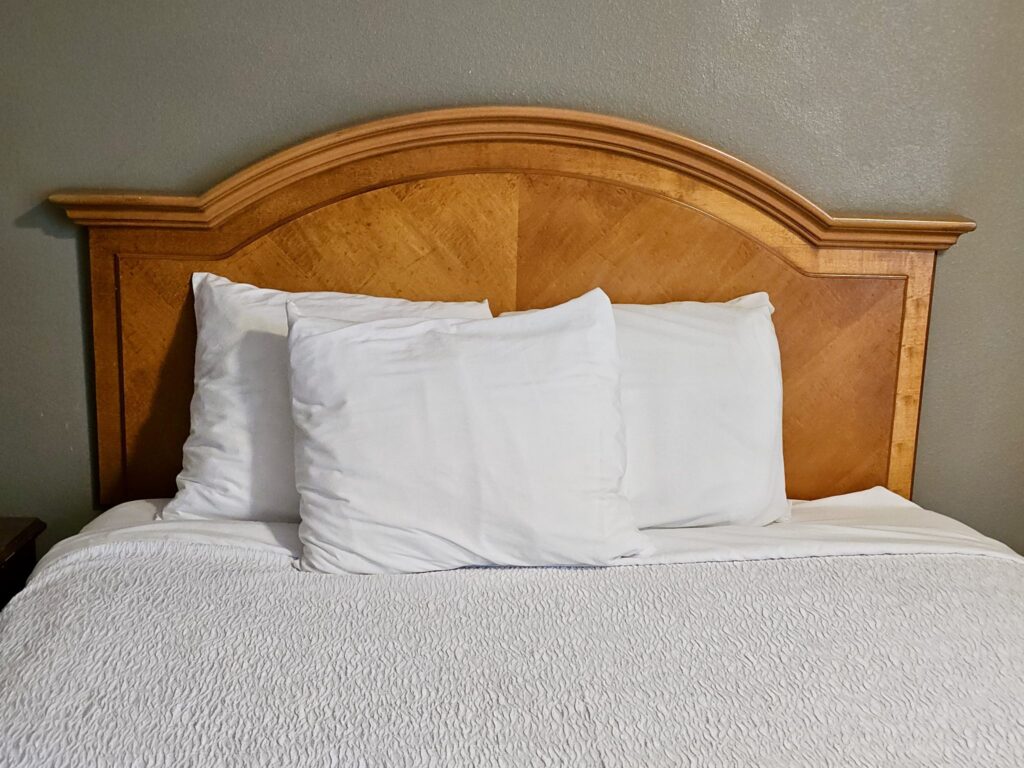
Best organic buckwheat pillow compared
Five pillows, scored on the same criteria. The Organic Integrity Score is out of 100 and our rating is that score expressed out of five. Prices update automatically.
| Best Choice | Best Value | ||||
 |  |  |  |  | |
| Product | LOFE Organic | Sachi Organics | APOBUY Large | MIOTO | USlixury |
| Organic Integrity Score | 90/ 100 | 87/ 100 | 85/ 100 | 82/ 100 | 80/ 100 |
| Our rating | 4.5 | 4.4 | 4.3 | 4.1 | 4.0 |
| Shape | Standard rectangle | Cylinder bolster | Large rectangle | Standard rectangle | Small rectangle |
| Sales rank | Strongest in category | Niche | Mid | Lower | Mid |
| Best for | Most people, first | Neck support | Large pillow cheaply | Lowest entry price | Smaller frames and travel |
| Cover | Organic cotton, removable and washable | Organic cotton | Organic cotton, plus a spare case included | Organic cotton pillowcase included | Organic cotton |
| Fill | Milled buckwheat hulls, adjustable via zip | — | Buckwheat hulls, adjustable | Buckwheat hulls, adjustable | Buckwheat hulls, adjustable |
| Price | $56.99 View on Amazon | $43.00 View on Amazon | Currently unavailable See buying options | $29.99 $33.99 −12% View on Amazon | $35.99 View on Amazon |
- Organic Household hub
- our organic product database — compare brands across every guide
Price and availability as of October 27, 2026 7:10 am EDT. Product prices and availability are accurate as of the date/time indicated and are subject to change. Any price and availability information displayed on Amazon.com at the time of purchase will apply to the purchase of this product.
The organic buckwheat pillow certifications, and the question each one leaves open
Certification names are easy to confuse and easy to trade on. Below is what each of these marks covers, and the part of the picture it says nothing about.
| Certification | Covers | Key exclusion |
| GOTS | Organic fiber from farm to finished textile, plus dyeing, finishing, wastewater and labor criteria | Has a weaker second tier, “made with organic”, that needs only 70% organic fiber and carries the same name |
| GOLS | Latex specifically: at least 95% certified organic latex content | Applies to the latex only, never to the cover fabric, the fill, or any foam layers around it |
What makes GOTS unusual is how far past the farm it reaches. Most organic marks certify how a crop was grown and stop there. GOTS carries the requirement through spinning, weaving, dyeing and finishing, bans a long list of processing chemicals, sets wastewater limits, and adds labor criteria at every stage. That is why a GOTS textile costs more than a fabric merely woven from organic cotton, and why the two are not the same claim.
Why buckwheat instead of foam or down
The appeal is mechanical rather than mystical, and it comes down to three properties that no other common fill combines.
It holds a shape without pushing back
Foam compresses and then tries to return, which means it exerts continuous upward pressure on your head all night. Down compresses and stays flat until you fluff it. Buckwheat hulls slide past each other, settle into whatever contour you make, and then lock in place because the irregular shapes interlock. The result is support that matches your position rather than resisting it, which is why people with neck pain often prefer it.
It does not trap heat
Hulls are hollow and irregular, so a filled pillow is mostly air channels. Body heat moves out rather than accumulating under your head the way it does in memory foam. If you flip the pillow looking for the cool side, this is the fill that removes the problem rather than delaying it.
You can change the amount
Every pillow here has a zip. Take hulls out for a lower loft, add them for more. Almost no other pillow type lets you tune the height this precisely, and height is the single most common reason a pillow does not work.
The honest drawbacks
Worth stating before you spend the money, because two of these surprise people.
They are heavy. A standard-size buckwheat pillow weighs several pounds, often five or more. Moving it around the bed is a different experience from a down pillow, and it is genuinely awkward for travel.
They rustle. Hulls shift audibly when you move. Most people stop noticing within a week or two, but if you are a light sleeper sharing a bed, it is a real consideration. Higher-quality milled hulls rustle less than cheap ones, which is one of the few places where paying more changes the experience directly.
The first nights feel firm. Coming from foam or down, buckwheat feels hard at first because it does not compress under weight the way you expect. Give it a week and adjust the fill quantity before deciding it is wrong.
The hulls eventually break down. After a few years the hulls fragment and the fill loses loft. The good news is that replacement hulls are cheap and sold separately, so the pillow itself lasts far longer than the fill does.
How we scored these pillows
Every product on this site is scored out of 100 against the same ten criteria. Four mattered most here.
What is actually certified
We checked whether the organic claim attaches to the cover, the hulls, or neither, reading the product listing itself rather than the title. Search results in this category carry a lot of sponsored placements, and a certification seal on the page frequently belongs to a different product entirely.
Hull quality and milling
Hulls should be cleaned and milled to remove dust and residual flour. Poorly processed hulls smell faintly of grain, rustle more, and are the usual cause of the complaints about dust. Listings that describe washing and heat treatment score better than those that say nothing.
Fill adjustability
A zip that opens fully and a supplied bag for spare hulls make the difference between a pillow you can tune and one you are stuck with.
Cover washability
The hulls must never get wet. A removable, machine-washable outer cover is what makes the pillow practical rather than a maintenance problem.
Best overall: LOFE Organic Buckwheat Pillow
| Organic Integrity Score | 90 / 100 |
| Cover | Organic cotton, removable and washable |
| Fill | Milled buckwheat hulls, adjustable via zip |
| Shape | Standard rectangle |
| Best for | The safest first buckwheat pillow |
LOFE is the best-selling buckwheat pillow on Amazon by a wide margin, and in this category that is more meaningful than usual. Hull quality varies a lot between manufacturers, and volume tends to correlate with consistent processing rather than a single good batch.
The hulls are milled and cleaned, which is the difference between a pillow that smells faintly of grain and one that does not. The cover is organic cotton and removable, and the zip runs far enough to actually get a hand inside and remove fill, which sounds trivial until you try it on a pillow where it does not.
It comes in several sizes at different prices. Buy the size that matches your frame rather than the cheapest, because a pillow narrower than your shoulders defeats the purpose for side sleeping.
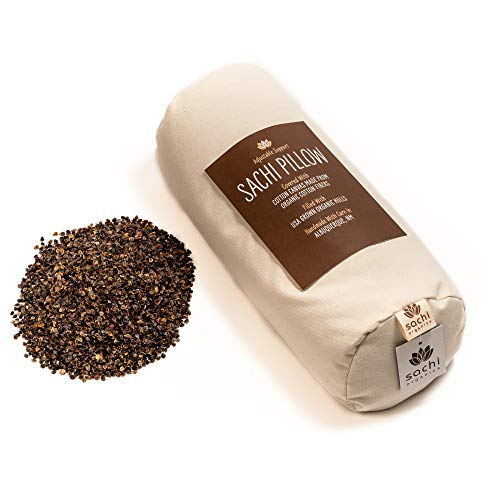
Best for neck support: Sachi Organics Buckwheat Cylinder
| Organic Integrity Score | 87 / 100 |
| Shape | Cylinder bolster rather than a rectangle |
| Cover | Organic cotton |
| Origin | Made in the USA |
| Best for | Cervical support, or under the knees |
A different product for a different job. The cylinder shape sits under the neck rather than under the head, filling the gap between the mattress and the cervical curve. People who wake with neck stiffness often find this more useful than any rectangular pillow, used alone or tucked in front of a flatter one.
Sachi is a small American manufacturer and has been making these for a long time, which shows in the hull processing. It is also genuinely versatile: the same bolster works under the knees for lower back comfort when sleeping on your back.
It is not a replacement for a main pillow if you sleep on your side, so treat it as a companion rather than the whole solution.
Best large size: APOBUY Organic Buckwheat Pillow
| Organic Integrity Score | 85 / 100 |
| Size | 20 x 26 inches, standard bed pillow footprint |
| Cover | Organic cotton, plus a spare case included |
| Fill | Buckwheat hulls, adjustable |
| Best for | A full-size buckwheat pillow at a lower price than the leaders |
At 20 by 26 inches this is a proper bed-pillow footprint rather than the smaller sizes common in this category, and it costs less than the equivalent LOFE. If you want buckwheat as your permanent main pillow and you are a side sleeper, the extra width matters more than almost any other spec.
Including a spare cotton case is a genuinely useful touch, because the cover needs washing more often than you would expect and the pillow is unusable while it dries.
The trade-off is weight. A pillow this size filled with hulls is heavy enough to notice every time you move it, and that is worth thinking about if you rearrange your pillows during the night.
Lowest price: MIOTO Organic Buckwheat Pillow
| Organic Integrity Score | 82 / 100 |
| Cover | Organic cotton pillowcase included |
| Fill | Buckwheat hulls, adjustable |
| Best for | The cheapest way in, if the leaders are out of stock |
MIOTO is the lowest entry price in the group and includes an organic cotton case. It is a newer listing with less history behind it, which is the main reason it scores below LOFE and APOBUY rather than anything visible in the specification.
If the established options are unavailable or you want to spend as little as possible on the experiment, this is a reasonable place to start. If it works for you and the hulls degrade, replacement hulls are inexpensive and any pillow here can be refilled.
Best value: USlixury Organic Buckwheat Pillow
| Organic Integrity Score | 80 / 100 |
| Cover | Organic cotton |
| Size | 14 x 20 inches, larger sizes available |
| Fill | Buckwheat hulls, adjustable |
| Best for | Trying buckwheat cheaply, smaller frames, travel |
The 14 by 20 size makes this the cheapest sensible way to find out whether buckwheat suits you at all. It is also the most practical of these for travel, though “practical for travel” is relative when the fill is this dense.
The small size is a genuine limitation for side sleeping if you have broad shoulders, because the pillow needs to span the width of the shoulder to hold the head level. USlixury sell larger versions, and if this is intended as your main pillow rather than a trial, buy up a size.
Scored lower than LOFE mainly on hull processing detail: the listing says less about cleaning and milling, and that is the variable that most affects dust and smell.
Buckwheat compared with the other natural fills
Buckwheat is one of several plant fills sold as alternatives to foam and down, and they behave differently enough that the choice is worth making deliberately.
Millet hulls are smaller and lighter than buckwheat, so a millet pillow weighs noticeably less and conforms more finely. The trade-off is support: millet compresses more under the same load, so it feels softer and needs more fill to reach the same height. It is the better choice for children or anyone who finds buckwheat too firm.
Kapok is a silky fiber from the seed pods of the kapok tree, and it behaves much more like down: light, lofty, and compressible. It does not hold a shape the way hulls do, and it flattens over time and needs fluffing. It is the natural fill to choose if you want a soft pillow rather than a supportive one.
Shredded latex sits between the two. It is mouldable like hulls but springy like foam, and it is lighter than buckwheat while still holding loft. It is also the only one of these that comes with meaningful organic certification on the fill itself, through GOLS, which is covered in our organic latex pillow guide.
Organic cotton fill is the firmest and flattest of the group. It compresses hard and stays compressed, which some people want and most do not. It is worth knowing about mainly because it is the usual recommendation for anyone avoiding both latex and buckwheat for allergy reasons.
The short version: buckwheat for support and heat, millet for a lighter version of the same idea, kapok for softness, shredded latex if you want certification on the fill rather than only the cover.
Living with a buckwheat pillow
Adjust the fill before you judge it. Most pillows arrive overfilled, which is deliberate because removing hulls is easy and adding them is not. Take a cup out, sleep on it, repeat. It usually takes three or four nights to find the right amount.
Shape it before you lie down. Push the hulls into a ridge at the edge nearest your shoulders and a hollow where your head goes. This is the whole point of the fill, and people who dislike buckwheat pillows are often those who never did it.
Never wash the hulls. Water ruins them. Remove the fill, wash the outer cover, and let everything dry completely before refilling.
Air the hulls occasionally. A few hours spread out in sunlight every few months keeps them dry and fresh. This is also the fix if the pillow starts to smell faintly of grain.
Replace the hulls, not the pillow. After a few years the hulls fragment and lose loft. Replacement hulls cost a fraction of a new pillow and the casing lasts far longer.
If buckwheat turns out not to suit you, our organic latex pillow guide covers the main alternative, and organic cotton sheets and our textiles guide cover the rest of the bed.
Finding your fill level, and the first two weeks
More buckwheat pillows are abandoned in the first fortnight than fail at any later point, and almost always because the fill was never adjusted. It is worth treating the setup as part of the purchase.
Pillows arrive overfilled, deliberately. Removing hulls is easy and adding them means buying more, so manufacturers err upward. Straight out of the bag a standard pillow is usually firmer and higher than anyone needs.
The method that works is one change at a time. Open the zip, remove roughly a cup of hulls into a sealable container, and sleep on it. If you wake with your neck bent upward, remove another cup. If your head sinks and your chin tucks toward your chest, put some back. Three or four nights of this is usually enough to land on the right amount, and keeping the removed hulls means the adjustment runs in both directions.
Expect the first two or three nights to feel wrong regardless of fill level. Coming from foam or down, buckwheat feels hard because it does not compress under weight the way you have learned to expect. What it does instead is hold whatever shape you push it into, which is a different sensation rather than a worse one, and most people stop noticing within a week.
Shaping it, which is the part people skip
A buckwheat pillow is meant to be moulded before you lie down, not simply laid flat. Push the hulls toward the edge nearest your shoulders to build a ridge, and create a shallow hollow where your head will rest. Side sleepers want a higher ridge to fill the gap at the shoulder; back sleepers want a smaller one under the neck with the head sitting lower.
This takes about five seconds and it is the entire point of the fill. People who dislike buckwheat pillows are frequently people who used them like a conventional pillow and found them lumpy.
Choosing the size, which matters more than for a soft pillow
With a compressible pillow you can bunch and fold to compensate for a size that is not quite right. Buckwheat does not allow that, because the fill stays where you put it and the casing dimensions are the dimensions. Size is a harder constraint here than in any other pillow type.
The measurement that matters for side sleepers is width relative to your shoulders. The pillow has to span from the mattress to the side of your head across the full width of the shoulder, and a 14 by 20 pillow will not do that for a broad-shouldered adult no matter how much fill is in it. Twenty by twenty-six is the standard bed-pillow footprint and the safer default for a main pillow.
Smaller sizes have real uses: travel, children, or as a supplementary pillow tucked in front of a larger one. They are a poor choice as the only pillow on an adult bed, and the low price on the smaller listings is what draws people into that mistake.
Humidity, and why hulls need airing
Buckwheat hulls are dry plant matter and they take up moisture from the air and from your head overnight. In a dry climate this never becomes noticeable. In a humid one, or in a bedroom with poor ventilation, hulls gradually absorb enough moisture to smell faintly musty and to feel heavier and less springy.
The remedy is airing rather than washing, which would ruin them. Spread the hulls on a sheet in direct sunlight for a few hours every few months, or in a warm dry room if sun is not available. They dry out completely and the loft and smell return. This is also the correct response if a pillow develops any odor, and it works far better than trying to mask it.
Hull quality, and what a cheap pillow gets wrong
Hulls should be cleaned, kiln-dried and sifted to remove dust and residual flour. Poorly processed hulls are the source of nearly every common complaint: a faint grain smell, dust when the pillow is moved, and a louder, sharper rustle. Well-milled hulls are quieter and effectively odourless.
You can assess this on arrival. Open the zip and smell the fill; it should smell of almost nothing, faintly woody at most. Shake a handful over a dark surface and look for fine powder. If the pillow arrives dusty or smelling strongly of grain, that is a processing failure rather than a characteristic of buckwheat, and it is worth returning.
Common questions about organic buckwheat pillows
Are the buckwheat hulls themselves certified organic?
Usually not. On most of these products the organic claim attaches to the cotton cover rather than the hulls, which are an agricultural by-product and rarely separately certified. Check which component the listing is describing.
Do buckwheat pillows trigger allergies?
Buckwheat allergy exists but is uncommon, and it is usually a food allergy to the groat rather than the hull. Well-milled, cleaned hulls carry very little residual flour. If you have a known buckwheat allergy, avoid them.
How loud is the rustling?
Noticeable at first and usually ignored within a week or two. Better-milled hulls rustle less. If you are a very light sleeper, it is a genuine consideration.
How heavy is a buckwheat pillow?
A standard size typically weighs around five pounds or more, considerably heavier than down or foam. This is the most common surprise for first-time buyers.
How long do the hulls last?
Usually a few years before they fragment and lose loft. Replacement hulls are sold separately and cost far less than a new pillow, so the casing outlives several fills.
Can I wash a buckwheat pillow?
Only the cover. Empty the hulls out first, wash the casing, and dry it completely before refilling. Wet hulls are ruined hulls.
Why does my buckwheat pillow feel too firm at first?
Almost always because it is overfilled, which manufacturers do deliberately since removing hulls is easier than adding them. Take out roughly a cup at a time over several nights until the height suits you, and keep the removed hulls so the adjustment works both ways.
How should I shape a buckwheat pillow before sleeping?
Push the hulls into a ridge along the edge nearest your shoulders and make a shallow hollow where your head rests. Side sleepers need a higher ridge to span the shoulder gap; back sleepers need a smaller one under the neck. This is the point of the fill and takes a few seconds.
How can I tell whether the hulls are well processed?
Open the zip and smell the fill, which should be almost odourless or faintly woody. Shake a handful over a dark surface and look for fine powder. A strong grain smell or visible dust indicates poor cleaning and milling, which also causes a louder rustle.
Can I buy replacement hulls instead of a new pillow?
Yes, and it is much cheaper. Hulls fragment and lose loft after a few years while the casing lasts far longer. Replacement hulls are sold by weight and any of these pillows can be emptied and refilled.
Do buckwheat pillows work for stomach sleepers?
They can, but only with most of the fill removed. Stomach sleeping needs the lowest possible loft, because a thick pillow forces the neck into extension and rotation at the same time. Empty the casing until it is nearly flat, which is an adjustment no moulded pillow allows and one of the better arguments for buckwheat if you sleep face down.
Looking for other organic products?
We have checked more than 800 products across food, household goods, gardening, personal care and pet, every one against its stated certification. Browse all reviews.
Organic Connection participates in the Amazon Services LLC Associates Program, an affiliate advertising program designed to provide a means for sites to earn advertising fees by advertising and linking to Amazon.com. This article is general information, not medical advice. If you have persistent neck or back pain, speak to a doctor.