Last updated: September 12, 2026
We may earn a commission when you buy through links on this page, at no extra cost to you. We were not sent samples and no brand paid for placement. How we research and rate.
The short version
Dog shampoo sits in a regulatory gap. It is not a cosmetic under FDA rules and not a drug unless it makes a medical claim, which means the words on the bottle face less scrutiny than the same words on your own shampoo. That is the strongest practical argument for buying something with a certification behind it.
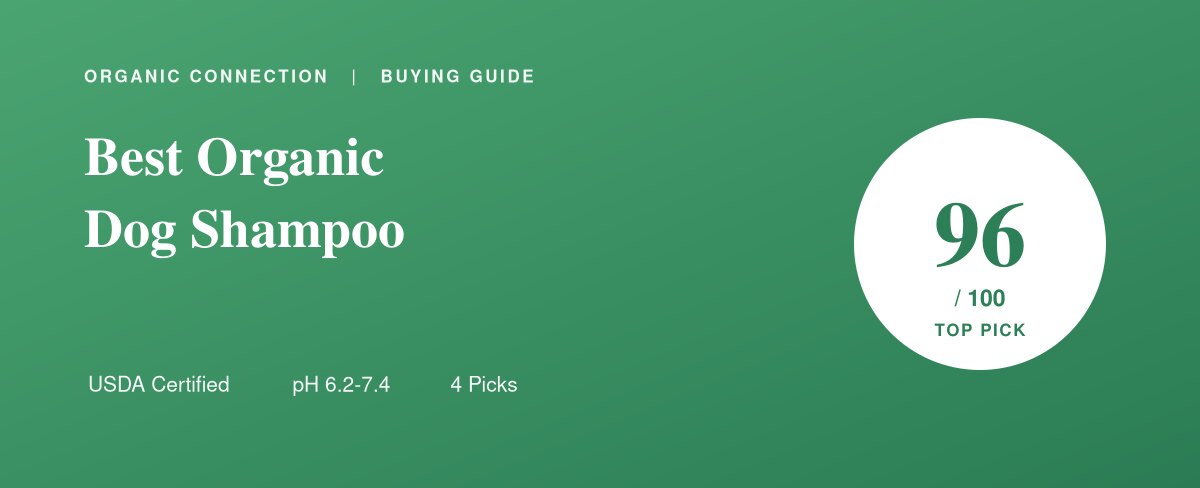
Our top pick is 4-Legger Certified Organic Dog Shampoo, which holds genuine USDA organic certification, an unusual thing in this aisle. earthbath Oatmeal & Aloe is the best-selling option by a wide margin and the sensible choice for itchy skin, and Scrubby Tails is the pick if you want something gentle enough for a puppy at a lower price.
An honest note before you buy: the single biggest mistake in dog washing is doing it too often with anything. Most dogs need bathing every four to eight weeks. Weekly bathing strips the coat’s protective oils and causes the dry, itchy skin people then buy more shampoo to fix.
Best organic dog shampoo compared
Four shampoos, scored on the same criteria. The Organic Integrity Score is out of 100 and our rating is that score expressed out of five. Prices update automatically.
| Best Choice | Best Value | |||
 |  |  |  | |
| Product | 4-Legger Certified | earthbath Oatmeal & Aloe | Petsmont Dream Bubbles | Scrubby Tails Puppy |
| Organic Integrity Score | 96/ 100 | 88/ 100 | 86/ 100 | 84/ 100 |
| Our rating | 4.8 | 4.4 | 4.3 | 4.2 |
| Certification | Certified Organic, Vegan | — | — | — |
| Key ingredient | Aloe and essential oils | Colloidal oatmeal and aloe | Plant based blend | Colloidal oatmeal |
| Best for | Strongest certification | Itchy and dry skin | Dogs and cats, shampoo | Puppies and lower budgets |
| Sales rank | Mid | Highest here | Lower | Mid |
| Price | $17.98 View on Amazon | $18.99 $19.95 −5% View on Amazon | $24.99$1.56 / fluid ounce View on Amazon | $18.99$1.19 / fluid ounce View on Amazon |
Price and availability as of October 27, 2026 1:10 am EDT. Product prices and availability are accurate as of the date/time indicated and are subject to change. Any price and availability information displayed on Amazon.com at the time of purchase will apply to the purchase of this product.
Why certification matters more on pet products
Human cosmetics in the US are regulated by the FDA under the Federal Food, Drug, and Cosmetic Act. Pet grooming products largely are not. They fall outside cosmetic rules because a cosmetic is defined by application to the human body, and they only become drugs if the label makes a therapeutic claim such as treating mange or killing fleas.
The practical consequence is that a bottle of dog shampoo can say natural, gentle, or hypoallergenic with very little behind it. There is no agency checking those words in the way there is for a food label.
USDA organic certification is the exception, because it is an agricultural standard rather than a cosmetic one. A product carrying the seal has been through the same certification process as organic food, with an accredited certifier verifying the ingredient chain. That is why it means something here even though pet grooming is otherwise loosely policed. Our guide to organic certifications covers how the tiers work.
Very few dog shampoos hold it. Most of the aisle uses organic as an adjective attached to one or two ingredients in a conventional formulation, which is legal and much weaker than it sounds.
What actually causes itchy skin
Most people shopping for dog shampoo are trying to solve scratching, and it is worth being clear that shampoo is rarely the answer on its own.
Fleas are the first thing to rule out, and flea allergy dermatitis is the most common skin condition in dogs. A single bite can set off days of itching in a sensitized dog, which means you can have a serious reaction without seeing fleas. No shampoo fixes this; a veterinary flea preventative does.
Environmental allergies to pollen, dust mites and mold are the next most common cause, and they present seasonally or year-round depending on the trigger. Bathing genuinely helps here by physically removing allergens from the coat, which is one case where more frequent washing is correct and should be done on veterinary advice.
Food allergy is real but much less common than the marketing suggests, and it is diagnosed by an elimination diet rather than by a blood test.
Dry skin from over-bathing is the self-inflicted one. It looks like allergy, it itches like allergy, and the fix is bathing less.
Colloidal oatmeal is the ingredient with the best evidence for symptomatic relief. It has genuine anti-inflammatory and skin-barrier activity and is recognized by the FDA as a skin protectant for humans. It soothes; it does not treat the underlying cause.
How we scored these shampoos
Every product on this site is scored out of 100 against the same ten criteria. Four mattered most here.
Verified certification
USDA organic certification scored highest by a wide margin, a specific certified organic claim next, and general use of the word organic lowest. We checked each claim against the product listing rather than the title, because pet supplies carry heavy sponsored placement and certification badges on the page frequently belong to a different product.
Formulated for canine pH
Products stating a canine-appropriate pH or explicitly formulated for dogs scored above those that read like a human shampoo relabelled. This is the difference that matters most for skin health.
No added fragrance
Dogs have a vastly more sensitive sense of smell than we do, and heavily fragranced shampoo is unpleasant for them in a way it is not for us. Fragrance is also a common contact irritant. Unscented or lightly scented with essential oils scored above perfumed.
Soap-free and sulfate-free
True soaps and harsh sulfates strip coat oils faster than mild surfactants, and they can interfere with topical flea treatments. Soap-free formulations scored higher.
Best overall: 4-Legger Certified Organic Dog Shampoo
| Organic Integrity Score | 96 / 100 |
| Certification | Certified Organic, Vegan |
| Formulation | Soap free, no synthetic fragrance |
| Best for | Anyone who wants a certification they can actually verify |
This is the highest-scoring product on the site in the pet category, and the reason is simple: it holds genuine USDA organic certification, which almost nothing else in the aisle does. Given how lightly pet grooming products are regulated, that verified chain is worth more here than in almost any other category we cover.
The formulation is soap-free and free of synthetic fragrance, which matters more for a dog than for a person. It uses aloe and essential oils rather than perfume, and the scent is mild and fades quickly.
It is concentrated, so the bottle goes further than the price suggests. Most owners dilute it more than they expect to on the first wash.
One caution that applies to any essential-oil formulation: cats metabolise essential oils differently from dogs and several oils that are fine on a dog are not safe for cats. This is a dog shampoo and should be used as one.
Best for itchy skin: earthbath Oatmeal & Aloe
| Organic Integrity Score | 88 / 100 |
| Certification | — |
| Key ingredient | Colloidal oatmeal with aloe vera |
| Best for | Dogs that scratch, and owners who want the proven ingredient |
By a wide margin the best-selling shampoo on this page, and it earns that through the one ingredient in the category with real evidence behind it. Colloidal oatmeal has documented anti-inflammatory and barrier-supporting activity, and it is the standard recommendation for symptomatic itch relief.
The formulation is soap-free and pH-balanced for dogs, and earthbath state it will not strip topical flea and tick treatments, which is a genuine consideration if your dog is on a spot-on preventative.
It scores below 4-Legger on certification specificity. earthbath describe organic ingredients rather than holding a named organic certification for the finished product, which is a materially weaker claim and the reason for the gap in score rather than anything about how it performs.
If your dog is itchy and you want the ingredient with the best support, buy this. If the certification is the point, buy the 4-Legger.
Best for dogs and cats: Petsmont Dream Bubbles
| Organic Integrity Score | 86 / 100 |
| Certification | — |
| Format | Combined shampoo and conditioner |
| Best for | Households with both dogs and cats |
Formulated for dogs and cats, which is genuinely useful and genuinely rare. Most dog shampoos are not safe for cats, because cats lack some of the liver enzymes that break down certain essential oils and phenolic compounds, and they groom by licking everything off afterwards.
A product explicitly formulated for both removes a real risk in a multi-pet household, where the temptation to use one bottle for everything is strong.
The combined shampoo and conditioner suits dogs with longer coats that tangle, and it saves a step on an animal that is not enjoying the process.
It scores below the top two on the strength of the organic claim, which is general rather than named, and on a considerably weaker sales rank, which means less consistency data to go on.
Best value: Scrubby Tails Organic Puppy Oatmeal Shampoo
| Organic Integrity Score | 84 / 100 |
| Certification | — |
| Key ingredient | Colloidal oatmeal |
| Best for | Puppies, and a cheaper way into the category |
The cheapest option here and formulated gently enough for puppies, which is the main practical reason to choose it. Puppy skin is thinner and more permeable than an adult dog’s, and a milder formulation is the right call.
It uses colloidal oatmeal, the same evidence-backed soother as the earthbath, at a lower price.
Do not bathe a puppy under about eight weeks without veterinary advice. Very young puppies struggle to regulate their own temperature and a wet puppy chills quickly. Spot cleaning with a damp cloth is the safer approach until then.
It scores lowest here on the strength of the organic claim and on being a newer listing with less history behind it. The formulation itself is sound.
How often to bathe a dog
Every four to eight weeks suits most dogs. This is the single most useful thing on this page. Dogs are not people and their coats carry protective oils that washing removes. Over-bathing is a leading cause of the dry itchy skin owners then treat with more bathing.
Short-coated breeds can go longer. A smooth-coated dog with healthy skin may only need a bath a few times a year, plus whatever mud requires.
Double-coated breeds need brushing more than washing. Huskies, German Shepherds and similar coats shed loose undercoat that traps dirt, and removing it mechanically does more good than shampoo.
Allergic dogs may need more, on veterinary advice. Where environmental allergens are the trigger, weekly bathing to physically remove pollen from the coat is a recognized part of management. That is a specific medical case rather than general practice.
Never use human shampoo. The pH mismatch is real, and baby shampoo is not an exception; it is still formulated for human skin.
How to actually wash a dog
Brush thoroughly first. Wet mats tighten and become far harder to remove. Ten minutes of brushing before the bath saves considerable trouble after it.
Lukewarm water only. Dogs run warmer than we do, around 38°C, so water that feels pleasantly warm to you is cool to them, and hot water is genuinely uncomfortable and drying.
Dilute the shampoo. Most concentrated formulations lather better and rinse out faster when mixed with water in a bottle rather than applied neat to the coat.
Rinse for longer than you think. Residue is a common cause of post-bath itching, and thick coats hold shampoo well past the point where the water runs clear. Rinse, then rinse again.
Avoid the eyes and ears. Water in the ear canal contributes to ear infections, particularly in floppy-eared breeds. A cotton ball loosely in each ear helps.
Dry properly. Towel first, and if you use a dryer, use a cool setting. Human hair dryers run hot enough to burn skin under a coat.
When it is not a shampoo problem
A good deal of money gets spent on grooming products for conditions that need veterinary attention, and recognizing the difference saves both time and the dog’s comfort.
Hair loss in patches is not a shampoo issue. Symmetrical thinning can indicate a hormonal condition such as hypothyroidism or Cushing’s, while circular patches may be ringworm, which is a fungal infection that also transmits to people.
A yeasty or musty smell, particularly from the paws, ears or skin folds, usually points to a Malassezia overgrowth. It responds to specific antifungal treatment rather than to a nicer-smelling wash.
Head shaking and ear scratching means the ears, not the coat. Ear infections are common in floppy-eared and swimming breeds and need examination, because treatment differs depending on whether the cause is bacterial, yeast or mites.
Hot spots, the raw weeping patches that appear suddenly and spread fast, need veterinary care. They are usually infected by the time they are noticed, and bathing alone will not resolve them.
Scooting is anal glands rather than anything to do with the coat, however much it looks like an itching problem.
The general rule is that shampoo manages comfort and cleanliness. Anything that is getting worse, spreading, or accompanied by changes in appetite, energy or thirst is a veterinary question.
Ingredients worth avoiding
Synthetic fragrance is the main one. A dog’s sense of smell is orders of magnitude more sensitive than ours, and a strongly perfumed coat is genuinely unpleasant for them. Fragrance is also among the more common contact irritants.
Harsh sulfates such as sodium lauryl sulfate strip coat oils quickly and can degrade topical flea treatments applied to the skin.
Tea tree oil at high concentration. Diluted tea tree oil appears in many pet products at low levels and is generally tolerated, but concentrated tea tree oil is toxic to dogs and cats and poisoning cases are well documented. Never apply undiluted essential oils to an animal.
Anything with a medical claim you have not discussed with a vet. Shampoos claiming to treat mange, ringworm or serious dermatitis are making drug claims, and the underlying conditions need diagnosis rather than a shampoo chosen from a listing.
For the rest of your dog’s routine, our organic dog treats guide covers the 10% rule and what USDA certification means on pet food.
Matching the shampoo to the coat
Coat type changes what a wash needs to do, and it is the variable most product pages ignore entirely.
Short and smooth coats such as Beagles, Boxers and Staffies are the easiest. Dirt does not hold in the coat, so these dogs need washing least often and tolerate most formulations. A basic gentle shampoo is genuinely all that is required.
Double coats on Huskies, German Shepherds, Corgis and similar breeds consist of a coarse outer layer and a dense insulating undercoat. The undercoat repels water, which means these dogs take real effort to wet through and considerably longer to rinse and dry. Trapped moisture next to the skin is a genuine risk here, so drying properly matters more than the shampoo does. Never shave a double coat; the undercoat insulates against heat as well as cold.
Long silky coats on Yorkshire Terriers, Afghans and Maltese tangle readily, which is why a conditioning formulation earns its place. Wet mats tighten, so brushing before the bath is not optional for these dogs.
Curly and wool coats on Poodles, Bichons and the various doodle crosses trap shed hair rather than dropping it, so it mats close to the skin. These coats need frequent professional grooming more than they need special shampoo, and matting that has reached the skin needs clipping out rather than washing.
Wire coats on many terriers have a harsh protective texture that softens with heavy conditioning, which is why show groomers avoid conditioner on them. If the texture matters to you, a plain shampoo without conditioning agents is the right choice.
Hairless breeds such as the Chinese Crested have exposed skin that behaves more like human skin, gets oily, and can develop blackheads. These are the dogs that genuinely need more frequent bathing, roughly weekly, with a very gentle product.
Reading a pet shampoo label
Because the regulatory floor is low, the label is worth reading carefully rather than trusting the front of the bottle.
“Natural” means nothing at all on a pet product, exactly as it means nothing on a human one. There is no definition behind it and no one checking.
“Hypoallergenic” is also undefined. It suggests a product is less likely to cause a reaction, but no standard specifies what qualifies, and no testing is required to make the claim.
“Made with organic ingredients” is not the same as certified organic. It means some unstated proportion of the formulation is certified, and that proportion can be small. The USDA seal on the finished product is a different and much stronger claim.
“Soap free” is meaningful. It distinguishes formulations using mild synthetic detergents from those using true saponified soap, which is more alkaline and strips more aggressively. This is one of the more useful phrases on a pet bottle.
“pH balanced” is meaningful if a number is given and near-meaningless if it is not. Balanced to what? A product stating a range in the canine 6 to 7.5 band is telling you something real.
An ingredient list should exist. Pet products are not required to carry a full ingredient list the way human cosmetics are, and a brand that publishes one anyway is choosing transparency it does not owe you. That choice is worth rewarding.
Watch where the good ingredient sits. If oatmeal or aloe is the selling point but appears near the end of a long list, it is present in a token amount. Order still reflects concentration.
Common questions about organic dog shampoo
Can I use human shampoo on my dog?
No. Human skin is acidic at around pH 5.5 and our shampoos match it, while canine skin sits closer to neutral at roughly 6.2 to 7.4. Repeated use disrupts the barrier and causes dryness. Baby shampoo is not an exception.
How often should I bathe my dog?
Every four to eight weeks suits most dogs, and short-coated dogs can go longer. Over-bathing strips protective coat oils and is a common cause of the itchy skin people then buy shampoo to fix.
Does organic certification mean anything on pet products?
More than usual, because pet grooming products sit largely outside FDA cosmetic regulation. USDA organic is an agricultural standard with an accredited certifier verifying the ingredient chain, which is a real check in an aisle that otherwise has few.
What actually helps an itchy dog?
Rule out fleas first, since flea allergy dermatitis is the most common skin condition in dogs and one bite can cause days of itching. Colloidal oatmeal soothes symptoms. Persistent itching needs a veterinary diagnosis rather than a different shampoo.
Is dog shampoo safe for cats?
Usually not. Cats lack some liver enzymes that break down certain essential oils and phenolics, and they ingest whatever is left on the coat by grooming. Use a product explicitly formulated for cats.
Will shampoo wash off my dog’s flea treatment?
It can. Harsh sulfates and true soaps are the main culprits with spot-on treatments. Soap-free formulations are the safer choice, and several brands state explicitly that they will not strip topicals.
Can I bathe a puppy?
Not under about eight weeks without veterinary advice, since very young puppies regulate temperature poorly and chill quickly when wet. Spot cleaning with a damp cloth is safer until then.
Is tea tree oil safe for dogs?
Heavily diluted, as it appears in many pet products at low concentration, it is generally tolerated. Concentrated tea tree oil is toxic to dogs and cats and poisoning cases are well documented. Never apply undiluted essential oils to an animal.
What does colloidal oatmeal actually do?
It has documented anti-inflammatory and skin-barrier activity and is recognized as a skin protectant in human products. It reliably soothes symptoms of itching, and it does not treat the underlying cause, which is why an itchy dog still needs a diagnosis.
Why does my dog still smell after a bath?
Usually incomplete rinsing, a damp undercoat that has not dried through, or an underlying issue such as a yeast overgrowth or ear infection. A persistent musty smell shortly after washing is worth a veterinary look rather than a stronger shampoo.
Should I use conditioner on my dog?
It helps on long silky and curly coats that tangle, and it is unnecessary on short smooth coats. On wire-coated terriers groomers avoid it deliberately, because heavy conditioning softens the harsh protective texture the coat is meant to have.
How do I dry a double-coated dog?
Towel thoroughly, then use a dryer on a cool setting, working against the lie of the coat to reach the undercoat. The dense undercoat traps moisture near the skin, and leaving it damp is a genuine risk. Human hair dryers run hot enough to burn skin under a coat.
Looking for other organic products?
We have checked more than 800 products across food, household goods, gardening, personal care and pet, every one against its stated certification. Browse all reviews.
Organic Connection participates in the Amazon Services LLC Associates Program, an affiliate advertising program designed to provide a means for sites to earn advertising fees by advertising and linking to Amazon.com. This article is general information, not veterinary advice. If your dog has a persistent skin problem, see a vet.