Last updated: September 30, 2026
We may earn a commission when you buy through links on this page, at no extra cost to you. We were not sent samples and no brand paid for placement. How we research and rate.
The short version
This is the most awkward guide on this site, so we will start with the part most pages in this category leave out. Dandruff is caused by an overgrowth of Malassezia, a yeast that lives on everyone’s scalp, and the ingredients with strong clinical evidence against it are ketoconazole, zinc pyrithione, selenium sulfide, salicylic acid and coal tar. None of those are organic, and none of them can be. They are synthetic or mineral actives, which puts them outside any organic standard by definition.
What organic shampoos offer is a gentler wash, sometimes with tea tree oil, which has one reasonable trial behind it and considerably less firepower than a medicated product. For mild flaking, that may be enough. For genuine persistent dandruff, it usually is not.
If you still want the best organic option, our pick is Avalon Organics Scalp Treatment Tea Tree, which pairs the one botanical with real evidence with a gentle organic base. Read the section below before you buy, because a considerable number of people reading this page would be better served by a medicated shampoo.
Best organic dandruff shampoo compared
Four options, scored on the same criteria. The Organic Integrity Score is out of 100 and our rating is that score expressed out of five. Prices update automatically.
A note on the field: two of the four below are from the same brand. That is not an oversight. Avalon Organics dominates the certified-organic end of this category to an unusual degree, and presenting a fifth pick would have meant including something with no organic claim at all.
| Best Choice | Best Value | |||
 |  |  | 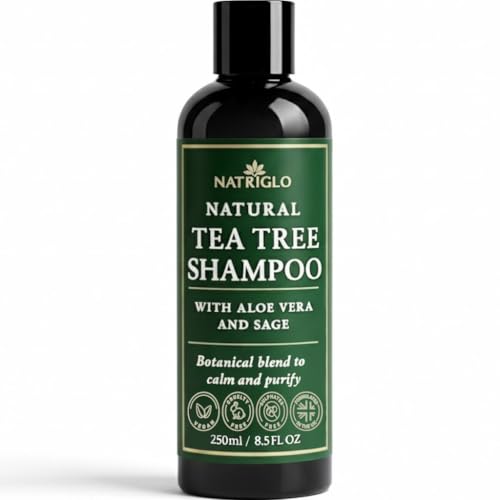 | |
| Product | Avalon Tea Tree Scalp | Avalon Dandruff Therapy | Era Organics Manuka | Organic Tea Tree Oil |
| Organic Integrity Score | 88/ 100 | 86/ 100 | 83/ 100 | 81/ 100 |
| Our rating | 4.4 | 4.3 | 4.2 | 4.1 |
| Certification | EWG Verified, Leaping Bunny, NSF | EWG Verified, Leaping Bunny, NSF | — | Vegan, Organic |
| Key ingredient | Tea tree oil | Botanical blend | Manuka honey and argan | Tea tree oil |
| Evidence for the active | One RCT, modest | Limited | Limited | One RCT, modest |
| Best for | Mild flaking | Lowest cost per wash | Dry itchy scalp rather | Higher tea tree content |
| Price | $11.99$1.09 / fluid ounce View on Amazon | $11.99$1.09 / fluid ounce View on Amazon | $17.99$2.25 / fluid ounce View on Amazon | $27.99$3.31 / fluid ounce View on Amazon |
Price and availability as of October 27, 2026 1:10 am EDT. Product prices and availability are accurate as of the date/time indicated and are subject to change. Any price and availability information displayed on Amazon.com at the time of purchase will apply to the purchase of this product.
The certification map for organic dandruff shampoo, and what each one actually excludes
Seals accumulate on a package faster than meaning does. This is what each of the marks you will see here certifies, and what it leaves out.
| Certification | Covers | Key exclusion |
| Leaping Bunny | No animal testing at any stage by the company or its suppliers, with supply-chain audits and annual recommitment | Says nothing about the ingredients themselves, organic content, or whether the product is vegan |
| COSMOS Organic | Cosmetics: organic content thresholds, permitted processes and ingredients, and packaging rules | Its sister grade, COSMOS Natural, carries the same name and requires no minimum organic content at all |
| EWG Verified | Full ingredient disclosure and avoidance of the chemicals on the EWG list of concern | Run by an advocacy group rather than a standards body, and not an organic claim |
COSMOS is two standards with one name, and the weaker one is easy to miss. COSMOS Organic requires at least 95% of the plant ingredients to be organic. COSMOS Natural, printed in the same typeface by the same body, requires no minimum organic content whatsoever: it governs which ingredients and processes are permitted, not how much of the product is organic. If the word after COSMOS is “Natural”, the organic question is still open.
What dandruff actually is
Understanding the mechanism explains why the organic aisle struggles here.
It is not dryness. This is the most common misunderstanding and it leads people in exactly the wrong direction. Dandruff is associated with an oily scalp rather than a dry one, which is why washing less, the instinctive response to flaking, usually makes it worse.
It is a yeast overgrowth. Malassezia lives on virtually every adult scalp, feeding on sebum. In susceptible people it triggers an inflammatory response, accelerating skin cell turnover so that cells shed in visible clumps rather than invisibly.
Three things have to coincide: sebum production, the presence of the yeast, and individual susceptibility. The third is why some people with oily scalps never flake and others do, and it is not something a shampoo changes.
Seborrhoeic dermatitis is the same process, further along. Where dandruff is flaking, seborrhoeic dermatitis adds redness, greasy yellowish scale and sometimes itching, and it extends beyond the scalp to eyebrows, the sides of the nose and behind the ears. It responds to the same actives and often needs medical input.
Flaking that is not dandruff includes scalp psoriasis, which produces thicker silvery scale on well-defined patches, contact dermatitis from a hair product, and simple dry scalp from over-washing or harsh shampoo. These need different approaches, which is a good reason to be sure what you are treating.
Why organic and effective are hard to combine here
Organic standards, whether USDA or COSMOS, restrict formulations to agricultural and permitted natural ingredients. The antifungal actives that control Malassezia are none of those things.
Ketoconazole is a synthetic antifungal drug and among the most effective options available over the counter at 1%.
Zinc pyrithione is a synthetic zinc compound, the classic active in mass-market anti-dandruff shampoo.
Selenium sulfide is an inorganic compound, effective and available in stronger prescription versions.
Salicylic acid is a keratolytic that lifts scale rather than killing yeast, and can be derived from willow bark, though the version in shampoos is generally synthetic.
Coal tar is a petroleum-derived byproduct, effective and cosmetically unpleasant.
An organic-certified product cannot contain the first three at all. What remains is botanicals, and the strongest of those is tea tree oil, whose antifungal activity is genuine in laboratory conditions and whose clinical evidence in humans amounts to a single decent trial.
This is not a reason to avoid organic shampoo. It is a reason to be clear about what you are buying: a gentler wash that may help mild flaking, not a treatment. Our guide to skincare ingredients worth avoiding covers the same pattern elsewhere in the category.
How we scored these shampoos
Every product on this site is scored out of 100 against the same ten criteria. Because of the constraint above, the weighting here differs.
Contains an ingredient with actual evidence
Tea tree oil at a meaningful concentration scored above formulations relying on ingredients with no antifungal data. This carried more weight than certification strength, because a certified product that cannot help is not a good recommendation.
Verified organic claim
We checked each claim against the product listing rather than the title. Certification in this specific category is weaker than elsewhere on the site, and we have not inflated scores to disguise that.
Gentle base
Sulfate-free formulations that clean without stripping scored higher, since over-washing with harsh surfactants worsens the irritation that accompanies flaking.
Honest labeling
Products claiming to cure or eliminate dandruff scored down. Nothing in this category cures it, medicated or otherwise; dandruff is managed, and it returns when treatment stops.
Best overall: Avalon Organics Scalp Treatment Tea Tree Shampoo
| Organic Integrity Score | 88 / 100 |
| Certification | EWG Verified, Leaping Bunny, NSF |
| Key ingredient | Tea tree oil |
| Best for | Mild flaking with itching, where a medicated shampoo feels excessive |
Our top pick because it contains the one botanical in this category with a controlled trial behind it, in a sulfate-free organic base that will not aggravate an already irritated scalp.
Avalon Organics is a long-established brand with genuine organic content and consistent manufacturing, and this formulation has been on shelves for years, which matters when you are judging whether something works over the six weeks it takes to tell.
Be clear about what to expect. If your flaking is mild and accompanied by itching, this may well be enough, and many people find tea tree formulations comfortable enough to use long-term where medicated shampoos feel harsh. If you have visible scale, redness, or flaking that returns within days, this will underperform and a 1% ketoconazole shampoo will not.
The organic claim is general rather than named to a standard, which is why nothing on this page scores above 88. That reflects the category rather than this product.
Best value: Avalon Organics All Natural Dandruff Therapy
| Organic Integrity Score | 86 / 100 |
| Certification | EWG Verified, Leaping Bunny, NSF |
| Positioning | Marketed specifically for dandruff |
| Best for | The cheapest organic option with the strongest sales history |
The best-selling product on this page and the one positioned explicitly for dandruff rather than general scalp care. It uses a botanical blend rather than leading with tea tree.
That positioning is worth a caution. A product named for dandruff sets an expectation that a botanical formulation may not meet, and we scored it slightly below the tea tree version for exactly that reason: the name promises more than the evidence supports.
As a gentle, affordable, sulfate-free wash for someone with mild flaking who wants to avoid medicated shampoo, it is a reasonable buy and the cheapest way to test whether the botanical route works for you.
Give it four to six weeks before judging. Scalp conditions respond slowly and nothing here works in a fortnight.
Best for a dry itchy scalp: Era Organics Manuka Honey & Argan Oil
| Organic Integrity Score | 83 / 100 |
| Certification | — |
| Key ingredients | Manuka honey and argan oil |
| Best for | Dry itchy scalp, which is a different problem from dandruff |
Included deliberately for the people who have diagnosed themselves wrongly, which in this category is a lot of us.
If your scalp is dry, tight and itchy with fine white flakes, and it improves when you wash less, that is dry scalp rather than dandruff. The two are frequently confused and they respond to opposite approaches: dandruff improves with more frequent washing using an antifungal, dry scalp improves with gentler and less frequent washing.
This shampoo is built for the second case. Manuka honey is humectant and has some antibacterial activity, and argan oil is a conditioning emollient. Neither is antifungal in any meaningful sense, so this will do nothing for genuine dandruff.
Era Organics is a USDA-certified brand across parts of its range, though this particular product carries a general organic claim. The sales rank is weak, which is the main practical caveat.
Highest tea tree content: Organic Tea Tree Oil Shampoo
| Organic Integrity Score | 81 / 100 |
| Certification | Vegan, Organic |
| Key ingredient | Tea tree oil, prominently positioned |
| Best for | Maximising the one ingredient with evidence |
The whole product is built around tea tree oil rather than including it as one botanical among many, which matters if you are trying to approximate the concentration used in the trial.
The trial that found a benefit used a 5% tea tree oil shampoo. Most cosmetic formulations contain considerably less, and few disclose the percentage at all, which makes it difficult to know whether you are getting a meaningful dose or a token one. A product positioned entirely around the ingredient is more likely to be at the useful end.
It is the most expensive option here with the weakest sales rank, and the organic claim is general. Those are real drawbacks.
A caution worth stating: tea tree oil is a recognized contact allergen and sensitisation does occur, more commonly with oxidised oil. If your scalp becomes more irritated rather than less, stop using it. That is a genuine reaction, not the product working.
Flaking that is not dandruff at all
A meaningful share of people buying anti-dandruff shampoo do not have dandruff, and no product in this category will help them. It is worth ruling these out first.
Scalp psoriasis produces thick, silvery-white scale on sharply defined raised patches, often extending past the hairline onto the forehead, neck or behind the ears. It may itch or feel sore. It is an autoimmune condition, not a yeast overgrowth, and it needs different treatment. If you can feel a defined edge to the patch, this is the more likely explanation.
Contact dermatitis from a hair product causes redness, itching and flaking that begins after introducing something new. Hair dye, a new shampoo, or a styling product are the usual culprits. It resolves when you stop using the trigger, which is why a symptom diary is more useful than another bottle.
Dry scalp gives fine white flakes with a tight feeling, often alongside dry skin elsewhere, and worsens in winter or with hard water and hot showers. It improves with gentler, less frequent washing, which is the opposite of dandruff management.
Tinea capitis is a fungal infection distinct from Malassezia, more common in children, and it typically causes patchy hair loss with scaling. It requires oral antifungal medication; topical shampoo will not clear it.
Product buildup from dry shampoo, waxes or silicone-heavy conditioners can flake off in a way that closely resembles dandruff. A clarifying wash resolves it in one or two goes.
Sunburn on the scalp peels, and people occasionally mistake the resulting flakes for a sudden onset of dandruff. Parting lines and bald patches burn readily.
If you are unsure which of these you have, that uncertainty is itself the argument for seeing a doctor rather than working through the shelf.
When to use a medicated shampoo instead
We would rather send you elsewhere than sell you something that will not work.
Buy a medicated shampoo if the flaking is visible on your clothing, the scalp is red or greasy-scaled, the flaking returns within a few days of washing, or a botanical shampoo has had six weeks and achieved nothing.
1% ketoconazole is the strongest option available without prescription and the one with the deepest evidence base. Twice weekly is a typical starting frequency.
Zinc pyrithione is the mass-market standard, gentler and cheaper, suitable for maintenance.
Rotating actives helps. Malassezia populations can become less responsive to a single active over time, and alternating between two different ones is a common dermatological recommendation.
You can do both. A medicated shampoo twice a week and a gentle organic shampoo on other days is a reasonable arrangement, and it is what we would suggest for someone who wants to limit synthetic exposure without giving up on results.
See a doctor if the scalp is painful, weeping or bleeding, if hair is coming out in the affected areas, if patches are thick and silvery rather than flaky, or if nothing over the counter has helped after a couple of months.
Washing habits that matter more than the bottle
Wash more often, not less. This is counterintuitive and important. Dandruff feeds on sebum, so leaving hair unwashed gives the yeast more to work with. People who flake often wash less because they assume dryness, and it compounds the problem.
Leave it on the scalp for several minutes. Whatever active you are using, it needs contact time. Lathering and rinsing immediately wastes most of the benefit, and this applies as much to tea tree as to ketoconazole.
Massage the scalp, not the hair. The scalp is where the problem is. Use fingertips rather than nails, since scratching an inflamed scalp worsens it.
Rinse thoroughly. Product residue is itself a cause of irritation and flaking.
Give it six weeks. Scalp conditions change slowly and a fortnight tells you almost nothing. Switching products every two weeks is how people end up with a cupboard full and no improvement.
Stress and season affect it. Dandruff commonly worsens in winter and during stressful periods, which means an apparent product failure may be a seasonal flare and an apparent success may be a remission that would have happened anyway.
Do not stop when it clears. Dandruff is managed rather than cured, and it returns when treatment stops. Reducing frequency rather than stopping altogether is the usual approach.
The other botanicals, and what they are worth
Tea tree is not the only plant ingredient in this aisle, and the rest deserve an honest ranking.
Tea tree oil sits at the top of a short list. Demonstrated antifungal activity against Malassezia in laboratory conditions, one controlled human trial with a positive result. Best of a modest field.
Salicylic acid is a genuine exception worth knowing about. It is keratolytic, meaning it lifts and loosens scale rather than killing yeast, and that mechanism is well established. It occurs naturally in willow bark, though shampoo formulations generally use the synthetic form. A willow-bark shampoo is unlikely to reach a useful concentration, but the ingredient itself is not pseudoscience.
Apple cider vinegar is widely recommended online and thinly supported. The theory is that lowering scalp pH discourages yeast. There is no clinical trial in dandruff, and undiluted vinegar irritates the scalp. Harmless when diluted, unlikely to do much.
Coconut oil is a genuinely awkward one. It has some antimicrobial properties, and it is also a lipid that certain Malassezia species can metabolise, which theoretically feeds the organism causing the problem. We would not use it on a flaking scalp.
Neem has traditional use and laboratory antifungal activity, with essentially no clinical evidence in dandruff specifically.
Rosemary, peppermint and lavender appear constantly in scalp products and are there principally for scent and a cooling sensation. The tingle is not the product working; it is a sensory effect from menthol or camphor compounds.
Aloe vera soothes irritation and is a reasonable inclusion for comfort. It does nothing to the underlying yeast.
The pattern here is the one that runs through this whole category: the botanicals are pleasant, mostly harmless, and considerably weaker than the marketing implies.
What makes it worse
Several common habits actively aggravate flaking, and stopping them costs nothing.
Washing less. Covered above and worth repeating, because it is the single most common self-inflicted error in this category.
Scratching. It provides seconds of relief and prolongs the inflammation, and broken skin on the scalp invites secondary infection. Fingertips for washing, never nails.
Heavy styling products. Waxes, pomades and dry shampoo build up on the scalp, trap sebum, and give the yeast more to work with. If you use them daily, wash daily.
Very hot water. It strips and irritates, and an irritated scalp flakes more. Lukewarm is sufficient.
Hats worn constantly. Warm, occluded and humid is the environment Malassezia prefers. Not a reason to abandon hats, but relevant if you wear one all day.
Switching products every fortnight. Nothing in this category shows its full effect in two weeks. Rapid switching guarantees you never find out what works.
Treating it as a hygiene failure. Dandruff is not caused by being unclean, it affects a large share of adults, and the shame attached to it drives a good deal of unnecessary spending. It is a common inflammatory response to a normal skin organism.
Common questions about organic dandruff shampoo
Can an organic shampoo actually treat dandruff?
Not in the way a medicated one can. The actives with strong evidence, ketoconazole, zinc pyrithione and selenium sulfide, are synthetic or mineral and cannot appear in a certified organic product. Organic options offer a gentle wash with botanicals, which may help mild flaking.
Does tea tree oil work for dandruff?
There is a randomised trial of a 5% tea tree oil shampoo showing meaningful improvement over placebo across four weeks in mild to moderate cases. That is a real result from one study, against decades of trials behind the medicated actives. Promising and modest, not equivalent.
Is dandruff caused by dry scalp?
No, and this is the most common misunderstanding. Dandruff is associated with an oily scalp and an overgrowth of Malassezia yeast feeding on sebum. Washing less, the instinctive response, generally makes it worse.
How do I tell dandruff from dry scalp?
Dry scalp gives fine white flakes with a tight itchy feeling that improves when you wash less and moisturize. Dandruff gives larger, sometimes oily or yellowish flakes on a scalp that may be red, and it improves with more frequent washing using an antifungal.
How often should I wash if I have dandruff?
More often rather than less, since sebum is what the yeast feeds on. Daily or near-daily washing is commonly recommended during a flare, leaving the product on the scalp for several minutes each time.
Can I use organic and medicated shampoo together?
Yes, and it is a sensible compromise. A medicated shampoo twice a week with a gentle organic shampoo on other days limits synthetic exposure without giving up the active that actually controls the yeast.
Will dandruff ever go away permanently?
Usually not. It is managed rather than cured, because the yeast is a normal scalp resident and individual susceptibility does not change. Most people find a maintenance routine that keeps it controlled and expect occasional flares.
Is coconut oil good for dandruff?
We would avoid it. It has some antimicrobial activity, but it is also a lipid that certain Malassezia species can metabolise, which in theory feeds the organism causing the flaking. Popular advice and questionable reasoning.
Does apple cider vinegar help?
There is no clinical trial supporting it for dandruff. The theory is that lowering scalp pH discourages yeast, and undiluted vinegar irritates the scalp. Harmless when properly diluted, and unlikely to achieve much.
Why does the tingling mean it is working?
It does not. Tingling comes from menthol, peppermint or camphor compounds producing a cooling sensation on nerve endings. It is a sensory effect with no relationship to whether the antifungal ingredient is doing anything.
Can dandruff cause hair loss?
Not directly, but the scratching it provokes can damage hair and inflame follicles, and severe seborrhoeic dermatitis may cause temporary shedding. Patchy hair loss with scaling is more likely another condition and warrants medical assessment.
How long before I know if a shampoo works?
Six weeks. Scalp conditions change slowly, and a fortnight tells you almost nothing. Switching every two weeks is the most reliable way to end up with a cupboard of bottles and no improvement.
Looking for other organic products?
We have checked more than 800 products across food, household goods, gardening, personal care and pet, every one against its stated certification. Browse all reviews.
Organic Connection participates in the Amazon Services LLC Associates Program, an affiliate advertising program designed to provide a means for sites to earn advertising fees by advertising and linking to Amazon.com. This article is general information, not medical advice. If you have a persistent scalp condition, see a doctor or dermatologist.