Last updated: September 30, 2026
We may earn a commission when you buy through links on this page, at no extra cost to you. How we research and rate.
The short version
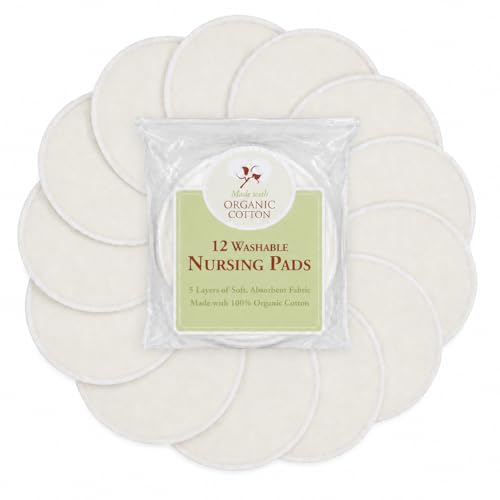
Our recommendation for most people is TL Care Nursing Pads Made with Organic Cotton, with an Organic Integrity Score of 88 out of 100. It is five layers of 100 percent organic cotton with nothing else in it, it is washable, and it costs less than any other pack in this comparison.
The category has a wording problem worth understanding before you shop. The highest-scoring product is GOTS certified on its surface layer. Another is made from organic viscose, which is not cotton. A third, ranked second overall, is bamboo and makes no organic claim at all. In each case the listing says so, and in each case the word doing the work is easy to read past.
Best organic nursing pads compared
| Best Choice | Best Value | ||||
 |  |  |  |  | |
| Product | PureTree Organic Cotton Disposable | TL Care Organic Cotton | Azollia Reusable Organic Cotton | Kindred Bravely Reusable | KeaBabies Organic Nursing Pads |
| Organic Integrity Score | 88/ 100 | 86/ 100 | 80/ 100 | 78/ 100 | 74/ 100 |
| Our rating | 4.4 | 4.3 | 4.0 | 3.9 | 3.7 |
| Certification named | GOTS, surface layer | — | — | OEKO-TEX 100 | — |
| Fiber | Organic cotton surface | 100% organic cotton | 100% organic cotton | Organic viscose | Organic, fiber unstated |
| Type | Disposable | Washable | Washable | Washable | Washable |
| Quantity | 100 | 12 | 14 | 10 | 14 |
| Best for | Nights and going out | All-cotton everyday use | Non-slip reusables | Tested-safe viscose | Popular, vaguest claim |
| Certification | GOTS, Certified Organic | — | — | OEKO-TEX, Organic | — |
| Contents | 100 individually wrapped contoured disposable pads | Twelve washable pads, five layers of 100% organic cotton, natural color | Fourteen washable non-slip pads, 100% organic cotton | Ten washable three-layer pads with a 100% organic viscose inner layer | Fourteen washable pads with a wash bag, 5 inch diameter |
| Price | $21.99$0.22 / count View on Amazon | $10.61 View on Amazon | $18.99$1.36 / count View on Amazon | $15.29 $16.90 −10%$1.53 / count View on Amazon | $15.96 View on Amazon |
- Organic Baby Essentials hub
- our organic product database — compare brands across every guide
Price and availability as of October 27, 2026 1:10 am EDT. Product prices and availability are accurate as of the date/time indicated and are subject to change. Any price and availability information displayed on Amazon.com at the time of purchase will apply to the purchase of this product.
The organic nursing pads certifications, and the question each one leaves open
Seals accumulate on a package faster than meaning does. This is what each of the marks you will see here certifies, and what it leaves out.
| Certification | Covers | Key exclusion |
| GOTS | Organic fiber from farm to finished textile, plus dyeing, finishing, wastewater and labor criteria | Has a weaker second tier, “made with organic”, that needs only 70% organic fiber and carries the same name |
| OEKO-TEX Standard 100 | Laboratory testing of the finished textile against limits for more than 1,000 harmful substances | Says nothing at all about whether the fiber was organically grown |
Standard 100 answers “what is in this fabric”, not “how was it grown”. That is a useful question and the testing behind it is rigorous, covering formaldehyde, heavy metals, azo dyes and a long list besides. But a product can pass it while having been grown with every pesticide the organic standards prohibit, because those residues do not survive to the finished textile. Treat it as a floor for chemical safety and look elsewhere for the farming claim.
Reusable or disposable, and what that decides
This is the first fork in the decision and it changes everything after it, so it goes before the products.
In the early weeks of breastfeeding, leaking is close to continuous, and six to eight pads a day is normal. It settles as supply regulates, and for the first month or two the volume is high whichever type you buy.
Reusable pads are layered cotton discs that go in the wash with everything else. The economics are obvious over a year, and they can be organic cotton the whole way through, since absorbency comes from stacking layers rather than from an engineered core. The trade-offs are that they are thicker, so they show more under a fitted top, and that you need a lot of them in circulation because half are always in the wash.
Disposable pads are thin, contoured and individually wrapped, and they use an absorbent core to hold far more liquid in far less thickness. That is why they are almost invisible under clothing and why they suit going out, sleeping through and the first weeks generally. They are a recurring cost, and the core is where the organic question gets complicated.
Most people who breastfeed for any length of time end up owning both: disposables for nights, going out and the heavy early weeks, reusables for around the house. That is not indecision, it is the sensible answer.
One point that matters more than either choice: change pads as soon as they are wet. A damp pad held against skin softens it and creates the warm moist conditions associated with cracking and with thrush. Absorbency and frequent changing are the same goal, and no fiber content substitutes for the habit.
Organic viscose is not organic cotton
One product in this comparison describes its fiber as organic viscose, and the term deserves unpacking because it appears increasingly often.
Viscose, also called rayon, is regenerated cellulose. Plant material, commonly wood pulp or bamboo, is dissolved in a chemical bath, extruded through spinnerets and reformed as filament. The finished fiber is a manufactured product, not a harvested one. It is often lovely to touch, and it is genuinely absorbent, which is exactly why manufacturers reach for it in a pad whose job is absorbency.
What “organic viscose” can reasonably describe is viscose made from organically grown feedstock. What it cannot describe is a fiber that was grown, picked and spun the way cotton is. If you are choosing organic to avoid chemical processing, viscose is the opposite end of the scale from cotton however the feedstock was farmed.
The same reasoning applies to bamboo, which we have written about in our guide to organic swaddle blankets, where two top sellers turned out to be mostly bamboo viscose. The US Federal Trade Commission has taken repeated action over textiles marketed as bamboo when the product is rayon, and its guidance to sellers is direct about it.
None of this makes viscose pads bad. The Kindred Bravely pads below are OEKO-TEX certified, which is a real and useful credential. They are simply not organic cotton, and the listing is clear about that if you read the fiber statement.
What GOTS and OEKO-TEX each tell you here
Two different standards appear in this category, and on nursing pads they answer genuinely different questions.
GOTS, the Global Organic Textile Standard, certifies organic fiber content plus the processing that follows: permitted dyes and chemicals, mill wastewater treatment, and social criteria. It prohibits chlorine bleaching, formaldehyde-based finishes and several heavy metals used in conventional dyeing. Its two label grades matter: “organic” needs at least 95 percent certified organic fiber, “made with organic materials” needs 70 percent.
That 95 percent threshold is why a disposable pad certifies its surface rather than the whole article. A pad built from a cotton facing over an engineered absorbent core is not 95 percent organic fiber by weight, so a whole-product claim at that grade is not available. Certifying the surface is the honest way to make the claim that is true.
OEKO-TEX Standard 100 tests the finished item against limits for hundreds of harmful substances. It says nothing about organic farming, and conventionally grown material carries it routinely. On a product held against broken or tender skin for hours, testing the finished article for what is present in it is arguably the more directly relevant question of the two.
Neither standard is a substitute for the other. A pad with both would be the ideal and nothing in this category offers it.
One phrase to discount entirely: “chemical-free”, which appears on one listing here. Everything is chemicals, water included. The term has no regulatory meaning and tells you nothing, and its presence is mild evidence that the copy was written for reassurance rather than for accuracy.
Thickness, shape and how many you need
Three practical specifications separate pads you keep using from pads that end up in a drawer.
Diameter. Most pads run 4 to 5 inches across. Larger covers more and is harder to hide under a fitted top; smaller is discreet and can be caught out by a strong letdown. Around 5 inches is the usual compromise, and some brands sell both.
Contour. A flat disc sits flat and a contoured pad is shaped to curve, which makes a real difference to how visible it is and whether it stays put. Reusable pads are more often flat, disposables more often contoured.
Backing. Some reusable pads add a waterproof layer to stop leaks reaching a bra. That layer is a laminate, typically polyurethane, and it is not cotton, so an all-cotton pad and a leakproof pad are usually different things. All-cotton pads rely on layer count instead, which is why five layers appears in the specification of our top pick.
Quantity. For reusables, ten to fourteen pads, meaning five to seven pairs, is a working supply in the early weeks. Fewer means washing daily. Most packs here are sized around that, which is unusually well judged for a baby-adjacent category.
A last detail that sounds trivial and is not. Pads that shift inside a bra stop working, so a non-slip surface or a snug contour earns its place. Several listings mention this and it is worth weighing.
Best overall: PureTree Organic Cotton Disposable Nursing Pads
| Organic Integrity Score | 88 / 100 |
| Contents | 100 individually wrapped contoured disposable pads |
| Certification | GOTS, Certified Organic |
| Best for | Nights, going out, and the heavy early weeks |
The highest score here, and the reason is precision rather than volume of claims. The listing says “100% GOTS Certified Organic Cotton Surface”, which is a carefully drafted sentence: it tells you the standard, the fiber and exactly which part of the pad it applies to. Compared with a listing that says organic and stops, that is a considerable step up.
It is also why this is not our overall recommendation. The absorbent core is not described anywhere in the listing, and on a disposable pad the core is most of the product by function. What is certified is the layer against your skin, which is the layer that matters most for contact, and it is not the whole pad.
As a disposable it is well designed. Contoured with groove marks so it sits discreetly, dual adhesive strips so it does not travel inside a bra, and individually wrapped, which matters more than it sounds when you are putting one in a pocket on the way out.
At 100 pads per box the per-pad cost is low for a disposable, which is why it carries the value badge. It is still a recurring purchase, and over a year of feeding that adds up in a way a washable pack does not.
What we liked: Names GOTS and states precisely which layer it covers. Contoured with adhesive strips. 100 per box. Individually wrapped.
Keep in mind: Certification covers the surface, not the core, and the core is not described. A recurring cost rather than a one-off.
What the listing discloses: You are told GOTS for PureTree; you are not told whether the USDA seal applies and where it was grown or made.
Everyday use with no synthetic: TL Care Nursing Pads Made with Organic Cotton, 12 Count
| Organic Integrity Score | 86 / 100 |
| Contents | Twelve washable pads, five layers of 100% organic cotton, natural color |
| Certification | — |
| Best for | Everyday use with no synthetic anywhere in the product |
This is the only pad here that is organic cotton the entire way through, and on a product with no certifier named that is worth more than it might be elsewhere. The listing describes five layers of 100 percent organic cotton, with no barrier film, no engineered core and no blended fiber. What you are buying is cotton.
It is also the cheapest pack in the comparison, and twelve pads is six pairs, which is a genuine working supply rather than a starter set. For a product you will use several times a day for months, that combination is difficult to argue with.
Absorbency comes from layer count, which is the honest all-cotton approach, and the listing itself notes that organic cotton behaves differently from synthetics in this respect. It is more absorbent than a thin pad and thicker as a result. Under a loose top that is invisible; under something fitted it shows more than a contoured disposable would.
Two reservations. The title uses “Made with Organic Cotton”, the softer of the two GOTS phrasings, while the description says 100 percent organic cotton across all five layers; the two statements are not identical and no certifier is named to settle it. And with no waterproof backing, a strong letdown can eventually work through, which is the trade you make for having no plastic in the product.
What we liked: Five layers of organic cotton with nothing else in it. Cheapest pack here. Twelve pads is a working supply. Long-established brand.
Keep in mind: No certifier named, and title and description word the claim differently. Thicker than disposables, so more visible. No leakproof backing.
What the listing discloses: TL Care leaves the basics open, including whether the USDA seal applies and where it was grown or made.
Best non-slip reusable: Azollia Reusable Organic Cotton Nursing Pads, 14 Pack
| Organic Integrity Score | 80 / 100 |
| Contents | Fourteen washable non-slip pads, 100% organic cotton |
| Certification | — |
| Best for | Pads that stay where you put them |
Fourteen pads is seven pairs, the largest reusable supply here, and the non-slip design addresses the most common practical complaint about washable pads: that they shift inside a bra and stop covering the thing they are meant to cover.
The listing claims thin and discreet alongside ultra absorbent and leakproof, which is a combination worth reading with some care since those properties usually trade against each other in an all-cotton pad. Leakproof in particular normally implies a barrier layer, and the listing does not describe one.
The fiber claim itself is straightforward: 100 percent organic cotton, stated in the description rather than only the title. No certifying body is named.
Two things pull the score down from the pads above it. The listing uses “chemical-free”, a phrase with no regulatory meaning that describes nothing, and it leans on adjectives where the better listings here give specifications. Its sales rank is also well behind the others, so there is less accumulated buyer experience behind it.
What we liked: Fourteen pads, the largest reusable pack here. Non-slip surface addresses a real annoyance. Organic cotton stated in the body.
Keep in mind: No certifier named. Uses “chemical-free”, which means nothing. Claims thin and leakproof together without describing a barrier.
What the listing discloses: AZOLLIA leaves the basics open, including whether the USDA seal applies and where it was grown or made.
Best tested-safe option: Kindred Bravely Organic Reusable Nursing Pads, 10 Pack
| Organic Integrity Score | 78 / 100 |
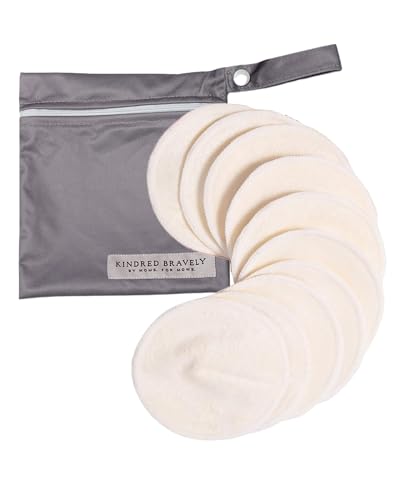
| Contents | Ten washable three-layer pads with a 100% organic viscose inner layer |
| Certification | OEKO-TEX, Organic |
| Best for | Absorbency, with the finished product tested for harmful substances |
This pad is well made, well specified and honest about what it is, and it is not organic cotton. It is the clearest example in this guide of why reading the fiber statement matters.
The listing states it directly: “Made from organic viscose, which is more absorbent” and “a 100% organic viscose inner layer”. Viscose is regenerated cellulose, produced by dissolving plant material in a chemical bath and reforming it as fiber. It is genuinely more absorbent than cotton, which is why it is used here, and it is a manufactured fiber whatever the feedstock.
What it does bring is a real certification. OEKO-TEX Standard 100 means the finished product has been tested against limits for hundreds of harmful substances. On something worn against tender or cracked skin for hours a day, that is a directly relevant credential, arguably more so than an organic farming claim.
Three layers, ten pads, from a brand that specialises in maternity and nursing wear and has a reputation to protect.
So the score reflects a split verdict: a genuine certification on a fiber that is not what most people mean by organic. If you want tested-safe and highly absorbent, this is a good buy. If you want organic cotton, it is not one.
What we liked: OEKO-TEX Standard 100 named explicitly. Very absorbent. Clear about its own fiber content. Specialist maternity brand.
Keep in mind: Organic viscose is regenerated cellulose, not cotton. Ten pads is the smallest reusable pack here.
What the listing discloses: On the Kindred Bravely label: OEKO-TEX. Not stated: whether the USDA seal applies and where it was grown or made.
The popular choice: KeaBabies Organic Nursing Pads, 14 Pack
| Organic Integrity Score | 74 / 100 |
| Contents | Fourteen washable pads with a wash bag, 5 inch diameter |
| Certification | — |
| Best for | Buyers who want the popular pack and know what the claim rests on |
The best-selling pad in the category by a clear margin, and by the standards of this guide the vaguest organic claim of our five picks.
The reason is unusual. Most weak claims in these categories are title-only, where a product says organic once and never elaborates. This listing does elaborate, describing “organic nursing pads” and promising “your skin is only in contact with natural materials”. What it never does, anywhere in the title or the feature bullets, is say what the fiber actually is. Not cotton, not bamboo, not viscose. The word organic is applied to the product without ever attaching to a material.
The pack itself is well judged: fourteen pads at 5 inches, with a wash bag included, which is a genuinely useful inclusion for laundering small items that otherwise vanish.
Widely bought and widely liked, and if certification is not the reason you are shopping this is a reasonable purchase. If it is, three of the four options above name either a fiber or a standard, and this one names neither.
What we liked: Fourteen pads with a wash bag. 5 inch size. The most popular option in the category by some distance.
Keep in mind: The fiber is never named anywhere in the listing. No certifier. Claims rest on the words organic and natural alone.
What the listing discloses: KeaBabies leaves the basics open, including whether the USDA seal applies and where it was grown or made.
What we left out and why
Momcozy Bamboo Disposable Nursing Pads. The second best-selling product our search returned, and it is not an organic product. The listing makes no organic claim in the title or in any feature bullet, describing the material as 100 percent natural bamboo liner. Bamboo fabric of this kind is viscose rayon, and the pad’s absorbency comes from an engineered core, which the listing refers to by its color rather than its composition. Nothing here is wrong or hidden. It simply does not belong in a guide about organic nursing pads.
Additional TL Care and KeaBabies pack sizes. Both brands list the same pad in several counts and colors. We have included each once.
The limit of this method, as always. Reading listing copy tells you what a brand will state publicly and how far it will substantiate it. It cannot tell you what is in the box. What we can do is read the whole listing rather than the title, and report precisely which words a claim depends on: surface, viscose, natural, made with. In this category more than most, the qualifier is where the information is.
Caring for reusable nursing pads
Never use fabric softener. Softener leaves a water-repellent film on fibers, which on a pad whose only job is absorbency is straightforwardly destructive. Pads that seem to have stopped working are usually coated rather than worn out. Dryer sheets do the same thing.
To recover a set, wash two or three times with no detergent and half a cup of white vinegar in the rinse.
Wash before first use. New cotton carries sizing and does not reach full absorbency until it has been through the machine two or three times. A new pad that seems to repel liquid is behaving normally.
Rinse milk in cold water first. Milk protein sets when heated, so a hot wash on a fresh stain fixes it into the fabric. Cold rinse, then warm wash.
Use a mesh wash bag. Small round pads disappear into sleeves and duvet covers and come out of the machine attached to something else. One pack here includes a bag, and any mesh bag does the job.
Dry them fully. A pad put away slightly damp is the beginning of a smell, and layered cotton holds moisture in the middle longer than the surface suggests.
Change pads as soon as they are wet. The most important habit in this guide, and worth repeating. A damp pad against skin softens it and creates conditions associated with cracking and thrush. Having enough pads is what makes changing them often possible.
Questions about organic nursing pads
What does a GOTS certified surface mean?
It means the layer against your skin is certified organic cotton, and that the rest of the pad is not covered by the certification. On a disposable pad the absorbent core is a separate material, so certifying the surface is the accurate way to make the claim. It is a real certification with a specific scope.
Is organic viscose the same as organic cotton?
No. Viscose, also called rayon, is regenerated cellulose made by dissolving plant material in a chemical bath and reforming it as fiber. It can be made from organically grown feedstock, and it is not cotton. If chemical processing is your concern, viscose is at the opposite end of the scale from cotton.
How many nursing pads do I need?
For reusables, ten to fourteen pads, meaning five to seven pairs. Six to eight pad changes a day is normal in the early weeks, and half your supply will always be in the wash.
Reusable or disposable?
Most people end up with both. Disposables are thinner, contoured and near invisible under clothing, which suits nights and going out. Reusables cost far less over a year and can be organic cotton throughout. Reusables are thicker and show more under fitted tops.
Why do my washable pads leak through?
All-cotton pads rely on layer count rather than a barrier, so a strong letdown can eventually saturate them. That is the trade for having no plastic layer. More layers, or changing sooner, are the two answers.
Does “chemical-free” mean anything?
No. The phrase has no regulatory definition and describes nothing, since all materials are chemicals. Treat it as marketing language rather than information, and look for a named fiber or a named standard instead.
How often should I change a nursing pad?
As soon as it is wet. A damp pad held against skin softens it and creates warm moist conditions associated with cracking and with thrush. This matters more than which pad you buy.
Are contoured pads better than flat ones?
They are usually less visible under clothing and stay in place better, which is why most disposables are contoured. Flat pads are more common in reusables and are perfectly workable, particularly if the surface is non-slip.
Looking for other organic products?
We have checked more than 800 products across food, household goods, gardening, personal care and pet, every one against its stated certification. Browse all reviews.
Organic Connection is reader supported. We check every product against its stated certification and say plainly when a claim cannot be verified. How we research and rate.