Last updated: September 11, 2026
We may earn a commission when you buy through links on this page, at no extra cost to you. How we research and rate.
The short version
After researching the certifications, distillation methods, and ingredient lists of the most popular organic rose waters, our top pick is Alteya Organics Rose Water, 4 oz. It is USDA certified organic, steam-distilled directly from freshly picked Bulgarian Rosa damascena petals, and sold in an amber glass spray bottle, which is why it earned our highest Organic Integrity Score of 93 out of 100. For the best value, the Alteya 8.5 oz is our pick, and for a USDA-certified value size, HBNO Organic Rose Water is the best choice.
Rose water is the category where most of what is sold is not really rose water at all, but water with rose fragrance added, and the label usually tells you if you know which word to look for. We flag each product’s certification, distillation, and packaging.
Best organic rose water compared
| Best Choice | Best Value | ||||
 |  |  |  |  | |
| Product | Alteya 4 oz Amber Glass | Alteya 8.5 oz | HBNO 16 oz | Alteya Spray 3.4 oz | Alteya Toner 17 oz |
| Organic Integrity Score | 93/ 100 | 89/ 100 | 86/ 100 | 83/ 100 | 80/ 100 |
| Our rating | 4.7 | 4.5 | 4.3 | 4.2 | 4.0 |
| Type | Steam-distilled hydrosol | Steam-distilled hydrosol | Rose distillate | Steam-distilled hydrosol | Steam-distilled hydrosol |
| Best for | Best overall | Best value | Best budget | Handbag and travel | Body and hair |
| Packaging | Amber glass spray | Glass spray | Recycled plastic | Glass spray | Bottle |
| Certification | USDA Organic, Non-GMO | USDA Organic, Non-GMO | Vegan | USDA Organic, Non-GMO | USDA Organic, Non-GMO |
| Ingredients | Organic Rosa damascena flower water | 100% pure organic Bulgarian rose water | Water and natural Rosa damascena flower extract | Organic Rosa damascena flower water | Organic Rosa damascena hydrosol |
| Price | $13.95$3.49 / fluid ounce View on Amazon | $19.95$2.35 / fluid ounce View on Amazon | $19.99$1.25 / fluid ounce View on Amazon | $16.95$4.99 / fluid ounce View on Amazon | $32.95$1.94 / fluid ounce View on Amazon |
Price and availability as of October 11, 2026 7:10 pm EDT. Product prices and availability are accurate as of the date/time indicated and are subject to change. Any price and availability information displayed on Amazon.com at the time of purchase will apply to the purchase of this product.
Scores are ours, based on independent research of certification, ingredient purity, distillation method, origin transparency, packaging, and value, using the same 10-criteria method we apply to every product. See how we research and rate.
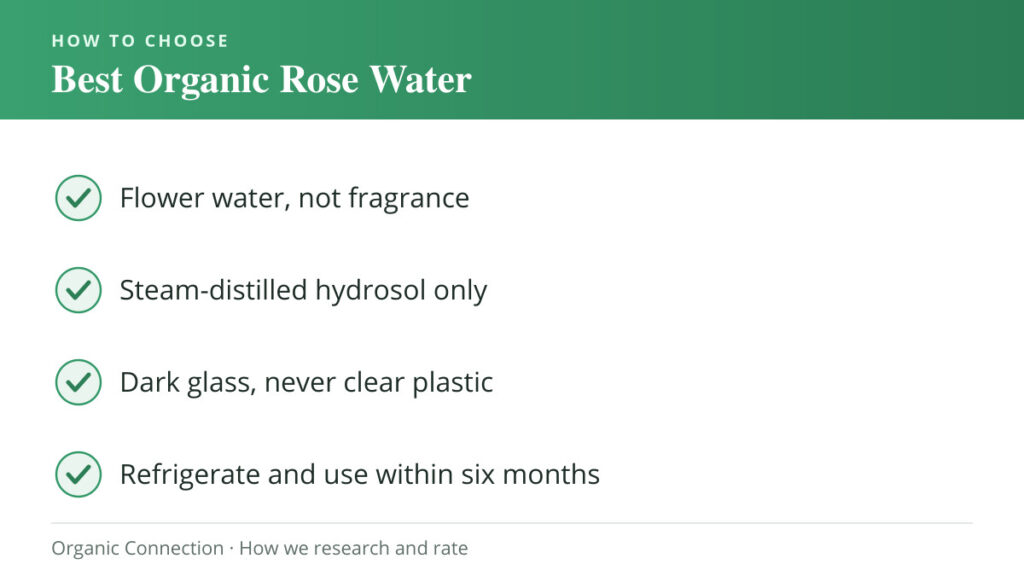
Key things to look for in organic rose water
Good rose water comes down to the ingredient list, distillation, packaging, and preservatives. Here is what matters.
1. One ingredient: rose flower water
The list should read Rosa damascena flower water or distillate. If it says water plus fragrance or extract, it is scented water, not a hydrosol.
2. USDA organic or a named certifier
You are applying this to your face daily and leaving it on, so pesticide certification on the petals genuinely matters.
3. Steam-distilled, and ideally a named origin
Bulgarian Rosa damascena is the benchmark. A brand that names its valley and its method has usually chosen it deliberately.
4. Glass, preferably amber or dark
Hydrosols are unstable in light and heat and have no strong preservative system. Glass protects the product and does not leach.
What rose water does, and what it does not
Rose water is one of the gentlest things you can put on your face, and also one of the most oversold.
What is in it. A true rose hydrosol carries trace volatile compounds from the distillation, principally citronellol, geraniol, and phenylethyl alcohol, plus water-soluble polyphenols and flavonoids including kaempferol and quercetin. Citronellol and geraniol have shown mild anti-inflammatory and antimicrobial activity in laboratory work, and a 2018 study on Rosa gallica petal extract documented anti-inflammatory effects in UV-exposed skin through suppression of MAPK signalling and reduced COX-2 expression.
What is well supported. Rose hydrosol sits at a pH of roughly 4.0 to 4.5, which aligns closely with skin’s acid mantle, and it provides light hydration and mild soothing. It is genuinely useful as a gentle toner after cleansing, as a refresher over the day, and as a way to dampen skin before applying a serum or facial oil, which helps those products spread and absorb. For sensitive and reactive skin it is one of very few actives-free products that almost never causes trouble.
The finding that undercuts the acne claims. Rose water is widely marketed as antibacterial, and there is a specific human study worth knowing about. A 2020 study published in GMS Hygiene and Infection Control tested Rosa damascena hydrosol on hand skin flora using contact culture after hand-rubbing and found no measurable antimicrobial effect. That is a direct test of the claim, and it failed. Treat rose water as a soothing hydrator rather than an antiseptic, and do not expect it to clear breakouts.
What is oversold. Rose water does not meaningfully treat acne, does not fade pigmentation, does not tighten pores in any lasting way, and is not an anti-aging treatment. The cooling, tightening sensation people describe is evaporation, not a structural change in the skin. It is also not a moisturizer: it is water, and water evaporates. Applied alone to dry skin it can leave you slightly drier than before, which is why it works best applied to damp skin and immediately followed by an oil or cream that seals it in.
The honest framing. Buy rose water as a pleasant, soothing, sensory step that improves how the rest of your routine goes on. That is a genuinely worthwhile role, and it is not the same as a treatment product. Anyone selling it as a solution to a specific skin condition is overselling.
Two practical cautions. Products with no preservative at all are more prone to microbial growth once opened, particularly in a warm bathroom, which is why refrigeration and a spray rather than an open-topped bottle matter. And while true allergy to rose hydrosol is uncommon, it does happen, so patch test on your inner arm before spraying your face.
How to choose organic rose water
- Read the ingredient list first. Rose flower water or distillate, ideally as the only ingredient.
- Reject anything listing fragrance or parfum, which means scented water rather than a hydrosol.
- Confirm USDA organic or another named certifier on the petals.
- Prefer glass over plastic, and amber or dark glass over clear.
- Buy a size you will use in six months, and refrigerate it once opened.
Who should buy organic rose water
The right bottle depends on how you use it. If you want the highest-integrity hydrosol in protective packaging, our top pick fits. If you want the best cost per ounce, a budget everyday option, something for a handbag, or a large bottle for body and hair, we have a pick for each.
Best overall: Alteya Organics Rose Water, 4 fl oz Amber Glass
| Organic Integrity Score | 93 / 100 |
| Ingredients | Organic Rosa damascena flower water |
| Certification | USDA Organic, Non-GMO |
| Best for | Daily facial toning on sensitive skin |
Alteya is our top pick because it controls the whole chain. The company grows and distils its own Rosa damascena in the Bulgarian Rose Valley, steam-distilling petals picked that morning, and the product is a genuine single-ingredient hydrosol with USDA organic certification. The amber glass spray bottle is the right packaging for an unstable, preservative-light product: it blocks light, does not leach, and the fine mist gives even coverage without contaminating the contents by dipping fingers in.
The trade-off is price and size. Four ounces of true hydrosol from freshly picked petals costs several times what a fragrance-based rose water does, and if you use it generously it will not last long. The genuine rose scent is also much softer and greener than the strong rose perfume people expect from fake rose water, which occasionally disappoints buyers who wanted the perfume smell.
What we liked: USDA organic single-ingredient hydrosol, distilled by the grower from same-day petals, in protective amber glass with a fine mist spray.
Keep in mind: Expensive per ounce, and the real rose scent is subtler than people expect.
What the listing discloses: Alteya documents USDA organic certification and a single-ingredient formula, and leaves where it was grown or made unsaid.
Best value: Alteya Organics Rose Water, 8.5 fl oz
| Organic Integrity Score | 89 / 100 |
| Ingredients | 100% pure organic Bulgarian rose water |
| Certification | USDA Organic, Non-GMO |
| Best for | Daily use without rationing it |
The same USDA organic Bulgarian hydrosol in more than double the volume, which brings the cost per ounce down considerably. Rose water is a product people under-use because they are conscious of how fast a small bottle empties, and this is the size that lets you actually spray generously after cleansing, over make-up, and through the day. Everything true of the top pick applies here.
The trade-off is shelf life against volume. A hydrosol with no strong preservative has a limited window once opened, realistically around six months, and 8.5 oz is more than many people will get through in that time unless they use it daily. If you buy this size, keep it in the fridge, which both extends its life and makes it far more pleasant to use.
What we liked: The same certified single-ingredient hydrosol at a much better rate per ounce, in a practical everyday size.
Keep in mind: More than some people will use before it turns; refrigeration is close to essential.
What the listing discloses: Alteya is explicit about USDA organic certification and a single-ingredient formula, and silent on where it was grown or made.
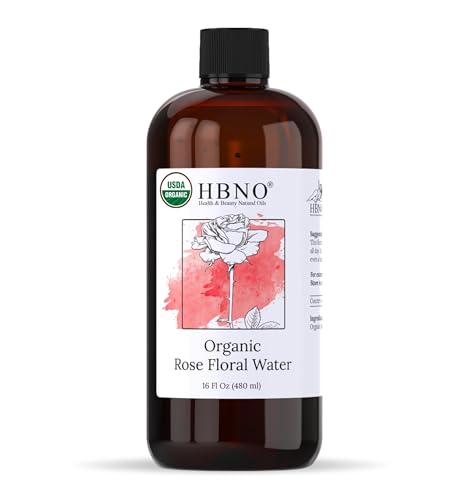
Best USDA-certified value: HBNO Organic Rose Water, 16 fl oz
| Organic Integrity Score | 86 / 100 |
| Ingredients | Organic rose floral water; distillation method not stated |
| Certification | USDA Certified Organic, certifier named as OneCert |
| Best for | Using rose water freely, with certification you can verify |
This is the one bottle on the page that names its certifier. The listing states that it is USDA organic certified by OneCert — an accredited certifying agent, named, checkable. Everywhere else in this category you get the word organic and are left to trust it, so on a page built around certification integrity this is the strongest single disclosure here.
At 16 fl oz it is also the size that lets you actually use rose water the way people want to: on hair, on the body, as a face mist, in the kitchen, without rationing a small amber bottle. It is bottled in the USA and stated as cruelty-free.
The honest caveat, and it is the reason it sits third rather than first. The listing never says how the rose water was produced. Alteya’s case rests on being a steam-distilled Bulgarian hydrosol, which is a specific and demanding process; HBNO describes a floral water without telling you whether it was distilled or made from extract. Strong certification of an unspecified process is not the same as a specified process, and on this page the distillation claim carries real weight.
What we liked: USDA certified organic with the certifier actually named — OneCert — which nothing else here does. A 16 fl oz bottle at a price that lets you use it freely. Bottled in the USA, cruelty-free.
Keep in mind: The listing does not say whether it is steam distilled, which is the whole basis of Alteya’s premium. A large bottle takes longer to get through, so keep it cool and out of sunlight.
What the listing discloses: Fully documented: HBNO states USDA organic certification and an origin of the USA.
Best for travel: Alteya Organics Rose Water Spray, 3.4 fl oz
| Organic Integrity Score | 83 / 100 |
| Ingredients | Organic Rosa damascena flower water |
| Certification | USDA Organic, Non-GMO |
| Best for | Handbags, desks, and flights |
Rose water is at its most useful as a mid-afternoon refresher, on a long flight, or in an air-conditioned office, and none of those work with a bottle on your bathroom shelf. At 3.4 oz this sits under the standard 100 ml cabin liquid limit, which makes it genuinely flight-friendly, and the fine mist means a couple of sprays refresh your face without wrecking make-up. It is the same USDA organic high-potency Bulgarian hydrosol as the top pick.
It scores lower on economics rather than quality. The cost per ounce is high, and a bottle carried around in a warm handbag is exposed to exactly the heat and light that degrade a preservative-light hydrosol fastest. Treat it as a companion to a larger bottle at home rather than your only purchase.
What we liked: Genuine organic hydrosol in a cabin-friendly size with a fine mist spray.
Keep in mind: High cost per ounce, and carrying it warm shortens its life.
What the listing discloses: Alteya states USDA organic certification and a single-ingredient formula, and does not say where it was grown or made.
Best for body and hair: Alteya Organics Rose Water Toner, 17 fl oz
| Organic Integrity Score | 80 / 100 |
| Ingredients | Organic Rosa damascena hydrosol |
| Certification | USDA Organic, Non-GMO |
| Best for | Body mist, hair refresh, and refilling smaller bottles |
Seventeen ounces of certified organic Bulgarian hydrosol, which is the size that makes non-facial uses realistic: misting over the body after a shower, refreshing curls and second-day hair, damping a flannel, or simply refilling a small glass spray bottle so the bulk stays sealed. On a cost-per-ounce basis it is the cheapest true hydrosol here.
It scores lowest because volume works against a preservative-light product. Seventeen ounces is far more than most people can use within the roughly six-month window a hydrosol realistically has once opened, and repeatedly opening a large bottle introduces air and microbes each time. Buy this only if you genuinely have whole-body or household uses, decant into a small spray, and keep the main bottle refrigerated and sealed.
What we liked: The lowest cost per ounce for a genuine USDA organic hydrosol, and enough volume for body and hair use.
Keep in mind: More than most people can use before it turns, and repeated opening shortens its life further.
What the listing discloses: Alteya is explicit about USDA organic certification and a single-ingredient formula, and silent on where it was grown or made.
How to use rose water, and how to keep it fresh
The most useful thing rose water does is give you damp skin to work on. Cleanse, then spray rose water over your face while it is still slightly wet, then apply your serum or facial oil immediately while the skin is damp. Oils and serums spread further and absorb better on damp skin, and the water gets sealed in rather than evaporating. Used this way, rose water genuinely improves the rest of your routine. Used alone on dry skin with nothing over it, it evaporates and can leave you marginally drier than before.
Beyond that, it works as a mid-day refresher over or under make-up, as a way to take the heat out of skin after sun or after shaving, and as a setting mist. It is also traditionally used in cooking, in Middle Eastern and South Asian sweets, though for that you want food-grade rose water rather than a cosmetic one.
Storage is where most people go wrong. A true hydrosol has little or no preservative, which is the point, and that means it is vulnerable. Keep it in the refrigerator: it extends usable life considerably and a cold mist on a hot day is one of the genuine pleasures of the product. Keep it out of direct sun and away from radiators, always use a spray rather than dipping fingers or cotton pads into an open bottle, and aim to finish it within about six months of opening. If it turns cloudy, develops floaters, or smells sour or musty rather than floral and slightly green, throw it out. Patch test on your inner arm before first use.
How we researched this guide
We are a research-based review site. We compared each product against its certification, ingredient list and whether it is a true steam-distilled hydrosol or a fragrance-based water, origin and distillation transparency, packaging material and light protection, bottle size relative to realistic shelf life, published contaminant testing, and the weight of aggregated customer feedback on scent and skin tolerance, then scored each with our 10-criteria Organic Integrity Score. No brand paid to be included or ranked. This page is informational and is not medical advice. Read the full method on our How We Research and Rate page.
Common questions about organic rose water
What is the best organic rose water for face?
Our overall pick is Alteya Organics Rose Water in the 4 oz amber glass bottle, because it is USDA certified organic, a genuine single-ingredient steam-distilled hydrosol made by the grower from same-day picked Bulgarian Rosa damascena, and packaged in light-protecting glass. For the best value, the Alteya 8.5 oz, and for a certified value size, HBNO Organic Rose Water.
How do you tell real rose water from fake?
Read the ingredient list. Real rose water is a hydrosol and lists Rosa damascena flower water or distillate, ideally as the only ingredient. Fake rose water lists water plus fragrance, parfum, or rose extract, which means scented water rather than a distillate. Real rose water also smells softer and greener than the strong rose perfume most people expect.
Does rose water actually do anything for skin?
Modestly, and honestly. It is mildly anti-inflammatory and soothing, sits at a pH close to skin’s own, and provides light hydration, which makes it a genuinely good gentle toner and a useful way to dampen skin before a serum or oil. It does not treat acne, fade pigmentation, shrink pores, or reverse aging, whatever the marketing says.
Should rose water be refrigerated?
Ideally yes, especially a true hydrosol with little or no preservative. Refrigeration slows microbial growth and meaningfully extends usable life, and a cold mist is far more pleasant to use. Keep it out of sunlight and warm bathrooms, use a spray rather than dipping into the bottle, and finish it within about six months of opening.
Can you use rose water every day?
Yes. It is one of the gentlest facial products available, contains no actives, and is well tolerated by most sensitive and reactive skin. Use it once or twice a day after cleansing, and follow with a moisturizer or oil while the skin is still damp so the water is sealed in rather than evaporating. Patch test first, since rose allergy is uncommon but real.
- Organic Skincare & Beauty hub
- Best Organic Witch Hazel
- Best Organic Rosehip Oil
- Organic Skincare 101: How to Read Labels
- our searchable product database — compare all 800+ picks side by side
Price and availability as of October 11, 2026 7:10 pm EDT. Product prices and availability are accurate as of the date/time indicated and are subject to change. Any price and availability information displayed on Amazon.com at the time of purchase will apply to the purchase of this product.
Looking for other organic products?
We have checked more than 800 products across food, household goods, gardening, personal care and pet, every one against its stated certification. Browse all reviews.
Organic Connection is reader-supported. When you buy through links on this page we may earn a commission, at no extra cost to you. As an Amazon Associate we earn from qualifying purchases. We are not paid to feature or rank any product. This page is informational and is not medical advice. How we research and rate.