Last updated: September 30, 2026
We may earn a commission when you buy through links on this page, at no extra cost to you. How we research and rate.
The short version
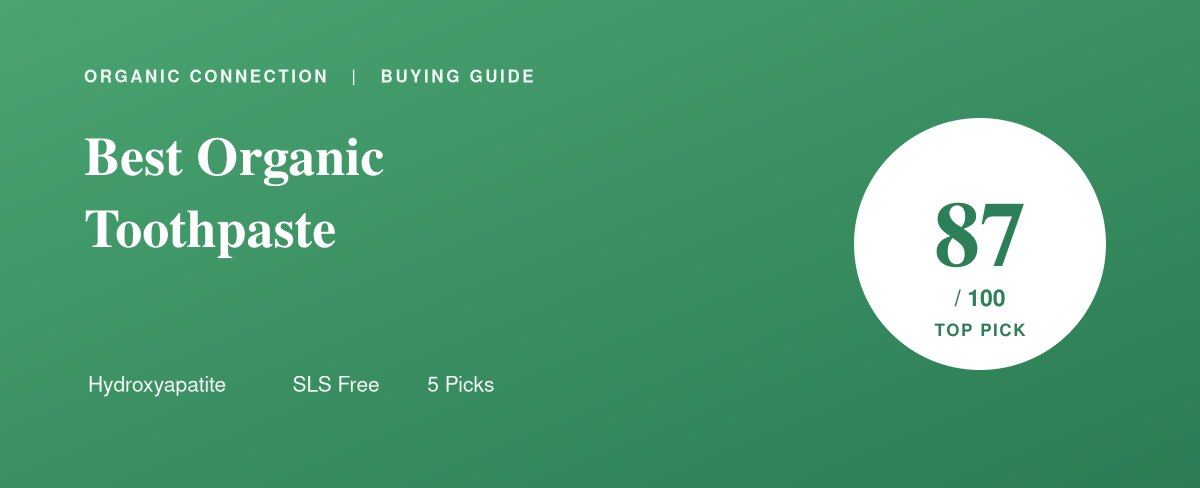
After working through the clinical trial literature and the certification rules, our top pick is Davids Nano Hydroxyapatite Toothpaste. It is the only kind of fluoride-free toothpaste with randomized controlled trial evidence behind its active ingredient, it is SLS-free and EWG Verified, and it comes in a recyclable metal tube, which is why it earned our highest Organic Integrity Score of 87 out of 100.
For a genuinely high organic-content formula, Dr. Bronner’s All-One Toothpaste is the pick at 70 percent organic ingredients. But before you buy anything in this category, you need to understand what going fluoride-free actually costs you, and the answer is more interesting than either side of that argument usually admits.
Best organic toothpaste compared
| Best Choice | Best Value | ||||
 |  |  |  |  | |
| Product | Davids Nano Hydroxyapatite | Boka Nano Hydroxyapatite | Davids Nano Hydroxyapatite | Dr. Bronner’s All-One | Dr. Bronner’s All-One |
| Organic Integrity Score | 87/ 100 | 84/ 100 | 83/ 100 | 80/ 100 | 79/ 100 |
| Our rating | 4.4 | 4.2 | 4.2 | 4.0 | 4.0 |
| Best for | Best overall | Best for sensitivity | Best for travel | Best organic content | Best value |
| Active ingredient | Nano-hydroxyapatite (n-HA) | Nano-hydroxyapatite (n-HA) | Nano-hydroxyapatite (n-HA) | None (70% organic ingredients) | None (70% organic ingredients) |
| Certification | EWG Verified, Vegan | Not stated on the listing | EWG Verified, Vegan | Fair Trade, Leaping Bunny, Vegan | Leaping Bunny, Vegan, Organic |
| Size | 5.25 oz | 4 oz | 1.75 oz | 5 oz | 5 oz, 3-pack |
| Price | $11.95$2.28 / ounce View on Amazon | $11.62$2.91 / ounce View on Amazon | $5.95$3.40 / ounce View on Amazon | $9.99$2.00 / ounce View on Amazon | $22.79$1.52 / ounce View on Amazon |
Scores are ours, based on independent research of active ingredients, trial evidence, ingredient transparency, packaging and value, using the same 10-criteria method we apply to every product.
What each certification on an organic toothpaste label actually covers
A seal is a specific promise about a specific thing. These are the promises behind the marks on this page, in plain terms, along with the question each one leaves unanswered.
| Certification | Covers | Key exclusion |
| USDA Organic | Farming and handling: no synthetic pesticides or fertilizers, no GMOs, no sewage sludge or irradiation, audited yearly by an accredited certifier | Three different tiers share the one seal, and it makes no claim about worker pay, food miles, or nutrition |
| EWG Verified | Full ingredient disclosure and avoidance of the chemicals on the EWG list of concern | Run by an advocacy group rather than a standards body, and not an organic claim |
The USDA seal is a farming standard, and only a farming standard. It is enforced, it is audited annually, and it genuinely prohibits synthetic pesticides, synthetic fertilizers and GMOs. It says nothing about what the people who grew the crop were paid, how far the product traveled, or whether it is good for you. Organic sugar is organic. It is still sugar.
The fluoride question, answered honestly
Start with the mainstream position, because it is well founded. The American Dental Association and the World Health Organization both recommend fluoride toothpaste, and decades of research support its ability to strengthen enamel and reduce decay. If you ask most dentists, they will tell you that fluoride toothpaste is the proven way to prevent cavities, and they are reflecting the weight of the evidence accurately.
That matters here because the great majority of toothpaste sold as organic or natural is fluoride-free. If you switch on the assumption that organic simply means the same product with cleaner ingredients, you may be giving up the one thing toothpaste is demonstrably good at without realizing you have made that trade.
But the picture has genuinely changed, and it would be lazy to stop at “use fluoride”. A growing body of randomized controlled trials has tested hydroxyapatite, the mineral that makes up tooth enamel, directly against fluoride. An 18-month double-blinded trial in adults found hydroxyapatite toothpaste was not statistically inferior to 1450 ppm sodium fluoride for caries prevention. A separate one-year randomized trial examined microcrystalline hydroxyapatite and early childhood caries in children. Further trials have compared it against amine fluoride formulations in children and in adolescents undergoing orthodontic treatment.
So the honest position is narrower than either camp usually states it. Fluoride-free is not automatically ineffective, but only hydroxyapatite has earned that claim. A fluoride-free toothpaste built on herbal extracts, essential oils, clay or charcoal has no comparable evidence for preventing decay, and buying one of those instead of a fluoride paste is a real downgrade rather than a lateral move.
Why toothpaste is rarely fully certified organic
You will find very few toothpastes carrying a USDA Organic seal, and there is a structural reason. Toothpaste needs abrasives, thickeners, humectants and a preservative system, and several of the standard functional ingredients such as silica, calcium carbonate, sodium bicarbonate and xylitol are minerals or processed compounds rather than agricultural products. Certification is calculated on the agricultural ingredients, so a paste can be substantially natural and still fall well short of the threshold for the seal.
This is why the honest labels in this category quote a percentage. Dr. Bronner’s states 70 percent organic ingredients rather than claiming to be an organic toothpaste, and that specificity is a good sign. Treat a bare “organic toothpaste” claim on the front of a tube with more suspicion than a stated percentage on the back, and see our guide to spotting greenwashing for the wider pattern.
Charcoal toothpaste and the abrasion problem
Charcoal is the most heavily marketed natural whitening ingredient and the one we would most readily tell you to skip. The whitening effect is mechanical, meaning it works by scrubbing surface stain rather than changing the color of the tooth, and abrasion that removes stain also removes enamel, which does not grow back.
There is a second problem specific to charcoal formulas. Many are fluoride-free, and charcoal is capable of binding compounds, which raises a reasonable question about whether it interferes with active ingredients in the same paste. Combine an abrasive with the absence of a proven active and you have a product that may be actively worse than the conventional paste it replaced.
If whiter teeth are the goal, the ingredient with better evidence behind it is hydrogen peroxide, and the honest answer is that intrinsic tooth color is largely genetic. A toothpaste can remove stain; it cannot change the underlying shade.
Key things to look for in an organic toothpaste
1. A named active ingredient
Hydroxyapatite, nano-hydroxyapatite, or fluoride. Anything else is a flavor and a cleaning agent rather than a therapeutic ingredient. If the tube leads with botanical extracts and does not name an active, assume it is doing very little beyond mechanical cleaning.
2. No SLS if you get mouth ulcers
Sodium lauryl sulfate is the foaming agent in most conventional toothpaste, and there is a reasonable body of evidence linking it to recurrent aphthous ulcers in susceptible people. Most natural brands leave it out, which is one of the more defensible reasons to switch. If you get frequent mouth ulcers, an SLS-free paste is worth trying on those grounds alone.
3. A stated organic percentage
As above, a specific figure such as 70 percent organic ingredients is a more credible claim than an unqualified “organic” on the front of the tube.
4. RDA information if you can find it
Relative dentin abrasivity measures how harshly a paste scrubs. Anything up to 250 is considered safe, but lower is gentler, and this is the number that matters most if you have receding gums or exposed root surfaces. Few natural brands publish it, which is itself informative.
5. Packaging that matches the pitch
If you are buying this category for environmental reasons, a recyclable metal tube is a materially different proposition from a multilayer plastic laminate tube, which is effectively unrecyclable in most curbside systems. This is one of the few places where the eco claim is easy to verify with your own eyes.
Who should buy an organic toothpaste
Buy one if you want to avoid SLS, artificial sweeteners, dyes or plastic tubes, and you choose a hydroxyapatite formula so you are not giving up decay prevention to get those things. Buy one if you get recurrent mouth ulcers and want to test whether SLS is the trigger. Buy one if the packaging genuinely matters to you and a metal tube would change your habit.
Think harder if you or your children are at elevated risk of decay, if you have a history of frequent cavities, or if your dentist has specifically recommended a fluoride concentration. In those situations the sensible move is to raise hydroxyapatite with your dentist rather than switch quietly, because they know your risk profile and this page does not.
How to choose an organic toothpaste
Decide first whether you want an active ingredient with trial evidence, which currently means hydroxyapatite or fluoride, or whether you are shopping purely on ingredient avoidance. That decision does more work than anything else. Then check for SLS if ulcers are a concern, look for a stated organic percentage rather than a bare claim, and choose the tube material you can actually recycle. Flavor is the last consideration and the one most likely to determine whether the tube gets finished, so do not dismiss it entirely.
Best overall: Davids Nano Hydroxyapatite Toothpaste, Peppermint 5.25 oz
| Organic Integrity Score | 87 / 100 |
| Active ingredient | Nano-hydroxyapatite |
| Certification | EWG Verified, Vegan |
| Best for | Leaving fluoride behind without leaving evidence |
It is the rare natural toothpaste that does not ask you to trade evidence for ingredients. Nano-hydroxyapatite is the fluoride-free active with randomized trial support, and Davids pairs it with an SLS-free formula, EWG verification, US manufacture and a metal tube that is genuinely recyclable rather than nominally so.
What we liked: A named active with real trial evidence behind it. SLS-free, which matters if you get mouth ulcers. Recyclable metal tube rather than plastic laminate. EWG Verified, and the sensitivity formulation is a sensible pairing since hydroxyapatite has evidence for sensitivity as well as decay.
Keep in mind: It is fluoride-free, so if you are at high decay risk this is a conversation for your dentist first. It costs meaningfully more than conventional toothpaste. The metal tube needs rolling from the bottom or you will strand product in it.
What the listing discloses: Davids makes no organic claim anywhere, so the case rests on the other claims it does make.
Best for sensitivity: Boka Nano Hydroxyapatite Toothpaste, Ela Mint 4 oz
| Organic Integrity Score | 84 / 100 |
| Active ingredient | None (70% organic ingredients) |
| Best for | Sensitive teeth and milder flavor |
Boka helped popularize nano-hydroxyapatite in the US market, and the Ela Mint formulation is aimed squarely at sensitive teeth. Hydroxyapatite has a plausible mechanism here, occluding exposed dentinal tubules, and the sensitivity evidence for it is somewhat more established than the caries evidence.
What we liked: Evidence-backed active. Formulated for sensitivity, where hydroxyapatite has its strongest case. Milder flavor than most mint pastes, which suits people who find peppermint harsh.
Keep in mind: Plastic laminate tube rather than metal. Naturally derived rather than certified organic, and the brand does not publish an organic percentage. Fluoride-free, with the same caveat as every other paste here.
What the listing discloses: No organic certification appears anywhere on the Boka listing.
Best for travel: Davids Nano Hydroxyapatite Toothpaste, 1.75 oz
| Organic Integrity Score | 83 / 100 |
| Active ingredient | Nano-hydroxyapatite (n-HA) |
| Certification | EWG Verified, Vegan |
| Best for | Travel and first-time trial |
The same hydroxyapatite formula in a 1.75 ounce tube that clears carry-on limits comfortably. Also the cheapest way to find out whether you get on with hydroxyapatite before buying a full-size tube.
What we liked: Same evidence-backed active as the full size. Genuinely travel-legal. Low-cost trial of the format. SLS-free.
Keep in mind: Cost per ounce is higher, as with all travel sizes. Small tube runs out quickly with twice-daily use.
What the listing discloses: No organic certification appears anywhere on the Davids listing.
Best organic content: Dr. Bronner’s All-One Toothpaste, Peppermint 5 oz
| Organic Integrity Score | 80 / 100 |
| Active ingredient | Nano-hydroxyapatite (n-HA) |
| Certification | Fair Trade, Leaping Bunny, Vegan |
| Best for | Buyers prioritizing organic ingredient content |
Dr. Bronner’s is the highest genuine organic content here at 70 percent, and the company states that figure plainly rather than implying more. It is SLS-free, vegan, and free of the artificial sweeteners and dyes that people usually leave conventional toothpaste to avoid.
What we liked: A stated organic percentage instead of a vague claim, which is exactly the transparency we want to reward. SLS-free and vegan. Simple ingredient list with no charcoal gimmick. The brand’s certification record across its range is among the better ones in personal care.
Keep in mind: No fluoride and no hydroxyapatite either, so there is no active with decay-prevention evidence in this tube. It cleans and freshens well; it is not doing therapeutic work. The plastic laminate tube is a weak point given the brand’s positioning. Some find the peppermint intensity high.
What the listing discloses: Dr. Bronner’s documents Fair Trade and a Leaping Bunny mark, and leaves whether the USDA seal applies and where it was grown or made unsaid.
Best value multipack: Dr. Bronner’s All-One Toothpaste 3-Pack
| Organic Integrity Score | 79 / 100 |
| Active ingredient | Nano-hydroxyapatite (n-HA) |
| Certification | Leaping Bunny, Vegan, Organic |
| Best for | Households settling the flavor question |
Peppermint, cinnamon and anise in one pack, which brings the per-tube cost down and lets a household try all three rather than commit to a flavor sight unseen. The anise in particular divides opinion sharply, so buying it as part of a trio is the sensible way in.
What we liked: Better cost per tube than buying singly. Three flavors suits a household with different preferences. Same 70 percent organic formula and SLS-free base.
Keep in mind: Same limitation as the single tube, which is that there is no evidence-backed active ingredient here. If nobody in the house likes anise you have effectively bought two tubes. Plastic laminate tubes.
What the listing discloses: Dr. Bronner’s states a Leaping Bunny mark, and does not say whether the USDA seal applies and where it was grown or made.
Common questions about organic toothpaste
Does organic toothpaste prevent cavities?
Only if it contains an active ingredient with evidence behind it. Most organic and natural toothpaste is fluoride-free, and fluoride-free formulas built on herbal extracts, clay or charcoal have no trial evidence for preventing decay. The exception is hydroxyapatite, which has been tested directly against fluoride in randomized controlled trials and was found not statistically inferior over 18 months in adults.
Is fluoride-free toothpaste a bad idea?
Not necessarily, but it depends entirely on what replaces the fluoride. The ADA and WHO recommend fluoride because the evidence for it is deep and long-standing. If you go fluoride-free, choosing hydroxyapatite keeps you on evidenced ground. Choosing a botanical paste with no named active does not, and if you are at elevated decay risk you should raise the switch with your dentist rather than make it quietly.
What is hydroxyapatite and does it really work?
It is the calcium phosphate mineral that makes up the bulk of tooth enamel, so the idea is to resupply enamel with its own building material. Multiple randomized controlled trials support it, including an 18-month adult trial where 89.3 percent of the hydroxyapatite group had no increase in decayed, missing and filled surfaces against 87.4 percent on 1450 ppm fluoride, plus trials in children and in adolescents in orthodontic treatment.
Why is there almost no USDA Organic toothpaste?
Because certification is calculated on agricultural ingredients, and toothpaste depends on abrasives, thickeners and humectants such as silica, calcium carbonate and sodium bicarbonate that are minerals or processed compounds rather than crops. A paste can be largely natural and still fall short of the seal, which is why the honest brands quote a percentage such as 70 percent organic instead.
Is charcoal toothpaste safe?
We would avoid it. Its whitening effect is mechanical abrasion, which removes surface stain and enamel alike, and enamel does not regenerate. Most charcoal pastes are also fluoride-free without substituting a proven active, so you get abrasion without prevention. If whitening is the goal, hydrogen peroxide has better evidence, and intrinsic tooth shade is largely genetic in any case.
Should I avoid SLS in toothpaste?
If you get recurrent mouth ulcers, it is worth trying. Sodium lauryl sulfate is the foaming agent in most conventional pastes and there is reasonable evidence linking it to aphthous ulcers in susceptible people. If you do not get ulcers, SLS is not a safety concern, and avoiding it is a preference rather than a health decision.
Can children use hydroxyapatite toothpaste?
There is trial evidence in children, including a one-year randomized study of microcrystalline hydroxyapatite and early childhood caries, and further work in adolescents undergoing orthodontic treatment. That said, children’s decay risk varies enormously and pediatric fluoride guidance is well established, so this is a question for your child’s dentist rather than a buying guide.
Does natural toothpaste whiten teeth?
It can remove surface stain, which is what most whitening toothpaste of any kind does. It cannot change the intrinsic color of the tooth, which is largely genetic. Be skeptical of dramatic whitening claims on a natural paste, and be especially skeptical when the mechanism offered is an abrasive.
- Organic Skincare and Beauty hub
- How to spot greenwashing
- Best Organic Castile Soap
- browse all our reviewed products — scores and certifications for 800+ products
Price and availability as of October 15, 2026 1:10 pm EDT. Product prices and availability are accurate as of the date/time indicated and are subject to change. Any price and availability information displayed on Amazon.com at the time of purchase will apply to the purchase of this product.
Looking for other organic products?
We have checked more than 800 products across food, household goods, gardening, personal care and pet, every one against its stated certification. Browse all reviews.
Organic Connection is reader-supported. When you buy through links on this page we may earn a commission, at no extra cost to you. As an Amazon Associate we earn from qualifying purchases. We are not paid to feature or rank any product. How we research and rate.