Last updated: September 30, 2026
We may earn a commission when you buy through links on this page, at no extra cost to you. How we research and rate.
The short version
Judged on what each maker will put in writing, our top pick is the Sustainable Containables Stainless Steel Food Storage Containers. It names its steel two ways, its lids are platinum-cured silicone rather than plastic, it states plainly that the whole product is plastic-free, and it carries a two-year warranty. That earned it our highest Organic Integrity Score of 93 out of 100.
Everybody buying these is buying them to get away from plastic. That is the entire premise of a stainless food container — no staining, no odor retention, no scratched-up polymer holding onto last week’s curry.
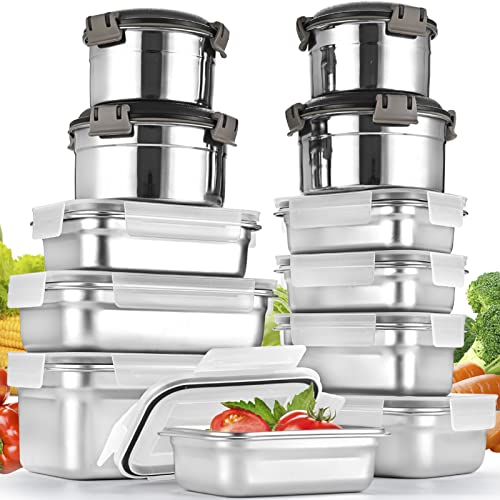
Which makes the lid the only question that matters. The box is steel in all five of these. Two have silicone lids. Two have plastic lids, disclosed only by a BPA-free claim. One never says what its lid is made of at all.
These are portable, unbreakable containers for lunches and meal prep. If you want glass for the fridge and the oven, that is a different product and we cover it in our glass food storage container guide.
What the listings leave out
| Best Choice | Best Value | ||||
 |
 |
 |
|||
| Product | Sustainable Containables | Caperci 3-Pack | Cuiselect 4-Size | Cykorxicc 12PC | Umigy 4-Piece |
| Organic Integrity Score | 93/ 100 | 88/ 100 | 84/ 100 | 81/ 100 | 76/ 100 |
| Our rating | 4.7 | 4.4 | 4.2 | 4.1 | 3.8 |
| Best for | Best overall | Cheapest, silicone lids | Four sizes, largest capacity | Most containers, seal explained | Bento style, least stated |
| Lid material | Platinum silicone, plastic-free | Silicone | Plastic, BPA-free | Plastic with silicone ring | Not stated |
| Steel grade | 18/8 (304), both given | 18/8, stated | 304, stated | 18/8, stated | Not named |
| Oven safe | Stated | Not stated | Not stated | Not stated | Not stated |
| Warranty | 2 years, stated | Not stated | Not stated | Not stated | Not stated |
| Capacities given | Nested sizes | 15 oz / 440 ml | 58, 41, 24, 14 oz | 7 sizes, 12 containers | One dimension only |
| Price | $38.99$13.00 / count View on Amazon |
View on Amazon | View on Amazon | $58.99$4.92 / count View on Amazon |
$30.99$7.75 / count View on Amazon |
Scores are ours, based on independent research of materials disclosure, construction, published specifications and value, using the same ten-criteria method we apply to every product.
What each claim on a stainless container listing covers
| Claim | Covers | Key exclusion |
| Platinum silicone lid | A named higher-purity curing process, no chemical byproducts | The most specific lid claim here; one listing makes it |
| Silicone lid | A polymer that is not plastic in the usual sense, freezer to oven | Does not say whether it is platinum or peroxide cured |
| BPA-free lid | No bisphenol A in the plastic | Confirms the lid is plastic; says nothing about what replaced BPA |
| Plastic-free | The whole product, lid included | Only meaningful on a set that ships lids; one listing states it |
| 304 / 18-8 stainless | The container body, a named food-contact grade | Describes the box, never the lid |
| Leakproof | The seal holds liquid in a bag | Depends on the gasket, which usually is silicone even on plastic lids |
| Oven safe | The container tolerates oven heat, lid removed | Rare and useful; one listing states it |
| Removable sealing ring | The gasket lifts out so you can clean under it | Where mold grows on any sealed container; one listing addresses it |
You bought steel to avoid plastic. Then there is the lid.
The case for a stainless container is genuinely strong and it is about the material’s indifference. Steel does not stain from tomato sauce or turmeric. It does not hold the smell of last week’s garlic. It does not craze into a network of scratches that trap residue. It does not warp, and it will outlive you.
Every one of those advantages applies to the box. None of them applies to the lid, and the lid is the part that seals against your food, gets microwaved by somebody eventually, and goes through the dishwasher several hundred times.
On this page there are three answers.
Silicone lids. Two sets use them. Silicone is not a plastic in the ordinary sense — it is a silicon-oxygen polymer rather than a carbon-chain one — and it does not contain BPA, does not go brittle, and tolerates freezer to oven temperatures. A silicone lid is the answer that matches the reason you bought steel.
Plastic lids, disclosed sideways. Two sets describe “BPA-free lids” or “snap-on lids”, which tells you they are plastic without using the word. That is not dishonest — a clear plastic lid that locks with clips seals well and lets you see the contents, and BPA-free is a real if narrow assurance. It is simply not what most buyers think they are getting.
Nothing at all. One set describes the container as stainless steel and never mentions the lid material in any form.
The tell is the word “clear”. A see-through lid is either plastic or clear silicone, and if a listing highlights visibility without naming silicone, assume plastic.
Platinum silicone, and why one listing bothers to say it
One set here does not just say silicone. It says platinum silicone, and that is a real distinction rather than a flourish.
Silicone has to be cured — cross-linked from a gel into a solid — and there are two common ways to do it.
Peroxide-cured silicone is the standard, cheaper route and it is what most food-grade silicone is. It is perfectly safe and meets FDA requirements. The process can leave small amounts of chemical residue behind, which is why peroxide-cured parts are more prone to odor, to a slight volatility when new, and to yellowing over time.
Platinum-cured silicone uses a platinum catalyst instead. It produces no chemical byproducts, so it is purer and more stable: no odor, better heat resistance, and it resists yellowing. It is the grade used for medical and clean industrial applications and it meets FDA, USP Class VI and EU food-contact standards.
Both are safe. We want to be plain about that, because this is a distinction that lends itself to scaremongering and does not deserve it. Peroxide-cured food-grade silicone is a properly regulated material and there is nothing wrong with a lid made of it.
Platinum-cured is simply the higher-purity option, it costs more, and naming it is a specification rather than an adjective. Four listings here say silicone or say nothing. One tells you which kind, which is the same instinct as the cast iron maker that named its seasoning oil or the kettle that named its handle polymer.
Best overall: Sustainable Containables Stainless Steel Food Containers
| Organic Integrity Score | 93 / 100 |
| Steel | 18/8, given also as 304 food grade |
| Lids | Clear platinum silicone — plastic-free, BPA-free, BPS-free, phthalate-free |
| Use | Freezer and oven safe, hot and cold, nested for storage |
| Warranty | 2 years against manufacturing defects |
| Best for | The only genuinely plastic-free set on this page |
This listing answers every question the category raises, and it answers them in the right order.
The lid is platinum silicone, named as such, and the listing goes further and states outright that the lids are plastic-free — then adds BPA-free, BPS-free and phthalate-free. That last cluster would be filler on its own, but attached to a named material and a plastic-free claim it reads as thoroughness rather than padding.
BPS deserves a note, because almost nobody mentions it. When BPA fell out of favor, a common substitute was bisphenol S — a closely related compound that ended up in a great many products stamped “BPA-free”. A listing that excludes BPS as well as BPA is closing the loophole its competitors’ claims leave open.
The steel is given both ways, 18/8 and 304 food grade, which is the same alloy under two names and removes any ambiguity.
And it is oven safe. That is genuinely rare in this category and it changes what the container is for — you can roast in it, refrigerate in it and reheat in it without transferring anything. Take the silicone lid off for the oven.
The two-year warranty is the only warranty on this page, and the containers nest for storage, which is the practical failure of most stainless sets.
The gap is capacity. Sizes are described as nested rather than listed in ounces, so you cannot check portion sizes before buying the way you can with two competitors.
What we liked: Platinum silicone named, an explicit plastic-free claim, BPS excluded as well as BPA, steel grade given two ways, oven and freezer safe, a 2-year warranty, and nesting storage.
Keep in mind: Individual capacities are not listed in ounces. Silicone lids seal well but are less rigid than clipped plastic ones. Mid-to-high price for the count.
Cheapest with silicone lids: Caperci 3-Pack Stainless Snack Containers
| Organic Integrity Score | 88 / 100 |
| Set | 3 containers with 3 silicone lids |
| Capacity | 15 oz / 440 ml each, in both units |
| Materials | 18/8 food-grade stainless steel and silicone |
| Seal | Snug-fitting leak-proof silicone lid |
| Best for | Silicone lids at the lowest price here |
The cheapest set on this page and it still gets the important part right: the lids are silicone, not plastic, and the materials line names both components together — 18/8 food-grade stainless steel and silicone.
The capacity description is the best on the page, and it is unusually practical. Rather than only giving 15 oz and 440 ml, the listing tells you what that actually holds: half a sandwich plus a side of chips or fruit. Anyone who has bought containers that turned out to be the wrong size for a real lunch will appreciate a seller translating volume into food.
Leak-proof is claimed and the silicone lid is the reason it is credible — a flexible lid stretched over a rim seals better than a rigid one relying on clips, particularly once a clip loosens.
Lightweight and dishwasher safe are both stated, and the set is framed honestly as snack and portion containers rather than pretending to be a full meal-prep system.
It sits second because it does not say which silicone, there is no oven or freezer statement, no warranty, and three containers of one size is a starter set rather than a solution. At this price that is a reasonable trade.
What we liked: Silicone lids at the lowest price here, 18/8 named alongside the lid material, capacity in two units translated into actual food, a genuinely leak-proof design, and honest positioning.
Keep in mind: Silicone type not specified. One size only, three containers. No oven, freezer or warranty statement.
Four sizes, largest capacity: Cuiselect Stainless Steel Lunch Boxes
| Organic Integrity Score | 84 / 100 |
| Set | Four sizes — 58, 41, 24 and 14 oz, two of each |
| Steel | Food-grade 304, stated |
| Lids | Clear BPA-free plastic with 4 locking clips |
| Use | Hot and cold, stackable, no warping or cracking |
| Best for | Big portions and a graduated set of sizes |
The most generously sized set here, and the one with the clearest capacity information. 58, 41, 24 and 14 ounces, two of each — a genuine spread from a snack pot to a container that holds a full family portion of leftovers.
The 304 grade is named, the containers stack, and the listing makes a fair comparative argument: steel avoids the fragility of glass and the odor absorption of plastic. That is accurate, and it is the right reason to buy stainless.
The 4-lock lids with clips on each side are a proper mechanical seal and the reason a set like this genuinely survives a bag.
But the lids are plastic. The listing says “visible BPA-free lids”, which discloses the material by implication without ever using the word — and on a product bought specifically to escape plastic, that is the gap. BPA-free tells you one compound is absent; it does not say what the polymer is, and it says nothing about BPS.
One more thing to note before you order. The title says 4 PCS and the description says the set includes 8 pieces — four sizes with two containers of each. Eight is the number to plan around, and a listing that contradicts itself on the count is a listing to read twice.
What we liked: Four capacities all stated in ounces, the largest container here at 58 oz, 304 named, secure four-clip locking lids, stackable, and a correct argument for steel over glass and plastic.
Keep in mind: The lids are plastic, disclosed only as BPA-free, with no mention of BPS. The title says 4 pieces and the body says 8. No oven, freezer or warranty statement.
Most containers, seal explained: Cykorxicc 12-Piece Stainless Set
| Organic Integrity Score | 81 / 100 |
| Set | 12 containers and 12 lids in 7 sizes — 8 square, 4 round |
| Steel | 18/8, mirror polished |
| Lids | Snap-on plastic with a removable silicone sealing ring |
| Use | Dishwasher and freezer safe |
| Best for | Kitting out a whole fridge in one purchase |
Twelve containers across seven sizes, in both square and round shapes, which is enough to reorganize a fridge in a single order. Square containers use shelf space far better than round ones; round ones pour and clean more easily. Having both is sensible.
18/8 is named, the finish is mirror polished, and dishwasher and freezer use are both stated.
The detail we want to credit is the removable sealing ring. The listing points out that the silicone ring under the lid lifts out for cleaning — and that is the single most useful maintenance fact about any sealed container. The groove under a gasket is where water sits, where food residue collects, and where black mold appears on containers that look clean. A gasket you can remove is a container you can actually keep clean; a molded-in one is not.
It scores fourth because the lids themselves are plastic. “Snap-on lids with a silicone sealing ring” plus a BPA-free claim describes a plastic lid with a rubber gasket, which is the standard construction and not what a stainless buyer is usually after. There is no oven statement and no warranty.
What we liked: Twelve containers in seven sizes, square and round, 18/8 named, mirror-polished finish, dishwasher and freezer safe, and an explicitly removable gasket for cleaning.
Keep in mind: Plastic snap-on lids with a silicone ring, not silicone lids. No individual capacities in ounces, no oven use, no warranty.
Bento style, least stated: Umigy 4-Piece Stainless Containers
| Organic Integrity Score | 76 / 100 |
| Set | 4 bento-style containers |
| Steel | “Stainless steel material” — no grade named |
| Lids | Not described at all; lockable clips stated |
| Size | About 5.51 in / 14 cm, one dimension given |
| Best for | Bento-style lunches if you are buying on shape rather than spec |
A compact bento-style set with lockable clips, sensibly sized for carrying and reasonably priced.
The clips are the one properly described feature, and they matter: a clip that firmly secures the lid is what stops a lunch redistributing itself inside a bag. The listing is right to lead with it.
Everything else is left open. The steel is “stainless steel material” with no grade — the only set here that does not say 304 or 18/8. The lid material is never mentioned in any form, not even a BPA-free claim, which is the least any competitor manages. And only one dimension is given, 5.51 inches, with no capacity in ounces or milliliters, so you cannot tell what it holds.
None of that makes it a bad container. Stainless is stainless, the clips work, and for carrying a sandwich it will do the job. But on a page where four competitors name their alloy and three describe their lids, buying this one means accepting that you will find out what it is made of when it arrives.
What we liked: Genuinely secure lockable clips, a compact portable size, dishwasher safe, reusable, and a fair price for four containers.
Keep in mind: No steel grade. No lid material stated at all. No capacity figure, only a single external dimension. No oven, freezer or warranty statement.
Stainless or glass?
We audit both, and they are genuinely different tools rather than better and worse.
Stainless wins on portability. It does not break when a bag falls off a bike, it weighs less than glass, and it survives being dropped on a staff-room floor. It is the right answer for lunches, picnics, travel and anything going in a rucksack.
Glass wins on the microwave and on seeing your food. Metal does not go in a microwave, which is the single biggest limitation of everything on this page — you will be decanting onto a plate at work. Glass also lets you identify leftovers without opening them.
Both go in the oven, though only one listing here says so, and glass is the more common oven-to-table choice.
Neither stains or holds odors the way plastic does, which is the main reason to leave plastic behind for either.
The practical answer for most households is stainless for things that travel and glass for things that stay home. Our glass container guide covers the other half.
Living with steel containers
No microwave. Ever. This is the adjustment people find hardest. Plan to decant, or keep a couple of glass containers for food you will reheat.
Take the gasket out and wash under it. Whatever kind of lid you have, the seal has a groove, and that groove is where mold grows. Once a week, or whenever anything oily has been in there.
Dry them properly. Stainless is rust resistant, not rust proof. Water trapped under a gasket or in a rolled rim will eventually mark even 304, and the dishwasher’s drying cycle rarely reaches inside a lid.
Do not store heavily salted or acidic food for days. Short storage is fine and this is what the material is for. Prolonged salt contact can pit stainless, which is the same caution we give for stainless mixing bowls.
Expect the seal to age, not the box. The steel will outlast everything. Silicone lids soften and plastic ones go brittle and stop clipping. Buy a set where replacement lids are conceivable, and check the gasket before you blame the container for leaking.
For carrying loose produce rather than prepared food, our reusable produce bag guide covers the fabric alternative.
How we researched this guide
We read all five listings in full, title and description, and recorded every materials claim. Because the container body is stainless steel in every case, we scored primarily on the lid: whether its material is named at all, whether it is silicone or plastic, and whether the curing process of any silicone is specified. We then scored steel grade, whether capacities are given as figures, whether oven and freezer use are stated, and whether a warranty is published. We checked listings for internal contradictions and found one that gives a different piece count in its title than in its description. Claims that confirm a material by implication, such as BPA-free on a lid, were recorded as partial disclosure rather than full.
Common questions about stainless steel food containers
Are the lids on stainless containers plastic?
Often yes. On this page two sets use silicone lids, two use plastic lids disclosed as BPA-free, and one never states the material. The box being steel says nothing about the lid.
What is platinum silicone?
Silicone cured with a platinum catalyst rather than peroxide. It leaves no chemical byproducts, so it is purer and more stable, with no odor and better resistance to yellowing. Both types are food safe; platinum is the higher-purity grade.
Is silicone a plastic?
Not in the ordinary sense. It is a silicon-oxygen polymer rather than a carbon-chain one, it contains no BPA, and it tolerates a much wider temperature range. Listings that say “plastic-free” while using silicone lids are using the term as most people understand it.
Can stainless steel containers go in the microwave?
No. Metal does not belong in a microwave under any circumstances. This is the main practical limitation of the whole category, and it means decanting at work.
Can they go in the oven?
The steel can, with the lid removed. Only one listing here states oven safety explicitly, so do not assume it for the others.
What does BPA-free tell me about a lid?
That the lid is plastic, and that one specific compound is absent. It says nothing about which polymer was used or whether BPS was substituted. One listing here excludes BPS as well.
What steel grade should I look for?
304, also written 18/8. Four of these five name it; one says only “stainless steel material”.
Why do my containers leak?
Almost always the gasket rather than the lid. Silicone rings compress and harden over time. Check and clean the seal before assuming the container has failed.
How do I stop mold in the lid?
Remove the sealing ring and wash the groove underneath. One listing here specifically notes its ring is removable, which is the feature that makes this possible.
Stainless or glass containers?
Stainless for anything that travels, because it will not break. Glass for anything you will microwave or want to see into. Most kitchens are best served by owning both.
Will stainless containers rust?
304 is highly rust resistant but not rust proof. Water trapped under a gasket or in a rim will eventually mark it, so dry them properly rather than stacking them damp.
Can I store acidic food in them?
For normal storage periods, yes. Avoid leaving heavily salted or strongly acidic food in stainless for days at a time, which can pit the surface over the long term.
- Best Glass Food Storage Containers — for the fridge, oven and microwave
- Best Reusable Produce Bags
- Best Stainless Steel Mixing Bowls
- Best Glass Pantry Jars
- Organic Product Database — search all 800+ products we have reviewed