Last updated: September 23, 2026
We may earn a commission when you buy through links on this page, at no extra cost to you. How we research and rate.
Health note: This guide is general information, not medical advice. Sea moss supplements are not intended to diagnose, treat, cure, or prevent any disease, and the evidence for many popular claims is limited. Sea moss is very high in iodine, so talk to your doctor before using it, especially if you are pregnant, nursing, have a thyroid condition, or take thyroid medication.
The short version
Scoring the listings rather than the labels, our top pick is Double Wood. Its listing names no certification at all, which earned it our highest Organic Integrity Score of 82 out of 100. Organic Sea Moss Gummies is our pick for easiest to take, and Raw Dried Sea Moss for value.
An honest note on the claims: you will see sea moss marketed as containing “92 of the 102 minerals the body needs.” That specific claim is marketing lore, not established science, and we do not repeat it as fact. Sea moss is genuinely a source of iodine and some minerals and fiber, and many people enjoy it, but treat the bigger health promises with healthy skepticism. What we can score reliably is sourcing quality, processing, and testing.

Best organic sea moss compared
| Best Choice | Best Value | ||||
 |  |  |  |  | |
| Product | Double Wood | TrueSeaMoss Gel | Sea Moss Gummies | Raw Dried Sea Moss | Vineyah Capsules |
| Organic Integrity Score | 82/ 100 | 80/ 100 | 77/ 100 | 76/ 100 | 75/ 100 |
| Our rating | 4.1 | 4.0 | 3.9 | 3.8 | 3.8 |
| Best for | Best overall | Smoothies | Easy gummy | DIY value | Capsules |
| Form | Capsules | Raw wildcrafted gel | Gummies | Dried whole | Capsules + blend |
| Signal | Third-party tested | Minimal processing | Convenient | Make your own gel | With bladderwrack, burdock |
| Price | $19.95$0.11 / count View on Amazon | $34.99$2.19 / ounce View on Amazon | $24.14$0.40 / count View on Amazon | $26.95 $29.95 −10%$3.37 / ounce View on Amazon | $29.99$0.50 / count View on Amazon |
Price and availability as of September 26, 2026 1:10 pm EDT. Product prices and availability are accurate as of the date/time indicated and are subject to change. Any price and availability information displayed on Amazon.com at the time of purchase will apply to the purchase of this product.
Scores are ours, based on independent research of sourcing, processing, testing, and value, and deliberately not on unproven health claims.
What sea moss actually is
Sea moss (often Chondrus crispus or Genus Gracilaria, sold as “Irish moss”) is an edible seaweed traditionally used as a thickener and a folk remedy. Here is what is fair to say about it.
1. A source of iodine and minerals
Sea moss provides iodine and smaller amounts of minerals like potassium and magnesium, plus fiber, though amounts vary widely by source.
2. A natural thickener
Its carrageenan-like gel gives smoothies and recipes a thick texture, which is why the gel form is popular.
3. Traditional, not clinically proven
Most benefits attributed to sea moss come from tradition and its nutrient content, not from strong human trials, so we keep expectations modest.
4. Quality varies enormously
Wild-harvested, well-sourced sea moss differs a lot from cheap, pool-grown or bleached product, which makes sourcing the key factor.
Sea moss quality: what actually matters
Because sea moss claims are hard to verify, the honest place to focus is quality and safety. Seaweed absorbs minerals (and potentially heavy metals) from the water it grows in, so where and how it is harvested matters, and so does third-party testing for contaminants. Bleached, uniformly pale “sea moss” is often pool-grown and salt-dried rather than wild, and lower quality.
The one nutrient worth taking seriously is iodine. As the NIH notes, both too little and too much iodine can cause thyroid problems, and sea moss can deliver a lot. Our scoring rewards clean sourcing, minimal processing, and testing, and we deliberately do not score products on unproven health claims.
Iodine: the reason to be careful with sea moss
This is the most important thing on this page, and it is the opposite of how sea moss is usually marketed. The mineral content that gets promoted as the benefit is also the risk.
| Iodine reference | Amount |
| RDA for adults | 150 mcg per day |
| NIH tolerable upper intake limit | 1,100 mcg per day |
| A single sea moss serving | Frequently 300% or more of the RDA, and highly variable by brand |
Why the variability is the problem. Sea moss is a wild or farmed seaweed, and iodine content depends on species, water, harvest location, and season. Two products can differ several-fold, and most do not state an iodine figure at all. That makes it genuinely difficult to know your intake, which is unusual for a supplement and is the core issue here.
What excess iodine does. Iodine is essential and the dose-response curve is not a straight line. Too much causes thyroid dysfunction, and documented consequences of excess intake include thyroiditis, goitre, and hypothyroidism from overconsumption of seaweed. Sea moss can also trigger hyperthyroidism through the Jod-Basedow phenomenon, particularly in people with an existing or previously treated thyroid condition. Case reports of seaweed-induced thyroid dysfunction are in the medical literature.
Who should be most careful. Anyone with a thyroid condition, anyone on thyroid medication, anyone with a family history of thyroid disease, and anyone who is pregnant, where iodine requirements change and both deficiency and excess matter. If any of those apply, this is a conversation with your doctor rather than a purchase decision.
Practical guidance. Prefer brands that state iodine content per serving, treat a product that does not as unquantifiable, start well below the label serving, and do not take sea moss daily and indefinitely on the assumption that more minerals is better. Do not stack it with other iodine sources such as kelp, and if you develop palpitations, unexplained weight change, heat or cold intolerance, or neck swelling, stop and see a doctor. Nothing here is medical advice.
On the broader claims. Sea moss is marketed for immunity, skin, digestion, and thyroid support on the basis of its mineral and polysaccharide content. Human clinical evidence for those specific claims is thin. It is a nutrient-dense seaweed, and the confident health claims run well ahead of what has been demonstrated.
How to choose sea moss
- Prioritize sourcing. Look for wildcrafted or clearly sourced sea moss and brands that explain where and how it is harvested.
- Watch the color. Naturally dried sea moss is usually golden to dark; uniformly bleached-white product is often pool-grown and lower quality.
- Look for testing. Third-party testing for heavy metals and contaminants is a strong signal, since seaweed can accumulate them.
- Pick your form. Raw gel is the least processed; capsules and gummies are convenient but check for fillers and added sugar.
- Mind the iodine. Start with a small serving and do not overdo it, especially with thyroid concerns.
Who should buy organic sea moss
The best option depends on how you want to use it. If you want the least-processed, best-sourced sea moss, our top pick fits. If you want convenient capsules, third-party testing, an easy gummy, or the best DIY value, we have a pick for each. Check with your doctor before adding sea moss, especially for thyroid reasons.
Best overall: Double Wood
| Organic Integrity Score | 82 / 100 |
| Form | Capsules |
| Signal | Third-party tested, published COAs |
| Best for | Buyers who prioritize testing |
Double Wood is our pick when testing matters most. The brand is known for third-party testing and publishing certificates of analysis, which is especially reassuring with a seaweed product that can accumulate heavy metals. The capsules are straightforward and no-frills.
It leads this page because its listing names no certification at all, which is more than anything else here puts in writing.
What we liked: Third-party testing with published certificates of analysis, a real safety plus for seaweed, in a simple capsule.
Keep in mind: It is a straightforward capsule rather than a wildcrafted-story product, and as always you should watch total iodine intake.
What the listing discloses: Double Wood Supplements makes no organic claim anywhere, so the case rests on the other claims it does make.
Smoothies and least-processed: TrueSeaMoss Wildcrafted Sea Moss Gel
| Organic Integrity Score | 80 / 100 |
| Form | Raw wildcrafted gel |
| Signal | Minimal processing, clear sourcing |
| Best for | Smoothies and least-processed use |
TrueSeaMoss remains a sound option because the gel form is the least-processed way to use sea moss, and this brand is transparent about wildcrafting its seaweed. A spoonful blends into smoothies or recipes, giving you the whole food rather than a powder or filler-containing capsule.
The trade-offs are practical: gel must be refrigerated and used within a couple of weeks, and the taste and texture take getting used to. As with any sea moss, mind the iodine and start small. For minimally processed, well-sourced sea moss, it does the job well.
What we liked: Raw wildcrafted gel with minimal processing, transparent sourcing, and the whole-food form rather than fillers.
Keep in mind: Gel needs refrigeration and a short shelf life, some TrueSeaMoss versions are blended with real fruit (choose the plain option if you want it unflavored), and its high iodine means you should start with a small serving.
What the listing discloses: The word organic does not appear on the TrueSeaMoss listing at all.
Best gummy: Organic Sea Moss Gummies
| Organic Integrity Score | 77 / 100 |
| Form | Chewable gummies |
| Signal | Easiest format; check added sugar |
| Best for | People who dislike gel or capsules |
Sea moss gummies are our pick for the easiest experience. If gel texture and capsules are not for you, a flavored gummy makes daily use pleasant, and many are made with organic sweeteners and a modest sea moss dose.
It scores in the value range because gummies are the most processed form, usually contain the least sea moss per serving, and often add sugar, but for palatability and consistency they win, just read the label for added sugar and dose.
What we liked: The most palatable, convenient format, often with organic sweeteners, good for people who dislike gel or pills.
Keep in mind: Gummies are the most processed form, deliver the least sea moss per serving, and can contain added sugar, so read the label.
What the listing discloses: TrueSeaMoss makes no organic claim anywhere, so the case rests on the other claims it does make.
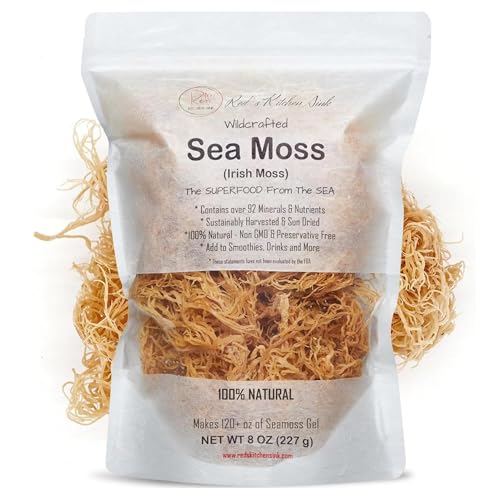
Best DIY value: Raw Dried Sea Moss
| Organic Integrity Score | 76 / 100 |
| Form | Dried whole sea moss |
| Signal | Cheapest per serving; you make the gel |
| Best for | DIYers who want the most control and value |
Raw dried sea moss is our value pick for the hands-on. You soak, rinse, and blend it into your own gel, which is by far the cheapest way to use sea moss and gives you full control over the process, ideal if you use it regularly.
It scores at the value end because it requires preparation and, in bulk raw form, testing and sourcing are often less documented, so buy from a seller that describes harvest origin. For value and control, it is the best option.
What we liked: The cheapest per serving, full control over your own gel, and the least-processed whole seaweed.
Keep in mind: It takes preparation, and bulk raw sea moss often has less documented testing and sourcing, so choose a seller that states the harvest origin. Rinse well and mind the iodine.
What the listing discloses: No organic certification appears anywhere on the Red’s Kitchen Sink listing.
Best capsules: Vineyah Sea Moss
| Organic Integrity Score | 75 / 100 |
| Form | Capsules with bladderwrack and burdock root |
| Signal | Popular traditional blend |
| Best for | Convenient daily use |
Vineyah is our pick for convenience. Its capsules combine sea moss with bladderwrack and burdock root, the traditional trio, so you get the popular blend without preparing gel, with no refrigeration and easy, consistent dosing.
What we liked: Convenient capsules, the traditional sea moss, bladderwrack, and burdock blend, no refrigeration, and easy consistent dosing.
Keep in mind: Capsules are more processed than raw gel, and the added botanicals are traditional rather than clinically proven. Watch total iodine intake.
What the listing discloses: Herbal Vineyards carries no organic claim, certified or otherwise.
How to use sea moss sensibly
Start with a small serving (about a tablespoon of gel or the lowest label dose) to gauge how you tolerate it, and because of the iodine, do not exceed the suggested amount. Gel keeps in the fridge for one to two weeks or can be frozen. Blend it into smoothies, teas, or soups. Most importantly, treat sea moss as a food or wellness habit rather than a treatment, and talk to your doctor before using it if you are pregnant, nursing, have thyroid issues, or take medication.
How we researched this guide
We are a research-based review site. We did not lab-test these products ourselves, and we do not endorse unproven health claims about sea moss. We compared each against its sourcing transparency, processing, third-party testing, and the weight of aggregated customer feedback, then scored each with our 10-criteria Organic Integrity Score. No brand paid to be included or ranked. Read the full method on our How We Research and Rate page.
Sea moss, iodine and the claim that needs the most caution
Sea moss is among the most aggressively marketed products in this category and among the least supported, and there is a specific safety issue that matters more than the efficacy question.
On weight, there is essentially no human trial evidence. The claims circulating rest on the presence of fiber, on iodine’s role in thyroid function, and on general nutrient content. None of that has been tested in people in a way that supports a weight claim, and the fiber content of a typical serving of gel is small.
The iodine argument is the one to be careful with, because it cuts both ways. Thyroid hormones do regulate metabolic rate, and iodine is required to make them. But this only helps someone who is actually iodine deficient, and in that case the correct response is a measured intake, not an unmeasured one. Excess iodine can cause thyroid dysfunction in both directions, including hyperthyroidism and, paradoxically, hypothyroidism.
Sea moss is a seaweed, and seaweed iodine content varies enormously between species, harvest sites and batches. Products rarely state an iodine figure, which means the dose is unknown. Taking an unknown quantity of a potent thyroid nutrient daily, indefinitely, is not a small thing, particularly for anyone with existing thyroid disease or taking thyroid medication.
Sea moss also concentrates heavy metals from seawater, which is why third-party testing matters here more than in most categories and why it is weighted heavily above.
Honest summary: no credible weight evidence, a thyroid mechanism that is a risk rather than a benefit at unmeasured doses, and a strong case for talking to a doctor before daily use.
Common questions about organic sea moss
What is the best sea moss?
Our overall pick is TrueSeaMoss Wildcrafted Sea Moss Gel, because the gel is the least-processed form and the brand is transparent about wildcrafting its seaweed. For convenient capsules, Vineyah is our pick, and for third-party testing, Double Wood. Check with your doctor first.
Does sea moss really contain 92 minerals?
The claim that sea moss provides “92 of the 102 minerals the body needs” is marketing lore, not established science, and we do not repeat it as fact. Sea moss does provide iodine, some minerals, and fiber, but the specific 92-mineral figure is not supported.
Is sea moss safe to take every day?
Some people use it daily in small amounts, but sea moss is very high in iodine, and too much iodine can disrupt thyroid function. Start small, do not exceed label servings, and talk to your doctor first, especially with any thyroid condition or during pregnancy.
Gel, capsules, or gummies, which is best?
Raw gel is the least processed and most flexible; capsules are convenient and shelf-stable; gummies are the easiest to take but the most processed and often contain added sugar and less sea moss. Choose based on your priorities.
Can sea moss contain heavy metals?
Seaweed can absorb heavy metals from the water it grows in, so third-party testing is valuable. Favor brands that publish contaminant testing and describe where their sea moss is harvested.
- Organic Supplements and Wellness hub
- Best Organic Spirulina
- Best Organic Turmeric
- our full product index — search by brand, product or certification
Price and availability as of September 26, 2026 1:10 pm EDT. Product prices and availability are accurate as of the date/time indicated and are subject to change. Any price and availability information displayed on Amazon.com at the time of purchase will apply to the purchase of this product.
Looking for other organic products?
We have checked more than 800 products across food, household goods, gardening, personal care and pet, every one against its stated certification. Browse all reviews.
Organic Connection is reader-supported. When you buy through links on this page we may earn a commission, at no extra cost to you. As an Amazon Associate we earn from qualifying purchases. We are not paid to feature or rank any product. How we research and rate.