
Last updated: September 30, 2026
We may earn a commission when you buy through links on this page, at no extra cost to you. How we research and rate.
The short version
After working through wheat classes, milling methods, protein content and the rancidity problem that ruins more home baking than any other single factor, our top pick is King Arthur 100% Organic Whole Wheat Flour. It is certified organic and Non-GMO Project Verified, milled from hard red wheat to a consistent protein level, and sold in two-pound bags that get used before they turn. It earned our highest Organic Integrity Score of 90 out of 100.
If your loaves have tasted bitter, the flour is the likelier culprit than your technique. Whole wheat flour goes rancid within months, and almost nobody stores it accordingly.
Best organic whole wheat flour compared
| Best Choice | Best Value | ||||
 |  |  | |  | |
| Product | King Arthur 100% Organic | Bob’s Red Mill Organic | Arrowhead Mills Organic | Arrowhead Mills Organic | Bob’s Red Mill Organic |
| Organic Integrity Score | 90/ 100 | 88/ 100 | 87/ 100 | 86/ 100 | 85/ 100 |
| Our rating | 4.5 | 4.4 | 4.4 | 4.3 | 4.3 |
| Best for | Best overall | Best for bread | Best value | Best small bag | Best for pastry |
| Wheat | Hard red | Hard red spring | — | Hard red, stone ground | Soft white |
| Protein | High | 13 to 15% | — | High | Low |
| Best use | Bread, all-round | Bread, big batches | — | Small-batch baking | Cakes, muffins, scones |
| Bag size | 2 lb, easy to finish | 5 lb, freeze it | — | 22 oz, very fresh | 5 lb, freeze it |
| Certification | Non-GMO Project Verified, QAI, Kosher | — | Non-GMO, Kosher, Organic | Non-GMO, Kosher, Organic | USDA Organic, Non-GMO Project Verified |
| Contents | 100% organic whole wheat flour, hard red wheat, 2 lb x 12 | Organic whole wheat flour, hard red spring wheat, stone ground, 5 lb | Organic stone ground whole wheat flour, 22 oz x 6 | Organic stone ground whole wheat flour, 22 oz bag | Organic whole wheat pastry flour, soft white wheat, 5 lb |
| Price | $89.17 View on Amazon | Currently unavailable See buying options | Currently unavailable See buying options | Currently unavailable See buying options | Currently unavailable See buying options |
Scores are ours, based on independent research of certification, wheat class, milling method, protein consistency, packaging and value, using the same 10-criteria method we apply to every product.
What each certification on an organic whole wheat flour label actually covers
The labels on these products are not interchangeable, and several of them cover things that have nothing to do with each other. Here is what each one actually buys you.
| Certification | Covers | Key exclusion |
| USDA Organic | Farming and handling: no synthetic pesticides or fertilizers, no GMOs, no sewage sludge or irradiation, audited yearly by an accredited certifier | Three different tiers share the one seal, and it makes no claim about worker pay, food miles, or nutrition |
| Non-GMO Project | Testing and supply-chain traceability showing the ingredients are not genetically engineered | Sets no limit on synthetic pesticides or fertilizers, so it is not an organic claim |
| Kosher | Ingredients and production comply with Jewish dietary law, verified by a rabbinic agency that inspects the facility | A dietary-law standard: it makes no claim about pesticides, GMOs or farming practice |
Non-GMO and organic are not two grades of the same thing. The butterfly certifies an absence of genetic engineering and stops there; the USDA seal prohibits genetic engineering as one clause among many, alongside synthetic pesticides, synthetic fertilizers, sewage sludge and irradiation. That makes organic the broader claim by some distance. Where both appear together, the butterfly is adding batch testing on top of a standard that had already banned GMOs.
The rancidity problem, and why nobody warns you
This is the most consequential thing in the guide, so it goes first.
Wheat has three parts: bran on the outside, the starchy endosperm in the middle, and the germ, the embryo of the plant. The germ is where the oil is, along with much of the vitamin E and flavor. White flour is endosperm alone, which is why it is shelf-stable and nutritionally thin. Whole wheat flour includes all three, which is why it is nutritionally superior and why it spoils.
Once the germ is broken open by milling, its oil starts oxidizing. The result is not dramatic — no mold, no visible change — just a growing bitterness and a stale, faintly crayon-like smell. Because it creeps in gradually, most people never identify it. They conclude they do not like whole wheat baking, when what they actually dislike is oxidized flour.
The test is simple: open the bag and smell it. Fresh whole wheat flour smells sweet, nutty and faintly grassy. Rancid flour smells sharp, bitter or like old nuts. If in doubt, taste a pinch. Bitterness that lingers means throw it out, because it will only be worse in the bread.
Two practical consequences follow. Buy in quantities you will use within a few months rather than the largest bag available, and freeze what you are not using now. This matters more than the brand you choose.
Hard red, hard white and soft wheat are genuinely different products
Bags rarely explain this, and it is the difference that determines what your baking tastes like.
Hard red wheat is the classic whole wheat flour: high in protein, typically 13 to 15 percent, and strongly flavored. The red refers to the bran color, which carries tannins that give the assertive, slightly bitter, unmistakably wholemeal taste people either love or find heavy. It makes excellent bread with good structure.
Hard white wheat has comparable protein but a bran without those pigments and tannins, so it is noticeably milder and sweeter while still being genuinely whole grain. It is the best answer for anyone converting a household that resists whole wheat, and it is often what commercial “white whole wheat” flour is.
Soft wheat, sold as whole wheat pastry flour, runs much lower in protein, around 9 to 10 percent. Less protein means less gluten, which means tenderness rather than structure. It is right for cakes, muffins, scones and cookies and wrong for bread, where it produces a dense, crumbly result.
Choosing the wrong class is the second most common cause of disappointing whole wheat baking, after rancid flour. A cake made with hard red bread flour will be tough no matter how carefully you mix it.
Stone ground versus roller milled
The phrase stone ground appears on several of these bags and it does mean something, though less than it is sometimes made to.
Traditional stone milling crushes the whole grain between stones in a single pass, so bran, germ and endosperm stay together throughout. Modern roller milling separates the grain into streams, processes them separately, and then recombines them to produce whole wheat flour. Both can produce a legitimately whole grain product, and the legal definition permits recombination.
The practical differences are texture and heat. Stone grinding produces a slightly coarser, less uniform flour that many bakers find more flavorful, and it generally runs cooler, which matters because heat accelerates the oxidation of germ oil. Roller milling is more consistent and lets millers control protein precisely, which is why large commercial brands can guarantee the same result bag after bag.
Neither is simply better. Stone ground favors character; roller milled favors consistency. Bakers who want repeatable results often prefer the latter, and there is nothing unserious about that preference.
What organic certification changes in wheat
Wheat is one of the crops where the organic seal maps onto a specific, nameable farming practice rather than a general impression.
Conventional wheat is sometimes sprayed with glyphosate shortly before harvest to kill the crop and force even dry-down, a practice called pre-harvest desiccation. Because it happens days from collection rather than early in the season, it is a genuinely different proposition from early-season weed control. Organic certification prohibits it, along with synthetic pesticides and fertilizers throughout. We go into the detail in our organic bread guide, where the same argument applies to the finished loaf.
Certification does not, however, tell you anything about freshness, wheat class, protein content or milling method — which are the four things that will actually determine whether your bread is good. Buy organic for the farming, then choose on the other four.
Key things to look for in organic whole wheat flour
1. A bag size you will finish in months
The single most important decision. A five pound bag is only good value if it is used or frozen before the germ oil turns.
2. Wheat class, stated or inferable
Hard red for bread, hard white for milder whole grain baking, soft or pastry wheat for cakes and biscuits. Getting this wrong ruins recipes that are otherwise fine.
3. Protein percentage
13 to 15 percent means structure and chew, suited to bread. Around 9 to 10 percent means tenderness, suited to pastry. Brands that publish the figure are making your life easier.
4. Stone ground if you want flavor, roller milled if you want consistency
A real trade-off rather than a hierarchy. Decide which you care about more before paying extra for either.
5. Packaging that reseals or is easy to decant
Paper bags are poor long-term storage for a product that oxidizes. Plan to move the flour into an airtight container or a sealed freezer bag the day it arrives.
Who should buy organic whole wheat flour
Buy it if you bake regularly and want the nutrition of the whole grain, which is substantially better than white flour on fiber, minerals and vitamin E. Buy organic specifically if avoiding pre-harvest desiccation matters to you, since wheat is one of the crops where that choice is most concrete.
Buy hard white wheat rather than hard red if you are trying to convert a household that has rejected whole wheat before, because the difference in flavor is large and it solves most objections. Buy pastry flour if you bake cakes and muffins rather than bread. And buy small bags unless you have freezer space, because there is no point paying for flour that will be bitter before you reach the bottom of it.
How to choose organic whole wheat flour
Start by deciding what you bake. Bread means hard red or hard white and high protein; cakes and scones mean soft wheat and low protein. Then decide how quickly you will get through a bag and buy accordingly, erring smaller than instinct suggests.
Choose stone ground if you want more character in the flavor and can live with slightly less consistency. Then, whatever you buy, freeze it, and expect to adjust your recipes: whole wheat flour absorbs more water than white and the bran physically cuts gluten strands, so a straight one-to-one substitution usually produces something dense and dry. Start by replacing a quarter to half of the white flour and adding a little extra liquid.
Best overall: King Arthur 100% Organic Whole Wheat Flour, 2 lb (Pack of 12)
| Organic Integrity Score | 90 / 100 |
| Contents | 100% organic whole wheat flour, hard red wheat, 2 lb x 12 |
| Certification | Non-GMO Project Verified, QAI, Kosher |
| Best for | Regular bakers who want consistent results |
This is the pick largely because of the bag size, which sounds like faint praise and is not. Two-pound bags mean each one is opened and finished within a reasonable window instead of sitting half-used and slowly turning, and the sealed bags you have not opened are still fresh. Given that rancidity is the main thing wrong with most people’s whole wheat flour, packaging that works with the ingredient rather than against it is worth more than most quality claims.
King Arthur mill to tight protein specifications, which is why their flour behaves the same way every time. For anyone following recipes rather than improvising, that consistency is the difference between a reliable loaf and an unpredictable one. The company is employee-owned and unusually forthcoming about specifications, which is rare in flour.
It is hard red wheat, so the flavor is full and assertive in the traditional wholemeal way — excellent in bread, and heavier than some people want in cakes. Twelve two-pound bags is also a substantial commitment, and it is roller milled rather than stone ground, so it favors consistency over character.
What we liked: Two-pound bags directly address the freshness problem. Tightly controlled protein means repeatable results. Organic and Non-GMO Project Verified. Excellent bread flour.
Keep in mind: Twelve bags is a lot to commit to. Hard red wheat is assertive, not mild. Roller milled rather than stone ground.
What the listing discloses: King Arthur documents a USDA organic claim, QAI as the certifying agent, Non-GMO Project Verified and kosher certification, and leaves where it was grown or made unsaid.
Best for bread: Bob’s Red Mill Organic Whole Wheat Flour, 5 lb
| Organic Integrity Score | 88 / 100 |
| Contents | Organic whole wheat flour, hard red spring wheat, stone ground, 5 lb |
| Certification | — |
| Best for | Bread bakers who want structure and strong flavor |
Hard red spring wheat at 13 to 15 percent protein is about as strong as whole wheat flour gets, and that protein is what allows a whole grain loaf to rise properly instead of collapsing into a brick. Bran physically interferes with gluten development, so starting from a high protein base is how you compensate.
It is stone ground in a single pass, which keeps bran and germ with the endosperm throughout and produces a slightly coarser flour with more character than roller-milled equivalents. For rustic loaves and sourdough it is genuinely excellent, and Bob’s Red Mill publish their protein range rather than leaving you to guess.
Five pounds is the problem, and it is the same problem as always: unless you bake weekly, this bag will outlast its freshness in a pantry. Buy it if you bake a lot or have freezer space, and decant it into a sealed container immediately. The strong hard red flavor is also not what you want in delicate baking.
What we liked: High protein hard red spring wheat, ideal for whole grain bread. Genuinely stone ground with more flavor. Published protein specification.
Keep in mind: Five pounds will go rancid in a pantry before most households finish it. Too strong for cakes and pastry. Paper packaging needs decanting.
What the listing discloses: Bob’s Red Mill is thin on detail, and does not say whether the USDA seal applies and where it was grown or made.
Best value: Arrowhead Mills Organic Whole Wheat Flour, 22 oz (Pack of 6)
| Organic Integrity Score | 87 / 100 |
| Contents | Organic stone ground whole wheat flour, 22 oz x 6 |
| Certification | Non-GMO, Kosher, Organic |
| Best for | Regular bakers who want bulk value without bulk staleness |
This is the format that resolves the tension running through the whole guide. Six sealed 22 oz bags give you the quantity of a bulk purchase while keeping five of them unopened and protected until you need them. Sealed flour ages far more slowly than flour in a bag you have already opened and rolled shut.
It is the same stone ground organic flour as the single bag, so you are trading nothing on quality, and the price per pound comes down considerably.
Storage is the practical catch — six bags takes up more room than one large one, and the ideal is still to keep them cool or frozen. Around eight pounds of flour is also more than an infrequent baker should buy, however well packaged.
What we liked: Bulk value with sealed bags that stay fresh far longer. Same stone ground quality as the single bag. The best compromise in the guide.
Keep in mind: Takes more storage space than one large bag. Still around eight pounds of flour. Keep it cool or frozen.
What the listing discloses: Arrowhead Mills documents kosher certification, and leaves whether the USDA seal applies and where it was grown or made unsaid.
Best small bag: Arrowhead Mills Organic Stone Ground Whole Wheat Flour, 22 oz
| Organic Integrity Score | 86 / 100 |
| Contents | Organic stone ground whole wheat flour, 22 oz bag |
| Certification | Non-GMO, Kosher, Organic |
| Best for | Occasional bakers who want flour that is actually fresh |
If you bake whole wheat occasionally rather than weekly, this is the honest answer, and it is a better purchase than a bulk bag at a lower price per pound. Twenty-two ounces is roughly two loaves’ worth. You will finish it while it is fresh, which is the entire point.
Arrowhead Mills have been stone grinding organic flour for decades, and the product has the slightly coarse texture and full nutty flavor that comes with single-pass milling. For someone making the occasional loaf or batch of muffins, this is exactly the right quantity.
Value per pound is clearly the weak point, and it is noticeably more expensive than buying five pounds at once. Set against flour thrown away, or worse, baked with while rancid, the arithmetic is less lopsided than it looks. Protein content is also not published as precisely as the larger brands.
What we liked: Small enough to use fresh, which solves the category’s main problem. Genuine stone grinding with good flavor. Long-established organic miller.
Keep in mind: Poor value per pound. Protein specification not published precisely. Only about two loaves’ worth.
What the listing discloses: Arrowhead Mills commits to kosher certification but stops short of whether the USDA seal applies and where it was grown or made.
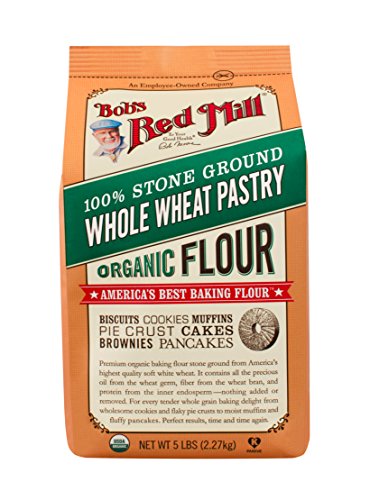
Best for cakes and pastry: Bob’s Red Mill Organic Whole Wheat Pastry Flour, 5 lb
| Organic Integrity Score | 85 / 100 |
| Contents | Organic whole wheat pastry flour, soft white wheat, 5 lb |
| Certification | USDA Organic, Non-GMO Project Verified |
| Best for | Muffins, scones, cakes and cookies with whole grain nutrition |
This is the flour that rescues whole grain baking for people who bake sweet things. Made from soft white wheat rather than hard red, it has far less protein, so it develops much less gluten, so the results are tender rather than chewy. Muffins, scones, pancakes and cookies made with it are recognizably good rather than worthy and dense.
It is genuinely whole grain, so you keep the fiber, minerals and germ nutrition. Soft white wheat is also naturally milder than hard red, which means it does not overwhelm delicate flavors like vanilla or fruit the way strong wholemeal flour does.
Two clear limits. Do not use it for bread — there is not enough protein to build structure, and you will get a dense, crumbly loaf. And five pounds of a specialty flour is a lot unless you bake sweet things often, so the freezer advice applies with particular force here.
What we liked: Makes genuinely tender whole grain cakes and muffins. Milder soft white wheat that does not dominate. Fully whole grain nutrition.
Keep in mind: Unsuitable for bread. Five pounds is a lot of specialty flour. Freeze it or it will turn.
What the listing discloses: You are told USDA organic certification, QAI as the certifying agent and Non-GMO Project Verified for Bob’s Red Mill; you are not told where it was grown or made.
Fiber, the bran, and what refining takes out
Whole wheat flour differs from white in a specific and quantifiable way, and understanding what is removed explains most of the nutritional difference.
A wheat kernel has three parts: the bran, which is fiber and minerals; the germ, which is fat, vitamin E and B vitamins; and the endosperm, which is starch and protein. White flour is the endosperm alone. Whole wheat flour is all three, which is why it carries around 12 to 13 grams of fiber per 100 grams against 2 to 3 for white, along with considerably more magnesium, B vitamins and vitamin E.
Fiber is the component with the clearest link to fullness and to slower glucose response, and the difference between whole and refined flour is large enough to matter in a diet where bread and baking are regular.
What it does not deliver is a calorie saving. Whole wheat and white flour are within a few calories of each other per 100 grams. The advantage is in composition and in how the food behaves, not in energy content, and anyone switching flours expecting the total to fall will be disappointed.
There is a practical cost worth knowing. The germ contains oil, which goes rancid, so whole wheat flour has a much shorter shelf life than white and is best stored cool or frozen. Baked goods made with it are also denser, since bran fragments interfere with gluten development, which is why most recipes blend the two.
Honest summary: substantially more fiber and micronutrients, a genuinely better glucose and satiety profile, essentially identical calories, and a shorter shelf life that catches people out.
Common questions about organic whole wheat flour
How long does whole wheat flour last?
A few months at room temperature and around a year frozen. The germ contains oil that oxidizes once milled, so whole wheat flour is genuinely perishable in a way white flour is not. Keep it sealed in the freezer and bring out what you need. Warm pantries shorten that window considerably.
How can I tell if my flour has gone rancid?
Smell it. Fresh whole wheat flour smells sweet, nutty and slightly grassy. Rancid flour smells sharp, bitter or like old nuts, and tastes bitter in a way that lingers. There is no visible change, which is why so much bitter home baking gets blamed on whole wheat itself rather than on flour that has turned.
Can I substitute whole wheat flour for white flour one to one?
Not reliably. Whole wheat absorbs more liquid, and the bran physically cuts gluten strands as the dough develops, so a straight swap usually gives a dense, dry result. Start by replacing a quarter to half of the white flour, add a little extra liquid, and let the dough rest before kneading so the bran can soften.
What is the difference between hard red and white whole wheat?
The bran. Hard red wheat carries pigments and tannins that give the strong, slightly bitter classic wholemeal flavor. Hard white wheat has similar protein but lacks them, so it is milder and sweeter while remaining fully whole grain. White whole wheat is usually the better choice for households that have rejected whole wheat before.
Is stone ground flour better?
Better in some ways, not all. Stone grinding keeps bran, germ and endosperm together in one pass and runs cooler, which many bakers feel gives more flavor. Roller milling is more consistent and allows precise protein control. Choose stone ground for character and roller milled for repeatability.
Why is my whole wheat bread so dense?
Usually one of three things: the flour is rancid, the protein is too low for bread, or the recipe was not adjusted for whole wheat’s higher water absorption. Check freshness first, use hard red or hard white wheat rather than pastry flour, and add extra liquid with a longer rest before kneading.
Does organic flour taste different?
Not because it is organic. Taste is driven by wheat class, freshness and milling method, not by farming system. Organic certification governs how the wheat was grown, most notably prohibiting pre-harvest glyphosate desiccation. Buy organic for the farming and judge flavor on the other factors.
Should I buy the biggest bag to save money?
Usually not. Flour that turns rancid before you finish it costs more than the premium on a smaller bag, and baking with it wastes the other ingredients too. Either buy a size you will finish within a couple of months or commit to freezing the rest properly on the day it arrives.
- Organic Food and Pantry hub
- Best Organic Bread Flour
- Best Organic Wheat Berries
- browse all our reviewed products — scores and certifications for 800+ products
Price and availability as of October 15, 2026 7:10 pm EDT. Product prices and availability are accurate as of the date/time indicated and are subject to change. Any price and availability information displayed on Amazon.com at the time of purchase will apply to the purchase of this product.
Nutrition facts side by side
| Per 100 g | King Arthur 100% | Arrowhead Mills |
| Calories | 344 kcal | 343 kcal |
| Carbs | 68.8 g | 71.4 g |
| Sugars | 0 g | 0 g |
| Fiber | 12.5 g | 11.4 g |
| Protein | 12.5 g | 11.4 g |
| Fat | 1.6 g | 1.4 g |
| Sodium | 0 mg | 0 mg |
Source: USDA FoodData Central, matched by UPC. Figures are per 100 g, not per serving, and reflect the panel USDA published for each product.
Looking for other organic products?
We have checked more than 800 products across food, household goods, gardening, personal care and pet, every one against its stated certification. Browse all reviews.
Organic Connection is reader-supported. When you buy through links on this page we may earn a commission, at no extra cost to you. As an Amazon Associate we earn from qualifying purchases. We are not paid to feature or rank any product. How we research and rate.