Last updated: September 30, 2026
We may earn a commission when you buy through links on this page, at no extra cost to you. How we research and rate.
The short version
After working through what GOTS covers, what Fair Trade certification adds, cotton’s water footprint and how long a t-shirt actually lasts, our top pick is Pact Men’s Organic Softspun Crew Neck T-Shirt, 5-Pack. It is GOTS certified, sewn in a Fair Trade certified factory, and sold in a multipack that brings genuinely certified organic cotton down to a realistic price per shirt. It earned our highest Organic Integrity Score of 90 out of 100.
If you take one thing from this guide, make it this: the certification that matters covers the dyehouse, not the field. Most organic cotton clothing claims stop at the field.
Best organic cotton t-shirts compared
| Best Choice | Best Value | ||||
 |  |  |  |  | |
| Product | Pact Men’s Organic | Pact Women’s Organic | Pact Organic Cotton | Pact Men’s Organic Cotton | Pact Men’s Organic Cotton |
| Organic Integrity Score | 90/ 100 | 89/ 100 | 88/ 100 | 86/ 100 | 85/ 100 |
| Our rating | 4.5 | 4.5 | 4.4 | 4.3 | 4.3 |
| Certification | GOTS, Fair Trade, Certified Organic | — | Fair Trade, Certified Organic | GOTS, Fair Trade, Organic | Fair Trade, Organic |
| Weight | Soft, light-mid | Soft, light-mid | Midweight | Light | — |
| Quantity | 5 | 5 | 1 | 2 | — |
| Best for | Everyday basics, value | Everyday basics, value | Durability, outer wear | Layering under shirts | — |
| Contents | 100% organic cotton crew neck t-shirts, 5-pack | 100% organic cotton women’s crew neck t-shirts, 5-pack | Organic cotton midweight crew neck tee, single | Organic cotton crew neck undershirts, 2-pack | Organic cotton crew neck undershirts, white, 2-pack |
| Price | Currently unavailable See buying options | $35.00 View on Amazon | See buying options | Currently unavailable See buying options | $29.99 View on Amazon |
Scores are ours, based on independent research of certification, labor standards, fabric weight and durability, sizing consistency and value, using the same 10-criteria method we apply to every product.
The organic cotton t shirts certifications, and the question each one leaves open
A seal is a specific promise about a specific thing. These are the promises behind the marks on this page, in plain terms, along with the question each one leaves unanswered.
| Certification | Covers | Key exclusion |
| GOTS | Organic fiber from farm to finished textile, plus dyeing, finishing, wastewater and labor criteria | Has a weaker second tier, “made with organic”, that needs only 70% organic fiber and carries the same name |
| Fair Trade Certified | A price floor for producers, a community premium, and labor standards on the farms and in the facilities | An economic and labor standard; it is not an organic or pesticide claim |
What makes GOTS unusual is how far past the farm it reaches. Most organic marks certify how a crop was grown and stop there. GOTS carries the requirement through spinning, weaving, dyeing and finishing, bans a long list of processing chemicals, sets wastewater limits, and adds labor criteria at every stage. That is why a GOTS textile costs more than a fabric merely woven from organic cotton, and why the two are not the same claim.
Organic cotton and the water claim
You will see a striking figure quoted — often that organic cotton uses ninety percent less water than conventional. It is worth understanding what that number is and is not.
The figure comes largely from the distinction between rainfed and irrigated growing. Much organic cotton is grown in rainfed systems, which draw on rainfall rather than irrigation, so the measured “blue water” footprint is dramatically lower. That is a real difference in water systems under pressure.
The complication is that this is substantially a consequence of where organic cotton tends to be grown rather than of organic practice itself. A conventional rainfed crop would score similarly. Organic cotton also typically yields less per acre, so more land is needed for the same quantity of fiber, which is a genuine cost that the water figure does not capture.
What organic certification straightforwardly delivers is the removal of synthetic pesticides and fertilizers from a crop that is among the more heavily sprayed in the world, with real benefits for farm workers and local ecosystems. That is a solid argument. The ninety percent water figure is a marketing number carrying more weight than it can bear, and we would rather you bought organic cotton for the reason that holds up.
What Fair Trade certification adds
GOTS includes social criteria, but a separate Fair Trade certification on the sewing factory is doing something more specific and worth understanding.
Garment sewing is labor intensive and is where most of the human cost of cheap clothing sits. Fair Trade certification of a factory covers working conditions, freedom of association, health and safety, and typically a premium paid into a fund that workers themselves direct.
It is worth separating the two claims. Organic and GOTS certification is largely about materials and processing. Fair Trade certification is about the people sewing the garment. A shirt can be GOTS certified and sewn in a factory with no independent labor certification at all. When a brand carries both, as our top picks do, they are answering different questions and both answers are worth having.
The most sustainable t-shirt is the one you already own
This has to be said in a buying guide about clothing, because it is true and the guide is less useful without it.
The environmental cost of a garment is dominated by its production, and it is amortized across every wear. A shirt worn two hundred times has a far lower impact per wear than one worn twenty times, regardless of how the cotton was grown. Buying a certified organic t-shirt to replace a perfectly serviceable one is not an environmental improvement; it is a purchase with a certificate attached.
Where organic cotton genuinely helps is when you need shirts anyway. T-shirts wear out — they thin at the shoulders, stretch at the neck, hold odor. When you are replacing them, buying certified organic and Fair Trade is a straightforwardly better choice than buying the cheapest available.
Two practical consequences follow. Buy for durability, since a heavier fabric that survives three years beats a lightweight one that sags in six months. And wash cooler and tumble dry less, which extends garment life more than almost anything else and cuts the use-phase footprint at the same time.
Key things to look for in organic cotton t-shirts
1. GOTS certification, not just an organic cotton claim
GOTS covers dyes, processing chemistry and wastewater. “Made with organic cotton” covers the field alone, which is the less polluting half of the story.
2. Fair Trade certification on the factory
A separate claim from the material, covering the people who sewed the garment. Look for it explicitly rather than assuming GOTS implies it.
3. Fabric weight
Heavier midweight jersey lasts considerably longer than lightweight. If a shirt is for regular wear rather than layering, the extra weight is worth it.
4. Multipacks for basics
Certified organic tees are expensive individually and reasonable in fives. For plain everyday shirts, the multipack is how the cost becomes sensible.
5. Honest sizing information
Untreated organic cotton shrinks more than treated conventional cotton. Check whether the brand pre-shrinks and sizes for it, and read recent reviews on fit.
Who should buy organic cotton t-shirts
Buy them when you need t-shirts, not to replace ones that still have life in them. Buy GOTS certified specifically, because that is where the meaningful environmental difference sits, and prefer brands that also carry Fair Trade factory certification.
Buy midweight if the shirts are for daily wear, since durability does more good than any certification once you account for wears per garment. Buy multipacks for plain basics. And wash them cold and hang them to dry, which will extend their life more than anything else you can do after the purchase.
How to choose organic cotton t-shirts
Start by checking the certification is GOTS rather than a general organic cotton claim, then look for Fair Trade on the factory as a separate assurance. Decide on weight based on use: midweight for everyday shirts, lightweight only for layering.
Then buy a multipack for basics and single shirts only where you want a specific color or fit. Size with shrinkage in mind, wash cold, and skip the tumble dryer where you can — heat is what kills cotton knitwear, and a shirt that lasts three years instead of one is the single largest environmental improvement available to you.
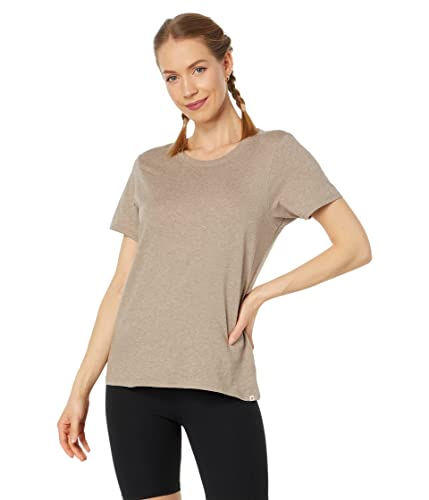
Best overall: Pact Men’s Organic Softspun Crew Neck T-Shirt, 5-Pack
| Organic Integrity Score | 90 / 100 |
| Contents | 100% organic cotton crew neck t-shirts, 5-pack |
| Certification | GOTS, Fair Trade, Certified Organic |
| Best for | Everyday basics at a realistic price per shirt |
Two certifications matter here, this carries both, and it sells in the quantity that makes them affordable. GOTS covers the fiber and the dyeing and finishing chemistry; Fair Trade certification covers the factory where the shirts were sewn. Together they answer the two separate questions worth asking about a garment.
The five-pack is what turns this from a statement purchase into a practical one. Certified organic tees bought individually cost enough that most people buy one and keep wearing their old ones; bought in fives, the per-shirt price lands somewhere sensible, which is how you actually change what is in your drawer.
Two honest points. Softspun is a soft, relatively light jersey — very comfortable, and less durable than a heavy tee, so expect these to wear thinner sooner than a midweight shirt. And organic cotton without synthetic finishes shrinks, so wash cold and skip the dryer where you can.
What we liked: Both GOTS and Fair Trade certification. Five-pack makes certified cotton genuinely affordable. Soft, comfortable jersey. Straightforward crew neck cut.
Keep in mind: Lighter fabric wears thinner than midweight. Shrinks without synthetic finishes. Limited color choice in multipacks.
What the listing discloses: Pact documents GOTS and Fair Trade, and leaves whether the USDA seal applies and where it was grown or made unsaid.
Best women’s multipack: Pact Women’s Organic Softspun Crew Neck T-Shirt, 5-Pack
| Organic Integrity Score | 89 / 100 |
| Contents | 100% organic cotton women’s crew neck t-shirts, 5-pack |
| Certification | — |
| Best for | Women’s everyday basics with both certifications |
The women’s equivalent, with the same certification set and the same economics. Multipacks are considerably less common in women’s basics than men’s, which is a persistent oddity of clothing retail, so a five-pack of properly certified tees is genuinely useful.
The cut is a standard fit crew neck rather than a fashion shape, which is the point — these are drawer basics meant to be worn under things and on their own without thought.
Same fabric caveats as the men’s version: soft and light rather than robust, and shrinkage without synthetic finishes. Women’s sizing across brands is less standardized than men’s, so it is worth reading recent reviews on fit before committing to five of anything.
What we liked: Rare five-pack in women’s basics. Both GOTS and Fair Trade certification. Practical standard-fit crew neck.
Keep in mind: Lightweight jersey, not hard-wearing. Sizing worth checking against reviews. Shrinks in hot washes.
What the listing discloses: Pact is thin on detail, and does not say whether the USDA seal applies and where it was grown or made.
Best for durability: Pact Organic Cotton Midweight Crew Neck Tee
| Organic Integrity Score | 88 / 100 |
| Contents | Organic cotton midweight crew neck tee, single |
| Certification | Fair Trade, Certified Organic |
| Best for | Shirts worn as outerwear that need to last |
Fabric weight is the most underrated specification in a t-shirt, and it matters more environmentally than most certifications do. A midweight jersey holds its shape, resists thinning at the shoulders and keeps a decent neckline for far longer than lightweight fabric. Since the footprint of a garment is spread across every wear, a shirt that lasts three times as long is roughly a third of the impact per wear.
This carries the same GOTS and Fair Trade credentials as the multipacks, in a fabric built to be worn on its own rather than under something.
The cost is that it is sold singly, which makes it expensive per shirt compared with a five-pack. Midweight cotton is also warmer, which is welcome in spring and fall and less so in a hot summer.
What we liked: Heavier fabric that genuinely lasts, which is the real sustainability lever. Same GOTS and Fair Trade certification. Holds its shape and neckline.
Keep in mind: Sold singly, so expensive per shirt. Warmer than lightweight tees. Still shrinks in hot washes.
What the listing discloses: Pact lists Fair Trade. The gap is whether the USDA seal applies and where it was grown or made.
Best for layering: Pact Men’s Organic Cotton Crew Neck Undershirt, 2-Pack
| Organic Integrity Score | 86 / 100 |
| Contents | Organic cotton crew neck undershirts, 2-pack |
| Certification | GOTS, Fair Trade, Organic |
| Best for | Wearing under shirts without bulk |
Undershirts are a different garment from t-shirts and it is worth buying them as such. These are cut longer to stay tucked, and made from a lighter fabric that does not add visible bulk under a shirt — the two things that make an undershirt work rather than annoy.
Since undershirts sit directly against skin all day, the GOTS certification of the dyeing and finishing chemistry is arguably more relevant here than in outerwear.
They are not meant to be worn alone: the fabric is light enough to be slightly transparent and the longer cut looks wrong untucked. Two-packs also cost more per shirt than the five-packs, and white undershirts discolor at the underarms over time regardless of fiber quality.
What we liked: Properly cut as an undershirt — longer body, low bulk. GOTS chemistry matters most next to skin. Fair Trade certified.
Keep in mind: Not intended to be worn alone. More expensive per shirt than five-packs. White will discolor at the underarms eventually.
What the listing discloses: Pact states GOTS and Fair Trade, and does not say whether the USDA seal applies and where it was grown or made.
Best plain white pack: Pact Men’s Organic Cotton Crew Undershirt, White 2-Pack
| Organic Integrity Score | 85 / 100 |
| Contents | Organic cotton crew neck undershirts, white, 2-pack |
| Certification | Fair Trade, Organic |
| Best for | Minimal dyeing and a genuine white base layer |
White is the sensible choice if the dyeing stage is what concerns you most, since a white shirt goes through far less of it than a colored one. Given that dyeing and finishing is where most of the environmental cost of a textile sits, that is a real reduction rather than a symbolic one — and GOTS additionally prohibits chlorine bleaching, so the whitening is done without it.
Same GOTS and Fair Trade credentials, same well-judged undershirt cut, in the color that works under everything.
The obvious drawback is that white shows everything. Underarm discoloration from sweat and antiperspirant is inevitable over time and is not a fault of the shirt. Two-pack pricing per shirt is also higher than the larger packs.
What we liked: Minimal dyeing, and no chlorine bleaching under GOTS. Works under any shirt. Same certification set as the range.
Keep in mind: White discolors at the underarms with time. Higher cost per shirt than five-packs. Light enough to be slightly sheer.
What the listing discloses: On the Pact label: Fair Trade. Not stated: whether the USDA seal applies and where it was grown or made.
Common questions about organic cotton t-shirts
Is organic cotton better for the environment?
In specific ways. It removes synthetic pesticides and fertilizers from a heavily sprayed crop, which benefits farm workers and local ecosystems. Against that, organic cotton typically yields less per acre, so more land is needed for the same fiber. The widely quoted water savings come mostly from rainfed rather than irrigated growing, which is about where it is grown rather than organic practice itself.
What does GOTS certification cover?
The whole chain rather than just the field. It requires certified organic fiber, restricts which dyes and processing chemicals may be used, requires wastewater treatment at mills, prohibits chlorine bleaching and formaldehyde finishes, and includes social criteria. Since dyeing and finishing is the most polluting stage of clothing production, this is where the meaningful difference lies.
Is “made with organic cotton” the same as GOTS certified?
No, and the gap is significant. “Made with organic cotton” describes the fiber and says nothing about how the fabric was dyed and finished. A shirt can be made from organic cotton and processed in a conventional dyehouse. GOTS is the claim to look for.
What does Fair Trade certification add?
It covers the people sewing the garment rather than the material. Fair Trade certification of a factory addresses working conditions, freedom of association, health and safety, and typically a premium paid into a worker-directed fund. It is a separate question from organic certification and both are worth having.
Do organic cotton t-shirts shrink?
More than conventional ones, because GOTS prohibits most synthetic anti-shrink finishes. Good brands pre-shrink and size for it. Wash cold and avoid the tumble dryer, which limits shrinkage and extends the life of the shirt considerably.
Are organic cotton t-shirts softer?
Not because they are organic. Softness comes from fiber staple length, yarn spinning, knit structure and finishing, none of which organic certification governs. Some organic tees are beautifully soft and some are not.
Is it worth replacing my t-shirts with organic ones?
Not if the ones you have are still good. A garment’s footprint is dominated by production and spread across every wear, so a shirt worn two hundred times costs far less per wear than one worn twenty. Buy certified organic when you genuinely need replacements, not to upgrade a working wardrobe.
How do I make t-shirts last longer?
Wash cold, wash less often, and skip the tumble dryer. Heat is what destroys cotton knitwear, breaking down fibers and distorting necklines. Turning shirts inside out protects printed and dyed surfaces. Doubling the life of a shirt does more environmental good than any certification on the label.
- Organic cotton and textiles guide
- Best Organic Cotton Underwear
- Best Organic Cotton Socks
- every organic household product we have reviewed — filter by GOTS and OEKO-TEX
Price and availability as of October 15, 2026 7:10 pm EDT. Product prices and availability are accurate as of the date/time indicated and are subject to change. Any price and availability information displayed on Amazon.com at the time of purchase will apply to the purchase of this product.
Looking for other organic products?
We have checked more than 800 products across food, household goods, gardening, personal care and pet, every one against its stated certification. Browse all reviews.
Organic Connection is reader-supported. When you buy through links on this page we may earn a commission, at no extra cost to you. As an Amazon Associate we earn from qualifying purchases. We are not paid to feature or rank any product. How we research and rate.