Last updated: September 30, 2026
We may earn a commission when you buy through links on this page, at no extra cost to you. We were not sent samples and no brand paid for placement. How we research and rate.
The short version
Conditioner is the most straightforward product in hair care and the one most burdened with claims it cannot deliver. What it genuinely does is deposit a thin cationic film on the hair shaft, smoothing the raised cuticle scales that shampooing and brushing lift. That reduces friction, tangling and static, and makes hair feel and look smoother. It does not repair hair, because hair is dead protein and cannot be repaired.
Our top pick is Dr. Bronner’s Organic Hair Crème, which holds USDA organic certification alongside fair trade and non-GMO verification, an unusually complete set. INNERSENSE Hydrating Cream Conditioner is the best-selling organic option and the choice for dry hair, and Avalon Organics Revitalizing Lavender is the value pick at under ten dollars.
An honest note before you buy: if your hair feels worse since switching to organic or sulfate-free products, the likely cause is not the conditioner. It is the absence of silicones, which coat hair convincingly and wash out. That transition is real, it takes a few weeks, and it is covered below.
Best organic conditioner compared
Five conditioners, scored on the same criteria. The Organic Integrity Score is out of 100 and our rating is that score expressed out of five. Prices update automatically.
| Best Choice | Best Value | ||||
 |  |  |  |  | |
| Product | Dr. Bronner’s Hair Crème | Avalon Thickening | Avalon Lavender | INNERSENSE Hydrating | Organic Jaguar Unscented |
| Organic Integrity Score | 96/ 100 | 92/ 100 | 90/ 100 | 89/ 100 | 87/ 100 |
| Our rating | 4.8 | 4.6 | 4.5 | 4.5 | 4.4 |
| Certification | USDA Organic, Fair Trade, Non-GMO | Certified Organic, Leaping Bunny | EWG Verified, Leaping Bunny, NSF | Vegan, Organic | — |
| Type | Leave-in crème | Rinse-out, protein | Rinse-out | Rinse-out cream | Rinse-out, unscented |
| Best for | Frizz and the strongest | Fine hair needing body | Everyday use, lowest price | Dry and coarse hair | Fragrance sensitivity |
| Price | $12.99$2.17 / fluid ounce View on Amazon | Currently unavailable See buying options | $9.25$0.84 / fluid ounce View on Amazon | $30.00$3.00 / ounce View on Amazon | $25.00$1.85 / ounce View on Amazon |
Price and availability as of October 27, 2026 7:10 am EDT. Product prices and availability are accurate as of the date/time indicated and are subject to change. Any price and availability information displayed on Amazon.com at the time of purchase will apply to the purchase of this product.
Reading the seals on organic conditioner: what each one does and does not cover
A seal is a specific promise about a specific thing. These are the promises behind the marks on this page, in plain terms, along with the question each one leaves unanswered.
| Certification | Covers | Key exclusion |
| USDA Organic | Farming and handling: no synthetic pesticides or fertilizers, no GMOs, no sewage sludge or irradiation, audited yearly by an accredited certifier | Three different tiers share the one seal, and it makes no claim about worker pay, food miles, or nutrition |
| Leaping Bunny | No animal testing at any stage by the company or its suppliers, with supply-chain audits and annual recommitment | Says nothing about the ingredients themselves, organic content, or whether the product is vegan |
| EWG Verified | Full ingredient disclosure and avoidance of the chemicals on the EWG list of concern | Run by an advocacy group rather than a standards body, and not an organic claim |
USDA Organic is three claims wearing one seal. “100% Organic” means every ingredient is certified. Plain “Organic”, the version you will see most often, means at least 95% by weight, with the remainder drawn from an approved national list. “Made with organic ingredients” means 70%, and that wording may not carry the USDA seal at all. The phrase on the front of the pack tells you which of the three you are holding, and the gap between them is not small.
What conditioner actually does
Three mechanisms, all real, none of them repair.
It deposits a positive charge onto a negative surface
Damaged hair carries a negative electrical charge, and more damage means more negative charge. Conditioning agents are cationic, meaning positively charged, so they are drawn to exactly the areas that need them most. This is genuinely elegant chemistry and it is why conditioner distributes itself where the damage is.
The deposited layer smooths down lifted cuticle scales, which reduces friction between strands. Less friction means less tangling, less breakage during brushing, and light reflecting more evenly, which reads as shine.
It reduces static and improves manageability
The same charge neutralisation reduces the static that makes hair fly away in dry conditions. This is the most immediately noticeable effect in winter.
It slows moisture loss
Emollients and occlusives in the formulation slow water leaving the hair shaft. Hair that holds water is more flexible and less prone to snapping, which is the practical mechanism behind conditioner reducing breakage over time.
What it does not do
It does not repair split ends. A split end can be temporarily glued together by a product and it will separate again. Cutting is the only fix, and this is not a controversial claim among trichologists.
It does not feed or nourish hair. There is nothing alive to feed. Nutrition affects hair at the follicle, which is why diet matters for new growth and not for the length already on your head.
It does not permanently rebuild bonds. Some products do form temporary crosslinks that improve strength while present. Permanent structural repair of dead keratin is not a thing.
The silicone question, settled
This is the single most useful section for anyone who has switched to organic hair care and been disappointed.
Silicones work extremely well. Dimethicone and its relatives coat the hair shaft in a smooth, water-repellent film that delivers instant slip, shine and detangling better than almost any natural alternative. There is no point pretending otherwise.
They are also not absorbed and not harmful. Silicones sit on the hair surface, are too large to penetrate skin meaningfully, and the safety concerns circulated about them are largely unsupported. Organic standards exclude them because they are synthetic petroleum-derived polymers, not because they are dangerous.
The genuine drawback is buildup. Non-water-soluble silicones accumulate with repeated use and need a stronger surfactant to remove. If you use silicone conditioner and sulfate-free shampoo, the shampoo may not fully remove the silicone, and hair gradually feels coated, heavy and dull.
The transition is real and temporary. Switching from silicone products to organic ones removes the film that was doing the smoothing, and hair can feel rougher, drier and more tangled for two to six weeks while the cuticle adjusts and residual buildup clears. Many people give up in week two and conclude organic conditioner does not work.
Our organic shampoo guide covers the same transition from the washing side, and the two are best changed together.
Protein and moisture, and getting the balance wrong
The second most common reason conditioner disappoints has nothing to do with certification.
Protein fills gaps in the cuticle temporarily, adding strength and structure. Hydrolysed proteins from wheat, rice, silk or keratin are small enough to sit in surface damage. They wash out.
Moisture adds flexibility through humectants and emollients that help hair hold water and bend without snapping.
Too much protein makes hair stiff, straw-like and prone to snapping. This is protein overload, and it is frequently mistaken for dryness, which leads people to apply more protein-containing product and make it worse.
Too much moisture makes hair limp, mushy and over-elastic, stretching when wet and failing to hold any shape.
The practical test: take a wet strand and pull gently. If it snaps immediately, it needs moisture. If it stretches a long way and does not spring back, it needs protein. Most people need mostly moisture with occasional protein, which is why a thickening or strengthening conditioner is a periodic product rather than a daily one.
How we scored these conditioners
Every product on this site is scored out of 100 against the same ten criteria. Four carried most of the weight.
Verified certification
USDA organic named explicitly scored highest, certified organic next, general organic claims lowest. We checked each against the product listing rather than the title, because hair care search results carry heavy sponsored placement and badges frequently belong to another product on the page.
Honest claims
Products claiming to repair, heal or rebuild hair scored down regardless of formulation quality. Hair is dead protein, and a brand willing to say so tends to be more accurate elsewhere too.
Suited to a stated hair type
Conditioner is not one product. A formulation for fine hair and one for coarse curly hair should differ substantially, and brands offering a considered range scored above those selling one conditioner for everyone.
Cost per use
Bottle sizes range from 8 oz to 32 oz here, and price per ounce varies more than threefold. We converted everything.
Best overall: Dr. Bronner’s Organic Hair Crème
| Organic Integrity Score | 96 / 100 |
| Certification | USDA Organic, Fair Trade, Non-GMO |
| Type | Leave-in crème |
| Best for | Frizz, and the most complete certification on the page |
The highest-scoring hair product we have reviewed, and it earns that on credentials rather than marketing. USDA organic, fair trade and non-GMO verification together is a combination almost nothing in hair care manages, and Dr. Bronner’s has held those standards for decades rather than adopting them recently.
It is a leave-in rather than a rinse-out conditioner, which is the main thing to understand before buying. You apply a small amount to damp hair and leave it. That makes it excellent for frizz control and curl definition and means it is not a direct substitute for a rinse-out conditioner in the shower.
A very little goes a long way. The most common complaint about it comes from people applying a styling-cream quantity and finding hair heavy, which is a dosing problem rather than a product problem.
The ingredient list is short and fully disclosed, which is characteristic of the brand and makes troubleshooting straightforward if you react to something.
Best for fine hair: Avalon Organics Therapy Thickening Conditioner
| Organic Integrity Score | 92 / 100 |
| Certification | Certified Organic, Leaping Bunny |
| Size | 32 oz, the largest here |
| Best for | Fine hair wanting body without weight |
A lighter formulation with biotin and B-complex, aimed at fine hair that goes flat under richer conditioners. The 32 oz bottle gives it by far the best cost per ounce on the page.
A note on biotin, since it is the selling point. Biotin deficiency genuinely causes hair loss, and correcting a real deficiency helps. Biotin applied topically to hair, or supplemented by people who are not deficient, has no good evidence behind it. What this conditioner does for fine hair is coat the shaft slightly and add apparent body, which is a cosmetic effect and a real one.
It is thickening in the sense of making each strand feel and appear slightly fuller, not in the sense of producing more hair.
Certified organic stated specifically puts it above INNERSENSE on our scoring despite a weaker sales rank. As a protein-containing formulation, alternate it with a plain moisturizing conditioner rather than using it exclusively.
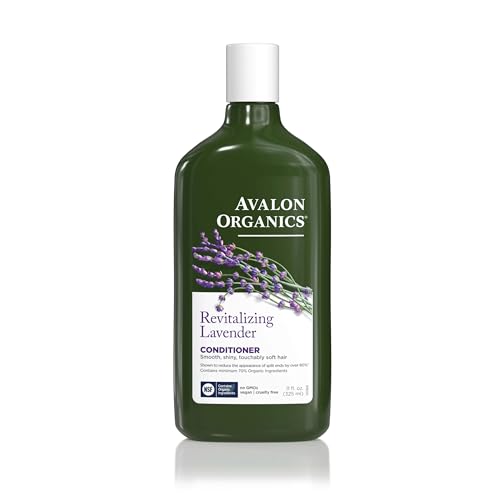
Best value: Avalon Organics Revitalizing Lavender Conditioner
| Organic Integrity Score | 90 / 100 |
| Certification | EWG Verified, Leaping Bunny, NSF |
| Scent | Lavender |
| Best for | Certified organic at the lowest entry price |
Certified organic under ten dollars is unusual, and this is the cheapest route onto this page. Avalon Organics has been making this line for years with consistent formulation, which matters when you are buying repeatedly.
It is a middleweight conditioner that suits normal to slightly dry hair and is a sensible default if you do not know your hair type yet. Buying this first and moving to something more specialised later is a better sequence than starting with a thirty dollar bottle.
Certified organic named specifically scores it above several more expensive options here.
The lavender scent is noticeable, and lavender oil contains linalool, a recognized contact allergen. If you have a reactive scalp, the unscented option above is the better choice despite the higher price.
Best for dry hair: INNERSENSE Hydrating Cream Conditioner
| Organic Integrity Score | 89 / 100 |
| Certification | Vegan, Organic |
| Type | Rinse-out cream conditioner |
| Best for | Dry, coarse, curly and color-treated hair |
The best-selling organic conditioner in this search by a clear margin, and the one most often recommended within the curly hair community, which is a demanding audience for conditioner specifically.
It is a rich cream formulation, which suits dry and coarse hair and will feel heavy on fine hair. Matching weight to hair type matters more than brand here, and this one sits at the heavier end deliberately.
INNERSENSE built the range around silicone-free formulation from the start rather than reformulating later, and it shows in how the products behave together.
It is the most expensive per ounce on this page. The organic claim is also general rather than named to a standard, which is what keeps it below Dr. Bronner’s and Avalon despite the stronger sales rank. You are paying partly for the brand’s standing in the curly hair market.
Best fragrance-free: Organic Jaguar Unscented Conditioner
| Organic Integrity Score | 87 / 100 |
| Certification | — |
| Fragrance | Unscented |
| Best for | Sensitive scalps and fragrance sensitivity |
Genuinely unscented conditioner is hard to find, and it earns a place here for that alone. Fragrance mix is consistently among the leading contact allergens in dermatology patch testing, and a scalp that itches after washing is often reacting to fragrance rather than to a surfactant.
Essential oils count as fragrance for this purpose, which catches people who have switched to natural products expecting fewer reactions and found more. An organic conditioner heavy with lavender and rosemary oil presents more allergen exposure than a plain conventional one.
The formulation is sulfate-free and simple, which suits an irritated scalp.
It scores mid-table because the organic claim is general rather than named, and because it is a newer listing with limited history and a price at the higher end.
How to actually use conditioner
Mid-lengths and ends only. The roots are the newest, least damaged hair and they sit next to a scalp already producing oil. Conditioner at the roots makes hair greasy faster and does nothing useful. This single change fixes most complaints about conditioner weighing hair down.
Squeeze out excess water first. Hair dripping wet dilutes the product and washes much of it straight off. A firm squeeze before applying makes a small amount go further.
Leave it for a minute or two. Deposition is not instantaneous, and rinsing immediately wastes most of the benefit. Use the time to do something else in the shower rather than standing there.
Detangle while it is in. This is when hair is at its most slippery and least likely to break. A wide-tooth comb from the ends upward, never from the roots down.
Rinse with cooler water. The claim that cold water seals the cuticle is overstated, but hot water does swell the hair shaft and strip more, so finishing cooler is a mild genuine improvement.
Rinse properly. Residue is a common cause of limp, dull hair that people then blame on the product.
Do not condition every wash if your hair is fine. Every second or third wash is enough for many people, and daily conditioning on fine hair is the usual cause of flatness.
Porosity, and why the same conditioner behaves differently on different heads
Two people can use the same bottle and get opposite results. Porosity is usually why, and it is more useful than the curl-type charts that dominate hair advice.
Porosity is how readily the cuticle lets water in and out. The cuticle is a layer of overlapping scales, and how tightly they lie determines everything about how a product behaves on your hair.
Low porosity hair has tightly packed scales. Water beads on it and takes a long time to soak in, and it takes a long time to dry. Products sit on the surface rather than absorbing, so heavy creams and oils build up and leave hair coated and limp. Low porosity hair wants lighter formulations, applied to damp rather than soaking hair, and benefits from a little warmth to help the cuticle open.
High porosity hair has raised or damaged scales, usually from coloring, heat or age. It absorbs water instantly and loses it just as fast, which is why it dries quickly and frizzes in humidity. It wants richer conditioners, more of them, and benefits from protein because there are genuine gaps in the cuticle to fill.
Medium porosity behaves predictably and tolerates most products, which is the hair type every product is designed for and roughly nobody complains about.
The float test is unreliable despite being the most-recommended method online. A clean strand in a glass of water is affected by product residue, surface oils and how you drop it. Better indicators are how long your hair takes to get wet in the shower, how long it takes to dry, and whether products seem to sit on it or disappear into it.
The practical upshot is that a conditioner failing for you may be entirely correct for someone else. Weight is the variable to change first, before brand or certification.
What else affects hair more than conditioner
Worth stating plainly on a page selling conditioner: several things matter more, and most of them are free.
Heat styling is the largest controllable cause of damage. Temperatures above roughly 180°C degrade keratin structure, and daily straightening at high heat does more damage than any conditioner can compensate for. Lowering the temperature helps more than upgrading products.
Mechanical handling comes second. Brushing wet hair, which is at its most fragile when swollen with water, and rough towel drying both cause breakage. A wide-tooth comb on conditioned hair and squeezing rather than rubbing with a towel are free improvements.
Tight styles worn constantly cause traction alopecia, which is hair loss from sustained tension at the follicle, and it can become permanent. Tight ponytails, braids and extensions worn daily over years are the usual causes.
Chemical processing stacks. Bleaching, permanent color and relaxing each raise the cuticle and weaken the shaft, and combining them compounds the effect considerably.
Frequency of washing matters less than people assume for hair health, though it matters for scalp health. Wash when your scalp needs it.
Diet and general health affect hair at the follicle, which means they affect new growth over months rather than the hair already on your head. Iron deficiency and thyroid problems are common and treatable causes of hair changes, and both are worth a blood test rather than a new conditioner.
Common questions about organic conditioner
Can conditioner repair damaged hair?
No. Hair above the scalp is dead protein with no repair mechanism. Conditioner coats and smooths the cuticle, which genuinely improves how hair looks and behaves and reduces breakage, but split ends can only be cut off.
Why did my hair get worse after switching to organic?
Almost always silicones. They coat the shaft and deliver instant smoothness, and removing them leaves hair feeling rougher for two to six weeks while buildup clears and the cuticle adjusts. Most people who give up do so in week two.
Are silicones actually bad for hair?
Not harmful, and they work well. They sit on the surface and are not meaningfully absorbed. The genuine drawback is buildup, particularly when paired with sulfate-free shampoo that cannot fully remove them. Organic standards exclude them for being synthetic, not for being dangerous.
Should I use a protein conditioner?
Occasionally, not exclusively. Too much protein makes hair stiff and prone to snapping, which is frequently mistaken for dryness. If a wet strand stretches far without springing back it needs protein; if it snaps immediately it needs moisture.
Does biotin in conditioner help hair growth?
No. Correcting a genuine biotin deficiency helps hair, but topical biotin on the hair shaft has no good evidence behind it. Any thickening effect is the conditioner coating each strand, which is cosmetic and temporary.
Where should I apply conditioner?
Mid-lengths and ends only. Roots are the newest and least damaged hair, sitting next to a scalp already producing oil, so conditioner there just makes hair greasy sooner.
How often should I condition?
Every wash for dry, coarse or curly hair, and every second or third wash for fine hair. Daily conditioning on fine hair is the most common cause of it going flat.
What is hair porosity and does it matter?
It is how readily the cuticle lets water in and out, and it matters more than curl type for choosing products. Low porosity hair repels water and gets weighed down by rich creams; high porosity hair absorbs fast, dries fast and wants richer formulations with some protein.
Is the float test a reliable way to check porosity?
Not really, despite being the most-recommended method online. Product residue, surface oils and how you drop the strand all affect it. How long your hair takes to get wet and how fast it dries are better indicators.
Do I need separate shampoo and conditioner from the same brand?
No. Matching ranges are a marketing convenience rather than a formulation requirement. What matters is that the pair suits your hair weight and that a sulfate-free shampoo is not being asked to remove silicones it cannot shift.
Can I leave rinse-out conditioner in?
Better not to. Rinse-out formulations are more concentrated than leave-ins and are designed to be diluted and removed, so leaving them in usually produces heavy, coated hair. Buy a product made for the job instead.
Does cold water really seal the cuticle?
The effect is overstated. Hot water does swell the hair shaft and strip more, so finishing cooler is a mild genuine improvement, but it is not the transformation it is sometimes described as.
What damages hair more than conditioner can fix?
Heat styling above roughly 180°C, brushing hair while wet, tight styles worn daily, and stacked chemical processing. Lowering your straightener temperature does more for hair condition than upgrading any product on this page.
Should I be worried about sudden hair changes?
Worth investigating rather than shopping. Iron deficiency and thyroid problems are common, treatable, and show up in hair before most people connect the two. A blood test settles it faster than working through the shelf.
Looking for other organic products?
We have checked more than 800 products across food, household goods, gardening, personal care and pet, every one against its stated certification. Browse all reviews.
Organic Connection participates in the Amazon Services LLC Associates Program, an affiliate advertising program designed to provide a means for sites to earn advertising fees by advertising and linking to Amazon.com.