Last updated: September 30, 2026
We may earn a commission when you buy through links on this page, at no extra cost to you. How we research and rate.
The short version
Our top pick is the Burt’s Bees Baby Organic Beekeeper Wearable Blanket, with an Organic Integrity Score of 92 out of 100. It names GOTS certification explicitly, uses combed ring-spun organic cotton, and publishes TOG ratings for both of its weights so you can actually match it to your room.
This category turned out to be the best documented of any baby textile we have examined. Two of the five picks name GOTS certification in their listings, and neither of them mentions it in the product title. One of those two is the highest-ranked sleep sack on Amazon.
Best organic baby sleep sacks compared
| Best Choice | Best Value | ||||
 | 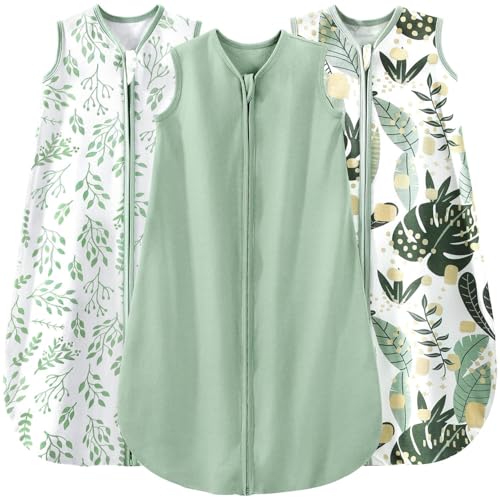 |  | |||
| Product | Burt’s Bees Organic Beekeeper | Yoofoss Baby Sleep Sack | BSTOPPT Organic Muslin Sack | KeaBabies Organic Sleep Sack | Burt’s Bees Beekeeper Blanket |
| Organic Integrity Score | 92/ 100 | 90/ 100 | 81/ 100 | 80/ 100 | 78/ 100 |
| Our rating | 4.6 | 4.5 | 4.1 | 4.0 | 3.9 |
| Certification named | GOTS | GOTS | — | — | — |
| TOG options | 0.5 and 1.5 | 0.5 | 0.3 | 0.5 and 1.5 | 0.5 and 1.5 |
| Fabric | Combed ring-spun cotton | Organic cotton | Organic cotton muslin | Organic cotton | Organic cotton |
| Pack size | 1 | 1 | 2 | 2 | 1 |
| Best for | Checkable certification | Certified, top seller | Warm rooms, lowest price | Two sacks, TOG choice | Wide size range |
| Certification | GOTS, Certified Organic | GOTS, Organic | — | — | — |
| Contents | One wearable blanket, 0.5 TOG all organic cotton or 1.5 TOG quilted | One 100% organic cotton wearable blanket, 0.5 TOG, 0 to 6 months | Two 100% organic cotton muslin sleep sacks, 0.3 TOG, two-way zipper | Two organic cotton sleep sacks, 0.5 TOG, other weights available | One 100% organic cotton wearable blanket, sizes from 10 lbs to 36 lbs |
| Price | $24.47 $29.95 −18% View on Amazon | $27.99 $29.99 −7% View on Amazon | View on Amazon | View on Amazon | $22.95 View on Amazon |
Price and availability as of October 27, 2026 1:10 am EDT. Product prices and availability are accurate as of the date/time indicated and are subject to change. Any price and availability information displayed on Amazon.com at the time of purchase will apply to the purchase of this product.
The certification map for organic sleep sacks, and what each one actually excludes
Most shoppers read a certification as a general signal of quality. Every one of them is narrower than that, and the gaps between them are where the marketing lives.
| Certification | Covers | Key exclusion |
| GOTS | Organic fiber from farm to finished textile, plus dyeing, finishing, wastewater and labor criteria | Has a weaker second tier, “made with organic”, that needs only 70% organic fiber and carries the same name |
| OEKO-TEX Standard 100 | Laboratory testing of the finished textile against limits for more than 1,000 harmful substances | Says nothing at all about whether the fiber was organically grown |
Standard 100 answers “what is in this fabric”, not “how was it grown”. That is a useful question and the testing behind it is rigorous, covering formaldehyde, heavy metals, azo dyes and a long list besides. But a product can pass it while having been grown with every pesticide the organic standards prohibit, because those residues do not survive to the finished textile. Treat it as a floor for chemical safety and look elsewhere for the farming claim.
TOG is the number that actually matters
Every other specification on a sleep sack is secondary to this one, and it is the one most listings explain worst.
TOG measures thermal resistance. It describes how much warmth a fabric holds, and on a sleep sack it is the difference between a baby who sleeps comfortably and one who is too hot or too cold. Unlike fiber content, it is a physical measurement rather than a marketing term.
The mapping to room temperature is roughly this:
0.2 to 0.5 TOG suits warm rooms, around 74 to 81 degrees Fahrenheit. This is the summer weight, and in most centrally heated homes it is what you want for much of the year.
1.0 TOG covers the middle, around 69 to 73 degrees. A sensible all-rounder if you are buying only one.
2.5 TOG is for cold rooms, roughly 61 to 68 degrees. Genuinely warm, and easy to overdo if your bedroom sits at the top of that band.
The reason this matters more than usual is that safe sleep guidance recommends keeping the room comfortable for a lightly clothed adult, generally cited as 68 to 72 degrees Fahrenheit. If you keep the room in that range, a 2.5 TOG sack is more than you need, and a 0.5 TOG plus appropriate sleepwear is usually the right combination.
Overheating is not a trivial concern. It is one of the modifiable risk factors in safe sleep guidance, which is why buying the warmest sack available is the wrong instinct. Check the temperature of the room the baby actually sleeps in, then buy to that number.
A sleep sack is a safe sleep product first
The reason this category exists at all is worth stating, because it shapes what a good one looks like.
Safe sleep guidance is consistent that loose bedding does not belong in a crib. No blankets, no bumpers, no pillows, nothing but a firm flat mattress and a fitted sheet. That leaves a practical problem in a cool room, which the wearable blanket solves: the baby wears the covering, so it cannot ride up over the face or be kicked into a corner.
Two design details follow from that, and both are safety features rather than comfort features.
The neck and arm openings must be snug. A sack a baby can slide down inside defeats the purpose entirely, because the fabric ends up over the face. This is why sleep sacks are sized by weight and height rather than age alone, and why buying a size up to get more use out of it is a bad idea in this one product category.
The body must be roomy. The legs need space to bend up and out at the hips. A sack that is narrow through the body holds the hips in extension, which is the position associated with developmental dysplasia. Snug at the top, generous at the bottom.
Sleep sacks are also the standard next step once swaddling ends. Swaddling stops at the first sign of rolling, usually somewhere between two and four months, and a sleeveless wearable blanket is what replaces it. If you are shopping for a baby approaching that stage, buying the sack before you need it saves a difficult week.
What GOTS certification actually covers
Two products here name GOTS, so it is worth being precise about what the standard governs.
The Global Organic Textile Standard covers the full production chain and not the farm alone. Fiber must be certified organic, and the standard then regulates what happens to it: which dyes and processing chemicals are permitted, how mill wastewater is treated, and social criteria covering working conditions. It prohibits chlorine bleaching, formaldehyde-based finishes and several heavy metals used in conventional dyeing.
For a garment worn against the skin for ten or twelve hours a night, the processing rules are the substantive part. What the mill applied to the cloth is a more immediate question than what the farm sprayed on the plant.
The standard has two label grades. “Organic” requires at least 95 percent certified organic fiber. “Made with organic materials” requires 70 percent. Both are real GOTS labels and they are not the same claim.
That 95 percent threshold is exactly why the polyester fill matters. A quilted sack with an organic cotton shell and a polyester filling is not 95 percent organic fiber by weight. The certification can still apply truthfully to the shell fabric, and the finished article is a different product from the unlined version. Reading which weight you are buying is the whole job.
OEKO-TEX Standard 100 shows up across baby textiles and answers a different question: it tests the finished item for harmful substances and sets limits on what may be present. It says nothing about organic farming, and conventional cotton carries it routinely.
Zips, sizing and the things that annoy you at 3am
Beyond fiber and TOG, a handful of details decide whether you like a sleep sack in practice.
Two-way zips are worth seeking out. A zip that opens from the bottom lets you change a nappy without undressing the child or taking the sack off. In the middle of the night that is the single most useful feature on the product, and it costs nothing.
Zip direction and cover. A zip that runs downwards from the neck should have a fabric guard behind the top of it, so the slider does not sit against the chin. Most good sacks have this and it is easy to check in the photographs.
Sleeveless is the norm and it is deliberate. Arms out helps the baby regulate temperature, since hands and arms are where a lot of heat is shed. A baby with slightly cool hands in a warm sack is usually a baby at the right temperature.
Size by weight and height, not age. Manufacturers publish ranges in pounds and inches for a reason. Age is a poor proxy, and in this category an oversized sack is a safety issue rather than a bargain.
Buy two. A sleep sack gets used every night and is periodically leaked on. One sack means either laundry at midnight or a night without it. Two is the working minimum, which is why the multipacks below matter more than they might in another category.
Best overall: Burt’s Bees Baby Organic Beekeeper Wearable Blanket
| Organic Integrity Score | 92 / 100 |
| Contents | One wearable blanket, 0.5 TOG all organic cotton or 1.5 TOG quilted |
| Certification | GOTS, Certified Organic |
| Best for | Buyers who want certification and a published TOG rating |
It does the two things this category should do and most products only manage one. It names GOTS certification explicitly, and it publishes TOG ratings for both weights so you can match the sack to your room instead of guessing from words like lightweight.
The cotton is combed ring-spun, which is a real specification. Combing strips the short fibers before spinning and ring spinning twists the rest into a smoother, stronger yarn. On something washed constantly this shows as less pilling and a fabric that stays soft for longer.
Now the part that decides which version you should buy, and it is the reason for the box near the top of this page. The 0.5 TOG is 100 percent organic cotton throughout. The 1.5 TOG is a quilted construction with a 100 percent organic cotton jersey shell and 100 percent polyester fill. Burt’s Bees states this in the listing and deserves credit for the clarity. It does mean that if organic content is your reason for buying, the lightweight version is the one that delivers it, and in a room kept at the recommended 68 to 72 degrees the lightweight version is usually the correct choice anyway.
Sold as a single sack, so budget for a second.
What we liked: GOTS certification named outright. TOG published for both weights. Combed ring-spun cotton that lasts. Clear about the fill.
Keep in mind: The 1.5 TOG version is polyester filled with an organic shell. One sack per purchase. The most expensive pick here.
What the listing discloses: Burt’s Bees Baby states GOTS, and does not say whether the USDA seal applies and where it was grown or made.
Best certified value: Yoofoss Baby Sleep Sack, 0.5 TOG
| Organic Integrity Score | 90 / 100 |
| Contents | One 100% organic cotton wearable blanket, 0.5 TOG, 0 to 6 months |
| Certification | GOTS, Organic |
| Best for | Certification at a lower price than the premium brands |
This is the highest-ranked sleep sack in the category and it is GOTS certified, a combination that does not occur often. Its first feature bullet reads “Certified by the Global Organic Textile Standard (GOTS)”, spelled out in full.
What makes it interesting is where that claim is not. The product title says only “100% Cotton” with no mention of organic anywhere. A shopper filtering search results for organic products could easily pass over the best-certified affordable sack on the page, because the seller did not put the word where searches look.
It is a single-weight product at 0.5 TOG, which suits rooms in the mid-seventies and above and pairs well with sleepwear underneath in a cooler room. For most homes that is the useful weight, and buying only what you need is not a limitation.
Sized 0 to 6 months on this listing, so check the range against your baby before ordering. Like the Burt’s Bees it is sold singly.
What we liked: GOTS certification spelled out in full. The category’s best seller. Considerably cheaper than the premium certified option.
Keep in mind: Only 0.5 TOG, so no option for a cold room. Narrow size range on this listing. One sack per purchase.
What the listing discloses: Yoofoss documents GOTS, and leaves whether the USDA seal applies and where it was grown or made unsaid.
Best value: BSTOPPT Organic Cotton Muslin Sleep Sack, 2-Pack
| Organic Integrity Score | 81 / 100 |
| Contents | Two 100% organic cotton muslin sleep sacks, 0.3 TOG, two-way zipper |
| Certification | — |
| Best for | Warm rooms, summer, and getting two sacks for the price of one |
Two sacks for less than any single sack above it, which settles the value question. Since two is the practical minimum for a product used every night, that matters more here than in most categories.
It has the feature we would put on every sleep sack if we could: a two-way zipper. Being able to open from the bottom for a nappy change without removing the sack or waking the baby fully is worth a surprising amount at four in the morning.
At 0.3 TOG this is a genuinely light sack, muslin rather than jersey, meant for warm rooms and summer nights. In a room at the top of the recommended range it works well over a sleepsuit. In a cold room it will not be enough on its own, and that is a real constraint rather than a quibble.
The listing states 100 percent organic cotton muslin and names no certifying body, which is what places it at 81 rather than alongside the certified pair. It is otherwise a well-specified product from a brand with a much shorter track record than the two above it.
What we liked: Two sacks at the lowest price here. Two-way zipper for night changes. Genuinely light muslin for warm rooms.
Keep in mind: 0.3 TOG is too light for a cold room. No certifier named. Little-known brand.
What the listing discloses: Sparse documentation from BSTOPPT — nothing on whether the USDA seal applies and where it was grown or made.
Best TOG range in a multipack: KeaBabies Organic Baby Sleep Sacks, 2-Pack
| Organic Integrity Score | 80 / 100 |
| Contents | Two organic cotton sleep sacks, 0.5 TOG, other weights available |
| Certification | — |
| Best for | Choosing a TOG and getting two sacks in it |
The most flexible option here on temperature. KeaBabies offers this sack in 0.5 and 1.5 TOG and publishes the room temperature ranges alongside them, which is the information you actually need and which many competitors leave out.
Two per pack, so a spare is built in. The construction is long-length, which is worth having: sacks sized generously in the body last through more of a growth phase and leave the legs the room they need at the hip.
The organic claim runs through the description consistently, appearing in more than one feature bullet, but no certifying body is named anywhere. That is what separates it from the two at the top of this list, and it is the whole of the difference: the fabric description is otherwise as detailed as theirs.
Sizing runs by month range and weight. Read the chart rather than the label on the front, since a sleep sack that is too large is the one specification you should not compromise on.
What we liked: Two sacks per pack with a genuine TOG choice. Room temperature ranges published. Long-length cut.
Keep in mind: No certifier named. TOG and size vary by listing variant, so check what you are adding to the cart.
What the listing discloses: Sparse documentation from KeaBabies — nothing on whether the USDA seal applies and where it was grown or made.
Widest size range: Burt’s Bees Baby Beekeeper Wearable Blanket
| Organic Integrity Score | 78 / 100 |
| Contents | One 100% organic cotton wearable blanket, sizes from 10 lbs to 36 lbs |
| Certification | — |
| Best for | Older babies and toddlers still using a sleep sack |
The same Beekeeper design as our top pick, on an older listing that covers a much wider size range: from around 10 pounds up to 36 pounds, which takes a child well into the second year.
That range is the reason to consider it. Most sleep sacks in this category stop at 6 or 18 months, and parents of toddlers who still need a wearable blanket find the options thinning out quickly. This one keeps going.
The certification language is where it differs from its sibling. This listing says “100 percent organic cotton” and “premium-quality organic cotton” without naming GOTS anywhere, while the newer listing for essentially the same product does name it. Burt’s Bees Baby holds GOTS certification across much of its range, so the likely explanation is listing copy rather than a different fabric. We score what the listing says, so it sits at 78.
Same TOG choice as the top pick, and the same consideration applies to the quilted weight.
What we liked: Fits from newborn up to 36 pounds, far beyond most competitors. Established design. TOG choice published.
Keep in mind: This listing does not name GOTS, unlike the newer one. Sold singly. Check which TOG you are ordering.
What the listing discloses: Burt’s Bees Baby is thin on detail, and does not say whether the USDA seal applies and where it was grown or made.
How we scored these and what the method cannot tell you
Every score above comes from what the listing itself states, read in full rather than from the title.
A product that names a certifying standard scores highest, because a named standard is one a third party can be held to. A product that states organic content consistently through the description scores in the low eighties. A product that mentions organic only in the title scores lower still, and none of the sleep sacks here fell into that last group, which is why this category scores better overall than hooded towels or burp cloths.
Two honest limits. First, reading listing copy tells you what a brand will claim in public and how far it will substantiate the claim. It cannot tell you what is in the box. Second, listings change. The two Burt’s Bees products above describe essentially the same design, and only one names GOTS, which is a good demonstration that copy and certification are not the same thing and can drift apart over time.
Where a listing is ambiguous, we have said so rather than resolving it in the product’s favor.
Washing and using a sleep sack
Skip fabric softener. Softener leaves a thin water-repellent film on fibers. On a garment worn against skin all night, that coating reduces breathability, which is precisely what you want a cotton sleep sack for. Dryer sheets do the same.
Wash before first use. New cotton carries manufacturing residues and softens noticeably after a cycle or two.
Warm rather than hot. GOTS prohibits most synthetic shrink-control finishes, so certified organic cotton shrinks more in early washes than treated conventional fabric. On a sleep sack, shrinkage tightens the neck and armholes, so this is worth taking seriously. Warm wash, low tumble.
Check the fit as the baby grows, not just at purchase. The neck and arm openings should stay snug enough that the baby cannot slip down inside. Check every few weeks rather than assuming a size lasts the range printed on the label.
Dress underneath for the TOG. A sleep sack is one layer of a system. In a warm room, a 0.5 TOG sack over a short-sleeved bodysuit is usually right. In a cooler room, the same sack over a long-sleeved sleepsuit. Adding a hat indoors is not part of the system, since babies shed heat through the head.
Questions parents ask about organic sleep sacks
What TOG do I need?
Match it to the room. Around 0.5 TOG for rooms in the mid-seventies and warmer, 1.0 for around 69 to 73 degrees, and 2.5 only for genuinely cold rooms in the low sixties. Since safe sleep guidance suggests keeping the room around 68 to 72, a light sack plus appropriate sleepwear covers most homes.
When do we switch from swaddling to a sleep sack?
At the first sign the baby is trying to roll, usually somewhere between two and four months. A swaddle stops being safe once rolling starts, and a sleeveless wearable blanket is the standard replacement.
Is an organic cotton sleep sack filled with polyester still organic?
Partly, and it depends what you mean. Certification can apply truthfully to the shell fabric while the fill is synthetic. Under GOTS the “organic” label grade requires at least 95 percent certified organic fiber, which a polyester-filled quilted sack will not meet as a finished article. Read which weight you are buying.
Should a sleep sack be loose or snug?
Snug at the neck and armholes so the baby cannot slide down inside, and roomy through the body so the legs can bend up and out at the hips. That combination is a safety requirement, which is why sizing up for longer use is a bad idea here.
How many sleep sacks do I need?
Two at minimum. It is worn every night and will periodically be leaked on, and one sack means laundry at midnight. Three is comfortable.
Do sleep sacks replace blankets entirely?
That is the point of them. Safe sleep guidance advises no loose bedding in the sleep space, and a wearable blanket provides warmth that cannot ride up over the face or be kicked away.
Does GOTS certification mean the whole product is organic?
It means the certified component meets the standard. On a single-fabric sack that is the whole garment. On a quilted sack it may be the shell only. The two label grades matter too: “organic” needs 95 percent certified organic fiber, “made with organic materials” needs 70 percent.
Are sleeveless sleep sacks warm enough?
Yes, and the sleeveless design is deliberate. Babies shed heat through the hands and arms, so leaving them free helps temperature regulation. Slightly cool hands on a baby whose chest feels warm is normally a baby at the right temperature.
Looking for other organic products?
We have checked more than 800 products across food, household goods, gardening, personal care and pet, every one against its stated certification. Browse all reviews.
Organic Connection is reader supported. We check every product against its stated certification and say plainly when a claim cannot be verified. How we research and rate.