Last updated: September 30, 2026
We may earn a commission when you buy through links on this page, at no extra cost to you. How we research and rate.
Health note: This guide is general information, not medical advice. A varied whole-food diet is the best foundation; protein powder is a convenient supplement. Talk to your doctor before adding a supplement, especially if you are pregnant, nursing, have a kidney condition, or take medication.
The short version
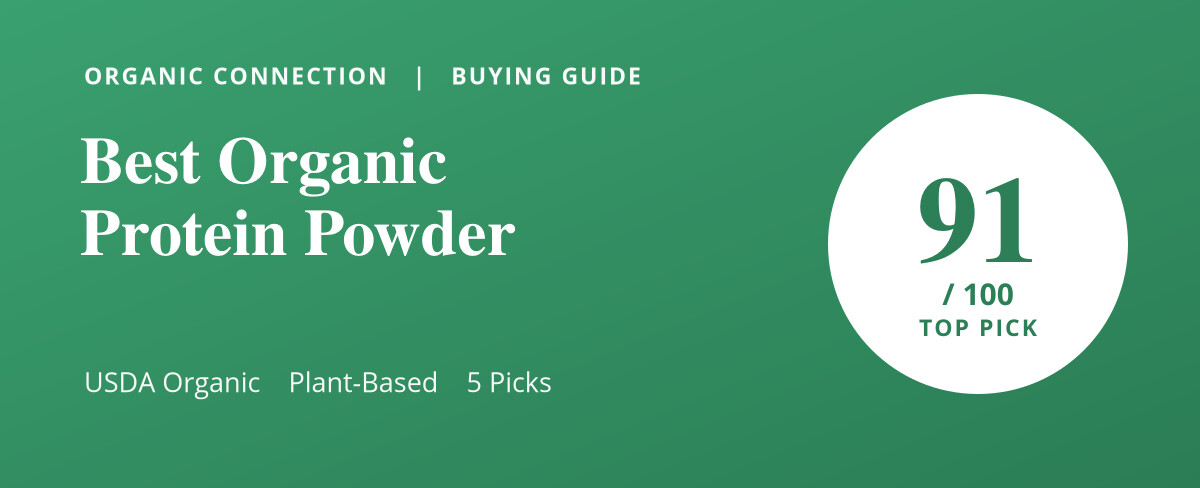
After researching the sourcing, ingredients, and certifications of the most popular organic protein powders, our top pick is Orgain Organic Vegan Protein Powder. It is USDA organic, delivers 21g of complete plant protein from peas, brown rice, and more, is non-GMO and free of dairy, soy, and gluten, and is the best-selling plant protein in the US, which is why it earned our highest Organic Integrity Score of 94 out of 100. For a raw whole-food formula, Garden of Life Raw Organic Protein is our pick, and for athletes, Garden of Life Sport is the best choice.
Genuinely organic protein powders are almost all plant-based, because organic whey is rare and hard to certify, so these are vegan protein blends built on organic peas, rice, and seeds. We flag each pick’s protein per serving and standout feature.
Best organic protein powder compared
| Best Choice | Best Value | ||||
 |  |  |  |  | |
| Product | Orgain | Garden of Life Sport | Truvani | Garden of Life Raw | Sunwarrior |
| Organic Integrity Score | 94/ 100 | 89/ 100 | 88/ 100 | 86/ 100 | 82/ 100 |
| Our rating | 4.7 | 4.5 | 4.4 | 4.3 | 4.1 |
| Best for | Best overall | Athletes | Minimal ingredients | Raw whole-food | Keto / amino |
| Protein | 21g | 30g | 20g | 22g | Pea & hemp blend |
| Certification | USDA Organic, Non-GMO, Kosher | USDA Organic, Non-GMO Project Verified, NSF | USDA Organic, Non-GMO, Vegan | USDA Organic, Non-GMO Project Verified, Certified Vegan | Non-GMO, Gluten-free, Vegan |
| Price | $29.59 $31.98 −7%$0.91 / ounce View on Amazon | $41.99 $59.99 −30%$1.39 / ounce View on Amazon | Currently unavailable See buying options | Currently unavailable See buying options | $44.97$1.70 / ounce View on Amazon |
Price and availability as of October 12, 2026 1:10 am EDT. Product prices and availability are accurate as of the date/time indicated and are subject to change. Any price and availability information displayed on Amazon.com at the time of purchase will apply to the purchase of this product.
Scores are ours, based on independent research of certification, amino profile, ingredient cleanliness, and testing, using the same 10-criteria method we apply to every product. See how we research and rate.
The certification map for organic protein powder, and what each one actually excludes
Certification names are easy to confuse and easy to trade on. Below is what each of these marks covers, and the part of the picture it says nothing about.
| Certification | Covers | Key exclusion |
| USDA Organic | Farming and handling: no synthetic pesticides or fertilizers, no GMOs, no sewage sludge or irradiation, audited yearly by an accredited certifier | Three different tiers share the one seal, and it makes no claim about worker pay, food miles, or nutrition |
| Kosher | Ingredients and production comply with Jewish dietary law, verified by a rabbinic agency that inspects the facility | A dietary-law standard: it makes no claim about pesticides, GMOs or farming practice |
| NSF/ANSI | Independent testing of a water treatment product against one named standard number | The number is the claim: 42 is taste and odor, 53 is health contaminants, 58 is reverse osmosis, 401 is emerging compounds, and 372 is only lead-free materials |
| Clean Label Project | Testing of finished products for heavy metals, pesticide residues and plasticizers | Not an organic certification, and the thresholds are the organization own |
| NSF Certified for Sport | Batch testing for more than 280 substances banned in sport, plus label accuracy and facility audits | A contamination and label-truth screen, not a claim about efficacy |
| Informed Sport | Every batch tested for banned substances before it is released for sale | A contamination screen; it is not an organic or efficacy claim |
With NSF, the number is the whole claim. “NSF certified” on its own means very little, because each standard covers something different: 42 is aesthetic, taste, odor and chlorine; 53 is health-related contaminants such as lead and cysts; 58 is reverse osmosis performance; 401 covers emerging compounds like pharmaceutical residues; and 372 is not a filtration standard at all, only a confirmation that the wetted parts are lead-free. A filter certified to 42 and 372 has been certified for taste, and for its own plumbing, and for nothing you would call purification.
Key things to look for in organic protein powder
Good organic protein powder is about clean sourcing and a complete amino profile. Here is what matters.
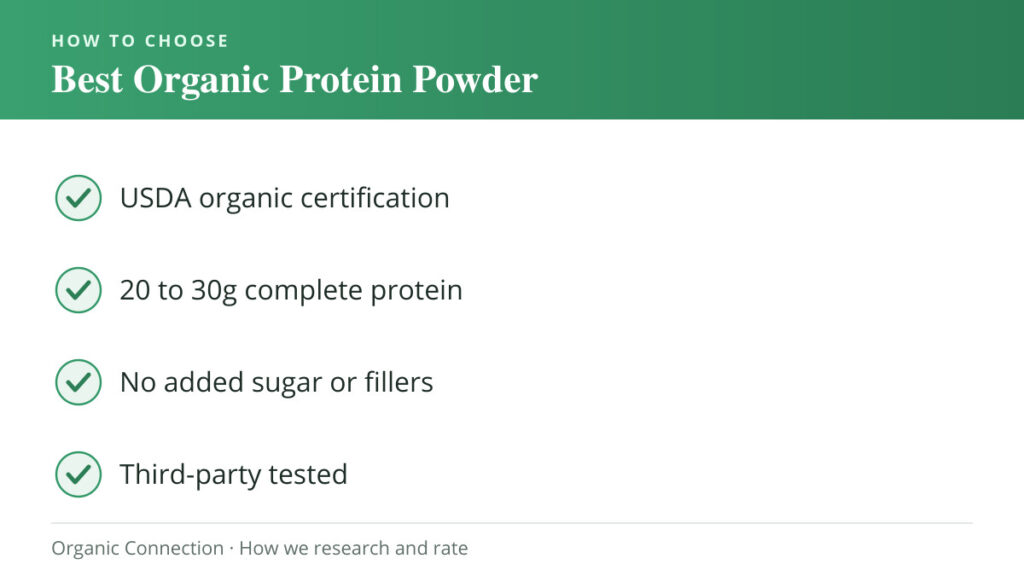
1. USDA organic certification
It confirms organic ingredients grown without synthetic pesticides, and no artificial sweeteners or additives.
2. Complete protein and grams per serving
Look for 20 to 30g and a blend (like pea plus rice) that provides all nine essential amino acids.
3. Clean ingredients
Favor no added sugar, no artificial sweeteners, and minimal fillers; monk fruit or stevia for sweetness.
4. Third-party testing
NSF or other testing adds assurance of purity and, for athletes, no banned substances.
Why organic protein powder is plant-based
If you are looking for a certified-organic protein powder, you will notice they are nearly all plant-based. That is because organic whey and casein (dairy proteins) are rare and difficult to certify at scale, while organic plant proteins, peas, brown rice, seeds, and legumes, are widely available and easy to certify. The good news is that a well-formulated organic plant blend combines complementary sources so it delivers all nine essential amino acids, a complete protein comparable to whey for most everyday and athletic needs, without the bloating some people get from whey.
Our scoring rewards genuine USDA organic certification, a complete amino profile with a solid protein dose, clean ingredients (no artificial sweeteners or junk fillers), and third-party testing, so you get a protein powder that is both organic and genuinely effective.
Heavy metals in plant protein: the finding this category has to confront
This is uncomfortable for a guide recommending organic plant protein, and leaving it out would not serve you.
What the testing found. The Clean Label Project tested 160 protein powder products across 70 top-selling brands. Nearly half, 47%, exceeded California’s Proposition 65 safety limits for heavy metals. Earlier testing found 75% of plant proteins exceeded Prop 65 limits for lead, and that plant-based powders contained roughly three times more lead than whey-based products. Rice protein showed the highest cadmium levels of any protein type tested.
Why plant protein specifically. Lead and cadmium occur naturally in soil and water, and plants take them up as they grow. Protein powder concentrates the plant, so it concentrates whatever the plant absorbed. Rice is a particularly efficient accumulator of cadmium and arsenic, which is why rice protein performs worst. This is a soil and crop issue, not a manufacturing failure.
The critical point about organic certification. USDA organic rules govern what is applied to a crop. Heavy metals come up out of the ground. An organic pea or rice protein can therefore be entirely legitimate as organic and still test high for lead or cadmium. Organic certification is necessary and it is not sufficient here, exactly as with moringa and greens powders.
| Protein source | Relative heavy metal risk |
| Rice protein | Highest cadmium of types tested |
| Plant proteins generally | About 3x the lead of whey |
| Pea protein | Lower than rice, still a plant crop |
| Whey and dairy proteins | Lowest in this comparison |
| Chocolate-flavored versions | Higher, since cacao itself accumulates cadmium |
What to actually do. Do not stop eating plant protein over this; do buy on published testing rather than on the organic seal alone. Look for brands that publish batch-level certificates of analysis covering lead, cadmium, arsenic, and mercury, or that carry Clean Label Project certification or NSF Certified for Sport. Prefer pea over rice where you have the choice, be aware chocolate flavors run higher because cacao accumulates cadmium, and rotate your protein sources rather than taking the same powder twice daily for years. Dose matters: an occasional shake is a very different exposure from three scoops a day.
PDCAAS versus DIAAS: the label number that hides the truth
Protein quality scoring is where plant protein marketing gets to flatter itself, and knowing the difference tells you a lot.
PDCAAS is the older metric and it is capped at 1.00. That cap is the problem: whey and rice protein can both display “1.00” on a label despite being very different in quality, because anything scoring above the cap gets rounded down to it.
DIAAS is the newer measure, adopted by the FAO in 2013, and it is uncapped, so it distinguishes properly. On DIAAS, whey scores around 125 and rice protein around 45. Many brands still quote PDCAAS specifically because it makes a weaker protein look equivalent to a stronger one.
The practical fix for plant protein. Single-source plant proteins have amino acid gaps: pea is low in methionine, rice is low in lysine. Blending them fills both gaps, and a pea and rice blend scores around DIAAS 98, essentially matching soy and closing most of the distance to dairy. This is why a well-formulated blend beats a single-source plant powder, and it is the single most useful thing to look for on the ingredient list.
How to choose an organic protein powder
- Look for the USDA Organic seal. It confirms clean ingredients and no synthetic pesticides.
- Check the protein and amino profile. 20 to 30g, from a blend that is a complete protein.
- Read the sweetener and fillers. No added sugar or artificial sweeteners; monk fruit or stevia is fine.
- Match it to your goal. Everyday nutrition, athletic recovery (look for NSF Certified for Sport), or added greens and probiotics.
- Taste and mixability matter. Plant proteins vary; blends with rice and pea tend to be smoother.
Who should buy organic protein powder
Start from your goal rather than the label. For general use, our top pick does the job. If you want a raw whole-food formula with probiotics, an athlete’s recovery protein, a minimal-ingredient blend, or a keto-friendly amino-rich option, we have a pick for each. Clear new supplements with your doctor.
Best overall: Orgain Organic Vegan Protein Powder
| Organic Integrity Score | 94 / 100 |
| Certification | USDA Organic, Non-GMO, Kosher |
| Protein | 21g from organic pea, brown rice, and more |
| Best for | An all-around organic protein |
Orgain is our top pick because it balances clean organic sourcing, a complete protein, taste, and value. As the best-selling plant protein in the US, it is USDA organic and delivers 21g of complete protein from organic peas, brown rice, mung bean, and chia, with no added sugar, no dairy, soy, or gluten, and a smooth taste that mixes well into shakes, smoothies, oats, and baking.
The trade-off is that 21g is a solid but not maximal dose, and it uses stevia and erythritol for sweetness. For a genuinely organic, complete, great-tasting everyday protein, it is our first choice, and an unsweetened version exists.
What we liked: USDA organic, 21g complete protein, no added sugar, dairy/soy/gluten-free, great taste and mixability, and strong value.
Keep in mind: It is sweetened with stevia and erythritol, and 21g is moderate; an unsweetened and a 30g version are available.
What the listing discloses: On the Orgain label: USDA organic certification and kosher certification. Not stated: where it was grown or made.
Best for athletes: Garden of Life Sport Organic Protein
| Organic Integrity Score | 89 / 100 |
| Certification | USDA Organic, Non-GMO Project Verified, NSF |
| Protein | 30g with 5g BCAAs and 5g glutamine |
| Best for | Muscle recovery and training |
Garden of Life Sport is our pick for athletes. It delivers a big 30g of complete organic protein from peas, navy beans, lentils, and garbanzo beans, plus over 5g BCAAs and 5g glutamine for recovery and 2 billion CFU probiotics, and crucially it is NSF Certified for Sport, meaning it is tested for banned substances, which matters for competitive athletes.
It scores in the middle on our metric mainly on taste and price versus everyday blends, but for a genuinely organic, high-protein, sport-certified recovery powder, it is the standout.
What we liked: USDA organic and NSF Certified for Sport, a big 30g protein with BCAAs and glutamine, and added probiotics.
Keep in mind: It is priced and formulated for athletes, and the recovery-focused blend is heavier than a light everyday protein.
What the listing discloses: You are told a USDA organic claim and Non-GMO Project Verified for Garden of Life; you are not told where it was grown or made.
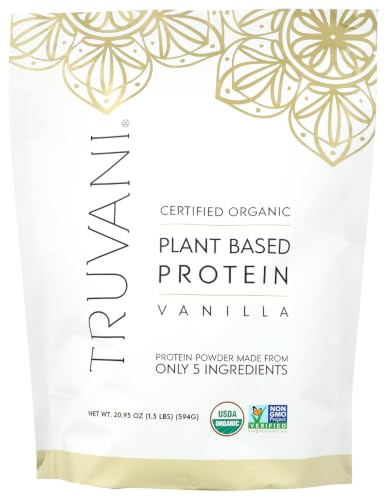
Best minimal ingredients: Truvani Organic Protein
| Organic Integrity Score | 88 / 100 |
| Certification | USDA Organic, Non-GMO, Vegan |
| Protein | 20g from organic pea, pumpkin seed, chia |
| Best for | The shortest, cleanest ingredient list |
Truvani is our pick for a minimal label. It is USDA organic with a very short ingredient list, organic pea, pumpkin seed, and chia proteins delivering 20g, sweetened only with organic monk fruit, and free of added sugar, stevia, soy, gluten, dairy, and fillers, for people who want to recognize every ingredient.
It scores in the value range because 20g is a moderate dose and monk-fruit-only sweetening is a specific taste, but for the cleanest, most transparent organic protein, it is a standout.
What we liked: USDA organic, a very short ingredient list, monk-fruit sweetened with no stevia or fillers, and clean plant sources.
Keep in mind: The dose is a moderate 20g, and monk-fruit-only sweetness is a particular taste some love and some do not.
What the listing discloses: Truvani documents USDA organic certification, and leaves where it was grown or made unsaid.
Best raw whole-food: Garden of Life Raw Organic Protein
| Organic Integrity Score | 86 / 100 |
| Certification | USDA Organic, Non-GMO Project Verified, Certified Vegan |
| Protein | 22g from 13 organic sprouts |
| Best for | A raw, whole-food protein with probiotics |
Garden of Life Raw is our pick for a whole-food formula. It provides 22g of complete protein from 13 raw, organic sprouts (including pea and sprouted brown rice) with all essential amino acids, plus live probiotics and enzymes for digestion, and it is USDA organic, Non-GMO Verified, NSF gluten-free, vegan, and kosher.
It scores just below our top pick mainly on taste and texture, as raw sprouted proteins are earthier and less smooth, but for the cleanest raw, whole-food profile with digestive support, it is excellent.
What we liked: USDA organic, 22g from 13 raw sprouts, added probiotics and enzymes, and strong third-party certifications.
Keep in mind: Raw sprouted protein has an earthier taste and grittier texture than smoother blends, so blend it well.
What the listing discloses: On the Garden of Life label: USDA organic certification, Non-GMO Project Verified and Certified Gluten-Free. Not stated: where it was grown or made.
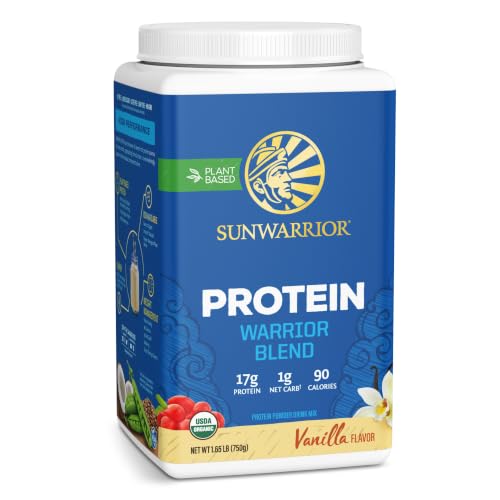
Best keto: Sunwarrior Warrior Blend Organic
| Organic Integrity Score | 82 / 100 |
| Certification | Non-GMO, Gluten-free, Vegan |
| Protein | Pea, hemp, and goji with MCTs and BCAAs |
| Best for | Keto and amino-rich support |
Sunwarrior is our keto pick. Its Warrior Blend combines organic pea and hemp protein with goji, coconut MCTs, and BCAAs for a keto-friendly, low-carb, amino-rich formula that is soy-, dairy-, gluten-, and sugar-free, with an amino profile similar to whey that makes it an easy switch for athletes moving to plant protein.
It scores at the value end on our metric because its protein dose per serving is a bit lower than the leaders and the blend is specialized, but for a keto-friendly, MCT- and amino-rich organic protein, it is a solid choice.
What we liked: Organic pea and hemp with MCTs and BCAAs, keto-friendly and low-carb, and a whey-like amino profile.
Keep in mind: The per-serving protein is a little lower than the leaders, and the blend is specialized for keto and aminos.
What the listing discloses: Little to verify on the Sunwarrior listing: no word on whether the USDA seal applies and where it was grown or made.
How to use organic protein powder
Blend one scoop into water, or a milk or plant-milk of choice, a smoothie, oats, or baking. Plant proteins mix best in a blender or shaker; pea-and-rice blends tend to be smoothest, while raw sprouted proteins are earthier and benefit from blending with fruit or cocoa. Use protein powder to supplement whole-food protein, not replace it, and spread your protein across the day. Athletes often take it after training for recovery. Store it sealed in a cool, dry place. If you have a kidney condition or are pregnant, check with your doctor about your protein needs first.
The 2025 testing, including the finding that goes against us
Our section above introduces the heavy metals problem. New testing has since made it considerably more specific, and one of the results directly contradicts the premise of this site. We would rather publish it than leave it out.
The Clean Label Project tested 160 protein powder products from 70 top-selling brands for 258 contaminants including heavy metals, bisphenols, phthalates and PFAS. The headline finding: 47% exceeded California Proposition 65 safety limits for heavy metals.
| Comparison | Result |
| Plant-based vs whey | Plant-based contained 5× more cadmium |
| Organic vs non-organic | Organic contained 3× more lead and 2× more cadmium |
| Chocolate vs vanilla | Chocolate contained 110× more cadmium |
Keep in mind: that middle row is the most awkward result we have published anywhere on this site. Organic protein powders tested worse than conventional ones — not better. It is not a paradox once you look at the mechanism: heavy metals are soil contaminants, not sprays, so organic certification does nothing about them, and organic products skew heavily toward plant sources and toward cacao-based chocolate flavoring, which are precisely the two things the testing found most contaminated. The organic seal is not causing the contamination; it is failing to prevent it while correlating with the ingredients that carry it.
Some proportion is warranted. Prop 65 limits are strict reproductive-toxicity thresholds rather than acute-harm levels, and exceeding one is not the same as being dangerous. But for a product many people consume daily, often in large scoops, for years, it is a real consideration — and “I buy the organic one” is not the protection it feels like.
What actually reduces your exposure
- Choose vanilla or unflavored over chocolate. Given a 110-fold cadmium difference, this is the single highest-leverage change available and it costs nothing. Cacao is the culprit, and it is the same cadmium issue we flag on cocoa powder and dark chocolate.
- Look for third-party contaminant certification — NSF Certified for Sport, Informed Sport, or Clean Label Project certification. These test finished batches for heavy metals and banned substances. This is the meaningful mark, and it is a different and more informative claim than organic.
- Rotate protein sources. Pea, rice, hemp, pumpkin and whey accumulate different things from different soils. A single powder eaten daily for years concentrates whatever that one source carries.
- Whey is genuinely lower in cadmium, which is worth knowing if you have no dietary reason to avoid dairy. This guide covers organic plant proteins because that is the category, not because whey is worse on this measure.
- Do not mega-dose. More scoops means proportionally more of everything in the tub.
- Get most of your protein from food. Powder is a convenience, and the exposure question does not arise with chicken, eggs, lentils or yogurt.
Amino spiking: how protein claims get inflated
Protein content is usually measured by nitrogen content, and the test cannot tell the difference between nitrogen from complete protein and nitrogen from free amino acids. That gap has been exploited.
Amino spiking — also called protein spiking or nitrogen spiking — means adding cheap non-protein nitrogen sources such as glycine, taurine, creatine or free-form amino acids to inflate the measured protein figure. The label is not technically false; the protein is not what you think you are buying.
- Check the ingredient list for free amino acids listed separately from the protein source — glycine, taurine, alanine and glutamine appearing high in the list are the flag.
- Be skeptical of very cheap protein with an impressive protein-per-serving figure.
- Look for a full amino acid profile published by the brand. Companies not spiking generally show it.
- Third-party testing catches this too, which is another argument for certified products.
Plant protein and the amino acid question
The nutritional gap between plant and whey protein is real but smaller than often claimed, and it is straightforwardly solvable.
- Leucine is the limiting factor. It is the amino acid that triggers muscle protein synthesis, and plant proteins generally contain less per gram than whey. The practical fix is a slightly larger serving — roughly 25–40 g of plant protein against 20–25 g of whey for an equivalent leucine dose.
- Blends beat single sources. Pea is low in methionine and high in lysine; rice is the reverse. A pea-and-rice blend is close to complete, which is why most good plant powders use one.
- Hemp is nutritionally decent and low in protein density — typically 50–60% protein against 80%+ for pea isolate — so check grams per scoop rather than assuming.
- Soy is the most complete single plant protein and is unfairly neglected in this category.
- Total daily protein matters far more than timing or source. Meta-analysis evidence suggests benefits plateau around 1.6 g per kg of body weight per day for muscle building; beyond that, additional protein does little. Most people using powder are closer to the low end than they think, and a few are well past the point of return.
Reading the tub
- Protein per 100 g, not per scoop. Scoop sizes vary enormously and are the easiest way to make a number look good.
- Check added sugars — some “clean” powders carry 8–12 g per serving.
- Gums and thickeners — xanthan, guar, acacia — are harmless but bulk out the tub and improve texture, so a powder that is 30% gum by weight is selling you less protein than it appears.
- “Proprietary blend” on a protein powder means you cannot tell how much of each source is present. Prefer stated quantities.
- Sugar alcohols and stevia cause digestive trouble for a minority; if a powder disagrees with you, the sweetener is more often the cause than the protein.
- Storage: airtight, cool, dry, and never with a wet scoop. Protein powder is hygroscopic and clumps permanently. Use within 6–12 months of opening; rancid or cardboard smells mean the fats have oxidized.
How we researched this guide
We are a research-based review site. We did not lab-test these powders ourselves. We compared each against its certification, amino profile and protein dose, ingredient cleanliness, testing, and the weight of aggregated customer feedback, then scored each with our 10-criteria Organic Integrity Score. No brand paid to be included or ranked. Read the full method on our How We Research and Rate page.
Protein, appetite and holding on to lean mass
Of everything covered on this site, protein has the strongest evidence base for a role in body composition, so it is worth being precise about what that evidence actually shows.
Two findings are reasonably well established. Protein is the most satiating of the three macronutrients, gram for gram, so higher-protein meals reduce subsequent intake more than equivalent calories from carbohydrate or fat. And during a calorie deficit, a higher protein intake helps preserve lean mass that would otherwise be lost alongside fat.
The second point is the one people miss, and it is the more interesting one. Weight lost is not automatically fat. In an aggressive deficit without adequate protein, a meaningful share of the loss is muscle, and since muscle is metabolically active tissue, losing it lowers resting energy expenditure. That is a large part of why weight regain is so common after crash diets.
Where protein powder fits is convenience, not chemistry. There is nothing in a scoop of powder that a chicken breast, lentils or eggs do not provide. What powder offers is a way to hit a protein target without cooking, at a predictable cost per gram, which for a lot of people is the difference between intending to eat enough protein and actually doing it.
The failure mode is equally simple. A shake added on top of an unchanged diet is several hundred additional calories, and calories still determine the direction of travel. Protein helps most when it displaces something else rather than joining it.
Two practical notes. Plant proteins vary in amino acid profile, and a blend of pea and rice covers the gaps better than either alone, which is why several picks above are blends. And the protein figure on the front of the tub is per serving, not per scoop, and the two are frequently different. Reading the panel rather than the label is worth the ten seconds.
Common questions about organic protein powder
What is the best organic protein powder?
Our overall pick is Orgain Organic Vegan Protein Powder, because it is USDA organic, delivers 21g of complete plant protein, has no added sugar, and tastes great. For a raw whole-food formula, Garden of Life Raw is our pick, and for athletes, Garden of Life Sport.
Is there an organic whey protein?
Organic whey exists but is rare and hard to certify at scale, so almost all certified-organic protein powders are plant-based. A well-blended organic plant protein (like pea plus rice) is a complete protein comparable to whey for most needs.
Is plant protein a complete protein?
A single plant source may be low in one or two amino acids, but the best organic powders blend complementary sources (such as pea and brown rice) so the result contains all nine essential amino acids, making it a complete protein.
How much protein should a powder have?
Most good organic powders provide 20 to 30 grams per serving. Twenty grams suits everyday nutrition, while 30g and added BCAAs suit athletes and recovery. Match the dose to your goals and overall diet.
Are organic protein powders tested for safety?
Many carry third-party certifications like NSF, and athlete-focused ones like Garden of Life Sport are NSF Certified for Sport, meaning they are tested for banned substances. Look for these marks for extra assurance of purity.
Do protein powders contain heavy metals?
Many do. Clean Label Project testing of 160 products from 70 top-selling brands found 47% exceeded California Proposition 65 limits for heavy metals. Plant-based powders contained 5 times more cadmium than whey, and chocolate flavors 110 times more cadmium than vanilla. Prop 65 limits are strict reproductive-toxicity thresholds rather than acute-harm levels, so exceeding one is not the same as being dangerous — but for a product consumed daily for years it is worth taking seriously.
Is organic protein powder lower in heavy metals?
No — the testing found the opposite, and it is worth saying plainly. Organic products contained 3 times more lead and 2 times more cadmium than non-organic. The mechanism is not mysterious: heavy metals are soil contaminants rather than sprays, so organic certification does nothing about them, and organic products skew heavily toward plant sources and cacao-based chocolate flavoring — the two things the testing found most contaminated. The seal is not causing the problem; it is failing to prevent it.
What is the easiest way to reduce heavy metals in protein powder?
Choose vanilla or unflavored over chocolate. Given a 110-fold cadmium difference, it is the highest-leverage change available and costs nothing — cacao is the culprit, the same issue that affects cocoa powder and dark chocolate. Beyond that, look for NSF Certified for Sport, Informed Sport or Clean Label Project certification, which test finished batches, and rotate protein sources rather than using one powder daily for years.
What is amino spiking?
Adding cheap non-protein nitrogen sources — glycine, taurine, creatine or free amino acids — to inflate the measured protein figure, since standard testing measures nitrogen and cannot distinguish complete protein from free amino acids. The label is not technically false but the protein is not what you think. Check for free amino acids listed separately and high in the ingredient list, and be skeptical of very cheap powder with an impressive protein figure.
Is plant protein as good as whey?
Close, with one adjustment. Leucine is the limiting factor — it triggers muscle protein synthesis and plant proteins carry less per gram — so a slightly larger serving closes the gap, roughly 25 to 40 g of plant protein against 20 to 25 g of whey. Blends also beat single sources: pea is low in methionine and high in lysine while rice is the reverse, which is why good plant powders combine them.
How much protein do you actually need?
Meta-analysis evidence suggests benefits for muscle building plateau around 1.6 g per kg of body weight per day, and additional protein beyond that does little. Total daily intake matters far more than timing or source. Most people using powder are closer to the low end than they think, and some are well past the point of return.
How do you compare protein powders fairly?
By protein per 100 g, not per scoop — scoop sizes vary enormously and are the easiest way to make a number look good. Check added sugars, which reach 8 to 12 g per serving even in some “clean” powders, and note that gums and thickeners bulk out a tub. A proprietary blend means you cannot tell how much of each protein source is present, so prefer stated quantities.
Why does protein powder upset my stomach?
More often the sweetener than the protein. Sugar alcohols and stevia cause digestive trouble for a minority of people, so if a powder disagrees with you, try one sweetened differently before concluding you cannot tolerate the protein source. Store powder airtight, cool and dry, never with a wet scoop, and use within 6 to 12 months of opening.
- Organic Supplements and Wellness hub
- Best Organic Multivitamin
- Best Organic Spirulina
- How we research and rate products
- our organic supplement database — compare third-party testing across brands
- Heavy metals in organic food, explained
- Third-party testing for supplements, explained
Price and availability as of October 12, 2026 1:10 am EDT. Product prices and availability are accurate as of the date/time indicated and are subject to change. Any price and availability information displayed on Amazon.com at the time of purchase will apply to the purchase of this product.
Looking for other organic products?
We have checked more than 800 products across food, household goods, gardening, personal care and pet, every one against its stated certification. Browse all reviews.
Organic Connection is reader-supported. When you buy through links on this page we may earn a commission, at no extra cost to you. As an Amazon Associate we earn from qualifying purchases. We are not paid to feature or rank any product. How we research and rate.