Last updated: September 22, 2026
We may earn a commission when you buy through links on this page, at no extra cost to you. How we research and rate.
The short version
Judged on what each maker will put in writing, our top pick is the Passionate Penny Pincher Kitchen Apron. It claims 100% organic cotton, states that the fabric is pre-washed, gives an actual tie length, and is explicit about fitting a range of body sizes. That earned it our highest Organic Integrity Score of 88 out of 100.
Note the ceiling. Eighty-eight is the lowest top score we have given in this run of guides, and it is because not one apron on this page names a certifier. Three claim organic cotton. Zero name GOTS, or any standard, or any license number.
And one apron adds a second question on top of the first: it is sold as an eco-friendly organic apron that is also water repellent — without ever saying what the water-repellent finish is made of.
What the listings leave out
| Best Choice | Best Value | ||||
 |
 |
 |
 |
||
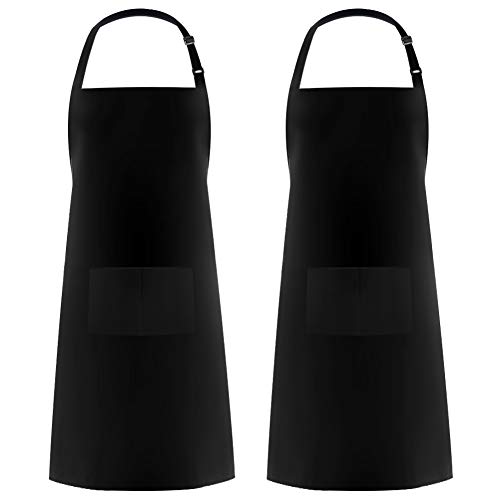
| Product | Passionate Penny Pincher | AMOUR INFINI | ZOMAO Canvas | Caraway | Syntus 2-Pack |
| Organic Integrity Score | 88/ 100 | 85/ 100 | 82/ 100 | 80/ 100 | 77/ 100 |
| Our rating | 4.4 | 4.3 | 4.1 | 4.0 | 3.9 |
| Best for | Best overall | Dye type named | Heaviest canvas, most specs | Matching a cookware set | Cheapest per apron |
| Organic claimed | Yes, no certifier | No claim made | Yes, no certifier | Yes, no certifier | No claim made |
| Fabric weight | Not stated | Cotton canvas | 12 oz canvas, stated | Not stated | Not stated |
| Dimensions | 44 in ties stated | 27.5 x 33 in | 31.5 x 26.7 in, 61 in straps | Not stated | Not stated |
| Finish / dye disclosed | Pre-washed | Neo pigment dyes, named | Water repellent, chemistry not named | Not stated | Not stated |
| Price | $39.00 View on Amazon |
View on Amazon | $8.99 $9.99 −10% View on Amazon |
$65.00 View on Amazon |
$13.99$7.00 / count View on Amazon |
Scores are ours, based on independent research of fiber and finish disclosure, construction, published specifications and value, using the same ten-criteria method we apply to every product.
The water-repellent apron is the one to ask about
One apron here is sold as a cotton canvas, eco-friendly organic apron that is also water repellent, using what the listing calls water repellent technology. It never says what that technology is.
That combination is worth stopping on, because cotton is not water repellent. Cotton absorbs. If a cotton apron sheds water, a finish has been applied to it, and that finish is a chemical coating sitting on the fabric you are wearing over your food.
Durable water repellent finishes have historically been fluorochemical. That is the family that includes PFAS — the compounds now under active restriction in textiles. France has banned PFAS in consumer clothing from 2026, the EU’s universal restriction proposal covers apparel, and major outdoor brands have spent the last few years replacing fluorinated DWR with silicone and polysiloxane alternatives.
To be completely clear: we are not saying this apron contains PFAS. Fluorine-free water repellents are widely available now, and a manufacturer in 2026 may well be using one. What we are saying is that the listing does not tell you, and that in 2026 it should be able to.
The gap is sharper because of the company the claim keeps. An apron marketed as eco-friendly and organic is aimed precisely at the buyer who would want to know which repellency chemistry it uses. Naming a fluorine-free finish would be a selling point, and its absence is conspicuous.
What a good answer looks like: “PFAS-free” or “fluorine-free DWR”, or naming a silicone-based finish. If you want water resistance without the question, a heavier untreated canvas gets you most of the way — thick cotton sheds a splash by weave density alone before it wets through.
Three organic claims, no certifier
This is the weakest category for certification we have audited, and it is worth setting out plainly.
Three aprons claim organic cotton. None of them names GOTS, the Global Organic Textile Standard, which is the certification that exists for exactly this. None names any other scheme, and none gives a license number.
As we covered in our organic cotton kitchen towel guide, GOTS requires at least 95% certified organic fiber for the organic grade, audits the entire chain from field to finished garment, restricts dyes and finishing chemicals, prohibits formaldehyde and chlorine bleaching, and applies social criteria to the facilities. That is a great deal more than “grown without pesticides”, and a great deal more than an adjective.
An apron is also a garment you wear against your body for hours, over food, and wash constantly. If the finishing chemistry matters anywhere in a kitchen textile, it matters here.
Two aprons make no organic claim at all, and as we have said in every category where this comes up, that is more honest than an unbacked one. One of them goes further and is the only listing on this page to name its dye chemistry — which no organic claimant does.
The practical takeaway: if certified organic cotton is what you want in an apron, none of these five proves it to you. Look for a GOTS license number, which serious organic textile brands print.
What each claim on an apron listing covers
| Claim | Covers | Key exclusion |
| GOTS certified | 95%+ organic fiber, audited chain, restricted dyes and finishes | The standard that exists; no apron here carries it |
| 100% organic cotton | The seller’s description of the fiber | No certifier, no threshold, nothing verifiable |
| Water repellent | A chemical finish applied to the fabric | The chemistry is the question, and it is not named |
| Neo pigment dyes | A named dye class used on the print | The only dye disclosure here, from a non-organic claimant |
| Pre-washed | Fabric shrunk and softened before making up | Means it will not shrink on you; one listing states it |
| 12 oz canvas | Fabric weight, which predicts durability and coverage | The most useful physical spec here; one listing gives it |
| Eco-friendly | Nothing defined | References no standard and excludes no substance |
| Biodegradable cotton | Untreated natural fiber breaks down | True of plain cotton; a coated or blended fabric may not |
Best overall: Passionate Penny Pincher Kitchen Apron
| Organic Integrity Score | 88 / 100 |
| Fabric | 100% organic cotton, pre-washed, no certifier named |
| Ties | Extra-long 44 inch, stated |
| Fit | Explicitly suitable as a plus size apron |
| Pockets | Spacious front pockets |
| Best for | The most specific organic claimant, and the one that will fit |
This wins on two details that sound minor and are not.
Pre-washed. Cotton shrinks, and an apron that shrinks becomes an apron that no longer ties comfortably or covers your knees. Pre-washing the fabric before making it up means the shrinkage has already happened, and it also means the apron is soft on the first wear rather than after a month. It is a manufacturing step that costs money, and saying so is a real disclosure.
Forty-four inch ties. This is the specification that quietly ruins most aprons and almost nobody publishes. Standard apron ties are cut for a narrow range of body sizes, and if they do not meet comfortably at the back the apron is unusable no matter how nice the fabric is. This listing states the length and explicitly says it is intended to fit a range of sizes, describing itself as a plus size apron for women. That is genuine inclusivity in a specification rather than in a slogan.
The pockets are described as fitting recipe cards, utensils and towels, which is a sensible account of what people actually put in them.
What holds the score to 88 is the certification gap that caps this entire page. It says 100% organic cotton and names no certifier. It is the most specific of the three organic claimants, and that is not the same as being verified.
What we liked: Pre-washed fabric so it will not shrink, a stated 44-inch tie length, explicit plus-size fit, well-described pockets, and two design options.
Keep in mind: Organic claimed with no certifier. No fabric weight and no apron dimensions. Modest sales history compared with the cheaper options here.
Dye type named: AMOUR INFINI Cotton Apron
| Organic Integrity Score | 85 / 100 |
| Fabric | Pure, natural, biodegradable cotton canvas — no organic claim |
| Dimensions | 27.5 in wide x 33 in long |
| Printing | Neo pigment dyes, named |
| Care | Machine washable in cold water, repeatedly |
| Best for | The only apron here that says anything about its dyes |
The most interesting listing on the page, because of what it chooses to disclose.
It names its dye class. Neo pigment dyes, on soft cotton canvas. No other apron here says anything at all about how the color got onto the fabric — including the three claiming to be organic, where dye and finishing chemistry is precisely what a certification like GOTS would restrict.
That is a small but real piece of transparency, and it comes from the listing that makes no organic claim. Pigment dyes sit on the fiber surface rather than bonding chemically into it, which is why printed pigment designs feel slightly raised and soften with washing.
It also gives exact dimensions — 27.5 inches wide by 33 long — and states that it suits most men and women, which along with the adjustable neck and waist ties tells you whether it will actually fit before you buy.
Describing the cotton as biodegradable is a fair claim on an untreated natural fabric, and notably it is a claim the water-repellent apron could not honestly make.
It scores second rather than first because there is no organic claim to verify and no fabric weight, and because pigment-printed designs fade faster than woven or dyed color over years of hot washing.
What we liked: The only dye disclosure on the page, exact dimensions, adjustable neck and waist, biodegradable untreated cotton, cold-wash care, and no claims it cannot support.
Keep in mind: Not organic and does not claim to be. No fabric weight. Pigment prints fade sooner than dyed fabric with heavy washing.
Heaviest canvas, most specifications: ZOMAO Cross-Back Chef Apron
| Organic Integrity Score | 82 / 100 |
| Fabric | 100% 12 oz cotton canvas; called organic, no certifier |
| Dimensions | 31.5 in long x 26.7 in wide, 61 in straps |
| Design | Cross-back straps, 3 double-stitched pockets |
| Finish | Water repellent — chemistry not named |
| Best for | Long sessions, heavy work, and no neck strain |
On physical specification this is the best-described apron on the page, and if it named its finish it would be competing for the top spot.
Twelve ounce canvas is a real number and the most useful one here. Fabric weight predicts durability, coverage and how well an apron stops a splash of hot oil — and 12 oz is genuinely heavy, closer to workwear than to a decorative kitchen apron. Nobody else states a weight at all.
Cross-back straps are the ergonomic answer to the main complaint about aprons: a single neck loop puts the whole weight of a wet, heavy apron on your cervical spine. Cross-back distributes it across the shoulders, and over a long cooking session the difference is substantial. The 61-inch straps and full dimensions are stated.
Three double-stitched pockets, and the listing is specific that they are for a phone and pens as well as tools.
What costs it is the chemistry. It is described as an eco-friendly organic apron with no certifier, and as water repellent with no statement of what the repellent finish is. As set out above, cotton does not repel water on its own; something has been applied. In 2026, with PFAS restrictions taking effect in textiles and fluorine-free alternatives widely available, a listing that leads on eco-friendliness and applies a repellent finish should say which chemistry it used.
We are not alleging anything about this product. We are recording that the two claims sit together unexplained, and scoring accordingly.
What we liked: A stated 12 oz canvas weight, full dimensions and strap length, cross-back straps that spare your neck, three double-stitched pockets, and genuine work-apron construction.
Keep in mind: “Organic” with no certifier, alongside a water-repellent finish whose chemistry is never named. Heavy canvas takes longer to dry after washing.
Matching a cookware set: Caraway Apron
| Organic Integrity Score | 80 / 100 |
| Fabric | 100% organic cotton, no certifier named |
| Design | Adjustable neck strap, deep front pockets |
| Care | Machine wash and tumble dry |
| Colors | Coordinated with the wider Caraway range |
| Best for | Buyers who already own the cookware |
The most attractive apron here and by a wide margin the most expensive, from a brand built on non-toxic cookware.
The appeal is coherent: soft organic cotton, an adjustable neck strap, deep front pockets, and colorways designed to match the rest of the range. If you own the cookware and want the kitchen to look considered, this is the piece that does it, and it is machine washable and tumble dryable rather than precious.
The specification is where it falls short of its price. There is no certifier behind the organic claim, no fabric weight, no dimensions, and no tie length — the single most useful fit specification, which the apron at half the price does state.
Two of the five bullets are about how good it looks on display and how well it coordinates with other Caraway products. That is a legitimate thing to sell, but it is not information.
Regular readers may recall that Caraway’s oven mitts described themselves as both “100% organic cotton” and an “organic cotton blend” in the same listing. This apron does not contradict itself, which is an improvement — it simply does not substantiate the claim either.
What we liked: Genuinely lovely fabric, an adjustable neck strap, deep pockets, coordinated colors, and easy machine wash and tumble dry care.
Keep in mind: The most expensive apron here with the least specification. No certifier, no dimensions, no tie length, no fabric weight.
Cheapest per apron: Syntus 2-Pack Cotton Bib Apron
| Organic Integrity Score | 77 / 100 |
| Set | 2 aprons |
| Fabric | 100% cotton, no organic claim, compared favorably to polyester |
| Coverage | Chest to knee bib |
| Care | Cold wash, do not bleach, line dry to avoid shrinkage |
| Best for | Two working aprons for the price of one nice one |
The best-selling apron of the five, two in a pack, and the cheapest per apron by a distance.
It makes no organic claim, and on a page where three competitors use the word with nothing behind it, that plainness is worth noting. What it does claim is checkable: 100% cotton rather than the polyester uniform cloth much cheap workwear is made from, which is a real distinction — polyester aprons are hotter to wear and melt rather than char near a flame.
The care instructions are the most precise on the page: machine wash cold or hand wash, do not bleach, line dry to avoid shrinkage, and it can be ironed. That last detail about line drying is genuinely useful and it is the honest counterpart to the pre-washed fabric at the top of this page — this apron will shrink if you tumble it, and the seller says so.
Two aprons is also more practical than one. Aprons get filthy, and having a second means the first can be in the wash without you cooking in a clean shirt.
It scores lowest because beyond the fiber and the care advice there is very little: no dimensions, no fabric weight, no tie length, no dye or finish information, and no organic credential of any kind.
What we liked: Two aprons at the lowest price here, honest 100% cotton with no unbacked claims, a genuine point about cotton versus polyester, full chest-to-knee coverage, and precise care instructions.
Keep in mind: Not organic and does not claim to be. Will shrink if tumble dried. No dimensions, weight or tie length given.
Cross-back or neck loop?
This is the comfort decision and it matters more the longer you cook.
A neck loop is the standard bib apron. It is simple, adjustable on better models, and fine for half an hour of cooking. A wet apron is heavy, though, and all of that weight hangs from the back of your neck. People who cook for hours, or who already have neck or shoulder trouble, feel it.
Cross-back straps pass over both shoulders and cross behind, spreading the load across your back. There is nothing around your neck at all. They are also easier to put on and take off without untying anything, which is why they dominate professional and craft aprons. The trade is that they are less adjustable for very different body sizes, and they can catch on a bra strap.
One apron here is cross-back. If you cook for long stretches, it is worth choosing on that alone.
Fabric weight, and what an apron is actually protecting you from
Apron fabric is usually measured in ounces per square yard, and only one listing here gives a number.
Around 6 to 8 oz is a light domestic apron. Comfortable, quick to dry, fine for baking and general cooking. It will not stop much.
Around 10 to 12 oz is workwear canvas. Heavier, hotter, slower to dry, and genuinely protective — it will stop a splash of hot oil reaching your skin long enough for you to step back, which a thin apron will not.
That is the real function people forget. An apron is not only about keeping your clothes clean; over a frying pan it is a heat barrier. If you deep fry or sear regularly, weight is the specification to buy on, and full-length coverage from chest to knee matters more than pockets.
Our oven mitt guide covers the same trade in more detail: cotton’s insulation collapses when it is compressed or wet, which is why a heavy dry apron protects and a thin damp one does not.
Washing an apron so it lasts
Wash it far more often than feels necessary. An apron collects raw meat juices, egg and grease, then hangs on a hook until tomorrow. It is one of the dirtiest textiles in a kitchen and it is treated as one of the cleanest.
Cold water and line dry unless the fabric was pre-shrunk. Hot washing and tumble drying are what turn a well-fitting cotton apron into a short one, and one listing here says so explicitly.
Treat grease before it sets. A little dish soap worked into an oil spot before washing lifts it; a spot that has been through a hot dryer is permanent.
No fabric softener. It coats cotton fibers and reduces absorbency, which on an apron is the entire point — the same reason we advise against it for kitchen towels.
Do not bleach printed or dyed aprons. One listing states this. Bleach breaks down pigment prints quickly and weakens cotton fibers over repeated use.
How we researched this guide
We read all five listings in full, title and description, and recorded every fiber, dye, finish and construction claim. Because an apron is a garment worn against the body and over food, we scored on whether organic claims carry a named certifier, whether any dye or finishing chemistry is disclosed, and whether a listing claiming water repellency identifies the finish that provides it. We also scored practical specifications that determine fit and protection: fabric weight, dimensions, tie length and strap design. We treated a listing making no organic claim as more honest than one using the word without a certifier. No allegation is made about any product’s chemistry; we record what each listing states and what it does not.
Common questions about kitchen aprons
Is “organic cotton” on an apron certified?
Not unless a certifier is named. GOTS is the standard for organic textiles, requiring at least 95% certified organic fiber and auditing dyes, finishes and the whole supply chain. None of the three organic claimants here names it.
How is a cotton apron water repellent?
A finish has been applied, because cotton absorbs water by nature. The chemistry matters and is rarely stated. Durable water repellents were historically fluorochemical; fluorine-free silicone-based alternatives are now widely used.
Should I avoid water-repellent aprons?
Not necessarily, but look for a listing that names the finish as PFAS-free or fluorine-free. If it does not say, a heavy untreated canvas gives you splash resistance through weave density alone.
What fabric weight should an apron be?
Around 6 to 8 oz for general home cooking, and 10 to 12 oz for genuine protection against hot oil. Only one listing here states a weight, at 12 oz.
Cross-back or neck loop straps?
Cross-back spreads the weight across your shoulders and puts nothing around your neck, which matters over long sessions. Neck loops are simpler and usually more adjustable across body sizes.
Why does my apron no longer fit after washing?
Cotton shrinks in hot water and tumble drying. Buy pre-washed fabric, or wash cold and line dry. One apron here states it is pre-washed and another warns against tumble drying.
How long should apron ties be?
Long enough to tie comfortably at the front or back for your body. Around 44 inches suits a wide range of sizes. It is the specification that most often makes an apron unwearable, and only one listing publishes it.
How often should I wash an apron?
Far more often than most people do. It collects raw meat juices, egg and grease and then hangs up until the next day. Treat it like a kitchen towel, not like an outer garment.
Can I use fabric softener on an apron?
No. It coats the fibers and reduces absorbency, which defeats the purpose. White vinegar in the rinse softens without the coating.
Is cotton better than polyester for an apron?
For kitchen use, yes. Cotton is cooler to wear and chars rather than melting near a flame. Polyester can melt onto skin, which is a genuine reason to avoid it near heat.
Do pigment-dyed prints last?
They sit on the fiber surface rather than bonding into it, so they soften and fade faster than dyed fabric with repeated hot washing. Cold washing extends their life considerably.
Does an apron actually protect against burns?
A heavy dry one buys you a moment against a hot oil splash. A thin or damp one does not, for the same reason a damp oven mitt conducts heat rather than insulating.
- Best Organic Cotton Kitchen Towels
- Best Oven Mitts
- Best Reusable Produce Bags
- Best Box Graters
- Organic Product Database — search all 800+ products we have reviewed