Last updated: September 30, 2026
We may earn a commission when you buy through links on this page, at no extra cost to you. How we research and rate.
The short version
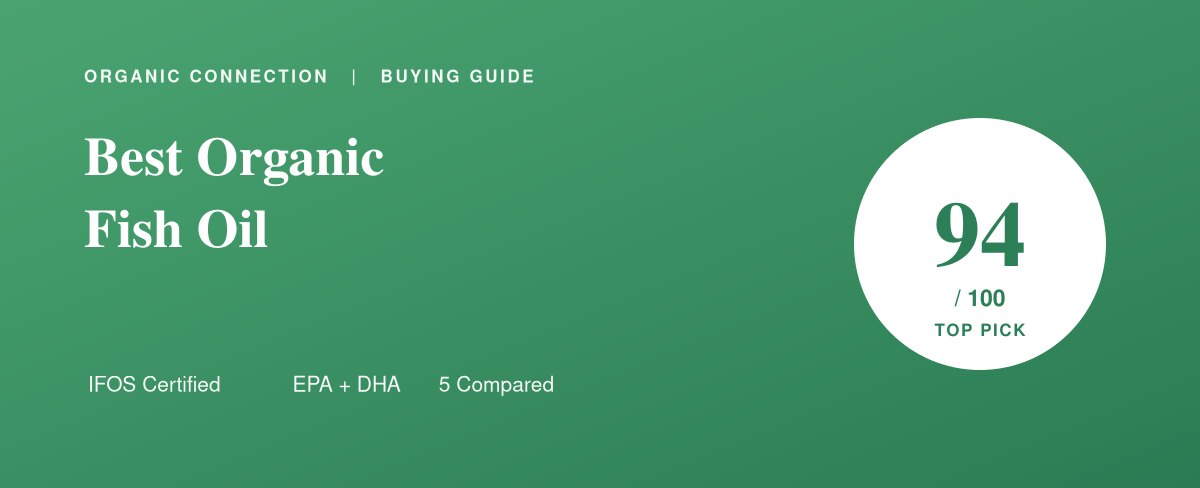
Scoring the listings rather than the labels, our top pick is Rational Nutrition EPAX Norwegian Omega-3, with our highest Organic Integrity Score of 94 out of 100. OmegaVia Ultra Concentrated is the runner-up at 88.
That is not an oversight by five companies. It is the correct behavior, and it is the reason this page is worth reading rather than closing.
Our top pick is Rational Nutrition EPAX Norwegian Omega-3, with an Organic Integrity Score of 94 out of 100 — scored, as always, on what the manufacturer put in writing — because it names a batch-level testing certification, a facility certification, its raw material supplier and its molecular form. Four attributions in two bullets, in a category where most listings offer none.
The other thing worth knowing before you buy anything here: the milligrams on the front of the bottle are usually not the milligrams that matter.
Best fish oil compared
 |  |  |  |  | |
| Product | Rational Nutrition EPAX | OmegaVia Ultra | Thorne Super EPA | MAV Triple Strength | InnovixLabs |
| Organic Integrity Score | 94/ 100 | 88/ 100 | 86/ 100 | 80/ 100 | 74/ 100 |
| Our rating | 4.7 | 4.4 | 4.3 | 4.0 | 3.7 |
| Certification named | IFOS batch, NSF facility | None | Third-party, unnamed | None | None |
| EPA and DHA split | Combined, 1000 mg | Combined, 1135 mg | Not in the bullet | 1300 + 860 mg | Combined, 900 mg |
| Molecular form | rTG, explained | Not stated | Not stated | Not stated | Not stated |
| Sourcing detail | EPAX supplier named | Peru, Chile, Norway | None | None | Norway purification |
| Best for | Buyers who want | Buyers who want | Buyers who want label | Buyers who want | Cheap trial bottle |
| Price | $32.99$0.27 / count View on Amazon | $39.95$0.67 / count View on Amazon | $41.00$0.46 / count View on Amazon | $34.95$0.29 / count View on Amazon | $9.99$0.33 / count View on Amazon |
- Organic Supplements and Wellness hub
- Best Organic MCT Oil
- our organic product database — compare brands across every guide
Price and availability as of October 27, 2026 1:10 am EDT. Product prices and availability are accurate as of the date/time indicated and are subject to change. Any price and availability information displayed on Amazon.com at the time of purchase will apply to the purchase of this product.
The certification map for organic fish oil, and what each one actually excludes
The labels on these products are not interchangeable, and several of them cover things that have nothing to do with each other. Here is what each one actually buys you.
| Certification | Covers | Key exclusion |
| USDA Organic | Farming and handling: no synthetic pesticides or fertilizers, no GMOs, no sewage sludge or irradiation, audited yearly by an accredited certifier | Three different tiers share the one seal, and it makes no claim about worker pay, food miles, or nutrition |
| NSF/ANSI | Independent testing of a water treatment product against one named standard number | The number is the claim: 42 is taste and odor, 53 is health contaminants, 58 is reverse osmosis, 401 is emerging compounds, and 372 is only lead-free materials |
| MSC | Wild-caught fisheries: stock health, ecosystem impact and management | Wild capture only; farmed fish falls under a separate standard |
| NSF Certified for Sport | Batch testing for more than 280 substances banned in sport, plus label accuracy and facility audits | A contamination and label-truth screen, not a claim about efficacy |
Check which NSF standard, and then check which contaminants inside it. Certification is granted claim by claim rather than filter by filter, so a unit certified to NSF/ANSI 53 is certified for the specific contaminants it was tested against, not for everything the standard covers. Manufacturers publish those claims and so do the certifying bodies, and the two should agree. “Tested to NSF standards” in a listing, with no number and no certifier, is not a certification at all.
Why the organic seal cannot reach fish oil
The National Organic Program certifies operations under four scopes, which we set out in full in our guide to the USDA organic database: crops, livestock, handling and wild crops.
Fish fit none of them cleanly.
Wild-caught fish cannot be certified because certification requires control over inputs and management practices, and nobody manages the open ocean. The wild crops scope exists for wild-harvested plants, where a certifier can examine a defined harvest area — as we found with Brazil nuts. There is no equivalent for a migratory fish stock.
Farmed fish would in principle be certifiable, and this is where the story sits. The National Organic Standards Board recommended organic aquaculture standards in 2008. The USDA never finalized them into a rule. So there is no US organic standard for farmed fish either, and no certifier can issue one.
The practical result: a product sold in the United States cannot legitimately carry the USDA Organic seal on the strength of its fish.
You may still see the word organic on a fish oil bottle. When you do, it is generally one of two things — a foreign certification, since some jurisdictions do have organic aquaculture standards, or certification of something other than the fish, such as an organic flavoring or an organic carrier oil.
Neither tells you anything about the fish.
None of the five products we scanned makes the claim, and we want to be explicit that this is a point in their favor. In most categories we spend this section documenting claims that overreach. Here an entire field has declined to make a claim it could have gestured at, and that deserves saying.
What replaces the seal
Fish oil has its own certification landscape, and it is unusually good — better, in several respects, than the organic ecosystem we cover elsewhere on this site.
IFOS — International Fish Oil Standards. The one that matters most. IFOS tests individual production batches for potency, contaminants and oxidation, and publishes the reports. Batch-level testing is a stronger proposition than annual facility certification, because it verifies the bottle rather than the process that made it.
NSF certification. Facility and product programs, including NSF Certified for Sport for banned substances, which we covered in our comparison of organic whey protein.
Friend of the Sea and the Marine Stewardship Council. Fishery sustainability marks. They address whether the stock is being fished responsibly, not what is in the capsule.
One listing here names IFOS and NSF together. One explains what third-party certification verifies without naming the body. Three name nothing at all.
The arithmetic on the front of the bottle
This is the single most useful thing to understand in the category, and it applies to every bottle on every shelf.
Fish oil is a mixture. The omega-3 fatty acids that the research is about — EPA and DHA — are part of it, alongside other fatty acids that are not.
So a capsule containing 1000 mg of fish oil might contain 300 mg of EPA and DHA combined. The bottle can accurately say 1000 mg, and the useful number is 300.
Always read the supplement facts panel for EPA and DHA separately, then add them. That total, multiplied by the number of capsules in a serving, is what you are actually taking.
The listings here handle this variably:
MAV Nutrition gives the full breakdown — 3600 mg oil, over 2100 mg omega-3, and then 1300 mg EPA and 860 mg DHA named individually. That is the complete arithmetic, published.
OmegaVia puts 1135 mg EPA DHA in the product title, which is the combined figure without the split.
Rational Nutrition puts 1000 mg EPA and DHA in the title, again combined.
The other two lead with capsule counts and purification claims rather than with the number.
One practical consequence: a concentrate at a higher price per bottle is frequently cheaper per gram of EPA and DHA than a cheap bottle of unconcentrated oil. Comparing bottle prices in this category without doing the division is close to meaningless.
Triglyceride or ethyl ester, and why one listing mentions it
A distinction almost nobody discloses, and one listing here explains properly.
Omega-3s in whole fish are in triglyceride form. To concentrate the oil — to get from 30 percent EPA and DHA up to 60 or 80 — manufacturers typically convert it to ethyl ester form, which is cheaper and where most concentrated fish oil stops.
Some manufacturers then convert it back, producing re-esterified triglyceride, usually written rTG. That extra step costs money, and there is evidence it is better absorbed than the ethyl ester form.
Rational Nutrition’s listing says exactly this: “We use their re-esterified triglyceride (rTG) form. The same natural form found in whole fish, concentrated for maximum potency. Most mass-market fish oils use cheaper ethyl ester instead.”
That is an accurate description of a real distinction, in a bullet where a competitor would have written “premium quality”. None of the other four listings states its form at all.
Rancidity, and what fishy burps actually tell you
Fish oil is among the most oxidation-prone products you can buy. Long-chain polyunsaturated fats are exactly the molecules that go off fastest, and they begin doing so from the moment the oil is pressed.
Oxidation is measured by peroxide value and anisidine value, often combined into a figure called TOTOX. IFOS tests for these and publishes the results by batch, which is a large part of why batch-level certification matters more here than in most supplement categories.
Now the practical part. Three of the five listings here advertise “no fishy burps.”
Fishy repeat is usually treated as a comfort problem, and it is frequently a freshness signal. Fresh, high-quality fish oil does not taste strongly of fish; rancid oil does. So a product solving the burp problem with an enteric coating — a coating that delays dissolution until the capsule reaches the intestine — is solving the symptom rather than the cause.
OmegaVia is straightforward that this is what it does: “the enteric coating makes the fish oil pills burpless by preventing them from dissolving in your stomach.” That is an honest description of a genuinely useful feature, and it is worth knowing that a coating can also mask an oil you would otherwise notice.
Store fish oil in the fridge, buy a size you will finish, and treat a strong fishy taste as information rather than as an inconvenience.
Mercury, PCBs, and which one is actually in the oil
Two listings mention purification and one names mercury specifically. The distinction is worth getting right.
Mercury binds primarily to protein, so it concentrates in fish muscle rather than in fish fat. Fish oil is generally a low-mercury product for that reason, and mercury is the contaminant consumers ask about most.
PCBs and dioxins are fat-soluble. They concentrate in the fat, which is where fish oil comes from. These are the contaminants that molecular distillation and similar purification steps exist to remove.
So a listing that says “purified to remove mercury” is naming the contaminant buyers worry about rather than the one most relevant to an oil. Neither claim is wrong. A listing naming PCBs, dioxins, or a testing standard that covers them, is telling you more.
The most useful version of this claim is simply an IFOS batch certification, which covers contaminants, potency and oxidation together and publishes the numbers.
What we looked for
We read every feature bullet on every listing in full and scored on what each manufacturer put in writing.
Whether EPA and DHA are broken out rather than folded into a total fish oil figure.
Whether a certification is named, and whether it is batch-level or facility-level.
Whether the molecular form is stated. One listing does.
Whether sourcing names a fishery region and a processing location.
Whether the listing claims organic. None does, and that is correct.
Best overall: Rational Nutrition EPAX Norwegian Omega-3
| Organic Integrity Score | 94 / 100 |
| Certifications named | IFOS batch certification; NSF-certified US facility |
| Molecular form | Re-esterified triglyceride (rTG), explained against ethyl ester |
| Raw material | EPAX, named as the supplier |
| Omega-3 | 1000 mg EPA and DHA per serving |
| Best for | Buyers who want batch-level proof and know what to do with it |
Two bullets containing four separate attributions, which is more than any other supplement listing we have scanned.
IFOS batch certification is the important one. IFOS tests individual production batches for potency, contaminants and oxidation, and publishes the results. That is a stronger proposition than an annual facility audit, because it verifies the bottle you are holding rather than the system that produced it. In a product as prone to oxidation as fish oil, batch-level testing is close to the whole ballgame.
NSF-certified USA facility is the second, covering manufacturing conditions. EPAX is the third — naming the ingredient supplier is something we almost never see, and it means the raw material has a traceable origin rather than being a commodity purchase.
The fourth is the form. “We use their re-esterified triglyceride (rTG) form… Most mass-market fish oils use cheaper ethyl ester instead.” That is an accurate account of a real distinction, offered as a comparison rather than as a boast, and it is the only mention of molecular form anywhere on this page.
The listing then does something we have asked for repeatedly: “we publish the proof.” A company that names three certifications and points to the documents is inviting verification rather than trust.
Two deductions. “The gold standard in fish oil ingredients” and “the world’s most trusted” are superlatives that sit awkwardly beside claims this specific. And “Most fish oils on Amazon cannot claim all three” is a comparative about competitors that we cannot check.
The practical caveat is obscurity. Its sales rank is by far the weakest here, which usually means a newer listing. That is not a quality judgment, and it does mean fewer buyers ahead of you and less inventory turnover on a product where freshness matters.
- IFOS batch certification, which verifies the batch rather than the process.
- NSF-certified manufacturing facility, named.
- Names EPAX as its raw material supplier.
- Only listing to state and explain its molecular form.
- Says it publishes the supporting documents.
- “Gold standard” and “world’s most trusted” are unsupported superlatives.
- Comparative claim about other Amazon sellers is unverifiable.
- Weakest sales rank here by a wide margin.
- EPA and DHA given combined rather than split.
What the listing discloses: No organic certification appears anywhere on the Rational Nutrition listing.
Best sourcing detail: OmegaVia Ultra Concentrated
| Organic Integrity Score | 88 / 100 |
| Sourcing | Small wild fish off Peru and Chile, purified in Norway |
| Purification | Patented heat-free CO2 chromatography |
| Omega-3 | 1135 mg EPA and DHA, in the title |
| Delivery | Enteric coated, mechanism explained |
| Best for | Buyers who want to know where the fish came from and how it was cleaned |
The most specific supply chain description in the comparison, and the only listing that explains a mechanism rather than asserting a benefit.
The sourcing bullet names three places: small wild fish caught off the coasts of Peru and Chile, purified in Norway. Naming the fishery region and the processing country separately is more than any competitor here manages, and “small fish” is a substantive detail — smaller, shorter-lived species accumulate fewer contaminants than large predatory fish.
The purification method is named too: a patented heat-free CO2 chromatography process. Heat is what damages omega-3s, so a purification step that avoids it is a relevant claim rather than a decorative one.
The enteric coating explanation is a model of how to write a feature bullet: “the enteric coating makes the fish oil pills burpless by preventing them from dissolving in your stomach, instead, the omega 3 oil gradually dissolves in the intestines.” That is the mechanism, plainly stated, so a reader can judge it. As discussed above, it is worth knowing this addresses the symptom rather than freshness itself.
The omega-3 figure is in the title — 1135 mg EPA DHA — as a combined number without the split.
Deductions are for what is absent and one phrase. No certification is named at all — no IFOS, no NSF, no sustainability mark — which in a category with such a good certification ecosystem is a real gap. No contaminant figures are given despite the purification detail. And “pristine waters” is the one piece of atmosphere in an otherwise concrete listing.
- Names the fishery region and the processing country separately.
- “Small fish” is a substantive contaminant-relevant detail.
- Names its purification technology, and notes it is heat-free.
- Explains the enteric coating mechanism rather than asserting a benefit.
- Omega-3 figure in the title.
- No certification named of any kind.
- No contaminant or oxidation figures despite detailed purification claims.
- EPA and DHA combined rather than split.
- “Pristine waters” is filler in an otherwise specific listing.
What the listing discloses: No organic certification appears anywhere on the OmegaVia listing.
Explains its certification: Thorne Super EPA
| Organic Integrity Score | 86 / 100 |
| Certification | Not stated on the listing |
| What it verifies | Label accuracy, and absence of unsafe contaminant levels |
| Count | 90 softgels |
| Best for | Buyers who want label verification from a clinically oriented brand |
One bullet, and it does the thing this brand does better than anyone: it explains what a certification actually verifies.
“Third-Party Certified: This product has been third-party tested and certified to verify what’s in the package matches what’s on the label and to confirm it contains no unsafe levels of contaminants.”
Two claims in one sentence, and both are the right ones. Label accuracy matters because supplement labels are not routinely verified by anyone, and a certification confirming the capsule contains what the panel says is doing basic and underrated work. Contaminant levels matter for the reasons set out above.
It is the same construction we praised in this brand’s whey protein listing, where it explained what NSF Certified for Sport screens and put a number on it.
Which makes the omission here more noticeable. The certifying body is not named. In its whey listing this company names NSF Certified for Sport specifically; here it says third-party and stops. A reader who has learned from our other comparisons to look for the certifier’s name will not find one.
The rest of the listing is thin. No sourcing, no fishery, no molecular form, no oxidation claim, and the EPA and DHA figures are in the product name rather than in a bullet where they could be broken out.
It is also the most expensive product on this page, from a brand that generally justifies its pricing on manufacturing standards rather than on marketing.
- Explains what its third-party certification actually verifies.
- Names label accuracy, which few supplement listings mention.
- Addresses contaminants explicitly.
- Strong sales rank from a clinically oriented brand.
- Does not name the certifying body, unlike this brand’s other listings.
- A single feature bullet.
- No sourcing, form or oxidation information.
- Most expensive product in the comparison.
What the listing discloses: THORNE carries no organic claim, certified or otherwise.
Best selling, full arithmetic: MAV Nutrition Triple Strength
| Organic Integrity Score | 80 / 100 |
| Per serving | 3600 mg fish oil, over 2100 mg omega-3, 1300 mg EPA, 860 mg DHA |
| Concentration | Roughly 60 percent EPA and DHA by weight of oil |
| Certification | Non-GMO |
| Sales rank | Best selling fish oil in our search results |
| Best for | Buyers who want the numbers published and will forgo certification |
The best selling product in our search results, and the only one that publishes the complete arithmetic.
“1300 mg of EPA and 860 mg of DHA” per serving, alongside 3600 mg of fish oil and over 2100 mg of omega-3 in the title. Every number a buyer needs, in the order they need them, with EPA and DHA broken out separately rather than folded together.
Do the division and it tells you something the label does not spell out: around 60 percent of the oil is EPA and DHA, which makes this a genuine concentrate rather than ordinary fish oil in a bigger capsule. That is a meaningful distinction at this price.
It is also, on the numbers alone, likely the best value per gram of omega-3 on this page — which is exactly the calculation the category makes hard and which this listing makes easy.
What it does not have is any of the surrounding assurance. No certification of any kind — no IFOS, no NSF, no third-party testing claim. No sourcing, no fishery, no processing location. No molecular form, and at 60 percent concentration the ethyl ester question is live. No oxidation or contaminant claim.
So it is a listing that answers “how much?” completely and “how good?” not at all. The asterisk after the claim points to the standard dietary supplement disclaimer.
The single bullet is thin for a category leader, and the strong sales rank suggests a lot of buyers are content with the numbers alone.
- The only listing to split EPA and DHA into separate figures.
- Genuine concentrate at roughly 60 percent EPA and DHA.
- Likely the best value per gram of omega-3 here.
- Best selling product in our search results.
- No certification, testing or purification claim of any kind.
- No sourcing or fishery information.
- Molecular form unstated on a concentrated oil.
- A single feature bullet.
What the listing discloses: No organic certification appears anywhere on the MAV NUTRITION listing.
Cheapest, names its contaminant: InnovixLabs Triple Strength
| Organic Integrity Score | 74 / 100 |
| Purification | Each batch purified in Norway; mercury named |
| Free from | Dairy, eggs, shellfish, nuts, gluten, soy, sugar, GMOs, artificial flavors and colors |
| Omega-3 | 900 mg EPA and DHA, combined |
| Count | 30 softgels, the smallest here |
| Best for | A cheap trial bottle, or buyers with multiple allergen concerns |
The cheapest product on this page, with the longest exclusion list and one purification claim worth reading closely.
“Each EPA DHA Omega 3 supplement batch undergoes purification in Norway to remove mercury.” Two things are good about that: it says each batch, which implies a per-batch process rather than a one-time certification, and it names the country.
The contaminant it names is mercury. As set out above, mercury binds mainly to protein and concentrates in fish muscle, so it is less of an issue in an oil than the fat-soluble contaminants — PCBs and dioxins — that purification is really there to remove. Naming mercury names the contaminant buyers ask about. It is not the one an oil is most likely to carry.
The allergen list is genuinely thorough and enumerated rather than summarized: dairy, eggs, shellfish, nuts, gluten, soy, sugar, GMOs, artificial flavors and colors. Shellfish in particular is worth naming on a marine product.
“UltraPurified” is a coined brand term rather than a standard, and it sits where a certification name would go.
The practical caution is the count. At 30 softgels this is by far the smallest bottle here, so the low sticker price is not the bargain it appears — check price per serving and per gram of omega-3 before comparing it to a 90 or 240 count bottle. As a first bottle to see whether you tolerate fish oil, it is a sensible size.
No certification named, no molecular form, no fishery, and no oxidation claim.
- Says each batch is purified, not just the product line.
- Names the purification country.
- Longest and most specific allergen exclusion list here.
- Cheapest sticker price, and a sensible size for a first bottle.
- Names mercury rather than the fat-soluble contaminants more relevant to an oil.
- “UltraPurified” is a coined term, not a standard.
- Only 30 softgels; check price per serving.
- No certification, form or fishery information.
What the listing discloses: The word organic does not appear on the InnovixLabs listing at all.
What we left out and why
Krill oil and algae oil. Both deliver omega-3s by a different route with different arithmetic. Algae oil in particular is the option for vegans and vegetarians, since it skips the fish entirely — algae is where the omega-3 originates in the marine food chain. Different products, different comparison.
Cod liver oil. Contains vitamins A and D in quantities that make dosing a separate question, so it should not be compared against plain fish oil on EPA and DHA alone.
Multiple listings of the same product at different counts, several of which appeared in our search with identical copy.
Products claiming organic certification for their fish. We looked. In the results we scanned, nobody did — which is the correct outcome and the reason this page is written the way it is.
If you are building a supplement routine, our comparisons of organic multivitamins and organic probiotics cover the same certification questions in categories where the organic seal does apply.
Buying and storing fish oil
- Find EPA and DHA separately on the supplement facts panel and add them. That total, times the capsules per serving, is what you are taking. Ignore the headline fish oil figure.
- Divide the bottle price by total grams of EPA and DHA. Concentrates often win despite a higher sticker price.
- Look for a named certification. IFOS is batch level and the strongest signal here; NSF covers facilities and banned substances.
- Check the molecular form if it is stated. rTG is better absorbed than ethyl ester and costs more; most listings say nothing.
- Check the capsule count. Bottles here range from 30 to several hundred, and sticker prices are not comparable.
- Refrigerate after opening. Fish oil oxidizes faster than almost anything else in a supplement cupboard.
- Buy a size you will finish in a couple of months rather than the best price per capsule.
- Bite one capsule occasionally. Fresh fish oil is mild; a sharp, rancid or strongly fishy taste means it has turned.
- Treat persistent fishy repeat as a possible freshness signal rather than an inevitability, unless the product is enteric coated by design.
- Check the expiry date on the bottle before buying, not after.
- EPA and DHA: the two long-chain omega-3s the research is about. ALA, from flax and chia, is a different molecule the body converts inefficiently.
- Triglyceride, ethyl ester and rTG: the molecular forms. Whole fish is triglyceride; concentration usually produces ethyl ester; rTG converts it back.
- TOTOX, peroxide value, anisidine value: measures of oxidation. IFOS publishes them by batch.
- Molecular distillation: the purification step that removes fat-soluble contaminants such as PCBs and dioxins.
- Enteric coating: delays capsule dissolution until the intestine, which prevents fishy repeat.
What the field adds up to
Not one product claims organic, and every one of them is right not to. One names a certification body. One splits EPA and DHA. One states its molecular form. None publishes an oxidation figure, in the supplement category most vulnerable to oxidation.
The rule here is different from anywhere else on this site, and simpler. Stop looking for the organic seal, because it cannot exist. Look for IFOS, do the EPA and DHA arithmetic yourself, and keep the bottle in the fridge.
Questions about organic fish oil
Is there such a thing as USDA organic fish oil?
No. The National Organic Program has no standard for fish. Organic aquaculture standards were recommended by the National Organic Standards Board in 2008 and never finalized into a rule, and wild-caught fish cannot be certified because nobody controls the inputs to an ocean. A bottle using the word organic is generally referring to a foreign certification or to a non-fish ingredient.
Why can wild fish not be certified organic?
Organic certification requires an operation to control and document its inputs and practices. That is possible for a farm, and for a defined wild harvest area under the wild crops scope, but not for a migratory fish stock in open water.
What should I look for instead of an organic seal?
IFOS batch certification is the strongest single signal, because it tests individual production batches for potency, contaminants and oxidation and publishes the results. NSF certification covers facilities and banned substances. Friend of the Sea and the Marine Stewardship Council address fishery sustainability rather than what is in the capsule.
What does “1000 mg fish oil” actually mean?
It describes the total oil, not the omega-3 content. The figures that matter are EPA and DHA, which in unconcentrated fish oil are often around 30 percent of the total. Read them separately on the supplement facts panel and add them together.
What is the difference between rTG and ethyl ester?
Whole fish contains omega-3s in triglyceride form. Concentrating the oil usually converts it to ethyl ester, which is cheaper. Some manufacturers convert it back to re-esterified triglyceride, or rTG, which costs more and is reported to be better absorbed. Only one listing in this comparison states its form.
Do fishy burps mean the oil has gone bad?
Often, yes. Fresh fish oil is mild; rancid oil tastes strongly of fish. Enteric coating prevents the burps by delaying dissolution until the intestine, which is genuinely useful and also masks the taste that would otherwise tell you the oil has oxidized.
Should I worry about mercury in fish oil?
Less than most people expect. Mercury binds mainly to protein and concentrates in fish muscle rather than fat, so oils are generally low in it. The contaminants more relevant to an oil are the fat-soluble ones, PCBs and dioxins, which purification steps such as molecular distillation are designed to remove.
How should fish oil be stored?
In the refrigerator once opened, and in a size you will finish within a couple of months. Long-chain polyunsaturated fats oxidize faster than almost anything else in a supplement cupboard, and a cheap large bottle is a false economy if half of it turns.
Is algae oil a real alternative?
Yes, and it is the option for vegans and vegetarians. Algae is where EPA and DHA originate in the marine food chain; fish accumulate them by eating it. Algae oil skips a step, and it is priced accordingly.
Organic Connection is reader supported. We read every product listing in full and say plainly when a claim cannot be verified. Nothing on this page is medical advice; talk to your doctor before starting a supplement, particularly if you take anticoagulants. How we research and rate.