Last updated: September 30, 2026
We may earn a commission when you buy through links on this page, at no extra cost to you. How we research and rate.
The short version
On the evidence each listing gives you, our top pick is Earth's Daughter. Its listing names USDA Certified Organic and USDA Organic, which earned it our highest Organic Integrity Score of 94 out of 100. Dr. Bronner's Organic Lip Balm, 6-Pack is our pick for also considered, and Hurraw for vegan.
Every balm below is certified organic or made with certified-organic ingredients, with a short, recognizable ingredient list. The scores show how they compare on our 10 criteria, from our 93-point top pick to the 73-point value option. Confirm the current certification on the label before buying.
Best organic lip balm compared
| Best Choice | Best Value | ||||
 |  | 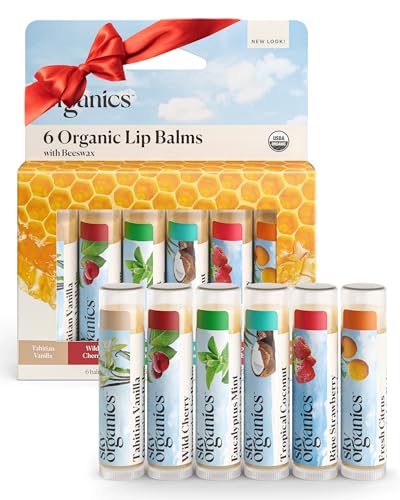 |  |  | |
| Product | Earth’s Daughter | Hurraw | Sky Organics | Dr. Bronner’s | Badger |
| Organic Integrity Score | 94/ 100 | 89/ 100 | 88/ 100 | 87/ 100 | 77/ 100 |
| Our rating | 4.7 | 4.5 | 4.4 | 4.4 | 3.9 |
| Best for | Best overall | Vegan | Value multipack | Multi-use lip, hand | Chapped lips |
| Certification | USDA Organic, Non-GMO | COSMOS, Ecocert, Fair Trade | USDA Organic | Fair Trade, Certified Organic, Leaping Bunny | — |
| Wax | Beeswax, coconut oil | Candelilla (no beeswax) | Beeswax, vitamin E | Organic beeswax | Beeswax, minimal |
| Price | $9.97$11.08 / ounce View on Amazon | $8.45 $9.95 −15% View on Amazon | $14.99$16.66 / ounce View on Amazon | $22.99$25.54 / ounce View on Amazon | $13.99$23.32 / ounce View on Amazon |
Price and availability as of October 15, 2026 7:10 pm EDT. Product prices and availability are accurate as of the date/time indicated and are subject to change. Any price and availability information displayed on Amazon.com at the time of purchase will apply to the purchase of this product.
Scores are ours, based on independent research of certification, ingredient purity, and formulation, using the same 10-criteria method we apply to every product.
What each certification on an organic lip balm label actually covers
Certification names are easy to confuse and easy to trade on. Below is what each of these marks covers, and the part of the picture it says nothing about.
| Certification | Covers | Key exclusion |
| USDA Organic | Farming and handling: no synthetic pesticides or fertilizers, no GMOs, no sewage sludge or irradiation, audited yearly by an accredited certifier | Three different tiers share the one seal, and it makes no claim about worker pay, food miles, or nutrition |
| Leaping Bunny | No animal testing at any stage by the company or its suppliers, with supply-chain audits and annual recommitment | Says nothing about the ingredients themselves, organic content, or whether the product is vegan |
| COSMOS Organic | Cosmetics: organic content thresholds, permitted processes and ingredients, and packaging rules | Its sister grade, COSMOS Natural, carries the same name and requires no minimum organic content at all |
| Soil Association | The UK organic standard across food, textiles and beauty, in several places stricter than the legal minimum | A UK and EU scheme; it is not USDA Organic and the two are not interchangeable on a US label |
COSMOS is two standards with one name, and the weaker one is easy to miss. COSMOS Organic requires at least 95% of the plant ingredients to be organic. COSMOS Natural, printed in the same typeface by the same body, requires no minimum organic content whatsoever: it governs which ingredients and processes are permitted, not how much of the product is organic. If the word after COSMOS is “Natural”, the organic question is still open.
The ingredients worth understanding on the label
| Ingredient | What it does | The actual concern |
| SLS and SLES | Sulfate detergents that create lather | SLS is a known irritant at higher concentrations. SLES is milder but can carry trace 1,4-dioxane from manufacturing, a probable carcinogen |
| Fragrance or parfum | Scent | A single word can legally represent a proprietary blend of up to around 300 undisclosed chemicals, and phthalates often hide here |
| Phthalates | Plasticizer, thickener, scent carrier | Frequently not listed at all, because trade secret protection lets them sit inside “fragrance” |
| Parabens | Preservative against bacteria and mold | Some research associates long-term exposure with hormone disruption; the evidence is contested rather than settled |
| Formaldehyde donors | Preservative, released slowly | Known sensitizer. Look for DMDM hydantoin, quaternium-15, imidazolidinyl urea |
Fragrance is the one to act on first. Of everything above, undisclosed fragrance is both the most common cause of contact dermatitis and the ingredient you can least investigate, since the law does not require the components to be named. If you buy on one rule alone, buy fragrance-free. It removes the largest single source of irritation and it closes the loophole that phthalates travel through.
A note on proportion. None of this means conventional products are dangerous. Exposures are generally low, and the regulatory position on most of these ingredients is that they are permitted at the concentrations used. What is fair to say is that disclosure is weak, the fragrance gap is real, and if you would rather not accept undisclosed ingredients on skin you use daily, a certified product with a short readable list is a reasonable preference rather than a paranoid one.
Key benefits of organic lip balm
Lip balm is a product you swallow small amounts of every day, so what is in it genuinely matters. Choosing a certified-organic balm keeps the ingredient list clean. Here is what that gets you.
1. Clean ingredients you can actually eat
Because you lick and ingest traces of lip balm all day, a short list of organic waxes, plant oils, and butters is far more reassuring than petrolatum, synthetic fragrance, and dyes.
2. No petrolatum or synthetic fragrance
Certified-organic balms skip petroleum-derived ingredients and artificial fragrance, which are common irritants in conventional balms and can leave lips feeling drier over time.
3. Beeswax or vegan wax, your choice
The best organic balms are built on organic beeswax for a protective, long-lasting feel, or candelilla wax for a fully vegan alternative, so you can match your values.
4. Genuinely nourishing, not just coating
Organic plant butters and oils like shea, coconut, and jojoba condition the lips rather than simply sealing them, which is why the best organic balms feel nourishing rather than waxy.
Organic vs conventional lip balm: does it matter?
Many conventional lip balms are built on petrolatum and include synthetic fragrance and dyes, ingredients you would not choose to eat, yet you ingest small amounts of balm throughout the day. Choosing a certified-organic balm avoids those inputs in favor of organic waxes, plant oils, and butters.
The broader case is clear: the EU restricts over 1,300 chemicals in cosmetics versus around 11 for the US FDA, so certification does real work in personal care. Groups like the Environmental Working Group rate lip products for exactly these ingredient concerns. For something you apply to your lips many times a day, a certified-organic balm is a small, sensible upgrade, which is the trade-off we weight in our scoring.
Why “organic” is barely regulated in personal care
This is the structural fact that makes label reading necessary, and it is very different from how food works.
Food organic is legally enforced. Cosmetic organic mostly is not. A food product cannot say “organic” in the US without USDA certification behind it. A shampoo or lotion can carry the word organic on the front while containing a token amount of an organic botanical in an otherwise conventional formula. The USDA seal does exist for cosmetics that qualify, and most products using the word organic in this category are not carrying it. Where a product is genuinely certified, you will see USDA Organic, COSMOS, Soil Association, or NATRUE named explicitly.
MoCRA changed less than the headlines suggested. The Modernization of Cosmetics Regulation Act of 2022 was the first significant update to US cosmetics law in decades. It expanded FDA powers around facility registration, adverse event reporting, and recalls, which is real progress. What it did not do is ban formaldehyde, parabens, or phthalates, or close the fragrance disclosure gap. Much of the substantive ingredient restriction has fallen to individual states, around twenty of which have now passed their own limits.
How to choose an organic lip balm
- Certification. Look for a USDA Organic seal or a clearly stated organic certification, not just “natural” on the front.
- Short ingredient list. A good balm reads like a recipe: organic beeswax or candelilla wax, plant oils and butters, maybe vitamin E. Avoid petrolatum, synthetic fragrance, and dyes.
- Beeswax vs vegan wax. Beeswax balms are protective and long-lasting; candelilla-based balms are the vegan alternative.
- Cruelty-free. A Leaping Bunny mark confirms no animal testing.
- Flavor and additives. Flavor is fine, but skip added synthetic sweeteners or heavy fragrance if you have sensitive lips.
Who should buy organic lip balm
The best balm depends on what you want. If you want a trusted, multi-use certified-organic balm, our top pick fits. If you have very dry, chapped lips, want a vegan option, need a budget multipack, or like a bit of flavor, we have a pick for each.
Best overall: Earth’s Daughter
| Organic Integrity Score | 94 / 100 |
| Certification | USDA Organic, Non-GMO |
| Formula | Beeswax, coconut oil, vitamin E; fruit flavors |
| Best for | Those who like a flavored balm, in a value pack |
Earth’s Daughter is a USDA Organic, non-GMO balm made in a USDA certified organic facility, usually sold as a fruit-flavored multipack with beeswax, coconut oil, and vitamin E. A good pick if you like a bit of flavor and want value.
What puts it first is simply that its listing names USDA Certified Organic and USDA Organic. That is a lower bar than it sounds, and most rivals here do not clear it.
What we liked: USDA Organic, made in a certified organic facility, with flavored multipack value and a clean coconut-and-beeswax formula.
Keep in mind: Flavored balms can tempt lip-licking, which is drying, and it contains beeswax.
What the listing discloses: Earth’s Daughter documents itself unusually well, stating USDA organic certification and an origin of the USA.
Best vegan: Hurraw
| Organic Integrity Score | 89 / 100 |
| Certification | COSMOS, Ecocert, Fair Trade |
| Wax | Candelilla (no beeswax) |
| Best for | Anyone wanting a vegan organic balm |
Hurraw is the vegan pick. It uses certified-organic, raw, plant-based ingredients with no beeswax, relying on candelilla wax instead, so it suits anyone avoiding animal products while still wanting an organic balm. It comes in a wide range of flavors.
It scores in the value range mainly because vegan waxes give a slightly different feel than beeswax and you should confirm the specific certification on the label, but for a fully vegan organic balm it is the clear choice.
What we liked: Certified organic and fully vegan, with a raw, plant-based formula and a wide flavor range. A genuine beeswax-free option.
Keep in mind: Vegan waxes give a slightly different feel than beeswax, and you should confirm the specific certification on the label.
What the listing discloses: Fully documented: HURRAW! states USDA organic certification, Ecocert as the certifying agent, Fair Trade and an origin of the USA.
Best value multipack: Sky Organics
| Organic Integrity Score | 88 / 100 |
| Certification | USDA Organic |
| Formula | Organic beeswax, vitamin E |
| Best for | Keeping a balm everywhere, on a budget |
Sky Organics offers USDA Organic beeswax balms enriched with vitamin E, usually sold as a multipack, which makes it easy to keep one in every bag, car, and desk. Good everyday value from a trusted clean-beauty brand.
It scores in the value range because assortments and flavors vary by pack, and it contains beeswax, but for certified-organic everyday value it is a smart buy.
What we liked: USDA Organic with vitamin E, at genuine multipack value, so you can keep one everywhere. A light, non-waxy everyday feel.
Keep in mind: Flavors and assortments vary by pack, so check what is included, and it contains beeswax.
What the listing discloses: Sky Organics is explicit about a USDA organic claim, and silent on where it was grown or made.
Multi-use lip, hand, and cheek: Dr. Bronner’s Organic Lip Balm, 6-Pack
| Organic Integrity Score | 87 / 100 |
| Certification | Fair Trade, Certified Organic, Leaping Bunny |
| Base | Organic beeswax, jojoba, avocado, hemp oils |
| Best for | Multi-use lip, hand, and cheek balm |
Dr. Bronner’s holds its place on this page because it combines strong certifications with a genuinely clean, simple formula. It is USDA Organic and Leaping Bunny (cruelty-free) certified, built on organic beeswax, jojoba, avocado, and hemp oils, and it works on lips, hands, and cheeks. The brand’s long-standing reputation for ingredient transparency is a real trust signal.
It is more nourishing than glossy, which is exactly what you want in a daily balm, and a little goes a long way. For most people who want one clean, trustworthy balm, this is it.
What we liked: USDA Organic and Leaping Bunny certified, with a clean, recognizable formula and genuine multi-use versatility. The brand’s transparency is a strong trust signal.
Keep in mind: It contains beeswax, so it is not vegan, and the finish is nourishing rather than glossy, which some people expect from a balm.
What the listing discloses: On the Dr. Bronner’s label: USDA organic certification, Fair Trade and a Leaping Bunny mark. Not stated: where it was grown or made.
Best for very dry, chapped lips: Badger
| Organic Integrity Score | 77 / 100 |
| Certification | — |
| Formula | Very short, beeswax-based |
| Best for | Dry, weather-exposed, chapped lips |
Badger makes a USDA Certified Organic balm with a very short ingredient list built around beeswax and organic oils, designed to seal in moisture on dry, weather-exposed lips. It is a great winter and outdoor choice.
What we liked: USDA Certified Organic with a minimal ingredient list and a strong protective feel that suits chronically chapped lips. Great for cold weather and the outdoors.
Keep in mind: The thicker, waxier feel is great for protection but firmer to apply in cold weather, and it contains beeswax.
What the listing discloses: Badger leaves the basics open, including whether the USDA seal applies and where it was grown or made.
How to use organic lip balm
Apply a thin layer whenever lips feel dry, and always before bed and before going out in wind, sun, or cold. For very chapped lips, gently exfoliate first with a damp cloth, then seal with a thicker beeswax balm like Badger. If you are outdoors, choose a balm with sun protection or pair it with an SPF option, and avoid constant lip-licking, which dries lips further.
Why lip balm can make your lips worse
The most common complaint about lip balm is that it seems to create the problem it solves — you apply it, feel relief, and half an hour later need it again. That cycle is real and it has two separate mechanisms.
The first is irritant “medicated” ingredients. Menthol, camphor, phenol, eucalyptus and salicylic acid stimulate nerve endings, which produces the tingle people read as the product working. What they are actually doing is irritating fragile lip skin and interfering with healing. The American Academy of Dermatology specifically recommends avoiding menthol, camphor and fragrance in lip products for this reason, and dermatologists routinely add phenol, eucalyptus and salicylic acid to that list. A balm that tingles is not a stronger balm.
The second is humectants without an occlusive to seal them. Humectants such as glycerin and hyaluronic acid draw water toward the surface. In humid air they pull it from the atmosphere; in cold, dry, indoor-heated air, they pull it from deeper in your own tissue instead, and it then evaporates. A humectant-heavy balm in a dry environment can leave lips drier than before. The fix is not to avoid humectants, but to use them with an occlusive — beeswax, shea, lanolin, a plant butter — that seals the moisture in.
Keep in mind: flavor is the third factor and it is the one nobody admits to. Sweetened, vanilla- or fruit-flavored balms encourage licking, and saliva evaporates fast and carries digestive enzymes that break down the lip barrier. If you apply balm constantly and still have chapped lips, switching to an unflavored product often does more than switching to a more expensive one.
What each ingredient is actually doing
A good balm needs three components: an occlusive to seal, an emollient to soften, and structure to hold it in a tube. Most labels are some combination of these.
| Ingredient | Role | Worth knowing |
| Beeswax | Occlusive + structure | The classic base. Not vegan. Rarely allergenic, but propolis traces can sensitize. |
| Candelilla wax | Occlusive + structure | The main vegan substitute. Harder than beeswax, so balms feel firmer. |
| Carnauba wax | Structure, high melt point | Vegan; used to stop balms softening in a hot pocket |
| Shea butter | Emollient | Rich, softening, well tolerated. Tree nut, though reactions are rare. |
| Coconut oil | Emollient | Absorbs fast, seals poorly on its own. Fine in a blend, weak as the sole base. |
| Castor oil | Emollient + gloss | Gives the shine in glossy balms; very stable |
| Lanolin | Occlusive, exceptionally effective | The best occlusive for severely chapped lips, and one of the more common contact allergens |
| Glycerin | Humectant | Needs an occlusive alongside it — see above |
| Vitamin E (tocopherol) | Antioxidant, extends shelf life | Useful; occasionally sensitizing at high concentration |
| Petrolatum | Occlusive | Genuinely effective and dermatologist-recommended, but petroleum-derived and therefore absent from organic balms |
It is worth being straight about that last row. Plain petrolatum is one of the most effective and least allergenic occlusives available, and it is not permitted in a certified organic product. Organic balms achieve the same job with waxes and butters, which work well — but “organic” here buys you plant-derived sourcing and the absence of synthetics, not superior performance on severely cracked lips.
Sun protection, and why lips deserve it
Lips have little melanin and a much thinner stratum corneum than facial skin, and the lower lip in particular takes direct overhead sun. That combination makes it a genuine site of concern for sun damage and, over decades, for skin cancer — actinic cheilitis on the lower lip is a recognized precancerous condition.
- SPF 30 or higher is the standard recommendation for daytime lip protection.
- Reapply every two hours, and after eating, drinking or wiping your mouth. Lip products come off faster than face sunscreen by a wide margin.
- Mineral filters — zinc oxide and titanium dioxide — are what you will find in organic and natural balms, since chemical UV filters are synthetic. They work, and they can leave a faint white cast.
- Most organic balms carry no SPF at all. That is the honest trade in this category: a certified organic balm is likely to be an unprotected balm. If you spend time outdoors, own an SPF balm for daytime and use the organic one at night.
- Sun exposure is a common cause of persistently chapped lips that no amount of balm resolves, particularly in winter sports and at altitude, where reflected UV is high and people rarely think to protect their mouth.
When balm is not the answer: allergic and other cheilitis
Persistently sore lips that do not respond to any balm are often not simple chapping.
- Allergic contact cheilitis — the balm itself is the cause. The usual culprits are fragrance and flavoring, lanolin, propolis, cinnamates (cinnamon flavoring) and certain preservatives. It presents as ongoing redness, scaling and burning that worsens with more application. Stopping every lip product for two weeks is the practical test.
- Angular cheilitis — cracking specifically at the corners of the mouth, often with a yeast or bacterial component. Balm will not fix it; it needs treatment.
- Lip licking dermatitis — common in children, presenting as a defined ring of irritation extending beyond the lip border.
- Nutritional causes — iron, zinc, B2 and B12 deficiency can all present as sore or cracked lips.
- Medication — isotretinoin is the obvious one, but diuretics, some antihistamines and chemotherapy agents dry lips substantially.
The rule of thumb: if two weeks of a plain, unflavored, unmedicated balm has not improved things, the problem is not which balm you bought, and it is worth seeing a doctor or dermatologist rather than working through the shelf.
You eat lip balm, which changes the calculation
Lip balm is the one cosmetic that is straightforwardly ingested — it sits on a mucous membrane and is licked, eaten and drunk away over the course of a day. Estimates of how much people consume vary widely and none are precise, but the direction is not in dispute.
That is the strongest argument for buying this category organic, and it is a better argument than the one usually made. It is not that organic balm performs better; it is that a product you swallow in small amounts daily is a reasonable place to prefer food-grade plant oils and waxes over synthetic esters, petroleum derivatives, synthetic fragrance and colorants of uncertain provenance. The same logic applies to children, who use more balm and swallow more of it.
Practical checks on the label: a genuinely certified product carries a USDA organic seal or a COSMOS/Ecocert mark, and lists the percentage of organic content. “Made with organic ingredients” and “natural” are unregulated in personal care and mean only what the brand wants them to mean.
Storage and shelf life
- 12–24 months unopened, roughly a year once opened. Organic balms without synthetic preservatives sit at the shorter end.
- Heat is the enemy. A balm left in a car or a hot pocket melts and re-sets grainy, which is a texture change rather than spoilage but is unpleasant. Carnauba wax raises the melt point if this happens to you often.
- Rancidity is real. Plant oils oxidize; a balm that smells sharp, waxy-stale or like old crayons should be discarded. Vitamin E in the formula slows this.
- Replace after illness. Cold sores and other infections transfer readily via a stick or pot, and pots are worse than sticks because fingers go in.
- Keep one balm in a cool place rather than buying multipacks you will use over years — turnover matters more than the printed date.
How we researched this guide
We are a research-based review site. We did not lab-test these balms ourselves. We compared each product against its certification records, ingredient list, and the weight of aggregated buyer and expert feedback, then scored each with our 10-criteria Organic Integrity Score. No brand paid to be included or ranked. Read the full method on our How We Research and Rate page.
Common questions about organic lip balm
What is the best organic lip balm?
Our overall pick is Dr. Bronner’s Organic Lip Balm, 6-Pack, because it is USDA Organic and Leaping Bunny certified, uses organic beeswax and plant oils, and works for lips, hands, and cheeks.
Is organic lip balm better than regular lip balm?
Certified organic balms avoid petrolatum, synthetic fragrance, and dyes, and verify their ingredients through certification. For a product you reapply and ingest traces of all day, that verification is the main advantage.
What is the best organic lip balm for very dry, chapped lips?
A minimal, beeswax-based balm like Badger seals in moisture well, which suits weather-exposed, chronically chapped lips.
Is there a good vegan organic lip balm?
Yes. Hurraw uses certified-organic, plant-based ingredients with candelilla wax instead of beeswax, so it is fully vegan.
What ingredients should an organic lip balm avoid?
Avoid petrolatum or mineral oil, synthetic fragrance, artificial dyes, and undisclosed “flavor.” A clean balm lists organic waxes, plant oils and butters, and vitamin E.
Is lip balm addictive?
Not chemically, but the cycle is real and has two causes. Menthol, camphor, phenol, eucalyptus and salicylic acid create a tingle people read as effectiveness while actually irritating lip skin and impeding healing — the American Academy of Dermatology recommends avoiding menthol, camphor and fragrance for exactly this reason. Separately, humectants such as glycerin without an occlusive to seal them can draw moisture out of your own tissue in dry air, where it evaporates. A balm that tingles is not a stronger balm.
Why do my lips get drier when I use lip balm?
Usually a humectant without an occlusive, an irritant “medicated” ingredient, or flavoring that makes you lick. Saliva evaporates fast and carries digestive enzymes that break down the lip barrier, so sweetened and fruit-flavored balms work against you. Switching to a plain, unflavored balm that pairs a humectant with beeswax, shea or lanolin often does more than switching to a pricier product.
Which lip balm ingredients should you avoid?
Menthol, camphor, phenol, eucalyptus, salicylic acid, and added fragrance or flavor. For anyone with persistent soreness, also watch lanolin, propolis and cinnamates — these are the common causes of allergic contact cheilitis, where the balm itself is the problem and more application makes it worse.
Does lip balm need SPF?
For daytime, yes — SPF 30 or higher. Lips have little melanin and a thin outer layer, and the lower lip takes direct overhead sun, which is why actinic cheilitis is a recognized precancerous condition there. Reapply every two hours and after eating or drinking. Be aware that most certified organic balms carry no SPF at all, since chemical UV filters are synthetic; the mineral alternatives are zinc oxide and titanium dioxide.
Is organic lip balm actually better?
Better sourced rather than better performing. Plain petrolatum is one of the most effective and least allergenic occlusives available and is not permitted in certified organic products, so organic balms do the same job with waxes and butters. The strongest argument is different: lip balm is genuinely ingested throughout the day, which makes it a reasonable place to prefer food-grade plant oils and waxes over synthetic esters, fragrance and colorants — especially for children, who use and swallow more.
What is the vegan alternative to beeswax in lip balm?
Candelilla wax, usually with carnauba for structure. Candelilla is harder than beeswax so vegan balms tend to feel firmer in the tube, and carnauba’s high melt point helps them survive a hot pocket. Both are effective occlusives.
My lips are always chapped and nothing works — why?
If two weeks of a plain, unflavored, unmedicated balm has not helped, the problem is probably not the balm. Allergic contact cheilitis, angular cheilitis at the mouth corners, lip licking dermatitis, iron, zinc, B2 or B12 deficiency, and medications such as isotretinoin all present this way. Sun exposure is another common cause, particularly at altitude. That is a doctor’s question rather than a shopping one.
How long does lip balm last?
12 to 24 months unopened and roughly a year once opened, with preservative-free organic balms at the shorter end. Plant oils oxidize, so discard any balm smelling sharp or waxy-stale. Heat makes balms melt and re-set grainy, which is a texture change rather than spoilage. Replace a balm after a cold sore or infection — pots are worse than sticks, since fingers go in.
- Organic Skincare and Beauty hub
- Best Organic Castor Oil
- all our reviewed products in one place — sortable by Organic Integrity Score
Price and availability as of October 15, 2026 7:10 pm EDT. Product prices and availability are accurate as of the date/time indicated and are subject to change. Any price and availability information displayed on Amazon.com at the time of purchase will apply to the purchase of this product.
Looking for other organic products?
We have checked more than 800 products across food, household goods, gardening, personal care and pet, every one against its stated certification. Browse all reviews.
Organic Connection is reader-supported. When you buy through links on this page we may earn a commission, at no extra cost to you. As an Amazon Associate we earn from qualifying purchases. We are not paid to feature or rank any product. How we research and rate.