Last updated: September 30, 2026
We may earn a commission when you buy through links on this page, at no extra cost to you. How we research and rate.
The short version
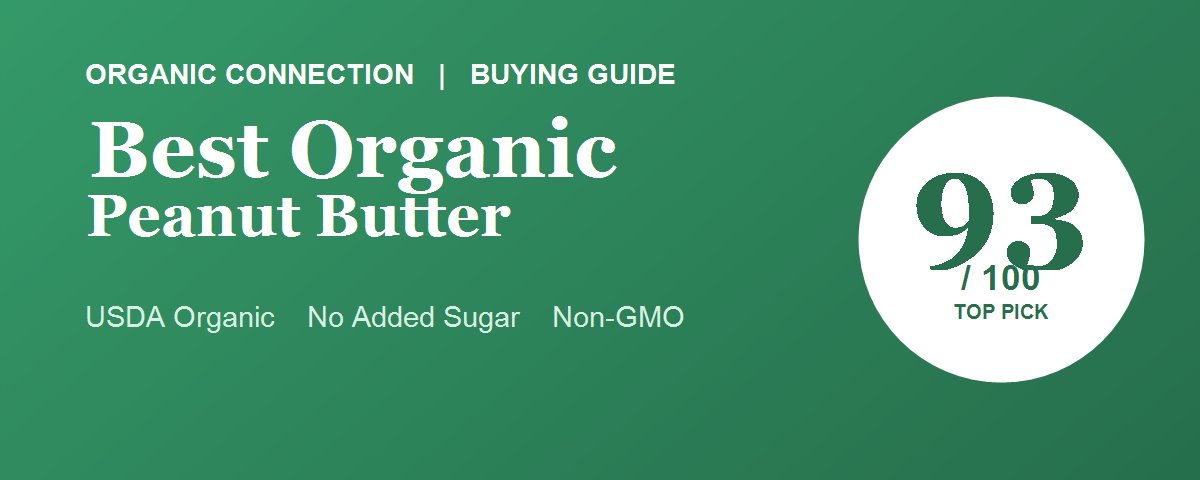
After researching the certifications, ingredient lists, and sourcing of the most popular organic peanut butters, our top pick is MaraNatha Organic Creamy. It is USDA Certified Organic and Non-GMO Project Verified, kosher and gluten free, which is the deepest certification disclosure of any jar here and why it earned our highest Organic Integrity Score of 92 out of 100. For the best value, 365 Organic Creamy is unsweetened and unsalted at the lowest price per ounce, and if you want peanuts and nothing whatsoever else, Spread The Love NAKED is a one-ingredient, palm-oil-free jar.
Every product below is USDA Certified Organic with a short ingredient list. The scores show how they compare on our 10 criteria, from our 93-point top pick to the 73-point everyday option. The best organic peanut butters read simply: organic peanuts, and maybe a little salt.
Best organic peanut butter compared
| Best Choice | Best Value | ||||
 |  |  |  |  | |
| Product | MaraNatha | 365 Organic | Spread The Love NAKED | MaraNatha Crunchy | 365 Crunchy No Stir |
| Organic Integrity Score | 92/ 100 | 84/ 100 | 81/ 100 | 79/ 100 | 76/ 100 |
| Our rating | 4.6 | 4.2 | 4.1 | 4.0 | 3.8 |
| Best for | Best overall | Best value | Single ingredient | Best crunchy | Best no-stir |
| Certification | USDA Organic, Non-GMO Project Verified, Kosher | Organic — certifier not named | USDA Organic, Kosher, Non-GMO | USDA Organic, Non-GMO Project Verified, Kosher | Organic — certifier not named |
| Peanut content | Organic peanuts | 100% USA peanuts, no sugar or salt | One ingredient: organic peanuts | Organic peanuts | Stated as 90% organic peanuts |
| Style | Creamy | Creamy, unsweetened, stir | Creamy, palm-oil free, stir | Crunchy, stir | Crunchy, no-stir |
| Price | $4.92$0.31 / ounce View on Amazon | $4.85$0.30 / ounce View on Amazon | $14.99$0.94 / ounce View on Amazon | $5.49$0.34 / ounce View on Amazon | $4.99$0.31 / ounce View on Amazon |
Price and availability as of October 17, 2026 7:10 pm EDT. Product prices and availability are accurate as of the date/time indicated and are subject to change. Any price and availability information displayed on Amazon.com at the time of purchase will apply to the purchase of this product.
Scores are ours, based on independent research of certification, ingredient simplicity, and sourcing, using the same 10-criteria method we apply to every product.
The certification map for organic peanut butter, and what each one actually excludes
Seals accumulate on a package faster than meaning does. This is what each of the marks you will see here certifies, and what it leaves out.
| Certification | Covers | Key exclusion |
| USDA Organic | Farming and handling: no synthetic pesticides or fertilizers, no GMOs, no sewage sludge or irradiation, audited yearly by an accredited certifier | Three different tiers share the one seal, and it makes no claim about worker pay, food miles, or nutrition |
| Non-GMO Project | Testing and supply-chain traceability showing the ingredients are not genetically engineered | Sets no limit on synthetic pesticides or fertilizers, so it is not an organic claim |
The mark most often mistaken for an organic claim is Non-GMO Project Verified. It is a real standard with real testing, and it verifies exactly one thing: that the ingredients are not genetically engineered. It sets no limit on synthetic pesticides, synthetic fertilizers, or anything else about how the crop was grown. USDA Organic already prohibits GMOs outright, so on a certified organic product the butterfly adds independent verification rather than a new promise. On a product carrying only the butterfly, the pesticide question has not been asked.
Key benefits of organic peanut butter
Peanut butter is a pantry staple, so the ingredients and how the peanuts were grown matter. Choosing USDA Organic means clean peanuts and, in the best options, nothing else. Here is what that gets you.
1. Cleaner peanuts
Peanuts grow underground and can carry pesticide and, in poor storage, mold-related concerns. USDA Organic certification prohibits synthetic pesticides and requires verified handling, so you start from cleaner nuts.
2. A short, honest ingredient list
The best organic peanut butters contain organic peanuts and maybe salt, with no added sugar, hydrogenated or palm oils, or preservatives. That simplicity is the whole point.
3. Non-GMO by default
Organic certification prohibits GMOs, and many organic peanut butters add a Non-GMO Project seal on top for extra verification.
4. Real nutrition, minus the additives
Peanut butter is naturally a good source of protein and healthy fats. A clean organic version delivers that without the added sugars and stabilizers found in many conventional jars.
Organic vs conventional peanut butter: does it matter?
Conventional peanuts can be grown with synthetic pesticides, and many conventional peanut butters add sugar, hydrogenated or palm oils, and preservatives. USDA Organic certification prohibits synthetic pesticides and GMOs, and the best organic jars skip the additives entirely.
Does organic lower pesticide exposure? A 2019 dietary study found switching to all-organic food for six days cut participants’ urinary pesticide levels by 60% to 95%, depending on the compound (study summary, full paper). For a food you might eat several times a week, the cleaner peanuts and simpler ingredient list are the trade-off we weight in our scoring.
Rancidity is the real quality problem, not pesticides
Most guides in this category focus entirely on certification. The thing far more likely to actually affect what you eat is oxidation, and almost nobody checks for it.
Why it happens. Nuts and seeds are high in unsaturated fat, and unsaturated bonds react with oxygen. Once that starts, the fats break down into hydroperoxides which decompose further into volatile compounds, chiefly hexanal, pentanal, and 2,4-decadienal, that produce the sharp, waxy, paint-like or old-crayon smell people recognize as rancid. It is a chemical cascade rather than a spoilage organism, so there is no mold to see and no obvious visual warning.
What it costs you. Beyond taste, oxidation destroys the things you bought the food for. In chia specifically, tocopherol content can fall by up to 91% within six months of poor storage. Rancid nuts and seeds deliver oxidized fats instead of intact ones, which is the opposite of the intended result.
| Factor | Effect on shelf life |
| Whole and unopened, cool and dark | Longest, often a year or more |
| Opened at room temperature | Cut sharply, often to a few months |
| Ground, milled, or chopped | Degrades roughly 3 to 5 times faster, since surface area rises enormously |
| Refrigerated after opening | Substantially extends life |
| Frozen | Best option for anything you will not finish in a couple of months |
| Clear jar in daylight, warm cupboard | Worst case; light and heat both accelerate oxidation |
The test is your nose, every time. Fresh nuts and seeds smell faintly sweet, buttery, or grassy. If it smells sharp, bitter, waxy, or like old paint, it has oxidized and should be thrown out rather than masked in a smoothie. This is more reliable than any date on the packet, because the date does not know how the product was stored between the factory and your kitchen.
Two things commonly claimed that do not hold up
Soaking to remove phytic acid. The popular advice is to soak nuts and seeds to neutralize phytates and “unlock” minerals. Research is unflattering: soaking whole nuts was not effective at reducing phytate concentration at all. Soaking chopped nuts did reduce phytic acid, and it also reduced the mineral content along with it, which rather defeats the purpose. Soaking has legitimate uses, it makes nuts softer and some people find them easier to digest, and the phytate-and-minerals argument for it is weak.
Aflatoxins, in proportion. Aflatoxins are carcinogenic compounds produced by Aspergillus molds, and nuts, peanuts, pistachios, and dried fruit are all susceptible during growing and storage. This is a genuine food safety category with real regulatory limits, and commercial products in developed markets are tested against them. The practical protections are ordinary: buy from suppliers with high turnover, store cool and dry, and discard any nut that tastes bitter or looks shrivelled or discolored rather than eating around it. Organic certification does not address aflatoxin, which is a storage and handling issue rather than a spraying one.
How to choose organic peanut butter
- USDA Certified Organic. Verifies the peanuts were grown without synthetic pesticides or GMOs.
- Short ingredient list. The best options read “organic peanuts” (and maybe salt). Skip added sugars, hydrogenated or palm oils, and preservatives for the cleanest spread.
- Natural vs no-stir. Natural peanut butter separates and needs stirring; no-stir versions usually add palm oil for stability.
- Salt and sugar. Choose salted, unsalted, or no-sugar based on your preference; check the label.
- Non-GMO. A Non-GMO Project seal is a nice extra layer of verification.
Who should buy organic peanut butter
The best jar depends on what you want. If you are a purist who wants peanuts and nothing else, our top pick fits. If you want a smooth, no-stir spread the whole family will eat, or the lowest price per ounce, or a no-salt option, we have a pick for each.
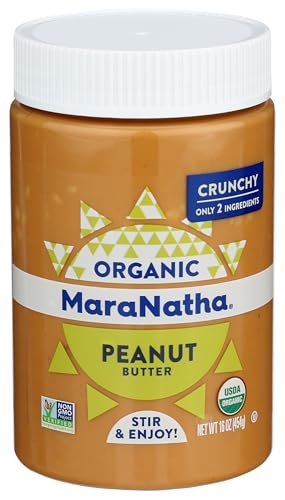
Best overall: MaraNatha Organic
| Organic Integrity Score | 92 / 100 |
| Certification | USDA Organic, Non-GMO Project Verified, Kosher |
| Texture | Smooth, easy-spread |
| Best for | Families wanting a creamy, mild spread |
MaraNatha is the pick if you want a smooth, spreadable organic peanut butter. It is USDA Organic and Non-GMO Project Verified, with a creamy texture and no artificial flavors, colors, or preservatives, which makes it an easy family favorite.
It takes first place on documentation: its listing names Non-GMO Project Verified and USDA Certified Organic, where most of this category asks to be taken on trust.
Check the specific label if you want no additives at all.
What we liked: USDA Organic and Non-GMO Verified, with a creamy, easy-spread texture and a clean label free of artificial additives. A crowd-pleaser for kids and adults.
Keep in mind: Some versions include a little cane sugar and palm oil for stability, so read the label if you want peanuts only. That mild sweetness is a plus for some, a downside for purists.
What the listing discloses: You are told USDA organic certification, Non-GMO Project Verified and kosher certification for MARANATHA; you are not told where it was grown or made.
Best value: 365 Organic
| Organic Integrity Score | 84 / 100 |
| Certification | — |
| Ingredients | Organic peanuts and salt |
| Best for | Simple, certified organic on a budget |
365 Organic is the value pick. It is USDA Certified Organic with just two ingredients, organic peanuts and salt, at one of the lowest prices per ounce for a certified-organic peanut butter. It is proof that clean does not have to be expensive.
It scores in the middle because it is a straightforward natural peanut butter, so expect oil separation and a stir, and it lacks the extra Non-GMO seal or ethical-sourcing story of the top picks. For simple, honest value it is hard to beat.
What we liked: USDA Organic with two-ingredient simplicity at an excellent price per ounce. A genuinely clean, affordable everyday jar.
Keep in mind: It is a natural peanut butter, so it separates and needs stirring. It is a no-frills product without extra certifications or sourcing detail.
What the listing discloses: Little to verify on the 365 by Whole Foods Market listing: no word on whether the USDA seal applies and where it was grown or made.
Best single ingredient: Spread The Love NAKED Organic Peanut Butter
| Organic Integrity Score | 81 / 100 |
| Certification | USDA Organic, Kosher, Non-GMO |
| Ingredients | One: dry-roasted organic peanuts |
| Style | Creamy, natural — stir and refrigerate |
| Best for | Anyone who wants peanuts and literally nothing else |
This is the cleanest jar on the page and it is not close. The ingredient list is one item long — dry-roasted organic peanuts — with no sugar, no salt, no added oil, and the listing states plainly that it is free from palm oil. It is USDA Organic certified, kosher, and non-GMO, and it delivers 8 g of protein and 2 g of carbohydrate per serving.
That palm-oil point deserves emphasis, because it is the trade-off running through this whole category. Peanut butter that does not separate needs a stabilizer, and in practice that stabilizer is palm oil. A jar that promises no stirring is a jar that added something. This one added nothing, which is why it separates and why it belongs in the refrigerator.
It is the most expensive pick here at roughly 94 cents an ounce, around three times our value jar, and it is made in small batches rather than at commodity scale. You are paying for the absence of everything else.
What we liked: A genuinely single-ingredient jar, USDA Organic and kosher, explicitly palm-oil free, with a clean roasted-peanut flavor and a strong protein-to-carb ratio.
Keep in mind: The highest cost per ounce here, and it separates and needs refrigeration because nothing is holding it together.
What the listing discloses: Spread The Love documents USDA organic certification, kosher certification and a single-ingredient formula, and leaves where it was grown or made unsaid.
Best crunchy: MaraNatha Organic Crunchy Peanut Butter
| Organic Integrity Score | 79 / 100 |
| Certification | USDA Organic, Non-GMO Project Verified, Kosher (OU Parve), Gluten Free |
| Style | Crunchy, with real peanut pieces |
| Best for | Crunch, without giving up certification depth |
This is the crunchy version of our top pick, and it carries exactly the same certification stack: USDA Certified Organic, Non-GMO Project Verified, kosher under OU Parve, gluten free, and no artificial flavors, colors or preservatives. On a page where several jars claim “organic” and name no certifier at all, having both the USDA seal and independent Non-GMO Project verification spelled out on the listing is the strongest disclosure available here.
It is also the cheapest way to get that certification depth, at the same price as the creamy jar and a fraction of the single-ingredient pick. If you want crunch and you want the paperwork, this is the answer.
It scores below the picks above it on simplicity rather than integrity: the creamy version is the more versatile everyday jar, and the single-ingredient pick has a shorter label.
What we liked: The same USDA Organic plus Non-GMO Project Verified stack as our top pick, in a crunchy grind, at the same modest price.
Keep in mind: A natural style that separates and wants stirring, and crunchy peanut butter is harder to spread thinly on soft bread.
What the listing discloses: You are told USDA organic certification, Non-GMO Project Verified and kosher certification for MARANATHA; you are not told where it was grown or made.
Best no-stir: 365 Organic Crunchy Peanut Butter
| Organic Integrity Score | 76 / 100 |
| Certification | Organic — no certifier named on the listing |
| Peanut content | Stated as 90% organic peanuts |
| Style | Crunchy, no-stir |
| Best for | People who will not stir a jar, and would rather know the trade |
If oil separation is the reason you have given up on natural peanut butter, this is the practical answer: a no-stir crunchy jar at the lowest price on the page apart from our value pick. It spreads straight from the cupboard and the peanut pieces are real.
It scores last because its own listing tells you why. It is “made with 90% organic peanuts”, and that figure is the most useful thing on the label. The remaining tenth is what stops the oil separating — a stabilizer, which in peanut butter is almost always palm oil, plus salt and sometimes sugar. That is the entire mechanism of no-stir peanut butter, and it is the trade this jar is making on your behalf.
Two further gaps: the listing never names a certifying agent, saying only “organic”, where our top two picks state USDA certification outright and one adds independent Non-GMO Project verification. And a product that is 90% organic peanuts is a different thing from one that is 100% organic peanuts, even though both may legally carry an organic label. None of this makes it a bad jar. It makes it a jar you should buy knowing what the convenience costs.
What we liked: Genuinely no-stir, properly crunchy, cheap, and unusually honest in publishing the 90% figure at all — most no-stir brands do not.
Keep in mind: 10% is not peanuts, the stabilizer is the reason it does not separate, and no certifying body is named on the listing.
What the listing discloses: 365 by Whole Foods Market is thin on detail, and does not say whether the USDA seal applies and where it was grown or made.
How to store organic peanut butter
Natural organic peanut butter separates because it has no stabilizers. Stir it well when you open the jar, then store it upside down for a day to redistribute the oil, and keep it in the refrigerator to stay mixed and fresh. Bring a scoop to room temperature before spreading if it firms up when cold.
Peanut butter and infant allergy prevention
This is the most consequential thing on any peanut butter page, and it almost never appears on one. The guidance on introducing peanut to babies reversed completely in the last decade, and peanut butter is the practical vehicle for the current advice.
The LEAP trial, published in the New England Journal of Medicine in 2015, randomized infants at high risk of peanut allergy to either avoid peanut or consume it regularly. Among 530 participants with negative baseline skin testing, peanut allergy at 60 months was 13.7% in the avoidance group against 1.9% in the consumption group — a relative risk reduction of about 86%. Deliberate early exposure was dramatically protective, and the old advice to delay had been actively harmful.
Following LEAP, the American Academy of Pediatrics endorsed early introduction, and in 2017 the National Institute of Allergy and Infectious Diseases published formal guidelines. In outline:
- Infants at high risk — defined as those with severe eczema, egg allergy, or both — should have peanut introduced between 4 and 6 months, after evaluation where indicated.
- All infants should have peanut introduced early in the first year, and for most, this can be done at home.
- The maintenance target is around 2 g of peanut protein, three times a week — roughly two teaspoons of peanut butter per serving.
Keep in mind: never give an infant whole peanuts or a thick spoonful of peanut butter — both are serious choking hazards. Thin smooth peanut butter with warm water, breast milk or formula to a runny consistency, or stir it into purée. And if your baby has severe eczema or a known egg allergy, speak to your pediatrician before introducing peanut rather than after; the guidelines set out evaluation pathways for exactly that group. This is general information about published guidance, not medical advice for your child.
Practically, this means smooth, unsweetened peanut butter with a short ingredient list is the useful product to have in the cupboard for a household with a baby — not for the organic seal, but because you want peanuts and nothing else going into a four-month-old.
Why “no-stir” peanut butter needs palm oil
Natural peanut butter separates because peanut oil is liquid at room temperature and, without an emulsifier, it rises. That is physics, not a defect.
No-stir peanut butters solve it by adding a fat that is solid at room temperature — historically hydrogenated vegetable oil, and now overwhelmingly palm oil or fully hydrogenated palm oil. It works: the emulsion holds, the texture stays uniform, and nothing separates.
| Natural / separating | No-stir | |
| Typical ingredients | Peanuts, sometimes salt | Peanuts, sugar, palm oil, salt |
| Saturated fat | From peanuts only | Higher — palm oil is around 50% saturated |
| Texture | Looser, oilier, needs stirring | Uniform, spreadable straight from the jar |
| Storage | Refrigerate after opening | Stable in the cupboard |
| Sustainability | No palm question | Palm oil is a major driver of tropical deforestation unless RSPO certified |
Organic certification permits organic palm oil, so an organic no-stir peanut butter is entirely possible — the seal does not tell you whether palm oil is present. Read the ingredient list rather than the front of the jar.
Separation is a quality signal. A jar with oil on top contains peanuts and little else. If you dislike stirring, store the jar upside down between uses so the oil migrates back through, and give it one thorough stir when you first open it rather than fighting it every time.
Reading the label: one, two or five ingredients
| Ingredient list | What it means |
| Peanuts | The cleanest option. Tastes less “peanut buttery” to anyone raised on sweetened versions. |
| Peanuts, salt | The sweet spot for most people. Salt is doing a lot of the flavor work. |
| Peanuts, sugar, palm oil, salt | Standard no-stir. Around 2–3 g sugar per two-tablespoon serving. |
| Anything with molasses, corn syrup or “natural flavor” | A confection with peanuts in it |
| “Reduced fat” | Fat removed and replaced with maltodextrin and sugar. More carbohydrate, less satiety, no benefit. |
- Sodium runs roughly 0–150 mg per two tablespoons depending on salting. No-salt-added versions exist and taste noticeably flat.
- Protein is about 7–8 g per two tablespoons and does not vary meaningfully between brands — it is peanuts.
- “Reduced fat” is the one to actively avoid. Peanut fat is largely monounsaturated and is the reason peanut butter is satiating; removing it and adding starch makes a worse product in every respect.
Storage, separation and rancidity
- Natural peanut butter: refrigerate after opening and use within 3–4 months. Cold slows oxidation and stops further separation; it also makes it hard to spread, so take it out fifteen minutes ahead.
- No-stir peanut butter keeps in the cupboard for 3–6 months after opening, because the added stabilizer and lower free oil slow separation and oxidation.
- Unopened jars keep 6–12 months for natural, up to two years for stabilized.
- Store upside down if you keep natural peanut butter in the cupboard — the oil redistributes rather than pooling in a hard layer at the top.
- Rancidity is the failure mode, and the tell is taste rather than appearance: sharp, bitter, like old paint. Peanut butter rarely grows mold, so trust flavor over looks.
- Never introduce moisture. A wet knife or a crumb-covered one shortens the jar’s life considerably.
- Freezing works for long storage and does not damage texture once it comes back to room temperature.
How we researched this guide
We are a research-based review site. We did not taste-test these products in a lab ourselves. We compared each against its certification records, ingredient list, and the weight of aggregated buyer and expert feedback, then scored each with our 10-criteria Organic Integrity Score. No brand paid to be included or ranked. Read the full method on our How We Research and Rate page.
The nut paradox, and why it holds
Peanut butter is one of the most calorie-dense foods in an ordinary kitchen, at roughly 190 calories in two tablespoons. On arithmetic alone it looks like something to avoid. The evidence says otherwise, and the reason is genuinely interesting.
Large observational studies consistently find that people who eat nuts and nut butters regularly tend to weigh slightly less, not more, than those who do not. That is the opposite of what calorie density predicts, and it has been replicated often enough to need explaining rather than dismissing.
Three mechanisms are proposed and each has support. Nuts are highly satiating, combining protein, fat and fiber, so they displace other food rather than adding to it. A portion of the fat is not fully absorbed, because the intact cell walls of chewed nuts resist digestion, meaning the calories you metabolise are somewhat fewer than the label states. And there is modest evidence for a small increase in energy expenditure after eating them.
The catch is that this applies to nuts, not to everything sold alongside them. The effect is documented for whole nuts and plain nut butters. It has no bearing on peanut butter cups, sweetened spreads, or the varieties with added sugar and palm oil, which is a strong practical argument for the two-ingredient products preferred above.
It also does not survive unlimited portions. The observational studies involve people eating an ounce or two a day, not a jar a week. Eaten from the jar with a spoon in front of the television, peanut butter is exactly as calorie-dense as it looks.
Honest summary: a genuinely useful food that behaves better than its calorie count suggests, provided the ingredient list is peanuts and salt and the serving is measured.
Common questions about organic peanut butter
What is the best organic peanut butter?
Our overall pick is MaraNatha Organic Creamy, which scores highest here at 92, because its listing states both USDA organic certification and independent Non-GMO Project verification, the deepest disclosure on the page. For the best value, 365 Organic Creamy is unsweetened and unsalted at the lowest price per ounce, and for a single-ingredient, palm-oil-free jar, Spread The Love NAKED.
Is organic peanut butter healthier than regular?
Organic certification verifies the peanuts were grown without synthetic pesticides or GMOs, and the best organic options skip added sugars and hydrogenated oils. The ingredient simplicity is the main advantage.
Why does natural organic peanut butter separate?
It has no added stabilizers, so the natural peanut oil rises to the top. Stir it in, then refrigerate to keep it mixed.
What should the ingredient list say?
Ideally just “organic peanuts,” or “organic peanuts and salt.” Avoid added sugar, hydrogenated or palm oils, and preservatives for the cleanest spread.
Should organic peanut butter be refrigerated?
Natural organic peanut butter keeps best in the refrigerator after opening, which also stops the oil from separating again.
When should babies be introduced to peanut butter?
Early — guidance reversed completely after the 2015 LEAP trial. Among 530 high-risk infants with negative baseline testing, peanut allergy at 60 months was 13.7% in the avoidance group against 1.9% in the consumption group, an 86% relative risk reduction. NIAID’s 2017 guidelines recommend introducing peanut between 4 and 6 months for infants at high risk — those with severe eczema, egg allergy or both — and early in the first year for all infants, targeting about 2 g of peanut protein three times weekly. If your baby has severe eczema or known egg allergy, speak to your pediatrician before introducing rather than after. This is general information about published guidance, not medical advice.
How do you safely give peanut butter to a baby?
Thinned, never neat. Whole peanuts and thick spoonfuls of peanut butter are both serious choking hazards. Thin smooth peanut butter with warm water, breast milk or formula to a runny consistency, or stir it into a purée. Roughly two teaspoons of peanut butter supplies the 2 g of peanut protein the guidelines target per serving.
Why does natural peanut butter separate?
Because peanut oil is liquid at room temperature and rises without an emulsifier. It is physics rather than a defect, and it is a quality signal — a jar with oil on top contains peanuts and little else. Store the jar upside down between uses so the oil migrates back through, and give it one thorough stir when you first open it.
What is in no-stir peanut butter?
Usually peanuts, sugar, palm oil and salt. Palm oil — historically hydrogenated vegetable oil — is solid at room temperature and holds the emulsion so nothing separates. It raises saturated fat, since palm oil is around 50% saturated, and carries a deforestation question unless RSPO certified. Organic certification permits organic palm oil, so an organic jar can still contain it; read the ingredient list rather than the front label.
Is reduced-fat peanut butter better?
No — it is the one version worth actively avoiding. The fat removed is largely monounsaturated and is what makes peanut butter satiating, and it is typically replaced with maltodextrin and sugar. You end up with more carbohydrate, less satiety and no nutritional advantage.
How much protein is in peanut butter?
About 7 to 8 g per two tablespoons, and it does not vary meaningfully between brands, because it is peanuts. Sodium ranges from 0 to around 150 mg per serving depending on salting, and no-stir versions typically carry 2 to 3 g of sugar.
Does peanut butter need refrigerating?
Natural peanut butter does once opened — use it within 3 to 4 months, and take it out fifteen minutes before spreading, since cold makes it stiff. No-stir peanut butter keeps in the cupboard for 3 to 6 months after opening, because the added stabilizer slows separation and oxidation. Unopened jars keep 6 to 12 months for natural and up to two years for stabilized.
How can you tell if peanut butter has gone bad?
By taste, not by looks. Peanut butter rarely grows mold; it goes rancid, tasting sharp and bitter like old paint. Avoid introducing moisture — a wet or crumb-covered knife shortens a jar’s life considerably. Freezing works well for long storage and does not damage texture once it returns to room temperature.
- Organic Food and Pantry hub
- Best Organic Honey
- every organic food product we have reviewed — searchable by brand and certification
- Best Organic Tahini
- How to read an ingredient list
Price and availability as of October 17, 2026 7:10 pm EDT. Product prices and availability are accurate as of the date/time indicated and are subject to change. Any price and availability information displayed on Amazon.com at the time of purchase will apply to the purchase of this product.
Looking for other organic products?
We have checked more than 800 products across food, household goods, gardening, personal care and pet, every one against its stated certification. Browse all reviews.
Organic Connection is reader-supported. When you buy through links on this page we may earn a commission, at no extra cost to you. As an Amazon Associate we earn from qualifying purchases. We are not paid to feature or rank any product. How we research and rate.