Last updated: September 30, 2026
We may earn a commission when you buy through links on this page, at no extra cost to you. How we research and rate.
The short version
After researching the certifications, seed sourcing, and grinding of the most popular organic tahinis, our top pick is Soom Foods Organic Tahini. It is USDA certified organic, made from single-origin Ethiopian Humera seeds stone-ground in Israel, and it is a single ingredient with no added oil, which is why it earned our highest Organic Integrity Score of 92 out of 100. For the best value, 365 by Whole Foods Market Organic Tahini is our pick at roughly half the price per ounce, and for raw unroasted sesame, Artisana Organics Raw Tahini is the best choice.
Tahini divides sharply into the kind you want to eat with a spoon and the kind that tastes like chalk and battery acid, and the difference comes down to seed origin and roast rather than price. We flag each product’s certification, seed source, and roast.
Best organic tahini compared
| Best Choice | Best Value | ||||
 |  |  |  |  | |
| Product | Soom Organic 16 oz | Kevala Organic 32 oz | 365 Organic 16 oz | Once Again Organic 16 oz | Artisana Raw 14 oz |
| Organic Integrity Score | 92/ 100 | 89/ 100 | 86/ 100 | 82/ 100 | 79/ 100 |
| Our rating | 4.6 | 4.5 | 4.3 | 4.1 | 4.0 |
| Best for | Best overall | Best big jar | Best value | Glass jar classic | Raw, unroasted |
| Style | Roasted — Humera seed | Roasted, stone-ground | Roasted, hulled | Lightly roasted — glass | Raw, unroasted |
| Certification | USDA Organic, Kosher | USDA Organic, Non-GMO Project Verified, Kosher | USDA Organic, QAI certified | USDA Organic, Non-GMO, Kosher, Gluten-free | USDA Organic, Non-GMO, Kosher, Certified R.A.W. |
| Price | $12.99$0.81 / ounce View on Amazon | $18.47$0.58 / ounce View on Amazon | $7.58$0.47 / ounce View on Amazon | $9.86$0.62 / ounce View on Amazon | $9.47$0.68 / ounce View on Amazon |
Price and availability as of October 11, 2026 7:10 pm EDT. Product prices and availability are accurate as of the date/time indicated and are subject to change. Any price and availability information displayed on Amazon.com at the time of purchase will apply to the purchase of this product.
Scores are ours, based on independent research of certification, ingredient purity, seed origin and hulling, roast quality, packaging, and value, using the same 10-criteria method we apply to every product. See how we research and rate.
What each certification on an organic tahini label actually covers
The labels on these products are not interchangeable, and several of them cover things that have nothing to do with each other. Here is what each one actually buys you.
| Certification | Covers | Key exclusion |
| USDA Organic | Farming and handling: no synthetic pesticides or fertilizers, no GMOs, no sewage sludge or irradiation, audited yearly by an accredited certifier | Three different tiers share the one seal, and it makes no claim about worker pay, food miles, or nutrition |
| GOTS | Organic fiber from farm to finished textile, plus dyeing, finishing, wastewater and labor criteria | Has a weaker second tier, “made with organic”, that needs only 70% organic fiber and carries the same name |
| Kosher | Ingredients and production comply with Jewish dietary law, verified by a rabbinic agency that inspects the facility | A dietary-law standard: it makes no claim about pesticides, GMOs or farming practice |
GOTS has a second tier that shares its name. The organic grade requires at least 95% certified organic fiber; the “made with organic” grade requires 70%, and both are labeled GOTS. It remains the strongest textile standard in the field, because it follows the fiber through dyeing, finishing, wastewater and working conditions rather than stopping at the farm. The percentage is on the label for a reason, and it is worth reading.
Key things to look for in organic tahini
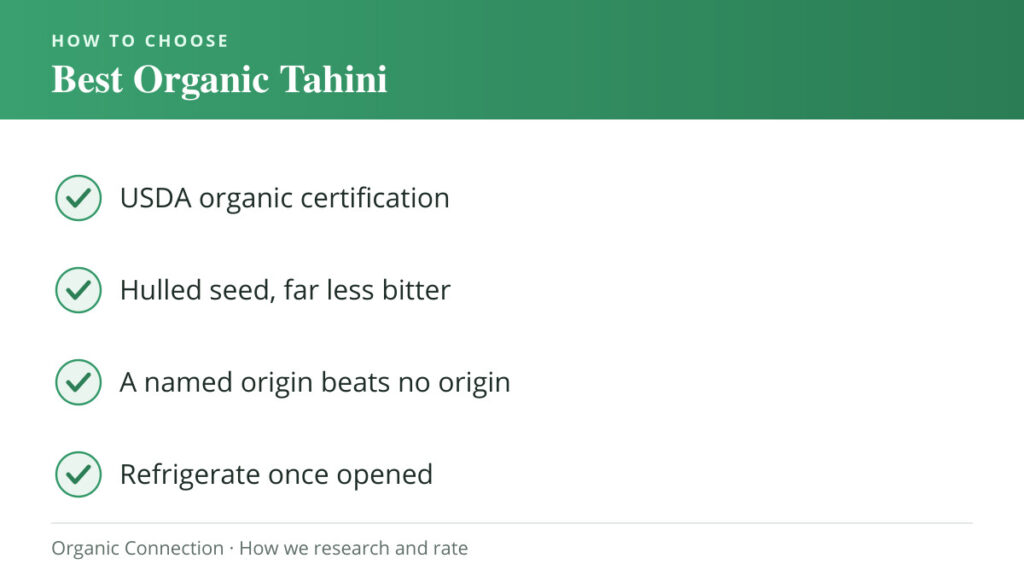
Great tahini comes down to certification, ingredient count, seed origin, and roast. Here is what matters.
1. USDA organic certification
Sesame is grown largely in regions with variable pesticide oversight, and you eat tahini raw. Certification is a useful baseline.
2. One ingredient
Organic sesame seeds. That is it. Added oil is a shortcut to a pourable texture that good grinding achieves on its own.
3. Hulled seed, and a stated origin
Hulled seed is far less bitter. Brands that name the growing region are usually the ones who chose it deliberately.
4. Light color and a pourable texture
Good tahini is pale beige and flows like thick cream. Dark, stiff, or claggy tahini usually means over-roasting or old stock.
Why most tahini tastes bitter, and how to avoid it
Bitterness is the single reason people give up on tahini, and it is almost always avoidable.
The hull. Sesame hulls contain oxalates and are where most of the bitter compounds sit. Hulled tahini, made from seeds that have had the outer layer removed, is dramatically smoother and sweeter. Unhulled tahini is darker, more bitter, higher in calcium and fiber, and genuinely useful in some cooking, but it is not what you want for hummus or a dressing. Most quality tahini is hulled, and the good brands say so.
The roast. Sesame roasted too hot or too long develops an acrid, burnt-toast bitterness. Traditional tahini houses roast low and slow to develop nuttiness without scorching. This is where you taste the difference between a producer who cares and a commodity supplier, and it is not something the label will tell you directly. Color is your best proxy: pale beige is good, dark brown is a warning sign.
Freshness. Tahini is more than half fat, and sesame oil goes rancid. Rancid tahini tastes sharp and bitter in a way that is distinct from roast bitterness, closer to old nuts or paint. A jar that has sat on a warm shelf for a year will taste bad regardless of how good the seed was. Buy from somewhere with turnover, check the date, and refrigerate after opening.
The one thing that is not a fault. Separation. A layer of oil on top means nothing has been added to stabilize it. Stir it in.
What tahini actually gives you nutritionally
Tahini is unusual among nut and seed butters in being genuinely mineral-dense rather than just calorie-dense, and it is worth knowing which minerals, because the hulled and unhulled versions differ.
The strong points. Tahini is an excellent source of copper and manganese, and a good source of calcium, magnesium, iron, phosphorus, zinc, selenium, and thiamin (vitamin B1). It provides useful protein and dietary fiber, and it is high in polyunsaturated fatty acids. For anyone avoiding dairy, sesame is one of the more meaningful plant calcium sources available, which is why tahini turns up so often in dairy-free eating.
Sesamin and sesamolin. These are the lignans that make sesame distinctive. They act as antioxidants, scavenging free radicals, and have been studied for anti-inflammatory activity. They are also part of why sesame oil is unusually stable for a polyunsaturated-rich oil.
| Attribute | Hulled tahini | Unhulled tahini |
| Flavor | Mild, sweeter, smooth | Robust, noticeably more bitter |
| Color | Pale beige | Darker brown |
| Calcium, iron, potassium | Lower | Higher, from the husk |
| Folate, vitamins A and E | Higher | Lower |
| Fiber | Lower | Higher |
| Oxalates | Lower | Higher |
| Best for | Hummus, dressings, desserts | Nutrient density, robust dishes |
The honest trade-off: unhulled is the more nutritious choice on paper, particularly for calcium and iron, and it is also the more bitter one and the reason many people conclude they dislike tahini. Hulled is what almost every Middle Eastern recipe assumes and what makes good hummus. If you want the mineral density, unhulled works better stirred into robust dishes than whisked into a delicate sauce.
How to choose organic tahini
- Confirm USDA organic, and check the list reads sesame seeds and nothing else.
- Buy hulled unless you specifically want the darker, more bitter unhulled style.
- Prefer a named seed origin, especially Ethiopian Humera.
- Look for pale color and a pourable consistency, not stiff dark paste.
- Check the date and refrigerate after opening, since sesame oil goes rancid.
Who should buy organic tahini
The right jar depends on how much you cook with it. If you want the best-tasting tahini for hummus and dressings, our top pick fits. If you want the best price per ounce, a glass-jar classic, raw unroasted sesame, or a small jar to try, we have a pick for each.
Best overall: Soom Foods Organic Tahini, 16 oz
| Organic Integrity Score | 92 / 100 |
| Style | Roasted, hulled — single-origin Humera seed |
| Certification | USDA Organic, Kosher |
| Best for | The best-tasting organic tahini here, neat or cooked |
Soom is our top pick because it solved the origin problem rather than the marketing problem. The company sources single-origin White Humera sesame from northern Ethiopia, the seed that Middle Eastern tahini houses regard as the best available, and has it stone-ground in Israel by a producer who roasts gently. The result is genuinely pourable, pale, and sweet enough to eat off a spoon, with none of the chalky bitterness that makes people avoid tahini. It is USDA organic and a single ingredient, with 6 g of plant protein a serving.
The trade-off is price. At roughly 81 cents an ounce this is the most expensive tahini on the page, and you are paying for sourcing rather than certification, since its certification stack is no deeper than anything else here. It is also sold in plastic rather than glass, which some buyers dislike on a fatty product, though it does make it lighter and harder to break.
What we liked: Single-origin Humera seed, gentle roast, genuinely pourable texture, USDA organic, and a single ingredient.
Keep in mind: The highest cost per ounce here, and plastic rather than glass packaging.
What the listing discloses: Soom commits to kosher certification and a single-ingredient formula but stops short of whether the USDA seal applies and where it was grown or made.
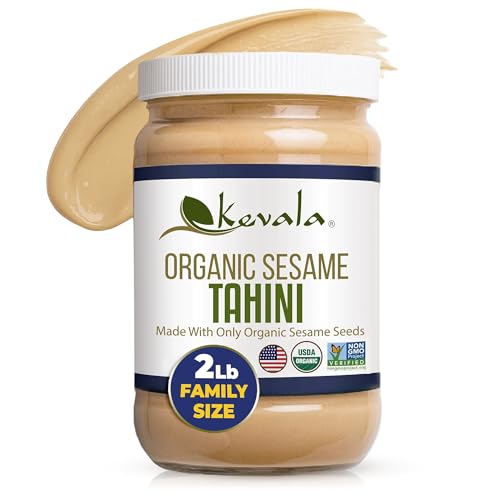
Best big jar: Kevala Organic Sesame Tahini, 32 oz
| Organic Integrity Score | 89 / 100 |
| Style | Roasted, hulled, stone-ground — 32 oz |
| Certification | USDA Organic, Non-GMO Project Verified, Kosher |
| Best for | Households that go through tahini faster than a 16 oz jar |
Kevala is the jar to buy if you make hummus most weeks. Two pounds of stone-ground, lightly roasted, single-ingredient organic tahini works out around 58 cents an ounce, second cheapest here and well under half what the specialist brands charge, and the texture is smooth enough to whisk straight into a dressing.
It also carries the deepest certification stack on the page: USDA Organic, Non-GMO Project Verified, and kosher. That said, we would rather explain a seal than sell you on it. Non-GMO Project verification does real work on corn, soy, canola and sugar beet, where genetically engineered varieties dominate the commodity supply. There is no genetically engineered sesame in commercial production anywhere, so on tahini that seal is confirming something that was not in question. It is a sign of a company willing to pay for third-party auditing, which is worth knowing, rather than a difference in what is in the jar.
The real trade-off is the format. Tahini separates, and a 32 oz jar means stirring several inches of stiff paste back into its oil each time, which is genuinely awkward. If you use tahini a few times a year, the smaller jars below will be better tahini by the time you reach the bottom.
What we liked: The deepest certification stack here, stone-ground single-ingredient sesame, and the best cost per ounce of any jar this size.
Keep in mind: Two pounds separates and needs real stirring, and the Non-GMO seal adds little on a crop with no GM varieties.
What the listing discloses: On the kevala label: a USDA organic claim, Non-GMO Project Verified, kosher certification and Whole30 approval. Not stated: where it was grown or made.
Best value: 365 by Whole Foods Market Organic Tahini, 16 oz
| Organic Integrity Score | 86 / 100 |
| Style | Roasted, hulled |
| Certification | USDA Organic, QAI certified |
| Best for | The cheapest certified organic tahini on this page |
At roughly 46 cents an ounce this is the cheapest organic tahini here by a wide margin, and it is ground organic sesame seeds and nothing else. For hummus, dressings and sauces, where tahini is one voice among garlic, lemon and salt, it is difficult to justify paying more.
It is also the only listing on this page that names its certifier. Most organic tahini listings say “organic” and stop; 365 names QAI, Quality Assurance International, the USDA-accredited body that certified it. That is a small thing that we weight heavily, because a named accredited certifier is a claim you can actually check, and an unattributed one is not. Its second bullet, “If It’s Organic It’s Non-GMO”, is doing something useful too: rather than buying a second seal, it is pointing out that the USDA organic rule already prohibits genetically engineered ingredients, so a separate non-GMO label is largely redundant. That is correct, and more honest than most packaging manages.
What you give up is provenance and character. There is no stated seed origin, and the flavor is straightforwardly nutty rather than distinctive, so it is not the jar to buy if you want to eat tahini neat. It is an Amazon private label, which some shoppers avoid on principle.
What we liked: By far the lowest cost per ounce, single-ingredient organic sesame, and a named accredited certifier rather than a bare organic claim.
Keep in mind: No stated seed origin, an unremarkable flavor eaten neat, and it is an Amazon private label.
What the listing discloses: 365 by Whole Foods Market is explicit about USDA organic certification and QAI as the certifying agent, and silent on where it was grown or made.
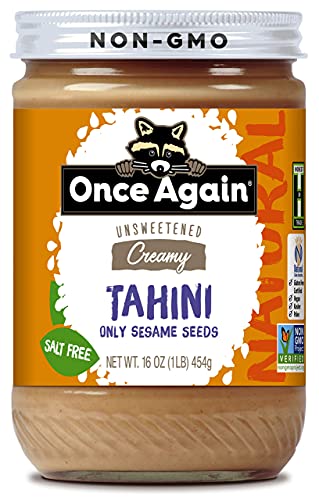
Best glass jar classic: Once Again Organic Tahini, 16 oz
| Organic Integrity Score | 82 / 100 |
| Style | Lightly roasted, hulled — 16 oz glass jar |
| Certification | USDA Organic, Non-GMO, Kosher, Gluten-free |
| Best for | Buyers who want glass rather than plastic |
Once Again is an employee-owned co-operative with a long track record in nut and seed butters and a genuinely good record on fair trade sourcing, which matters more in sesame than most people realize given where it is grown. The tahini is USDA organic, unsweetened, salt-free, and a single ingredient of lightly roasted sesame, packed in a 16 oz glass jar. It is a dependable, honest product from a company whose supply chain practices bear scrutiny.
Glass is the reason to choose it over the cheaper jars. Tahini is roughly half fat by weight, it sits in the cupboard for months, and buyers who would rather not store a high-fat food in plastic for that long have exactly one option on this page. At about 68 cents an ounce it costs more than the 365 jar without tasting materially better, so you are paying for the packaging and the co-operative, which is a perfectly reasonable thing to pay for as long as you know that is the trade.
The texture is thicker than Soom’s, so it needs a bit more whisking to loosen into a dressing, though it thins out perfectly well with water and lemon.
What we liked: USDA organic, salt-free single ingredient in a glass jar, from an employee-owned co-operative with strong sourcing ethics.
Keep in mind: Costs more per ounce than the value pick without tasting better, and it is thicker than the premium brands.
What the listing discloses: Once Again states kosher certification, Certified Gluten-Free and a single-ingredient formula, and does not say whether the USDA seal applies and where it was grown or made.
Best raw: Artisana Organics Raw Tahini, 14 oz
| Organic Integrity Score | 79 / 100 |
| Style | Raw, unroasted — certified R.A.W. |
| Certification | USDA Organic, Non-GMO, Kosher, Certified R.A.W. |
| Best for | Raw desserts, smoothies and halva-style sweets |
This is the outlier in the guide and useful for specific purposes. Artisana grinds unroasted organic sesame in small temperature-controlled batches, which produces a paler, milder, distinctly grassier paste with none of the toasty depth of conventional tahini. In raw desserts, halva-style sweets, and smoothies where you do not want a roasted note dominating, it works better than roasted tahini does. It is a single ingredient, USDA organic, and carries a Certified R.A.W. mark, meaning the paste was never taken above the temperature threshold that certification sets.
The trade-off is that raw tahini is not a substitute for roasted in savory cooking. Hummus made with it tastes flat and slightly green, because the roast is where the nutty depth comes from. Raw sesame paste also has a shorter shelf life than roasted, since roasting drives off moisture, so the 14 oz jar is the right size to buy: keep it in the refrigerator and use it within a couple of months rather than treating it as a pantry staple.
What we liked: Genuinely raw unroasted organic sesame, one ingredient, a verified raw certification, and a realistic 14 oz jar.
Keep in mind: Flat in savory dishes, and a shorter shelf life than roasted tahini.
What the listing discloses: Artisana is explicit about kosher certification and a single-ingredient formula, and silent on whether the USDA seal applies and where it was grown or made.
How to use tahini, and how to stop it seizing
The thing nobody warns you about: when you add a small amount of water or lemon juice to tahini, it does not thin out, it seizes into a stiff, grainy paste that looks ruined. This is normal and reversible. The fat and water are temporarily refusing to combine. Keep adding cold water a tablespoon at a time and whisking, and it will suddenly loosen into a pale, glossy, pourable sauce, much lighter in color than the tahini you started with. Adding ice-cold water works best. This transformation is the basis of almost every tahini sauce there is.
From there, tahini sauce is one part tahini, lemon juice, a crushed garlic clove, salt, and enough cold water to bring it to the consistency you want. That is the sauce for falafel, roasted vegetables, grain bowls, and fish. For hummus, the ratio that matters most is generous tahini: home hummus tastes thin and disappointing mostly because people use a spoonful when the recipe wants a third of a cup. Tahini is also excellent in baking, in halva, in cookies, drizzled over dates, and stirred into porridge.
Store an unopened jar in a cool dark cupboard, where it keeps for many months. Stir the separated oil back in thoroughly when you first open it, then refrigerate. Cold makes it stiffer, so take it out a few minutes before using or thin it with warm water. Refrigerated, an opened jar keeps for several months. Trust your nose: fresh tahini smells sweet and nutty, and rancid tahini smells sharp and paint-like. Sesame is a major allergen and is now one of the top nine allergens required to be labeled in the US.
How we researched this guide
We are a research-based review site. We compared each product against its certification (USDA organic and, where present, kosher and non-GMO), ingredient count and absence of added oils, seed origin and hulling, roast level, packaging material, and the weight of aggregated customer feedback on bitterness and texture, then scored each with our 10-criteria Organic Integrity Score. No brand paid to be included or ranked. Sesame is a major allergen. This page is informational and is not medical advice. Read the full method on our How We Research and Rate page.
Tahini, satiety and the serving nobody measures
Tahini is ground sesame seeds and nothing else, which puts it in the same category as the nut butters: highly calorie-dense, genuinely satiating, and unusually easy to over-serve.
Two tablespoons carry around 180 calories, almost all from fat, alongside roughly six grams of protein and three of fiber. The fat is predominantly unsaturated, and sesame carries a distinctive set of lignans, sesamin and sesamolin, which are being studied for effects on lipids. None of that research concerns body weight, and it would be a stretch to present it as if it did.
What tahini does well is make other food worth eating. A dressing of tahini, lemon and water turns raw vegetables into something people finish, and hummus makes chickpeas into a staple rather than an obligation. Both are cases where a calorie-dense ingredient increases consumption of high-fiber, high-satiety foods, and that trade generally comes out ahead.
The difficulty is that tahini is a liquid at room temperature and pours. A drizzle is easily three tablespoons, and unlike a nut butter you cannot see the portion on a knife. If the total matters, this is a food to spoon rather than pour.
Two smaller notes. Tahini separates, and the oil that rises to the top is a large share of the calories, so a jar stirred properly gives you an accurate spoonful while one taken off the top does not. And unhulled tahini carries more fiber and calcium than hulled, at the cost of a more bitter flavor.
Honest summary: a good ingredient with no weight-specific properties, whose main risk is that it is measured by eye.
Common questions about organic tahini
What is the best organic tahini?
Our overall pick is Soom Foods Organic Tahini, because it is USDA certified organic, made from single-origin Ethiopian Humera sesame that is stone-ground and gently roasted, and it contains sesame seeds and nothing else. For the best value, 365 by Whole Foods Market Organic Tahini is our pick at roughly 46 cents an ounce, and for raw unroasted sesame, Artisana Organics Raw Tahini.
Why is my tahini bitter?
Three usual causes. Unhulled seed, since the hull holds most of the bitter compounds. Over-roasting, which adds an acrid burnt note that no amount of lemon fixes. Or rancidity, since tahini is over half fat and sesame oil goes off. Buy hulled tahini from a brand that roasts gently, check the date, and refrigerate after opening.
Why did my tahini seize when I added water?
That is normal. Tahini stiffens and goes grainy when it first meets liquid, because the fat and water have not yet emulsified. Keep whisking and adding cold water a tablespoon at a time and it will suddenly loosen into a pale, glossy, pourable sauce. Ice-cold water works best.
Should tahini be refrigerated?
Unopened, no; a cool dark cupboard is fine for months. Once opened, refrigeration roughly doubles how long it stays fresh, because sesame oil oxidizes. Stir the separated oil back in thoroughly before you refrigerate, since cold makes stirring much harder, and let it warm slightly before using.
Is hulled or unhulled tahini better?
For most cooking, hulled. It is far smoother and sweeter, because the hull carries most of the bitterness and oxalates. Unhulled tahini is darker, more bitter, and higher in calcium and fiber, which makes it useful in specific dishes and as a nutritional choice, but it is not what you want for hummus or a dressing.
Is tahini a good source of calcium?
Yes, and it is one of the better plant sources, which is why it matters in dairy-free eating. Unhulled tahini carries considerably more calcium than hulled, since most of it sits in the husk. Tahini is also a strong source of copper and manganese and a good source of magnesium, iron, phosphorus, zinc, selenium, and thiamin.
What are sesamin and sesamolin?
They are lignans, the compounds that make sesame nutritionally distinctive. Both act as antioxidants, scavenging free radicals, and have been studied for anti-inflammatory activity. They also contribute to why sesame oil is unusually stable for an oil high in polyunsaturated fat.
How long does tahini last, and does it go off?
Unopened it keeps many months in a cool dark cupboard. Once opened, up to about a month at room temperature in a cool spot, or several months refrigerated, which is the better option since sesame oil oxidizes. It goes rancid rather than moldy, so trust your nose: fresh tahini smells sweet and nutty, rancid tahini smells sharp and paint-like.
Is tahini keto or paleo friendly?
It fits both reasonably well. Tahini is high in fat, low in net carbohydrate, and contains no grains, dairy, or legumes, so it suits paleo and low-carb eating. Check the label though, since some tahini-based products such as halva and sweetened spreads carry significant added sugar. Plain single-ingredient tahini is the one that qualifies.
- Organic Food & Pantry hub
- Best Organic Almond Butter
- Best Organic Olive Oil
- How to Build an Organic Pantry
- every product we have reviewed — filter by USDA Organic, GOTS, Fair Trade and more
Price and availability as of October 11, 2026 7:10 pm EDT. Product prices and availability are accurate as of the date/time indicated and are subject to change. Any price and availability information displayed on Amazon.com at the time of purchase will apply to the purchase of this product.
Looking for other organic products?
We have checked more than 800 products across food, household goods, gardening, personal care and pet, every one against its stated certification. Browse all reviews.
Organic Connection is reader-supported. When you buy through links on this page we may earn a commission, at no extra cost to you. As an Amazon Associate we earn from qualifying purchases. We are not paid to feature or rank any product. This page is informational and is not medical advice. How we research and rate.