
Last updated: September 11, 2026
Some links in this guide point to our product reviews, which may earn us a commission at no extra cost to you. How we research and rate.
Building an organic pantry sounds expensive, but it does not have to be. The secret is to convert the staples you actually use most, buy them in the smartest forms and sizes, and prioritize the items where organic makes the biggest difference. Do that and your everyday cooking quietly becomes cleaner without wrecking your grocery budget. This guide walks through a category-by-category plan for stocking an organic pantry, what to prioritize, where to save, and how to shop so your money goes furthest.
Start with the foundation: grains and flours
Grains are the backbone of most pantries and one of the highest-value places to go organic. The reason is specific: conventional wheat and some other grains are frequently treated with the herbicide glyphosate as a pre-harvest drying agent, and residues can carry into flour, pasta, oats, and bread. USDA organic certification prohibits that practice, so choosing organic grains meaningfully lowers your exposure to a chemical you would otherwise eat several times a week.
Focus your first organic grain purchases on the ones you use most. For everyday cooking, that usually means rice, oatmeal, and pasta; for anyone who bakes, organic bread flour is a smart staple. Grains store well and are often cheaper per serving in larger bags, so buying a bigger size of an organic staple you go through quickly is one of the easiest ways to eat cleaner for less. Ancient grains like einkorn (common in organic pasta) also bring extra protein and, for many people, easier digestibility.
Cooking fats and oils
You cook with fat constantly, so it is another high-frequency staple worth prioritizing. Organic olive oil is the versatile everyday choice for dressings, sautéing, and finishing, while organic coconut oil shines for higher-heat cooking and baking. For high-heat searing and roasting, organic grass-fed ghee is a shelf-stable, lactose-free option with a high smoke point that many households keep alongside their oils. Because a bottle of oil lasts a while and touches so many meals, spending a little more for an organic version is one of the better values in the pantry. Just store oils away from heat and light so they do not go rancid, and buy a size you will finish within a few months.
Coffee, tea, and daily drinks
If you drink coffee or tea every morning, this is one of the most worthwhile categories to convert, and we devote a whole guide to it in organic coffee and tea. The short version: coffee cherries and tea leaves are not washed before processing, and you steep or brew them directly, so residues pass straight into your cup, and you drink it daily. Organic coffee (or instant coffee for convenience), green tea, black tea, and matcha are all easy swaps. If you use a splash of creamer, an organic coffee creamer or oat milk rounds out a genuinely clean cup. These are small daily rituals, so the cumulative impact of going organic is larger than the modest price difference suggests.
Sweeteners and spreads
Sweeteners are used in smaller amounts, but the good organic versions are worth it and often taste better. Organic honey and pure maple syrup are the two workhorses, real, single-ingredient sweeteners that beat refined sugar and pancake-style syrups on flavor and cleanliness. For spreads, organic peanut butter made from just peanuts (and maybe salt) is a pantry staple that avoids the hydrogenated oils and added sugars in many conventional jars. These items last a long time, so a single organic purchase covers many meals.
Condiments and flavor builders
Condiments are where a lot of hidden additives and high-fructose corn syrup live in a conventional pantry, so organic versions can be a genuine upgrade. A good organic barbecue sauce, for example, skips the HFCS and, in the best cases, cuts the added sugar too. Organic apple cider vinegar is a versatile flavor builder and pantry multitasker. And organic dried spices like ginger and turmeric are worth prioritizing because many conventional spices are irradiated or fumigated, a step organic prohibits, and because they concentrate flavor (and any residue) into a small amount. Spices are inexpensive per use and last a long time, so upgrading them is a cheap way to clean up your cooking.
Snacks and baking extras
Once the core staples are handled, you can extend organic into the snacks and baking ingredients you reach for often. Organic nuts, pumpkin seeds, and chia seeds are nutrient-dense staples for snacking, baking, and smoothies. If you keep sweets around, organic candy made with real ingredients is a cleaner option for occasional treats. These are lower priority than daily staples, so convert them as budget allows rather than all at once.
How to build the pantry without overspending
The difference between an organic pantry that breaks the bank and one that quietly saves money is strategy. A few habits do most of the work:
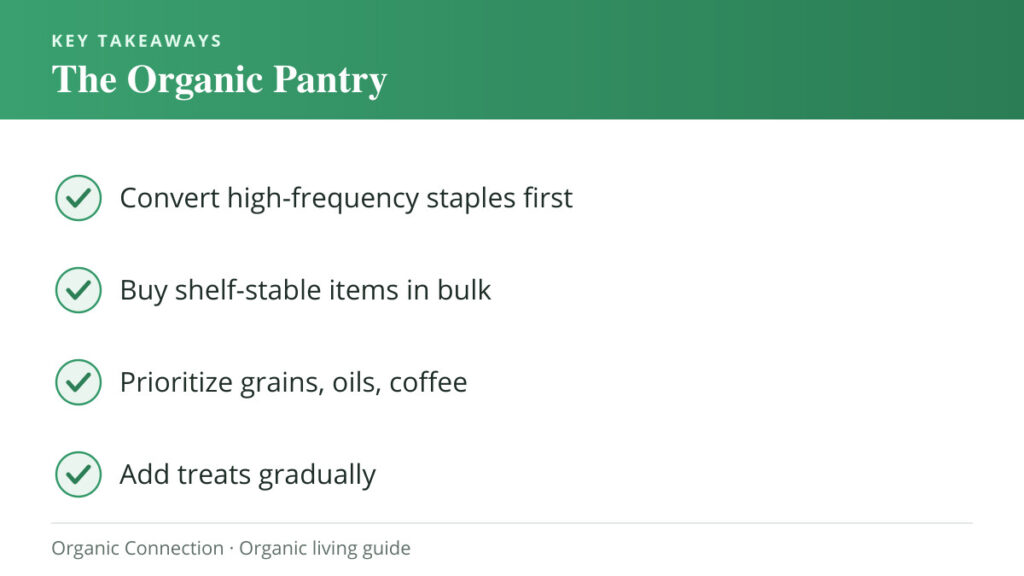
- Convert by frequency, not by aisle. Upgrade the ten or so items you use every week first, grains, oil, coffee, a sweetener, a couple of spices, before worrying about anything you use once a month.
- Buy shelf-stable staples in larger sizes. Rice, oats, flour, pasta, oil, honey, and spices all keep well, and the per-serving cost of a big organic bag or jar is often close to conventional.
- Watch for sales and stock up. Organic pantry staples go on sale like anything else; when a staple you use is discounted, buy several.
- Choose the honest version, not the fanciest. A simple certified-organic product usually beats a pricier one wrapped in marketing. Our reviews flag which products earn their price and which do not.
- Store it right. Airtight containers, away from heat, light, and moisture, keep grains, oils, and spices fresh so nothing goes to waste, which is the most expensive outcome of all.
With this approach, most households can convert the heart of their pantry to organic for a surprisingly small increase in the weekly bill, because the highest-impact swaps are the affordable, long-lasting staples, not the expensive specialty items.
A sample starter list
If you want a concrete place to begin, here is a well-rounded organic pantry foundation, roughly in priority order:
- Grains: organic rice, oats, and pasta; bread flour if you bake.
- Fats: organic olive oil, plus coconut oil or ghee for higher heat.
- Drinks: organic coffee or tea, and a creamer or oat milk if you use one.
- Sweeteners: organic honey and pure maple syrup.
- Spreads: organic peanut butter.
- Flavor: organic apple cider vinegar, a good barbecue sauce, and a few organic spices like ginger and turmeric.
- Snacks and extras: organic nuts, seeds, and chia as budget allows.
Nail those and you have covered the majority of everyday cooking with organic staples. Everything else can be added gradually, on sale, as you replace what you run out of, which is the painless way to make the switch permanent.
Which staples are worth buying organic
An organic pantry is built one high-frequency staple at a time. Prioritize grains, cooking fats, coffee and tea, and a few sweeteners, spreads, and spices, the things you use constantly, and buy them in smart, shelf-stable sizes on sale. Save on the occasional and the rarely used. Done this way, going organic in the kitchen is affordable and durable rather than a budget shock. For help choosing the best product in any category, follow the links above to our detailed reviews, and see how we evaluate every item in our rating method.
Common questions about organic pantry staples
Is an organic pantry expensive to build?
It does not have to be. The key is converting the staples you use most often, grains, oils, coffee, a few condiments, and buying them in larger, shelf-stable sizes on sale. Because these items last and are eaten frequently, upgrading them delivers most of the benefit for a modest increase in your grocery bill.
Which pantry items are most worth buying organic?
Prioritize grains and flours (conventional wheat is often treated with glyphosate before harvest), everyday cooking oils, and coffee or tea, since you consume these most often. Dried spices are also worth it because many conventional spices are irradiated or fumigated and they concentrate flavor and residue into small amounts.
How do I keep organic staples fresh?
Store grains, flours, and spices in airtight containers away from heat, light, and moisture, and keep oils in a cool, dark spot so they do not go rancid. Buy sizes you will finish within a reasonable time. Proper storage prevents waste, which is the most expensive outcome when buying organic.
Are bigger organic bags cheaper?
Usually, yes. Shelf-stable staples like rice, oats, pasta, flour, oil, and honey typically cost less per serving in larger sizes, and the gap with conventional narrows at bulk sizes. If it is something you go through regularly, buying the bigger organic size is one of the easiest ways to save.
Where should I start if I am on a tight budget?
Start with the ten or so items you use every week: rice, oats, pasta, olive oil, coffee or tea, honey or maple syrup, peanut butter, and a couple of spices. Converting those high-frequency staples first captures the majority of the benefit, and you can add everything else gradually as you replace what runs out.
Keep reading
- The Dirty Dozen and Clean Fifteen: Where Buying Organic Matters Most
- Organic Coffee and Tea: A Cleaner Daily Cup
- What “Organic” Really Means: A Guide to Certifications
- How we research and rate products
- our organic food product database — compare brands across every pantry guide
- Organic Food and Pantry hub
- our organic product database — compare brands across every guide
Organic Connection is reader-supported. When you buy through links in our reviews we may earn a commission, at no extra cost to you. As an Amazon Associate we earn from qualifying purchases. We are not paid to feature or rank any product. How we research and rate.