
Last updated: September 12, 2026
Some links in this guide point to our product reviews, which may earn us a commission at no extra cost to you. How we research and rate.
Buying everything organic can get expensive fast, and the truth is you do not need to. Some foods carry far more pesticide residue than others, so if you spend your organic budget strategically, you get most of the benefit for a fraction of the cost. That is the idea behind the Dirty Dozen and Clean Fifteen, two annual lists that rank produce by how much residue it typically carries. This guide explains what the lists are, how to use them, and how to extend the same “prioritize where it matters” thinking to the rest of your kitchen.
What are the Dirty Dozen and Clean Fifteen?
Each year, the Environmental Working Group (EWG), a nonprofit research organization, analyzes US Department of Agriculture and FDA data on pesticide residues found on popular fruits and vegetables. From that analysis they publish two lists. The Dirty Dozen ranks the twelve types of conventional produce found to carry the most pesticide residue. The Clean Fifteen ranks the fifteen types found to carry the least. The tests are done on produce washed and prepared the way people normally eat it, which makes the results practical rather than theoretical.
It is worth being clear about what the lists are and are not. They are a residue-ranking tool to help you prioritize, not a declaration that conventional produce is dangerous. Regulatory agencies consider the residue levels on most conventional produce to be within legal safety limits. The case for choosing organic is about reducing your cumulative exposure to synthetic pesticides over a lifetime, supporting farming that avoids those chemicals, and, for many people, simply preferring food grown without them. The lists just tell you where an organic choice removes the most residue for your money.
The Dirty Dozen: buy these organic if you can
The exact order shifts year to year, but the same produce tends to recur on the Dirty Dozen because of how it is grown and eaten, thin skins, high surface area, and pests that invite heavier spraying. The usual suspects include:
- Strawberries and other berries, which have delicate, edible skins and high surface area.
- Spinach, kale, collard, and mustard greens, leafy vegetables with lots of surface for residue to cling to.
- Grapes, eaten whole with the skin on.
- Peaches, nectarines, apples, pears, and cherries, soft or thin-skinned tree fruit.
- Bell and hot peppers, celery, and tomatoes, which frequently show multiple residues.
These are the items where paying for organic reduces your exposure the most, because you eat the part that holds the residue and cannot peel it away. If your budget only stretches to a handful of organic purchases, this is where to spend it. The same logic extends beyond fresh produce into processed pantry staples made from these crops, which is why we look for the organic seal on things like tomato-based sauces and fruit products.
The Clean Fifteen: conventional is usually fine
The Clean Fifteen is the money-saving half of the equation. These are fruits and vegetables that consistently test low for residue, often because they have thick skins or protective outer layers you remove before eating, or because they are simply less pest-prone. Regulars include:
- Avocados and sweet corn, which top the list almost every year.
- Pineapple, mango, papaya, and kiwi, tropical fruits you peel.
- Onions, asparagus, and cabbage.
- Sweet peas (frozen), eggplant, and mushrooms.
- Watermelon, cantaloupe, and honeydew, thick-rinded melons.
For these, buying organic gives you a much smaller residue reduction, because either the residue is naturally low or you throw away the peel that would hold it. Unless organic versions are similarly priced or you have other reasons to prefer them (supporting organic farming, environmental impact), conventional is a reasonable, budget-friendly choice here. Redirect the money you save toward organic versions of the Dirty Dozen instead.
How to actually use the lists at the store
The lists are most useful as a simple decision rule rather than something to memorize perfectly:
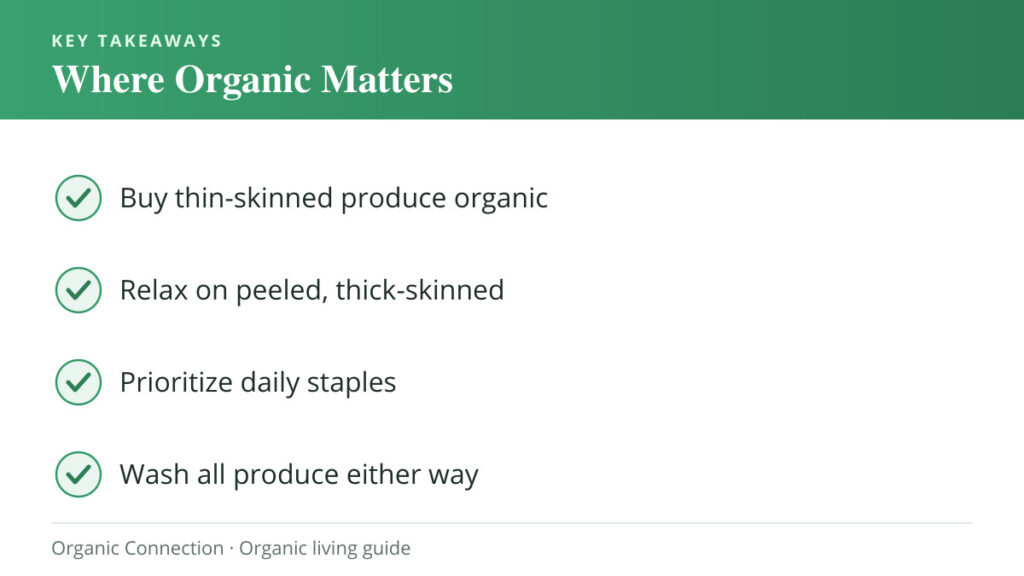
- Prioritize organic for what you eat whole and unpeeled: berries, leafy greens, grapes, apples, peppers, celery.
- Relax on what you peel or that tests clean: avocados, citrus, bananas, onions, melons, corn.
- When organic is on sale or similarly priced, buy it anyway. The lists are about where to spend a limited budget, not a rule against organic elsewhere.
- Wash all produce, organic or not. Rinsing under running water and rubbing firm produce reduces surface residue, dirt, and microbes. It does not remove everything, which is why the organic choice still matters for the Dirty Dozen, but it helps for everything.
Also remember that fresh is not the only form. Frozen organic berries and greens are often cheaper than fresh, just as clean, and available year-round, which makes eating organic versions of the Dirty Dozen far more affordable. Canned and jarred organic tomatoes, beans, and sauces are pantry-friendly ways to keep the same principle going without spoilage pressure.
Beyond produce: extending the “where it matters” mindset
The genius of the Dirty Dozen approach is not the specific list, it is the mindset: spend your organic dollars where they do the most good. You can apply that same thinking across your whole kitchen and home.
Foods you consume in large amounts
Staples you eat daily and in quantity are worth prioritizing, because small per-serving differences add up over time. Grains and their products are a good example: conventional wheat is often treated with glyphosate before harvest, so choosing organic pasta, bread flour, oatmeal, and rice meaningfully reduces cumulative exposure for foods you eat several times a week. The same goes for cooking fats you use constantly, like olive oil, and for coffee and tea, crops that are not washed before drying and that you steep directly, so residues pass into your cup. We cover this specific case in our guide to building a cleaner daily cup.
Foods where the growing method concentrates residue
Some products concentrate whatever was in the crop. Dried spices, oils, and juices are examples: it takes a lot of raw plant material to make a little finished product, so residues can concentrate. That is part of why we look for organic in ginger and other spices (many conventional spices are also irradiated or fumigated), and in juices pressed from Dirty Dozen fruits. Animal products are another category some people prioritize, since fat-soluble compounds can accumulate up the food chain, which is a common reason to choose organic dairy, eggs, and meat.
Things that touch your skin all day
The mindset does not stop at food. Products in prolonged contact with your skin, bedding you sleep on for a third of your life, lotions and deodorants you apply daily, are reasonable places to prioritize cleaner options too. We explore this in our guides to organic skincare and organic cotton and textiles. As with produce, you do not have to convert everything at once; start with the high-contact, high-frequency items and expand from there.
A realistic, budget-friendly organic strategy
Putting it all together, here is how a cost-conscious household can eat and live cleaner without buying everything organic:
- Always organic: the Dirty Dozen produce you eat whole, plus daily staples like grains, cooking oil, and coffee or tea.
- Organic when affordable: dairy, eggs, and other frequently eaten items, and anything on sale.
- Conventional is fine: the Clean Fifteen and thick-skinned or peeled produce.
- Buy smart forms: frozen and jarred organic to cut cost and waste.
- Expand gradually: once food is handled, prioritize high-contact non-food items like bedding and skincare.
This approach captures the large majority of the benefit of an organic lifestyle at a manageable cost, which is exactly the balance most families are looking for. It is also the philosophy behind our reviews: we tell you where the organic choice genuinely matters and where you can relax, so your spending goes where it counts.
How much the Dirty Dozen should change your shopping
The Dirty Dozen and Clean Fifteen turn “should I buy organic?” from an all-or-nothing question into a smart, affordable strategy. Prioritize organic for thin-skinned produce you eat whole and for the staples you consume most, save money on thick-skinned and low-residue items, and extend the same “spend where it matters” logic to spices, oils, and the products that touch your skin every day. For help choosing specific products once you have decided where to prioritize, browse our category reviews and our organic pantry guide.
Common questions about the Dirty Dozen
What is the Dirty Dozen list?
The Dirty Dozen is an annual list, published by the Environmental Working Group, of the twelve conventional fruits and vegetables found to carry the most pesticide residue based on USDA and FDA testing data. It helps shoppers prioritize which produce to buy organic when they cannot buy everything organic.
Do I need to buy everything organic?
No. Buying organic matters most for thin-skinned produce you eat whole, like berries and leafy greens, and for staples you eat in large amounts. For thick-skinned or peeled produce on the Clean Fifteen, like avocados and onions, conventional is usually fine, letting you save money without much added residue.
Does washing produce remove pesticides?
Washing under running water and rubbing firm produce reduces surface residue, dirt, and microbes, but it does not remove all pesticide residue, especially systemic residues absorbed into the plant. That is why buying organic still matters for high-residue Dirty Dozen items, even though you should wash all produce regardless.
Is conventional produce dangerous?
Regulators consider residue levels on most conventional produce to be within legal safety limits, so the lists are about reducing cumulative exposure rather than avoiding immediate danger. Many people choose organic to lower their long-term pesticide exposure and to support farming that avoids synthetic chemicals, which is a personal and reasonable preference.
Are frozen organic fruits and vegetables as good as fresh?
Yes, and often cheaper. Frozen organic produce is typically picked and frozen at peak ripeness, retains its nutrients well, and is available year-round, which makes it an affordable way to eat organic versions of high-residue produce like berries and greens without worrying about spoilage.
Keep reading
- How to Build an Organic Pantry Without Overspending
- Organic vs Natural vs Non-GMO: What Labels Actually Mean
- Organic Coffee and Tea: A Cleaner Daily Cup
- How we research and rate products
- our searchable product database — compare all 800+ picks side by side
Organic Connection is reader-supported. When you buy through links in our reviews we may earn a commission, at no extra cost to you. As an Amazon Associate we earn from qualifying purchases. We are not paid to feature or rank any product. How we research and rate.