Last updated: September 30, 2026
We may earn a commission when you buy through links on this page, at no extra cost to you. How we research and rate.
The short version
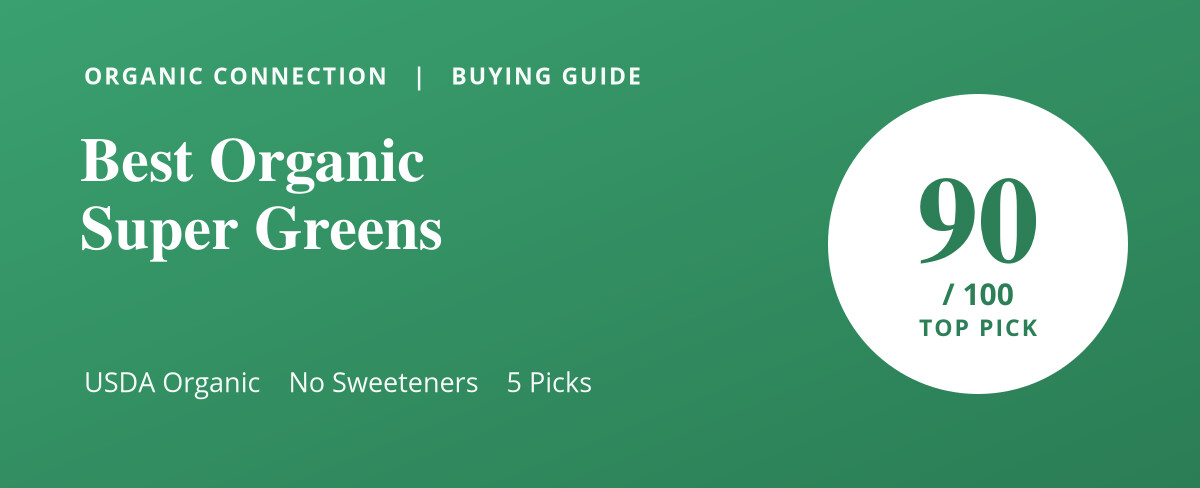
After researching the certifications, ingredient decks, and transparency of the most popular organic super greens powders, our top pick is Garden of Life Raw Organic Perfect Food Greens. It is USDA certified organic and Non-GMO Project Verified, built on juiced grasses and whole-food vegetables rather than a cheap filler base, and the stevia-free original has no added sweeteners, which is why it earned our highest Organic Integrity Score of 90 out of 100. For the best value, Amazing Grass Super Greens, 60 Servings is our pick, and for a smaller first purchase, the Amazing Grass 30-serving tub is the best choice.
Greens powders are one of the least transparent supplement categories, and proprietary blends are the reason. We flag each product’s certification and sweetener status.
Best organic super greens powder compared
| Best Choice | Best Value | ||||
 |  |  |  |  | |
| Product | Garden of Life Perfect Food | Amazing Grass 60 Srv | Nested Naturals | Garden of Life Super Greens | Amazing Grass Booster |
| Organic Integrity Score | 90/ 100 | 86/ 100 | 84/ 100 | 83/ 100 | 74/ 100 |
| Our rating | 4.5 | 4.3 | 4.2 | 4.2 | 3.7 |
| Sweetener | None (stevia-free) | None in Original | None in Original | None | None |
| Best for | Best overall | Best value | Trying it first | Probiotics & enzymes | Adding to a routine |
| Certification | USDA Organic, NSF, Gluten-free | USDA Organic, CCOF, Non-GMO | USDA Organic, Non-GMO, Vegan | USDA Organic, NSF, Gluten-free | USDA Organic, CCOF, Non-GMO |
| Base | Juiced organic grasses and whole-food vegetables | Organic wheat grass, barley grass, alfalfa, spirulina, beet root | — | Organic greens with fruit and vegetable blend | Spirulina, moringa, wheat grass, kale |
| Price | $34.29 $48.99 −30%$4.70 / ounce View on Amazon | $44.68$2.64 / ounce View on Amazon | $44.95$2.64 / ounce View on Amazon | $56.74$3.34 / ounce View on Amazon | $12.69$2.40 / ounce View on Amazon |
Price and availability as of October 11, 2026 7:10 pm EDT. Product prices and availability are accurate as of the date/time indicated and are subject to change. Any price and availability information displayed on Amazon.com at the time of purchase will apply to the purchase of this product.
Scores are ours, based on independent research of certification, ingredient transparency, sweetener use, testing, and value, using the same 10-criteria method we apply to every product. See how we research and rate.
What each certification on an organic super greens powder label actually covers
Each certification below appears on at least one product on this page. They are not ranked against each other, because they measure different things, but knowing which is which changes what you buy.
| Certification | Covers | Key exclusion |
| USDA Organic | Farming and handling: no synthetic pesticides or fertilizers, no GMOs, no sewage sludge or irradiation, audited yearly by an accredited certifier | Three different tiers share the one seal, and it makes no claim about worker pay, food miles, or nutrition |
| Non-GMO Project | Testing and supply-chain traceability showing the ingredients are not genetically engineered | Sets no limit on synthetic pesticides or fertilizers, so it is not an organic claim |
| NSF/ANSI | Independent testing of a water treatment product against one named standard number | The number is the claim: 42 is taste and odor, 53 is health contaminants, 58 is reverse osmosis, 401 is emerging compounds, and 372 is only lead-free materials |
| NSF Certified for Sport | Batch testing for more than 280 substances banned in sport, plus label accuracy and facility audits | A contamination and label-truth screen, not a claim about efficacy |
Check which NSF standard, and then check which contaminants inside it. Certification is granted claim by claim rather than filter by filter, so a unit certified to NSF/ANSI 53 is certified for the specific contaminants it was tested against, not for everything the standard covers. Manufacturers publish those claims and so do the certifying bodies, and the two should agree. “Tested to NSF standards” in a listing, with no number and no certifier, is not a certification at all.
Key things to look for in an organic greens powder
Great greens powders are about certification, transparency, sweeteners, and realistic expectations. Here is what matters.
1. USDA organic certification
Grasses and vegetables concentrated into a powder concentrate whatever was sprayed on them, so certification matters more here than on whole produce.
2. Ingredient amounts, not just a blend name
The best products disclose per-ingredient weights. A single combined figure for forty ingredients tells you almost nothing.
3. No added sweeteners or flavors
Stevia, monk fruit, and “natural flavors” are used to mask the taste. Unsweetened originals let you judge the base honestly.
4. Third-party testing
Grasses and leafy plants can accumulate heavy metals from soil. Published testing is a genuine differentiator in this category.
What greens powders can and cannot do
This deserves plain treatment because the marketing in this category is unusually aggressive. A greens powder is a concentrated dried plant supplement in a scoop weighing roughly 8 to 10 grams. Dietary guidance recommends several hundred grams of vegetables a day. Even if the powder retained every nutrient perfectly through harvesting, drying, and milling, which it does not, the arithmetic simply does not allow one scoop to substitute for produce. Claims of “5 servings of vegetables in one scoop” are marketing, and no greens powder is a replacement for eating vegetables.
What they can reasonably do is narrower and still worth something. They are a convenient way to add some polyphenols, chlorophyll, and micronutrients on days you know your intake is poor, they often include prebiotic fiber and probiotics that some people find helps digestion, and for people who genuinely struggle to eat vegetables, traveling, unwell, or simply averse, having something is better than nothing. They can also be a useful vehicle: a scoop in a smoothie with fruit, chia, and protein powder makes a reasonable breakfast.
Two cautions worth knowing. First, heavy metals: leafy plants and grasses take up lead and cadmium from soil, and independent testing programs have flagged detectable levels in some greens products. Organic certification does not address this, since it concerns soil composition rather than applied chemicals, which is why third-party testing matters. Second, vitamin K: greens powders can be high in it, and vitamin K interacts with warfarin and similar anticoagulants. If you take blood thinners, speak to your doctor before starting one.
How to choose an organic greens powder
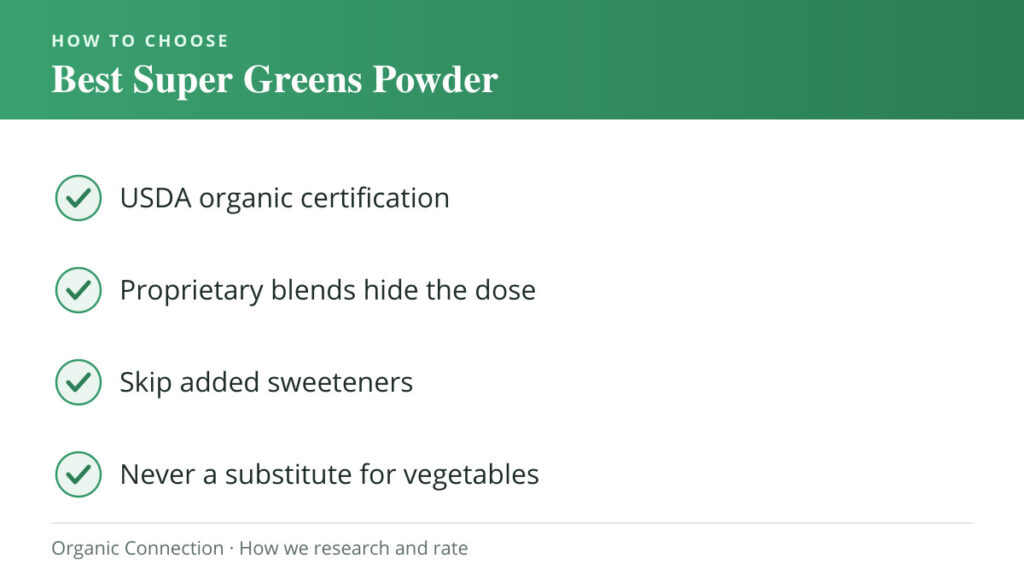
- Confirm USDA organic. Concentrated plant powders concentrate residues too.
- Prefer disclosed amounts over a single proprietary blend weight.
- Start unsweetened. If you need stevia to drink it, that tells you something about the base.
- Look for third-party heavy metal testing. Organic certification does not cover it.
- Treat it as a supplement, not a substitute. Nothing in a scoop replaces a plate of vegetables.
Who should buy organic super greens powder
The right powder depends on how you use it. If you want the cleanest whole-food organic greens with no sweetener, our top pick fits. If you want the best value per serving, a smaller tub to try, a version with probiotics and enzymes, or a concentrated booster to add to an existing routine, we have a pick for each.
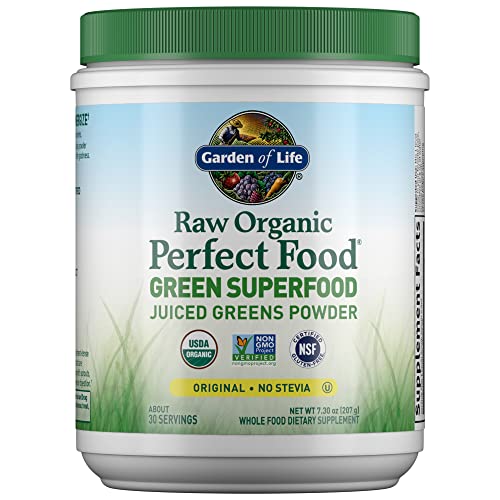
Best overall: Garden of Life Raw Organic Perfect Food Greens
| Organic Integrity Score | 90 / 100 |
| Base | Juiced organic grasses and whole-food vegetables |
| Certification | USDA Organic, NSF, Gluten-free |
| Best for | An unsweetened whole-food greens supplement |
Perfect Food is our top pick because it is built the right way round. It is USDA certified organic and Non-GMO Project Verified, and the base is juiced organic grasses and whole-food vegetables and sprouts rather than a cheap bulking agent with a decorative sprinkle of greens. The Original stevia-free version contains no sweeteners or flavors at all, which means you are tasting the actual ingredients rather than a masking agent, and Garden of Life discloses more about its ingredient sourcing than most of the category.
The trade-off is the taste, which is genuinely grassy and not for everyone, and the price, which sits at the premium end. Thirty servings per tub goes quickly at one scoop a day. It still uses blend structures rather than fully itemized per-ingredient weights, which is a limitation shared across the whole category.
What we liked: USDA organic and Non-GMO verified, juiced whole-food base rather than filler, no sweeteners or flavors, and better sourcing disclosure than most rivals.
Keep in mind: Genuinely grassy taste, premium price, and blend structures still obscure exact per-ingredient amounts.
What the listing discloses: Garden of Life lists USDA organic certification and Certified Gluten-Free. The gap is where it was grown or made.
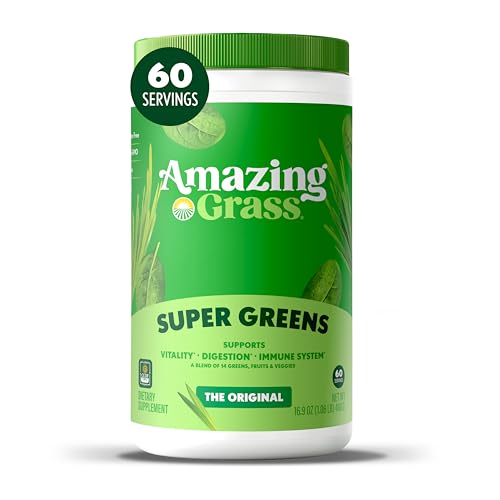
Best value: Amazing Grass Super Greens, 60 Servings
| Organic Integrity Score | 86 / 100 |
| Base | Organic wheat grass, barley grass, alfalfa, spirulina, beet root |
| Certification | USDA Organic, CCOF, Non-GMO |
| Best for | Daily use at a sustainable cost |
Amazing Grass is the volume brand in this category and the 60-serving tub is where the economics work. It is USDA certified organic, built on wheat grass, barley grass, alfalfa, spirulina, and beet root, with added probiotics and digestive enzymes. At two months per tub it is genuinely affordable as a daily habit rather than an occasional splurge, and the Original flavor has no added sweetener.
The trade-off is that the deck leans heavily on cereal grasses, which are the cheapest ingredients in a greens powder, and the proprietary blend structure means you cannot see how much of the more interesting ingredients you are actually getting. It is a solid product at a fair price rather than a best-in-class formulation.
What we liked: USDA organic with probiotics and enzymes at the best cost per serving here, and no sweetener in the Original.
Keep in mind: Grass-heavy base and a proprietary blend that obscures per-ingredient amounts.
What the listing discloses: Amazing Grass commits to CCOF as the certifying agent and kosher certification but stops short of whether the USDA seal applies and where it was grown or made.
Best third-party tested: Nested Naturals Super Greens Daily Superfood Powder
| Organic Integrity Score | 84 / 100 |
| Certification | USDA Organic, Non-GMO, Vegan |
| Testing | Third-party tested for purity and potency |
| Ingredients named | Spirulina, wheatgrass, barley grass, whole foods |
| Best for | Buyers who want testing as well as certification |
Two claims here do real work. The first is certified organic by the USDA stated in the regulated form rather than as a bare adjective.
The second is third-party tested for purity and potency. Greens powders are blends of many botanical ingredients, which is exactly the kind of product where contamination and under-dosing are hard for a buyer to detect, so independent testing is worth more here than in a single-ingredient category.
The ingredients are named individually — spirulina, wheatgrass and barley grass — rather than hidden behind a proprietary blend, though no quantities are given for any of them.
Two claims we do not credit. “Supports healthy detoxification” is not a measurable thing a powder does; the liver and kidneys handle that. And “many feel an uplift in energy within 1–2 weeks” is a testimonial dressed as a timeline.
It is also the most expensive product on this page by a considerable margin.
What we liked: Regulated USDA organic wording, third-party testing for purity and potency, and the key greens named individually.
Keep in mind: No quantities for any ingredient, a detoxification claim that means nothing, and the highest price here.
What the listing discloses: Nested Naturals is explicit about USDA organic certification, and silent on where it was grown or made.
Best with probiotics: Garden of Life Super Greens, 60 Servings
| Organic Integrity Score | 83 / 100 |
| Base | Organic greens with fruit and vegetable blend |
| Certification | USDA Organic, NSF, Gluten-free |
| Best for | People adding a greens powder mainly for digestive support |
This is Garden of Life’s larger, digestion-focused formulation, combining organic greens with a fruit and vegetable blend plus probiotics and digestive enzymes across sixty servings. If the reason you are buying a greens powder is gut comfort rather than micronutrients, the probiotic and enzyme content is the part doing the work, and the two-month tub prices better than the 30-serving Perfect Food.
It scores below Perfect Food because adding fruit powders raises the sugar content relative to a pure greens formula and lengthens the ingredient list without adding disclosure, so the proprietary blend problem is, if anything, more pronounced. Probiotic viability in a shelf-stable powder is also variable and depends heavily on storage.
What we liked: USDA organic with meaningful probiotic and enzyme content, and better value than the smaller Perfect Food tub.
Keep in mind: Fruit powders add sugar, the ingredient list is longer without more disclosure, and shelf-stable probiotic viability varies.
What the listing discloses: Garden of Life states USDA organic certification and Certified Gluten-Free, and does not say where it was grown or made.
Best booster: Amazing Grass Super Greens Booster
| Organic Integrity Score | 74 / 100 |
| Base | Spirulina, moringa, wheat grass, kale |
| Certification | USDA Organic, CCOF, Non-GMO |
| Best for | Adding chlorophyll-rich greens to an existing smoothie routine |
The Booster is a narrower, more concentrated product: spirulina, moringa, wheat grass, and kale, intended to be added to a smoothie you are already making rather than to be a complete greens supplement. If you already use a protein powder and want to add chlorophyll-rich greens without a second full formula, this is a sensible way to do it, and the shorter ingredient list is genuinely easier to evaluate than a forty-item blend.
It scores lowest here because it is not a standalone greens powder: there are no probiotics, enzymes, or fruit and vegetable breadth, and the scoop is small. Priced per serving it is not cheap for what it delivers, and it only makes sense as an add-on to an existing routine.
What we liked: A short, readable USDA organic ingredient list focused on chlorophyll-rich greens, easy to add to an existing smoothie.
Keep in mind: Not a complete greens supplement, and not cheap per serving for its narrow scope.
What the listing discloses: Amazing Grass states CCOF as the certifying agent and kosher certification, and does not say whether the USDA seal applies and where it was grown or made.
Getting something useful out of it
Mix greens powder into something with body rather than plain water, where it tastes worst and separates. A smoothie with banana, frozen berries, and a nut butter hides the grassiness almost entirely; plain water with a squeeze of lemon works if you are drinking it fast. Use a shaker bottle or blender, since greens powders clump badly when stirred with a spoon. Take it whenever suits your routine, timing does not matter much, though if the probiotics are the part you care about, away from very hot liquids is sensible.
Set expectations honestly and you will be happier with it. A scoop is a supplement to a diet, not a substitute for vegetables, and if a product promises to replace produce it is overselling. Store the tub sealed in a cool dry cupboard rather than a warm one, since heat degrades both the probiotics and the more delicate plant compounds, and use it within the shelf life on the tub. If you take warfarin or another anticoagulant, talk to your doctor first because greens powders can be high in vitamin K. And if you are buying one because your vegetable intake is low, the powder is a reasonable stopgap, but the more valuable change is the one it cannot make for you.
Proprietary blends: why you cannot tell what you are buying
Almost every greens powder lists its ingredients as one or more “proprietary blends” — a Greens Blend, a Fruit Blend, a Probiotic Blend — with a single total weight beside each.
FDA rules permit this. A manufacturer must declare the total weight of the blend and list ingredients in descending order by weight, but is not required to disclose how much of each is present. So a blend listing thirty ingredients might be 95% one cheap filler and thirty trace amounts of everything else, and the label would be entirely compliant.
Keep in mind: this practice is sometimes called “fairy dusting” — including an impressive-sounding ingredient at a quantity far below any studied dose so it can appear on the label. It is legal, it is widespread, and it means the ingredient list on a greens powder tells you what is present, not how much. The corollary matters for safety as much as value: without individual quantities, you cannot assess ingredient-specific risks such as the iodine and vitamin K issues below.
What to look for instead:
- Products that state individual ingredient amounts in mg, which a minority do and which is a strong signal of confidence.
- Shorter ingredient lists. Eight well-dosed ingredients beat forty at trace levels.
- Ingredient order. Whatever is listed first dominates the blend — if that is a cheap filler rather than the greens you are paying for, the ordering has told you something.
- Serving size. A 10 g scoop can hold meaningful amounts; a 3 g scoop claiming forty ingredients cannot.
Kelp, iodine and your thyroid
Many greens powders include kelp, spirulina or other seaweed, and kelp in particular carries a genuinely under-communicated risk.
Kelp is an extraordinary iodine accumulator, with average iodine content estimated at around 1,500 μg per gram of dried preparation — and the variation is enormous. In one analysis of 96 wholefood kelp products, iodine in a single portion ranged from 128 to 62,400 micrograms, and for more than half of the products tested, one serving would exceed the tolerable upper intake level for iodine.
The consequences are not theoretical. Excess iodine from kelp can cause decreased thyroid function as well as hyperthyroidism, depending on the person, and thyroid dysfunction following kelp-containing diet products is documented in the literature. It can also alter levothyroxine dose requirements in ways that are not predictable, which matters to a large number of people.
- Check whether your greens powder contains kelp, bladderwrack, dulse or “sea vegetable blend” — it is frequently buried mid-list in a proprietary blend.
- If you have any thyroid condition, or take levothyroxine or carbimazole, do not add a kelp-containing greens powder without speaking to your doctor.
- Do not stack it with a separate seaweed supplement, iodized salt used heavily, and regular seaweed snacks.
- Pregnancy — iodine needs rise, but excess is also harmful, and the variability here makes greens powders a poor way to manage it.
Vitamin K, warfarin and the consistency rule
Greens powders concentrate leafy greens, and leafy greens are the main dietary source of vitamin K1.
The common belief that people on warfarin must avoid vitamin K is wrong, and worth correcting. The actual guidance is consistency: warfarin dosing is calibrated to your habitual vitamin K intake, so a stable intake keeps INR stable. Sudden increases counteract the drug and reduce its effect; sudden decreases do the opposite.
Greens powders are awkward precisely because of how people use them — enthusiastically for two weeks, then sporadically, then not at all for a month. That pattern is the problem, not the vitamin K itself.
- If you take warfarin, tell your anticoagulation clinic before starting a greens powder, and mention it at your next INR check.
- Take it every day or not at all. Intermittent use is worse than consistent use.
- Direct oral anticoagulants — apixaban, rivaroxaban and similar — do not work through vitamin K and are not affected in the same way.
What a greens powder is not
The implicit promise is that a scoop replaces vegetables. It does not, and the arithmetic is the clearest way to see why.
| Greens powder | Actual vegetables | |
| Serving weight | ~8–10 g of powder | 400 g+ recommended daily |
| Fiber | Typically 1–2 g | Much higher, and structurally intact |
| Satiety | None | Substantial |
| Water content | None | High |
| Cost per day | Often £1.50–£3 | Usually less for more food |
Dehydrating and milling removes water and much of the physical structure that makes vegetables filling and that feeds gut bacteria the way whole plants do. A greens powder is a reasonable supplement for someone traveling, unwell, or genuinely unable to get variety — and it is a poor substitute for a bag of spinach at a third of the price.
The honest framing we would apply: buy it as insurance on bad weeks, not as a replacement for good ones.
Contaminants, and what organic does not cover
Greens powders concentrate plant material, and concentration applies to everything the plant took up. Leafy greens, rice-based fillers and seaweed are all recognized accumulators of heavy metals — lead, cadmium and arsenic in particular.
Organic certification governs what was applied to the crop. It does nothing about metals already in the soil or water, which is the same limitation we flag on cocoa, rice, tea and protein powders. What helps:
- Third-party testing published per batch, not a single certificate from years ago.
- NSF Certified for Sport, Informed Choice or similar marks, which include contaminant screening — a separate assurance from organic.
- Skepticism about very cheap products with long ingredient lists and no testing disclosure.
- Check for hidden stimulants. Some greens powders include green tea extract, guarana or matcha within a blend, so a “greens” product can carry meaningful caffeine without saying so on the front. If you are sensitive, or taking it in the evening, read the full list.
Using and storing it
- Taste: greens powders are bitter and vegetal. Citrus, pineapple, apple and banana mask it far better than water does; mint helps considerably.
- Do not add it to anything hot. Heat degrades the vitamin C and polyphenols you are paying for.
- Start with half a scoop. Fiber, chlorophyll and probiotic content together can cause bloating in the first week.
- Take it with food if it causes nausea, and with a fat source if it contains fat-soluble vitamins.
- Storage: airtight, cool, dark and dry. These powders are hygroscopic and clump permanently once damp — never dip a wet scoop.
- Use within 3–6 months of opening. Color fading from vivid green toward brown or khaki indicates oxidation, and the taste follows the color.
- Products with live probiotics lose viability over time and are worth refrigerating once opened, whatever the label says.
How we researched this guide
We are a research-based review site. We compared each product against its certification (USDA organic, and where present Non-GMO Project Verified), ingredient transparency and blend structure, sweetener and flavoring use, third-party testing, and the weight of aggregated customer feedback on taste and mixability, then scored each with our 10-criteria Organic Integrity Score. No brand paid to be included or ranked. Nothing here is medical advice. Read the full method on our How We Research and Rate page.
What a scoop of greens can and cannot replace
Greens powders are marketed with a broad set of implied benefits, and the honest assessment turns on a straightforward question of quantity.
A typical serving is 8 to 10 grams of powder representing a blend of dried vegetables, algae, grasses and fruit extracts. That is a genuine source of some vitamins and polyphenols in a small volume, and for someone whose vegetable intake is very low it is a better-than-nothing contribution.
What it cannot supply is fiber in meaningful quantity or the volume that makes vegetables filling. A serving typically carries 1 to 2 grams of fiber against the 25 to 30 grams a day most guidelines suggest, and a scoop in water has none of the bulk of an actual plate of vegetables. Most of what makes vegetables useful in a diet is precisely the bulk and fiber that drying and powdering removes.
On weight there is no evidence and no mechanism. Greens powders are close to calorie-free, so they neither add nor subtract, and no ingredient in a typical blend has demonstrated effects on appetite or metabolism at the doses supplied.
There is also a proprietary blend problem worth naming. Many products list ingredients as a combined blend total rather than individually, which makes it impossible to know whether the spirulina content is two grams or fifty milligrams. That is covered above and it is the main thing separating good products from expensive powder.
Where a greens powder genuinely helps is convenience for specific nutrients, and as a supplement to vegetables rather than a substitute for them.
Honest summary: a modest nutrient contribution in a small volume, almost no fiber, no weight mechanism, and a category where proprietary blends hide the doses that matter.
Common questions about organic super greens powder
What is the best organic super greens powder?
Our overall pick is Garden of Life Raw Organic Perfect Food Greens, because it is USDA certified organic and Non-GMO Project Verified, built on juiced grasses and whole-food vegetables rather than filler, and the Original is stevia-free with no added flavors. For the best value, Amazing Grass Super Greens 60 servings is our pick.
Can a greens powder replace eating vegetables?
No. A scoop weighs roughly 8 to 10 grams, while dietary guidance recommends several hundred grams of vegetables a day, so the arithmetic does not allow substitution even before accounting for nutrients lost in drying and milling. Claims of “5 servings of vegetables per scoop” are marketing. Treat it as a supplement on days your intake is poor.
What is a proprietary blend and why does it matter?
It is a list of many ingredients given a single combined weight, so you cannot see how much of each you are getting. That structure lets a manufacturer fill the blend with cheap bulk ingredients like cereal grasses and add only a token amount of the expensive ones featured on the front of the tub.
Who should avoid greens powders?
Anyone taking warfarin or another anticoagulant should speak to their doctor first, because greens powders can be high in vitamin K, which interacts with those medications. People with thyroid conditions may also want to check, since some formulas include cruciferous vegetables and seaweed-derived ingredients.
What is a proprietary blend on a greens powder?
A way of listing ingredients that discloses the total blend weight and the ingredient order by weight, but not how much of each is present. FDA rules permit it, so a blend of thirty ingredients could be 95% one cheap filler and trace amounts of everything else while remaining fully compliant. The practice of including an impressive ingredient far below any studied dose is sometimes called fairy dusting. Look for products stating individual amounts in mg, or shorter lists with larger serving sizes.
Is the kelp in greens powders a problem for your thyroid?
It can be. Kelp is an extraordinary iodine accumulator, averaging around 1,500 μg per gram of dried preparation, with enormous variation — one analysis of 96 wholefood kelp products found single-portion iodine ranging from 128 to 62,400 micrograms, with more than half exceeding the tolerable upper intake level in a single serving. Excess iodine can cause both decreased and increased thyroid function, and can alter levothyroxine requirements unpredictably. Check for kelp, bladderwrack, dulse or “sea vegetable blend” buried in the ingredient list.
Can you take greens powder on warfarin?
With medical advice, and the rule is consistency rather than avoidance. Warfarin dosing is calibrated to your habitual vitamin K intake, so a stable intake keeps INR stable — sudden increases counteract the drug. Greens powders are awkward because people use them enthusiastically for two weeks then sporadically, which is exactly the pattern that destabilizes INR. Tell your anticoagulation clinic before starting, and take it daily or not at all. Direct oral anticoagulants such as apixaban are not affected the same way.
Can greens powder replace vegetables?
No. A serving is roughly 8 to 10 g of powder against a 400 g+ daily vegetable recommendation, with typically 1 to 2 g of fiber, no water content and no satiety. Dehydrating and milling removes the structure that makes vegetables filling and that feeds gut bacteria the way whole plants do. Buy it as insurance on bad weeks, not as a replacement for good ones — a bag of spinach usually costs less.
Do greens powders contain heavy metals?
They can, because concentrating plant material concentrates whatever the plant took up. Leafy greens, rice-based fillers and seaweed are all recognized accumulators of lead, cadmium and arsenic. Organic certification governs what was applied to the crop, not metals already in the soil or water. Look for per-batch third-party testing, or marks such as NSF Certified for Sport, which include contaminant screening.
Do greens powders contain caffeine?
Some do, without saying so prominently. Green tea extract, matcha and guarana appear inside proprietary blends in a number of products, so a “greens” powder can carry meaningful caffeine that is only visible in the full ingredient list. Worth checking if you are sensitive or taking it in the evening.
Why does greens powder make me bloated?
Usually the combination of fiber, chlorophyll and added probiotics hitting at once. Start with half a scoop for the first week and build up, take it with food if it causes nausea, and note that some people simply do better with fewer ingredients — a simpler product often resolves it.
How should you store greens powder?
Airtight, cool, dark and dry, and never with a wet scoop, since these powders are hygroscopic and clump permanently once damp. Use within 3 to 6 months of opening; color fading from vivid green toward brown or khaki indicates oxidation, and taste follows color. Products containing live probiotics lose viability over time and are worth refrigerating once opened whatever the label says.
- Organic Supplements & Wellness hub
- Best Organic Spirulina
- Best Organic Maca Powder
- A Beginner’s Guide to Organic Supplements
- browse all our reviewed products — scores and certifications for 800+ products
- Third-party testing for supplements, explained
Price and availability as of October 11, 2026 7:10 pm EDT. Product prices and availability are accurate as of the date/time indicated and are subject to change. Any price and availability information displayed on Amazon.com at the time of purchase will apply to the purchase of this product.
Looking for other organic products?
We have checked more than 800 products across food, household goods, gardening, personal care and pet, every one against its stated certification. Browse all reviews.
Organic Connection is reader-supported. When you buy through links on this page we may earn a commission, at no extra cost to you. As an Amazon Associate we earn from qualifying purchases. We are not paid to feature or rank any product. This page is informational and is not medical advice. How we research and rate.