Last updated: September 30, 2026
We may earn a commission when you buy through links on this page, at no extra cost to you. How we research and rate.
The short version
Our top pick is the Waterdrop Plus WDP-F27, with an Organic Integrity Score of 96 out of 100. It is an aftermarket filter, and it documents itself better than any manufacturer’s own.
That is the finding worth the whole article. The received wisdom is that genuine filters are certified and generic ones are not. In this category the best documentation comes from an aftermarket brand, while the single best-selling filter on Amazon says “certified to NSF/ANSI standards” without naming which one.
Buying advice first, because it is not optional here: a refrigerator filter is model specific. Find your fridge’s filter part number before reading anything below. Nothing on this page fits every fridge.
Best refrigerator water filters compared
| Best Choice | Best Value | ||||
 |  |  |  |  | |
| Product | Waterdrop Plus WDP-F27 | everydrop EDR1RXD1 | LG LT1000P | GE XWFE | Amazon Basics MWF |
| Organic Integrity Score | 96/ 100 | 94/ 100 | 90/ 100 | 84/ 100 | 82/ 100 |
| Our rating | 4.8 | 4.7 | 4.5 | 4.2 | 4.1 |
| Standards named | 42, 53, 401, 372 | 42, 53, 401 | 42, 53, 401 | None named | 42, 372 |
| Compounds named | Yes, five plus PFAS | No | Partly | No | No |
| Type | Aftermarket | Genuine | Genuine | Genuine | Aftermarket |
| Fits | Whirlpool family | Whirlpool family | LG | GE XWFE models | GE MWF models |
| Certification | NSF | NSF | Not stated on the listing | NSF | NSF |
| Best for | Anyone who wants | Staying | LG refrigerators | GE owners who want | GE MWF owners |
| Configuration | Three-pack aftermarket cartridge, Sri Lankan coconut shell carbon block | Genuine filter for Whirlpool, Maytag, KitchenAid, Amana and JennAir | Genuine LG filter, 6 months or 200 gallons | Genuine GE filter for XWFE-compatible models | Aftermarket cartridge compatible with GE MWF and related models |
| Price | Currently unavailable See buying options | $50.99 $59.99 −15% View on Amazon | $50.66 $54.99 −8% View on Amazon | $49.98 $54.99 −9% View on Amazon | $30.99$10.33 / count View on Amazon |
- Clean Air and Water hub
- Best Countertop Water Filters
- Best Portable Water Filters
- our organic product database — compare brands across every guide
- What water filters actually remove
Price and availability as of October 11, 2026 7:10 pm EDT. Product prices and availability are accurate as of the date/time indicated and are subject to change. Any price and availability information displayed on Amazon.com at the time of purchase will apply to the purchase of this product.
What each claim on these listings actually covers
Almost every filter here says “certified”. The standard it is certified to is what separates a $30 cartridge from a $54 one.
| Claim | Covers | Key exclusion |
| NSF/ANSI 42 | Aesthetic effects: free chlorine, taste, odor and particulate reduction | Nothing health-related. Not lead, not PFAS, not cysts |
| NSF/ANSI 53 | Health effects: lead, cysts, VOCs, chromium and some PFAS claims | Certified per named contaminant, so “53 certified” alone does not say for which |
| NSF/ANSI 401 | Emerging compounds: pharmaceutical residues, pesticides, BPA | An add-on, never a substitute for 53 on lead |
| NSF/ANSI 372 | Lead-free materials in the product’s own wetted parts | Not a filtration claim. The housing will not add lead; it says nothing about removing any |
| “Certified*” with an asterisk | A real certification, with the scope defined in the footnote | The asterisk is where the contaminant list and the tested model numbers live. Read it |
| “Certified to NSF/ANSI standards” unnumbered | Some certification exists | Without the numbers you cannot tell taste-and-odor from health-effects certification |
| “Genuine” or OEM | A guaranteed fit and seal in the named refrigerator | A fit claim, not a filtration claim — and it is the argument used to justify the price gap |
The three numbers, and why 401 is the one to notice
Refrigerator filters are certified to the same NSF/ANSI standards as the rest of water treatment, and this is the category where you will most often see all three.
NSF/ANSI 42 is aesthetic: chlorine, taste and odor. Nearly every filter carries it and it is the floor, not an achievement.
NSF/ANSI 53 is health effects: lead, cysts, VOCs, asbestos, mercury. This is the one that covers what people are actually worried about, and plenty of cheap filters stop before it.
NSF/ANSI 401 is emerging contaminants: pharmaceutical residues, hormones, bisphenol A, and a list of compounds that appear in supply at very low concentrations because they pass through wastewater treatment. It is the newest and least common of the three.
You will also see NSF/ANSI 372, lead-free materials, which is about the housing rather than the filtration and is a baseline requirement rather than a performance claim. We unpack the full set in our under-sink guide.
The useful test in this category is simple. A filter certified to 42, 53 and 401 has been tested across all three questions. A filter advertising “NSF certified” with no number attached has told you nothing about which. Both appear below, and the one with no numbers outsells the one with all three.
Genuine versus aftermarket, honestly
This is the decision the category turns on, and both sides argue it badly.
The manufacturers’ case is fit and liability. Their listings warn that third-party filters can cause damage, are not covered by warranty and may lead to repairs. There is something real underneath: a filter that seats imperfectly can leak inside the door, and a poorly made cartridge can shed carbon fines. Those are genuine risks and they are also, conveniently, an argument for a product with a very high margin.
The aftermarket case is price and, unexpectedly, documentation. The best aftermarket filters here cost around half the genuine equivalent per cartridge, and the best of them publishes far more detail about what it removes than the genuine filters do.
Our reading of the evidence in the listings themselves:
Certification is the thing to check, not the badge. An aftermarket filter certified to 42, 53 and 401 by an accredited body has been through the same tests as a genuine one certified to the same standards. An uncertified aftermarket filter has been through nothing, and that is where the horror stories come from.
Fit is the real risk, and it is brand specific rather than generic-versus-genuine. Established aftermarket brands make filters for a defined list of models and state it. The problem cases are unbranded cartridges claiming universal compatibility.
Warranty language is worth reading rather than fearing. In the US, tying a warranty to the use of branded consumables is constrained by the Magnuson-Moss Warranty Act, which is why these listings say a third-party filter “can lead to” repairs rather than saying your warranty is void.
Our position: buy on certification and stated model compatibility, not on whose logo is on the box. On that test, one aftermarket filter wins this guide outright.
Find your part number first
Nothing else here matters if the filter does not fit, and fridge filters are not interchangeable.
Look inside the fridge. Most filters live in the upper right of the fresh food compartment, in the ceiling grille, or in the base grille at the front. The part number is printed on the cartridge itself.
Or read the door sticker, then search the model number plus “water filter” on the manufacturer’s site.
Common families you will meet: GE uses XWFE, MWF and RPWFE; Whirlpool, Maytag, KitchenAid, Amana and JennAir share the everydrop EDR series; LG uses LT1000P and LT700P; Samsung uses HAF-CIN.
Two traps worth knowing. GE’s XWFE is not the same as the older XWF, despite the single letter, because newer fridges include an electronic recognition chip. And some 2020-and-later GE models actively verify the filter, which is a genuine reason to check compatibility rather than assume.
Aftermarket listings publish the models they fit. If a listing claims to fit everything, that is the listing to avoid.
What a fridge filter is genuinely good at
Worth setting expectations, because this is the filter most households own and the one they think about least.
A refrigerator cartridge is a compact carbon block sitting in a cold water line. It has good contact time because flow through a dispenser is slow, and that is why a small cartridge can carry certification to three standards where a shower filter carries none.
What it does well: chlorine and the taste that comes with it, sediment and rust from old pipework, lead where present as particulates, cysts such as Giardia and Cryptosporidium on filters certified to 53, and on 401-certified filters the pharmaceutical residues and bisphenol A that pass through municipal treatment.
What it does not do: fluoride, nitrates, dissolved minerals or hardness, none of which carbon removes. It also does nothing for the rest of your house, since it treats only the water reaching the dispenser and ice maker.
Two points that change how you should think about the cost. The ice maker uses the same filtered water, which is why heavy ice users hit the 200 gallon rating long before six months. And the filter continues passing water after it is exhausted. It does not block or warn you; it simply stops adsorbing, and the first sign is usually the taste of chlorine returning.
If filtered drinking water for the whole kitchen is the goal rather than a cold glass from the door, an under-sink filter covers thousands of gallons for a similar annual outlay and feeds the main tap as well.
The trade-offs of a refrigerator filter
A refrigerator filter is a carbon block in an awkward location, and its great virtue is that you will actually use it. Its limits follow from where it sits.
| In its favor | Against it | |
| Convenience | Zero installation, zero plumbing, and it filters every glass and every ice cube without a thought | It treats the dispenser and the ice maker only — not the kitchen tap two feet away |
| Certification | Originals are often certified to NSF/ANSI 42, 53 and sometimes 401, which is a serious specification for something this passive | Aftermarket cartridges frequently carry no certification, or only 42 and 372 |
| Cost | Aftermarket filters cost a fraction of manufacturer originals | Originals are expensive per unit, and a six-month schedule makes that recur |
| Fit | Genuine filters guarantee the fit and the seal | Third-party fit is inconsistent, and a poor seal can bypass the media or leak |
| Capacity | Six months is realistic for most households | Flow falls off noticeably at end of life, and there is no way to inspect the cartridge |
If a fridge filter is your household’s only water treatment, that is worth reconsidering — not because it is bad, but because it covers one outlet. An under-sink filter covers the tap you cook from.
What actually separates these five
Nearly every listing here says “certified”. The differences are in which standard, and that is where the price gap is explained.
| Pick | What only this one does |
| Waterdrop Plus WDP-F27 | The most specific certification claim here: tested against NSF/ANSI 401 with a published 99.2% reduction figure, in a three-pack that costs less than a single original |
| everydrop EDR1RXD1 | The Whirlpool original, independently certified for 70 contaminants, and the only one quantifying microplastics at 99% reduction |
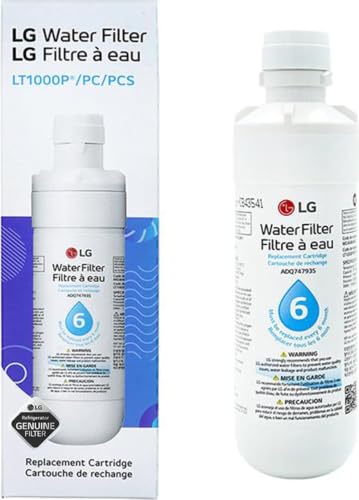
| LG LT1000P | The genuine LG part, certified by NSF International, and the listing makes the fit argument explicitly: third-party cartridges can cause seal problems |
| GE XWFE | The bestseller, certified to reduce 70+ impurities including PFOA and PFOS — but the listing says “certified to NSF/ANSI drinking water treatment standards” without naming which |
| Amazon Basics for GE MWF | The cheapest option, and the certification is worth reading closely: NSF/ANSI 42 and 372. That is taste and odor, plus lead-free materials in the housing. It is not a health-effects certification, and 372 is not a filtration claim at all |
Best overall: Waterdrop Plus WDP-F27, 3-Pack
| Organic Integrity Score | 96 / 100 |
| Configuration | Three-pack aftermarket cartridge, Sri Lankan coconut shell carbon block |
| Certification | NSF |
| Best for | Anyone who wants the claim itemised rather than asserted |
An aftermarket filter with the best documentation in the category, which is not the result anyone expects.
It names all four standards, names IAPMO as a certifying body, and then does the thing almost nothing in water treatment does: it publishes the compounds and the percentages. Certified against NSF/ANSI 401 for 99.2 percent reduction of bisphenol A, phenytoin, estrone, ibuprofen and naproxen. A separate third-party figure of 95.3 percent for PFOA and PFOS.
Naming the actual molecules matters because “emerging contaminants” is an abstraction. A plasticizer, an anti-seizure medication, a hormone and two painkillers is a specific and checkable claim.
The carbon block is described by origin and structure rather than as “premium”, and it ships as a three-pack, which at six months a cartridge covers eighteen months.
Two honest points. It fits the Whirlpool and everydrop family, so check your part number. And a manufacturer will tell you a third-party filter is not covered by their warranty, which is a real consideration even though certification is the better guide to filtration.
What we liked: Names four standards, the certifying body, and five specific compounds with percentages. Separate PFAS figure. Three-pack covers eighteen months.
Keep in mind: Aftermarket, so outside the appliance maker’s warranty language. Fits the Whirlpool family only. Check your part number before ordering.
Best for: Whirlpool, Maytag, KitchenAid and Amana owners who want evidence.
Best genuine filter: everydrop by Whirlpool EDR1RXD1
| Organic Integrity Score | 94 / 100 |
| Configuration | Genuine filter for Whirlpool, Maytag, KitchenAid, Amana and JennAir |
| Certification | NSF/ANSI 42, 53, 401 |
| Best for | Staying with the manufacturer’s own filter, well documented |
The genuine filter that documents itself properly, and the one we would buy if warranty language matters to you.
It names all three performance standards explicitly and, unusually for a manufacturer, makes the comparison openly: independently certified to meet three NSF standards, “where many generic brands stop at just one”. That is a fair point fairly made, and it is exactly the test we apply.
The microplastics claim is worth noting because it is specific: 99 percent reduction including particles well below the visible range, and described as the first among leading brands certified to reduce them. Microplastic reduction sits under Standard 401, so the claim has a standard behind it.
Seventy contaminants covered, developed alongside the appliances themselves, and no compatibility question because it is the official filter for five brands.
It costs meaningfully more than the aftermarket equivalent, and it stops short of naming the individual compounds the way our top pick does. Those two points are the whole gap between 94 and 96.
What we liked: Names all three performance standards. Specific microplastics claim under Standard 401. No compatibility doubt across five brands.
Keep in mind: Dearer per cartridge than certified aftermarket. Does not name individual compounds. Single filter rather than a multipack.
Best for: Whirlpool-family owners who want the official part.
Best for LG: LG LT1000P
| Organic Integrity Score | 90 / 100 |
| Configuration | Genuine LG filter, 6 months or 200 gallons |
| Certification | Not stated on the listing |
| Best for | LG refrigerators, with the standards named in the title |
The only product here putting its standard numbers in the product title, which is where they are most useful to somebody scanning search results.
Certified by NSF International to 42, 53 and 401, and it publishes some specific figures: 99.99 percent of cysts, 99 percent of asbestos, plus mercury, lead, benzene, herbicides, pesticides and pharmaceuticals. Naming cysts and asbestos with percentages is more than most genuine filters manage.
The rated life is stated plainly as six months or 200 gallons, whichever comes first, which is the honest way to express it.
The listing also leans hard on discouraging alternatives, warning that third-party filters can cause damage, are not covered under warranty and can lead to unnecessary repairs. Fit genuinely matters on LG models, and this is also a commercial argument for a high-margin consumable, so read it as both.
Priced between the aftermarket and the other genuine options.
What we liked: Standard numbers in the title. Specific figures for cysts and asbestos. Clear 6 month or 200 gallon rating. Certified by NSF International directly.
Keep in mind: Strong warranty-flavored discouragement of alternatives. LG models only. Does not name individual pharmaceutical compounds.
Best for: LG owners, where this is the straightforward answer.
The best seller, with the vaguest claim: GE XWFE
| Organic Integrity Score | 84 / 100 |
| Configuration | Genuine GE filter for XWFE-compatible models |
| Certification | NSF |
| Best for | GE owners who want the genuine part |
The single best-selling refrigerator water filter on Amazon, and the one whose certification claim tells you least.
It says the filter is “certified to NSF/ANSI drinking water treatment standards” and that it meets the requirements of independent accredited organizations. Both statements are almost certainly true and neither tells you which standard. Given 42, 53 and 401 answer entirely different questions, “NSF/ANSI standards” is the water equivalent of saying a garment is certified without saying to what.
What it does give you is a good contaminant list: 50-plus impurities including lead, chlorine, PFOA and PFOS, microplastics, arsenic and select pharmaceuticals. Naming arsenic and PFAS is meaningful. It is also careful to note that these impurities are not necessarily present in all water, which is a fair caveat most brands skip.
As the genuine part for XWFE fridges it removes all compatibility risk, and on newer GE models with filter recognition that is worth more than usual.
It scores 84 rather than lower because the contaminant detail is genuinely good, and rather than higher because the standard numbers are missing while three competitors publish theirs.
What we liked: Names arsenic, PFOA and PFOS and microplastics specifically. Honest caveat that impurities vary by supply. No fit risk on XWFE models.
Keep in mind: Never names which NSF/ANSI standard. Single cartridge at a premium price. XWFE is not interchangeable with the older XWF.
Best for: GE owners buying the genuine filter, especially on models that verify the cartridge.
Best value: Amazon Basics Replacement Filter for GE MWF
| Organic Integrity Score | 82 / 100 |
| Configuration | Aftermarket cartridge compatible with GE MWF and related models |
| Certification | NSF |
| Best for | GE MWF owners who want chlorine and taste at the lowest price |
The cheapest filter here, and it scores well for a reason that has nothing to do with price: it states exactly what it is certified for and does not imply more.
“Tested and certified by NSF International to NSF/ANSI 42 and 372, reducing chlorine, taste, and odor while meeting lead-free material requirements.” Named certifier, named standards, and the scope described accurately. There is no attempt to suggest health-contaminant coverage it does not have.
That honesty is also the limitation, and it is the whole reason to think before buying. Standard 42 is chlorine, taste and odor. It is not lead, cysts or pharmaceuticals. Certification to 372 covers the housing rather than the water. If you want the health-effect coverage that 53 provides, this filter does not claim it and does not have it.
For a household whose water is fine and who simply wants better-tasting cold water at a low price, it does that job with a certificate behind it, which is more than many dearer filters offer.
What we liked: Names certifier and both standards. Describes its scope accurately with no overreach. Cheapest here by a distance.
Keep in mind: Standard 42 only, so no health-contaminant certification. No 53 or 401. GE MWF models only.
Best for: Taste and chlorine on a budget, where 42 is genuinely enough.
What we left out and why
A second Waterdrop. The UKF8001 carries the same four standards and uses notably precise language, describing certification “from each component to the filter cartridge as a whole”, which is the component-versus-system distinction we look for. Left out on brand concentration; a good alternative if it matches your fridge.
Unbranded universal cartridges. Search results are full of filters claiming to fit everything with no certification named. That combination is where the leaking and carbon-shedding stories come from, and it is the actual risk the manufacturers warn about.
Inline fridge filters. These plumb into the supply line behind the appliance rather than sitting inside it. A reasonable option on fridges with no internal filter, and a different installation, so a different guide.
The limit of this method deserves stating plainly here, because this guide takes a position against received wisdom. We read what each listing claims and how far it substantiates the claim. We have not tested these filters and we cannot verify a laboratory result. What we can say is that one aftermarket listing names four standards, a certifying body and five compounds with percentages, while the best-selling genuine filter names no standard at all. That is a difference in documentation, not a measurement of performance.
How to change a refrigerator filter
Five minutes, no tools, and two steps almost everybody skips.
- Match the part number, not the picture. Cartridges that look identical are not. GE XWFE and XWF differ by an electronic chip despite one letter.
- No need to shut off the water. Fridge filter housings self-seal. Have a cloth ready regardless.
- Remove the old cartridge. Interior filters usually twist a quarter turn anticlockwise; base grille filters push in to release then pull straight out.
- Fit the new one and feel for the seat. It should twist to a firm stop. A cartridge that is not fully seated is the most common cause of a leak inside the door.
- Flush four gallons through the dispenser. This is the step people skip. New carbon sheds fines and traps air, so the first water is gray and sputtering. Roughly two to three minutes of dispensing.
- Reset the filter indicator. Usually holding the filter or reset button for three seconds. The light is a timer, not a sensor, so it will not clear itself.
- Discard the first two batches of ice. The ice maker holds unfiltered water and fines in the line.
What it costs to run
This is the highest recurring cost per gallon in household water treatment, which is worth knowing given how cheap each cartridge looks.
A genuine cartridge at six-month intervals is two a year. Over five years that is a meaningful sum for a filter rated at 200 gallons, against an under-sink carbon filter covering thousands of gallons for a similar annual cost. Under-sink filters are the cheaper way to filter drinking water if you are willing to fit one.
The interval is whichever comes first. A household using the dispenser and ice maker heavily hits 200 gallons in three or four months, and the indicator light counts days rather than gallons, so it will not tell you.
Multipacks are the obvious saving and the reason our top pick ships as three.
Questions about refrigerator water filters
Are generic refrigerator filters safe?
Certified ones are. The thing to check is the standard number and named certifier, not whether the logo matches your fridge. An aftermarket filter certified to NSF/ANSI 42, 53 and 401 has passed the same tests as a genuine one certified to the same standards. An uncertified cartridge claiming to fit everything has passed nothing.
Will a third-party filter void my warranty?
Manufacturers’ listings warn that third-party filters are not covered and can lead to repairs. In the US, tying a warranty to branded consumables is constrained by the Magnuson-Moss Warranty Act, which is why the wording is usually “can lead to” rather than “voids”. A leaking filter that damages the appliance is a genuine risk regardless.
What do NSF 42, 53 and 401 cover?
42 is chlorine, taste and odor. 53 is health effects such as lead, cysts and VOCs. 401 is emerging contaminants including pharmaceutical residues and bisphenol A. A filter certified to all three has been tested for all three questions.
How do I find my filter part number?
It is printed on the cartridge itself, usually in the upper right of the fridge interior or in the base grille. Alternatively use the model number on the door sticker on the manufacturer’s site.
How often should I change it?
Six months or 200 gallons, whichever comes first. Heavy dispenser and ice maker use reaches the gallon limit first, and the indicator light counts days rather than gallons.
Why is the water cloudy after a new filter?
Trapped air and carbon fines. Flush about four gallons through the dispenser, roughly two to three minutes, and discard the first two batches of ice.
Do fridge filters remove fluoride?
No. Fluoride is a dissolved ion that carbon does not meaningfully remove. That needs reverse osmosis, which we cover in our under-sink RO guide.
Is XWFE the same as XWF?
No. The XWFE includes an electronic recognition chip and newer GE models expect it. The single letter difference is not cosmetic, and this is the most common ordering mistake in the category.
Organic Connection is reader supported. We check every product against its stated certification and say plainly when a claim cannot be verified. How we research and rate.