
Last updated: September 11, 2026
Some links in this guide point to our product reviews, which may earn us a commission at no extra cost to you. How we research and rate.
Organic produce genuinely does spoil faster, and the reason is not that it is somehow more fragile. It is that conventional produce is routinely treated with post-harvest fungicides and synthetic waxes that organic rules prohibit, so organic fruit and vegetables arrive without the chemical scaffolding that holds conventional produce together for weeks. That makes storage the difference between paying a premium and throwing that premium in the bin. This guide covers what actually works, item by item.
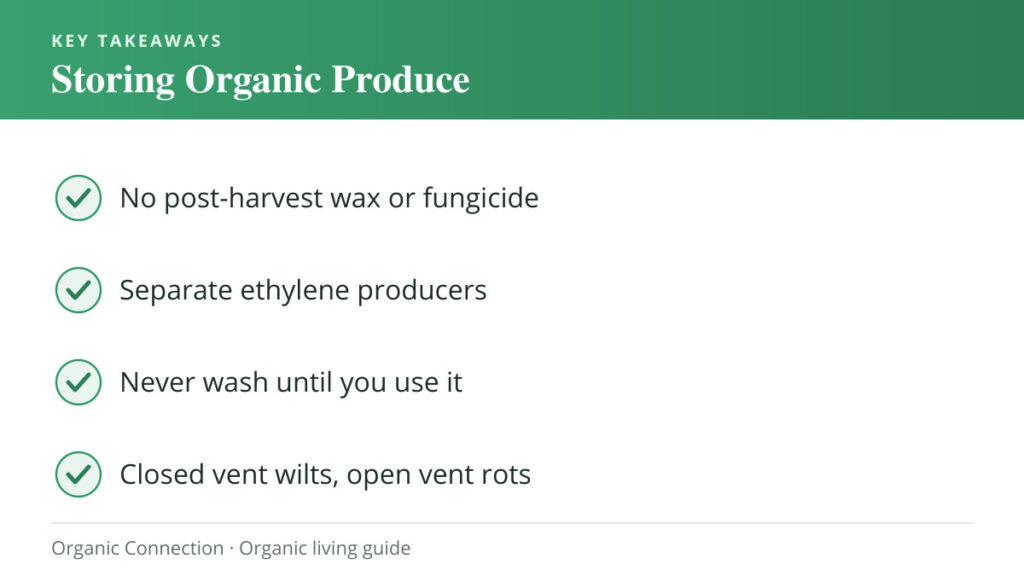
The three rules that do most of the work
1. Do not wash produce until you use it. This is the single most common storage mistake. Surface moisture is what mold and bacteria need to establish, and washing removes the natural protective bloom on fruit skins. Berries in particular go from firm to furry within a day or two of being washed and returned to the fridge. Wash immediately before eating, not on arrival. The one exception is leafy greens, which do better washed, dried thoroughly in a salad spinner, and stored with a dry cloth.
2. Match humidity to the item. Most refrigerators have two crisper drawers with adjustable vents, and almost nobody uses them correctly. The vent controls humidity: closed traps moisture, open lets it escape. High humidity, vent closed: leafy greens, herbs, broccoli, carrots, cucumbers, most vegetables that wilt. Low humidity, vent open: apples, pears, avocados, stone fruit, anything that rots rather than wilts. The rule of thumb is that things which wilt want humidity and things which rot want airflow.
3. Know what should never go in the fridge. Cold damages several common items. Tomatoes lose flavor irreversibly below about 55°F, as the cold destroys the volatile compounds that make them taste of anything. Potatoes convert starch to sugar in the fridge, which makes them unpleasantly sweet and causes them to darken when cooked. Onions and garlic go soft and moldy in humidity. Bananas blacken. Basil turns black within a day. Whole melons, avocados, and stone fruit should ripen on the counter and only go in the fridge once ripe, to hold them.
Item by item, what actually works
Leafy greens and salad. Wash, spin thoroughly dry, then store in a container or bag with a dry tea towel or kitchen paper to absorb condensation. The towel is the key step and it doubles the life of a bag of leaves. Change it if it becomes damp. High humidity drawer.
Herbs. Treat soft herbs, parsley, coriander, dill, like cut flowers: trim the stems and stand them in a jar with an inch of water, loosely covered with a bag, in the fridge. Basil is the exception and must stay at room temperature, in water, out of the fridge entirely. Hardy herbs like rosemary and thyme keep wrapped in a slightly damp cloth in the fridge.
Berries. Do not wash until eating. If you want to extend them, a brief bath in three parts water to one part vinegar, followed by thorough drying, kills surface mold spores and can add days. Dry them completely, this matters more than the vinegar, and store in a single layer in a ventilated container.
Carrots, celery, and radishes. Remove any leafy tops immediately, since the tops draw moisture out of the root and make it limp within days. Store submerged in a container of water in the fridge, changing the water every few days. This keeps carrots and celery crisp for weeks rather than days, and it revives limp ones.
Asparagus. Trim the ends and stand upright in an inch of water in the fridge, like flowers.
Mushrooms. Paper bag, never plastic. Plastic traps moisture and turns them slimy. Do not wash them; brush them off.
Potatoes, onions, and garlic. Cool, dark, dry, and well ventilated, in a paper bag or basket, never plastic and never the fridge. Keep potatoes and onions apart, since onions accelerate potato sprouting. Light turns potatoes green, which indicates solanine, and green patches should be cut away generously.
Tomatoes. Counter, stem side down, out of direct sun, and never refrigerated until fully ripe and only then if you must.
Avocados. Counter until they yield to gentle pressure, then fridge to hold for several more days. To speed one up, put it in a paper bag with a banana, which is ethylene put to deliberate use.
Bananas. Counter, away from everything else, and wrapping the crown of the bunch in cling film slows ripening noticeably by trapping the ethylene released there.
Citrus. Counter for a week, fridge for a month. Organic citrus is unwaxed, so it dries out faster than conventional; the fridge is the better bet if you are not using it quickly.
Cucumbers and peppers. Cucumbers are cold-sensitive and do best in the warmest part of the fridge or a cool room, wrapped to prevent moisture loss.
Why organic produce spoils faster, and what to do about it
It is worth being precise about this, because the usual explanation is vague. Conventional produce is commonly treated after harvest with fungicides such as imazalil or thiabendazole, and coated with synthetic waxes that seal in moisture and slow gas exchange. Both are prohibited under USDA organic rules. Organic produce may be waxed, but only with permitted natural coatings such as carnauba or wood resin, which are less effective barriers.
The practical consequences are specific. Organic citrus and apples dry out and shrivel faster, because there is no synthetic wax holding moisture in. Organic soft fruit molds sooner, because no post-harvest fungicide was applied. Organic potatoes and onions sprout sooner, because organic rules prohibit the sprout inhibitors used conventionally. None of this means the produce is lower quality; it means it is closer to what fruit and vegetables actually do.
So buy accordingly. Buy organic produce more often and in smaller quantities. Shop with a plan for the week rather than filling a fridge optimistically. Use the most perishable items first, berries, leafy greens, herbs, and keep the robust ones, root vegetables, cabbage, citrus, apples, for later in the week. If you can only buy weekly, weight your basket towards things that keep.
Use the freezer without guilt. Freezing is the most underused tool in a domestic kitchen. Herbs freeze well chopped into ice cube trays with olive oil. Berries freeze on a tray then bag up. Bananas past their best go in the freezer peeled for smoothies and baking. Most vegetables freeze well after blanching. Frozen organic produce retains nutrients well, since it is typically frozen close to harvest, and it is often cheaper than fresh.
What to do with produce on the turn
Most food waste happens at the point where something is not quite bad but no longer appealing, and there is a use for almost everything at that stage.
Limp carrots, celery, and radishes revive completely in a bowl of ice water for an hour. Wilted greens revive the same way, or go into soup, where texture stops mattering. Soft tomatoes are better for sauce than firm ones. Overripe bananas are what banana bread exists for. Bruised apples and pears go into a compote. Herbs about to go over become pesto, chimichurri, or herb butter, all of which freeze.
Keep a bag in the freezer for vegetable trimmings, onion skins, carrot ends, celery tops, herb stems, and make stock when it is full. And whatever genuinely cannot be salvaged should go to compost rather than landfill, where it produces methane instead of soil.
The honest framing is this: the environmental and financial case for organic produce is undermined more by throwing it away than by anything else in the supply chain. Better storage is the cheapest possible way to make an organic shop worth the premium, and it takes about ten minutes of putting things away properly rather than dumping the bags in the fridge.
A ten-minute unpacking routine
- Take the tops off carrots, radishes, and beetroot before anything else, and put the roots in water.
- Separate the ethylene producers, apples, bananas, tomatoes, avocados, and keep them away from greens and roots.
- Wash and spin the salad leaves, then bag them with a dry cloth. This is the only thing you wash on arrival.
- Stand the soft herbs and asparagus in water, and leave basil on the counter.
- Set your crisper vents: closed for greens and vegetables that wilt, open for fruit that rots.
- Keep potatoes, onions, and garlic out of the fridge, dark, dry, ventilated, and apart from each other.
- Put the most perishable items at eye level, so you actually eat them first. Nothing spoils faster than food you cannot see.
Common questions about storing organic produce
How do you store organic produce so it lasts longer?
Three things do most of the work. Do not wash produce until you use it, since surface moisture drives mold. Separate ethylene-producing fruit like apples, bananas, and tomatoes from ethylene-sensitive items like greens, carrots, and broccoli. And match humidity to the item: closed crisper vent for things that wilt, open vent for things that rot.
Why does organic produce go bad faster?
Because conventional produce is routinely treated after harvest with fungicides and synthetic waxes that organic rules prohibit. Those coatings seal in moisture and suppress mold, which is why conventional citrus and apples last so long. Organic produce arrives without that chemical scaffolding, so it behaves the way unprotected fruit and vegetables naturally do.
What should never be stored in the refrigerator?
Tomatoes lose flavor irreversibly below about 55°F. Potatoes convert starch to sugar and darken when cooked. Onions and garlic go soft in humidity. Bananas blacken, and basil turns black within a day. Avocados, melons, and stone fruit should ripen on the counter and only go in the fridge once ripe.
Does washing berries in vinegar make them last longer?
It helps, but drying matters more. A brief bath in three parts water to one part vinegar kills surface mold spores and can add several days. The critical step is drying them completely afterwards and storing them in a single layer in a ventilated container, because any residual moisture undoes the benefit entirely.
How do you keep carrots and celery from going limp?
Remove the leafy tops immediately, since they pull moisture out of the root, then store the roots submerged in a container of water in the refrigerator, changing the water every few days. This keeps them crisp for weeks instead of days, and an hour in ice water revives ones that have already gone limp.
Keep reading
- How to Build an Organic Pantry
- Seasonal Organic Eating: A Month-by-Month Guide
- The Dirty Dozen and Clean Fifteen
- Is Organic Worth It? An Honest Cost Breakdown
- all our reviewed products in one place — sortable by Organic Integrity Score
- Organic Food and Pantry hub
- our organic product database — compare brands across every guide
Organic Connection is reader-supported. When you buy through links in our reviews we may earn a commission, at no extra cost to you. As an Amazon Associate we earn from qualifying purchases. We are not paid to feature or rank any product. This page is informational and is not medical advice. How we research and rate.