Last updated: September 30, 2026
We may earn a commission when you buy through links on this page, at no extra cost to you. How we research and rate.
The short version
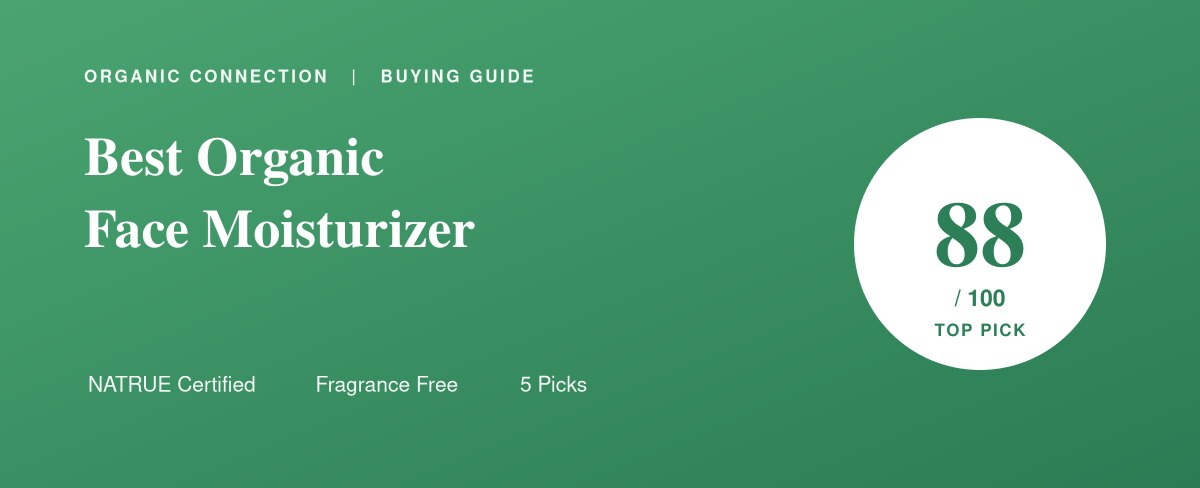
After working through the certification rules and the dermatology literature on natural-ingredient reactions, our top pick is Weleda Sensitive Care Face Cream. It carries the NATRUE seal, it is genuinely fragrance free rather than naturally scented, and that combination is unusual enough in this category to earn our highest Organic Integrity Score of 88 out of 100.
That pick reflects the most important finding on this page, and it is one the organic beauty industry does not advertise. When dermatologists advise people with sensitive skin, they recommend looking for products labeled fragrance free rather than products labeled natural, clean or organic. Botanical does not mean gentle.
Best organic face moisturizer compared
| Best Choice | Best Value | ||||
 |  |  |  |  | |
| Product | Weleda Sensitive Care Face | Alteya Organics Luminous | Weleda Renewing Day Face | Alteya Organics Night | Dr. Bronner’s Organic |
| Organic Integrity Score | 88/ 100 | 85/ 100 | 83/ 100 | 82/ 100 | 81/ 100 |
| Our rating | 4.4 | 4.3 | 4.2 | 4.1 | 4.1 |
| Certification | Not stated on the listing | Certified Organic | Not stated on the listing | Certified Organic | USDA Organic, Fair Trade, Non-GMO |
| Fragrance | Fragrance free | Rose otto | Wild rose | — | Essential oils |
| Key oils | Sweet almond | Bulgarian rose | Rose, peach kernel | — | Jojoba, coconut |
| Size | 1 fl oz | 50 ml | 1 fl oz | — | 8 fl oz |
| Best for | Reactive skin | Dry, mature skin | Daytime hydration | — | Face and body |
| Price | $25.99 View on Amazon | $24.95 $29.95 −17%$14.68 / ounce View on Amazon | Currently unavailable See buying options | $32.00$18.93 / fluid ounce View on Amazon | $12.99 $13.99 −7%$1.62 / fluid ounce View on Amazon |
Scores are ours, based on independent research of certification, fragrance status, ingredient restraint, packaging and value, using the same 10-criteria method we apply to every product.
Reading the seals on organic face moisturizer: what each one does and does not cover
A seal is a specific promise about a specific thing. These are the promises behind the marks on this page, in plain terms, along with the question each one leaves unanswered.
| Certification | Covers | Key exclusion |
| USDA Organic | Farming and handling: no synthetic pesticides or fertilizers, no GMOs, no sewage sludge or irradiation, audited yearly by an accredited certifier | Three different tiers share the one seal, and it makes no claim about worker pay, food miles, or nutrition |
| Fair Trade Certified | A price floor for producers, a community premium, and labor standards on the farms and in the facilities | An economic and labor standard; it is not an organic or pesticide claim |
| Leaping Bunny | No animal testing at any stage by the company or its suppliers, with supply-chain audits and annual recommitment | Says nothing about the ingredients themselves, organic content, or whether the product is vegan |
| COSMOS Organic | Cosmetics: organic content thresholds, permitted processes and ingredients, and packaging rules | Its sister grade, COSMOS Natural, carries the same name and requires no minimum organic content at all |
Read the word after COSMOS before you read anything else. The Organic grade sets a real floor, at least 95% of the plant content certified organic. The Natural grade sets none at all, and is a permitted-ingredients standard rather than an organic one. Both marks are issued by the same body, look alike on a bottle, and are frequently quoted in listings as simply “COSMOS certified”, which tells you nothing.
Why “natural” is not the same as “gentle”
The assumption underneath most organic skincare marketing is that plant-derived ingredients are inherently kinder to skin than synthetic ones. Dermatology does not support that assumption. Plant-based products can and do trigger allergic contact dermatitis, and essential oils, fragrant botanicals and even nourishing plant oils are unsuitable for some people.
Essential oils are the specific problem. They are concentrated aromatic compounds, and the same volatile molecules that make them smell appealing are the ones that sensitize skin. Dermatologists advise against applying undiluted essential oils to skin at all. In a moisturizer they are diluted, but they are still present, and in a product you apply to your face twice daily the cumulative exposure is exactly the pattern that produces sensitization over time.
None of this makes organic skincare a bad idea. It means the reason to buy it should be sourcing and agricultural practice, not an assumption about gentleness that the evidence does not carry. If your skin is reactive, the label to search for is fragrance free, and you should be aware that a great many certified organic moisturizers will fail that test.
Why almost nothing is USDA Organic in skincare
You will find very few face moisturizers carrying the USDA Organic seal, and there is a specific technical reason worth knowing.
USDA organic percentages are calculated on the agricultural ingredients in a product, and water is not an agricultural ingredient. A face cream is an emulsion, typically majority water by weight, so a product can be made almost entirely from certified organic botanicals and still struggle to reach the threshold for the seal once the water is excluded from the calculation. This is not a loophole being exploited; it is arithmetic.
The consequence is that the strongest certifications you will actually encounter in this category are European. NATRUE certifies natural and organic cosmetics against defined ingredient criteria and is the seal you will see on Weleda and Alteya products. It is a genuine third-party standard rather than a self-issued claim, and in a category this full of unregulated marketing that matters. Our guide to organic certifications covers how the schemes differ.
Key things to look for in an organic face moisturizer
1. Fragrance free if your skin is reactive
The single most useful filter, and the one most likely to conflict with the aesthetic of the category. “Unscented” is not the same as fragrance free, since some unscented products contain masking fragrance to neutralize raw ingredient odor. Look for the explicit claim.
2. A real third-party seal
NATRUE, COSMOS or USDA Organic mean an outside body checked. “Natural”, “clean”, “botanical” and “green” mean nothing in particular and are not legally defined for cosmetics.
3. A short ingredient list
Every additional botanical is another opportunity to react. For sensitive skin, the more restrained formulations are usually the more comfortable ones, and a cream carrying twelve plant extracts is offering you twelve chances to find out which one you cannot tolerate.
4. Non-fragrant oils where possible
Sunflower, safflower and sweet almond oil are frequently recommended by dermatologists for their gentleness. They do the moisturizing work without contributing the aromatic compounds that cause most of the trouble.
5. Packaging that protects the formula
Plant oils oxidize. An airless pump or a tube protects a formula better than a wide-mouth jar you dip fingers into, which introduces both air and bacteria on every use.
Who should buy an organic face moisturizer
Buy one if you want certified agricultural sourcing and you are choosing a formulation that suits your skin rather than assuming the seal guarantees it will. Buy one if you prefer the ingredient philosophy and your skin tolerates botanicals well, which most people’s does. Buy a fragrance-free one specifically if your skin is reactive, if you have eczema or rosacea, or if you have reacted to scented products before.
Be cautious if you have a known plant or pollen allergy, since botanical extracts can cross-react. Patch test on your inner forearm for a few days before putting anything new on your face, and treat that advice as more rather than less important for a heavily botanical product.
How to choose an organic face moisturizer
Work from your skin rather than from the label. If you are reactive, start with fragrance free and treat everything else as secondary. If you are not, decide what certification you actually want, check the oils suit your skin type, and prefer a shorter ingredient list and better packaging over a longer list of botanical actives. Price per ounce is worth checking against jar size, since face creams are often sold in one-ounce jars that make the unit cost easy to underestimate.
Best overall: Weleda Sensitive Care Face Cream, 1 fl oz
| Organic Integrity Score | 88 / 100 |
| Size | 1 fl oz |
| Certification | Not stated on the listing |
| Best for | Sensitive, reactive or eczema-prone skin |
It is the rare certified natural moisturizer that does what dermatologists actually recommend. It carries the NATRUE seal, and it is fragrance free rather than scented with something botanical, which puts it on the right side of the most common allergen in skincare. Sweet almond oil is one of the non-fragrant oils dermatologists tend to favor.
What we liked: Genuinely fragrance free, which is uncommon in certified natural skincare and is the single most useful property for reactive skin. NATRUE certification means an outside body checked the ingredients. Restrained formulation without a long botanical list. Sweet almond oil is gentle and well tolerated.
Keep in mind: One fluid ounce is a small tube and the cost per ounce is high. Contains sweet almond oil, so avoid it if you have a tree nut allergy. The texture is richer than some will want under makeup.
What the listing discloses: Weleda makes no organic claim anywhere, so the case rests on the other claims it does make.
Best certified organic: Alteya Organics Luminous Rose Face Cream, 50 ml
| Organic Integrity Score | 85 / 100 |
| Size | 50 ml |
| Certification | Certified Organic |
| Best for | Strongest certification, for skin that tolerates scent |
Alteya grow and distil their own Bulgarian rose, which is a genuinely vertical supply chain rather than a sourcing claim, and the NATRUE organic tier is a stricter standard than the base natural certification. At 50 ml it is also better value per milliliter than the one-ounce competition.
What we liked: NATRUE certified organic rather than merely natural. Traceable single-origin rose from the company’s own farms. Lightweight texture that suits most skin types. Better size-to-price ratio than the smaller jars in this category.
Keep in mind: Rose otto is an essential oil, so this is not a fragrance-free product and is the wrong choice for reactive skin. Rose is one of the more pleasant botanical scents but it is still fragrance in the allergen sense.
What the listing discloses: Alteya is thin on detail, and does not say whether the USDA seal applies and where it was grown or made.
Best for daytime: Weleda Renewing Day Face Cream, 1 fl oz
| Organic Integrity Score | 83 / 100 |
| Size | 1 fl oz |
| Certification | Not stated on the listing |
| Best for | Daytime hydration on normal to dry skin |
A lighter NATRUE-certified formulation built around wild rose, peach kernel and sweet almond oils, intended for daytime wear where a heavy cream would sit awkwardly under makeup or sunscreen.
What we liked: Lighter texture than the sensitive-skin cream, which makes it more wearable during the day. NATRUE certified. Peach kernel and sweet almond are both gentle carrier oils doing the real moisturizing work.
Keep in mind: Scented with wild rose, so not for reactive skin. No SPF, so it does not replace sunscreen. One ounce again, at a high cost per ounce.
What the listing discloses: No organic certification appears anywhere on the Weleda listing.
Best night cream: Alteya Organics Night Moisturizer, 50 ml
| Organic Integrity Score | 82 / 100 |
| Size | 50 ml |
| Certification | Certified Organic |
| Best for | Dry or mature skin overnight |
A richer certified organic formulation intended for overnight use, when a heavier texture is an advantage rather than a nuisance and when there is no makeup or sunscreen to layer over it.
What we liked: Certified organic with the same traceable Bulgarian rose supply chain. Richer texture genuinely suits overnight use. 50 ml is a reasonable size for the price.
Keep in mind: Rose oil again, so not fragrance free. The distinction between a day and night cream is more marketing than dermatology for most people, and if you like one Alteya cream you probably do not need both.
What the listing discloses: Alteya is thin on detail, and does not say whether the USDA seal applies and where it was grown or made.
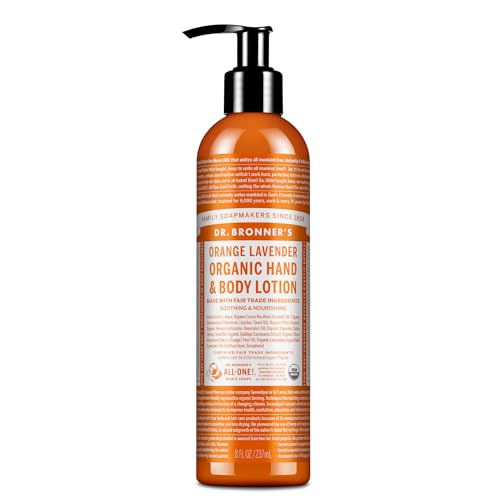
Best for face and body: Dr. Bronner’s Organic Lotion, 8 fl oz
| Organic Integrity Score | 81 / 100 |
| Size | 8 fl oz |
| Certification | USDA Organic, Fair Trade, Non-GMO |
| Best for | One certified product for face and body |
The only USDA Organic option here, and by a wide margin the best value at eight ounces against the one-ounce face creams. Dr. Bronner’s build it on organic jojoba, coconut, hemp and avocado oils, and it is fair trade certified as well as organic.
What we liked: Actual USDA Organic certification, which as explained above is genuinely difficult for a water-based cosmetic. Fair trade sourcing. Eight ounces changes the cost calculation completely. Jojoba is well tolerated and close to skin’s own sebum.
Keep in mind: This is a general lotion for hands, face and body rather than a dedicated facial formulation, so it is not tuned to facial skin the way the Weleda creams are. Scented with essential oils, so not for reactive skin. Some find it too light for a dry winter face.
What the listing discloses: Dr. Bronner’s is explicit about a USDA organic claim and Fair Trade, and silent on where it was grown or made.
Common questions about organic face moisturizers
Is organic skincare better for sensitive skin?
Not inherently, and often the opposite. Dermatologists advise people with sensitive skin to look for products labeled fragrance free rather than natural, clean or organic. Plant-based products can trigger allergic contact dermatitis, and essential oils are among the more common culprits. Choose an organic product for its sourcing, and choose a fragrance-free one for your skin.
Why is there so little USDA Organic face cream?
Because USDA organic percentages are calculated on agricultural ingredients and water does not count as one. A face cream is an emulsion that is mostly water by weight, so even a product built almost entirely from certified organic botanicals can fall short of the threshold once water is excluded. European schemes such as NATRUE and COSMOS are written for cosmetics specifically, which is why you see them more often here.
Are essential oils bad for your face?
They are a common cause of irritation and sensitization, and dermatologists advise against applying them undiluted to skin. Diluted in a moisturizer they are tolerated by most people, but if you are reactive, or if you have eczema or rosacea, they are the first thing to remove. Fragrance is the most frequently identified allergen in skincare, and essential oils are fragrance.
What does NATRUE certification mean?
It is a European third-party standard for natural and organic cosmetics, with defined criteria for which ingredients and processes are permitted, and tiers that distinguish natural from organic. Unlike the words natural or clean, which are not legally defined for cosmetics, it means an independent body has actually checked.
Which oils are best for facial moisturizing?
Non-fragrant oils such as sunflower, safflower and sweet almond are frequently recommended by dermatologists because they moisturize without contributing aromatic compounds. Jojoba is also well tolerated and closely resembles skin’s own sebum. The oils to approach with more care are the strongly aromatic ones.
Is “unscented” the same as “fragrance free”?
No, and the difference matters. Fragrance free means no fragrance ingredients have been added. Unscented can mean masking fragrance has been used to neutralize the natural smell of the raw ingredients, which means fragrance compounds are still present. If you are avoiding fragrance for skin reasons, look for the explicit fragrance-free claim.
Should I patch test a new moisturizer?
Yes, and more so with a heavily botanical product. Apply a small amount to your inner forearm daily for several days before using it on your face. Sensitization reactions often appear after repeated exposure rather than on first contact, which is exactly why a single application tells you less than you would like.
Does organic mean the product is not tested on animals?
No. They are separate claims governed by separate standards. Organic certification concerns agricultural production, not animal testing. If cruelty-free status matters to you, look for a specific certification such as Leaping Bunny rather than inferring it from an organic seal.
How long does an organic moisturizer last once opened?
Usually less than a conventional one, and that is a direct consequence of the ingredient philosophy. Natural preservative systems are generally less robust than synthetic ones, and plant oils oxidize over time, which is what produces the faintly rancid smell an old jar develops. Check the period-after-opening symbol on the packaging, which appears as a small open jar with a number and the letter M for months. Twelve months is common and six is not unusual for the more minimally preserved formulations.
Two practical consequences follow. Buy the smaller size if you use a product occasionally rather than daily, because a large jar you finish in two years will have degraded well before you reach the bottom. And prefer a pump or tube over a wide-mouth jar, since every finger dip introduces both air and skin bacteria into a formula whose preservative system is deliberately gentle.
- Organic Skincare and Beauty hub
- Understanding organic certifications
- Best Organic Rosehip Oil
- all our reviewed products in one place — sortable by Organic Integrity Score
- Face oil vs moisturizer, explained
- Best Organic Face Wash
Price and availability as of October 15, 2026 7:10 pm EDT. Product prices and availability are accurate as of the date/time indicated and are subject to change. Any price and availability information displayed on Amazon.com at the time of purchase will apply to the purchase of this product.
Looking for other organic products?
We have checked more than 800 products across food, household goods, gardening, personal care and pet, every one against its stated certification. Browse all reviews.
Organic Connection is reader-supported. When you buy through links on this page we may earn a commission, at no extra cost to you. As an Amazon Associate we earn from qualifying purchases. We are not paid to feature or rank any product. How we research and rate.