Last updated: August 28, 2026
We may earn a commission when you buy through links on this page, at no extra cost to you. How we research and rate.
The short version
This is the guide for a room that is genuinely large, meaning an open plan living space, a converted loft, or a floor of 500 sq ft or more that you actually want turned over. Our guides to purifiers for allergies, pets and mold recommend machines whose real coverage lands between about 150 and 375 sq ft, because that is what those jobs need. If your room is bigger than that, none of them is the answer and this is the page you want.
Our top pick is the Coway Airmega HyperVortex, with an Organic Integrity Score of 94 out of 100. It publishes all three of its CADR ratings, its coverage claim reconciles with them exactly, it is Energy Star certified, and it costs less than half what the largest machine here costs while delivering about 62% of its airflow.
The finding that shaped this guide is a pleasant surprise, because it runs the opposite way from everything else we have found in this category.
In the large room segment, the numbers mostly reconcile. Across four premium machines we checked, three publish a CADR and in every one of those three the stated coverage follows from the stated airflow exactly. That is a completely different picture from the budget end, where coverage claims routinely outrun the airflow behind them by a factor of two.
What counts as a large room, once you correct the arithmetic
Almost every purifier on Amazon is titled for a large room. The Airtok in our allergies comparison is titled at 1,848 sq ft and costs under fifty dollars. That does not make it a large room machine.
The reason is the convention behind the number. Coverage figures in titles are almost always quoted at one air change per hour, meaning the room’s air passes through the filter once every sixty minutes. Independent testing rates suggested room size at 4.8 air changes per hour instead, one change every twelve and a half minutes, which produces a figure roughly one fifth the size. We set out the full arithmetic in our guide to the best air purifiers for mold.
Apply that correction and the category thins out dramatically:
A typical budget machine claiming 1,800 to 2,500 sq ft delivers something between 250 and 385 sq ft of genuine coverage. That is a bedroom. The machines on this page deliver between 549 and 885 sq ft, and they cost between roughly $245 and $667 to do it, because moving that much air needs a bigger motor, a larger filter area and more electricity.
So the honest framing for this guide is that a genuinely large room costs real money. If your budget is under a hundred dollars, the right purchase is a smaller machine for the room you spend the most time in, not a large claim on a small unit.
Why the premium segment discloses better
This surprised us enough that it is worth setting out plainly, because it inverts the usual assumption that expensive things are simply marked up.
Of the five machines here, the three that publish a CADR are all from established appliance manufacturers, and all three reconcile:
Coway HyperVortex: CADR dust 376, smoke 352, pollen 450. Claims 2,640 sq ft in 60 minutes. Smoke CADR of 352 multiplied by 7.5 gives exactly 2,640.
Coway flagship: CADR dust 580, pollen 450, smoke 567. Claims 4,253 sq ft in 60 minutes and 2,126 in 30. Smoke CADR of 567 multiplied by 7.5 gives 4,252.5.
Levoit EverestAir-P: CADR 354 CFM, claims 2,655 sq ft in one hour. 354 multiplied by 7.5 gives exactly 2,655.
There is a plausible reason for the pattern. These are companies with appliance testing programs, existing certifications and reputations that a regulator or a competitor could challenge. A brand selling a single model through one marketplace has less at stake in a number nobody is going to check.
The practical consequence for a buyer is that in this segment the published figures are worth reading, which is not something we have been able to say about any other air purifier comparison on this site. The differences between these machines are real differences, not differences in how boldly each one rounds.
The one figure that does not fit
Having praised the disclosure, one number in this comparison does not behave, and it is in the most expensive listing.
Coway’s flagship publishes “CADR: Dust 580 / Pollen 450 / Smoke 567”. The mid-range HyperVortex, at roughly a third of the price, publishes “CADR: Dust 376, Smoke 352, & Pollen 450”.
Both models claim a pollen CADR of exactly 450. On every other axis the flagship is far stronger: 54% more dust delivery and 61% more smoke delivery. On pollen, the two machines are identical to the digit.
It is also the wrong shape internally. Pollen grains are large, roughly 10 to 100 microns, and are the easiest of the three test aerosols to capture, so pollen CADR is normally the highest of a machine’s three figures. On the HyperVortex it is, at 450 against 376 and 352. On the flagship it is the lowest, at 450 against 580 and 567.
We cannot tell you which explanation is right. It could be a genuine ceiling in the pollen test, or a figure carried over between listings. What we can say is that it is the one number in the premium segment that does not fit its neighbors, and that a buyer choosing the flagship specifically for pollen is paying an extra $400 or so for a figure identical to the cheaper model’s.
We have not marked the machine down for underperforming, because we do not test and it may well be excellent. We have marked the listing down because the figure is unexplained.
Big room, or two machines?
This is the question that decides most large room purchases, and the answer is less obvious than it looks.
A single large machine has one filter to buy, one plug, and one thing to maintain. It also has one location, and air purifiers do not distribute their effect evenly across a big space. Clean air concentrates near the unit and falls off with distance, which is why a purifier that nominally covers 800 sq ft still leaves the far corner of an L-shaped room barely touched.
Two smaller machines placed apart will usually give a more even result across an awkward floor plan, and they give you redundancy while one is having its filter changed. They will also cost more to run in filters and take up two sockets.
Our rule of thumb: one machine if the space is a single open rectangle and you can put it near the middle of the long wall. Two if the floor plan bends, or if a doorway divides usage. Purifiers do almost nothing through a doorway, so an open plan kitchen and living area that share air is one room, while a living room and an adjoining study with a door between them is two.
Ceiling height is the other correction people forget. Every coverage figure on this page assumes eight feet. A converted loft or a room with a vaulted ceiling holds considerably more air than its floor area suggests, and a 700 sq ft room at twelve feet is really a 1,050 sq ft room as far as the machine is concerned.
What we looked for
We read every feature bullet in full and scored on what each manufacturer put in writing.
A published CADR that its coverage claim follows from. In this segment we could apply that test properly, and it separated the field cleanly.
All three CADR figures rather than one. A single unlabeled figure is usually the flattering one, and in a large space the conservative figure is what you want to plan against.
Energy Star certification. More relevant here than in any other size class, because a machine moving 350 to 570 CFM continuously is a real load rather than a rounding error on a bill.
A washable pre-filter, since filters for machines this size are expensive and the pre-filter is what protects them.
Quantified odor and VOC claims rather than a general promise, and named compounds where possible.
Best air purifiers for large rooms compared
 |  |  |  |  | |
| Model | Coway HyperVortex | Levoit EverestAir-P | Coway Whole Home | Blueair Blue Signature | LUNINO K3 |
| Organic Integrity Score | 94 / 100 | 90 / 100 | 86 / 100 | 84 / 100 | 54 / 100 |
| CADR published | 376 / 352 / 450 | 354 CFM | 580 / 567 / 450 | No | No |
| Coverage claimed | 2,640 sq ft hourly | 2,655 sq ft hourly | 4,253 sq ft hourly | 3,385 sq ft hourly | 3,000 sq ft |
| Does it reconcile? | Yes, exactly | Yes, exactly | Yes, exactly | No CADR to check | Nothing to check |
| Real coverage at 4.8 changes | Approx. 549 sq ft | Approx. 552 sq ft | Approx. 885 sq ft | 705 sq ft, stated | Not calculable |
| Energy Star | Yes | Not stated | Not stated | Not stated | No |
| Quantified VOC claim | Over 99%, NH3 and CH3CHO | 60% more carbon than Vital 200S-P | Stated, not quantified | OdorFence, not quantified | No |
| Fragrance function | No | No | No | No | Yes, diffuser |
| Price | $339.00$339.00 / count View on Amazon | $499.99 View on Amazon | $899.99 $999.99 −10%$899.99 / count View on Amazon | $439.99$439.99 / count View on Amazon | $89.99$89.99 / count View on Amazon |
Price and availability as of September 1, 2026 2:12 am EDT. Product prices and availability are accurate as of the date/time indicated and are subject to change. Any price and availability information displayed on Amazon.com at the time of purchase will apply to the purchase of this product.
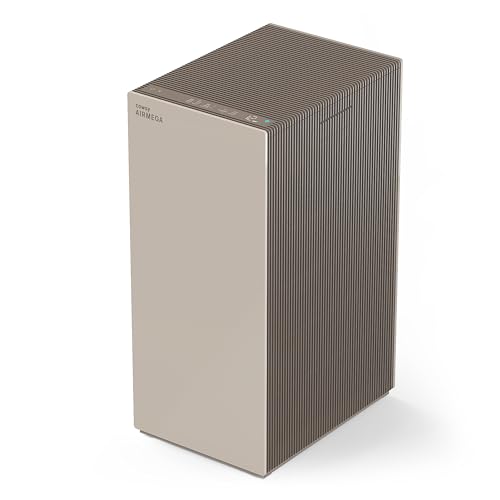
Best overall: Coway Airmega HyperVortex
| Organic Integrity Score | 94 / 100 |
| CADR | Dust 376, smoke 352, pollen 450 CFM |
| Coverage | 2,640 sq ft in 60 minutes; approximately 549 sq ft at 4.8 changes |
| Verification | Energy Star certified; CARB compliant |
| Best for | An open plan living space, at the best airflow per dollar here |
This is the machine we would buy, and the reasoning is mostly about value per unit of verified airflow.
It publishes all three CADR figures, and its coverage claim follows from the lowest of them: 352 CFM multiplied by 7.5 gives 2,640 sq ft, exactly as claimed. Corrected to 4.8 air changes an hour, real coverage is about 549 sq ft, which is a genuine open plan living area.
Set that against the flagship further down this page. That machine delivers 567 CFM of smoke CADR against this one’s 352, so 61% more air, for roughly 172% more money. On airflow per dollar the HyperVortex is comfortably the strongest machine in the comparison, and for most rooms described as large it is enough.
The Energy Star certification matters here in a way it would not on a bedroom unit. A machine of this size running continuously is a genuine electrical load, and it is the only unit in this comparison to carry the mark.
Two more things we credit. Its VOC claim is quantified and specific, reducing “more than 99% of volatile organic compounds” and naming ammonia and acetaldehyde, which is far better than the general odor promises elsewhere on this page. And the 21.6dB noise floor is remarkable for a machine moving this much air, which matters because a large room purifier is often in the room people are talking in.
The pre-filter is vacuumable rather than washable, a small distinction that means slightly less maintenance flexibility, and the filter life indicator is a straightforward status light rather than the percentage readout Coway puts on some other models.
The main limit is the one shared by the whole page: 2,640 sq ft is the one-air-change figure and 549 sq ft is the real one. Buy it for the latter.
- All three CADR figures published, and coverage reconciles from the lowest of them.
- Best airflow per dollar in this comparison by a wide margin.
- The only Energy Star certified machine here.
- VOC reduction quantified at over 99% with the compounds named.
- 21.6 dB is exceptionally quiet for this much airflow.
- Real coverage is about 549 sq ft, not the 2,640 in the title.
- Pre-filter is vacuumable rather than washable.
- Filter indicator is a light rather than a percentage readout.
- Not the largest machine here if your space is genuinely over 600 sq ft.
Best for: An open plan living and kitchen space up to roughly 550 sq ft, at the best value on this page.
Best sensor and carbon: Levoit EverestAir-P
| Organic Integrity Score | 90 / 100 |
| CADR | 354 CFM, single figure, category not stated |
| Coverage | 2,655 sq ft in one hour; approximately 552 sq ft at 4.8 changes |
| Verification | AHAM Verifide |
| Best for | Anyone who wants to find their pollution sources, not just filter them |
Almost identical airflow to our top pick, at roughly double the price, and what the extra money buys is instrumentation and carbon.
The arithmetic is clean: a CADR of 354 CFM and a claim of 2,655 sq ft in one hour, which is 354 multiplied by 7.5 exactly. Real coverage at 4.8 air changes is about 552 sq ft. It also carries AHAM Verifide, the independent performance verification that Coway’s listings do not mention, and the listing explains what that accreditation means.
The three-channel laser sensor is the genuine differentiator. Rather than a single PM2.5 reading, it reports PM10, PM2.5 and PM1.0 separately, and Levoit is explicit about the point: you “analyze the data to discover pollution sources”. Particle size tells you what the particles are. A spike in PM10 with PM1 flat suggests dust or pollen being disturbed; a spike in PM1 suggests combustion, cooking or smoke. In a large open space with several possible sources, that is a genuinely useful diagnostic, and no other machine here offers it.
The carbon claim is the other reason to consider it. Levoit states the EverestAir-P has “60% more carbon” than its Vital 200S-P, which is a quantified relative claim rather than a vague one. In a large room, where the volume of air passing the carbon is correspondingly larger, carbon capacity is what determines how long odor control lasts.
Two reservations. The CADR is published as a single figure without saying whether it is the smoke, dust or pollen number, which given that the three differ materially is information withheld; based on how the coverage figure is calculated it behaves like the smoke or a close-to-lowest figure, but the listing should say. And at roughly double the price of the HyperVortex for effectively the same airflow, this is a purchase you make for the sensor and the carbon, not for the coverage.
- CADR published and coverage reconciles from it exactly.
- AHAM Verifide, with the accreditation explained in the listing.
- Three-channel PM1, PM2.5 and PM10 sensor that identifies pollution sources.
- 60% more carbon than the Vital 200S-P, a quantified relative claim.
- Washable pre-filter.
- Roughly double the price of our top pick for essentially the same airflow.
- Publishes one CADR without saying which of the three it is.
- No Energy Star certification stated.
- Real coverage is about 552 sq ft, not the 2,655 in the listing.
Best for: A large room with several possible pollution sources, where knowing which one is acting matters.
Largest genuine coverage: Coway Whole Home
| Organic Integrity Score | 86 / 100 |
| CADR | Dust 580, pollen 450, smoke 567 CFM |
| Coverage | 4,253 sq ft in 60 minutes, 2,126 in 30; approximately 885 sq ft at 4.8 changes |
| Configuration | Binary motor, two sets of XL washable pre-filters and HEPA filters |
| Best for | Genuinely large open spaces above about 600 sq ft |
If your space is genuinely large, this is the machine on this page with the airflow to handle it, and the arithmetic supports the claim.
Smoke CADR of 567 CFM multiplied by 7.5 gives 4,252.5 sq ft, against a claimed 4,253. Corrected to 4.8 air changes an hour, real coverage is about 885 sq ft, the largest verified figure anywhere in our air purifier work. The dual-motor, dual-filter arrangement is what delivers it, with two complete sets of washable pre-filters and HEPA filters working in parallel.
That parallel arrangement has a practical benefit worth noting: two filter sets means the machine keeps working while you service one, and the load is shared across twice the filter area, which generally means a longer interval before either is exhausted.
Now the two reasons it sits third despite being the most capable.
The first is the pollen figure discussed above. At 450 it is identical to the far cheaper HyperVortex, and it is the only one of this machine’s three CADR figures that is not dramatically higher. It is also, unusually, its lowest figure rather than its highest. We do not know why, and the listing does not say.
The second is simply price. At roughly $667 it costs about 172% more than our top pick for 61% more airflow, and two HyperVortex units would cost less, cover more in total, and distribute the effect better across an awkward floor plan. The case for a single machine this large is genuinely narrow: one big open rectangle, one socket, one filter to think about.
The listing is also sparse for the money, with only two substantive feature bullets, no Energy Star claim and no quantified VOC figure of the kind its cheaper sibling publishes.
- Largest verified coverage in any of our air comparisons at roughly 885 sq ft.
- All three CADR figures published, and coverage reconciles from the smoke figure exactly.
- Two full sets of washable pre-filters and HEPA filters running in parallel.
- Turbo mode and AQI readout.
- Pollen CADR of 450 is identical to a model costing a third as much, and unexplained.
- 172% more expensive than our top pick for 61% more airflow.
- Two smaller machines would cover more, for less, with better distribution.
- Sparse listing with no Energy Star claim and no quantified VOC figure.
Best for: A single large open space over about 600 sq ft where you want one machine rather than two.
Honest without a CADR: Blueair Blue Signature
| Organic Integrity Score | 84 / 100 |
| True coverage | 705 sq ft in 12.5 minutes, stated in the listing |
| Coverage in title | 3,385 sq ft, its hourly figure |
| Filtration | 7-stage HEPASilent, 99.97% to 0.1 microns, OdorFence for gases |
| Best for | A large living room where the machine has to look like furniture |
Blueair publishes no CADR, and it still earns a good score, because it does the next best thing: it states both coverage figures and it uses the honest interval.
“Quickly cleans rooms up to 705 sq ft in just 12.5 minutes and 3,385 sq ft every hour.” Those two numbers sit in a ratio of 4.80, and twelve and a half minutes is precisely one air change at 4.8 changes per hour. 705 sq ft is therefore a stated figure rather than one we calculated, and it is the second largest genuine coverage on this page.
This is the same pattern we identified in our allergies comparison, where the twelve and a half minute interval turned out to be the reliable marker of a listing quoting its tested number rather than its flattering one. Blueair uses it consistently across its range.
The seven-stage HEPASilent filtration is claimed at 99.97% down to 0.1 microns, and OdorFence is the gas-phase stage for odors and VOCs, though unlike Coway’s the claim is not quantified and no compounds are named.
The design point is not trivial at this size. A machine covering 700 sq ft is physically large, and Blueair’s furniture-inspired cabinet, which doubles as a side table with interchangeable colored pre-filters, is a real answer to the problem of putting an appliance in the middle of a living room. Purifiers work best away from walls, and the ones people actually place away from walls are the ones that look acceptable there.
What keeps it below the machines above is the missing CADR. There is no way to compare this against a brand quoting airflow, no way to check the 705 sq ft figure independently, and no third-party performance verification named. The 0.1 micron claim is also not the standard 0.3 micron rating point, so it is not directly comparable with a competitor quoting the conventional figure.
- States 705 sq ft at the honest 12.5 minute interval rather than making you calculate it.
- Second largest genuine coverage on this page.
- Seven-stage filtration with a dedicated gas-phase stage.
- Furniture-style cabinet makes central placement realistic.
- Interchangeable washable pre-filters.
- No CADR published, so it cannot be compared across brands.
- OdorFence claim is not quantified and names no compounds.
- The 0.1 micron figure is not the standard HEPA rating point.
- No third-party performance verification named.
Best for: A large living room where the purifier has to sit in the open and look like it belongs there.
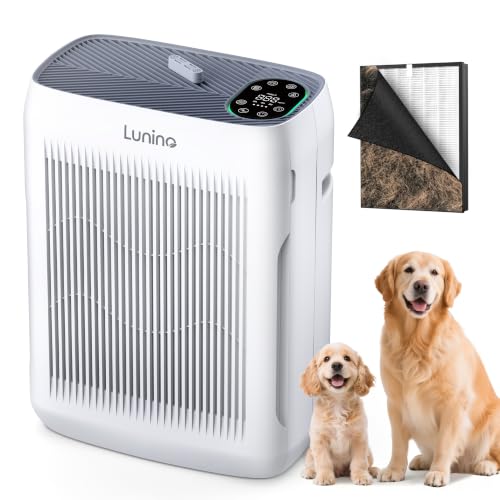
A 3,000 sq ft claim on a budget machine: LUNINO K3
| Organic Integrity Score | 54 / 100 |
| Coverage claimed | 3,000 sq ft, with no CADR and no air change rate |
| Filtration | 3-stage H13 HEPA, washable pre-filter |
| Verification | ETL, FCC, EPA, CARB; no performance certification |
| Best for | Not our recommendation where the room is genuinely large |
Included because it is the pattern this whole page exists to correct: a 3,000 sq ft coverage claim on a machine costing under a hundred dollars, sitting in search results next to units claiming similar figures at five to seven times the price.
There is no CADR, no air change rate and no interval, so there is nothing to check the claim against. Compare that with the Coway flagship, which delivers a verified 885 sq ft at 4.8 air changes and needs a binary motor, two full filter sets and $667 to do it.
Several things in the listing are genuinely good and we want to say so. The washable pre-filter comes with a quantified claim of restoring 30% filtration efficiency. The replacement filter ASIN is named directly in the bullets, which we have argued should be standard. The filter replacement reminder is described sensibly, and ETL, FCC, EPA and CARB are all named. At 15dB the sleep mode is the quietest figure in this comparison.
There is also a candid note we appreciated: the listing explains that its single-sided filter is “more affordable than double-sided design”, which is an unusually direct admission of a cost trade-off.
Against that, the machine has an aroma diffuser compartment for essential oils. As we set out in our guide to the best air purifiers for pets, essential oils are volatile organic compounds, the same class of thing the filter is meant to be removing, so running the diffuser works against the appliance. Leave it dry.
Our conclusion is not that this is a bad purifier. It is that at this price it is a bedroom machine wearing a large room title, and for a genuinely large space the honest options start at several times the money.
- Washable pre-filter with a quantified 30% efficiency restoration claim.
- Replacement filter ASIN named directly in the listing.
- 15 dB sleep mode, the quietest figure in this comparison.
- ETL, FCC, EPA and CARB all named.
- Candid about the single-sided filter being a cost trade-off.
- 3,000 sq ft claimed with no CADR and no air change rate behind it.
- Aroma diffuser adds VOCs to air the filter is trying to clean.
- No performance certification of any kind.
- Priced and specified as a bedroom machine.
Best for: A bedroom, honestly, rather than the large room in its title.
What we left out and why
We left out a mid-range Coway model titled at 3,120 sq ft and priced around $389, which is an instructive omission. It sits between two siblings that both publish full CADR figures, and its own feature bullets contain no coverage bullet and no CADR at all, only a filtration description. A manufacturer that discloses well on two models and not on a third, more expensive than one of them, is a reminder that disclosure is a per-listing decision rather than a brand promise.
We left out the Levoit Core 400S-P and the Winix 5510, both of which are genuinely capable, because they head or feature in our mold comparison and we do not want the same machines carrying two guides.
We excluded whole-house solutions that attach to ducting. They are a different purchase with a different installer and a different budget, and they do not compete with a plug-in appliance.
We also left out several units claiming coverage above 3,500 sq ft with no published airflow. Once the correction is applied, a claim that large from a machine that size implies airflow no consumer purifier at that price produces.
How to set one up in a large room
Placement matters more as the room gets bigger, because the shortfall between rated and delivered performance grows with distance from the unit.
- Measure the floor area, then measure the ceiling height. If the ceiling is above eight feet, multiply the floor area by the ratio: a 600 sq ft room at ten feet behaves like 750 sq ft.
- Decide whether the space is one room or two. If a doorway separates the areas, treat them separately, because purifiers do very little through a doorway.
- Take the smoke CADR in CFM and multiply by 1.56 to get genuine coverage at 4.8 air changes. Compare that with your corrected room size.
- If one machine does not reach it, price two smaller ones before buying one large one. Two units usually cover more, cost less, and distribute better.
- Unwrap the filters. Machines this size often ship with two filter sets, both sealed in plastic.
- Place the unit away from walls and corners, ideally near the middle of the longest wall. Large purifiers draw from several faces and lose a substantial share of their intake against a wall.
- Do not tuck it behind a sofa. This is the most common placement error in a living room, and it undoes much of what you paid for.
- If the space is L-shaped, put the machine at the inside of the bend rather than at either end.
- Keep it out of the direct path of an air conditioning vent or a draft, which will push unfiltered air past the sensor and skew auto mode.
- Run high for the first few hours, then let auto mode take over if the machine has a sensor.
- In a large room, continuous operation at a moderate speed beats intermittent bursts on maximum, because the volume takes longer to turn over.
- Vacuum or wash the pre-filter monthly. Large machines pull a lot of coarse debris and the pre-filter is what protects an expensive main filter.
- On dual-filter machines, service both sets at once even if one looks cleaner, so they stay on the same schedule.
What it costs to run
Large machines cost more to buy, more to run and considerably more to re-filter, and the last of those is the one people underestimate.
Two conclusions follow. The first is that Energy Star certification earns its keep at this size in a way it does not on a bedroom unit, which is a point in the HyperVortex’s favor beyond its purchase price.
The second is that a dual-filter machine’s consumable cost is roughly double a single-filter machine’s, which needs to go into the comparison alongside the purchase price. Over three years, two mid-range machines and one flagship can end up much closer in total cost than their sticker prices suggest, and the two machines will cover an awkward room better.
Living with a large room purifier
Coverage is not uniform. The rated figure assumes reasonably well mixed air. In a real living room the far corner gets substantially less than the sofa two feet from the unit, which is the strongest argument for two machines over one.
It has to sit in the open to work. A machine this size pushed against a wall or behind furniture loses a large fraction of its intake, which is why the units designed to look like furniture are not merely a style choice.
Auto mode is more useful at this size. Large rooms have variable loads, from cooking to a fire to a door opening, and a sensor-driven machine spends most of its time at a low speed and ramps only when needed, which is quieter and cheaper than running high continuously.
Noise is the constraint people underestimate. This is the room where you watch television and hold conversations, and a purifier running at full speed can be intrusive. The 21.6dB figure on our top pick is worth more here than an extra hundred CFM.
Pre-filters do the heavy lifting. A large machine processes far more air, which means far more coarse debris, which means the pre-filter is the component that decides how long the expensive filter behind it survives.
Questions about air purifiers for large rooms
How big a room can an air purifier really cover?
Take the smoke CADR in CFM and multiply by 1.56 for genuine coverage at 4.8 air changes an hour. The machines on this page land between about 549 and 885 sq ft. A budget unit titled at 2,000 sq ft typically delivers between 250 and 385 sq ft, which is a bedroom rather than a large room.
Is one large air purifier better than two smaller ones?
One if the space is a single open rectangle and you can place it away from walls near the middle. Two if the floor plan bends, if a doorway divides the space, or if the room is over about 700 sq ft, because purifiers do not distribute evenly and two units usually cover more for less money.
Why do cheap purifiers claim the same coverage as expensive ones?
Because coverage figures are usually quoted at one air change per hour and nothing requires a manufacturer to publish the airflow behind them. Once you ask for a CADR, the field separates: in this comparison the three machines that publish one all reconcile exactly, and the ones that do not publish one make the largest claims relative to their price.
Does ceiling height affect air purifier coverage?
Yes, and every figure on this page ignores it. Coverage is calculated assuming eight foot ceilings, so a room with ten foot ceilings holds 25% more air than its floor area suggests, and a vaulted or loft space considerably more. Multiply your floor area by the ratio of your ceiling height to eight feet before comparing.
What is CADR and which of the three numbers matters?
Clean Air Delivery Rate is the volume of filtered air a machine delivers, published separately for smoke, dust and pollen. Smoke is normally the lowest because smoke particles are the hardest to capture, so it is the conservative figure to plan a large room around. Coway calculates its coverage from the smoke figure, which is why its claims reconcile.
Do I need Energy Star on an air purifier?
It matters more at this size than any other. A machine moving 350 to 570 CFM continuously is a genuine electrical load rather than a rounding error, so the efficiency difference shows up on a bill over a year of running.
Where should I put a purifier in an open plan room?
Away from walls and corners, ideally near the middle of the longest wall, and not behind a sofa. Large purifiers draw air from several faces and lose a significant share of their intake against a wall. In an L-shaped space, place it at the inside of the bend rather than at either end.
Are two filter sets better than one?
They deliver more airflow and share the load across twice the filter area, which generally means a longer interval before replacement. They also cost roughly twice as much to re-filter, so factor the consumable cost into the comparison alongside the purchase price.
Can an air purifier clean my whole house?
No plug-in purifier does, whatever the title says. Air does not move usefully between rooms through doorways, so a machine rated for 4,000 sq ft is really covering the room it is standing in. Whole-house treatment means something attached to ducting, which is a different purchase entirely.
Is a more expensive purifier actually better?
In this size class, generally yes, and for a reason we did not expect: the premium machines publish figures that check out, while the budget ones mostly publish claims that cannot be checked at all. What the money buys is airflow you can verify, not just airflow.
Organic Connection is reader supported. We read every product listing in full, check the arithmetic in it, and say plainly when a claim cannot be verified. How we research and rate.