Last updated: September 16, 2026
We may earn a commission when you buy through links on this page, at no extra cost to you. How we research and rate.
The short version
Reading what each listing will actually stand behind, our top pick is the Snuvid 4-Pack 63 oz Glass Storage Containers. It is the only set on this page whose description states lead-free as well as BPA-free, it gives a specific temperature range rather than an adjective, and at around thirty dollars it is the best-selling set here. That earned it our highest Organic Integrity Score of 91 out of 100.
The finding that matters more is about lids. All five sets are marketed on being glass and BPA-free. The glass body was never the plastic question — glass is inert, it does not leach, and it never contained BPA. The part that touches hot food, gets microwaved, and goes through a dishwasher a thousand times is the lid, and on three of these five the lid is plastic.
Where the plastic actually is
| Best Choice | Best Value | ||||
 |
 |
 |
 |
 |
|
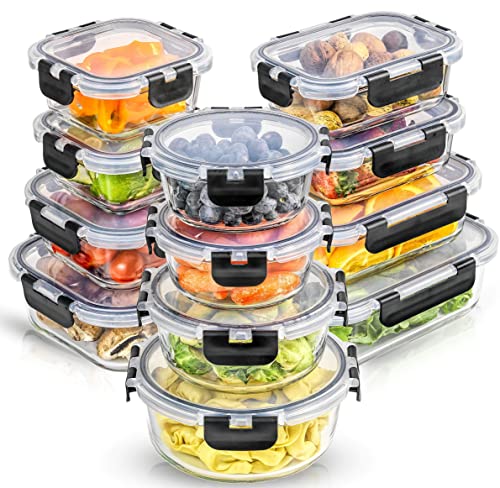
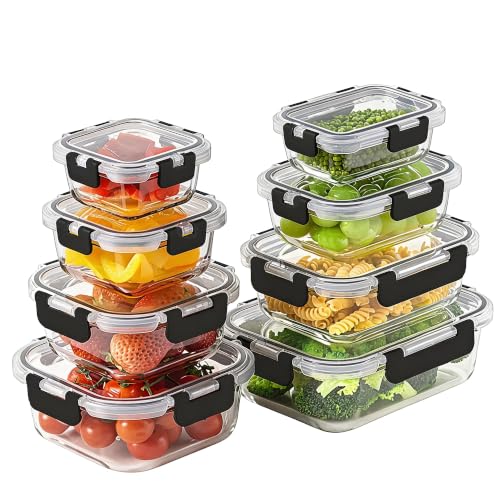
| Product | Snuvid 63 oz | BOROHOUSE 10-Pack | GENICOOK 5-Pack | JoyJolt 24pc | HOMBERKING 8-Pack |
| Organic Integrity Score | 91/ 100 | 89/ 100 | 84/ 100 | 81/ 100 | 78/ 100 |
| Our rating | 4.6 | 4.5 | 4.2 | 4.1 | 3.9 |
| Best for | Best overall | Glass lids throughout | Glass lids, honest limits | Most pieces | Cheapest set |
| Lid material | Plastic with silicone seal | Tempered glass | Glass with steam vent | Plastic with hinge clips | Plastic snap-lock |
| Lead-free stated | Yes | No | No | No | No |
| Temperature claim | −4°F to 752°F | −4°F to 950°F | Not stated | Not stated | −4°F to 752°F |
| Pieces | 4 containers | 10 containers | 5 containers | 12 containers | 8 containers |
| Price | $29.99$7.50 / count View on Amazon |
$45.99 $55.99 −18%$4.60 / count View on Amazon |
$43.99 View on Amazon |
$36.25 $42.95 −16%$3.02 / count View on Amazon |
$23.99$3.00 / count View on Amazon |
Scores are ours, based on independent research of materials disclosure, lid construction, published temperature limits and value, using the same ten-criteria method we apply to every product.
The glass was never the problem
People buy glass storage for one reason: to stop food sitting against plastic. That instinct is sound. Plastic containers scratch, stain, hold odours, and the debate over what migrates out of them under heat has run for two decades without fully resolving.
So it is worth being precise about what glass fixes. Glass is inert. It does not leach, it does not absorb, and it has never contained BPA, because BPA is a monomer used to make polycarbonate plastic and epoxy resins. Advertising BPA-free glass is like advertising a gluten-free apple.
The lid is a different object entirely. It is the part that sits directly over hot food, goes into the microwave, absorbs tomato stains, and takes a thousand dishwasher cycles at 60°C. On three of the five sets here, that part is plastic — usually polypropylene, with a silicone gasket.
Polypropylene is a reasonable food-contact plastic and is not the villain polycarbonate was. But if your reason for spending forty dollars on glass was to remove plastic from the equation, a plastic lid removes rather less of it than the marketing implies, and no listing on this page draws attention to that.
752°F or 950°F: two listings, one material, and both cannot be right
Every set here is described as borosilicate glass, the same family as laboratory glassware and old Pyrex. It handles thermal shock far better than soda-lime glass, which is why it can go from fridge to oven without shattering.
What it cannot do is take any temperature you like. Two of these listings state a range of −4°F to 752°F. One states −4°F to 950°F for the same material in the same application. Those are not both true, and neither cites a standard or a test method.
The practical figure is lower than any of them anyway, because your oven is not the limit — the seal is. A plastic lid should never go in an oven at all, and even a glass lid with a silicone gasket has a much lower ceiling than the glass itself. GENICOOK is the only set here that says this plainly, specifying oven use with the lid off.
Treat any number above about 500°F as marketing. The useful question is not how hot the glass can theoretically get; it is whether the maker tells you to remove the lid first. One of five does.
What each claim on a food container label actually covers
Food storage carries no organic certification, so the phrases on these listings mean different things from those on a food label. Here is what each one covers and what it leaves out.
| Claim | Covers | Key exclusion |
| BPA-free | No bisphenol A in the plastic components | Automatic for the glass body. It is a claim about the lid, and it says nothing about what replaced BPA |
| Lead-free | No lead in the glass or any decoration on it | The one claim here that is genuinely about the glass, and only one listing makes it |
| Borosilicate | A glass formulation with high thermal shock resistance | Not a safety standard and not certified; some listings use the word loosely for tempered soda-lime |
| Oven safe | The glass tolerates oven temperatures | Almost never covers the lid, which is the part that fails first |
| Airtight / leak-proof | A gasket and a clamping mechanism | A seal claim, not a materials one. The gasket is silicone on every set here |
| Food grade | Materials permitted for food contact | A legal floor for anything sold to hold food, not a mark of quality |
The claim worth wanting is lead-free, and only one set makes it. Lead is the real historical issue with glass — not the body, which is fine, but decorated or imported glassware where the paint or glaze carries it. A plain undecorated borosilicate container is very unlikely to be a problem. Saying so in writing still costs a manufacturer nothing, and four of five decline.
Best overall: Snuvid 4-Pack 63 oz Glass Storage Containers
| Organic Integrity Score | 91 / 100 |
| Set | 4 containers, 63 oz each |
| Materials claim | Borosilicate glass, BPA-free and lead-free, both stated |
| Lid | Locking plastic with a removable silicone seal |
| Best for | Family-sized batches from the only maker that mentions lead |
Snuvid is our top pick because it says the most, and what it says is the right thing. It is the only listing on this page that states lead-free alongside BPA-free, and lead is the claim that actually pertains to glass rather than to the lid.
It gives a specific temperature range, −4°F to 752°F, rather than saying oven safe and leaving you to guess. It notes that the silicone seal is removable, which matters because a gasket you cannot take out is a gasket that will eventually smell of last month’s curry.
At 63 oz these are large — roast chicken, a batch of soup, a whole tray of leftovers. That is a genuine gap in most sets, which skew toward lunch-sized portions. It is also the best-selling set of the five and among the cheapest.
What we liked: The only lead-free statement here, a published temperature range, a removable seal, a genuinely useful large size, and a low price for four big containers.
Keep in mind: The lid is plastic. If avoiding plastic entirely is the point, the two glass-lidded sets below answer that better. Four containers is a small set if you meal prep weekly.
Glass lids throughout: BOROHOUSE 10-Pack Glass Food Storage Containers
| Organic Integrity Score | 89 / 100 |
| Set | 10 containers, 4.4 and 1.6 cup sizes |
| Materials claim | Borosilicate glass and BPA-free; no lead statement |
| Lid | Tempered glass with an air-release valve |
| Best for | Actually removing plastic rather than reducing it |
If the reason you are buying glass is to get plastic away from your food, this is the set that delivers it. The lids are tempered glass, not plastic, which is the single most meaningful difference on this page and the one thing no amount of BPA-free labelling substitutes for.
Ten containers in two sizes covers more use cases than any set here except the JoyJolt, and the air-release valve is a genuinely thoughtful detail: it makes an airtight lid openable without a fight.
What keeps it second is a number we do not believe. The listing claims a range of −4°F to 950°F. Two other sets here, made from the same material, say 752°F. Nobody cites a standard, and 950°F is not a plausible working temperature for a food container with a gasket in it. We would rather a maker understate and be right.
It is also the most expensive set here, and it makes no lead statement.
What we liked: Genuine glass lids, ten pieces in two useful sizes, an air-release valve that makes the seal practical, and a set that matches its own marketing premise.
Keep in mind: The 950°F claim does not stand up next to the rest of the category. Priciest here, and no lead-free statement. Glass lids are heavier and will chip if dropped.
Glass lids, honest limits: GENICOOK 5-Pack Meal Prep Containers
| Organic Integrity Score | 84 / 100 |
| Set | 5 containers, 35 oz each |
| Materials claim | Borosilicate glass; no BPA or lead statement in the description |
| Lid | Glass with a steam vent and locking clips |
| Best for | The only maker that tells you to take the lid off |
The second set here with glass lids, and the only listing on the page that states the limitation everyone else leaves out: oven use is lid off. That single phrase is more useful than any of the temperature numbers, because the lid and its gasket are what fail first.
The steam vent is the other detail worth having. Microwaving a sealed container builds pressure; a vent means you are not gambling on the clips.
It sits mid-table on documentation rather than design. The description makes no BPA or lead claim at all, and it is a five-piece set at a price where others give eight or ten. Its sales record is also much the weakest here.
What we liked: Glass lids, a proper steam vent, locking clips, and the only honest statement about oven use on this page.
Keep in mind: No materials claims in the description, fewest pieces per dollar, and a thin sales record compared with the sets above.
Most pieces: JoyJolt 24pc Borosilicate Glass Storage Containers
| Organic Integrity Score | 81 / 100 |
| Set | 24 pieces, 12 containers with lids |
| Materials claim | BPA-free; no lead statement, no temperature figure |
| Lid | Plastic with hinge clips and a removable silicone seal |
| Warranty | Limited one year, stated |
Twelve containers is the most storage here by a distance, and JoyJolt is the only brand on this page that puts a warranty in writing. A stated one-year limited warranty is a small thing, but it is a commitment, and commitments are what this site counts.
The lids are plastic with hinge clips, and the silicone seal is removable, which is the right design for cleaning.
It scores fourth because the description is thin where it matters. BPA-free is the only materials claim, there is no lead statement, and no temperature figure at all — on a product whose main selling point is going from freezer to oven, that omission is odd.
What we liked: The most containers per set, a stated warranty, removable seals, and a strong sales record.
Keep in mind: Plastic lids, no lead claim, and no published temperature range despite freezer-to-oven being the pitch.
Cheapest set: HOMBERKING 8-Pack Glass Food Storage Containers
| Organic Integrity Score | 78 / 100 |
| Set | 8 containers with snap-locking lids |
| Materials claim | Borosilicate glass, BPA-free; no lead statement |
| Lid | Plastic snap-lock with silicone seal |
| Best for | Kitting out a kitchen for the least money |
The cheapest way onto this page, and eight containers is a real set rather than a starter pack. It states the same −4°F to 752°F range as our top pick, which is the more credible of the two figures floating around this category.
It scores lowest because there is nothing here the sets above do not do better. Plastic lids, no lead statement, no warranty, and the description reads as a list of features common to every set in the category rather than anything specific to this one. The typo in its own bullet — “BAP-Free” — is a small thing, but it is the kind of small thing that tells you how much attention the listing got.
What we liked: The lowest price here, eight containers, a stated temperature range, and snap locks that hold.
Keep in mind: Plastic lids, no lead claim, no warranty, and a listing that has clearly not been proofread.
Drop resistance, and the test nobody here publishes
The way glass storage actually dies is not thermal shock. It is a container knocked off a counter, or a lid caught on the edge of a cupboard door. Independent testing has found real differences between sets on exactly this — some survive a countertop drop intact, some lose only the lid, and at least one well-known premium set has been reported to shatter outright.
Not one of the five listings on this page mentions drop performance at all. They publish oven temperatures that most buyers will never approach and say nothing about the failure mode most buyers will actually meet.
Two things follow from that. First, the glass-lid sets carry more risk here, not less: a tempered glass lid chips at the rim where a plastic one bounces, and a chipped rim will not seal again. Second, tempered and borosilicate behave differently when they do fail — tempered glass is designed to break into blunt granules rather than shards, which is a genuine safety advantage and another thing worth stating that nobody states.
Until a maker publishes a drop test, treat the number of pieces in a set as a partial answer. Ten containers means eight still usable after two accidents; four means you are shopping again.
What a glass set actually costs over three years
Glass looks expensive next to plastic on the shelf, and the comparison is misleading because the two products have completely different lifespans.
Plastic containers are consumables in practice. They stain orange, they warp in the dishwasher, the lids lose their shape and stop sealing, and most households quietly replace the set every year or two without ever framing it as a purchase decision. Glass does none of that. It does not stain, it does not warp, and the only way it leaves your kitchen is by breaking.
So the honest comparison is not thirty dollars against twelve. It is one glass set against however many plastic sets you would have bought in the same period, plus the fact that the glass one still looks new at the end of it. On any horizon longer than about eighteen months the glass is cheaper, and that is before you count what it saves you in reheating something in a container you would rather not microwave.
The exception is genuinely portable use. A glass container in a backpack is heavy and breakable, and there the plastic box remains the sensible object.
How to choose glass food storage
Decide about the lid first. It is the only decision on this page that changes what touches your food. Glass lids mean no plastic contact and no staining, but they are heavier, they chip, and they are usually less reliably leak-proof. Plastic lids seal better and survive being dropped. Pick the trade-off deliberately rather than by accident.
Buy fewer, larger containers than you think. Most sets skew small because small containers photograph well in a stack. The gap in most kitchens is one or two big enough for a whole batch of soup or a roast, not six more lunch boxes.
Check the seal is removable. A silicone gasket that lifts out gets clean. One that is glued in place will hold the smell of everything you ever put in it.
Treat oven claims as being about the glass only. Unless a listing explicitly says lid off, assume it, because that is the truth regardless of what the number says.
Getting the most out of them
Let hot food cool a little before sealing. Sealing steam creates a vacuum as it cools, which is why a lid you closed happily last night refuses to open this morning.
Do not take a container straight from freezer to a preheated oven. Borosilicate tolerates thermal shock well; it does not ignore it. Give it twenty minutes on the counter.
Wash the gaskets separately. Pull the silicone out, wash it, dry it, put it back. It takes ten seconds and it is the difference between a set that lasts five years and one that smells.
Stack bodies, store lids flat. Nesting lids inside bodies traps moisture, and trapped moisture on a silicone seal is how mold starts. Our baking soda guide covers what to use on a gasket that has already gone.
Who should buy glass storage
Anyone reheating leftovers regularly. Repeated microwaving is where the plastic question is sharpest and where glass is unambiguously the better answer.
Anyone who batch cooks. Glass goes fridge to oven, so the container you stored it in is the container you reheat it in, which halves the washing up.
Anyone whose plastic containers have gone cloudy or orange. That staining is the plastic absorbing what you put in it, and it does not come out.
Less compelling if you mainly pack lunches to carry. Glass is heavy and it breaks, and a plastic box in a bag is a more sensible object. Our non-toxic home guide covers where swapping materials is worth it and where it is not.
How we researched this guide
We read all five listings in full, title and description, and recorded every materials claim. We noted lid construction on each, since that is where food actually meets plastic, and compared the stated temperature ranges against each other to see which were consistent. We checked which sets state lead-free rather than only BPA-free, counted pieces against price, and looked for a published warranty. Scores reflect what each maker is willing to put in writing, not what we assume about the brand.
Common questions about glass food storage containers
Is glass really better than plastic for food storage?
For anything you reheat or store for long, yes. Glass is inert, does not absorb odours or stains, and does not degrade. The caveat is the lid, which is plastic on most sets including three of the five here.
Does glass food storage contain BPA?
No, and it never has. BPA is used to make polycarbonate plastic and epoxy resin. When a listing advertises BPA-free glass it is describing the lid, or describing nothing.
Can glass containers go in the oven?
The glass usually can. The lid usually cannot. Unless the listing explicitly says otherwise, take the lid off before the container goes in the oven.
What is borosilicate glass and why does it matter?
A glass formulation with a low coefficient of thermal expansion, so it handles rapid temperature change far better than ordinary soda-lime glass. That is what makes freezer-to-oven possible. It is a material description, not a safety certification.
Can I put a frozen glass container straight into the oven?
Better not to, even with borosilicate. Let it stand at room temperature for fifteen to twenty minutes. Thermal shock is cumulative and a container that survived it ten times can fail on the eleventh.
Why do the lids smell after a while?
The silicone gasket absorbs odours. Remove it, wash it separately, and dry it fully. If it is already bad, soak it in a solution of baking soda and warm water overnight.
Are glass lids better than plastic ones?
For material purity, yes: nothing plastic touches the food. For practicality, not always. Glass lids are heavier, chip when dropped, and often seal less reliably than a clamping plastic lid with a gasket.
Should I worry about lead in glass containers?
Not with plain, undecorated borosilicate containers from a mainstream seller. Lead in glassware is overwhelmingly a problem with decorated, painted or vintage pieces, not clear food storage. Only one set here states lead-free in writing, which is worth noting rather than worrying about.
How many containers do I actually need?
For a household of two to four, six to eight in mixed sizes covers most weeks, and at least two should be large enough for a full batch of something.
Are these dishwasher safe?
All five say so. Remove the silicone seals first where they lift out, since gaskets trap water and detergent residue in the channel.
Do glass containers break easily?
They break when dropped on a hard floor, and the lids chip at the rim. Borosilicate is resistant to thermal breakage, not to being knocked off a counter.
Can I freeze in glass containers?
Yes, with headspace. Liquid expands, and a container filled to the rim will crack. Leave about an inch and leave the lid slightly loose until it is frozen solid.
Related reading