Last updated: September 30, 2026
We may earn a commission when you buy through links on this page, at no extra cost to you. How we research and rate.
The short version
After working through caffeine sources, doses and sweeteners, our top pick is CLEAN Cause Yerba Mate Sparkling. It is USDA organic, low sugar, delivers 160 mg of caffeine from yerba mate, and the company directs a share of profits to addiction recovery, which is why it earned our highest Organic Integrity Score of 88 out of 100.
One claim needs dismantling before anything else, because every product in this category makes it.
Best organic energy drinks compared
| Best Choice | Best Value | ||||
 |  |  |  |  | |
| Product | CLEAN Cause Raspberry | CLEAN Cause Yerba Mate | RUNA Berry Boost Guayusa | Yerba Madre Organic Yerba | RUNA BOLD Variety Pack |
| Organic Integrity Score | 88/ 100 | 87/ 100 | 86/ 100 | 85/ 100 | 83/ 100 |
| Our rating | 4.4 | 4.4 | 4.3 | 4.3 | 4.2 |
| Best for | Best overall | Best variety | Best for taste | Best traditional | Best bold |
| Plant | Yerba mate | Yerba mate | Guayusa | Yerba mate | — |
| Caffeine | 160 mg | 160 mg | 150 mg | 150 mg | — |
| Calories | Low | Low | 10 | Low | — |
| Format | 16 oz sparkling, 12-pack | 16 oz, 4 flavors | 12 oz, 12-pack | 15.5 oz, 12-pack | — |
| Certification | USDA Organic | USDA Organic | USDA Organic, Non-GMO, Kosher | Regenerative Organic, Fair Trade, Organic | USDA Organic, Non-GMO, Kosher |
| Price | $36.95$0.19 / fluid ounce View on Amazon | $39.95$0.21 / fluid ounce View on Amazon | Currently unavailable See buying options | $31.08$0.17 / fluid ounce View on Amazon | Currently unavailable See buying options |
Scores are ours, based on independent research of caffeine disclosure, sugar content, certification, sweetener choice and value, using the same 10-criteria method we apply to every product.
The certification map for organic energy drinks, and what each one actually excludes
Certification names are easy to confuse and easy to trade on. Below is what each of these marks covers, and the part of the picture it says nothing about.
| Certification | Covers | Key exclusion |
| USDA Organic | Farming and handling: no synthetic pesticides or fertilizers, no GMOs, no sewage sludge or irradiation, audited yearly by an accredited certifier | Three different tiers share the one seal, and it makes no claim about worker pay, food miles, or nutrition |
| Kosher | Ingredients and production comply with Jewish dietary law, verified by a rabbinic agency that inspects the facility | A dietary-law standard: it makes no claim about pesticides, GMOs or farming practice |
Kosher and organic answer entirely different questions. A kosher mark, OU, OK, Star-K and others, confirms that ingredients and production follow Jewish dietary law, verified by an agency that inspects the facility. It is a rigorous supply-chain audit and it says nothing about pesticides, GMOs or farming. The two seals appear together often precisely because neither substitutes for the other.
What actually differs in an organic energy drink
Three real things, none of which is the caffeine molecule.
Sugar. This is the big one. A conventional energy drink can carry the sugar of a can of cola or more, while the organic yerba mate and guayusa drinks generally sit between roughly 10 and 30 calories per can, sweetened lightly or with stevia. Over a daily habit that difference dwarfs anything else on this page.
The rest of the plant. Caffeine from a whole-plant infusion arrives with polyphenols and other compounds rather than alone. People frequently report a smoother, less jittery effect from yerba mate and guayusa than from an equivalent dose of synthetic caffeine, which is plausible and not firmly established. Some of it may simply be that these drinks deliver caffeine more slowly, in a larger volume of liquid, without a sugar spike and crash alongside.
The additive list. Conventional energy drinks typically include synthetic colors, preservatives and large doses of B vitamins and taurine whose benefit at those levels is not well supported. Organic certification excludes synthetic colors and most of that list by default.
So the honest summary: you are buying less sugar, fewer additives, and a different delivery — not a different stimulant.
How much caffeine you are actually getting
Worth putting in context, because “natural” makes people assume “mild”, and these are not mild.
Most of the drinks here deliver roughly 150 to 160 mg of caffeine per can. For comparison, a typical brewed coffee is around 95 to 165 mg per cup, a shot of espresso around 65 mg, and a can of cola around 35 mg. So one of these is roughly a strong cup of coffee, not a soft drink.
Health authorities commonly cite around 400 mg a day as a reasonable ceiling for most healthy adults, which is about two and a half of these cans, before you count any coffee or tea. Lower limits apply in pregnancy, and children should not be drinking them at all.
The practical point: read the milligram figure rather than the word natural. Two cans in an afternoon is a genuinely large caffeine dose regardless of which plant it came from.
Yerba mate versus guayusa
The two plants behind most organic energy drinks, and they are close cousins in the holly family.
Yerba mate is the South American staple, traditionally drunk from a gourd through a metal straw. It has a distinctive grassy, faintly smoky, slightly bitter flavor that divides opinion sharply on first taste. Canned versions are usually sweetened and flavored to soften that.
Guayusa comes from the Ecuadorian Amazon and is naturally smoother and less bitter, with a mellower tea-like character. If you tried yerba mate and disliked the bitterness, guayusa is the one to try next.
One caution is worth stating, because marketing rarely mentions it. Research on traditional yerba mate consumption has raised questions about esophageal cancer risk. The strongest associations involve drinking it very hot over many years in the traditional manner, and temperature is likely a substantial part of the effect. Chilled canned mate is a different exposure from a lifetime of scalding gourds. It is not a reason to avoid these drinks, and it is a reason to be skeptical of anyone presenting mate as purely a health tonic.
Key things to look for in an organic energy drink
1. Caffeine milligrams, stated
The number that matters. Anything vague about the dose is not helping you.
2. Sugar per can
The genuine advantage of this category. Look for single-digit grams, or stevia-sweetened.
3. USDA Organic, not just “natural”
Natural is unregulated here. The seal excludes synthetic colors and preservatives.
4. Yerba mate or guayusa, matched to taste
Mate is grassier and more bitter; guayusa is smoother. This decides whether you finish the can.
5. Sweetener you actually tolerate
Stevia has a distinctive aftertaste some people dislike. Lightly cane-sweetened versions avoid it at the cost of a few grams of sugar.
Who should buy an organic energy drink
Buy one if you want the caffeine without a large sugar load, if conventional energy drinks give you a spike and crash, or if you prefer a plant infusion to a synthetic formulation. They also work well as an afternoon coffee substitute for people who find coffee too harsh on an empty stomach.
Skip them if you are sensitive to caffeine, pregnant, or already drinking several coffees, since 160 mg a can adds up fast. Children should not have them. And do not treat them as hydration, because caffeine is a mild diuretic and these are not a substitute for water.
How to choose an organic energy drink
Check the caffeine figure first and decide how it fits your daily total. Then check sugar per can. Then pick mate or guayusa on flavor, ideally buying a variety pack before committing to a case of one flavor. Then check the sweetener suits you. Buy the smallest pack available for a first try, because a twelve-pack of something you dislike is a genuinely annoying purchase.
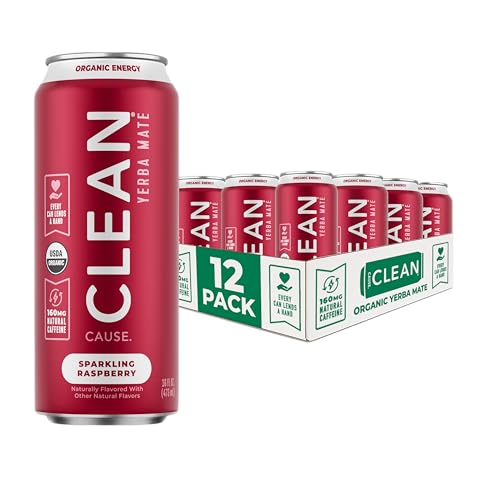
Best overall: CLEAN Cause Raspberry Yerba Mate Sparkling, 16 oz (12-Pack)
| Organic Integrity Score | 88 / 100 |
| Caffeine | 160 mg per 16 oz can, from yerba mate |
| Certification | USDA Organic |
| Best for | A sparkling soda alternative with real caffeine |
A proper caffeine dose, a genuinely enjoyable sparkling format, low sugar, and numbers stated plainly. That combination is why it leads. The sparkle matters more than it sounds: it makes this a credible replacement for a fizzy drink habit rather than a tea you are drinking dutifully.
CLEAN Cause also direct a share of profits to addiction recovery support, which is a real commitment rather than a vague one, and if you are choosing between comparable products it is a reasonable tiebreaker.
What we liked: USDA organic with caffeine and sugar both stated clearly. Sparkling format genuinely replaces soda. Raspberry masks mate’s bitterness well. Meaningful giving-back commitment.
Keep in mind: 160 mg is a strong cup of coffee, so watch your daily total. Twelve cans of one flavor is a commitment; consider the variety pack first. Yerba mate’s underlying grassiness still shows through.
What the listing discloses: On the CLEAN CAUSE label: a USDA organic claim. Not stated: where it was grown or made.
Best variety pack: CLEAN Cause Yerba Mate Variety, 16 oz (12-Pack, 4 Flavors)
| Organic Integrity Score | 87 / 100 |
| Caffeine | Approximately 160 mg per can |
| Certification | USDA Organic |
| Best for | Finding your flavor before committing to a case |
Four flavors across twelve cans, which is the sensible way into this category. Flavor preference in mate drinks is strong and unpredictable, and buying twelve identical cans of something you turn out to dislike is the most common mistake here.
Same organic certification, sparkling format and caffeine level as our top pick, so you are testing flavor rather than quality.
What we liked: Removes the guesswork before a bulk purchase. Same certification and format as the single-flavor cases. Good for a household with different tastes.
Keep in mind: You will probably not like all four. Same caffeine caution applies to every can.
What the listing discloses: CLEAN CAUSE is explicit about a USDA organic claim, and silent on where it was grown or made.
Best for smooth taste: RUNA Berry Boost Guayusa, 12 oz (12-Pack)
| Organic Integrity Score | 86 / 100 |
| Caffeine | 150 mg per can, from guayusa |
| Certification | USDA Organic, Non-GMO, Kosher |
| Best for | People who find yerba mate too bitter |
Guayusa is the smoother cousin of yerba mate, and RUNA built their business on it working directly with Ecuadorian Amazon farming communities. At ten calories a can with 150 mg of caffeine, the ratio of stimulant to sugar is about as favorable as this category gets.
If you have tried mate and found it grassy or bitter, this is the alternative that usually converts people. The tea character is much gentler and the berry flavoring is restrained rather than sweet.
What we liked: Noticeably smoother than yerba mate. Only 10 calories. Direct sourcing relationships with growers. Certified organic, non-GMO and kosher.
Keep in mind: 12 oz cans are smaller, so the caffeine is more concentrated per sip. Still 150 mg, which is a full coffee’s worth.
What the listing discloses: You are told USDA organic certification and kosher certification for RUNA; you are not told where it was grown or made.
Best traditional: Yerba Madre Organic Yerba Mate, Lemon Elation, 15.5 oz (12-Pack)
| Organic Integrity Score | 85 / 100 |
| Caffeine | 150 mg per 15.5 oz can, from yerba mate |
| Certification | Regenerative Organic, Fair Trade, Organic |
| Best for | People who want mate to taste like mate |
This is the more traditional mate profile: the grassy, faintly smoky character is present rather than buried, lifted with lemon rather than masked with sweetness. If you actually like yerba mate, this is more satisfying than the heavily flavored options.
It is also the one most likely to be rejected on first taste by someone expecting a soft drink. Mate is an acquired taste and this does not pretend otherwise, which we count in its favor.
What we liked: Authentic mate character rather than a sweet drink with mate in it. Lemon lifts it without masking. Organic, with a long-established brand behind it.
Keep in mind: Genuinely an acquired taste. Not the one to buy as a first try if you are unsure about mate.
What the listing discloses: Guayaki states Fair Trade, Regenerative Organic Certified and a B Corp certification, and does not say whether the USDA seal applies and where it was grown or made.
Best bold flavor: RUNA BOLD Variety Pack, 16 oz (12-Pack)
| Organic Integrity Score | 83 / 100 |
| Caffeine | Powerful natural caffeine from guayusa, 16 oz cans |
| Certification | USDA Organic, Non-GMO, Kosher |
| Best for | Bigger flavor, if stevia suits you |
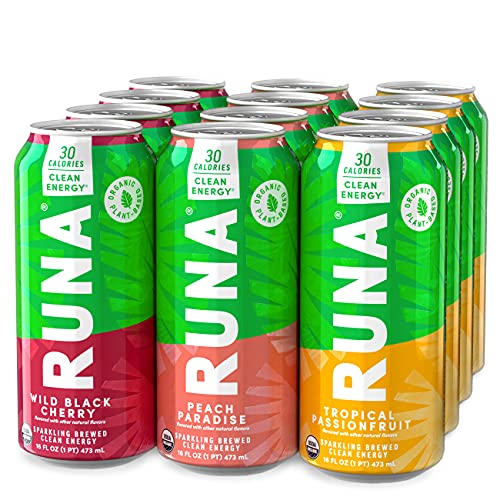
RUNA’s BOLD line is more assertively flavored than their standard range, in larger 16 ounce cans, sweetened with organic stevia at around 30 calories. If you find the standard versions too subtle, this is the fuller-flavored option.
We have scored it lowest here for one honest reason: stevia. Its aftertaste is genuinely divisive, and a meaningful minority of people find it unpleasant. If you already know you dislike stevia, buy the lightly sweetened options instead; if you are fine with it, this is a strong drink.
What we liked: Fuller flavor than the standard line. Organic stevia rather than a synthetic sweetener. Larger can. Variety pack removes flavor guesswork.
Keep in mind: Stevia aftertaste is divisive, and this leans on it. Slightly more calories than the standard RUNA range.
What the listing discloses: RUNA lists USDA organic certification and kosher certification. The gap is where it was grown or made.
Caffeine, sugar, and reading the can
Energy drinks are frequently marketed with metabolic language, and the honest assessment depends almost entirely on which of two products you have picked up.
The caffeine content is the functional ingredient, typically 80 to 200 mg per can, and it produces the same small acute increase in energy expenditure and mild appetite suppression discussed for coffee, subject to the same tolerance caveat in habitual users.
Everything else on the label does very little. Taurine, B vitamins, ginseng and guarana appear in quantities that are either well below studied doses or, in the case of B vitamins, irrelevant in someone who is not deficient. Guarana does contribute additional caffeine, which is worth counting toward the total.
The variable that matters is sugar. A standard energy drink carries around 27 to 39 grams of sugar per can, which is 110 to 160 calories and comfortably more than any thermogenic effect the caffeine produces. Sugar-free versions remove that, and at that point the drink is essentially caffeinated flavored water and behaves like black coffee in nutritional terms.
There is a real caution beyond nutrition. Total daily caffeine matters, energy drinks make it easy to consume a great deal quickly, and adverse cardiovascular events have been reported at high intakes, particularly in young people and when combined with exercise or alcohol.
Honest summary: caffeine is the only active ingredient of consequence, the sugar version is a soft drink with stimulants, the sugar-free version is nutritionally unremarkable, and the dose worth tracking is total daily caffeine rather than anything on the front of the can.
Common questions about organic energy drinks
Is natural caffeine different from synthetic caffeine?
No. Caffeine from yerba mate, guayusa, green tea or coffee is the same molecule as synthetic caffeine, and your body processes it identically. What differs is what comes with it: less sugar, fewer additives, other plant compounds, and often a larger volume of liquid, which may explain reports of a smoother effect.
How much caffeine is in an organic energy drink?
Typically 150 to 160 mg per can, which is comparable to a strong cup of brewed coffee and around four times a cola. Health authorities commonly cite roughly 400 mg a day as a reasonable ceiling for healthy adults, so two cans plus a coffee gets you close.
Are organic energy drinks healthier?
They are lower in sugar and free of synthetic colors and preservatives, which is a genuine improvement over conventional energy drinks. They are not a health drink: the caffeine is the same and the dose is substantial. Think of it as a better version of the same thing rather than a different category.
What is the difference between yerba mate and guayusa?
Both are caffeinated holly relatives. Yerba mate is South American with a grassy, faintly smoky, slightly bitter character. Guayusa is from the Ecuadorian Amazon and is naturally smoother and more tea-like. If mate’s bitterness put you off, guayusa is the one to try.
Is yerba mate safe?
For most people, in normal amounts, yes. Research on traditional consumption has raised questions about esophageal cancer risk, but the strongest associations involve drinking it very hot over many years in the traditional way, and temperature appears to be a significant factor. Chilled canned mate is a different exposure. It is worth knowing rather than worth panicking about.
Can I drink these while pregnant?
Caffeine limits in pregnancy are lower than for other adults and vary by country, and one can at 150 to 160 mg may represent a large share of a recommended daily limit. This is a question for your midwife or doctor rather than a label.
Do these cause a crash?
Less than sugary conventional energy drinks, largely because there is no sugar spike to come down from. Caffeine itself still wears off, and if you are drinking 160 mg late in the day it can affect sleep, which produces its own kind of next-day slump.
Are they hydrating?
They contribute fluid, but caffeine is a mild diuretic and these are not a substitute for water. If you are drinking them for energy during exercise or heat, drink water alongside rather than instead.
- Organic Food and Pantry hub
- Best Organic Yerba Mate
- Best Organic Coconut Water
- our organic food product database — compare brands across every pantry guide
Price and availability as of October 15, 2026 1:10 pm EDT. Product prices and availability are accurate as of the date/time indicated and are subject to change. Any price and availability information displayed on Amazon.com at the time of purchase will apply to the purchase of this product.
Looking for other organic products?
We have checked more than 800 products across food, household goods, gardening, personal care and pet, every one against its stated certification. Browse all reviews.
Organic Connection is reader-supported. When you buy through links on this page we may earn a commission, at no extra cost to you. As an Amazon Associate we earn from qualifying purchases. We are not paid to feature or rank any product. How we research and rate.