Last updated: September 30, 2026
We may earn a commission when you buy through links on this page, at no extra cost to you. How we research and rate.
The short version
After researching the certifications, materials, and construction of the most popular organic mattress toppers, our top pick is the Pure Green 100% Natural Latex Topper. It is made from GOLS-certified organic latex, is naturally supportive and durable, and contains no polyurethane, memory foam, or added chemicals, which is why it earned our highest Organic Integrity Score of 92 out of 100. For a plush organic wool topper, Sleep & Beyond myMerino is our pick, and for wool with an organic cotton cover, OrganicTextiles is the best choice.
With “organic” toppers, the two materials that are genuinely certifiable are GOLS organic latex and GOTS organic wool; a lot of “natural” foam toppers are neither. We flag exactly what each topper is made of and which carry real certifications.
Best organic mattress topper compared
| Best Choice | Best Value | ||||
 |  |  |  |  | |
| Product | Pure Green Latex | Pure Green + Cotton | Sleep & Beyond myMerino | OrganicTextiles Wool | Woolify Merino |
| Organic Integrity Score | 92/ 100 | 89/ 100 | 84/ 100 | 80/ 100 | 79/ 100 |
| Our rating | 4.6 | 4.5 | 4.2 | 4.0 | 4.0 |
| Material | GOLS organic latex | GOLS latex + cotton | GOTS organic wool | Organic wool | Organic merino wool |
| Feel | Supportive, responsive | Supportive, covered | Plush, cushioning | Plush, breathable | Plush, warm |
| Certification | Fair Trade, Certified Organic | GOTS, Fair Trade, Certified Organic | Certified Organic | — | — |
| Best for | Durable, supportive | Latex support | Softening a firm mattress | Value organic wool | Soft, warm merino wool |
| Price | $219.00 View on Amazon | $399.00 View on Amazon | $389.00 View on Amazon | $229.95 View on Amazon | $369.00 View on Amazon |
Price and availability as of October 11, 2026 7:10 pm EDT. Product prices and availability are accurate as of the date/time indicated and are subject to change. Any price and availability information displayed on Amazon.com at the time of purchase will apply to the purchase of this product.
Scores are ours, based on independent research of certification, material, cover, and value, using the same 10-criteria method we apply to every product. See how we research and rate.
The certification map for bedding, and what each one actually excludes
Bedding carries more competing seals than almost any category, and they cover genuinely different things. Here is what each one buys you.
| Certification | Covers | Key exclusion |
| GOTS | Organic fiber from farm to finished textile, plus labor criteria | Bans polyurethane foam and chemical flame retardants; requires wool as the fire barrier |
| GOLS | Latex specifically, at least 95% organic | Bans chemical flame retardants and polyurethane |
| OEKO-TEX Standard 100 | Tests finished product for 1,000+ harmful substances | Says nothing about whether fiber was organically grown |
| GREENGUARD Gold | Chemical emissions and VOC off-gassing | Stricter limits set for sensitive spaces such as nurseries |
| CertiPUR-US | Polyurethane foam only | Covers just the foam, not the rest of the product |
The one most misread is CertiPUR-US. It is a genuine certification and it applies only to the polyurethane foam in a product. It confirms that foam was made without formaldehyde, phthalates, ozone depleters, heavy metals, and TCEP flame retardants, and sets a VOC emission limit of 0.5 parts per million. What it does not do is tell you anything about the cover fabric, the fill, or the rest of the construction, and it certainly does not mean a product is organic. A CertiPUR-US mattress is still a polyurethane foam mattress.
Key things to look for in an organic mattress topper
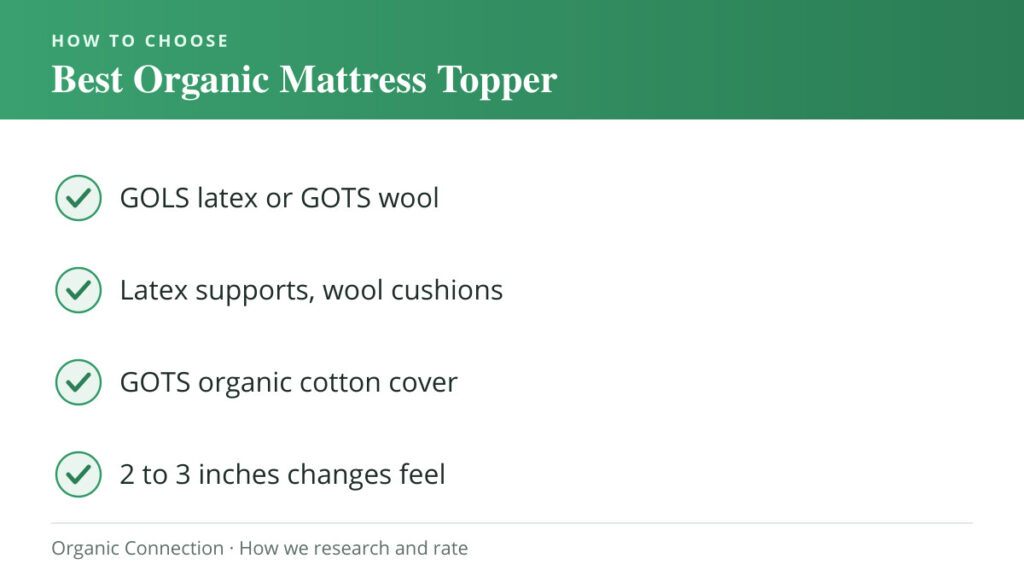
A genuine organic topper is about material, certification, and the cover. Here is what matters.
1. Certified organic material
GOLS organic latex or GOTS organic wool are the two genuinely certifiable options; avoid unlabeled “natural” foam.
2. The right feel
Latex is supportive and responsive; wool is plush and cushioning. Choose by whether you want support or softness.
3. An organic cotton cover
The best toppers wrap the fill in a GOTS organic cotton cover, ideally removable and washable.
4. Thickness and firmness
A 2 to 3 inch topper meaningfully changes feel; latex comes in firmness options, wool compresses to a plush loft.
Latex vs wool: which organic topper is right for you
The two genuinely organic topper materials feel very different. GOLS organic latex is supportive, responsive, and durable; it adds a buoyant cushioning that keeps your spine aligned and springs back rather than sinking, ideal if you want support and a little bounce, and it lasts for years. GOTS organic wool is plush and compressible; it adds a soft, cushioning loft, wicks moisture, regulates temperature (warm in winter, cool in summer), and acts as a natural flame barrier, ideal if you want to soften a too-firm mattress.
Both are genuinely organic when certified, and both beat “natural” foam toppers that are really polyurethane. Our scoring rewards GOLS or GOTS certification, a GOTS organic cotton cover, honest material labeling, and construction quality, so you can pick the feel you want with confidence that it is what it claims to be.
Flame retardants: the reason certification matters here
This is the substantive issue in bedding and the strongest argument for paying more.
Mattresses and some bedding must meet flammability standards, and manufacturers have two broad ways to do it: add chemical flame retardants, or use a material that resists fire on its own. Wool is naturally flame resistant and is the standard approach in certified organic bedding, which is why GOTS-certified mattresses use a wool fire barrier rather than a chemical treatment. Both GOTS and GOLS explicitly prohibit chemical flame retardants.
Since you spend roughly a third of your life in direct, prolonged, warm contact with a mattress, and since children spend considerably more, this is a more defensible reason to buy certified than most organic purchasing decisions. It is not about pesticide residue in fiber; it is about what was deliberately added to the product to make it pass a burn test.
On off-gassing. The chemical smell from new bedding is volatile organic compounds vaporizing at room temperature. It is most pronounced with polyurethane foam and diminishes over days to weeks. If VOC emissions are your concern specifically, GREENGUARD Gold is the certification that tests for it, and it is the one worth prioritizing for a nursery, where the emission limits are set lower precisely because of who is sleeping there.
For a crib specifically, the sensible combination is GREENGUARD Gold for emissions plus GOTS or GOLS for materials. One without the other leaves a gap: organic materials that still off-gas, or low emissions from conventional materials.
How to choose an organic mattress topper
- Pick latex or wool. Latex for support and bounce, wool for plush softness and temperature regulation.
- Demand GOLS or GOTS certification. These verify organic latex and organic wool; avoid unlabeled foam.
- Check for an organic cotton cover. A GOTS cotton cover, ideally removable, keeps the fill clean.
- Choose thickness and firmness. 2 to 3 inches changes feel noticeably; match latex firmness to your needs.
- Air it out. Natural latex has a mild scent that fades; certified materials are low-emission.
Who should buy organic mattress topper
The best topper depends on the feel you want. If you want a supportive, durable organic latex topper, our top pick fits. If you want plush organic wool, wool with an organic cotton cover, latex with a cotton cover, or a certified merino topper, we have a pick for each.
Best overall: Pure Green 100% Natural Latex Topper
| Organic Integrity Score | 92 / 100 |
| Material | 100% natural GOLS-certified organic latex |
| Feel | Supportive and responsive, firmness options |
| Best for | A durable, supportive organic topper |
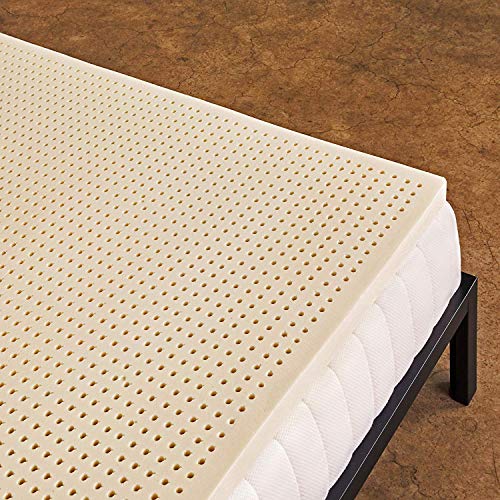
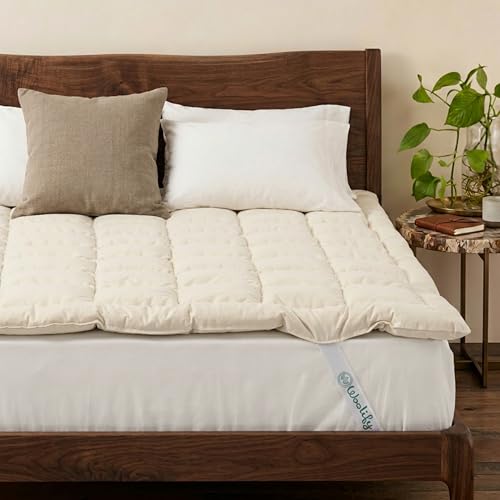
Pure Green is our top pick because it is genuinely organic and does what a topper should. It is made from 100% natural latex certified to the GOLS organic standard, with no polyurethane, memory foam, or added chemicals, offering supportive, responsive cushioning that keeps your spine aligned, comes in multiple firmnesses and 2 or 3 inch thicknesses, and is naturally breathable and highly durable.
The trade-off is that natural latex is heavier and pricier than foam, and it arrives with a mild natural scent that airs out. For a supportive, breathable, verifiably organic topper that lasts, it is our first choice.
What we liked: GOLS-certified organic latex, supportive and responsive, no foam or added chemicals, breathable, durable, with firmness options.
Keep in mind: Latex is heavy and premium-priced, with a mild natural scent that fades after airing out. A cover is sold separately.
What the listing discloses: Sleep On Latex documents Fair Trade, and leaves whether the USDA seal applies and where it was grown or made unsaid.
Best latex with cover: Pure Green Latex with Organic Cotton Cover
| Organic Integrity Score | 89 / 100 |
| Material | GOLS organic latex with a GOTS organic cotton cover |
| Feel | Supportive, responsive, with a soft cover |
| Best for | Latex support in an all-in-one package |
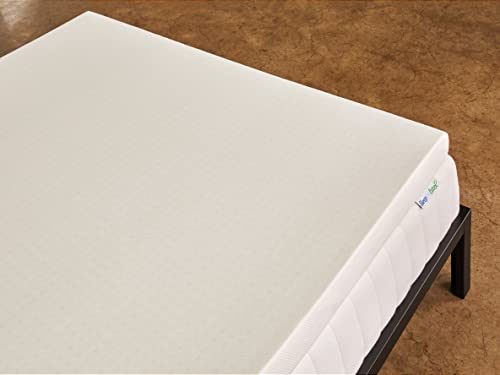
This Pure Green option is our pick for latex plus a cover in one. It combines the same GOLS-certified organic latex support as our top pick with an included GOTS-certified organic cotton cover, so you get the supportive, responsive, breathable feel of natural latex with a soft, protective, removable cotton layer already in place, no separate cover to buy.
It scores in the value range only because bundling raises the price and it overlaps with our top latex pick, but for people who want organic latex and a cover together, it is a convenient, genuinely certified choice.
What we liked: GOLS organic latex plus an included GOTS organic cotton cover, supportive and breathable, in a convenient all-in-one.
Keep in mind: Bundling the cover raises the price, and it overlaps with our top latex pick if you do not need the cover.
What the listing discloses: Sleep On Latex documents GOTS and Fair Trade, and leaves whether the USDA seal applies and where it was grown or made unsaid.
Best plush wool: Sleep & Beyond myMerino Organic Wool Topper
| Organic Integrity Score | 84 / 100 |
| Material | GOTS organic merino wool fill, GOTS organic cotton cover |
| Feel | Plush, cushioning, temperature-regulating |
| Best for | Softening a firm mattress with organic wool |
Sleep & Beyond myMerino is our plush pick. It uses GOTS-certified organic merino wool fill inside a GOTS-certified organic cotton cover, both genuinely certified, giving a soft, cushioning loft that wicks moisture and regulates temperature (cool in summer, warm in winter), with wool acting as a natural flame barrier, ideal for softening a too-firm bed.
It scores just below our latex pick because wool cushions rather than supports and compresses over time, but as a fully certified organic wool topper, it is outstanding for plush comfort and temperature control.
What we liked: GOTS organic wool and GOTS organic cotton cover, plush and cushioning, temperature-regulating, with wool as a natural flame barrier.
Keep in mind: Wool cushions rather than adds support and compresses with use, so fluff it periodically; it is premium-priced.
What the listing discloses: Sparse documentation from Sleep and Beyond — nothing on whether the USDA seal applies and where it was grown or made.
Best wool with cotton cover: OrganicTextiles Wool Topper
| Organic Integrity Score | 80 / 100 |
| Material | Organic wool fill, organic cotton cover |
| Feel | Plush, breathable, cushioning |
| Best for | Value organic wool with a cotton cover |
OrganicTextiles is our value wool pick. It pairs organic wool fill with an organic cotton cover, giving a plush, breathable, cushioning layer that softens a firm mattress and regulates temperature, from a maker that specializes in organic bedding, at a friendlier price than the fully GOTS-certified options.
It scores in the middle mainly because its certification is less comprehensively documented than our top wool pick, but for a plush, breathable organic wool topper with a cotton cover at good value, it is a strong choice.
What we liked: Organic wool fill with an organic cotton cover, plush and breathable, temperature-regulating, at good value.
Keep in mind: Its certifications are less fully documented than our top wool pick, and like all wool it compresses over time.
What the listing discloses: ORGANIC TEXTILES is thin on detail, and does not say whether the USDA seal applies and where it was grown or made.
Best merino: Woolify Organic Merino Wool Topper
| Organic Integrity Score | 79 / 100 |
| Material | Organic merino wool |
| Feel | Plush, warm, cushioning |
| Best for | A soft, warm merino wool layer |
Woolify is our merino pick. It uses soft organic merino wool to add a plush, warm, cushioning layer that wicks moisture and regulates temperature, giving a cozy softness on top of a firm mattress, from a wool-focused maker, for people who specifically want the fine, soft feel of merino.
It scores at the value end here because its certification documentation is lighter than our top wool pick and, like all wool, it compresses, but for a plush, warm, soft merino layer, it is a comfortable natural choice.
What we liked: Soft organic merino wool, plush and warm, moisture-wicking and temperature-regulating, cozy on a firm bed.
Keep in mind: Certification documentation is lighter than our top wool pick, and merino runs warm, so hot sleepers may prefer latex.
What the listing discloses: Woolify is thin on detail, and does not say whether the USDA seal applies and where it was grown or made.
Getting the most from your organic topper
Unroll a new latex or wool topper and let it air out for a day or two; natural latex has a mild scent that fades, and certified materials are low-emission. Place it directly on your mattress under a fitted sheet, or use a topper cover to keep it clean, and wash removable organic cotton covers per the label. Latex needs no fluffing and holds its shape for years; wool benefits from occasional fluffing and airing to keep its loft. Keep toppers out of prolonged direct sun, which can degrade natural latex over time. A quality organic topper meaningfully changes how a too-firm or aging mattress feels.
Dunlop versus Talalay: the processing choice that decides feel
Natural latex is made two ways, and it is the single most useful spec to understand — more so than brand, because the same latex is sold under many names.
| Dunlop | Talalay | |
| Process | Poured and baked in a single step | Vacuum-sealed, flash-frozen, then baked |
| Structure | Denser and more grounded; sediment settles so the base is firmer | More uniform cell structure throughout |
| Feel | Supportive, firmer, more “solid” | Softer, springier, more buoyant |
| Typical ILD | Around 19–21 in topper grades | Around 14 in plush grades |
| Energy to produce | Lower | Considerably higher |
| Certification | Commonly GOLS certified | Less often GOLS, because the process usually involves blending |
ILD — Indentation Load Deflection — is the firmness number, measuring the force needed to compress the material by 25%. Lower is softer. It is the most objective comparison available, and unfortunately most retail listings say “soft, medium, firm” instead. Where a seller states ILD, that is a sign they expect informed buyers.
A practical note that cuts against the usual framing: modern Dunlop can be manufactured to feel nearly as soft as Talalay, so the old rule that “Dunlop is firm, Talalay is soft” is now more a tendency than a law. If you want certified organic latex, Dunlop is where you will find it — and it need not mean a hard bed.
GOLS is the certification that matters for latex
Our certification section above covers bedding generally. For a latex topper specifically, the mark you want is GOLS — the Global Organic Latex Standard, which requires at least 95% certified organic raw latex content, plus restrictions on the remaining inputs, emissions and social criteria.
Keep in mind: the word to watch is “natural”. “Natural latex” is not a certification and can legitimately describe a blend of natural and synthetic (styrene-butadiene) latex — blends are common because synthetic is cheaper and more consistent. A product can say “natural latex” while being substantially synthetic. “100% natural latex” is a stronger claim, and GOLS certified is the auditable one. If a listing uses “natural” without a percentage or a certificate, ask for the composition before buying.
Note also that GOLS covers the latex core, while the cover is a separate question — a GOLS core in a conventional polyester cover is a common configuration. You want GOLS for the latex and GOTS for the cotton or wool cover.
Latex allergy: what the risk actually is
This is the most important safety question in the category and it deserves a direct answer rather than reassurance.
Type I latex allergy is a reaction to proteins in natural rubber. Natural latex foam does contain those proteins, but the manufacturing process — washing and, crucially, the baking step, which heats and denatures protein — reduces them substantially. In practice most people with a latex sensitivity use latex bedding without incident, and the mattress is also enclosed in a cover rather than in direct skin contact.
That is not the same as “safe for everyone”:
- If you have a diagnosed Type I latex allergy — particularly one involving anaphylaxis, or one arising from repeated medical exposure — do not buy a latex topper without speaking to your allergist. The risk is reduced, not eliminated.
- Spina bifida and multiple surgeries are recognized risk factors for latex sensitization and warrant the same caution.
- Fruit cross-reactivity — banana, avocado, kiwi, chestnut — can indicate latex sensitization, and is worth mentioning to your doctor.
- Wool is the obvious alternative if latex is ruled out, and performs the temperature-regulation job better anyway.
Wool or latex: choosing by the problem you have
| Your problem | The topper for it |
| Mattress is too firm | Soft latex, 2–3 inches. Wool cushions but does not change firmness much. |
| Mattress is sagging | Firm Dunlop latex — though a topper is a stopgap, not a repair |
| Overheating at night | Wool. It buffers humidity and regulates temperature actively; latex sleeps warmer. |
| Pressure points, hips and shoulders | Latex, 3 inches |
| Wanting a softer surface without changing support | Wool |
| Latex allergy or vegan household | Wool, or organic cotton batting |
| Allergy to wool / lanolin | Latex or cotton |
On thickness: 2 inches adjusts the feel of a mattress; 3 inches genuinely changes it; 4 inches is rarely necessary and starts causing problems with fitted sheets and with the topper sliding. Anything thicker than 3 inches usually means you need a new mattress rather than a thicker topper.
On weight: latex is dense and heavy — a 3-inch queen topper can weigh 30–40 lb. Plan for two people to handle it, and note that returning one is genuinely awkward, so check the return policy before ordering.
Setting it up and living with it
- Air new latex for 2–3 days. Natural latex has a distinct rubbery, slightly sweet smell that fades. It is not chemical off-gassing in the polyurethane sense, but it is noticeable, and airing in a ventilated room handles it.
- Let it decompress. Rolled toppers need 24–48 hours flat to reach full loft. Judge it after that, not on day one.
- Use a topper-sized cover or deep-pocket sheets. Standard fitted sheets will not accommodate a mattress plus 3 inches, and a sheet that pops off the corners nightly is the most common complaint about toppers.
- Latex degrades in sunlight and UV — keep it covered, and never leave it in direct sun to air.
- Wool toppers need airing, not washing. Wool is self-cleaning to a degree; air it outdoors in dry weather every few months. Most cannot be machine washed and will felt if you try.
- Rotate head to foot every few months to even out compression.
- Expect wool to compress 20–30% in the first months. That is normal fiber settling, not a defect, and it is why wool toppers are made overstuffed.
- Lifespan: good natural latex lasts 10–15 years, considerably longer than polyurethane foam. Wool toppers last 5–10 years with airing and rotation.
How we researched this guide
We are a research-based review site. We compared each topper against its certification (GOLS, GOTS), material and honest labeling, cover quality, and the weight of aggregated customer feedback on comfort and durability, then scored each with our 10-criteria Organic Integrity Score. No brand paid to be included or ranked. Read the full method on our How We Research and Rate page.
Common questions about organic mattress topper
What is the best organic mattress topper?
Our overall pick is the Pure Green 100% Natural Latex Topper, because it is GOLS-certified organic latex, supportive, breathable, and durable, with no foam or added chemicals. For plush organic wool, Sleep & Beyond myMerino is our pick.
Is latex or wool better for an organic topper?
Latex is supportive, responsive, and durable, ideal if you want support and a little bounce. Wool is plush, cushioning, and temperature-regulating, ideal for softening a firm mattress. Both are genuinely organic when certified GOLS (latex) or GOTS (wool).
How can I tell if a topper is really organic?
Look for GOLS certification on latex and GOTS certification on wool and cotton covers. Many toppers marketed as “natural” are actually polyurethane or memory foam with a thin natural cover, so the certification is the proof.
Do natural latex toppers smell?
Natural latex has a mild, rubber-like scent when new that fades within a few days of airing out. It is not the chemical off-gassing of synthetic foams, and certified GOLS latex is low-emission.
What is the difference between Dunlop and Talalay latex?
How it is baked. Dunlop is poured and baked in one step, producing a denser, more grounded foam with sediment settling so the base is firmer — typical topper ILD around 19 to 21. Talalay is vacuum-sealed and flash-frozen before baking, giving a more uniform cell structure and a softer, springier feel at ILD around 14. Talalay uses considerably more energy to produce, and Dunlop is where you will find GOLS certification. Modern Dunlop can be made nearly as soft as Talalay, so the old firm-versus-soft rule is now a tendency rather than a law.
What does ILD mean on a mattress topper?
Indentation Load Deflection — the force needed to compress the material by 25%, so lower is softer. It is the most objective firmness comparison available, and unfortunately most listings say “soft, medium, firm” instead. Where a seller states ILD, that generally signals they expect informed buyers.
Is “natural latex” the same as organic latex?
No, and this is the main thing to watch. “Natural latex” is not a certification and can legitimately describe a blend of natural and synthetic styrene-butadiene latex, which is common because synthetic is cheaper. “100% natural latex” is stronger, and GOLS certified — the Global Organic Latex Standard, requiring at least 95% certified organic raw latex — is the auditable claim. Note GOLS covers the core; you want GOTS for the cotton or wool cover.
Is a latex topper safe with a latex allergy?
Lower risk than expected, but not zero. Type I latex allergy is a reaction to proteins in natural rubber, and manufacturing — washing plus the baking step, which denatures protein — reduces them substantially, so most people with a latex sensitivity use latex bedding without incident. If you have a diagnosed Type I allergy, especially one involving anaphylaxis or arising from repeated medical exposure, speak to your allergist first. Wool is the obvious alternative.
Should you get a wool or latex topper?
Depends on the problem. For a mattress that is too firm, or for pressure at hips and shoulders, soft latex at 2 to 3 inches. For overheating at night, wool — it buffers humidity and regulates temperature actively, while latex sleeps warmer. For a softer surface without changing support, wool. For latex allergy or a vegan household, wool or organic cotton batting.
How thick should a mattress topper be?
2 inches adjusts the feel of a mattress, 3 inches genuinely changes it, and 4 inches is rarely necessary — it starts causing problems with fitted sheets and sliding. If you think you need more than 3 inches, you probably need a new mattress rather than a thicker topper. Use deep-pocket sheets, since standard fitted sheets will not accommodate a mattress plus 3 inches.
Why does my new latex topper smell?
Natural latex has a distinct rubbery, slightly sweet smell that fades over 2 to 3 days of airing in a ventilated room. It is not chemical off-gassing in the polyurethane sense. Rolled toppers also need 24 to 48 hours flat to reach full loft, so judge the feel after that rather than on day one.
How do you care for a wool topper?
Air it rather than washing it. Wool is self-cleaning to a degree — air it outdoors in dry weather every few months, and rotate head to foot. Most wool toppers cannot be machine washed and will felt if you try. Expect 20 to 30% compression in the first months, which is normal fiber settling and why they are made overstuffed. Wool toppers last 5 to 10 years; good natural latex lasts 10 to 15.
- Organic Household hub
- Best Organic Cotton Sheets
- Best Organic Crib Mattress
- How we research and rate products
- Organic Product Database — search every product we have reviewed, by certification
Price and availability as of October 11, 2026 7:10 pm EDT. Product prices and availability are accurate as of the date/time indicated and are subject to change. Any price and availability information displayed on Amazon.com at the time of purchase will apply to the purchase of this product.
Looking for other organic products?
We have checked more than 800 products across food, household goods, gardening, personal care and pet, every one against its stated certification. Browse all reviews.
Organic Connection is reader-supported. When you buy through links on this page we may earn a commission, at no extra cost to you. As an Amazon Associate we earn from qualifying purchases. We are not paid to feature or rank any product. How we research and rate.