Last updated: September 30, 2026
We may earn a commission when you buy through links on this page, at no extra cost to you. How we research and rate.
The short version
Our top pick is Amy’s Vegan Minestrone, with an Organic Integrity Score of 90 out of 100, because it names three certifications, publishes two nutrition figures and lists every vegetable in the can.
Two findings sit behind this comparison, and both are about things the organic seal cannot reach.
The first is the can. Four organic soups here say nothing about their can linings. The one listing that mentions a non-BPA lining is the conventional product with no organic claim at all. Organic certification governs the food and not the container, so this is not a failure of the seal — it is a gap the seal was never designed to cover.
The second is sodium. “Low sodium” and “light in sodium” are two different regulated claims with two different meanings. One product on this page uses both, for the same soup, in the same listing.
Best organic soup compared
 |  |  |  |  | |
| Product | Amy’s Vegan Minestrone | Pacific Chicken & Wild Rice | Amy’s Variety Pack | Pacific Butternut Squash | Campbell’s Unsalted Tomato |
| Organic Integrity Score | 90/ 100 | 86/ 100 | 80/ 100 | 74/ 100 | 60/ 100 |
| Our rating | 4.5 | 4.3 | 4.0 | 3.7 | 3.0 |
| Organic wording | USDA-Certified Organic | USDA Certified Organic | “Made with organic vegetables” | USDA Organic | None |
| Other certifications | Kosher, Non-GMO | Non-GMO | None named | Non-GMO | None |
| Sodium claim | Light in sodium, reference named | None | Light in sodium, reference named | Two different claims | Unsalted |
| Nutrition figures | 6 g protein, 6 g fiber | No | No | No | Servings per can |
| Packaging described | No | No | No | Carton, not flagged | Non-BPA lining |
| Best for | Buyers who want | Buyers who want | Buyers reducing sodium | Buyers who want | Sodium control and can |
| Sodium | Light in sodium; 50 percent less than Amy’s regular soup, reference named | — | 50 percent less than Amy’s regular soup, reference named | Titled Low Sodium; described in the body as Light in Sodium | Unsalted, the strongest sodium position on this page |
| Price | $32.94$0.39 / ounce View on Amazon | $4.21 View on Amazon | $29.36 View on Amazon | Currently unavailable See buying options | Currently unavailable See buying options |
- Organic Food and Pantry hub
- our organic product database — compare brands across every guide
Price and availability as of October 27, 2026 7:10 am EDT. Product prices and availability are accurate as of the date/time indicated and are subject to change. Any price and availability information displayed on Amazon.com at the time of purchase will apply to the purchase of this product.
Reading the seals on organic soup: what each one does and does not cover
Each certification below appears on at least one product on this page. They are not ranked against each other, because they measure different things, but knowing which is which changes what you buy.
| Certification | Covers | Key exclusion |
| USDA Organic | Farming and handling: no synthetic pesticides or fertilizers, no GMOs, no sewage sludge or irradiation, audited yearly by an accredited certifier | Three different tiers share the one seal, and it makes no claim about worker pay, food miles, or nutrition |
| Kosher | Ingredients and production comply with Jewish dietary law, verified by a rabbinic agency that inspects the facility | A dietary-law standard: it makes no claim about pesticides, GMOs or farming practice |
Kosher and organic answer entirely different questions. A kosher mark, OU, OK, Star-K and others, confirms that ingredients and production follow Jewish dietary law, verified by an agency that inspects the facility. It is a rigorous supply-chain audit and it says nothing about pesticides, GMOs or farming. The two seals appear together often precisely because neither substitutes for the other.
The organic seal stops at the food
This is worth stating carefully, because it surprises people who assume the seal is a general-purpose quality mark.
USDA Organic certification governs agricultural production and handling: what was applied to a crop, how livestock were raised, how ingredients were processed and traced. We set out the four scopes in our guide to the USDA organic database.
Packaging is not among them. The container a certified organic food arrives in is a food-contact material, regulated by the FDA under an entirely separate framework.
So a certified organic soup can be packed in any can the manufacturer chooses, and the certification neither requires nor prohibits a particular lining. That is not a loophole. It is two agencies with two remits.
Which makes the pattern here notable rather than damning. Four organic soups describe their vegetables, their certifications and their sodium, and none describes what the food is sitting in. Campbell’s, which makes no organic claim whatsoever, is the only listing that says “features a non-BPA lining.”
It is the same shape we found in organic baby cereal with heavy metals and in organic whey protein with banned substances: a real consumer concern sitting just outside what the organic seal covers, addressed by whoever happens to think of it.
There is also an option none of these listings points out. Aseptic cartons do not use epoxy can linings at all — they are a laminate of paperboard, polyethylene and aluminum foil. One product on this page comes in a carton rather than a can, and its listing never mentions the difference.
“Low sodium” and “light in sodium” are not the same claim
Both phrases appear here, and both are defined by FDA nutrient content claim rules.
Low sodium is an absolute claim: 140 milligrams or less per serving. It tells you a number regardless of what anything else contains.
Light in sodium is a relative claim: at least 50 percent less sodium than an appropriate reference food, which must be identified.
Those are genuinely different statements. A soup can be light in sodium — half of a very salty original — and still contain far more than 140 mg per serving.
Amy’s uses the relative claim correctly. Its listings say “Light in Sodium with 50 percent less sodium than Amy’s regular soup”, which states the reduction and names the reference food. That is exactly the construction the rule calls for, and we credit it.
Pacific Foods is where it gets muddled. One product is titled “Organic Low Sodium Butternut Squash Soup” and its first bullet describes the same carton as “Light in Sodium Organic Butternut Squash Soup.”
Those are two different regulated claims for one product, in one listing. We cannot tell from the page which applies. A buyer counting milligrams — which is most of the people who search for low sodium soup — is left holding two answers.
The wording that describes the vegetables, not the soup
A distinction we keep finding, and it appears again here inside a single brand’s range.
Amy’s minestrone says the soup is “USDA-Certified Organic” — the regulated phrasing, applied to the product.
Amy’s variety pack says it is “made with organic vegetables and spices” — a claim about the ingredients going in.
Pacific Foods’ chicken soup says “USDA Certified Organic chicken soup” — product level. Its butternut squash carton says “USDA Organic soup” — also product level.
As always, we are not asserting that the variety pack sits in a particular labeling tier. We are pointing out that “made with organic vegetables and spices” is the construction the 70 percent tier uses, that a mixed variety pack is exactly the kind of product where tiers can differ between the soups inside it, and that the wording is the only clue a listing offers.
Soup is a good category for this to matter in. It contains water, salt, thickeners and often a stock base, and salt and water are excluded from the organic percentage calculation entirely — a rule we examined in our comparison of organic taco seasoning. In a product that is mostly liquid, the percentage the seal describes is calculated on a smaller base than the can suggests.
What we looked for
We read every feature bullet on every listing in full and scored on what each manufacturer put in writing.
Whether the organic claim describes the product or its ingredients.
Whether sodium claims are used consistently, and whether an actual figure is given.
Whether the packaging is described. One listing does.
Whether nutrition is quantified per serving.
Whether the vegetables are named individually rather than summarized.
Best overall: Amy’s Vegan Minestrone
| Organic Integrity Score | 90 / 100 |
| Certifications claimed | USDA-Certified Organic, Certified Kosher, Non-GMO |
| Per serving | 6 g plant-based protein, 6 g fiber |
| Sodium | Light in sodium; 50 percent less than Amy’s regular soup, reference named |
| Vegetables named | Onions, carrots, potatoes, celery, green beans, peas, beans, pasta |
| Best for | Buyers who want the certifications named and the nutrition published |
Three certifications, two nutrition figures, and every vegetable in the can listed by name.
The organic claim is the regulated one — “USDA-Certified Organic”, applied to the soup rather than to its vegetables — and it sits alongside Certified Kosher and Non-GMO in a single enumerated line. Kosher stated as certified rather than as an adjective is a small correctness we consistently credit, even without an agency named.
The nutrition is published where most listings offer adjectives: 6 g of plant-based protein and 6 g of fiber per serving. Fiber in particular is worth stating, because it is the reason a vegetable and bean soup is a different proposition from a cream soup, and almost nobody quotes it.
The vegetable list is the part we like most. “Onions, carrots, potatoes, celery, green beans, peas, tender beans and pasta in a savory tomato broth” is a description of the actual contents rather than a category. A buyer can check every item of it on the panel.
The sodium claim is constructed correctly. “Light in Sodium with 50 percent less sodium than Amy’s regular soup” states the reduction and names the reference food, which is what the regulated relative claim requires. It is the right way to make that claim, and it still does not give you a milligram figure.
Deductions. Nothing is said about the can lining, which is the gap this whole page is about. “Without compromise” is filler. No certifying agency is named for the organic or the kosher certification. And its sales rank is the weakest here by a wide margin, with the highest price per can.
- USDA-Certified Organic in the regulated, product-level form.
- Names Certified Kosher and Non-GMO alongside it.
- Publishes protein and fiber per serving.
- Lists every vegetable individually.
- Sodium claim constructed correctly, with the reference named.
- Says nothing about the can lining.
- No milligram figure for sodium despite the sodium claim.
- No certifying agency named for anything.
- Highest price per can, and the weakest sales rank here.
What the listing discloses: Amy’s documents USDA organic certification and kosher certification, and leaves where it was grown or made unsaid.
Best value: Pacific Foods Organic Chicken & Wild Rice Soup
| Organic Integrity Score | 86 / 100 |
| Organic claim | “USDA Certified Organic chicken soup”, product level |
| Ingredients named | Organic chicken, organically grown vegetables, parsley, seasonings |
| Also claims | Gluten free, non-GMO, no artificial colors, no added flavors |
| Size | 16.3 oz single can |
| Best for | Buyers who want a certified organic chicken soup at the lowest price |
The cheapest single can on this page, with the organic claim written correctly and the chicken named.
“USDA Certified Organic chicken soup with non-GMO ingredients and no artificial colors or no added flavors.” The regulated phrasing, applied to the soup, alongside three specific exclusions. That is a well-built bullet.
The ingredient description is specific where it counts: “tender organic chicken, organically grown vegetables, parsley and other seasonings.” Naming the chicken as organic matters in a meat-containing soup, because organic livestock certification is a substantially higher bar than organic vegetables — organic feed, no antibiotics, no added hormones, pasture requirements. It is the most expensive part of the can to certify and the listing says so.
Gluten free is stated, which for a soup containing wild rice is a genuine and non-obvious claim, since wild rice is not wheat but soups are frequently thickened with flour.
What is missing: no sodium claim or figure at all, no nutrition breakdown, no certifying agency, and nothing about the can. The first bullet restates the title and package size, and the fourth is serving suggestions — so of four bullets, two carry information.
- USDA Certified Organic in the regulated, product-level form.
- Names the chicken as organic, the hardest part of the can to certify.
- Three specific exclusions plus gluten free.
- Cheapest single can in the comparison.
- No sodium claim or figure of any kind.
- No nutrition breakdown per serving.
- Two of four bullets are package restatement and serving suggestions.
- Nothing about the can lining.
What the listing discloses: Pacific Foods documents USDA organic certification, and leaves where it was grown or made unsaid.
Correct sodium claim, looser organic wording: Amy’s Light in Sodium Variety Pack
| Organic Integrity Score | 80 / 100 |
| Sodium | 50 percent less than Amy’s regular soup, reference named |
| Organic wording | “Made with organic vegetables and spices” — ingredient level |
| Also claims | Dairy free, vegan, plant based |
| Format | Six-can variety pack |
| Best for | Buyers reducing sodium who want to try several soups |
The right sodium construction, wrapped around a looser organic claim.
On sodium the listing does what the rule asks: “50% less sodium than our regular soup”, which states the reduction and identifies the reference food. That is a properly built relative claim, and it is the second time this brand gets it right on this page.
The organic wording is where it slips. “Made with organic vegetables and spices” describes the ingredients rather than the finished soup, on a product whose title says Organic.
Variety packs are the format where this matters most. A pack contains several different soups, and there is no reason to assume every recipe inside sits in the same labeling tier. A single ingredient-level sentence covering six different products is the least informative construction available.
The dietary claims are useful and correctly stated: dairy free, vegan and plant based, all of which are checkable.
The third bullet is preparation instructions, which every canned soup buyer already knows.
What is absent: no certifications named, no nutrition figures, no vegetables listed, no sodium figure, and no mention of the can.
- Sodium claim states the reduction and names the reference food.
- Dairy free, vegan and plant based, all clearly stated.
- Variety pack lets you find a soup you like before committing.
- Reasonable price per can for the format.
- Organic claim describes ingredients rather than the soup.
- One ingredient-level sentence covering six different recipes.
- No certifications, nutrition figures or vegetables named.
- Third bullet is preparation instructions.
What the listing discloses: Sparse documentation from Amy’s — nothing on where it was grown or made.
Two sodium claims, one soup: Pacific Foods Butternut Squash
| Organic Integrity Score | 74 / 100 |
| Sodium | Titled Low Sodium; described in the body as Light in Sodium |
| Organic claim | USDA Organic, product level |
| Packaging | 32 oz carton rather than a can |
| Sourcing note | Fall-harvested butternut squash |
| Best for | Buyers who want a carton and will check the panel for the sodium figure |
A good product with an internal contradiction in the one claim its title is built on.
The title says “Organic Low Sodium Butternut Squash Soup.” The first bullet describes the same product as “Light in Sodium Organic Butternut Squash Soup.”
As set out above, those are two different regulated claims. Low sodium is an absolute limit of 140 mg per serving. Light in sodium is a 50 percent reduction against a named reference and carries no ceiling. A soup can satisfy the second and be well over the first.
The second bullet then says “less sodium than the regular version”, which is the relative framing again, without stating the percentage the regulated claim requires.
So the listing offers three sodium statements and no number. For a product whose title leads on sodium, that is the disclosure that most needed to be right.
What it does well: the organic claim is product level — “USDA Organic soup” — and “fall-harvested butternut squash” is a genuine seasonality detail rather than a slogan.
And there is something the listing does not mention that is arguably its best feature. This is a carton, not a can. Aseptic cartons do not use the epoxy linings that raise the BPA question at all. On a page where the packaging gap is the headline finding, this product quietly sidesteps it and never says so.
“Consciously crafted” has no meaning, and there are only two bullets, one of which restates the package.
- USDA Organic applied to the soup itself.
- Carton packaging sidesteps the can lining question entirely.
- “Fall-harvested” is a real seasonality detail.
- Good value per ounce at 32 oz.
- Titled low sodium, described as light in sodium: two different claims.
- No milligram figure anywhere despite three sodium statements.
- Never mentions that the carton avoids can linings.
- “Consciously crafted” is meaningless; two bullets, one a restatement.
What the listing discloses: Pacific Foods is explicit about a USDA organic claim, and silent on where it was grown or made.
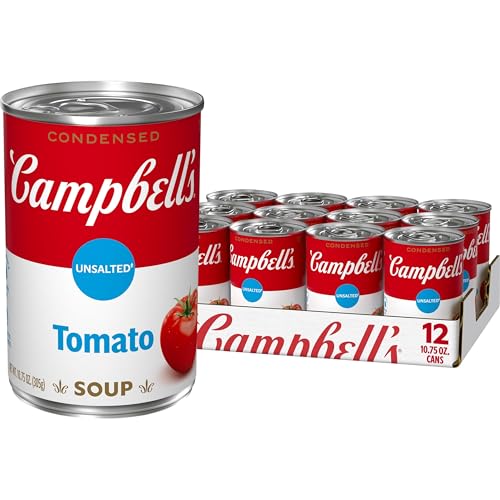
Not organic, and the only one that mentions the can: Campbell’s Unsalted Tomato
| Organic Integrity Score | 60 / 100 |
| Organic claim | None |
| Packaging | Non-BPA lining, recyclable can — the only packaging disclosure here |
| Sodium | Unsalted, the strongest sodium position on this page |
| Format | Condensed, 10.75 oz, about 2.5 servings per can |
| Best for | Sodium control and can lining transparency, without certification |
The only product here with no organic claim, and the only one that tells you what its can is lined with.
“Each 10.75 oz recyclable can contains about 2.5 servings of microwave soup and features a non-BPA lining.”
One sentence, three facts, all checkable: servings per can, recyclability, and the lining. In a comparison where four certified organic soups describe their vegetables and none describes their packaging, that sentence is doing something none of them attempted.
It also takes the strongest sodium position available. Unsalted means no salt added at all, which beats both low sodium and light in sodium, and it puts the seasoning decision back with the cook. For anyone genuinely managing sodium, this is the clearest option on the page.
Being condensed matters for price comparison: at about 2.5 servings per 10.75 oz can once diluted, it is not comparable to a ready-to-eat can on weight, and it is considerably cheaper per serving than anything else here.
None of which makes it an organic soup. There is no organic claim, no certification, no sourcing and no ingredient detail. On a page scoring organic integrity, a product with no organic claim scores accordingly.
We include it because it is the reference point. It shows what the organic premium costs in this category, and it shows that the one disclosure the organic brands all missed was available to anyone who thought of it.
- The only listing to state its can lining.
- Unsalted, the strongest sodium position on this page.
- States servings per can and recyclability.
- Cheapest per serving by a wide margin once condensed soup is diluted.
- No organic claim or certification of any kind.
- No ingredient or sourcing detail.
- Condensed, so not directly comparable to ready-to-eat cans.
- A single feature bullet.
What the listing discloses: No organic certification appears anywhere on the Campbell’s listing.
What we left out and why
Larger multipacks of products already ranked. Several appeared in our search with identical copy at different case sizes.
Broths and stocks. An ingredient rather than a meal, and judged on different criteria. Our comparisons of organic chicken broth and organic bone broth cover those.
Dry and instant soups. A different product with different questions, mostly about sodium and flavor enhancers rather than about vegetables.
Refrigerated fresh soups. Short shelf life, limited availability, and a different distribution model.
Buying canned soup sensibly
- “Low sodium” means 140 mg or less per serving. It is an absolute number.
- “Light in sodium” means at least 50 percent less than a named reference food. It has no ceiling, and half of a very salty soup is still a salty soup.
- “Unsalted” or “no salt added” means none was added in processing, which is the strongest position and puts the decision with you.
- Ignore all three and read the milligrams on the panel. No listing in this comparison published one.
- Check servings per container. Many cans are two servings, and the panel figure is per serving.
- Prefer “USDA Certified Organic” applied to the soup over “made with organic vegetables”, which describes the inputs.
- In variety packs, treat a single organic sentence as covering the pack loosely. Different recipes inside can sit in different tiers.
- Remember that salt and water are excluded from the organic percentage calculation, and soup is mostly liquid.
- An organic claim on a meat soup is a bigger deal than on a vegetable soup, because organic livestock certification is a substantially higher bar.
- Organic certification says nothing about packaging. If can linings matter to you, look for an explicit non-BPA statement, from any brand.
- Aseptic cartons do not use epoxy linings at all, which sidesteps the question. One product here is a carton and never mentions it.
- Transfer leftovers out of an opened can into a sealed container. This is standard advice for any canned food.
- Condensed soup is not comparable to ready-to-eat on weight or price. Convert to servings before comparing.
What the field adds up to
Three of five use the regulated organic wording, which is a better rate than most categories we audit. One publishes any nutrition figure. None publishes a sodium number, in a category where sodium is the main nutritional question. And the only listing that mentions its packaging is the one with no organic claim at all.
The rule for canned soup: the seal covers what is in the can, not the can. Read the panel for milligrams, read the wording for whether the claim describes the soup or its vegetables, and if the container matters to you, look for a brand that says so — whichever aisle it is in.
Questions about organic soup
Does organic certification cover the can?
No. USDA Organic certification governs agricultural production and handling. Packaging is a food-contact material regulated separately by the FDA, so a certified organic soup can be packed in any lawful can. Only one listing in this comparison mentions its lining, and it is the product with no organic claim.
What is the difference between low sodium and light in sodium?
Low sodium is an absolute claim meaning 140 mg or less per serving. Light in sodium is a relative claim requiring at least 50 percent less than a named reference food, with no ceiling. A soup can be light in sodium and still contain a great deal of it.
Is “50% less sodium than our regular soup” a real claim?
Yes, and it is correctly constructed. A relative sodium claim must state the reduction and identify the reference food, which that phrasing does. It still does not tell you the milligrams, so read the panel.
Do cartons avoid the BPA question?
Aseptic cartons are a laminate of paperboard, polyethylene and aluminum foil, and do not use the epoxy resin linings that raise the question in cans. One product in this comparison is a carton, and its listing never mentions the difference.
Why does soup wording matter more than in other categories?
Because salt and water are excluded from the organic percentage calculation, and soup is mostly liquid. So the percentage the seal describes is computed on a smaller base than the can suggests, which makes the exact wording of the claim the main thing you have to go on.
Is organic chicken soup a bigger deal than organic vegetable soup?
In certification terms, yes. Organic livestock certification requires organic feed, no antibiotics, no added growth hormones and pasture access, which is a substantially higher bar and cost than certifying vegetables. A listing that names the chicken as organic is telling you about the most expensive part of the can.
Are variety packs uniformly certified?
Not necessarily. A pack contains several different recipes, and there is no reason to assume every one sits in the same organic labeling tier. A single ingredient-level sentence covering six soups is the least informative construction available.
How should I compare condensed soup to ready-to-eat?
By servings, never by weight. Condensed soup is diluted before eating, so a smaller can produces more finished soup. It is generally much cheaper per serving, which is worth knowing before comparing sticker prices.
Should I move leftovers out of the can?
Yes, into a sealed container in the refrigerator. That is standard practice for any opened canned food and has nothing to do with the lining.
Organic Connection is reader supported. We read every product listing in full and say plainly when a claim cannot be verified. How we research and rate.