Last updated: September 30, 2026
We may earn a commission when you buy through links on this page, at no extra cost to you. How we research and rate.
The short version
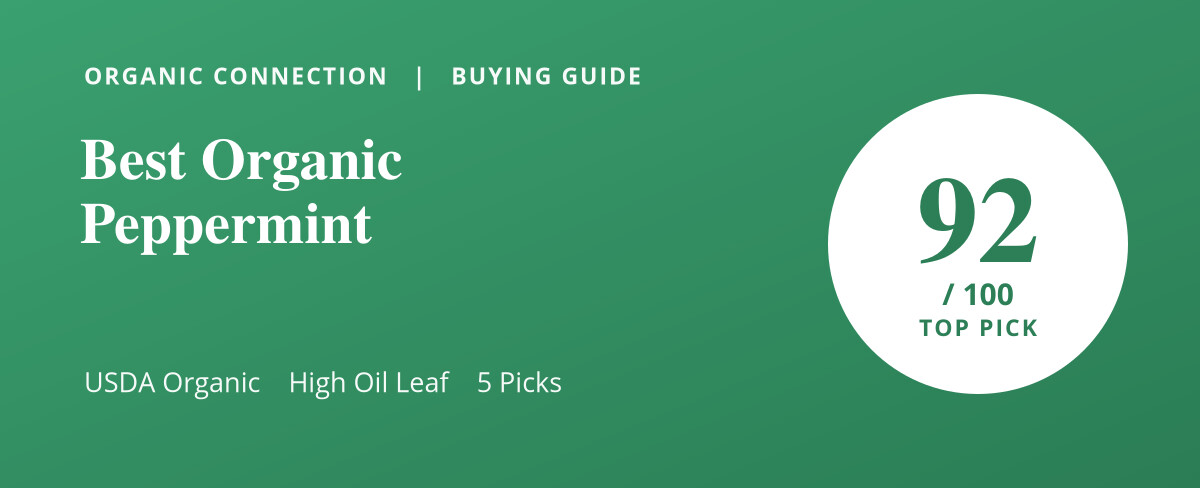
After researching the certifications, sourcing, and leaf quality of the most popular organic peppermint teas, our top pick is Traditional Medicinals Organic Peppermint. It is USDA certified organic and Non-GMO Project Verified, sourced from partner growers in the Pacific Northwest whose leaf is unusually rich in essential oils, which is why it earned our highest Organic Integrity Score of 92 out of 100. For loose leaf, Frontier Co-op Organic Peppermint Leaf is our pick, and for the best value, the Traditional Medicinals 96-bag pack is the best choice.
Peppermint is the herbal tea where the gap between a good cup and a bad one is widest, because the entire product is volatile oil and volatile oil is exactly what escapes from a badly stored, badly cut, or badly brewed tea. We flag each product’s certification, cut, and origin.
Best organic peppermint tea compared
| Best Choice | Best Value | ||||
 |  |  |  |  | |
| Product | Traditional Medicinals 16 ct | Frontier Co-op 1 lb | Traditional Medicinals 96 ct | Davidson’s 16 oz | Frontier Co-op 16 oz |
| Organic Integrity Score | 92/ 100 | 90/ 100 | 87/ 100 | 84/ 100 | 81/ 100 |
| Our rating | 4.6 | 4.5 | 4.4 | 4.2 | 4.1 |
| Format | Tea bags | Cut and sifted | Tea bags | Cut and sifted | Cut and sifted |
| Best for | Best overall | Best loose leaf | Best value | Grower direct | Bulk blending |
| Certification | Certified Organic, Non-GMO, Kosher | Kosher, Organic | USDA Organic, Non-GMO, Kosher | USDA Organic, Non-GMO | Kosher |
| Ingredients | Organic peppermint leaf | Organic peppermint leaf, cut and sifted | Organic peppermint leaf | Organic peppermint leaves | Organic peppermint leaf, cut and sifted |
| Price | $5.88$0.37 / count View on Amazon | Currently unavailable See buying options | $20.69 $30.54 −32%$0.22 / count View on Amazon | $18.00$1.13 / ounce View on Amazon | $12.36$0.77 / ounce View on Amazon |
Price and availability as of October 11, 2026 7:10 pm EDT. Product prices and availability are accurate as of the date/time indicated and are subject to change. Any price and availability information displayed on Amazon.com at the time of purchase will apply to the purchase of this product.
Scores are ours, based on independent research of certification, leaf grade and oil content, sourcing transparency, packaging, format, and value, using the same 10-criteria method we apply to every product. See how we research and rate.
The certification map for organic peppermint tea, and what each one actually excludes
The labels on these products are not interchangeable, and several of them cover things that have nothing to do with each other. Here is what each one actually buys you.
| Certification | Covers | Key exclusion |
| USDA Organic | Farming and handling: no synthetic pesticides or fertilizers, no GMOs, no sewage sludge or irradiation, audited yearly by an accredited certifier | Three different tiers share the one seal, and it makes no claim about worker pay, food miles, or nutrition |
| GOTS | Organic fiber from farm to finished textile, plus dyeing, finishing, wastewater and labor criteria | Has a weaker second tier, “made with organic”, that needs only 70% organic fiber and carries the same name |
| Non-GMO Project | Testing and supply-chain traceability showing the ingredients are not genetically engineered | Sets no limit on synthetic pesticides or fertilizers, so it is not an organic claim |
| Kosher | Ingredients and production comply with Jewish dietary law, verified by a rabbinic agency that inspects the facility | A dietary-law standard: it makes no claim about pesticides, GMOs or farming practice |
| B Corp | The whole company: social and environmental performance, governance, and transparency | Certifies the company, not the product in your hand |
Non-GMO and organic are not two grades of the same thing. The butterfly certifies an absence of genetic engineering and stops there; the USDA seal prohibits genetic engineering as one clause among many, alongside synthetic pesticides, synthetic fertilizers, sewage sludge and irradiation. That makes organic the broader claim by some distance. Where both appear together, the butterfly is adding batch testing on top of a standard that had already banned GMOs.
Key things to look for in organic peppermint tea
Great peppermint comes down to certification, oil content, cut, and packaging. Here is what matters.
1. USDA organic certification
Mint is a leaf you steep and drink without rinsing, so pesticide certification matters more here than on a washed crop.
2. Aroma before brewing
Open the box and smell it. Good peppermint is sharply cooling in the bag; if it smells faintly of hay, the oil has gone.
3. A stated growing region
Pacific Northwest and north-central Oregon peppermint are prized for high oil content. A named region signals deliberate sourcing.
4. Airtight, opaque packaging
Volatile oil escapes through light and air. Sealed boxes and opaque pouches keep the tea worth drinking.
What peppermint tea does, and where the evidence is genuinely good
Peppermint is one of the better-evidenced herbal remedies, with an important distinction between the tea and the oil capsules.
For digestion, with the distinction that matters. Peppermint relaxes smooth muscle in the gut, and meta-analyses have found enteric-coated peppermint oil more effective than placebo for global IBS symptoms and for abdominal pain. Worth noting honestly that reviewers grade the quality of that evidence as low, with meaningful inconsistency between individual trials, so it is supportive rather than conclusive.
The crucial detail is what was tested. Those trials used enteric-coated capsules at roughly 180 to 400 mg three times daily, up to about 1,200 mg a day. The enteric coating exists specifically so the oil survives the stomach and releases in the intestine, where it can act on gut smooth muscle. A cup of tea delivers a far smaller, uncoated, less targeted dose. Reviewers are direct about this: peppermint in tea form has no proven benefit for IBS, though it is unlikely to make it worse. Tea is a pleasant, mild digestive aid, and it is not the intervention the IBS research is about. If you want the effect the studies describe, you want capsules, ideally discussed with a doctor.
For bloating and after meals. The traditional use as an after-dinner drink has a plausible mechanism in the same smooth-muscle relaxation, and it is a low-risk habit that many people find genuinely helpful.
The one that works against you, quantified. Because peppermint relaxes smooth muscle, it also relaxes the lower esophageal sphincter, the valve that keeps stomach acid where it belongs. This is not a theoretical concern. In the peppermint oil trials, reflux and heartburn occurred in about 26% of participants taking peppermint versus roughly 12% on placebo, and belching in about 11% versus 2%. Clinical guidance is that peppermint oil should not be used by people with gastro-esophageal reflux disease or active gastric ulcers for exactly this reason.
Tea is a milder dose than capsules, so the effect is smaller, and the direction is the same. This is the single most useful thing to know about peppermint and it appears on almost no packaging. If you get heartburn, this is the herbal tea to avoid rather than the one to reach for, and chamomile or ginger is the better evening choice.
Other cautions. Peppermint is not recommended for infants and young children, where menthol can cause breathing difficulties. It may interact with some medications by affecting liver enzymes. And it is generally best avoided in large amounts by people with gallstones. Nothing here is medical advice.
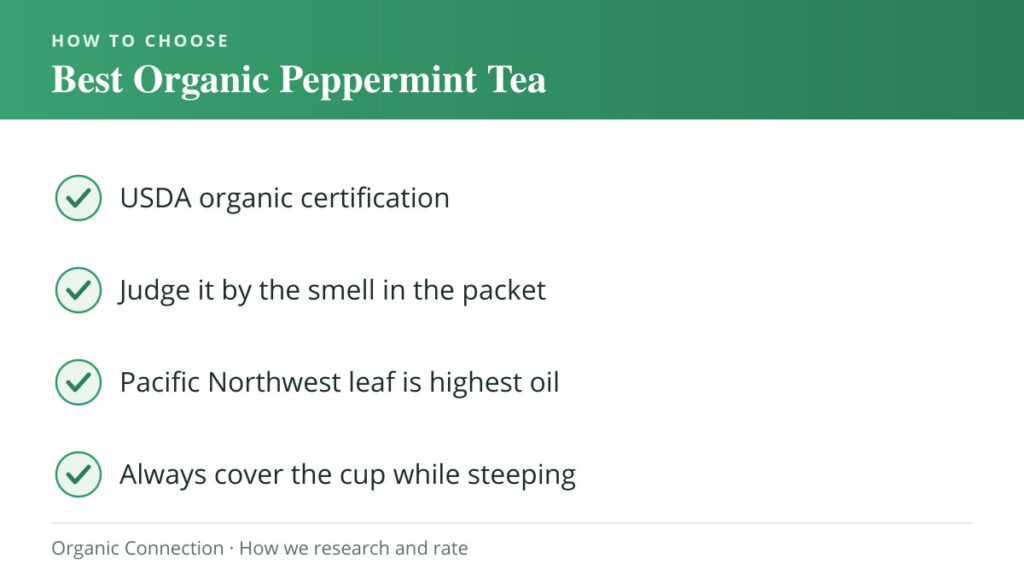
How to choose organic peppermint tea
- Confirm USDA organic, since you are drinking an unwashed steeped leaf.
- Judge it by smell. Sharply cooling in the packet is what you want; hay-like means the oil has gone.
- Prefer a named growing region, particularly the Pacific Northwest.
- Buy loose if you drink it often, since the value is far better and the leaf grade is visible.
- Always cover the cup while steeping, or the menthol goes up in the steam.
Who should buy organic peppermint tea
The right peppermint depends on how you drink it. If you want the most aromatic bagged tea for a daily cup, our top pick fits. If you want loose leaf for a pot, the best value in bags, an alternative grower, or bulk leaf for blending, we have a pick for each.
Best overall: Traditional Medicinals Organic Peppermint, 16 Bags
| Organic Integrity Score | 92 / 100 |
| Ingredients | Organic peppermint leaf |
| Certification | Certified Organic, Non-GMO, Kosher |
| Best for | An after-dinner cup with genuine menthol punch |
Traditional Medicinals is our top pick because it treats peppermint as a herbal product rather than a beverage, and because of where it buys. The company sources primarily from partner growers in the Pacific Northwest, a region whose growing conditions produce leaf notably high in essential oils, and it tests its botanicals to pharmacopoeial-grade standards. The result is immediately obvious when you open the box: it smells sharply, coolingly of mint rather than faintly of dried grass. The bags are compostable and the company is a certified B Corp.
The trade-off is box size and price. Sixteen bags disappears quickly if you drink peppermint after meals, and the per-bag cost sits above supermarket herbals. The same tea in the 96-bag format below is the better buy once you know you like it.
What we liked: USDA organic and Non-GMO verified, Pacific Northwest sourcing with high oil content, pharmacopoeial-grade testing, and a genuinely powerful aroma.
Keep in mind: Only 16 bags, and priced above supermarket peppermint.
What the listing discloses: Traditional Medicinals documents kosher certification, and leaves whether the USDA seal applies and where it was grown or made unsaid.
Best loose leaf: Frontier Co-op Organic Peppermint Leaf, 1 lb
| Organic Integrity Score | 90 / 100 |
| Ingredients | Organic peppermint leaf, cut and sifted |
| Certification | Kosher, Organic |
| Best for | Pots, iced tea, and home blending |
Frontier grows this in north-central Oregon, one of the best peppermint regions in the world, and sells it by the pound at a price that makes peppermint a daily habit rather than a treat. The cut-and-sifted grade is ideal: large enough to strain easily, small enough to extract fast, and visibly green rather than the brown dust in cheap tea bags. Frontier is a co-operative with strong sourcing transparency, and the leaf is non-irradiated and kosher certified. For anyone blending their own teas, peppermint is the most useful single herb to have in quantity.
The trade-off is that a pound is a great deal of mint, and peppermint’s volatile oil fades faster than almost any other dried herb once the bag is open. If you buy this size, decant a few weeks’ worth into a small airtight jar and keep the main bag sealed, cool, and completely dark. You will also need an infuser.
What we liked: Oregon-grown organic leaf with excellent oil content, non-irradiated, and outstanding value per cup.
Keep in mind: A pound is a lot of a herb whose aroma fades quickly, so decanting and airtight storage matter.
What the listing discloses: You are told kosher certification for Frontier Co-op; you are not told whether the USDA seal applies and where it was grown or made.
Best value: Traditional Medicinals Organic Peppermint, 96 Tea Bags
| Organic Integrity Score | 87 / 100 |
| Ingredients | Organic peppermint leaf |
| Certification | USDA Organic, Non-GMO, Kosher |
| Best for | Households drinking it after meals daily |
Six boxes, ninety-six bags, identical leaf quality to our top pick, at a substantially lower cost per cup. Peppermint is the tea people drink most habitually, usually after dinner, and at a cup a day a 16-bag box lasts a fortnight. This is the format that matches how it actually gets used. Each box stays sealed until you open it, which matters more for peppermint than for most teas because the volatile oil in an opened box fades noticeably within weeks.
The trade-off is commitment and shelf space. Ninety-six bags is several months, so buy the small box first if you have not established you like this particular tea. If you have reflux, note the caution above before committing to a large supply.
What we liked: The best cost per cup for pharmacopoeial-grade organic peppermint, in individually sealed boxes that protect the oil.
Keep in mind: A multi-month commitment, and it takes real cupboard space.
What the listing discloses: Traditional Medicinals lists USDA organic certification, kosher certification and a B Corp certification. The gap is where it was grown or made.
Grower direct: Davidson’s Organics Peppermint Leaves, 16 oz
| Organic Integrity Score | 84 / 100 |
| Ingredients | Organic peppermint leaves |
| Certification | USDA Organic, Non-GMO |
| Best for | Buyers who prefer a single-source tea company |
Davidson’s has been selling organic tea since 1976 and grows, imports, blends, and packs its own, which is unusual vertical integration in a category run mostly through brokers. The peppermint is USDA organic, sold loose by the pound, and has good clean mint character. As an alternative loose supplier to Frontier at a similar price, it is the obvious second choice, and buyers who prefer to concentrate their tea buying with one company find the range convenient.
The trade-off is that Davidson’s publishes less detail about growing region than Frontier does, and region matters more for peppermint than for most herbs because of oil content. The cut is also a little finer, which extracts faster but lets more dust through a coarse strainer.
What we liked: USDA organic from a long-established vertically integrated grower, good clean flavor, and strong value.
Keep in mind: No stated growing region, and a finer cut means more sediment.
What the listing discloses: Davidson’s states USDA organic certification, and does not say where it was grown or made.
Best for bulk blending: Frontier Co-op Peppermint Leaf, 16 oz
| Organic Integrity Score | 81 / 100 |
| Ingredients | Organic peppermint leaf, cut and sifted |
| Certification | Kosher |
| Best for | Blending, infusions, and non-tea uses |
The same Frontier organic peppermint in a standard 16 oz bulk bag, which is the format most home blenders actually reach for. Peppermint is the workhorse herb in blending: it lifts chamomile, cuts through liquorice root, balances nettle, and forms the base of most digestive blends. It is also useful well beyond tea, in infused syrups, in homemade lip balm, and in herbal steam inhalations.
It scores lowest here on economics rather than quality, since the price per ounce is higher than the 1 lb bag of essentially the same product, and peppermint’s fast-fading aroma means you want a size you will genuinely use. Judge this one as a blending ingredient rather than as your everyday cup.
What we liked: USDA organic kosher leaf in the standard blending size, versatile well beyond tea.
Keep in mind: Higher price per ounce than the 1 lb bag of the same leaf.
What the listing discloses: The word organic does not appear on the Frontier Co-op listing at all.
How to brew peppermint so it actually tastes of mint
The single most important step is covering the cup. Everything you want from peppermint is volatile oil, and volatile means it leaves in the steam. An uncovered mug loses a large share of its menthol into the air of your kitchen, which is why so many people find peppermint tea disappointingly weak. Put a saucer over the mug, or use a teapot with a lid, and the difference is immediately obvious.
Beyond that it is simple: water just off the boil, five to seven minutes, a heaped teaspoon per cup if brewing loose. Peppermint is low in tannin so it does not turn harsh with a longer steep, though it can become slightly bitter if pushed well past ten minutes. Squeeze the bag before removing it. It needs no sweetener, though a little honey suits it, and it is excellent with a slice of fresh ginger added to the pot.
Iced peppermint is one of the best summer drinks there is: brew double strength, cool, and serve over ice with lemon. Fresh mint from the garden also works, and you need considerably more of it than you expect, roughly a large handful per pot, since fresh leaf is mostly water.
Store it airtight, cool, and dark, and treat it as more perishable than other teas. Buy sizes you will finish within six months to a year. The test is always the same: open the container and smell it. If it does not smell sharply, coolingly of mint, no brewing technique will rescue it.
How we researched this guide
We are a research-based review site. We compared each product against its certification (USDA organic and, where present, Non-GMO Project Verified and kosher), leaf grade and cut, stated growing region and sourcing transparency, packaging and air protection, format, and the weight of aggregated customer feedback on aroma strength, then scored each with our 10-criteria Organic Integrity Score. No brand paid to be included or ranked. Nothing here is medical advice; peppermint can worsen reflux and is not recommended for infants. Read the full method on our How We Research and Rate page.
Digestion, bloating, and the difference from weight
Peppermint is frequently bought by people who want to feel less bloated, and it is worth separating that from weight because they are routinely conflated in marketing.
The evidence for peppermint is genuinely reasonable, and it is about the gut rather than the scale. Peppermint oil relaxes smooth muscle in the gastrointestinal tract, and enteric-coated peppermint oil capsules have a decent trial record in irritable bowel syndrome, with meta-analyses finding improvements in abdominal pain and global symptoms.
The important qualification is that most of that research is on capsules, not tea. Enteric coating exists specifically so the oil survives the stomach and acts further down. Peppermint tea delivers a much smaller and differently distributed dose, and the trial evidence for tea specifically is thin. Many people find it settles the stomach after a meal, which is a reasonable expectation and largely untested.
Feeling less bloated is a genuine comfort improvement and it is not fat loss. Abdominal distension is gas and fluid, it varies through the day, and relieving it changes how clothes fit without changing body composition. Products that photograph this difference and present it as a result are exploiting exactly that confusion.
One relevant caution runs the other way: peppermint relaxes the lower oesophageal sphincter, which can worsen reflux. If heartburn is your problem rather than bloating, peppermint may make it worse.
Honest summary: reasonable evidence for digestive comfort, mostly from capsules rather than tea, no weight effect, and a genuine caution for anyone with reflux.
Common questions about organic peppermint tea
What is the best organic peppermint tea?
Our overall pick is Traditional Medicinals Organic Peppermint, because it is USDA certified organic and Non-GMO Project Verified, sourced from Pacific Northwest partner growers whose leaf is high in essential oils, and tested to pharmacopoeial-grade standards. For loose leaf, Frontier Co-op Organic Peppermint Leaf is our pick, and for the best value, the 96-bag pack.
Does peppermint tea help with bloating and IBS?
Partly. Peppermint relaxes smooth muscle in the gut, and enteric-coated peppermint oil capsules have good randomized trial evidence for reducing IBS symptoms. Those trials used a defined dose of coated oil designed to release in the intestine, which is a much stronger intervention than a cup of tea. Tea is a mild, pleasant digestive aid rather than the treatment the research describes.
Can peppermint tea make heartburn worse?
Yes, and this is the most useful thing to know about it. Because peppermint relaxes smooth muscle, it also relaxes the lower esophageal sphincter that keeps stomach acid down. For people with reflux or GERD it commonly makes symptoms worse, so it is the herbal tea to avoid rather than reach for if you get heartburn.
Why does my peppermint tea taste weak?
Usually lost volatile oil or brewing uncovered. Peppermint’s flavor is almost entirely volatile oil, which escapes when leaf is dried too hot, stored too long or in light, or brewed in an open mug so the menthol leaves in the steam. Cover the cup, and check the aroma of the dry leaf: if it does not smell sharply cooling, the tea is past its best.
Is peppermint tea safe during pregnancy?
It is one of the more commonly accepted herbal teas in pregnancy and is often suggested for nausea, but it is not risk-free and guidance varies, particularly in large quantities. It can also worsen the reflux that is already common in pregnancy. As with any herbal tea in pregnancy, ask your midwife or doctor rather than relying on a buying guide.
- Organic Food & Pantry hub
- Best Organic Chamomile Tea
- Best Organic Ginger
- Organic Coffee and Tea: A Cleaner Daily Cup
- every product we have reviewed — filter by USDA Organic, GOTS, Fair Trade and more
Price and availability as of October 11, 2026 7:10 pm EDT. Product prices and availability are accurate as of the date/time indicated and are subject to change. Any price and availability information displayed on Amazon.com at the time of purchase will apply to the purchase of this product.
Looking for other organic products?
We have checked more than 800 products across food, household goods, gardening, personal care and pet, every one against its stated certification. Browse all reviews.
Organic Connection is reader-supported. When you buy through links on this page we may earn a commission, at no extra cost to you. As an Amazon Associate we earn from qualifying purchases. We are not paid to feature or rank any product. This page is informational and is not medical advice. How we research and rate.