
Last updated: September 11, 2026
We may earn a commission when you buy through links on this page, at no extra cost to you. How we research and rate.
Health note: This guide is general information, not medical advice. Supplements are not intended to diagnose, treat, cure, or prevent any disease. Talk to your doctor or pharmacist before starting any supplement, especially if you are pregnant, nursing, taking medication (ashwagandha can interact with thyroid, sedative, and immunosuppressant medications), or managing a health condition.
The short version
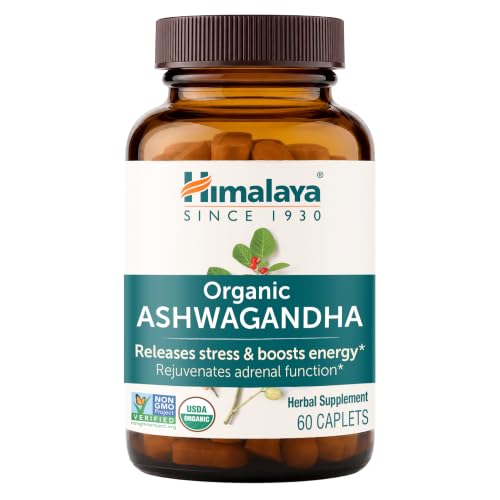
After researching the certifications, formulations, and testing of the most popular organic ashwagandha supplements, our top pick is Himalaya Organic Ashwagandha. Its listing states USDA Organic and Non-GMO Project Verified, more than 25 tests per lot including DNA-based plant identification, and four clinical trials, which is more than any rival here puts in writing, and it earned our highest Organic Integrity Score of 93 out of 100. For the traditional whole-root form, Organic India Ashwagandha is our pick, and for the cheapest way to take it daily, Terrasoul Organic Ashwagandha Powder.
Two things separate a good ashwagandha from a weak one: genuine organic root sourcing, and an honest label about what form you are getting (whole root versus a standardized extract like KSM-66, and whether an absorption aid such as black pepper is included). We flag which products are USDA organic, which use whole root versus extract, and which add black pepper.
Best organic ashwagandha compared
| Best Choice | Best Value | ||||
 |  |  |  |  | |
| Product | Himalaya | Terrasoul Powder | NutriRise | Organic India | Gaia Herbs |
| Organic Integrity Score | 93/ 100 | 90/ 100 | 85/ 100 | 82/ 100 | 81/ 100 |
| Our rating | 4.7 | 4.5 | 4.3 | 4.1 | 4.1 |
| Best for | Best overall | Culinary powder | High dose | Whole root | Clinical study cited |
| Certification | USDA Organic, Non-GMO Project Verified, Gluten-free | Certified Organic, Non-GMO, Gluten-free | Certified Organic, Gluten-free, Vegan | Gluten-free, Vegan, Organic | Vegan, Organic |
| Form | Root + extract caplet | Ground root powder | Root powder + black pepper | Whole root, capsules | Liquid extract capsules |
| Price | $22.99$0.38 / count View on Amazon | $17.99$1.12 / ounce View on Amazon | $19.95$0.17 / count View on Amazon | $23.68$0.26 / count View on Amazon | $25.19$0.42 / count View on Amazon |
Price and availability as of September 26, 2026 1:10 pm EDT. Product prices and availability are accurate as of the date/time indicated and are subject to change. Any price and availability information displayed on Amazon.com at the time of purchase will apply to the purchase of this product.
Scores are ours, based on independent research of certification, testing transparency, form and dosing honesty, and value, using the same 10-criteria method we apply to every product. See how we research and rate.
Key benefits of organic ashwagandha
Ashwagandha (Withania somnifera) is one of the most valued herbs in Ayurveda, traditionally used to support resilience to stress. Choosing an organic, well-made supplement matters for both purity and effect. Here is what people typically look for.
1. Adaptogenic stress support
Ashwagandha is classed as an adaptogen, a herb studied for helping the body cope with stress. Research has focused on its effect on cortisol and perceived stress.
2. Clean, organic root sourcing
Ashwagandha is a root crop, and roots can take up what is in the soil, so USDA-organic, tested sourcing matters for purity.
3. Whole root vs standardized extract
Whole-root products keep the herb’s full profile the traditional way; standardized extracts (such as KSM-66 or a concentrated root extract) deliver a measured level of withanolides, the active compounds.
4. Third-party testing
Because supplements are not pre-approved by the FDA, independent testing for potency and contaminants is a key quality signal.
Organic vs conventional ashwagandha: does it matter?
Ashwagandha is a root, and roots can concentrate heavy metals and residues from the soil they grow in, so contaminant testing and organic growing genuinely matter here. USDA-organic certification confirms the root was grown without synthetic pesticides, and pairing that with third-party testing is the best guard against the adulteration and heavy-metal issues that have historically been flagged in the wider herbal-supplement market.
Because the FDA does not review supplements for safety or effectiveness before they are sold, that independent verification is the consumer’s main protection. On top of purity, the form decides what you actually get: a whole-root powder delivers the traditional herb, while a standardized extract guarantees a set level of withanolides. Our scoring weights certification and testing alongside honest labeling of form and dose, not just the milligrams on the front of the bottle.
KSM-66 versus Sensoril: the distinction that decides your dose
Almost all the clinical research on ashwagandha used one of two branded extracts, and they are not interchangeable. Knowing which you are buying is the most useful thing in this category.
| KSM-66 | Sensoril | |
| Plant part | Root only | Root and leaf |
| Withanolide standard | At least 5% | Around 10% |
| Withaferin A | Lower | Higher |
| Typical daily dose | 300 to 600 mg | 125 to 250 mg |
| Most studied for | Stress, cortisol, cognition, testosterone in men | Sleep quality, metabolic markers, body composition |
| Feel | More energizing for most people | More sedating for most people |
Why the withanolide percentage misleads. A higher number looks better and does not mean stronger in a simple sense. Sensoril’s higher standardization comes partly from including leaf material, which is richer in withaferin A, a different compound with a different activity profile. That is why the effective Sensoril dose is roughly half the KSM-66 dose. Comparing two products purely on “% withanolides” without checking the plant part is the classic mistake here.
The trial most people are indirectly citing. A 2012 randomized trial gave 64 adults with chronic stress 600 mg of KSM-66 daily, as 300 mg twice with meals, and measured a 27.9% reduction in serum cortisol at 60 days against 7.9% on placebo. That is the study underneath most cortisol marketing, and the protocol is worth copying if stress is your reason for buying: 300 mg twice daily with food, root-only extract, for at least eight weeks.
Safety: thyroid, liver, and what the data actually shows
Ashwagandha is generally well tolerated and it is not risk-free, and two specific concerns deserve stating plainly rather than buried in a disclaimer.
Thyroid. Ashwagandha can increase thyroid hormone levels. For someone with an underactive thyroid that may sound appealing, and the practical problem is that thyroid medication is dosed precisely, so adding something that pushes hormone levels independently undermines that control. Anyone taking levothyroxine or similar should not add ashwagandha without their doctor’s involvement, and people with hyperthyroidism or Graves’ disease should be considerably more cautious, since further thyroid stimulation is the opposite of what they need.
Liver. There are published case reports of ashwagandha-induced liver injury. These are rare relative to how widely it is used, and they are real and documented in the medical literature. Risk appears higher at large doses taken for extended periods, and daily use above roughly 1,000 mg long-term has both higher risk and thinner safety data behind it. Stop and seek medical advice if you develop jaundice, dark urine, persistent nausea, or right-upper-abdominal pain.
The reassuring side. Controlled safety data at normal doses looks good. One study of 80 healthy adults taking 300 mg daily over eight weeks found no significant changes in vital signs, liver function tests, or thyroid hormone levels against placebo. The sensible reading is that standard doses for defined periods are well tolerated by most people, and that this is not something to take indefinitely at escalating doses without oversight.
Also worth knowing: ashwagandha is in the nightshade family, is generally avoided in pregnancy, may compound sedatives, and may lower blood sugar and blood pressure enough to matter if you are medicated for either. Some users report withdrawal-type effects on stopping abruptly after long use. Nothing here is medical advice.
How to choose an organic ashwagandha supplement
- Look for USDA organic. It confirms the root was grown without synthetic pesticides, which matters for a root crop.
- Decide whole root vs extract. Whole root is the traditional form; a standardized extract (KSM-66 or a concentrated root extract) guarantees a set withanolide level.
- Check the withanolide content. Standardized extracts list a percentage of withanolides, the active compounds; whole-root powders usually do not.
- Look for black pepper if you want absorption support. Some formulas add black pepper (piperine) to aid uptake.
- Check interactions. Ashwagandha can affect thyroid hormones, act as a sedative, and stimulate the immune system, so confirm with your doctor first.
Who should buy organic ashwagandha
Start from what you want it to do. For whole-root organic ashwagandha, our top pick is the one. If you want a clinically studied liquid extract, a USDA-organic value caplet, a high-potency capsule with black pepper, or an organic culinary powder for smoothies, we have a pick for each. Always clear a new supplement with your healthcare provider.
Best overall: Himalaya Organic Ashwagandha
| Organic Integrity Score | 93 / 100 |
| Certification | USDA Organic, Non-GMO Project Verified, Gluten-free |
| Form | Ashwagandha root powder plus root extract, caplet |
| Testing | More than 25 tests per lot, 7 for microbial safety, with DNA-based plant identification |
| Best for | Anyone who wants the claims on the label backed by something checkable |
Himalaya is our top pick, and it is the only one here that documents itself properly. Its clinically studied caplet blends USDA-organic ashwagandha root powder with a root extract, is free of additives, binders, and fillers, and is vegan, non-GMO, and gluten-free, all at a lower cost per day than the premium herbal brands, which makes it an easy affordable entry into a daily ashwagandha.
Read the five listings on this page side by side and this one is doing something none of the others do. It states USDA Organic and Non-GMO Project Verified outright. It says every lot passes more than 25 tests for identity, purity and safety, seven of them for microbial safety, and that DNA-based plant identification confirms the root is actually ashwagandha — adulteration being a genuine problem in this category. It names four clinical trials, including a randomized double-blind placebo-controlled one. And it specifies water and CO2 extraction rather than solvents.
None of that is unusual for a good supplement to do. It is unusual to say so on the listing, where a buyer can read it before paying. It is also the best-selling ashwagandha of the five, and among the cheaper ones.
Keep in mind: The label gives a root powder and extract blend rather than a guaranteed withanolide percentage, so if you want a standardized dose like KSM-66 this is not that product.
What we liked: USDA Organic, a clinically studied root-plus-extract blend, no additives or fillers, and an affordable price per day.
Keep in mind: The label emphasizes the blend rather than a specific standardized withanolide level, so it is a value pick rather than a high-potency extract.
What the listing discloses: On the Himalaya label: a USDA organic claim, Non-GMO Project Verified and a single-ingredient formula. Not stated: where it was grown or made.
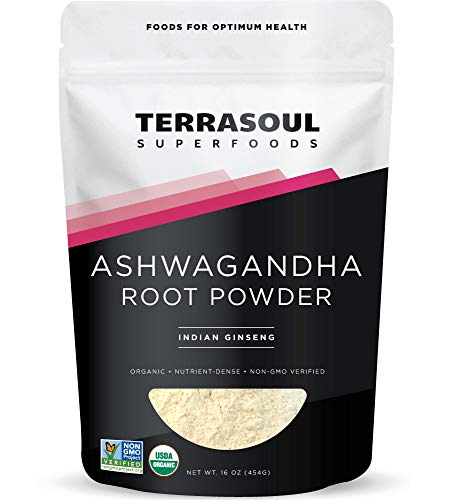
Best culinary powder: Terrasoul Organic Ashwagandha
| Organic Integrity Score | 90 / 100 |
| Certification | Certified Organic, Non-GMO, Gluten-free |
| Form | Ground ashwagandha root powder |
| Best for | Smoothies, tonics, and DIY dosing |
Terrasoul is our pick for those who prefer food over capsules. This USDA-organic ground ashwagandha root powder is lab-tested for quality and made for smoothies, golden milk, and herbal tonics, letting you add the herb to your routine the traditional way at a low cost per serving. Terrasoul imports, tests, and packages its ingredients directly rather than using co-packers.
It moves up a place on price and plain speaking. At well under twenty dollars for a pound it is comfortably the cheapest way to take ashwagandha daily here, and its listing states “100% Certified Organic, Non-GMO, Raw, Gluten-Free, Vegan” without dressing it up.
It stays mid-table because a bulk powder puts the dosing on you, the taste is earthy and bitter, and the listing is brief enough that there is little else to check.
What we liked: USDA Organic, lab-tested, versatile in smoothies and tonics, whole-food form, and very affordable per serving.
Keep in mind: The flavor is earthy and bitter and works best blended with a sweetener, and measuring a consistent dose is up to you.
What the listing discloses: Beyond the organic claim itself, Terrasoul Superfoods does not say whether the USDA seal applies and where it was grown or made.
Best high potency: NutriRise Organic Ashwagandha with Black Pepper
| Organic Integrity Score | 85 / 100 |
| Certification | Certified Organic, Gluten-free, Vegan |
| Form | High-milligram root powder capsule with black pepper |
| Best for | A high daily dose with absorption support |
NutriRise is our pick for a high-potency capsule. It pairs a large per-serving dose of organic ashwagandha root with organic black pepper to support absorption, is third-party tested, and is made in a GMP-certified facility, which makes it a strong choice if you want a bigger dose in fewer capsules.
It scores lowest here on two counts. It is much the slowest seller of the five, and its listing leans hard on superlatives — “#1 Superior Powerful Formula”, “highest concentration” — which are claims about itself rather than facts a reader can check. The substance underneath is real: certified organic farms, third-party testing, a genuinely large per-serving dose.
It also describes the same product as both root powder and root extract in different places, which is the kind of loose wording that makes a milligram figure hard to interpret.
What we liked: High per-serving dose of organic root, black pepper for absorption, third-party tested, and made in a GMP-certified facility.
Keep in mind: It emphasizes total milligrams rather than a standardized withanolide level, so more milligrams does not automatically mean more active compound.
What the listing discloses: Beyond the organic claim itself, NutriRise does not say whether the USDA seal applies and where it was grown or made.
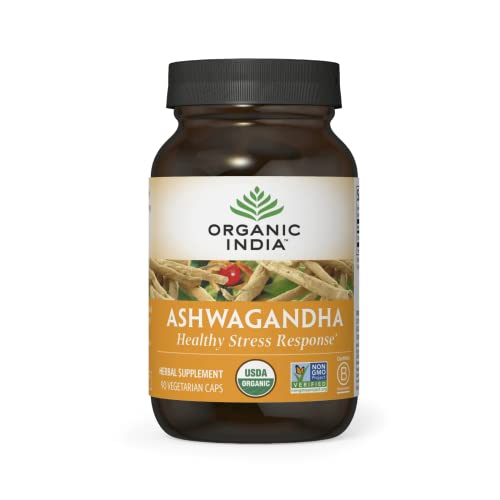
Best whole root: Organic India Ashwagandha
| Organic Integrity Score | 82 / 100 |
| Certification | Gluten-free, Vegan, Organic |
| Form | Whole ashwagandha root, vegetarian capsules |
| Best for | Traditional whole-root form from an established herb brand |
Organic India is our pick for the traditional whole-root form. The ashwagandha is USDA Organic, vegan, and non-GMO, made by grinding whole roots rather than isolating an extract, and the company grows its herbs through regenerative farming partnerships in India with a transparent farm-to-bottle story.
This was our top pick, and we have moved it down. Not because anything about it got worse, but because we went back and read what the listing actually says. It names no certifying body. It describes no testing regime. It cites no trial. The word “organic” on the page is the brand’s own name.
Organic India is a long-established certified organic operation and we have no reason to doubt the certification exists. But this site promises that every claim we repeat carries a source you can check, and on this listing that source is not there — while the product now above it states its certifications, its testing and its trials in plain sight. That difference is what the score is measuring.
A whole-root product also does not carry a guaranteed withanolide percentage the way a standardized extract does, so if you want a measured KSM-66 dose, look to a labeled extract instead.
What we liked: USDA Organic, whole-root traditional form, vegan and non-GMO, with a transparent regenerative-farming and sourcing story.
Keep in mind: As a whole-root product it does not guarantee a standardized withanolide percentage, so it is a traditional-form pick rather than a measured-extract one.
What the listing discloses: Sparse documentation from ORGANIC INDIA — nothing on whether the USDA seal applies and where it was grown or made.
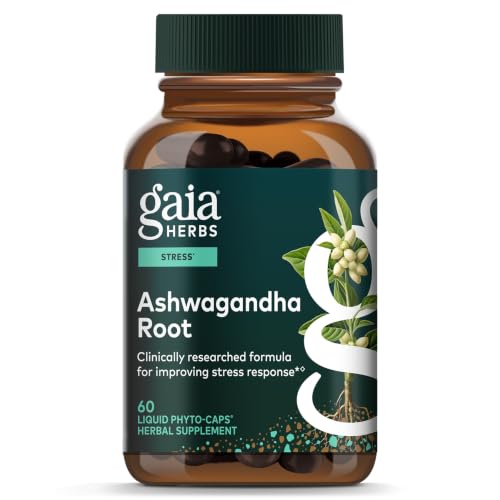
Best clinically studied extract: Gaia Herbs Ashwagandha Root
| Organic Integrity Score | 81 / 100 |
| Certification | Vegan, Organic |
| Form | Concentrated liquid extract in vegan capsules |
| Best for | An absorbable, well-tested extract |
Gaia Herbs is our pick if you want a study behind the capsule. Its listing cites a clinical study in which healthy participants saw improvement in overall stress scores and support for restorative sleep, and it names its supplier in India along with the clean-water and education projects that supplier runs. The root is delivered as a concentrated liquid extract in a fast-dissolving vegan Liquid Phyto-Cap.
It sits fourth because of the certification wording. “Made with organic ashwagandha root” describes the input, not the finished capsule, and no certifying body is named for either. It is also the most expensive product on this page.
What it does have is a cited study and a named supply chain, which is more than most of this category offers, and it is the second best-selling of the five.
What we liked: Concentrated liquid extract for absorption, made with organic root, vegan, and lot-level testing through the Meet Your Herbs program.
Keep in mind: It is labeled as made with organic root rather than a fully USDA-organic finished product, and it is priced as a premium herbal supplement.
What the listing discloses: Sparse documentation from Gaia Herbs — nothing on whether the USDA seal applies and where it was grown or made.
How to take ashwagandha well
Most people take ashwagandha once or twice daily, often with a meal, and many prefer an evening dose because of its calming reputation. Whole-root powders and capsules are traditional; standardized extracts guarantee a set withanolide level if you want a measured dose. Follow the amount on the label rather than assuming more is better. Importantly, ashwagandha can affect thyroid hormone levels, add to the effect of sedatives, and stimulate the immune system, so it may not suit people with thyroid conditions, autoimmune conditions, or those taking sedative or immunosuppressant medication, and it is generally not recommended in pregnancy. Talk to your doctor or pharmacist before starting, especially if you take medication.
The liver injury signal, and what it points at
Our safety section above introduces this. The picture has firmed up considerably and deserves specifics rather than a general caution.
Cases of ashwagandha-associated liver injury have been reported from Japan, Iceland, India and the USA, several assessed for causality using the updated RUCAM scoring system, which is the standard tool for attributing liver injury to a substance. The injury pattern described is prolonged hepatocellular damage, occurring in otherwise healthy and often young people. At least one reported case ended in liver transplantation.
Keep in mind: the constituent most implicated is withaferin-A, and this has a direct buying consequence. Withaferin-A is concentrated in the leaf rather than the root, and ethanolic leaf extract has shown dose- and time-dependent hepatocellular toxicity in testing. Root-only extracts carry substantially less of it. So a root-only standardized extract is not just the traditional preparation — it is the lower-risk one, and “whole plant” or “root and leaf” formulations are the ones to look at more carefully.
Proportion matters. Ashwagandha is very widely used and the case count is small relative to that; this is a rare idiosyncratic reaction rather than a predictable dose-dependent poisoning. But it is real, it has occurred in healthy young adults, and it is worth knowing before starting a daily supplement.
- Stop and seek medical attention for jaundice, dark urine, pale stools, itching, unexplained fatigue, nausea or right upper abdominal pain.
- Do not take it with existing liver disease or alongside other hepatotoxic medication without medical advice.
- Be cautious with piperine-enhanced formulations. Black pepper extract raises absorption substantially — the same mechanism flagged in turmeric-associated liver injury — which is a reasonable thing to avoid stacking with a herb that already carries a hepatic signal.
What the Danish regulatory assessment concluded
In 2020 the Technical University of Denmark’s Food Institute carried out a risk assessment of ashwagandha for the Danish Veterinary and Food Administration. It flagged the traditional use as an abortifacient, potential effects on sex and thyroid hormone levels, and five cases of liver damage.
Its conclusion was blunt: on the available data, no safe dose of intake could be determined.
That is a stricter position than most regulators have taken, and it is one assessment rather than a global consensus — plenty of clinical trials have used 300–600 mg daily for 8–12 weeks without significant safety signals. But it is a genuine regulatory finding from a national food authority, and a guide that only quoted the favorable trials would be presenting half the picture.
Thyroid: the interaction that is not theoretical
Ashwagandha demonstrably increases T3 and T4 levels. That is not a speculative mechanism — it shows up in measurement, and it is the basis for its traditional use in hypothyroidism.
The consequences run both ways:
- If you take levothyroxine, ashwagandha can push you toward over-replacement. Do not add it without telling the doctor managing your thyroid, and expect monitoring.
- If you have hyperthyroidism or Graves’ disease, it is working in exactly the wrong direction.
- If you have subclinical or undiagnosed thyroid disease, it can mask or alter results.
- Thyroid function tests taken while supplementing may be misleading — mention it before blood work.
Who should not take it
- Pregnancy — contraindicated. Ashwagandha is traditionally classified as an abortifacient in Ayurvedic medicine, and this is not a cautious-by-default entry. Avoid it entirely if pregnant or trying to conceive.
- Breastfeeding — insufficient safety data.
- Active autoimmune conditions, particularly where immunosuppression is the treatment — ashwagandha has immunostimulant activity that works against it.
- Thyroid hormone therapy, without monitoring, as above.
- Liver disease, or alongside hepatotoxic medication.
- Sedatives, benzodiazepines and alcohol — ashwagandha has sedative properties and the effects are additive.
- Before surgery — stop one to two weeks ahead, as with most botanicals.
- Nightshade sensitivity — ashwagandha is in the Solanaceae family, alongside tomato, potato and aubergine, and a small number of people react.
Choosing an extract, and dosing
| KSM-66 | Sensoril | |
| Plant part | Root only | Root and leaf |
| Standardized to | ≥5% withanolides | 10% withanolides |
| Typical dose | 300–600 mg daily | 125–250 mg daily |
| Evidence base | The largest body of clinical trials | Smaller |
| Character | More energizing; often taken in the morning | More sedating; often taken at night |
- Root-only is the safer default, for the withaferin-A reason above, and it is also the form with the most trial evidence behind it.
- 300–600 mg of extract standardized to 5% withanolides is the range provisionally recommended for anxiety, and where most trials sit.
- Plain root powder is a different product. Unstandardized powder contains a fraction of the withanolides of an extract, so a 1,000 mg capsule of powder is not comparable to 300 mg of KSM-66.
- Check what the percentage refers to. Some labels state withanolide glycosides rather than total withanolides, which is a different measurement.
- Trials generally ran 8–12 weeks. Indefinite daily use is not what was studied, and taking a break after a defined trial period is reasonable.
- Take it with food — the most common minor complaint is stomach upset, and it usually resolves that way.
What the evidence supports
- Stress and anxiety is the best-supported use, with several randomized trials showing reduced perceived stress scores and lower cortisol. Trials are mostly small and many are industry-funded, so treat the effect as real but modest.
- Sleep — some supportive evidence for sleep quality, particularly with the more sedating extracts.
- Exercise performance and testosterone — some positive small trials, considerably weaker and more heterogeneous than the marketing implies.
- Give it 4–8 weeks before judging it; effects in trials build rather than appearing immediately.
- Organic certification here covers the farming, not heavy metals — ashwagandha is a root crop grown largely in India, and root crops concentrate soil metals. A brand publishing third-party contaminant testing tells you more than the seal.
How we researched this guide
We are a research-based review site. We did not lab-test these supplements ourselves, and we do not make medical claims. We compared each against its certification, testing transparency, form and dosing honesty, and the weight of aggregated customer feedback, then scored each with our 10-criteria Organic Integrity Score. No brand paid to be included or ranked. Read the full method on our How We Research and Rate page.
Cortisol, stress eating and what the trials measured
Ashwagandha’s connection to weight runs through stress rather than metabolism, and the chain of reasoning is worth setting out because each link is weaker than the last.
The starting point is reasonably supported. Several small randomised trials have found ashwagandha supplementation reduces self-reported stress and anxiety scores, and some have measured lower serum cortisol alongside. The trials are small and mostly short, but the direction is fairly consistent and this is the best-evidenced thing the herb does.
The next link is where it thins. Chronically elevated cortisol is associated with abdominal fat accumulation and with appetite changes, so the inference is that lowering cortisol should help with weight. That is biologically plausible and largely untested as an intervention.
The direct evidence is one small trial. A study in chronically stressed adults reported modest reductions in body weight and food cravings against placebo over eight weeks, in a few dozen participants. It is a single small study measuring a secondary outcome, and it is the source of most of the weight claims made for the herb.
Where this could matter practically is narrower and more honest than “ashwagandha for weight loss”: if stress is genuinely driving your eating, and ashwagandha reduces your stress, the eating may follow. That is a real chain and it depends entirely on the first condition applying to you.
Two cautions. Ashwagandha can interact with thyroid medication and sedatives, and there have been reports of liver injury in a small number of cases. Our note on third-party supplement testing covers why product verification matters in this category.
Honest summary: decent evidence for stress, thin evidence for weight, and a mechanism that only applies if stress is your specific problem.
Common questions about organic ashwagandha
What is the best organic ashwagandha supplement?
Our overall pick is Himalaya Organic Ashwagandha, because it is USDA Organic, uses the traditional whole root, is vegan and non-GMO, and comes from a brand with a transparent regenerative-farming story. For a clinically studied liquid extract, Gaia Herbs is our pick. Always check with your doctor first.
Whole root or KSM-66 extract, which is better?
Neither is simply better. Whole-root products deliver the traditional herb and are often USDA organic, while standardized extracts such as KSM-66 guarantee a set percentage of withanolides, the active compounds, which is useful if you want a measured, clinically studied dose.
Is it safe to take ashwagandha every day?
Many people take ashwagandha daily at label doses, but it can affect thyroid hormones, act as a sedative, and stimulate the immune system, so it may not suit everyone. It is generally not advised in pregnancy. Talk to your doctor or pharmacist before daily use, especially if you take medication or have a thyroid or autoimmune condition.
Does organic ashwagandha matter?
Yes, because ashwagandha is a root that can concentrate heavy metals and residues from the soil, and the wider herbal-supplement market has been flagged for adulteration. USDA-organic certification plus third-party testing helps ensure purity.
When should I take ashwagandha?
It can be taken any time of day with food, but many people take it in the evening because of its calming reputation, or split it between morning and night. Consistency over several weeks matters more than the exact time.
Can ashwagandha damage your liver?
Rarely, but the signal is real. Cases of ashwagandha-associated liver injury have been reported from Japan, Iceland, India and the USA, several formally assessed for causality using RUCAM scoring, describing prolonged hepatocellular damage in otherwise healthy young people — and at least one reported case ended in liver transplantation. It appears to be a rare idiosyncratic reaction rather than a predictable dose-dependent effect, but it is worth knowing before starting a daily supplement.
Is root-only ashwagandha safer than whole-plant?
Probably, and this is the most useful buying consequence of the liver findings. The constituent most implicated is withaferin-A, which is concentrated in the leaf rather than the root, and ethanolic leaf extract has shown dose- and time-dependent hepatocellular toxicity in testing. Root-only extracts such as KSM-66 carry substantially less of it, and they also have the largest body of clinical evidence behind them.
What did the Danish assessment conclude about ashwagandha?
In 2020 the Technical University of Denmark’s Food Institute assessed ashwagandha for the Danish Veterinary and Food Administration, flagging its traditional use as an abortifacient, potential effects on sex and thyroid hormones, and five cases of liver damage. It concluded that on available data, no safe dose of intake could be determined. That is stricter than most regulators, and it is one assessment rather than global consensus — plenty of trials have used 300 to 600 mg for 8 to 12 weeks without safety signals.
Does ashwagandha affect your thyroid?
Yes, demonstrably — it increases T3 and T4 levels, which is the basis for its traditional use in hypothyroidism. If you take levothyroxine it can push you toward over-replacement, so do not add it without telling the doctor managing your thyroid, and expect monitoring. If you have hyperthyroidism or Graves’ disease it works in the wrong direction. Mention it before any thyroid blood work, since results may be altered.
Is ashwagandha safe in pregnancy?
No — it is contraindicated. Ashwagandha is traditionally classified as an abortifacient in Ayurvedic medicine, and this is not a cautious-by-default entry. Avoid it entirely if pregnant or trying to conceive, and note that there is insufficient safety data for breastfeeding.
What is the difference between KSM-66 and Sensoril?
KSM-66 is root-only, standardized to at least 5% withanolides, typically dosed 300 to 600 mg daily, more energizing, and has the largest trial base. Sensoril uses root and leaf, standardizes to 10% withanolides, is dosed lower at 125 to 250 mg, and is more sedating. Root-only is the safer default given the withaferin-A question.
How much ashwagandha should you take?
300 to 600 mg of extract standardized to 5% withanolides is the range provisionally recommended for anxiety and where most trials sit. Note that plain unstandardized root powder is a different product containing a fraction of the withanolides, so 1,000 mg of powder is not comparable to 300 mg of extract. Trials generally ran 8 to 12 weeks, so a defined period rather than indefinite use is reasonable.
Who should avoid ashwagandha?
Anyone pregnant, trying to conceive or breastfeeding; anyone with an active autoimmune condition, especially on immunosuppressants; anyone on thyroid hormone therapy without monitoring; anyone with liver disease or taking hepatotoxic medication; and anyone on sedatives or benzodiazepines, since effects are additive. Stop one to two weeks before surgery. A small number of people also react to it as a nightshade, since it is in the Solanaceae family.
- Organic Supplements and Wellness hub
- Best Organic Turmeric Supplements
- Best Organic Spirulina
- How we research and rate products
- all our reviewed products in one place — sortable by Organic Integrity Score
Price and availability as of September 26, 2026 1:10 pm EDT. Product prices and availability are accurate as of the date/time indicated and are subject to change. Any price and availability information displayed on Amazon.com at the time of purchase will apply to the purchase of this product.
Looking for other organic products?
We have checked more than 800 products across food, household goods, gardening, personal care and pet, every one against its stated certification. Browse all reviews.
Organic Connection is reader-supported. When you buy through links on this page we may earn a commission, at no extra cost to you. As an Amazon Associate we earn from qualifying purchases. We are not paid to feature or rank any product. How we research and rate.