Last updated: September 30, 2026
We may earn a commission when you buy through links on this page, at no extra cost to you. How we research and rate.
The short version
After working through what organic certification does and does not change about sugar, our top pick is Wholesome Sweeteners Organic Cane Sugar. It is USDA certified, grown and milled in the United States so the supply chain is unusually short, and it is the everyday granulated sugar most recipes assume, which is why it earned our highest Organic Integrity Score of 92 out of 100.
Now the part that matters more than any pick on this page: organic sugar is still sugar. It is metabolized identically, it carries the same calories, and it counts the same way against added-sugar guidance. Nothing about the seal changes that. There is one genuine difference, and it is not the one the marketing implies.
Best organic cane sugar compared
| Best Choice | Best Value | ||||
 |  |  |  |  | |
| Product | Wholesome 10 lb | Florida Crystals Raw | Just Panela Unrefined | Anthony’s 3 lb | 365 Powdered |
| Organic Integrity Score | 92/ 100 | 88/ 100 | 85/ 100 | 84/ 100 | 82/ 100 |
| Our rating | 4.6 | 4.4 | 4.3 | 4.2 | 4.1 |
| Type | Granulated | Granulated raw | Panela, whole cane | Granulated | Powdered |
| Certification | USDA Organic, Non-GMO Project Verified, Fair Trade | USDA Organic, Non-GMO | — | USDA Organic, Non-GMO, Gluten-free | Certified Organic, Non-GMO |
| Sourcing stated | Central and South America | Not stated | Not stated | Not stated | Not stated |
| Best for | Most certifications | Everyday baking | Coffee and flavor | Normal size bag | Icing and dusting |
| Price | $14.80$0.09 / ounce View on Amazon | $36.91$0.19 / ounce View on Amazon | $13.99$0.44 / ounce View on Amazon | $17.69$0.37 / ounce View on Amazon | $4.49$0.19 / ounce View on Amazon |
Scores are ours, based on independent research of certification, origin, packaging, suitability and value, using the same 10-criteria method we apply to every product.
Reading the seals on organic cane sugar: what each one does and does not cover
Each certification below appears on at least one product on this page. They are not ranked against each other, because they measure different things, but knowing which is which changes what you buy.
| Certification | Covers | Key exclusion |
| USDA Organic | Farming and handling: no synthetic pesticides or fertilizers, no GMOs, no sewage sludge or irradiation, audited yearly by an accredited certifier | Three different tiers share the one seal, and it makes no claim about worker pay, food miles, or nutrition |
| Non-GMO Project | Testing and supply-chain traceability showing the ingredients are not genetically engineered | Sets no limit on synthetic pesticides or fertilizers, so it is not an organic claim |
| Fair Trade Certified | A price floor for producers, a community premium, and labor standards on the farms and in the facilities | An economic and labor standard; it is not an organic or pesticide claim |
| Regenerative Organic | Soil health, animal welfare and farmworker fairness, built on top of an existing organic certification | Requires organic certification as its baseline, so it is an addition to the USDA seal and never a replacement for it |
| Kosher | Ingredients and production comply with Jewish dietary law, verified by a rabbinic agency that inspects the facility | A dietary-law standard: it makes no claim about pesticides, GMOs or farming practice |
Non-GMO and organic are not two grades of the same thing. The butterfly certifies an absence of genetic engineering and stops there; the USDA seal prohibits genetic engineering as one clause among many, alongside synthetic pesticides, synthetic fertilizers, sewage sludge and irradiation. That makes organic the broader claim by some distance. Where both appear together, the butterfly is adding batch testing on top of a standard that had already banned GMOs.
What organic certification actually changes about sugar
Two things, and neither is nutritional.
The farming. Sugarcane is a heavily managed crop, and organic certification means it was grown without synthetic pesticides or fertilizers, with the usual organic soil and rotation requirements. If your reason for buying organic is agricultural practice rather than personal nutrition, that is a coherent reason and it applies here as much as anywhere.
The refining. This is the one most people do not know. Conventional cane sugar refineries commonly use bone char as a filter to strip color and produce brilliant white sugar. The char is made from cattle bones, and while none of it ends up in the finished product, the process means a great deal of conventional white sugar is not vegan. Organic handling rules do not permit it, so certified organic cane sugar is reliably free of it. For vegans this is the single most practical reason to buy organic sugar, and it is far more concrete than any health claim attached to it.
What certification does not change is the sugar itself. Sucrose from an organic cane field is chemically identical to sucrose from a conventional one, and your body cannot tell the difference.
Raw, turbinado, and the trace mineral question
Less-refined sugars keep a little of the molasses that white sugar has removed, which is where the golden color and faint caramel note come from. That molasses carries trace minerals, and this is the basis for most “healthier sugar” marketing.
Be clear-eyed about the scale. The mineral content is present but tiny, and you would need to eat a genuinely harmful quantity of sugar to obtain a meaningful amount of anything from it. Raw and turbinado sugar are not health foods, and treating them as an upgrade is how people end up using more.
Where less-refined sugar genuinely wins is flavor. Raw cane sugar has a light molasses character that suits oatmeal, coffee, gingerbread and anything you want to taste faintly caramelly. That is a real reason to choose it. “It has minerals” is not.
Which type to buy for what
Granulated raw cane sugar is the general-purpose choice, slightly coarser and more golden than refined white, and a direct substitute in most recipes. Brown sugar has molasses added back and is what you want for cookies, where it contributes moisture and chew. Powdered sugar is milled fine with a little starch and is for icing and dusting, where granulated will not dissolve.
One practical note on the coarser crystal of raw cane sugar: it can behave slightly differently in delicate baking such as meringue or shortbread, where it may not dissolve fully. For those, pulse it briefly in a blender first, or buy a finer-ground organic sugar.
What “Regenerative Organic Certified” adds
You will see this on some Florida Crystals packaging and it is worth understanding, since it is one of the few labels that goes beyond USDA organic rather than merely alongside it.
Regenerative Organic Certified requires USDA organic certification as a baseline, then adds requirements on soil health, animal welfare and farmer and worker fairness. It is a genuinely higher bar rather than a parallel marketing scheme, and it is one of the more credible additional certifications in food. Our explainer on what regenerative organic means covers what it requires.
Key things to look for in an organic cane sugar
1. The USDA Organic seal
Not “natural cane sugar”, which is not a certified term and typically means unrefined conventional sugar. The seal is what guarantees the bone char exclusion.
2. The type matching your use
Granulated for general cooking, brown for cookies and anything wanting chew, powdered for icing. Buying the wrong one is the most common mistake here.
3. Country of origin if it matters to you
Most organic sugar is imported from Brazil, Paraguay or India. US-grown is available and means a considerably shorter supply chain.
4. Resealable packaging
Sugar clumps as it takes up and loses moisture. A resealable bag or jug keeps it pourable, and brown sugar in particular sets like a brick once air gets to it.
5. Regenerative Organic, if you want more than the baseline
A genuine step above USDA organic rather than a parallel claim, covering soil, animal welfare and worker fairness.
Who should buy organic cane sugar
Buy it if you are vegan, because it is the reliable way to avoid bone-char filtering, and that is a concrete, verifiable benefit rather than a vague one. Buy it if you want organic agricultural practice on a heavily managed crop. Buy raw cane sugar if you want the light molasses flavor, which is a legitimate culinary reason.
Do not buy it expecting a health benefit, because there is not one. Sugar is sugar, and the sensible move for health is using less of it rather than paying more for a certified version. If you are trying to reduce sugar rather than change its provenance, monk fruit sweetener is a different conversation and a more useful one.
How to choose an organic cane sugar
Confirm the USDA seal, then pick the type for your actual baking rather than the most premium-sounding one. Check the grind if you do delicate baking. Prefer resealable packaging, especially for brown sugar. Consider origin and Regenerative Organic certification as tiebreakers. Compare price per pound, since jugs, bags and multipacks in this category make headline prices hard to read.
Best overall: Wholesome Sweeteners Organic Cane Sugar, 10 lb
| Organic Integrity Score | 92 / 100 |
| Size | 10 lb |
| Certification | USDA Organic, Non-GMO Project Verified, Fair Trade |
| Sourcing | Organic sugar cane grown in Central and South America, stated |
| Processing | Cane juice squeezed, evaporated and crystallized |
| Best for | Anyone who wants the certifications actually named |
This listing carries more verifiable certification than anything else in the comparison, and it names all of it: USDA Organic, Fair Trade Certified, Non-GMO Project Verified, Kosher Certified, gluten free. Four of those are third-party schemes with published standards and an auditable certificate behind them.
Fair Trade is the one that matters most here, and it is the one almost nobody else in this category carries. Organic certification governs how the cane was grown. It says nothing at all about the people who cut it. Sugar has a long and genuinely ugly labor history, and Fair Trade is the only widely available scheme that addresses it. If you care about that, this is effectively the only pick on the page.
The listing also describes its sourcing and its process rather than gesturing at them: cane grown in Central and South America, with the juice “squeezed from fresh sugarcane, evaporated and crystallized”. That is a description of minimal processing you can actually picture, and it explains the “tiny bit of molasses in every blond crystal” the copy mentions.
At ten pounds it is also the best value here by a wide margin, which is unusual for the most certified product in a category.
What we liked: Five certifications named, Fair Trade among them, sourcing region stated, and a plain description of how the sugar is made. The largest bag at the lowest cost per pound.
Keep in mind: Ten pounds is a lot of sugar for an occasional baker, and sugar clumps if it is not kept airtight. There is no regenerative certification here, which the Florida Crystals line does carry on some products.
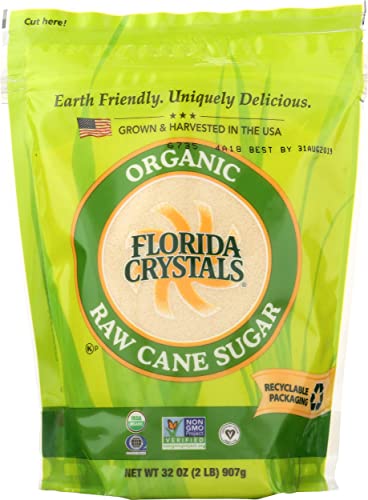
Best everyday granulated: Florida Crystals Organic Raw Cane Sugar, 2 lb (Pack of 6)
| Organic Integrity Score | 88 / 100 |
| Type | Granulated raw cane sugar, 2 lb bags, pack of 6 |
| Certification | USDA Organic, Non-GMO |
| Best for | Everyday baking and coffee, with a short supply chain |
It is the straightforward everyday sugar, done properly. USDA certified, grown and milled in Florida rather than shipped from South America, and a familiar granulated raw crystal that substitutes directly in almost any recipe. Six two-pound bags is enough for a year of ordinary baking without buying a sack.
The raw crystal is slightly coarser and more golden than refined white, which is exactly what you want in oatmeal or coffee and occasionally not what you want in a meringue. For delicate work, pulse it briefly in a blender to fine it down and the problem disappears.
What we liked: Genuine USDA certification, so no bone char. US grown, which is unusual in this category. Practical bag size that stays fresh. Light molasses note improves coffee and porridge noticeably.
Keep in mind: Coarser crystal can be an issue in delicate baking unless you grind it finer. It costs more than conventional sugar and does nothing different nutritionally.
What the listing discloses: On the Florida Crystals label: USDA organic certification. Not stated: where it was grown or made.
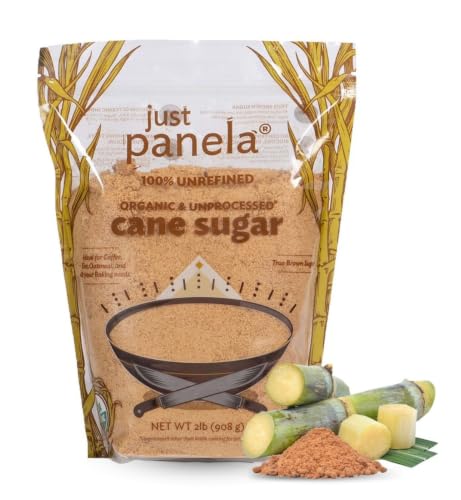
Best unrefined: Just Panela Organic Unrefined Cane Sugar, 2 lb
| Organic Integrity Score | 85 / 100 |
| Type | Panela, also sold as rapadura or whole cane sugar |
| Certification | — |
| Processing | Described as unprocessed and handcrafted, molasses retained |
| Best for | Coffee, and baking where a molasses note is wanted |
This is a genuinely different product rather than another white sugar. Panela is whole cane sugar: the juice is evaporated and left to set with its molasses still in it, rather than being spun to separate the two. That gives it a dark color, a caramel note, and a texture closer to soft brown sugar.
It is the right choice for coffee and for recipes where you want that flavor. It is the wrong choice as a one-for-one white sugar replacement, because it will color and flavor whatever you put it in.
One claim deserves pushing back on. The listing describes it as a “nutritious alternative to refined sugar” that retains “essential nutrients and minerals”. The minerals are real and they come from the molasses, but the quantities are small enough that you would have to eat an implausible amount of sugar to make them matter nutritionally. Panela is a better-tasting sugar with a more interesting production story. It is still sugar, and we would not buy it for the minerals.
What we liked: A distinct product with a real flavor difference, organic certification stated, and a production method described in enough detail to picture.
Keep in mind: Organic certification is claimed but no certifying body is named. The nutrition framing overstates what trace minerals in sugar can do. It is not a white sugar substitute.
Best mid-size bag: Anthony’s Organic Cane Sugar, 3 lb
| Organic Integrity Score | 84 / 100 |
| Size | 3 lb |
| Certification | USDA Organic, Non-GMO, Gluten-free |
| Type | Granulated, blonde colored |
| Best for | Households that want organic sugar without a ten pound bag |
The practical middle of this comparison. Three pounds is enough to bake with regularly and small enough to keep in a cupboard without decanting, and the certification named is the one that matters: USDA Certified Organic, stated plainly rather than implied.
Anthony’s appears across a lot of our guides for the same reason it appears here: the listings are consistently plain, the certification is consistently named, and the claims stop where the evidence does. There is no Fair Trade certification and no sourcing region given, which is what separates it from the top pick.
What we liked: USDA Certified Organic stated directly, a sensible size, and a listing that does not reach beyond what it can support.
Keep in mind: No Fair Trade certification and no country of origin. More expensive per pound than the ten pound bag above.
Best for icing: 365 by Whole Foods Market Organic Powdered Sugar, 24 oz
| Organic Integrity Score | 82 / 100 |
| Size | 24 oz |
| Certification | Certified Organic, Non-GMO |
| Best for | Icing, frosting and dusting |
Powdered sugar is granulated sugar milled fine and cut with a small amount of starch to stop it caking, and that starch is the reason a separate product exists at all. If you want organic icing, you need organic powdered sugar; grinding granulated sugar at home gets you close but not to the same texture.
This is comfortably the best-selling organic option in the category, and it is the cheapest per ounce of anything in this comparison. The listing is thin — two short bullets, certification named but no certifier, no statement of what the anti-caking starch is — which is why it scores where it does rather than higher.
What we liked: Certified organic, widely stocked, and by a distance the least expensive way to buy organic powdered sugar.
Keep in mind: A minimal listing with no certifier named and no detail on the starch used. Powdered sugar hardens if it takes on moisture, so decant it into something airtight.
What “unrefined” actually changes
Organic cane sugar is frequently bought on the belief that less refining makes it a better choice nutritionally. It is worth being precise about what refining removes and whether its absence matters.
Less refined cane sugars, including turbinado, demerara and muscovado, retain some molasses. Molasses carries iron, calcium, potassium and magnesium, so the darker sugars do contain minerals that white sugar does not. That much is straightforward chemistry.
The quantities are the issue. A teaspoon of even a dark unrefined sugar supplies a fraction of a percent of the daily requirement for any of those minerals, alongside around 16 calories of sucrose. The mineral content scales with how much sugar you eat, which is a self-defeating way to obtain nutrients.
Metabolically, the difference is close to nil. Cane sugar of any refinement level is sucrose, which is glucose and fructose bonded together, and the body separates them identically regardless of what color the crystals were. There is no meaningful glycaemic difference between organic raw cane sugar and white sugar, and no calorie difference worth counting.
Where organic certification genuinely earns its price on sugar is agricultural rather than nutritional: no synthetic pesticides in cultivation, and no use of bone char in processing, which matters to anyone eating a vegan diet. Those are real distinctions and they are covered above.
For body weight, treat all cane sugar as the same substance and count it the same way. Our guide to organic monk fruit sweetener covers the substitution question for anyone looking to reduce the amount.
Common questions about organic cane sugar
Is organic sugar healthier than regular sugar?
No. Sucrose from organic cane is chemically identical to sucrose from conventional cane, with the same calories and the same metabolic effect, and it counts identically against added-sugar guidance. The reasons to buy organic sugar are agricultural practice and the refining process, not nutrition.
What is bone char and is it in my sugar?
Bone char is a charcoal made from cattle bones, used in some conventional cane sugar refining as a filter to remove color and produce white sugar. None of it remains in the finished product, but its use means a great deal of conventional cane sugar is not vegan. USDA organic handling does not permit it, so certified organic cane sugar avoids it.
Is all organic sugar vegan?
Certified organic cane sugar is not bone-char filtered, which is the usual vegan objection to conventional sugar. If avoiding bone char is your reason for buying, look specifically for the USDA Organic seal rather than “natural cane sugar”, which is not a certified term.
Is raw or turbinado sugar better for you?
Not meaningfully. Less-refined sugars retain a little molasses and therefore trace minerals, but the quantities are tiny and you would need to eat a harmful amount of sugar to get a useful amount of anything. The genuine advantage of raw sugar is its light caramel flavor, not its nutrition.
Can I substitute raw cane sugar for white sugar?
In most recipes, yes, one for one. The crystal is slightly coarser and it adds a faint molasses note. In delicate baking such as meringue or shortbread it may not dissolve fully, in which case pulse it briefly in a blender to fine it down first.
What is the difference between brown and white sugar in baking?
Brown sugar contains molasses, which holds moisture and produces chewier, softer results. Using white sugar where a recipe asks for brown gives a crisper, flatter, drier bake. They are not interchangeable if texture matters to you.
Why does my brown sugar go hard?
Because it dries out. The molasses that keeps it soft loses moisture on contact with air, and it sets into a block. Store it sealed, and to rescue a hardened bag, seal it overnight with a slice of bread or a damp paper towel.
What does Regenerative Organic Certified add?
It requires USDA organic certification as a baseline and then adds criteria on soil health, animal welfare, and farmer and worker fairness. It is one of the few labels that genuinely goes beyond organic rather than running parallel to it, and for a land-intensive crop like sugarcane the soil requirements are the substantive part.
- Organic Food and Pantry hub
- What regenerative organic actually means
- Best Organic Monk Fruit Sweetener
- all our reviewed products in one place — sortable by Organic Integrity Score
Price and availability as of October 15, 2026 1:10 pm EDT. Product prices and availability are accurate as of the date/time indicated and are subject to change. Any price and availability information displayed on Amazon.com at the time of purchase will apply to the purchase of this product.
Looking for other organic products?
We have checked more than 800 products across food, household goods, gardening, personal care and pet, every one against its stated certification. Browse all reviews.
Organic Connection is reader-supported. When you buy through links on this page we may earn a commission, at no extra cost to you. As an Amazon Associate we earn from qualifying purchases. We are not paid to feature or rank any product. How we research and rate.
Why is organic sugar not white?
Because it is usually less refined. The blonde or tan color is residual molasses left on the crystal. Conventional white sugar is spun and filtered further to remove it, sometimes using bone char, which is also why some white sugar is not vegan. Organic raw cane sugar is generally not filtered that way.
Can I substitute organic raw cane sugar for white sugar one-for-one?
For granulated organic cane sugar, yes, by volume and by weight. The crystals are slightly larger and there is a faint molasses note, neither of which matters in most recipes. Panela and other whole cane sugars are a different case: they will darken and flavor whatever you put them in.
What does Fair Trade certification add to organic?
They cover different things. Organic is about the growing: no synthetic pesticides or fertilizers, no GMOs. Fair Trade is about the people: minimum prices, labor standards, a community premium. Sugar cane has a difficult labor history, so the two together are a meaningfully stronger position than organic alone.
How should I store sugar so it does not clump?
Airtight and dry. Sugar clumps because it takes on moisture, and the less refined sugars clump faster because the residual molasses is hygroscopic. Decant a large bag into a sealed container rather than rolling the top down. Brown and panela sugars that have hardened can be softened by sealing them overnight with a slice of bread.