Last updated: September 11, 2026
We may earn a commission when you buy through links on this page, at no extra cost to you. How we research and rate.
The short version
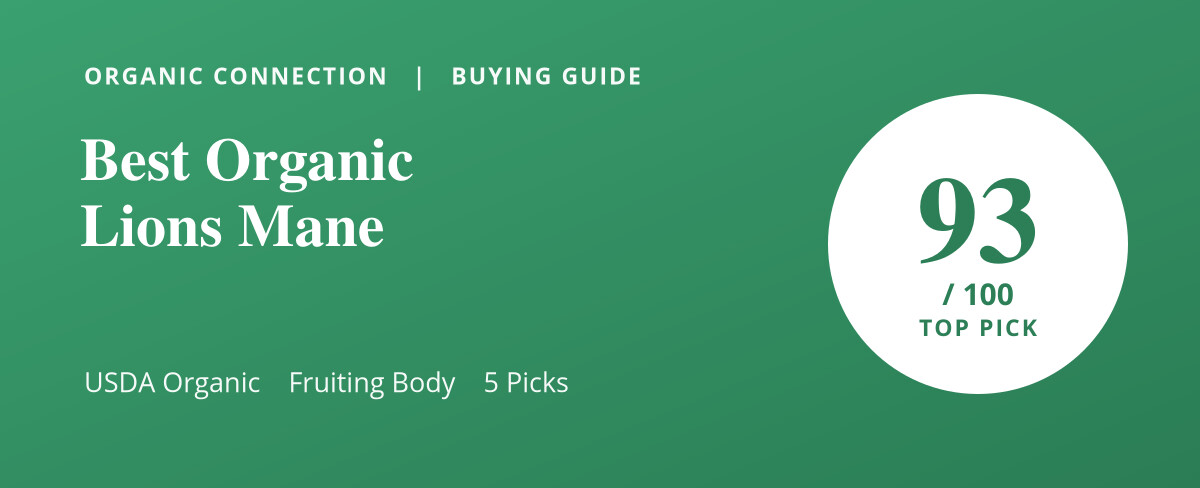
After researching the certifications, extraction methods, and published testing of the most popular organic lion’s mane supplements, our top pick is Real Mushrooms Lion’s Mane Extract Powder. It is USDA certified organic, made from 100% fruiting body rather than grain-grown mycelium, and every batch is tested for beta-glucan content with results published, which is why it earned our highest Organic Integrity Score of 93 out of 100. For the best value, the Real Mushrooms 150-serving powder is our pick, and for capsules, Real Mushrooms Lion’s Mane Capsules are the best choice.
Lion’s mane is the category where the label tells you least and the manufacturing method tells you most, because a large share of what is sold is not really mushroom at all. We flag each product’s source material, extraction, and testing.
Best organic lion’s mane compared
| Best Choice | Best Value | ||||
 |  |  | 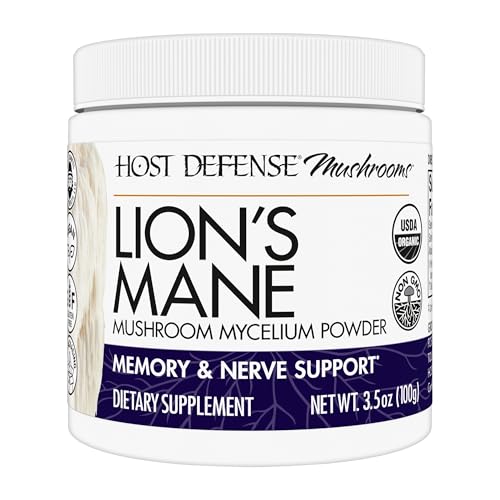 |  | |
| Product | Real Mushrooms Extract 60 srv | Real Mushrooms 150 srv | Real Mushrooms Capsules | Host Defense Powder | Om Lion’s Mane Powder |
| Organic Integrity Score | 93/ 100 | 90/ 100 | 88/ 100 | 85/ 100 | 82/ 100 |
| Our rating | 4.7 | 4.5 | 4.4 | 4.3 | 4.1 |
| Source | Fruiting body | Fruiting body | Fruiting body | Mycelium | Mycelium and fruit body |
| Best for | Best overall | Best value | Capsules | Established brand | Coffee blending |
| Beta-glucans | Verified, published | Verified, published | Verified, published | Not published | Not published |
| Certification | USDA Organic, Non-GMO, Gluten-free | USDA Organic, Non-GMO, Gluten-free | USDA Organic, Non-GMO, Gluten-free | Certified Organic, Non-GMO, Gluten-free | — |
| Ingredients | Organic Hericium erinaceus fruiting body extract | Organic lion’s mane fruiting body extract | Organic lion’s mane fruiting body extract | Organic lion’s mane mycelium on organic brown rice | Organic lion’s mane mycelial biomass and fruit body, myceliated oats |
| Price | $34.79$16.49 / ounce View on Amazon | $69.95$13.22 / ounce View on Amazon | $69.95$0.23 / count View on Amazon | $23.96$6.85 / ounce View on Amazon | See buying options |
Price and availability as of October 11, 2026 7:10 pm EDT. Product prices and availability are accurate as of the date/time indicated and are subject to change. Any price and availability information displayed on Amazon.com at the time of purchase will apply to the purchase of this product.
Scores are ours, based on independent research of certification, source material, extraction method, published beta-glucan testing, label transparency, and cost per gram of extract, using the same 10-criteria method we apply to every product. See how we research and rate.
Key things to look for in organic lion’s mane
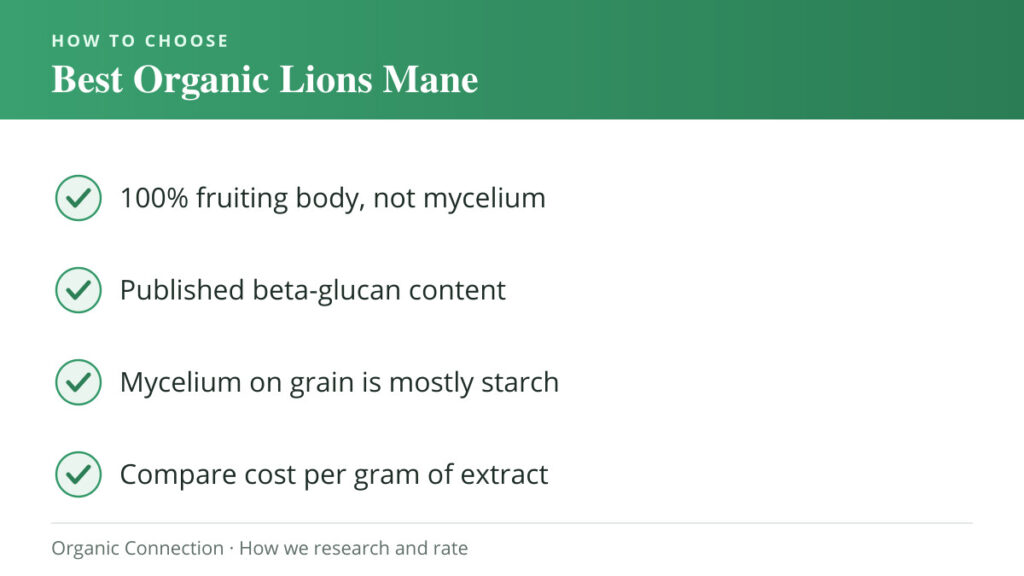
Good lion’s mane comes down to source material, extraction, testing, and honest labeling. Here is what matters.
1. 100% fruiting body
The label should say fruiting body explicitly. “Mycelial biomass”, “myceliated oats”, or a vague “full spectrum” usually means grain is included.
2. Stated beta-glucan content
Beta-glucans are the measurable active fraction. Brands that publish the percentage are telling you something real; those quoting only “polysaccharides” may be counting starch.
3. Hot water or dual extraction
Raw mushroom powder is largely indigestible chitin. Extraction is what makes the compounds available.
4. USDA organic certification
Mushrooms readily take up heavy metals from their substrate, so what they are grown on genuinely matters.
What the evidence actually says about lion’s mane
Lion’s mane is marketed hard for memory and focus, so it is worth setting out where the science genuinely stands.
The mechanism is interesting and mostly preclinical. Lion’s mane contains hericenones in the fruiting body and erinacines in the mycelium, and both have been shown in laboratory and animal studies to stimulate nerve growth factor synthesis. That is a genuinely intriguing mechanism, and it is the basis for essentially all the marketing. It is also almost entirely cell-culture and rodent work.
The human evidence is thin, mixed, and worth reading carefully. The most-cited trial studied adults aged 50 to 80 with mild cognitive impairment taking roughly 3 g daily, as four 0.8 g doses, for around 12 to 16 weeks. That group showed measurable improvement on cognitive scores against control, and the benefit faded after they stopped supplementing. That is a genuinely interesting result, and it is one small trial in a population with existing cognitive impairment.
The part the marketing leaves out. Trials in healthy young adults have largely failed to show cognitive improvement. At least two small randomized placebo-controlled trials in that group found no benefit on cognitive function, and a 2024 double-blind trial of 1,000 mg in 40 healthy adults examining acute effects produced mixed results at best. The Alzheimer’s Drug Discovery Foundation’s assessment is blunt: effects have been mixed across a small number of trials with few participants and short durations, and larger, longer trials are needed.
What that means if you are a healthy adult. The population where lion’s mane has shown a signal is older adults with existing mild cognitive impairment. If you are a healthy 30-year-old buying it to sharpen focus at work, you are extrapolating well beyond what has been demonstrated. A few small studies have also reported reductions in anxiety and depression scores and improvements in sleep, on the same thin evidence base. This is promising early research, not established benefit.
Dose is the underrated problem. Trials that found effects typically used around 3 grams a day of a genuine mushroom preparation. Many commercial products deliver a fraction of that, and if the product is mycelium on grain, the actual mushroom content may be lower still. A product that appears cheap per serving is often expensive per gram of real mushroom.
Safety. Lion’s mane is generally well tolerated. It is a mushroom, so anyone with a mushroom allergy should avoid it, and there are scattered reports of skin reactions and breathing difficulty. It may have mild effects on blood clotting and blood sugar, so mention it to your doctor if you are on relevant medication or approaching surgery. Nothing here is medical advice.
Beta-glucan percentages: the numbers that expose the difference
Telling people to look for beta-glucan content is only useful if you also say what a good number looks like, so here are the benchmarks the industry actually works to.
| Product type | Beta-glucans | Starch | Verdict |
| Quality fruiting body extract | 25% to 40% | Minimal | What you want |
| Concentrated standardized extract | 50% and above | Minimal | Premium, priced accordingly |
| Raw milled fruiting body, unextracted | Present but poorly available | Low | Chitin limits absorption |
| Mycelium grown on grain | Often under 5% | 35% to 60% | Mostly starch by weight |
| No figure published | Unknown | Unknown | Assume the worst |
Treat 25% as the floor for a fruiting body extract worth paying for. Any brand serious about this puts the percentage on the label or links to a batch certificate of analysis, and industry analyses have repeatedly found mycelium-on-grain products testing under 5% beta-glucans while running 35% to 60% starch from the substrate they were grown on.
Watch the wording carefully. A product quoting polysaccharides rather than beta-glucans is using a broader measure that can include the starch from grain, which is exactly how a grain-heavy product can advertise an impressive-looking number. Alpha-glucans, the starch fraction, are not what you are buying. If a label says “polysaccharides 40%” with no beta-glucan breakdown, that figure tells you very little.
How to choose organic lion’s mane
- Insist on 100% fruiting body unless you specifically want a mycelium product and know what that means.
- Look for a published beta-glucan percentage, not a vague polysaccharide figure.
- Confirm it is extracted, hot water or dual, rather than raw milled powder.
- Check USDA organic certification, since substrate quality affects heavy metal uptake.
- Compare cost per gram of extract, not per capsule or per serving.
Who should buy organic lion’s mane
The right product depends on format and budget. If you want the highest-integrity extract and will measure a powder, our top pick fits. If you want the best cost per serving, capsules, a well-known mycelium brand, or a blend to stir into coffee, we have a pick for each.
Best overall: Real Mushrooms Lion’s Mane Extract Powder, 60 Servings
| Organic Integrity Score | 93 / 100 |
| Ingredients | Organic Hericium erinaceus fruiting body extract |
| Certification | USDA Organic, Non-GMO, Gluten-free |
| Best for | Anyone who wants verified mushroom content |
Real Mushrooms is our top pick because it is built around exactly the problem this category has. The extract is made from 100% fruiting body with no grain, it is hot-water extracted so the beta-glucans are actually bioavailable, and the company publishes batch-level certificates of analysis showing beta-glucan content rather than hiding behind a polysaccharide number that could be mostly starch. The company was founded by a mycologist with decades in commercial mushroom growing, and that shows in how specific the labeling is.
The trade-off is taste and price. Real mushroom extract tastes like mushrooms, earthy and savory, which is not what everyone wants in a morning drink. It also costs more per serving than grain-based products, though considerably less per gram of actual mushroom, which is the comparison that matters.
What we liked: 100% fruiting body, hot-water extracted, published batch beta-glucan testing, USDA organic, and unusually honest labeling.
Keep in mind: Distinctly earthy mushroom flavor, and a higher price per serving than mycelium products.
What the listing discloses: Real Mushrooms states USDA organic certification and a single-ingredient formula, and does not say where it was grown or made.
Best value: Real Mushrooms Lion’s Mane Powder, 150 Servings
| Organic Integrity Score | 90 / 100 |
| Ingredients | Organic lion’s mane fruiting body extract |
| Certification | USDA Organic, Non-GMO, Gluten-free |
| Best for | Daily long-term use |
The same verified fruiting-body extract in a 150-serving size, which brings the cost per serving down substantially. Since the human trials that found any effect ran for eight to sixteen weeks, a supply that actually lasts that long is not a luxury, it is the minimum to give the supplement a fair test. If you have decided to try lion’s mane properly rather than dabble, this is the sensible format.
The trade-off is committing upfront to a taste you may not want to live with, and to a category where the evidence is still early. Buy the 60-serving size first if you have never taken mushroom extract before. Once a large pouch is opened, keep it sealed and dry, since extract powder is hygroscopic and will clump badly in a humid kitchen.
What we liked: The best cost per serving for verified fruiting-body extract, in a size that covers a realistic trial period.
Keep in mind: A large upfront commitment, and the powder clumps if it gets damp.
What the listing discloses: Real Mushrooms states USDA organic certification and a single-ingredient formula, and does not say where it was grown or made.
Best capsules: Real Mushrooms Lion’s Mane Capsules
| Organic Integrity Score | 88 / 100 |
| Ingredients | Organic lion’s mane fruiting body extract |
| Certification | USDA Organic, Non-GMO, Gluten-free |
| Best for | People who dislike the taste, and for travel |
Same extract, same published testing, in capsule form. The earthy savory flavor of genuine mushroom extract is the single most common reason people abandon lion’s mane, and capsules remove that objection entirely. They also make dosing consistent and travel simple, and a large count means you are not reordering constantly.
The trade-off is dose economics. Capsules hold a fixed and fairly small amount of extract, so hitting the 3 gram daily intake used in the research means taking a lot of them, which gets expensive quickly. Read the serving size carefully rather than assuming two capsules is a research-level dose, because in most mushroom capsule products it is well below that.
What we liked: Verified fruiting-body extract with the taste removed, consistent dosing, and genuinely convenient for travel.
Keep in mind: Reaching a research-level dose requires many capsules and costs considerably more than powder.
What the listing discloses: Real Mushrooms states a USDA organic claim, and does not say where it was grown or made.
Best established brand: Host Defense Lion’s Mane Powder
| Organic Integrity Score | 85 / 100 |
| Ingredients | Organic lion’s mane mycelium on organic brown rice |
| Certification | Certified Organic, Non-GMO, Gluten-free |
| Best for | Buyers who want a long-established US grower |
Host Defense is the best-known name in functional mushrooms in the US, founded by mycologist Paul Stamets, and the company grows its mushrooms on its own certified organic farm in Washington rather than importing. That vertical integration and the depth of mycological expertise behind the brand are genuine strengths, and the product is USDA organic and consistently well made.
The trade-off is the central one in this category. Host Defense uses mycelium grown on brown rice, and the rice is milled in with the mycelium, so a meaningful portion of what is in the jar is rice starch rather than mushroom. The company argues mycelium delivers erinacines that fruiting bodies lack, which is a real scientific position, but it does not publish beta-glucan percentages, so you cannot verify how much mushroom you are getting. It is a good product from a serious company; it is not comparable gram for gram with a fruiting-body extract.
What we liked: USDA organic, grown on the company’s own US farm, backed by unusually deep mycological expertise.
Keep in mind: Mycelium grown on rice, milled together with the grain, and no published beta-glucan content.
What the listing discloses: Host Defense documents an origin of the USA, and leaves whether the USDA seal applies unsaid.
Best for coffee: Om Lion’s Mane Mushroom Powder, 3.5 oz
| Organic Integrity Score | 82 / 100 |
| Ingredients | Organic lion’s mane mycelial biomass and fruit body, myceliated oats |
| Certification | — |
| Best for | Stirring into coffee, cocoa, or smoothies |
Om is the easiest product here to actually drink. It is USDA organic, uses both mycelial biomass and fruit body, and the oat content that dilutes the mushroom also gives it a milder, softer flavor that disappears into coffee or cocoa far more readily than a straight fruiting-body extract. At 50 servings in a small tub, it is a low-friction way to add lion’s mane to a morning routine you already have.
It scores lowest here because the label is explicit that it contains myceliated oats, which means a substantial share of the powder is grain. There is no published beta-glucan figure, so the actual mushroom content is unverifiable. It is an honest, well-made, pleasant product, and it is the least concentrated option in this guide. Judge it as a mushroom-containing coffee additive rather than as a therapeutic extract.
What we liked: USDA organic, includes fruit body as well as mycelium, and by far the easiest flavor to blend into a daily drink.
Keep in mind: Contains myceliated oats, so a large share is grain, and no beta-glucan content is published.
What the listing discloses: Sparse documentation from OM MUSHROOM SUPERFOOD — nothing on whether the USDA seal applies and where it was grown or made.
How to take lion’s mane, and what to expect
Extract powder is best stirred into something warm rather than cold, since it disperses more readily. Coffee is the most common vehicle and works well because the roast covers the earthiness; cocoa, chai, and miso soup all work for the same reason. Start with the label serving, take it in the morning, and take it consistently. The trials that reported effects ran eight to sixteen weeks of daily use, so judging it after a fortnight tells you nothing.
Be clear-eyed about expectations. Lion’s mane is not a stimulant and produces no acute noticeable effect, so if you take it expecting to feel something within an hour, you will conclude it does nothing, and you will be right about that specific expectation. What the early research points to is a slow, modest effect on cognitive measures over months, in a small number of small trials. It is reasonable to try it on that basis, and unreasonable to expect more.
Compare products on cost per gram of extract rather than per serving or per capsule, since that is the only way to compare a fruiting-body extract with a grain-grown mycelium powder honestly. Store powder airtight and dry, since mushroom extract absorbs moisture readily and clumps. If you take blood thinners or diabetes medication, or you have a mushroom allergy, talk to your doctor before starting, and stop if you notice any skin or breathing reaction.
How we researched this guide
We are a research-based review site. We compared each product against its certification, source material (fruiting body versus mycelium on grain), extraction method, published beta-glucan or certificate-of-analysis data, label transparency about grain content, growing location, and cost per gram of extract, then scored each with our 10-criteria Organic Integrity Score. No brand paid to be included or ranked. Nothing here is medical advice; lion’s mane may affect blood clotting and blood sugar and should be discussed with a clinician if you take related medication. Read the full method on our How We Research and Rate page.
Cognitive research, and the absence of a weight literature
Lion’s mane is one of the more interesting functional mushrooms, and the interest is entirely in a direction unrelated to body weight.
The research concerns hericenones and erinacines, compounds that stimulate nerve growth factor in laboratory studies. A small number of human trials, most notably a Japanese study in older adults with mild cognitive impairment, have reported improvements in cognitive scores during supplementation that regressed after stopping. Other small trials have looked at mood and sleep. The literature is genuinely promising and genuinely small.
On body weight there is essentially nothing in humans. Some rodent work has examined effects on lipid metabolism, which is where occasional marketing claims originate, and it has not been followed into people.
The most useful thing to know when buying is what part of the fungus you are getting. Many products are grown on grain and sold with the substrate included, so a large share of the powder is the grain rather than the mushroom. Fruiting body extracts and mycelium-on-grain products are quite different things at similar prices, and beta-glucan content is the number that distinguishes them.
That distinction matters more for value than any dosage question, and it is covered above.
If appetite or weight is what you are after, this is not the product. The cognitive and mood research is the reason to consider it, with the caveat that the human evidence is early.
Honest summary: an interesting early cognitive literature, no human weight data, and a category where knowing whether you bought mushroom or grain is the main buying skill.
Common questions about organic lion’s mane
What is the best organic lion’s mane supplement?
Our overall pick is Real Mushrooms Lion’s Mane Extract Powder, because it is USDA certified organic, made from 100% fruiting body with no grain filler, hot-water extracted, and tested batch by batch for beta-glucan content with the results published. For the best value, the 150-serving powder, and for capsules, Real Mushrooms Lion’s Mane Capsules.
What is the difference between fruiting body and mycelium lion’s mane?
Fruiting body is the actual mushroom. Mycelium products are grown on a bed of grain, usually oats or rice, and harvested together with that grain because separating them is not commercially practical, so a significant share of the powder can be starch. Both can be certified organic. Beta-glucan content is the reliable way to tell them apart.
Does lion’s mane actually improve memory?
The evidence is early and limited. The nerve growth factor mechanism is well documented in cell and animal studies, and one small trial in older adults with mild cognitive impairment found improvement that faded after they stopped. Human trials are few, small, and short. It is promising, not established, and no one should expect a noticeable change.
How much lion’s mane should you take?
Trials that found effects generally used around 3 grams a day of a genuine mushroom preparation, taken for eight to sixteen weeks. Many products deliver far less, and mycelium-on-grain products deliver less real mushroom still. Compare cost per gram of extract rather than per capsule or serving.
Are there side effects to lion’s mane?
It is generally well tolerated. It is a mushroom, so people with mushroom allergies should avoid it, and there are scattered reports of skin reactions and breathing difficulty. It may mildly affect blood clotting and blood sugar, so mention it to your doctor if you take related medication or have surgery planned.
What beta-glucan percentage should lion’s mane have?
Treat 25% as the floor for a fruiting body extract worth buying, with good products testing between 25% and 40% and concentrated standardized extracts going above 50%. Mycelium-on-grain products frequently test under 5% beta-glucans while running 35% to 60% starch. Be wary of labels quoting “polysaccharides” instead, since that broader measure can include the grain starch.
Does lion’s mane work for healthy young people?
The evidence says probably not, or at least it has not been shown. The trial that produced the well-known positive result studied adults aged 50 to 80 with existing mild cognitive impairment. Separate randomized trials in healthy young adults have largely failed to find cognitive improvement. Buying it for focus in your twenties or thirties is extrapolating well beyond the data.
How long does lion’s mane take to work?
The trials that found effects ran roughly 12 to 16 weeks of daily use, and the benefit faded once participants stopped. There is no acute effect: lion’s mane is not a stimulant and you will not feel anything within an hour. If you are going to try it, commit to a full three months at a research-level dose or do not bother, because a fortnight tells you nothing.
Should you take lion’s mane every day, and does it need cycling?
Daily use is what the trials did, and there is no established need to cycle it, unlike some adaptogens. The more relevant point is that benefits appeared to disappear after supplementation stopped, which means it behaves as an ongoing input rather than something that builds a lasting change. Take it with food, and start at the lower end if you have a sensitive stomach.
- Organic Supplements & Wellness hub
- Best Organic Ashwagandha
- Best Organic Super Greens Powder
- A Beginner’s Guide to Organic Supplements
- Organic Product Database — search every product we have reviewed, by certification
Price and availability as of October 11, 2026 7:10 pm EDT. Product prices and availability are accurate as of the date/time indicated and are subject to change. Any price and availability information displayed on Amazon.com at the time of purchase will apply to the purchase of this product.
Looking for other organic products?
We have checked more than 800 products across food, household goods, gardening, personal care and pet, every one against its stated certification. Browse all reviews.
Organic Connection is reader-supported. When you buy through links on this page we may earn a commission, at no extra cost to you. As an Amazon Associate we earn from qualifying purchases. We are not paid to feature or rank any product. This page is informational and is not medical advice. How we research and rate.