Last updated: September 30, 2026
We may earn a commission when you buy through links on this page, at no extra cost to you. How we research and rate.
The short version
After researching the certifications, oils, and ingredients of every organic mayonnaise we could find in stock, our top pick is Sir Kensington’s Organic Mayonnaise. It is USDA certified organic and Non-GMO Project Verified, and it is the only one whose listing names its oil — 100% organic sunflower — which is why it earned our highest Organic Integrity Score of 93 out of 100. For the best value, 365 by Whole Foods Market Organic Mayonnaise costs about a third as much per ounce, and for a bottle that stays clean in the refrigerator, Spectrum Organic Mayonnaise in the squeeze bottle is the best choice. One finding shaped this guide: we could not find a single certified organic avocado-oil or olive-oil mayonnaise in stock, so every pick here is a seed-oil mayonnaise.
With mayonnaise, “organic” and the type of oil are the two things that matter most, since the oil is the bulk of the jar. We flag each product’s certification and oil.
Best organic mayonnaise compared
| Best Choice | Best Value | |||
 |  |  | 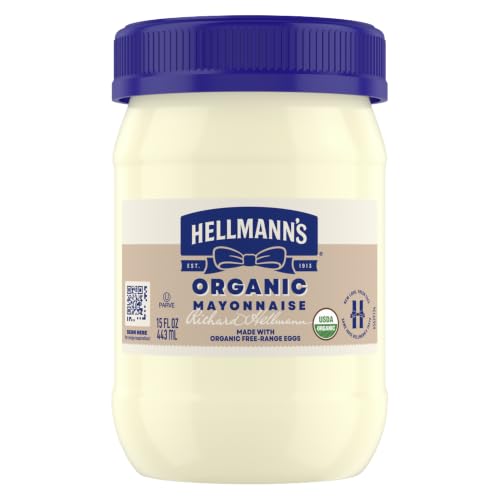 | |
| Product | Sir Kensington's Organic | 365 Organic 16 oz | Spectrum Organic Squeeze | Hellmann's Organic |
| Organic Integrity Score | 93/ 100 | 89/ 100 | 85/ 100 | 79/ 100 |
| Our rating | 4.7 | 4.5 | 4.3 | 4.0 |
| Best for | Best overall | Best value | Squeeze bottle | Supermarket brand |
| Oil named on listing | Yes — organic sunflower | No | No | No |
| Eggs | Organic | Cage-free | Cage-free | Free-range, American Humane Certified |
| Certification | USDA Organic, Non-GMO Project Verified, Keto | Certified organic ingredients, no certifier named | USDA Organic, Non-GMO Project Verified | USDA Organic, American Humane Certified, Kosher |
| Price | $11.19$0.93 / fluid ounce View on Amazon | $5.19 View on Amazon | $6.87$0.61 / fluid ounce View on Amazon | $6.28 $14.90 −58%$0.42 / fluid ounce View on Amazon |
Price and availability as of October 11, 2026 7:10 pm EDT. Product prices and availability are accurate as of the date/time indicated and are subject to change. Any price and availability information displayed on Amazon.com at the time of purchase will apply to the purchase of this product.
Scores are ours, based on independent research of certification, oil and egg quality, ingredients, and value, using the same 10-criteria method we apply to every product. See how we research and rate.
Reading the seals on organic mayonnaise: what each one does and does not cover
The labels on these products are not interchangeable, and several of them cover things that have nothing to do with each other. Here is what each one actually buys you.
| Certification | Covers | Key exclusion |
| USDA Organic | Farming and handling: no synthetic pesticides or fertilizers, no GMOs, no sewage sludge or irradiation, audited yearly by an accredited certifier | Three different tiers share the one seal, and it makes no claim about worker pay, food miles, or nutrition |
| Certified Humane | Animal welfare: space, handling, enrichment and slaughter conditions, audited on farm | A welfare standard that permits conventional, non-organic feed |
USDA Organic is three claims wearing one seal. “100% Organic” means every ingredient is certified. Plain “Organic”, the version you will see most often, means at least 95% by weight, with the remainder drawn from an approved national list. “Made with organic ingredients” means 70%, and that wording may not carry the USDA seal at all. The phrase on the front of the pack tells you which of the three you are holding, and the gap between them is not small.
Key things to look for in organic mayonnaise
Great organic mayo is about certification, oil, and eggs. Here is what matters.
1. USDA organic certification
It verifies organic oils and eggs, no GMOs, and no artificial preservatives, the baseline for clean mayo.
2. The type of oil
Avocado, olive, and sunflower oils are cleaner choices than refined soybean or canola; each has its own flavor.
3. Quality eggs
Look for organic and, ideally, cage-free or Certified Humane free-range eggs.
4. A short, clean ingredient list
Recognizable ingredients with little or no added sugar and no artificial additives.
Which oil? And why organic narrows the choice sharply
Because oil is most of what is in the jar, the oil shapes both flavor and how you use the mayo. Sunflower oil is light and neutral and tastes closest to classic mayonnaise. Avocado oil is neutral and rich, with a fat profile that keto, paleo and Whole30 eaters prefer. Olive oil gives a savory, assertive character that works better in dressings and potato salad than on a plain sandwich.
Here is the part other guides skip. If you require organic certification, the oil choice is largely made for you. When we searched Amazon for organic mayonnaise, organic avocado-oil mayonnaise, and organic olive-oil mayonnaise, every certified organic product we found was a sunflower- or seed-oil mayonnaise. We could not find a single certified organic avocado-oil or olive-oil mayonnaise in stock. So the honest framing is not “pick your favorite oil, all of them come in organic”. It is: organic, or your preferred specialty oil. On this page you are choosing among organic seed-oil mayonnaises, and the next section explains what happens if you go the other way.
One further point on the listings themselves: of the four certified organic mayonnaises we recommend, only one names the oil it is made from. On a product that is roughly 75% oil, that is a striking gap, and it is why the comparison table above has a row for it.
Avocado-oil mayonnaise is almost never organic
Avocado-oil mayonnaise is the fastest-growing corner of this aisle and it is routinely described as the clean, premium option. It is usually not organic, and the packaging is very good at obscuring that.
Three examples, all currently in stock, all from respected brands:
- Chosen Foods Classic Avocado Oil Mayonnaise. The word “organic” does appear on the listing — once, in the phrase “organic distilled white vinegar”. One ingredient is organic. The mayonnaise is not certified organic. It is Non-GMO Project Verified, glyphosate-residue free, kosher and Whole30 approved, which are real things, but none of them is organic certification.
- Sir Kensington’s Avocado Oil Mayonnaise. The same company makes our top pick, which is USDA certified organic. Its avocado-oil version makes no organic claim at all. Same brand, same shelf, two different standards — so brand trust does not transfer between products.
- Primal Kitchen Original Mayo with Avocado Oil. Non-GMO Project Verified, Certified Gluten-Free, Certified Humane cage-free eggs, Keto Certified, Certified Paleo, and Whole30 Approved. Six certifications, and not one of them is organic.
That last one is the clearest illustration of a pattern worth carrying to every aisle: a dense stack of seals is not evidence of organic certification, and can quietly substitute for it. A shopper scanning a label for reassurance finds six certified-this and verified-that marks, concludes the product is thoroughly vetted, and never notices the one seal that is missing.
We are not telling you to avoid these products. Avocado-oil mayonnaise made without soybean or canola oil is a reasonable thing to want, and non-GMO verification and humane egg standards have genuine value. We are telling you that if you are buying it because you believe it is organic, you are paying for a claim that was never made.
The oil is the whole product
Mayonnaise is roughly 70 to 80% oil. Everything else, egg, acid, salt, mustard, is a small fraction. So the oil choice determines what you are eating more than any other factor, and it is where the meaningful differences between brands sit.
| Oil | Flavor | Notes |
| Avocado oil | Mild, faintly buttery | Preferred in most quality mayo; high in monounsaturated fat |
| Olive oil | Distinctly olive, can be bitter | Good, though extra virgin can overpower; many use refined or a blend |
| Soybean oil | Neutral | The industry default. Overwhelmingly GM unless organic, and high in omega-6 |
| Canola or rapeseed | Neutral | Same GM point as soy; organic versions avoid it |
| Sunflower or safflower | Neutral | Common in “avocado oil” blends; check whether avocado is first or a minor addition |
The trap to watch for. A jar prominently labeled “made with avocado oil” frequently lists sunflower, safflower, or canola oil first, with avocado as a minor component. Ingredients are listed by weight, so check the order rather than the front of the jar. This is the most common way mayonnaise is marketed as an upgrade without being one.
Why organic matters here specifically. Soy and canola are among the most heavily genetically modified crops in the US and are associated with glyphosate use. Since mayonnaise is mostly oil, a conventional soybean-oil mayo delivers that oil in quantity. USDA organic certification excludes GM crops and glyphosate outright, which makes it a more consequential choice for mayonnaise than for foods where oil is a minor ingredient.
Egg-based versus vegan mayonnaise
Traditional mayonnaise is an emulsion of oil into egg yolk, which contains lecithin, the emulsifier that holds the two together. If you eat eggs, organic and pasture-raised is worth specifying, since the yolk is the one animal ingredient in the jar.
Vegan versions replace the yolk with a plant emulsifier: aquafaba, the liquid from cooked chickpeas, or pea protein, soy protein, or modified food starch. Aquafaba-based versions tend to have the cleanest ingredient lists; starch-based ones are usually the most processed and can taste gluey.
Neither is nutritionally superior in any meaningful way, since both are overwhelmingly oil. Choose on diet and on which ingredient list is shorter.
Watch for added sugar. A surprising number of mayonnaises contain sugar, and there is no culinary reason for it in a product that should taste of oil, egg, and acid. A good jar reads: oil, eggs or aquafaba, vinegar or lemon juice, salt, mustard, and possibly rosemary extract as a natural antioxidant. Anything much longer is doing work the oil should be doing.
Homemade is genuinely easy and gives you complete control of the oil. One egg yolk, a teaspoon of mustard, a squeeze of lemon, and a cup of oil drizzled in slowly while blending produces mayonnaise in about two minutes. It keeps around a week refrigerated, which is the trade-off against a commercial jar.
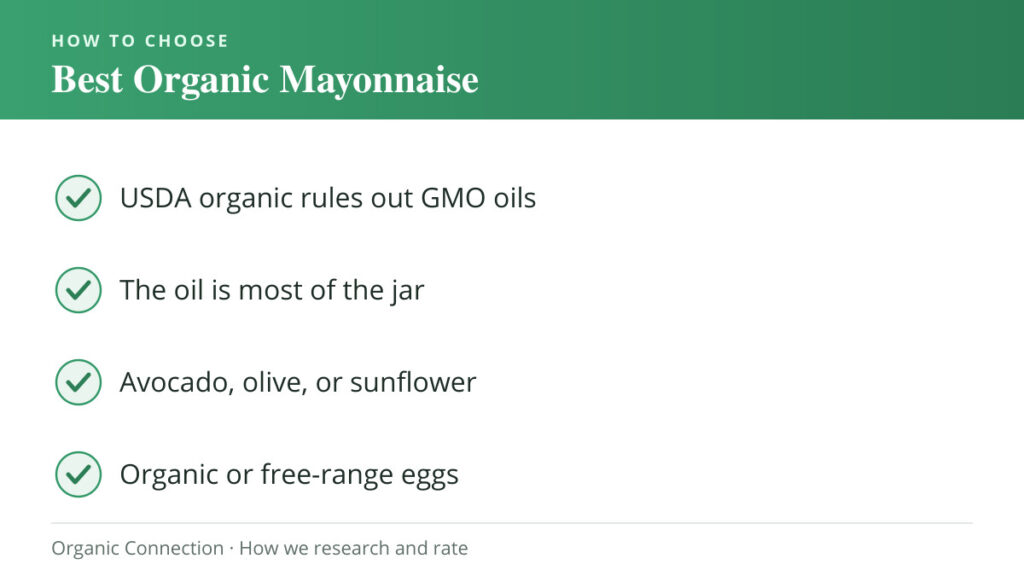
How to choose organic mayonnaise
- Confirm USDA organic. It rules out GMO oils and artificial preservatives.
- Pick your oil. Avocado for neutral and rich, olive for savory, sunflower for classic taste.
- Check the eggs. Organic, cage-free, or Certified Humane free-range are the best signals.
- Read the list. Short and recognizable, with little or no added sugar.
- Match it to the job. Neutral mayo for sandwiches and cooking, olive-oil mayo for bold dressings.
Who should buy organic mayonnaise
Taste and diet pull in different directions here. Most people should just buy our top pick. If you want an avocado-oil blend, an olive-oil option, a pure-avocado mayo, or a classic everyday jar, we have a pick for each.
Best overall: Sir Kensington’s Organic Mayonnaise
| Organic Integrity Score | 93 / 100 |
| Oil and eggs | Organic sunflower oil and organic lemon juice |
| Certification | USDA Organic, Non-GMO Project Verified, Keto Certified |
| Best for | The most completely certified organic mayo you can actually buy |
Sir Kensington’s takes the top spot on the strength of what its label will commit to. It is the only mayonnaise here whose listing names its oil — 100% USDA certified organic sunflower oil — and adds organic lemon juice rather than generic “natural flavors”. On top of organic certification it carries Non-GMO Project verification, and the ingredient list is short and recognizable, with no artificial colors, flavors, or preservatives.
The sunflower oil keeps the flavor light and classic, so it behaves like a conventional mayonnaise everywhere you would use one: sandwiches, dressings, potato salad, and as the base for an aioli.
The trade-off is price. At roughly 93 cents an ounce it is the most expensive mayonnaise on this page and around three times the cost of our value pick, and the 12 oz jar is small. You are paying for the certification stack and for a brand that says what is in the jar.
What we liked: The only listing here that names its oil, USDA organic plus Non-GMO Project verification, organic lemon juice, and a clean, classic, versatile flavor.
Keep in mind: The highest price per ounce here by a wide margin, in the smallest jar.
What the listing discloses: On the Sir Kensington’s label: USDA organic certification and Non-GMO Project Verified. Not stated: where it was grown or made.
Best value: 365 by Whole Foods Market Organic Mayonnaise
| Organic Integrity Score | 89 / 100 |
| Oil and eggs | Cage-free eggs; the oil is not named on the listing |
| Certification | Certified organic ingredients, no certifier named |
| Best for | The cheapest certified organic mayonnaise here |
At roughly 32 cents an ounce in the 16 oz jar, this is a third the price of our top pick and the obvious choice if mayonnaise is a staple rather than a treat. It is made with cage-free eggs and certified organic ingredients, with no artificial preservatives, and the texture is a straightforwardly creamy, neutral mayo that does everything a conventional jar does.
Two things keep it out of first place, and both are about disclosure rather than the product. The listing says “certified organic ingredients” without naming a certifying agent, where 365 names QAI on other products in the same range — and an unattributed organic claim is one you cannot check. It also never says which oil it uses, which on a product that is mostly oil is the single most useful thing a label could tell you.
What we liked: By far the lowest cost per ounce, certified organic ingredients, cage-free eggs, and no artificial preservatives.
Keep in mind: The listing names neither its certifier nor its oil, and it is an Amazon private label.
What the listing discloses: 365 by Whole Foods Market leaves the basics open, including whether the USDA seal applies and where it was grown or made.
Best squeeze bottle: Spectrum Organic Mayonnaise
| Organic Integrity Score | 85 / 100 |
| Oil and eggs | Cage-free eggs; 860 mg omega-3 ALA per serving |
| Certification | USDA Organic, Non-GMO Project Verified |
| Best for | Anyone who would rather squeeze than spoon |
Spectrum states its certification more precisely than most: USDA Certified Organic and Non-GMO Project Verified, both spelled out on the listing, with cage-free eggs and a non-hydrogenated fat profile. It also publishes a specific figure — 860 mg of omega-3 ALA per serving, 54% of the daily value — which is more nutritional detail than any other jar here offers.
The squeeze bottle is the practical reason to choose it. Mayonnaise in a jar gets contaminated by the knife that has just been in the mustard, and a squeeze bottle avoids that entirely, which matters for a product kept open in the refrigerator for weeks.
It sits mid-table because it costs about two and a half times the value pick per ounce and, like the 365 jar, never names its oil.
What we liked: USDA Organic and Non-GMO Project Verified both stated plainly, a published omega-3 figure, cage-free eggs, and a squeeze bottle that stays clean.
Keep in mind: Around two and a half times the value pick per ounce, and the oil is not named.
What the listing discloses: You are told USDA organic certification and Non-GMO Project Verified for Spectrum; you are not told where it was grown or made.
Best supermarket brand: Hellmann’s Organic Mayonnaise
| Organic Integrity Score | 79 / 100 |
| Oil and eggs | American Humane Certified free-range eggs; 831 mg omega-3 ALA |
| Certification | USDA Organic, American Humane Certified, Kosher |
| Best for | A familiar brand, with a welfare certification organic does not include |
Hellmann’s organic line is the one pick here that will taste like the mayonnaise most people grew up with, because it is made by the company that defined that taste. It is USDA certified organic, kosher, gluten free, and publishes 831 mg of omega-3 ALA per serving.
Its distinctive credential is the eggs. They are American Humane Certified free-range, which is a separate audited animal-welfare standard, and this is worth understanding clearly: USDA organic certification requires outdoor access for laying hens but does not set the stocking densities, enrichment, or handling standards that a dedicated welfare certification does. Organic and humane are overlapping claims, not the same claim, and this is the only jar here carrying both.
It scores last for one practical reason rather than any fault in the product: its stock is intermittent. It has been repeatedly unavailable or priced well above shelf level, so check the live price before ordering, and treat one of the three picks above as the reliable buy.
What we liked: USDA organic from a brand people already trust on flavor, with an audited humane-egg certification that organic alone does not provide.
Keep in mind: Stock is intermittent and pricing swings; the oil is not named on the listing.
What the listing discloses: You are told USDA organic certification, American Humane Certified and kosher certification for HELLMANN’S; you are not told where it was grown or made.
Using and storing organic mayonnaise
Organic mayo works exactly like conventional mayo, on sandwiches and burgers, as a base for dressings, dips, and slaws, and as a secret to moist baked goods and crispy pan-fried sandwich exteriors. Because it is made with real eggs and no artificial preservatives, refrigerate it after opening and use it within the timeframe on the label, typically a couple of months, and always use a clean utensil to avoid introducing bacteria. Unopened jars are shelf-stable until the date on the lid. If the oil separates slightly, a quick stir brings it back together. Olive-oil mayo shines in bolder recipes, while sunflower and avocado mayos are best where you want a neutral base.
How we researched this guide
We are a research-based review site. We compared each mayonnaise against its certification (USDA organic), oil and egg quality, ingredient list, and the weight of aggregated customer feedback on flavor, then scored each with our 10-criteria Organic Integrity Score. No brand paid to be included or ranked. Read the full method on our How We Research and Rate page.
Fat, satiety, and the light version question
Mayonnaise is almost pure fat, and it is one of the few foods where the low-fat alternative deserves genuine scrutiny rather than automatic preference.
A tablespoon of full-fat mayonnaise carries around 90 to 100 calories, essentially all from oil. Two tablespoons in a sandwich is a couple of hundred calories that most people would not count, which makes it a meaningful contributor in a diet where it appears regularly.
The light and reduced-fat versions cut that substantially, typically to 35 to 50 calories a tablespoon. What replaces the oil is water, starch or gum thickeners, and frequently sugar to compensate for the flavor lost with the fat. So the swap saves real calories and moves the product further from its four-ingredient original.
Whether that trade is worth it depends on how you use it. If mayonnaise is a thin spread on a sandwich, the difference is 50 calories and the full-fat version tastes considerably better for it. If it is the base of a bowl of coleslaw or potato salad, the quantities are large enough that the reduced-fat version saves something worth having.
There is also a satiety argument for the full-fat version. Fat slows gastric emptying, and a small amount of a rich food can be more satisfying than a larger amount of a diluted one, which is the general case against reflexively choosing the light option.
The oil matters too. Most conventional mayonnaise uses soybean or canola oil; avocado and olive oil versions cost more and change the fatty acid profile, which is covered above.
Honest summary: calorie-dense and easy to under-count, with light versions offering a real saving at a cost in ingredients and taste. Measure it rather than swap it, if the total matters.
Common questions about organic mayonnaise
What is the best organic mayonnaise?
Our overall pick is Sir Kensington’s Organic Mayonnaise, because it is USDA certified organic and Non-GMO Project Verified, and it is the only one here that names its oil: 100% organic sunflower. For the best value, 365 by Whole Foods Market Organic Mayonnaise costs about a third as much per ounce, and for a squeeze bottle, Spectrum Organic Mayonnaise. Note that no certified organic avocado-oil or olive-oil mayonnaise was in stock when we checked.
Why choose organic mayonnaise?
Mayonnaise is mostly oil, and conventional versions typically use refined soybean or canola oil, often from GMO crops, plus additives. USDA organic mayo uses certified organic oils and eggs with no GMOs or artificial preservatives, so the organic choice meaningfully upgrades a condiment you may use often.
Which oil is best in mayonnaise?
It depends on taste. Avocado oil is neutral and rich and popular with keto and paleo eaters; olive oil is savory and distinctive, best in dressings; sunflower oil is light and closest to classic mayo flavor. All can be organic, so choose the oil whose flavor and use suit you.
Is avocado oil mayo healthier?
Avocado and olive oils have favorable fat profiles and are less refined than typical soybean or canola oil, which is why many people prefer them. Within organic options, the certification ensures clean sourcing regardless of oil, so the choice is mostly about the fat profile and flavor you want.
How long does organic mayonnaise last?
Unopened jars are shelf-stable until the date on the lid. Once opened, refrigerate and use within the timeframe on the label, typically about two months, and always use a clean utensil. Because organic mayo avoids artificial preservatives, proper refrigeration and clean handling matter.
- Organic Food & Pantry hub
- Best Organic Olive Oil
- Best Organic Apple Cider Vinegar
- How we research and rate products
- our searchable product database — compare all 800+ picks side by side
- Best Organic Ketchup
Price and availability as of October 11, 2026 7:10 pm EDT. Product prices and availability are accurate as of the date/time indicated and are subject to change. Any price and availability information displayed on Amazon.com at the time of purchase will apply to the purchase of this product.
Looking for other organic products?
We have checked more than 800 products across food, household goods, gardening, personal care and pet, every one against its stated certification. Browse all reviews.
Organic Connection is reader-supported. When you buy through links on this page we may earn a commission, at no extra cost to you. As an Amazon Associate we earn from qualifying purchases. We are not paid to feature or rank any product. How we research and rate.