Last updated: September 30, 2026
We may earn a commission when you buy through links on this page, at no extra cost to you. How we research and rate.
Important health note: This guide is general information, not medical advice, and prenatal nutrition is a decision to make with your doctor or midwife. If you are pregnant, trying to conceive, or nursing, choose a prenatal with your healthcare provider, who may recommend specific nutrient levels (for example, extra iron, iodine, choline, or DHA) based on your needs. Do not start, stop, or combine supplements in pregnancy without professional guidance.
The short version
After researching the certifications, nutrient forms, and formulations of the most popular organic and whole-food prenatal vitamins, our top pick is Ritual Essential Prenatal. It is USDA Organic, non-GMO, made from whole foods, and provides key nutrients like folate in an easy-to-take form, which is why it earned our highest Organic Integrity Score of 93 out of 100. For a gentle-on-the-stomach whole-food option, New Chapter Perfect Prenatal is our pick, and for a comprehensive organic formula with DHA, Actif Organic Prenatal is the best choice.
The single most important nutrient in any prenatal is folate (folic acid or its active form, methylfolate), and the second thing to check with your provider is whether you also need adequate iron, iodine, choline, vitamin D, and DHA, which not every product includes. We flag what each provides.
Best organic prenatal vitamins compared
| Best Choice | Best Value | ||||
 |  |  | 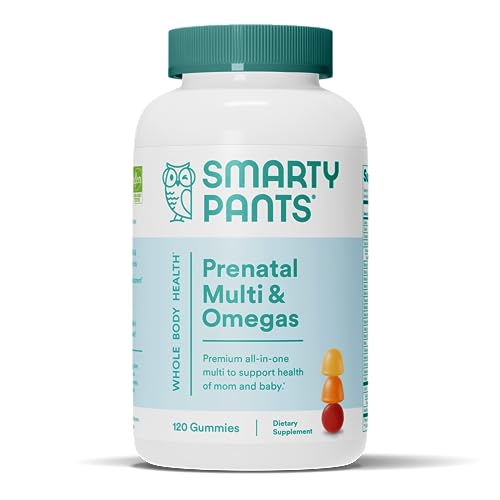 |  | |
| Product | Ritual Essential | New Chapter Perfect | Actif Organic | SmartyPants | Garden of Life mykind |
| Organic Integrity Score | 93/ 100 | 90/ 100 | 82/ 100 | 76/ 100 | 75/ 100 |
| Our rating | 4.7 | 4.5 | 4.1 | 3.8 | 3.8 |
| Best for | Best overall | Gentle stomach | Comprehensive + DHA | Easy gummy | Clean, certified prenatal |
| Certification | Non-GMO Project Verified, Gluten-free, Vegan | Non-GMO Project Verified, Certified Organic, Kosher | Non-GMO, Gluten-free, Organic | Not stated on the listing | — |
| Note | Methylfolate, vegan | Fermented, gentle | Includes omega DHA | Omega-3; low iron | Whole-food, easy tablets |
| Form | Delayed-release capsules with methylfolate and DHA | Fermented tablets | Tablets with added DHA and herbs | Gummies with omega-3 DHA | Whole-food tablets (also gummies) |
| Price | Currently unavailable See buying options | $33.59 $37.85 −11%$0.35 / count View on Amazon | $45.95$0.51 / count View on Amazon | Currently unavailable See buying options | Currently unavailable See buying options |
Price and availability as of October 18, 2026 7:10 am EDT. Product prices and availability are accurate as of the date/time indicated and are subject to change. Any price and availability information displayed on Amazon.com at the time of purchase will apply to the purchase of this product.
Scores are ours, based on independent research of certification, nutrient forms, and formulation quality, using the same 10-criteria method we apply to every product. They are not medical rankings.
What each certification on an organic prenatal vitamins label actually covers
Seals accumulate on a package faster than meaning does. This is what each of the marks you will see here certifies, and what it leaves out.
| Certification | Covers | Key exclusion |
| USDA Organic | Farming and handling: no synthetic pesticides or fertilizers, no GMOs, no sewage sludge or irradiation, audited yearly by an accredited certifier | Three different tiers share the one seal, and it makes no claim about worker pay, food miles, or nutrition |
| Non-GMO Project | Testing and supply-chain traceability showing the ingredients are not genetically engineered | Sets no limit on synthetic pesticides or fertilizers, so it is not an organic claim |
| NSF/ANSI | Independent testing of a water treatment product against one named standard number | The number is the claim: 42 is taste and odor, 53 is health contaminants, 58 is reverse osmosis, 401 is emerging compounds, and 372 is only lead-free materials |
| USP Verified | Supplement identity, potency, purity and dissolution against United States Pharmacopeia monographs | Confirms the label is accurate; it does not claim the ingredient does anything |
Check which NSF standard, and then check which contaminants inside it. Certification is granted claim by claim rather than filter by filter, so a unit certified to NSF/ANSI 53 is certified for the specific contaminants it was tested against, not for everything the standard covers. Manufacturers publish those claims and so do the certifying bodies, and the two should agree. “Tested to NSF standards” in a listing, with no number and no certifier, is not a certification at all.
The five numbers to check on the label
| Nutrient | Target | Why it matters |
| Folate or folic acid | 600 mcg DFE | Neural tube defect prevention |
| Iron | 27 mg | Blood volume expansion; deficiency is common |
| Iodine | 150 mcg | Maternal thyroid function and fetal brain development |
| Choline | 450 mg AI | Fetal brain and spinal cord development |
| DHA | At least 200 mg | Fetal brain and eye development |
Choline is where almost every prenatal falls short. The adequate intake in pregnancy is 450 mg, and most prenatal vitamins supply somewhere between 55 mg and 250 mg, well under target. Choline is bulky, so including a full dose makes the pill large or forces a multi-capsule serving, and manufacturers avoid that. This is the single most useful thing to check, because you may need to make it up from food, eggs and liver are the richest sources, or take choline separately.
Iodine is the other common gap. A significant share of prenatals omit iodine entirely. Since iodine is essential for fetal brain development and many people using non-iodized salt get little from diet, its absence is worth noticing.
DHA is often sold separately. Many prenatals contain no DHA at all, expecting you to buy a separate fish or algal oil. If yours has none, the March of Dimes recommends a minimum of 200 mg daily, and an algal oil is the vegetarian option.
Always discuss supplements with your midwife or doctor, particularly iron, which should not be over-supplemented without reason. Nothing here is medical advice.
Key things a prenatal should cover
A prenatal fills nutritional gaps that matter most before and during pregnancy. Choosing an organic, well-formulated one is about both clean ingredients and getting the right nutrients in usable forms. Here is what to look for, alongside your provider’s advice.
1. Folate (folic acid or methylfolate)
The cornerstone nutrient for early development. Some people are advised to use methylfolate, the active form; your provider can guide you.
2. Iron, iodine, and choline
Commonly needed in pregnancy and sometimes underdosed in “clean” formulas, so check the label and ask your provider.
3. Vitamin D and DHA
Vitamin D supports development, and DHA (an omega-3) supports the brain and eyes; some prenatals include DHA, others sell it separately.
4. Clean, tolerable formulation
Organic, non-GMO ingredients without unnecessary fillers, and a form (whole-food, gummy, or gentle tablet) you can actually keep down through morning sickness.
Organic vs conventional prenatals: does it matter?
Both organic and conventional prenatals can provide the essential nutrients, and the most important thing is that yours contains what you and your provider decide you need. Where organic and whole-food formulas add value is ingredient quality: USDA-organic, non-GMO sourcing and fewer synthetic fillers, dyes, and additives, which many people prefer during pregnancy.
The trade-off to watch is that some whole-food and gummy prenatals contain less iron or omit certain nutrients to stay gentle or tasty, so they must be matched to your needs. The CDC is clear that adequate folate is the non-negotiable, and beyond that your provider tailors the rest. Our scoring weights organic certification and formulation quality, but it is not a substitute for medical guidance on which nutrients you personally need.
Folate versus folic acid, and the MTHFR question
This is the most argued-over point in prenatal supplements, and both sides have a legitimate case.
The case for folic acid. ACOG and the CDC continue to recommend folic acid specifically, and their reasoning is sound: folic acid is the form used in the large randomized trials that established folate’s role in preventing neural tube defects. The evidence base for preventing spina bifida and anencephaly rests on that molecule. When the stakes are a neural tube defect, regulators reasonably prefer the form with the trial data behind it.
The case for methylfolate. Folic acid is synthetic and must be converted by the body, via the MTHFR enzyme, into 5-methyltetrahydrofolate (5-MTHF), the active form cells actually use. Roughly 25% to 30% of people carry MTHFR variants that slow that conversion. For them, supplementing the already-active 5-MTHF bypasses the bottleneck, and studies have found methylfolate effectively raises blood and red-cell folate in women with these variants.
The practical resolution. Both forms prevent neural tube defects when folate status is adequate; the argument is about efficiency of conversion, not about whether folate works. If you know you carry an MTHFR variant, a methylfolate prenatal is a reasonable choice. If you do not, either form is fine and folic acid has the deeper evidence base. What matters far more than the form is that you take enough, early enough, since the neural tube closes in the first four weeks, often before a pregnancy is confirmed. The RDA in pregnancy is 600 mcg.
How to choose a prenatal vitamin
- Start with your provider. Bring the label to your appointment and confirm the folate, iron, iodine, choline, D, and DHA levels are right for you.
- Check the folate form. Folic acid works for most; some are advised to use methylfolate. Ask which is right for you.
- Look for USDA Organic and non-GMO. These verify cleaner sourcing and no genetically modified ingredients.
- Mind tolerability. Whole-food tablets can be gentler on an empty stomach; gummies are easy but usually lack iron; pick what you can keep down.
- Consider DHA. If your prenatal does not include DHA, your provider may suggest a separate omega-3.
Who should buy organic prenatal vitamins
This is a decision to make with your provider rather than from a guide. Among USDA-organic whole-food prenatals, our top pick is the strongest. If you want something gentle on the stomach, the most comprehensive organic formula, a highly traceable option, or an easy gummy, we have a pick for each, to discuss with your provider.
Best overall: Ritual Essential Prenatal
| Organic Integrity Score | 93 / 100 |
| Certification | Non-GMO Project Verified, Gluten-free, Vegan |
| Form | Delayed-release capsules with methylfolate and DHA |
| Best for | People who want sourcing transparency |
Ritual Essential is our pick for transparency. It focuses on a shortlist of the nutrients most people actually need in usable forms, including methylfolate (the active folate) and vegan omega-3 DHA, and it publishes the source of each ingredient. The delayed-release capsule and mint tab aim to reduce nausea.
It takes first place on documentation: its listing names Non-GMO Project Verified and NSF, where most of this category asks to be taken on trust.
What we liked: Methylfolate and vegan DHA, unusual ingredient-source transparency, non-GMO, and a nausea-conscious capsule.
Keep in mind: It is traceable and non-GMO rather than USDA organic, and deliberately omits some nutrients (including most iron), so confirm the gaps with your provider.
What the listing discloses: The word organic does not appear on the Ritual listing at all.
Best gentle on the stomach: New Chapter Perfect Prenatal
| Organic Integrity Score | 90 / 100 |
| Certification | Non-GMO Project Verified, Certified Organic, Kosher |
| Form | Fermented tablets |
| Best for | Sensitive stomachs and morning sickness |
New Chapter Perfect Prenatal is our pick for tolerability. Its whole-food, fermented formula is designed to be gentle enough to take any time, even on an empty stomach, which is a real advantage during first-trimester nausea. It is Non-GMO Project Verified with organic ingredients.
What we liked: Whole-food fermented formula that is gentle on an empty stomach, Non-GMO Project Verified, and long trusted for tolerability.
Keep in mind: It is not fully USDA Organic on every ingredient, and like many whole-food prenatals it may need a separate DHA. Confirm iron with your provider.
What the listing discloses: You are told Non-GMO Project Verified and kosher certification for New Chapter; you are not told whether the USDA seal applies and where it was grown or made.
Most comprehensive: Actif Organic Prenatal
| Organic Integrity Score | 82 / 100 |
| Certification | Non-GMO, Gluten-free, Organic |
| Form | Tablets with added DHA and herbs |
| Best for | An all-in-one that includes omega DHA |
Actif Organic Prenatal is our pick for an all-in-one. It packs a broad range of vitamins and minerals plus DHA omega-3 into one formula with organic and non-GMO ingredients, which appeals to people who would rather not take a separate omega supplement.
It scores in the middle mainly because the “organic” claim applies to ingredients rather than a full USDA seal, and comprehensive formulas can include herbal extras you should clear with your provider, but for coverage in one product it is strong.
What we liked: Comprehensive formula that includes DHA, organic and non-GMO ingredients, and the convenience of one all-in-one product.
Keep in mind: It uses organic ingredients rather than carrying a full USDA seal, and includes added herbs, so review the full label with your provider during pregnancy.
What the listing discloses: Little to verify on the ACTIF listing: no word on whether the USDA seal applies and where it was grown or made.
Easiest gummy: SmartyPants Prenatal
| Organic Integrity Score | 76 / 100 |
| Certification | Not stated on the listing |
| Form | Gummies with omega-3 DHA |
| Best for | Those who cannot swallow tablets |
SmartyPants Prenatal is our pick for the easiest experience. These non-GMO, third-party tested gummies include methylfolate and omega-3 DHA and are genuinely pleasant to take, which helps consistency for anyone who struggles with pills or nausea.
It scores at the value end on our organic metric because gummies are not organic-certified, contain some added sugar, and, importantly, cannot hold much iron, so most gummy prenatals contain little or none. If you choose a gummy, ask your provider whether you need iron separately.
What we liked: Pleasant, easy-to-take gummies with methylfolate and DHA, non-GMO and third-party tested, great for consistency.
Keep in mind: Gummies are not organic-certified, add some sugar, and contain little to no iron, so confirm with your provider whether you need iron elsewhere.
What the listing discloses: SmartyPants makes no organic claim anywhere, so the case rests on the other claims it does make.
Clean, certified prenatal: Garden of Life mykind Organics Prenatal
| Organic Integrity Score | 75 / 100 |
| Certification | — |
| Form | Whole-food tablets (also gummies) |
| Best for | An all-around clean, certified prenatal |
Garden of Life mykind Organics holds its place on this page because it is one of the few prenatals that is genuinely USDA Organic and Non-GMO Project Verified, built from real whole foods rather than isolated synthetics. It provides folate and a broad range of prenatal nutrients, and many people find the tablets easy to take. A gummy version exists for those who prefer it.
As with every prenatal, confirm with your provider that the iron and other levels suit you, since whole-food formulas can differ from standard prescriptions. For a clean, certified, all-around prenatal, it is still worth buying.
What we liked: Genuinely USDA Organic and Non-GMO Project Verified, whole-food based, broad nutrient profile, and generally easy to take.
Keep in mind: Whole-food formulas can carry different iron levels than a standard prenatal, so confirm with your provider, and it may not include DHA.
What the listing discloses: Garden of Life leaves the basics open, including whether the USDA seal applies and where it was grown or made.
How to take a prenatal well
Ideally start a prenatal before conception, since folate matters most in the earliest weeks, and take it daily with your provider’s blessing. If it upsets your stomach, take it with food or before bed, or switch to a gentler whole-food or split-dose formula. Pair with a healthy diet rather than relying on the pill alone, and never double up to “catch up.” Bring your chosen product to your appointments so your provider can confirm the folate, iron, iodine, choline, vitamin D, and DHA levels are right for you.
Choline: the nutrient almost every prenatal gets wrong
Keep in mind: choline supports neural tube formation, brain development and placental function, and the pregnancy target is 450 mg per day. A 2022 analysis of 188 prenatal supplements found choline among the most frequently underdosed or missing nutrients — most products carry somewhere between 55 and 250 mg, and many contain none at all. This is the single biggest gap between what a prenatal implies it covers and what it actually delivers, and it applies to premium and organic products as much as cheap ones.
The reason is practical rather than sinister: choline is bulky. Delivering 450 mg would make the tablet considerably larger, and manufacturers optimize for swallowability. That is a reasonable engineering trade-off and a poor nutritional one, and almost no label draws attention to it.
What to do:
- Check the choline figure specifically — it will be in milligrams, and if it is absent from the panel it is absent from the product.
- Eggs are the most practical food source. Two eggs supply roughly 250–300 mg. Beef liver is higher still, though it is also high in preformed vitamin A, which brings its own limit.
- A separate choline supplement is the other route if your diet is low in eggs, and is worth discussing with your midwife or doctor.
- Do not assume “whole food” or “organic” means complete. On choline specifically, those products are no better and are frequently worse, because whole-food formulations are volume-constrained too.
Iodine, and the gap in “natural” prenatals
Iodine supports thyroid function, which regulates fetal brain development, and the pregnancy recommendation is 150 mcg daily. Deficiency during pregnancy is a recognized cause of impaired neurodevelopment.
Roughly 40% of “natural” prenatal labels skip it entirely — a higher omission rate than in conventional products, partly because the usual sources are potassium iodide or kelp, and kelp is variable enough in iodine content that careful formulators avoid it.
That variability is worth understanding. Kelp is an extraordinary iodine accumulator, and content varies by orders of magnitude between products. A prenatal listing “kelp” rather than a stated microgram quantity of iodine is not giving you a dose you can rely on — in either direction, since excess iodine in pregnancy is also harmful.
Vitamin A: the one where more is actively dangerous
This is the clearest safety issue in the category and it deserves plain language.
Preformed vitamin A — retinol, retinyl palmitate, retinyl acetate — is teratogenic in excess. Intakes above roughly 10,000 IU daily raise the risk of birth defects. Beta-carotene is a different matter: the body converts it to vitamin A as needed and does not over-convert, so it does not carry the same risk.
- Check how vitamin A is listed. A good prenatal supplies it mostly or entirely as beta-carotene, not as retinyl palmitate.
- Do not stack sources. A prenatal plus a separate multivitamin plus cod liver oil plus liver in the diet is how people reach the threshold without noticing. Cod liver oil in particular is high in preformed vitamin A and is a common addition.
- Topical retinoids and oral isotretinoin are a separate and much more serious matter — those are discussed with your doctor, not managed by supplement choice.
Folate: what the evidence actually supports
Our section above covers the MTHFR question. Two clarifications worth adding, because the debate is often presented as more one-sided than it is.
The evidence base is strong and specific. Randomized trials and population data show 400–800 mcg daily, taken preconceptionally and through the first trimester, cuts neural tube defect risk by 50–70%. That is one of the most robust findings in nutritional medicine.
Both forms work. Folic acid and 5-MTHF (methylfolate) both prevent neural tube defects at adequate dose for most people. Methylfolate has the advantage of working regardless of MTHFR genotype, which is a reasonable argument for it as a default given how common those variants are. But folic acid is not ineffective, and the trial evidence underpinning the recommendation was largely built on it.
The thing that actually matters is timing. The neural tube closes within about 28 days of conception — frequently before a pregnancy is known. Starting a prenatal after a positive test is later than ideal. Guidance is to begin at least a month, and ideally three, before trying to conceive.
Iron: dose, absorption and the side effect that stops people
- 27 mg is the pregnancy target, and deficiency is associated with anemia, preterm birth and low birth weight.
- Constipation is the usual reason people stop taking prenatals. It is manageable: increase water and fiber, keep moving, and consider a gentler form — iron bisglycinate is generally better tolerated than ferrous sulfate at equivalent elemental iron.
- Take iron with vitamin C, which substantially improves absorption of non-haem iron. A glass of orange juice does it.
- Separate it from calcium, which competes for absorption — so a prenatal high in both is working against itself. Also separate from tea and coffee, whose tannins inhibit uptake.
- Do not self-prescribe extra iron. Excess iron is harmful, and iron status should be guided by blood work rather than assumption.
What a prenatal will not do, and how to check quality
- DHA is usually a separate product. Most prenatals contain little or none, and the omega-3 recommendation in pregnancy is generally met with a fish oil or algal DHA supplement alongside. Algal DHA is the vegan option and is the same molecule.
- Supplements are not FDA-approved. They are regulated as food, not medicine, and no agency verifies that the contents match the label before sale. Third-party verification — USP Verified, NSF Certified — is the meaningful quality signal, and it is separate from and more informative than an organic seal.
- Heavy metals are not covered by organic certification. Plant-derived ingredients concentrate what was in the soil, so look for published contaminant testing.
- Watch the herbal blends. Several “whole food” and “organic” prenatals include botanical extracts — herbs whose safety in pregnancy is often not established, and which are not part of any prenatal recommendation. A long proprietary herbal blend on a prenatal label is a reason to check each ingredient with your midwife or doctor rather than a mark of quality.
- Gummies routinely omit iron, because it tastes metallic, and frequently omit or underdose several other nutrients while adding sugar. They are better than nothing if tablets cause vomiting — and that is the case for choosing them, rather than nutritional equivalence.
- Take it with food, and at night if morning nausea is an issue. The best prenatal is the one you can keep down and keep taking.
This guide summarizes published guidance and is not medical advice. Supplement choices in pregnancy, including any change, should be discussed with your midwife, obstetrician or doctor.
How we researched this guide
We are a research-based review site. We did not lab-test these supplements, and we do not give medical advice or rank prenatals by health outcomes. We compared each against its certification, nutrient forms, formulation transparency, and the weight of aggregated customer feedback, then scored each with our 10-criteria Organic Integrity Score. No brand paid to be included or ranked. Always choose a prenatal with your provider. Read the full method on our How We Research and Rate page.
Common questions about organic prenatal vitamins
What is the best organic prenatal vitamin?
Our overall pick is Garden of Life mykind Organics Prenatal, because it is genuinely USDA Organic and Non-GMO Project Verified, whole-food based, and provides folate and a broad nutrient profile. The right prenatal for you, though, should be chosen with your doctor or midwife.
When should I start taking a prenatal?
Ideally before conception, because adequate folate matters most in the earliest weeks of pregnancy, often before someone knows they are pregnant. The CDC recommends 400 micrograms of folic acid daily for anyone who could become pregnant. Confirm timing and dose with your provider.
What is the difference between folic acid and methylfolate?
Both provide folate. Folic acid is the standard synthetic form used in most prenatals and public-health guidance; methylfolate is the active form some people are advised to use. Your provider can tell you which is right for you.
Do prenatal gummies have enough iron?
Usually not. Iron does not work well in gummy form, so most gummy prenatals contain little or none. If you choose a gummy, ask your provider whether you need a separate iron supplement.
Does my prenatal need DHA?
DHA, an omega-3, supports fetal brain and eye development, and some prenatals include it while others do not. If yours does not, your provider may recommend a separate DHA or omega-3 supplement.
Do prenatal vitamins contain enough choline?
Almost never. The pregnancy target is 450 mg daily, and a 2022 analysis of 188 prenatal supplements found choline among the most frequently underdosed or missing nutrients — most carry 55 to 250 mg and many contain none. The reason is that choline is bulky and would make tablets much larger. Check the figure specifically; if it is not on the panel it is not in the product. Two eggs supply roughly 250 to 300 mg, and a separate choline supplement is worth discussing with your midwife.
Do prenatal vitamins have iodine?
Often not — roughly 40% of “natural” prenatal labels skip it, a higher omission rate than conventional products. The recommendation is 150 mcg daily, and iodine supports thyroid function which regulates fetal brain development. Be wary of products listing “kelp” rather than a stated microgram quantity, since kelp iodine content varies by orders of magnitude and excess iodine in pregnancy is also harmful.
Is vitamin A safe in pregnancy?
Beta-carotene is; preformed vitamin A in excess is not. Retinol, retinyl palmitate and retinyl acetate are teratogenic above roughly 10,000 IU daily. Beta-carotene is converted as needed and does not carry the same risk. Check how your prenatal lists it, and do not stack sources — a prenatal plus a separate multivitamin plus cod liver oil plus liver in the diet is how people reach the threshold without noticing.
Folic acid or methylfolate?
Both work. Randomized trials and population data show 400 to 800 mcg daily, preconceptionally and through the first trimester, cuts neural tube defect risk by 50 to 70% — one of the most robust findings in nutritional medicine, and largely built on folic acid. Methylfolate works regardless of MTHFR genotype, which is a reasonable argument for it as a default given how common those variants are. Folic acid is not ineffective.
When should you start taking prenatal vitamins?
Before conception — at least a month, ideally three. The neural tube closes within about 28 days of conception, frequently before a pregnancy is known, so starting after a positive test is later than ideal.
How do you take iron without constipation?
Increase water and fiber, keep moving, and consider iron bisglycinate, which is generally better tolerated than ferrous sulfate at equivalent elemental iron. Take it with vitamin C, which substantially improves absorption, and separate it from calcium, tea and coffee, which all inhibit uptake. The pregnancy target is 27 mg — do not self-prescribe extra, since excess iron is harmful and status should be guided by blood work.
Do prenatal vitamins contain DHA?
Usually not, or not much. Most prenatals contain little or no DHA, and the omega-3 recommendation in pregnancy is generally met with a separate fish oil or algal DHA supplement. Algal DHA is the vegan option and is the same molecule.
Are herbal ingredients in organic prenatals a good thing?
Not necessarily. Several “whole food” and organic prenatals include botanical extracts whose safety in pregnancy is often not established and which form no part of any prenatal recommendation. A long proprietary herbal blend is a reason to check each ingredient with your midwife or doctor rather than a mark of quality. Note too that supplements are not FDA-approved — third-party verification such as USP Verified or NSF Certified is the meaningful quality signal, and it is separate from an organic seal.
- Organic Supplements and Wellness hub
- Best Organic Turmeric
- Best Organic Spirulina
- our searchable product database — compare all 800+ picks side by side
- Best Organic Fish Oil
Price and availability as of October 18, 2026 7:10 am EDT. Product prices and availability are accurate as of the date/time indicated and are subject to change. Any price and availability information displayed on Amazon.com at the time of purchase will apply to the purchase of this product.
Looking for other organic products?
We have checked more than 800 products across food, household goods, gardening, personal care and pet, every one against its stated certification. Browse all reviews.
Organic Connection is reader-supported. When you buy through links on this page we may earn a commission, at no extra cost to you. As an Amazon Associate we earn from qualifying purchases. We are not paid to feature or rank any product. How we research and rate.