
Last updated: September 11, 2026
Some links in this guide point to our product reviews, which may earn us a commission at no extra cost to you. How we research and rate.
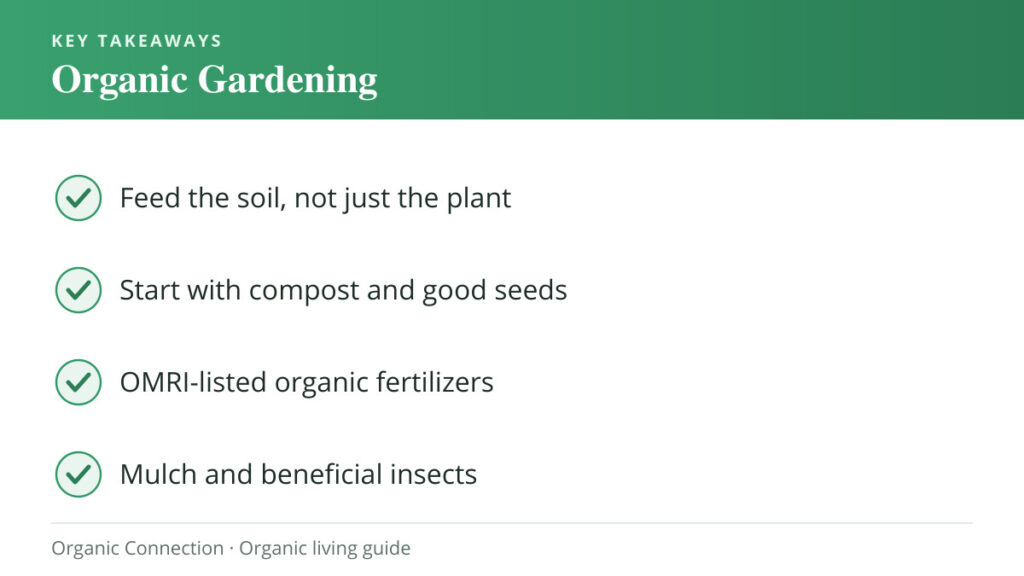
Growing your own food or flowers organically is one of the most satisfying ways to live cleaner, and it is more approachable than it looks. The core idea is simple: feed the soil, not just the plant, and work with nature instead of against it. This beginner’s guide covers the foundations of organic gardening, building healthy soil, choosing the right seeds, feeding plants with organic fertilizer, and managing weeds and pests without synthetic chemicals, so you can grow a productive, chemical-free garden from the ground up.
What makes a garden “organic”
Organic gardening means growing without synthetic pesticides, herbicides, or fertilizers, relying instead on natural inputs and practices: compost and organic matter to build soil, natural fertilizers derived from plant, animal, or mineral sources, and biological and physical methods to manage pests and weeds. For inputs, the seal that tells you a product is allowed in organic growing is OMRI Listed (from the Organic Materials Review Institute), the gardening equivalent of a certification stamp. When you see OMRI Listed on a bag of fertilizer or a pest control, you know it meets organic standards, which is why we look for it throughout our gardening reviews and explain it in our certifications guide.
The philosophy behind all of this is that a garden is an ecosystem, not a factory. Instead of forcing growth with synthetic chemicals and then fighting the pests that quick, soft growth attracts, organic gardening builds a resilient system: living soil, diverse plants, and natural predators that keep problems in check. It takes a little more patience up front, but it pays off in healthier plants and food you can eat straight from the garden.
Step 1: Build healthy, living soil
Everything in an organic garden starts with soil. Great soil is alive, full of microbes, fungi, and earthworms, and rich in organic matter that holds moisture and nutrients. The two workhorses for building it are compost and quality growing medium.
Compost is the single most valuable input in an organic garden. It recycles kitchen and yard waste into a dark, crumbly, nutrient-rich material that feeds soil life, improves structure, and boosts water retention. You can make your own or buy it; our guide to the best organic compost covers ready-made options and what to look for. Work compost into beds before planting and top-dress through the season, and your soil steadily improves year over year.
For containers, raised beds, and starting seeds, you need the right medium rather than garden dirt. A quality organic potting soil gives roots the drainage, aeration, and nutrition they need in a confined space. Using the correct medium is one of the most common differences between thriving and struggling container plants, so it is worth getting right from the start.
Step 2: Choose good seeds and plants
Organic gardening is easier when you start with the right genetics. Certified organic and untreated seeds have not been coated with synthetic fungicides and come from plants grown organically. Choosing organic vegetable seeds, ideally open-pollinated or heirloom varieties, also lets you save seed from your best plants year to year, building a garden adapted to your conditions. Pick varieties suited to your climate and the amount of sun your space gets, and do not overcrowd; plants with room and airflow are far less prone to disease. Starting with strong, well-adapted plants prevents many problems before they begin, which is the essence of the organic approach.
Step 3: Feed plants with organic fertilizer
Even great soil benefits from feeding during the growing season, especially for hungry crops like tomatoes, squash, and leafy greens. The difference in organic gardening is what you feed with. Synthetic fertilizers deliver a quick hit of soluble nutrients that can force soft growth and leach into waterways. Organic fertilizers, derived from sources like composted manure, bone and blood meal, kelp, feather meal, and rock minerals, release nutrients more slowly as soil microbes break them down, feeding plants steadily and improving the soil at the same time.
You will encounter two main forms. Granular organic fertilizer is worked into the soil and releases over weeks, ideal as a season-long base feeding. Liquid organic fertilizer (like fish emulsion, seaweed, or compost tea) acts faster and is great for a quick boost or for container plants that need regular feeding. For lawns specifically, an organic lawn fertilizer greens grass while building soil rather than creating dependence on synthetic feeding. Look for OMRI Listed on any of these to confirm it meets organic standards, and always follow the application rates, even organic fertilizers can be overapplied.
Step 4: Manage weeds without synthetic herbicides
Weeds are inevitable, but you can manage them without reaching for synthetic weed killers. The most effective organic strategies are physical and preventive:
- Mulch heavily. A thick layer of organic mulch (straw, shredded leaves, wood chips) blocks light so weed seeds cannot sprout, while retaining soil moisture and feeding the soil as it breaks down. This is the single best weed-prevention tactic.
- Hand-pull and hoe early. Removing weeds while they are small, before they seed, keeps their numbers down over time. A quick weekly pass is easier than a big battle later.
- Use organic weed control for tough spots. For paths and stubborn areas, a natural weed killer based on ingredients like vinegar (acetic acid) or plant oils can knock back weeds without synthetic herbicides. These work best on young weeds and in sunny, dry conditions.
- Plant densely. Closely spaced crops and ground covers shade out weeds naturally, letting your plants outcompete them.
Combining mulch, timely hand weeding, and dense planting handles the large majority of weeds, with organic sprays as a spot treatment rather than a first resort.
Step 5: Handle pests the organic way
Pest management in an organic garden is about balance, not eradication. A few pests are normal and even necessary to feed the beneficial insects that keep everything in check. The organic approach layers several gentle tactics:
- Encourage beneficial insects. Ladybugs, lacewings, and predatory wasps eat aphids and other pests. Planting flowers and avoiding broad-spectrum sprays lets these natural predators thrive and do the work for you.
- Use physical barriers. Row covers, netting, and collars protect vulnerable plants from insects and larger pests without any spray at all.
- Rotate crops and diversify. Moving crop families to new spots each year and mixing plantings disrupts pest cycles and prevents any one pest from building up.
- Reach for gentle controls last. When intervention is needed, OMRI-listed options like insecticidal soap, neem oil, or Bt target specific pests with minimal impact on beneficial insects. Use them sparingly and as directed.
Healthy soil and strong plants are your best pest defense, because vigorous plants resist and recover from damage far better than stressed ones. This is why the organic method keeps circling back to the soil: get the foundation right and pest pressure drops on its own.
A simple first-season plan
If you are just starting, keep it small and set yourself up to succeed:
- Start with one bed or a few containers in the sunniest spot you have, most vegetables want at least six hours of sun.
- Build the soil with quality organic compost (in beds) or organic potting soil (in containers).
- Choose a few easy, organic-seed crops suited to your climate, lettuce, herbs, cherry tomatoes, and beans are forgiving starters.
- Mulch well to suppress weeds and hold moisture from day one.
- Feed lightly with an OMRI-listed organic fertilizer as plants grow, following the label rate.
- Watch and adjust. Check plants a few times a week; catching issues early makes them easy to handle.
Grow from there each season, expanding your beds, improving your soil, and adding crops as your confidence builds. Organic gardening rewards observation and patience more than expensive inputs.
Where to start an organic garden
Organic gardening comes down to feeding the soil, starting with good seeds, feeding plants with natural OMRI-listed fertilizers, and managing weeds and pests through mulch, barriers, beneficial insects, and gentle controls rather than synthetic chemicals. Build living soil with compost and quality potting mix, and most other problems become manageable. Start small, observe closely, and improve every season. For our specific product picks, compost, potting soil, seeds, fertilizers, and organic weed control, follow the links above, and see how we evaluate every garden input in our rating method.
Common questions about organic gardening
What does organic gardening mean?
Organic gardening means growing plants without synthetic pesticides, herbicides, or fertilizers, relying instead on compost and organic matter to build soil, natural fertilizers, and biological and physical methods to manage pests and weeds. For inputs, the OMRI Listed seal indicates a product meets organic gardening standards.
How do I start an organic garden?
Start small with one bed or a few containers in a sunny spot. Build the soil with quality organic compost or potting mix, choose a few easy crops from organic seeds suited to your climate, mulch to suppress weeds, and feed lightly with an OMRI-listed organic fertilizer. Observe your plants regularly and expand each season.
What is the best organic fertilizer for a garden?
It depends on your needs. Granular organic fertilizer works into the soil for slow, season-long feeding, while liquid organic fertilizer like fish emulsion or seaweed acts faster and suits containers. Look for OMRI Listed to confirm organic standards, and follow the application rate, since even organic fertilizers can be overapplied.
How do I control weeds without chemicals?
Mulch heavily to block light and stop weed seeds from sprouting, hand-pull or hoe weeds while they are small, and plant densely so crops shade out weeds. For stubborn spots, an organic weed killer based on vinegar or plant oils works best on young weeds in sunny, dry conditions. Mulch is the most effective single tactic.
How do I deal with pests organically?
Layer gentle tactics: encourage beneficial insects like ladybugs, use physical barriers such as row covers, rotate and diversify crops to disrupt pest cycles, and reach for OMRI-listed controls like insecticidal soap or neem oil only when needed. Healthy soil and strong plants resist pests best, so a good foundation reduces problems.
Keep reading
- What “Organic” Really Means: A Guide to Certifications
- The Dirty Dozen and Clean Fifteen: Where Buying Organic Matters Most
- How to Build an Organic Pantry Without Overspending
- How we research and rate products
- Organic Product Database — search every product we have reviewed, by certification
- Organic Gardening hub
- our organic product database — compare brands across every guide
Organic Connection is reader-supported. When you buy through links in our reviews we may earn a commission, at no extra cost to you. As an Amazon Associate we earn from qualifying purchases. We are not paid to feature or rank any product. How we research and rate.