Last updated: September 30, 2026
We may earn a commission when you buy through links on this page, at no extra cost to you. How we research and rate.
The short version
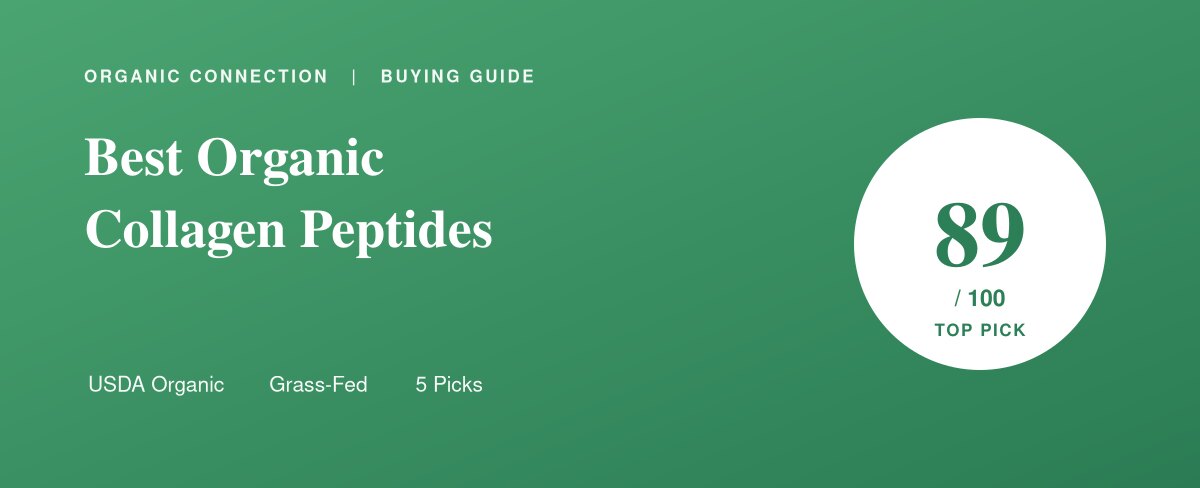
After working through the organic livestock rules and what certification can and cannot cover, our top pick is Sports Research Organic Collagen Peptides. It is genuinely USDA Certified Organic, sourced from grass-fed pasture-raised bovine hide, and unflavored so it disappears into coffee, which is why it earned our highest Organic Integrity Score of 89 out of 100.
Collagen is a category where the word organic is doing less work than the packaging implies, and in one common case it cannot legitimately appear at all. That is worth understanding before you spend.
Best organic collagen compared
| Best Choice | Best Value | ||||
 |  |  |  |  | |
| Product | Sports Research Organic | Sports Research Organic | Anthony’s Collagen Peptide Powder | Anthony’s 1 lb | Anthony’s Collagen Peptide Powder |
| Organic Integrity Score | 89/ 100 | 85/ 100 | 78/ 100 | 77/ 100 | 76/ 100 |
| Our rating | 4.5 | 4.3 | 3.9 | 3.9 | 3.8 |
| Best for | Best overall | Best flavored | Best value | Best mid size | Best everyday |
| Certification | USDA Organic, Non-GMO | USDA Organic, Non-GMO Project Verified | Non-GMO, Organic | Non-GMO, Gluten-free | Non-GMO, Organic |
| Collagen type | Type I & III | Type I & III | Type I & III | Type I & III | — |
| Per scoop | 10 g | 10 g | 11 g | 11 g | — |
| Servings | 30 | 30 | 82 | 41 | — |
| Flavor | Unflavored | Chocolate | Unflavored | Unflavored | — |
| Price | Currently unavailable See buying options | Currently unavailable See buying options | $59.95$1.87 / ounce View on Amazon | $26.99$1.69 / ounce View on Amazon | $30.95$3.97 / ounce View on Amazon |
Scores are ours, based on independent research of certification, sourcing transparency, dose disclosure, format and value, using the same 10-criteria method we apply to every product.
What each certification on an organic collagen label actually covers
Certification names are easy to confuse and easy to trade on. Below is what each of these marks covers, and the part of the picture it says nothing about.
| Certification | Covers | Key exclusion |
| USDA Organic | Farming and handling: no synthetic pesticides or fertilizers, no GMOs, no sewage sludge or irradiation, audited yearly by an accredited certifier | Three different tiers share the one seal, and it makes no claim about worker pay, food miles, or nutrition |
| Non-GMO Project | Testing and supply-chain traceability showing the ingredients are not genetically engineered | Sets no limit on synthetic pesticides or fertilizers, so it is not an organic claim |
The mark most often mistaken for an organic claim is Non-GMO Project Verified. It is a real standard with real testing, and it verifies exactly one thing: that the ingredients are not genetically engineered. It sets no limit on synthetic pesticides, synthetic fertilizers, or anything else about how the crop was grown. USDA Organic already prohibits GMOs outright, so on a certified organic product the butterfly adds independent verification rather than a new promise. On a product carrying only the butterfly, the pesticide question has not been asked.
Why certified organic collagen is so rare
Collagen is an animal product, extracted from hide, bone or fish skin, which places it under organic livestock rules rather than crop rules. Those are considerably harder to satisfy across an entire supply chain.
For bovine collagen, certification means the cattle themselves were raised to the organic standard: organic feed, no routine antibiotics, no added growth hormones, with outdoor access and documented records throughout. Then the hide has to be tracked separately through rendering and hydrolysis, with organic handling maintained at every step. It is achievable, and the USDA’s own technical work confirms collagen and gelatin can be isolated from wholly organic sources, but it demands sourcing discipline most manufacturers have not built.
For marine collagen the situation is different in kind rather than degree. Most marine collagen comes from wild-caught fish, and there is no USDA organic certification available for wild capture, because you cannot document the feed and management of a wild animal. Wild-caught marine collagen is not certifiable, full stop. That is not a criticism of the product, which may be excellent, but it means “organic” on a marine collagen tub is not the claim you think it is.
What the organic seal covers, and what it does not
Worth being precise, because collagen marketing leans hard on adjacent-sounding claims.
USDA organic certification tells you how the animal was raised and how the material was handled. It says nothing about the molecular weight of the peptides, which affects absorption, nothing about whether the product is third-party tested for heavy metals, and nothing about efficacy.
It also does not mean the same thing as grass-fed, though the two often travel together. Grass-fed describes diet; organic describes a whole production system including feed, medication and land management. A product can be one without the other, and the strongest products state both explicitly. Our guide to supplement third-party testing covers the contaminant question, which certification does not address.
What collagen supplements actually do
The mechanism deserves a straight explanation, because the marketing rarely gives one.
Collagen is a protein. When you eat it, digestion breaks it into amino acids and short peptides. It does not travel intact to your skin and reassemble itself there, and anyone implying otherwise is describing something that does not happen. The plausible mechanism is subtler: hydrolysed collagen is unusually rich in glycine, proline and hydroxyproline, and some evidence suggests circulating collagen-derived peptides may signal fibroblasts to increase their own collagen production.
On outcomes, the honest summary is that there is a reasonable body of randomized trial evidence for modest improvements in skin elasticity and hydration, and some for joint comfort, much of it industry-funded, with meaningful variation in dose, duration and peptide type. It is a more evidenced supplement than many we cover and a less certain one than the advertising suggests. If you eat enough protein overall, the incremental benefit is smaller still.
Key things to look for in an organic collagen
1. The actual USDA Organic seal
Not “made with organic ingredients”, not “organic grass-fed sourcing” as loose copy. The seal, on a bovine product, because for wild-caught marine it cannot legitimately be there.
2. Type I and III for skin, Type II for joints
Types I and III dominate skin, hair, nails and bone, and are what bovine hide collagen supplies. Type II is cartilage and comes from chicken sternum. Most peptide powders are I and III, which is the right choice for the reasons most people buy collagen.
3. Hydrolysed peptides, not gelatin
Hydrolysed collagen peptides dissolve in cold liquid and do not gel. Gelatin is less broken down and will set your drink. Both are collagen; only one mixes into iced coffee.
4. A stated dose per scoop
Ten to twenty grams daily is the range used in most trials. A product that does not state grams per scoop is making the one number you need to compare hard to find.
5. Unflavored, unless you have a reason
Unflavored collagen is close to tasteless and goes into anything. Flavored versions add sweeteners and other ingredients, which is fine if you want a standalone drink and unnecessary if it is going in coffee.
Who should buy organic collagen
Buy it if you want certified organic animal sourcing and you are willing to pay for a supply chain few manufacturers maintain. Buy it if you are already taking collagen and want to upgrade the sourcing rather than the promise. Buy the unflavored version if it is going into coffee or a smoothie, which is how most people actually take it.
Reconsider if you eat plenty of protein already, since collagen is a protein supplement with an unusual amino acid profile rather than a category apart. Reconsider if you are vegetarian or vegan, because there is no such thing as vegan collagen: products sold that way supply nutrients such as vitamin C and amino acids intended to support your own collagen synthesis, which is a different proposition honestly described. And if you want marine collagen specifically, buy it for the sourcing you prefer rather than for an organic claim it cannot carry.
How to choose an organic collagen
Confirm the USDA seal is genuinely present and that the product is bovine, since that is the only route to real certification. Check grams per scoop and aim for the ten to twenty gram range the trials used. Choose unflavored unless you want a standalone drink. Then compare cost per serving rather than per tub, because tub sizes and scoop sizes vary enough to make headline prices misleading. Third-party testing for heavy metals is a genuine bonus that certification does not provide.
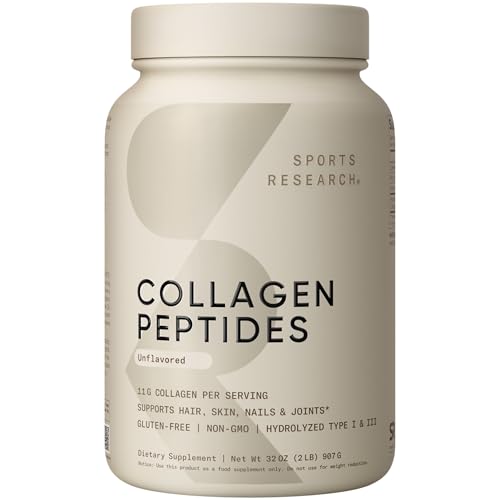
Best overall: Sports Research Organic Collagen Peptides, Unflavored, 30 Servings
| Organic Integrity Score | 89 / 100 |
| Dose | 10 g per scoop, 30 servings |
| Certification | USDA Organic, Non-GMO |
| Best for | Anyone who wants the seal that most of this category cannot carry |
This is the pick because genuine USDA organic certification on a collagen product is rare enough to be the whole story. Sports Research source from grass-fed, pasture-raised bovine hide and carry the actual seal rather than adjacent language, which means the organic livestock standard was met and documented through the supply chain. Ten grams per scoop sits inside the range used in trials, and unflavored means it vanishes into coffee.
The trade-off is cost and quantity. Thirty servings is a month, and the certified organic version costs meaningfully more per gram than the same company’s conventional grass-fed line. Whether that premium is worth it depends entirely on whether organic livestock sourcing is something you value, because the collagen itself is not doing anything different.
What we liked: Real USDA Organic certification in a category where it is genuinely uncommon. Grass-fed and pasture-raised as well as organic. Dose stated plainly at 10 g. Unflavored and mixes cleanly, including in cold liquid.
Keep in mind: Costs noticeably more per gram than the non-organic version, and 30 servings goes quickly at one scoop a day. The seal certifies sourcing, not efficacy or heavy metal testing.
What the listing discloses: Sports Research commits to USDA organic certification but stops short of where it was grown or made.
Best flavored: Sports Research Organic Collagen Peptides, Chocolate, 30 Servings
| Organic Integrity Score | 85 / 100 |
| Dose | 10 g per scoop, 30 servings |
| Certification | USDA Organic, Non-GMO Project Verified |
| Best for | Taking collagen as a drink rather than an additive |
The same certified organic collagen with chocolate flavoring, which makes it a standalone drink in milk or water rather than something you hide in coffee. For people who have bounced off unflavored powders, a version you enjoy is the one you will actually keep taking.
It scores below the unflavored version for a simple reason: flavoring means additional ingredients, and part of the appeal of a certified organic product is a short, clean list. This is a preference trade rather than a quality problem, but it is a trade.
What we liked: Same USDA organic certification and 10 g dose. Genuinely pleasant as a standalone drink. Traceable sourcing stated by the brand.
Keep in mind: More ingredients than the unflavored version. Chocolate will not suit coffee, which is where most people take collagen.
What the listing discloses: Sports Research is explicit about USDA organic certification and Non-GMO Project Verified, and silent on where it was grown or made.
Best value, not certified organic: Anthony’s Collagen Peptide Powder Peptides, 2 lb
| Organic Integrity Score | 78 / 100 |
| Dose | 11 g per scoop, 82 servings |
| Certification | Non-GMO, Organic |
| Best for | Daily use where cost per serving matters most |
We are including this with the label stated plainly, because it answers a question the certified products cannot. If you want to take collagen daily at a sane cost, 82 servings at 11 grams a scoop is far better value than 30 servings of the organic version, and the collagen is the same molecule.
It is grass-fed but not USDA Organic, and that is the whole difference. If you came to this page because certification matters to you, buy the top pick. If you came because you want collagen and noticed the organic versions cost triple, this is the honest answer rather than one we would hide.
What we liked: Dramatically better cost per serving. Slightly higher dose per scoop at 11 g. Grass-fed sourcing. Mixes as cleanly as the organic version.
Keep in mind: Not certified organic, so the livestock standard was not audited. If the seal is your reason for buying, this is not your product.
What the listing discloses: Sparse documentation from Sports Research — nothing on where it was grown or made.
Best value, not certified organic: Anthony’s Collagen Peptide Powder, 1 lb
| Organic Integrity Score | 77 / 100 |
| Size | 1 lb |
| Source | Pasture-raised, grass-fed cattle from the USA |
| Excludes | Hormones, steroids, antibiotics |
| Organic claim | None; certified organic collagen exists but is uncommon |
| Best for | Value collagen with the cattle described |
Worth restating on this page: certified organic collagen exists but is uncommon, because collagen is rendered from hide and bone and certifying that supply chain is difficult. Two picks above this one are certified; most of the market is not, so the honest comparison for the rest is what the cattle claims actually say.
This listing says its collagen comes from pasture-raised, grass-fed cattle from the USA that are free of hormones, steroids and antibiotics. That is four separate claims in one sentence — a raising system, a diet, a country and three excluded inputs — which is more than most collagen listings offer.
It is also unflavored and hydrolyzed. Hydrolyzed matters practically rather than nutritionally: it is what allows the powder to dissolve in cold liquid instead of clumping.
What it does not have is any certification at all. No organic claim, no third-party testing, no certifier, and the grass-fed claim is unattributed — which since the USDA withdrew its grass-fed marketing standard in 2016 means it rests on company documentation.
What we liked: Names the raising system, diet, country and three excluded inputs; unflavored and cold-soluble; strong sales rank at a modest price.
Keep in mind: No certification of any kind and no third-party testing, and the grass-fed claim has no certifier behind it.
What the listing discloses: Anthony’s carries no organic claim, certified or otherwise.
Best everyday tub: Anthony’s Collagen Peptide Powder Peptides, Hydrolyzed Type I & III
| Organic Integrity Score | 76 / 100 |
| Form | Hydrolysed peptides, Type I & III |
| Certification | Non-GMO, Organic |
| Best for | Straightforward daily collagen in coffee or shakes |
The long-standing everyday version, hydrolysed so it dissolves in cold liquid without gelling, which is the practical difference between collagen peptides and gelatin and the reason this format dominates.
As with the other non-organic picks, it is grass-fed rather than certified. Included because it is the version most people end up buying and it would be dishonest to build a page that pretends the certified products are the only reasonable choice.
What we liked: Dissolves properly in cold drinks. Type I and III, which is the right pairing for skin, hair and nails. Widely available and consistent.
Keep in mind: Not certified organic. Check the scoop size against the tub, since servings vary between formats in this range.
What the listing discloses: Beyond the organic claim itself, Sports Research does not say where it was grown or made.
Collagen and body composition: a claim without a mechanism
Collagen supplements are increasingly marketed with body composition language, and this is a case where the honest answer is unusually clean, because there is no proposed mechanism to evaluate.
Collagen is a protein, and protein has a general satiating effect. That is the entire connection. There is nothing specific to collagen that acts on fat storage, appetite regulation or energy expenditure, and no credible body of trial evidence claiming otherwise.
In fact collagen is a comparatively poor protein for this purpose. It is an incomplete protein, very low in tryptophan and short on several other essential amino acids, which is why it is not counted toward protein targets in the way whey, soy or a pea and rice blend would be. If satiety or lean mass preservation is what you are after, our organic protein powder guide covers products that do that job properly, and a typical serving of collagen supplies less protein than most of them.
Where the evidence for collagen is more interesting is elsewhere. There is a reasonable and growing literature on collagen peptides and skin elasticity and hydration, and a smaller one on joint comfort in athletes and people with osteoarthritis. Those are the claims worth evaluating on their merits, and they are the reasons most people who take it are satisfied with it.
The conflation to watch for is between “improves skin firmness” and “tones the body”. The first is a plausible claim with supporting trials. The second is the first one stretched into a body composition promise it does not support.
Buy collagen for skin and joints if that appeals and you accept the evidence is moderate rather than conclusive. Do not buy it as a weight product, and treat any listing framing it that way as a signal about the seller rather than the supplement.
Common questions about organic collagen
Can collagen be USDA Organic?
Bovine collagen can, though it is rare. It requires cattle raised to the organic livestock standard, with organic feed, no routine antibiotics or added hormones, and documented handling through rendering and hydrolysis. The USDA’s own technical work confirms collagen and gelatin can be isolated from wholly organic sources.
Why is there no organic marine collagen?
Because most marine collagen comes from wild-caught fish, and USDA organic certification requires documented, controlled production practices that wild capture by definition cannot provide. You cannot certify the feed and management of a wild animal. Wild-caught marine collagen is not certifiable, so an organic claim on one is not describing USDA certification.
Is organic collagen better than grass-fed?
They describe different things. Grass-fed refers to diet; organic refers to a whole production system including feed, medication and land management. The strongest products state both. Neither claim tells you anything about the peptides themselves, the molecular weight, or heavy metal testing.
Does collagen actually work?
There is a reasonable body of randomized trial evidence for modest improvements in skin elasticity and hydration, and some for joint comfort, though much of it is industry-funded and doses and durations vary. It is better evidenced than many supplements and less certain than the marketing implies. If your overall protein intake is already high, the incremental benefit is smaller.
Does eating collagen turn into skin collagen?
Not directly. Digestion breaks collagen into amino acids and short peptides; it does not arrive intact at your skin. The plausible mechanism is that circulating collagen-derived peptides may signal fibroblasts to increase their own collagen production, alongside supplying glycine, proline and hydroxyproline.
How much collagen should I take?
Most trials use roughly 10 to 20 grams daily. Check grams per scoop rather than scoops per day, since scoop sizes differ between products, and a tub advertising more servings may simply be using a smaller scoop.
What is the difference between collagen peptides and gelatin?
Both are collagen; the difference is how far it has been broken down. Hydrolysed collagen peptides dissolve in cold liquid and stay liquid. Gelatin is less hydrolysed and will set into a gel, which is useful for cooking and impractical in iced coffee.
Is vegan collagen a real thing?
Not as collagen. Collagen is an animal protein and there is no plant source. Products sold as vegan collagen supply nutrients such as vitamin C, amino acids and sometimes silica intended to support your body’s own collagen synthesis, which is a legitimate but different proposition, and worth reading the label carefully to see which you are buying.
- Organic Supplements and Wellness hub
- Supplement third-party testing explained
- Best Organic Bone Broth
- Organic Product Database — search every product we have reviewed, by certification
Price and availability as of October 15, 2026 1:10 pm EDT. Product prices and availability are accurate as of the date/time indicated and are subject to change. Any price and availability information displayed on Amazon.com at the time of purchase will apply to the purchase of this product.
Looking for other organic products?
We have checked more than 800 products across food, household goods, gardening, personal care and pet, every one against its stated certification. Browse all reviews.
Organic Connection is reader-supported. When you buy through links on this page we may earn a commission, at no extra cost to you. As an Amazon Associate we earn from qualifying purchases. We are not paid to feature or rank any product. How we research and rate.