Last updated: September 30, 2026
We may earn a commission when you buy through links on this page, at no extra cost to you. How we research and rate.
The short version
After working through the preservative rules and the added-sugar question, our top pick is Terrasoul Superfoods Organic Apricots. They are certified organic, unsulfured, and have no added sugar, which is why they earned our highest Organic Integrity Score of 90 out of 100.
They are also brown rather than bright orange, and understanding why is most of what you need to know about buying dried fruit well.
Best organic dried fruit compared
| Best Choice | Best Value | ||||
 |  |  |  |  | |
| Product | Terrasoul Superfoods | Made In Nature Organic | Terrasoul Superfoods | Made In Nature Organic | Sunny Fruit Organic Dried |
| Organic Integrity Score | 90/ 100 | 88/ 100 | 85/ 100 | 84/ 100 | 83/ 100 |
| Our rating | 4.5 | 4.4 | 4.3 | 4.2 | 4.2 |
| Added sugar | None | None | None | — | None |
| Sulfites | Unsulfured | Unsulfured | Unsulfured | — | No sulphides |
| Size | 2 lb | 28 oz | 3 lb (3-pack) | — | 5 portion packs |
| Best for | Snacking and baking | Everyday snacking | Bulk buyers | — | Lunchboxes |
| Certification | USDA Organic, Non-GMO, Gluten-free | Certified Organic, Non-GMO, Gluten-free | Certified Organic, Non-GMO, Kosher | Certified Organic, Kosher, Gluten-free | Vegan, Organic |
| Price | $28.99$0.91 / ounce View on Amazon | Currently unavailable See buying options | $42.99$0.90 / ounce View on Amazon | $7.75 $10.12 −23%$1.29 / ounce View on Amazon | $6.97 $8.00 −13%$1.99 / ounce View on Amazon |
Scores are ours, based on independent research of certification, added sugar, preservative status, packaging and value, using the same 10-criteria method we apply to every product.
Reading the seals on organic dried fruit: what each one does and does not cover
Each certification below appears on at least one product on this page. They are not ranked against each other, because they measure different things, but knowing which is which changes what you buy.
| Certification | Covers | Key exclusion |
| USDA Organic | Farming and handling: no synthetic pesticides or fertilizers, no GMOs, no sewage sludge or irradiation, audited yearly by an accredited certifier | Three different tiers share the one seal, and it makes no claim about worker pay, food miles, or nutrition |
| Kosher | Ingredients and production comply with Jewish dietary law, verified by a rabbinic agency that inspects the facility | A dietary-law standard: it makes no claim about pesticides, GMOs or farming practice |
| Halal | Ingredients and processing comply with Islamic dietary law, verified by a certifying body | A dietary-law standard, unrelated to organic farming or nutrition |
Kosher and organic answer entirely different questions. A kosher mark, OU, OK, Star-K and others, confirms that ingredients and production follow Jewish dietary law, verified by an agency that inspects the facility. It is a rigorous supply-chain audit and it says nothing about pesticides, GMOs or farming. The two seals appear together often precisely because neither substitutes for the other.
Sulfites, and why organic dried fruit looks different
Sulfur dioxide and related sulfite compounds are the standard preservative in conventional dried fruit. They inhibit the enzymatic browning that happens as fruit dries, so apricots stay orange, golden raisins stay golden, and mango stays vivid. They also extend shelf life and deter insects.
They are prohibited under organic standards, which is why certified organic dried fruit looks dull compared with the conventional product beside it. Organic apricots go deep brown. Organic golden raisins are not golden. Organic mango is a muted amber rather than neon. Every one of those differences is the absence of a preservative rather than a defect, and it is worth knowing before you assume the darker bag is the older one.
There is a health dimension too, though it applies to a minority. Sulfites can provoke reactions in sensitive people, with asthmatics the group most affected, which is why US labeling rules require sulfites to be declared above ten parts per million. Most people tolerate them without issue. If you are sulfite-sensitive, organic dried fruit removes the question entirely.
The added sugar problem, which certification does not solve
Here is where organic certification will not help you, and it catches people out.
A great deal of dried fruit is sweetened, and dried mango, cranberries and pineapple are the usual offenders. Organic certification requires any added sugar to be organic; it does not limit how much goes in. Organic sweetened mango is still sweetened mango, and it can carry a large amount of added sugar on top of the fruit’s own concentrated sugars.
Cranberries are the special case worth naming. They are so tart that almost all dried cranberries are sweetened, including organic ones, and unsweetened dried cranberries are genuinely difficult to find and unpleasant to eat. That is not a scandal, it is the fruit, but it does mean cranberries are not a low-sugar snack whatever the packaging suggests.
Look for “no added sugar” or “unsweetened” explicitly, and check the ingredients list is just the fruit. A one-ingredient bag is the goal.
Dried fruit is concentrated, and portions are small
Drying removes water, which concentrates everything else including the sugar. A cup of dried apricots contains far more sugar and calories than a cup of fresh, because you are eating several times as much fruit by weight.
That does not make dried fruit unhealthy. The fiber, potassium and polyphenols concentrate too, and unsweetened dried fruit is a genuinely good snack. It does mean the sensible portion is smaller than it feels, particularly with something moreish like mango, and that a handful straight from a large resealable bag is easy to underestimate. Our organic nuts guide makes a similar point about calorie density.
Key things to look for in organic dried fruit
1. One ingredient
Just the fruit. No added sugar, no oil coating, no preservative. If the list runs longer than a word, read it.
2. “Unsulfured” stated
Certified organic fruit will not contain sulfites, but the word on the pack confirms it and makes the color make sense.
3. Color that matches the processing
Brown apricots and muted mango are correct for unsulfured fruit. Vivid color in something claiming to be unsulfured is worth a second look.
4. Resealable packaging
Dried fruit goes hard and sugary at the surface once air gets to it. A resealable bag genuinely extends the useful life, which matters most on large packs.
5. A size you will finish
Three pound bags are excellent value and poor value simultaneously, depending on whether the last third is still pleasant to eat by the time you reach it.
Who should buy organic dried fruit
Buy it if you want fruit without sulfites, if you or someone in the house is sulfite-sensitive, or if you want a snack with one ingredient. Buy unsweetened versions if you are watching sugar, and buy the smaller bags unless you eat it regularly.
Be realistic if you are buying it as a low-sugar snack, because concentrated fruit sugar is still sugar and the portion that feels normal is often two or three times the stated serving. And if the appearance of conventional dried fruit is what you actually want, accept that you are buying sulfites, rather than searching for organic fruit that looks the same. It does not exist.
How to choose organic dried fruit
Read the ingredients before anything else and aim for one line. Confirm unsulfured. Then choose the fruit for the use: apricots and mango for snacking, apricots for baking where they rehydrate well. Then pick a pack size you will get through in a couple of months and prefer resealable. Price per pound is worth comparing but is secondary to whether the bag says sugar on it.
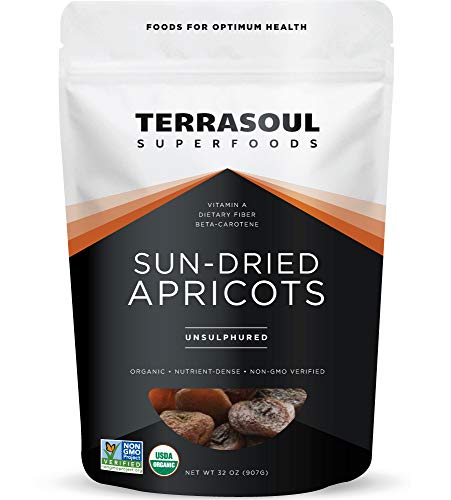
Best overall: Terrasoul Superfoods Organic Apricots, 2 lb
| Organic Integrity Score | 90 / 100 |
| Size | 2 lb |
| Certification | USDA Organic, Non-GMO, Gluten-free |
| Best for | Snacking and baking, where apricots rehydrate well |
One ingredient, and honest about what that produces. Certified organic, unsulfured, no added sugar, sun-dried, and consequently deep brown rather than orange. The flavor is more concentrated and more tart than the sulfured version, which most people find better once they adjust.
The trade-off is entirely cosmetic and entirely worth explaining to anyone else in the house before they open the bag. Unsulfured apricots look nothing like the ones in a supermarket, and the first reaction is often that they have gone off. They have not. They are also stickier and softer, because sulfur dioxide firms the texture as well as fixing the color.
What we liked: One ingredient. Genuinely unsulfured, with the color to prove it. Concentrated apricot flavor that beats the conventional product. Two pounds is a sensible quantity at a fair price.
Keep in mind: Brown appearance surprises people. Stickier than sulfured apricots and best kept in a sealed container. Fruit sugar is concentrated, so portions should be smaller than they feel.
What the listing discloses: Terrasoul Superfoods documents USDA organic certification, and leaves where it was grown or made unsaid.
Best mango: Made In Nature Organic Dried Mangoes, 28 oz
| Organic Integrity Score | 88 / 100 |
| Size | 28 oz |
| Certification | Certified Organic, Non-GMO, Gluten-free |
| Best for | Everyday snacking on unsweetened mango |
Dried mango is the category where sweetening is most common, so an unsulfured organic mango with nothing added is genuinely worth seeking out. Made In Nature’s is soft, properly mango-flavored, and a muted amber rather than the fluorescent orange of the sweetened, sulfured product.
Mango is also the dried fruit people most reliably overeat, and it is worth saying plainly. It is soft, sweet and moreish, and a 28 ounce bag can disappear in a way two pounds of apricots does not. Decant a portion rather than eating from the bag.
What we liked: No added sugar on a fruit that is usually sweetened. Unsulfured and certified organic. Good soft texture rather than leathery. Multiple dietary certifications.
Keep in mind: Extremely easy to overeat. Concentrated natural sugars are still significant even without added sugar.
What the listing discloses: Sparse documentation from Made In Nature — nothing on whether the USDA seal applies and where it was grown or made.
Best bulk: Terrasoul Superfoods Organic Dried Mango Slices, 3 lb
| Organic Integrity Score | 85 / 100 |
| Size | 3 lb (3-pack) |
| Certification | Certified Organic, Non-GMO, Kosher |
| Best for | Households that get through dried fruit quickly |
Three pounds of unsweetened organic mango slices, which brings the cost per pound down substantially for a household that actually eats this much. The slices are firmer and tarter than the Made In Nature mango, which some prefer and which holds up better in trail mixes and baking.
Bulk dried fruit has one real enemy, which is air. Once opened, dried fruit hardens and can develop sugar crystallization at the surface. If you buy three pounds, decant into sealed jars rather than leaving it in a large bag you open daily.
What we liked: Much better value per pound. No added sugar. Firmer, tarter slices suit trail mix and baking better than soft mango.
Keep in mind: Three pounds is a lot to keep fresh; decant it. Firmer texture is not what you want if you like soft mango.
What the listing discloses: Terrasoul Superfoods states kosher certification, and does not say whether the USDA seal applies and where it was grown or made.
Best small pack: Made In Nature Organic Dried Apricots, 6 oz
| Organic Integrity Score | 84 / 100 |
| Size | 6 oz |
| Certification | Certified Organic, Kosher, Gluten-free |
| Best for | Trying unsulfured apricots before buying two pounds |
Six ounces is the sensible way to find out whether you actually like unsulfured apricots, given how different they look and taste from the conventional version. If the brown color or the more intense tartness is not for you, you have lost very little.
Cost per ounce is the worst here, as small packs always are. Buy this once, then buy the two pound bag if you like them.
What we liked: Low-risk introduction to unsulfured apricots. Same certification and one-ingredient standard as the larger packs. Easy to keep fresh.
Keep in mind: Highest cost per ounce of our picks. Six ounces goes quickly.
What the listing discloses: Made In Nature is explicit about kosher certification, and silent on whether the USDA seal applies and where it was grown or made.
Best portion packs: Sunny Fruit Organic Dried Mangoes, 5 Packs
| Organic Integrity Score | 83 / 100 |
| Size | 5 individual portion packs |
| Certification | Vegan, Organic |
| Best for | Lunchboxes and controlling portions |
Individual portions solve the specific problem this whole page keeps returning to, which is that dried fruit is easy to overeat straight from a bag. A sealed single portion is a decision you make once rather than continuously, and it travels well in a lunchbox or bag.
The cost is packaging and price per ounce, both of which are worse than a large bag. Whether that is a fair trade depends on whether portion control is a real problem for you, and for a lot of people with dried mango it genuinely is.
What we liked: Portion control built in. Soft texture children accept. No preservatives, sulphides or added sugar. Broad certification list.
Keep in mind: More packaging and a higher price per ounce than bulk bags.
What the listing discloses: Little to verify on the SUNNY FRUIT listing: no word on whether the USDA seal applies and where it was grown or made.
The portion problem nobody warns you about
Dried fruit sits in the health aisle and is priced like health food, but the way it is eaten creates a specific and predictable difficulty.
Drying removes water, which is most of the fruit’s weight and none of its calories. A cup of fresh grapes weighs around 150 grams and supplies roughly 100 calories. A cup of raisins weighs around 145 grams and supplies close to 430. The sugar has not increased; the volume that carried it has collapsed, and volume is a large part of what makes fresh fruit filling.
That produces a mismatch between what feels like a serving and what a serving is. A small handful of raisins is nutritionally equivalent to a substantial bunch of grapes, and nobody eats a small handful. This is the same effect that makes fruit juice an easy way to consume a great deal of sugar quickly, without any of the deliberate design.
Two things make it worse in practice. Much commercial dried fruit is sweetened, so sugar is added to a food that had concentrated its own. And dried fruit is sticky, which prolongs contact with teeth in a way fresh fruit does not.
None of this makes dried fruit a bad food. The fiber, potassium and polyphenols survive drying, and it is genuinely useful where weight and shelf life matter, which is why it is hiking food. It is also a reasonable way to sweeten porridge or baking with something that brings fiber along.
The practical advice is unglamorous: buy unsweetened, portion it into a small bowl rather than eating from the bag, and treat a quarter cup as the serving.
Common questions about organic dried fruit
Why is organic dried fruit brown?
Because sulfur dioxide is prohibited in organic production. Sulfites prevent the enzymatic browning that happens naturally as fruit dries, which is what keeps conventional apricots orange and golden raisins golden. Without them the fruit oxidizes to a deep brown, which is its actual color rather than a sign of age or poor quality.
Are sulfites in dried fruit harmful?
Not for most people. They can provoke reactions in sensitive individuals, with asthmatics the most affected group, which is why US labeling requires sulfites to be declared above ten parts per million. If you are sulfite-sensitive, organic dried fruit avoids the issue entirely.
Does organic dried fruit have added sugar?
It can. Organic certification requires any added sugar to be organic but sets no limit on quantity, so organic sweetened mango, cranberries or pineapple are still sweetened. Look for “no added sugar” or “unsweetened” and check the ingredients list is just the fruit.
Why are dried cranberries always sweetened?
Because cranberries are extremely tart and largely unpalatable dried without sweetening, so almost all dried cranberries including organic ones contain added sugar. Unsweetened versions exist but are hard to find and hard to enjoy. Cranberries are not a low-sugar dried fruit whatever the front of the bag implies.
Is dried fruit as healthy as fresh?
It is concentrated rather than worse. Drying removes water, which concentrates the fiber, potassium and polyphenols along with the sugar and calories. Unsweetened dried fruit is a genuinely good snack; the sensible portion is simply much smaller than an equivalent volume of fresh fruit.
How should I store dried fruit?
Airtight, cool and out of direct light. Once opened, dried fruit hardens and can develop surface sugar crystallization as it loses remaining moisture. If you buy large bags, decant into sealed jars rather than repeatedly opening one big pack.
Why does unsulfured fruit feel stickier?
Sulfur dioxide firms the texture as well as fixing the color, so unsulfured fruit is typically softer and stickier. It is a processing difference rather than a quality problem, and it is why unsulfured apricots clump together in a way the conventional ones do not.
Is organic dried fruit worth the extra cost?
It depends what you are buying it for. If you want to avoid sulfites, or you want a genuinely one-ingredient product, then yes, because those are exactly what certification delivers here. If you are buying sweetened organic dried fruit, the seal is doing much less for you than the ingredients list would suggest.
- Organic Food and Pantry hub
- Best Organic Nuts
- How to read an ingredient list
- all our reviewed products in one place — sortable by Organic Integrity Score
- Best Organic Applesauce
Price and availability as of October 15, 2026 1:10 pm EDT. Product prices and availability are accurate as of the date/time indicated and are subject to change. Any price and availability information displayed on Amazon.com at the time of purchase will apply to the purchase of this product.
Looking for other organic products?
We have checked more than 800 products across food, household goods, gardening, personal care and pet, every one against its stated certification. Browse all reviews.
Organic Connection is reader-supported. When you buy through links on this page we may earn a commission, at no extra cost to you. As an Amazon Associate we earn from qualifying purchases. We are not paid to feature or rank any product. How we research and rate.